

I Quit My Corporate Job to Open a Dog Bar - Here's What Nobody Tells You
Top TLDR: Quitting a corporate job to open a dog bar is a legitimate career move — but the transition involves more psychological adjustment than most people anticipate. The operational learning curve is real, the community payoff is bigger than expected, and the business rewards owners who show up daily and lead from the floor. Your most important takeaway: talk to at least three current Wagbar franchise owners before you hand in your notice.
The resignation letter was the easy part.
I'd spent years inside a corporate structure — meetings that existed to schedule meetings, performance reviews tied to metrics nobody believed in anymore, a salary that looked good on paper and felt hollow everywhere else. The decision to leave didn't happen overnight. But once it crystallized, it was clear.
I was going to open a dog bar.
What followed was the most disorienting, instructive, exhausting, and genuinely satisfying professional chapter of my life. And the things that surprised me most were almost never the things anyone warned me about.
This is the account I wish I'd been able to read before I signed.
Why a Dog Bar and Not Something Else
People ask this constantly — friends, family, people at the bar who find out what I do. Why dogs? Why this?
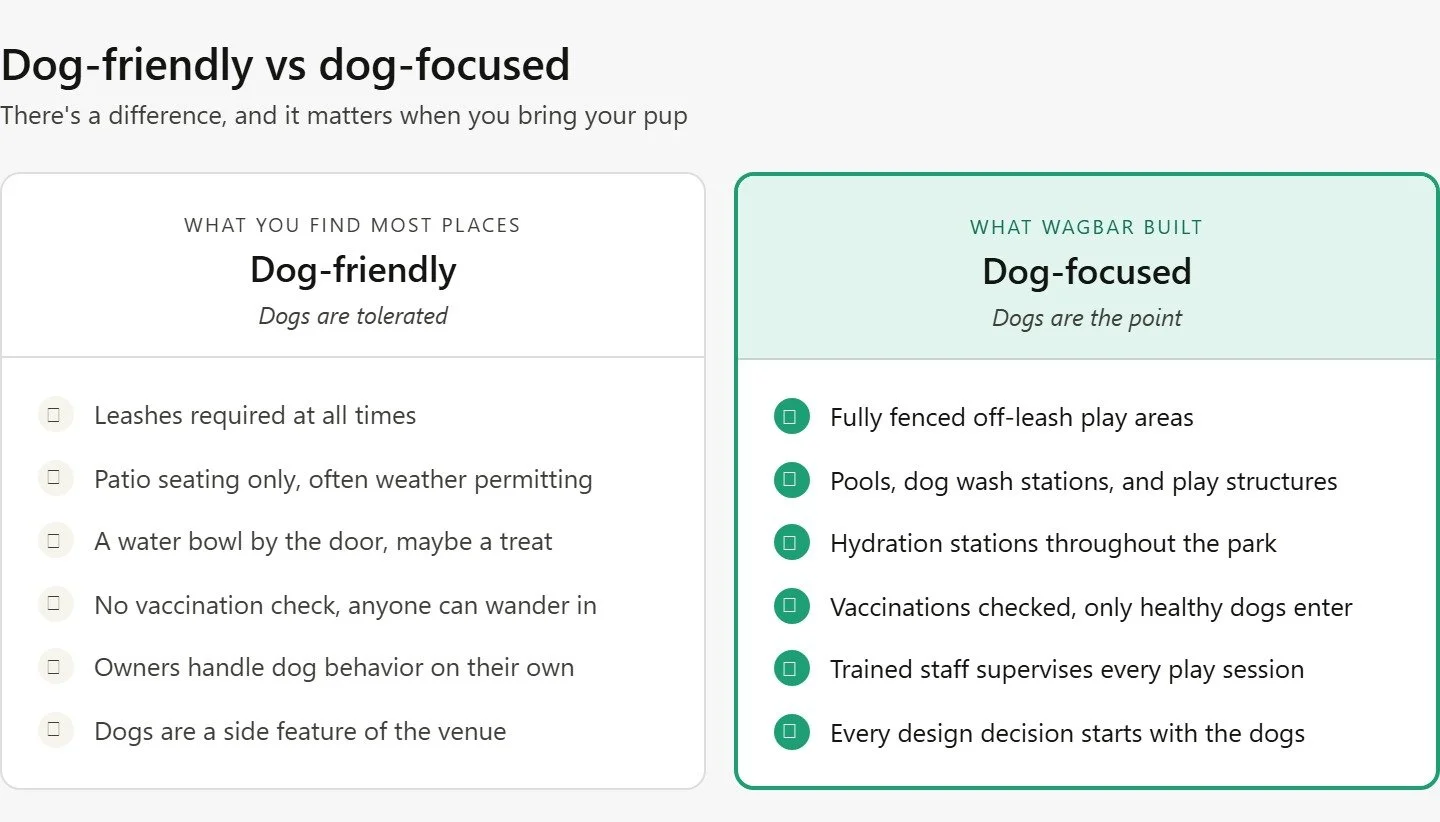
The honest answer is that the Wagbar model solved a problem I'd observed without knowing I was observing it. I was a dog owner. I'd watched the gap between what dog owners actually wanted — a place to let their dog run free while they had a real conversation with real people over a real drink — and what existed. Public dog parks are great for dogs and awkward for humans. Traditional bars tolerate dogs at best. Neither option felt like it was built for the way people actually live with their dogs now.

When I came across the off-leash dog bar concept, it clicked immediately. The business model made sense: recurring membership revenue layered with bar sales, a category with almost no direct competition in most markets, and a customer base — millennial and Gen Z dog owners — who spend more on their pets than any previous generation.
The passion was real. But I want to be clear: passion for dogs is not sufficient. You need a business case, and this one had one.
What I Did Before I Quit (That You Should Do Too)
I didn't leave my job on a feeling. I spent several months doing the homework while still employed, and that runway made everything that came after significantly less stressful.
I read the franchise disclosure document more than once. I mapped out the full investment picture including build-out, working capital, and the runway I'd need before reaching break-even. I evaluated how to finance the investment without overleveraging. I hired a franchise attorney and had her walk me through every section of the agreement I didn't understand, which was more sections than I'd like to admit.
Most importantly, I called existing Wagbar franchisees. Not once. Multiple times. I asked uncomfortable questions — about the hardest months, about what they got wrong, about whether they'd do it again. Every single one said yes, they'd do it again. Not one of them said it had been easy.
If you're evaluating whether a pet franchise is right for your career change, do this part thoroughly. The information is available. You just have to be willing to ask the questions and sit with the honest answers.
The Skills Transfer Better Than You Think — and Differently Than You Expect
I came out of finance. Fifteen years of it. When I told people what I was doing, the polite response was encouragement. The honest response, from a few people I respect, was skepticism. What does running a spreadsheet have to do with running a dog park?
More than you'd think.
Financial modeling, P&L fluency, understanding unit economics, reading a membership retention report and knowing what it's telling you — all of it translated directly. I was comfortable with the numbers side of the business in a way that I've since learned is genuinely uncommon among first-time operators.
What didn't transfer — or rather, what required a completely different muscle — was leading a team of hourly employees in a high-energy, customer-facing environment. Corporate management and floor management are not the same discipline. The skills that carry over from corporate life are real and useful. But the skills that don't carry over will find you fast if you're not ready to learn them.
I had to get comfortable with a level of operational immediacy that corporate life insulates you from. When something goes wrong on the floor — a dog scuffle, a staff miscommunication, a member upset about a policy — it requires a response in the next thirty seconds, not the next business day. That adjustment was humbling and valuable in equal measure.
The Things Nobody Actually Warned Me About
Here's the list I've assembled. Some of these I learned from other Wagbar franchise owners. Most I learned the hard way.
The emotional weight of being the person the community trusts. When you build a place that people love — and Wagbar members genuinely love their locations — they bring that love to you personally. That's beautiful. It's also weight. When something goes wrong, when a beloved regular dog passes, when a member has a bad experience, it lands differently when they see you as part of their community. You're not just a business owner. You're woven into something real.
The permitting process will take longer than you think. Every market is different, but licensing and regulatory requirements for off-leash dog bars are layered — animal facility permits, food service licensing, liquor licensing, construction permits, ADA compliance. Plan for delays. Budget for delays. Don't schedule your grand opening before your Certificate of Occupancy is in hand.
Hiring is your most important skill and nobody teaches it. I went through more staff iterations in the first six months than I'd anticipated. The staffing and operations management demands of this model are specific: you need people who read dogs, read people, and stay composed when both are unpredictable simultaneously. That's a narrow profile. Finding it, keeping it, and building your team around it is the operational challenge nobody fully prepares you for.
Your identity shifts in ways that take time to process. This one I didn't see coming. After years of a corporate identity — the title, the org chart, the professional ecosystem — stepping out of that structure is quieter than you expect. The mental shift from employee to franchise owner is documented, but experiencing it is different from reading about it. For the first few months, I missed having a boss in a way I found embarrassing to admit. Then I stopped missing it completely.
What the Day Actually Looks Like Now
By mid-morning on a weekday, I've already walked the yard, debriefed with the opening manager, checked overnight membership notifications, and had my first conversation with a regular about their dog's new dietary thing and whether it's affecting their energy level at the park.
By noon, I've reviewed the prior day's bar sales, responded to a prospective member inquiry, and approved the schedule change a staff member requested. I've also intervened — calmly — when a new dog tested the social dynamics of the morning session in a way that needed a reset.
By the time the evening rush hits, the floor is full, the bar is running clean, and I'm doing what I've come to think of as the most important part of my job: being present in a room that people chose to be in. That's not a small thing. Most businesses don't get to say their customers chose them that deliberately.
What running a Wagbar actually looks like day-to-day is detailed elsewhere, but the texture of it is this: full, fast, grounded, and genuinely yours in a way that corporate work rarely is.
The Financial Reality: Honest, Not Scary
I won't pretend the first year was financially comfortable. It wasn't. The break-even timeline for a dog bar franchise is real, and the pre-profitability period requires either a financial cushion or a working spouse or both.
What I can tell you is that the revenue model is fundamentally sound. Memberships create recurring baseline revenue. Bar sales add meaningful margin on top. Events layer on incremental income that also serves the community and drives membership conversions. Once the flywheel is turning — once your membership base is healthy and your churn is low — the business generates consistent, predictable cash in a way that most independent businesses never achieve.
The financial runway you need before buying a pet franchise should be thought of conservatively. Give yourself more runway than the minimum. The business will reward patience far more than urgency.
What I'd Tell Someone Sitting Where I Sat Two Years Ago
Get your numbers right before you leave your job. Not approximately right — actually right. Know your liquid capital requirements, your financing structure, and your personal overhead requirements for at least eighteen months.
Don't romanticize the leap. The leap is not the business. The business is what comes after the leap, and it requires you to be clearheaded, operational, and consistent on the days when it isn't fun.
Talk to people who've done it. Read their stories. Call them. Ask what they'd tell their earlier selves. The Wagbar franchisee network is genuinely forthcoming with this information because everyone who's gone through it understands the value of honest preparation.
And if, after all of that, the answer is still yes — if you keep coming back to it, if the picture of your community walking through that door with their dogs keeps pulling at something real — then the Wagbar franchising page is the right next call to make.
The corporate job will still be there if you need it. The open territory in your market won't be.
Bottom TLDR
Quitting a corporate job to open a dog bar delivers on its promise — but the transition demands honest financial preparation, a willingness to lead from the floor, and comfort with an identity shift that most career changers underestimate. The off-leash dog park bar model is structurally sound, with recurring membership revenue and bar sales creating a durable business once the flywheel is established. Start by calling two or three current Wagbar franchise owners and asking them what they'd do differently — their answers will tell you everything you need to know.
