
Dog Park Bar Revenue: Why Memberships + Alcohol Sales Create a Durable Business

Top TLDR: Dog park bar revenue comes from two complementary sources — recurring membership fees from dog entry and transactional bar sales — creating a financial structure more stable than either a standalone bar or a traditional dog park. Memberships provide a predictable monthly floor of income; alcohol sales scale with foot traffic. Explore how this model works and whether it fits your goals on the Wagbar franchising page.
A bar's revenue lives and dies by how many people walk in on a given night. A public dog park generates no revenue at all. Put them together intentionally, and you get a business with something most hospitality concepts never achieve: a floor of predictable income that starts before you open the doors each month.
That's the fundamental financial logic behind the dog park bar model. Understanding how it works — where the money comes from, why the two streams reinforce each other, and what keeps customers coming back — is the starting point for any serious evaluation of this business.
The Two Core Revenue Streams
Membership Revenue: The Foundation
Wagbar charges for dog entry, not human entry. Humans are always free. Dogs can enter on a day pass or through a membership, which comes in several tiers: daily, monthly, annual, and a 10-visit punch card.
Members pay their fees regardless of whether they visit every week or once a month. Annual members, in particular, represent revenue that hits the books the moment they sign up — before they've used the park once. That front-loaded, recurring income is structurally different from a bar that starts each month at zero and needs foot traffic to generate anything.
The practical effect is that a Wagbar location with a healthy membership base enters every month with a baseline of revenue already secured. The bar income adds on top. That layered structure is more financially stable than a business where every dollar depends on transactional visits.
Memberships also reduce friction for repeat visits. Once a dog is a member, proof of vaccinations isn't required every visit. The family just shows up. Removing that checkpoint makes it easier to come three times a week instead of once — which is good for the dogs, good for the owners' social life, and good for bar revenue.
Alcohol Sales: The Variable Layer That Scales Up
Bar revenue at a dog park operates differently from bar revenue at a traditional drinking venue. The key difference is dwell time.
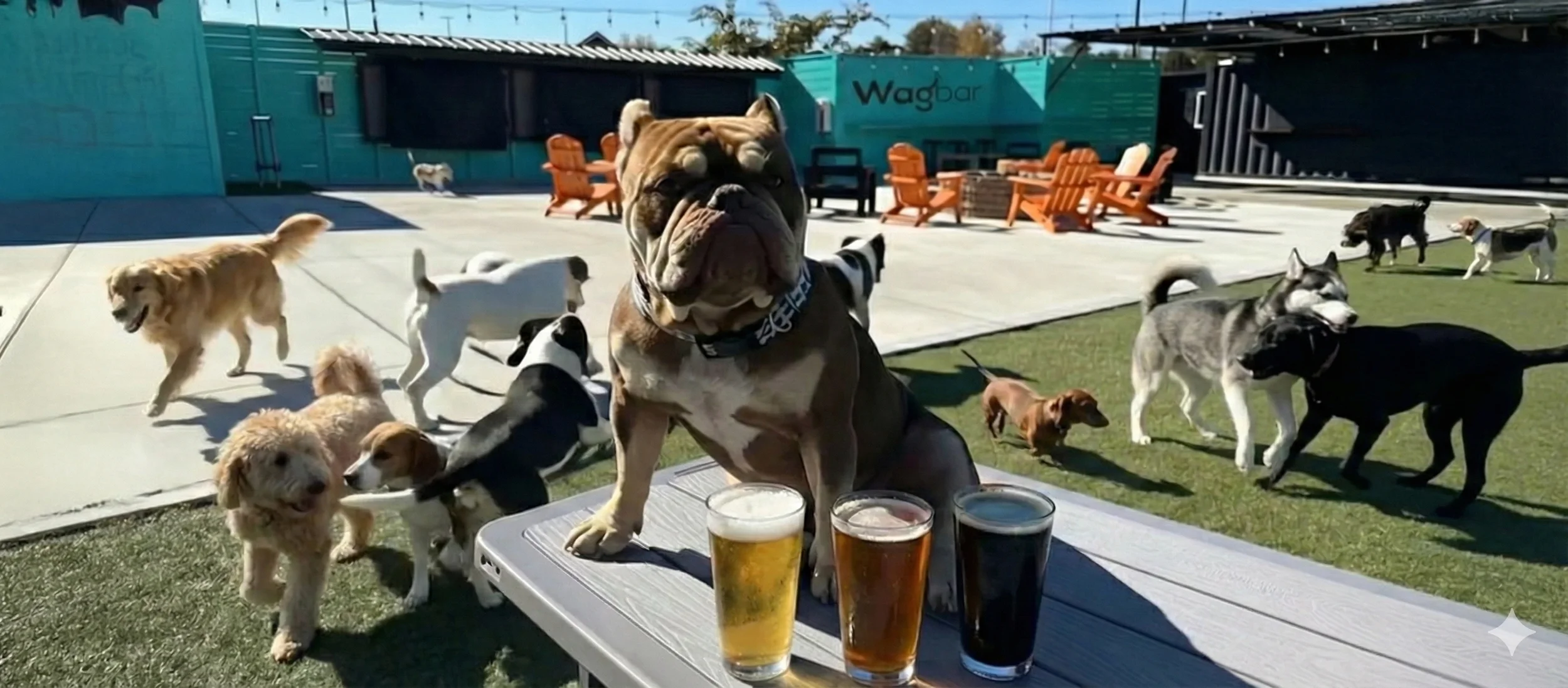
At a standard bar or brewery, people arrive, have a drink or two, and leave when they're done or when the conversation runs dry. At a dog park bar, the dog sets the pace. Nobody leaves while their dog is still having the time of their life chasing a golden retriever across an open field. That natural extension of the visit translates directly into more drinks per customer per visit.
Think of it this way: a customer who stays 90 minutes instead of 45 doesn't just double their time — they're likely to order a second or third drink in that additional window. The off-leash play area doesn't just attract customers; it keeps them there longer than any other bar amenity could.
Wagbar locations typically offer draft beer, craft brews, wine, cider, seltzers, and non-alcoholic options. The beverage menu doesn't need to be elaborate to be effective — it needs to be quality selections that dog owners enjoy while they watch their animals play. Simplicity in the bar program keeps costs manageable while delivering the experience customers come for.
Why the Two Streams Reinforce Each Other
The financial structure only holds up because the membership and bar sides actively support each other. It's not two separate businesses sharing a location — it's one business where each component drives the other.
Members visit more frequently than day pass customers. More frequent visits mean more bar purchases. Higher bar revenue supports better staffing, better facilities, and a better experience in the park — which encourages more people to become members. The cycle, when working well, is self-reinforcing.

Membership also acts as a commitment device. Once a family is paying monthly, they're motivated to get the value out of that membership by visiting regularly. Those regular visitors become the backbone of the community — they know each other, their dogs have friendships, and they become informal ambassadors for the venue to everyone they know with a dog.
You can read more about how this community-building dynamic works as a business asset in the community building guide, but the short version is: the social stickiness that emerges from a well-run dog park bar isn't just warm and fuzzy. It directly protects revenue by making membership cancellation feel like taking your dog away from their friends.
Additional Revenue Layers
Events
Live music nights, breed meetups, trivia events, holiday parties, food truck partnerships, and private event bookings all add revenue on top of the base membership and bar income. These events serve multiple purposes simultaneously: they generate direct revenue, give members a reason to show up on a Tuesday night instead of staying home, and produce social media content that drives new customer awareness organically.
Private events are especially valuable because they often fill slower periods — Tuesday evenings, weekday mornings — and bring in groups who then become regular visitors. A birthday party at a dog bar is a remarkably effective new customer acquisition tool.
Food Trucks and Food Service
Most Wagbar locations feature a rotating selection of food trucks rather than operating a kitchen in-house. This approach reduces operational complexity and food cost risk while still giving customers a reason to stay longer. A hungry customer who can order from a food truck at your venue is a customer who stays another 30-40 minutes — and likely orders another drink.
The rotating nature of food truck partnerships also creates ongoing novelty that encourages regular customers to keep coming back to see what's new.
Why This Model Holds Up During Economic Slowdowns
The pet industry has a well-documented record of weathering economic downturns. According to the American Pet Products Association, U.S. pet spending has grown every year for more than two decades — through the 2008 financial crisis, the 2020 pandemic, and the inflationary period that followed. Americans reduce spending on themselves before they reduce spending on their pets.
The dog park bar specifically benefits from what's sometimes called the "affordable luxury" dynamic. When household budgets tighten, people scale back expensive experiences but don't eliminate discretionary spending entirely. A dog park bar afternoon — watching your dog play while you have a drink with other regulars — costs a fraction of a restaurant dinner or a weekend trip but delivers a comparable emotional payoff.
Membership revenue adds another layer of recession resistance. A family with an annual membership has already paid. During a rough month, they're not going to cancel — they're going to use the membership they paid for. That sunk-cost psychology works in the business owner's favor during slow economic periods.
The broader pet industry market analysis on Wagbar's site covers the macroeconomic dynamics behind pet spending growth in more detail. The numbers support the thesis that pet-related businesses — particularly experience-oriented ones — sit in a more resilient category than most consumer discretionary spending.
What the Revenue Structure Means for Franchisees
Understanding the dog park bar revenue model changes how you think about the business from the franchisee perspective in a few specific ways.
Membership Growth Is the Primary Early Goal
In the first months of operation, building a membership base should be the top priority. Every new annual or monthly member represents recurring revenue that makes the business more predictable and financially stable. Day pass revenue is great, but it doesn't build the foundation the way memberships do.
This means early marketing and community-building efforts should be focused explicitly on converting first-time visitors into members. The off-leash dog bar investment guide touches on what to look for in a franchise system's support for this kind of membership-building effort.
Bar Revenue Is the Performance Indicator
Once memberships are established and predictable, bar revenue becomes the variable that tells you most about how the business is performing week to week. Is dwell time increasing? Are customers ordering multiple drinks per visit? Are events driving incremental bar spending on top of regular visitation?
Tracking bar revenue per visit, revenue per hour of operation, and performance on event days vs. regular days gives franchisees the clearest signal of where the operation has room to grow.
The Model Rewards Community Investment
A dog park bar isn't a passive business. The revenue structure rewards operators who actively build community — hosting events, recognizing regular members, creating breed meetups and seasonal celebrations that give people reasons to keep coming back. Those operators see higher membership retention and higher per-visit bar spend because the community around the venue has become something people genuinely want to be part of.
Franchisees who treat the location as a transactional service — come in, dog plays, go home — leave significant revenue on the table. The financial upside of the model is most accessible to operators who lean into the community and social aspects of what makes a dog park bar different from any other venue.
The revenue streams guide on Wagbar's site goes deeper on how to maximize each income component at the location level.
The Investment Context
Wagbar's initial franchise fee is $50,000, with total estimated initial investment ranging from $470,300 to $1,145,900. Ongoing royalties are 6% of adjusted gross sales, plus 1% to the Wagbar marketing fund. A multi-unit discount of 50% on the franchise fee applies for franchisees committing to three or more locations.
Those numbers represent the cost of access to a proven system — the operational playbook, the training infrastructure, the brand, and the institutional knowledge that goes into making the dual revenue model work. Building this concept from scratch, without prior locations and established systems, would cost more and take longer with a substantially higher risk of missing the structural elements that make the revenue model function.
Frequently Asked Questions
What percentage of revenue typically comes from memberships vs. bar sales?

That balance varies by location size, market, and how aggressively a franchisee has built their membership base. In general, a mature location with a strong membership program derives a meaningful share of income from recurring fees, which provides financial stability, while bar revenue scales with traffic and events. Wagbar provides financial details to qualified prospective franchisees — contact the team through the franchising page for specifics.
Does the membership model require dogs to be vaccinated?
Yes. Dogs must show proof of current rabies, Bordetella, and distemper vaccinations on their first visit. Members bypass the vaccine check on subsequent visits after initial verification. This vaccination requirement is what allows the off-leash environment to function safely — it's not a barrier to membership, it's the foundation of a trustworthy experience.
How do events affect revenue?
Events typically increase both day pass volume and per-visit bar spending compared to regular operating days. Breed meetups, live music nights, and holiday events bring in new visitors alongside regulars, extend average visit length, and generate social media content that drives ongoing awareness. Private events fill slower time windows and frequently convert attendees into regular customers.
Is bar revenue affected by the dog park side of the operation?
Yes, positively. The dog park drives dwell time, which directly increases per-customer beverage sales. A venue where customers naturally stay 90-120 minutes because their dog is playing will always outperform a venue where customers have no reason to stay after finishing their first drink.
What happens to membership revenue during slow seasons?
Annual and monthly members continue paying regardless of seasonal traffic patterns. This is one of the structural advantages of the membership model — it smooths out the revenue volatility that affects purely transactional hospitality businesses. Seasonal dips in walk-in traffic have less impact on a location with a strong base of recurring members.
The dog park bar revenue model works because it was built around a genuine insight: when dogs are having a great time, their owners stay longer, come back more often, and pay for both the experience and the drinks. Memberships create the financial floor. Alcohol sales create the ceiling. The community that forms between them is what makes the whole structure durable.
If the revenue model makes sense to you and you want to understand what it looks like in practice for a franchisee, the Wagbar franchising page is the place to start.
Bottom TLDR: Dog park bar revenue is built on two complementary streams: recurring membership fees for dog entry that create a predictable monthly floor, and alcohol sales that scale naturally with foot traffic and dwell time created by off-leash play. The combination makes the business more financially stable than either a standalone bar or a traditional dog park, and holds up well during economic slowdowns. Review the full model at the Wagbar franchising page.