
What Is a Dog Bar? How the Concept Differs from a Dog Park, Brewery, and Pet Cafe

Top TLDR: A dog bar is a licensed social venue that combines a supervised off-leash dog play area with a full bar for people, making it distinct from a public dog park, a dog-friendly brewery, or a pet cafe. Unlike those alternatives, a dog bar like Wagbar features trained staff monitoring play, vaccination requirements, membership options, and a built-in reason for owners to stay for hours. If you're looking for this kind of experience, check Wagbar's locations to find one near you.
You've probably seen the term "dog bar" pop up in your city's social media feeds or heard friends mention it. But the name alone doesn't fully explain what makes one different from a dog-friendly brewery, a pet cafe, or just a regular dog park with a cooler nearby.
The differences are real, and they matter — especially if you're trying to decide where to take your dog, or if you're curious about the business concept itself.
The Short Answer: What a Dog Bar Is
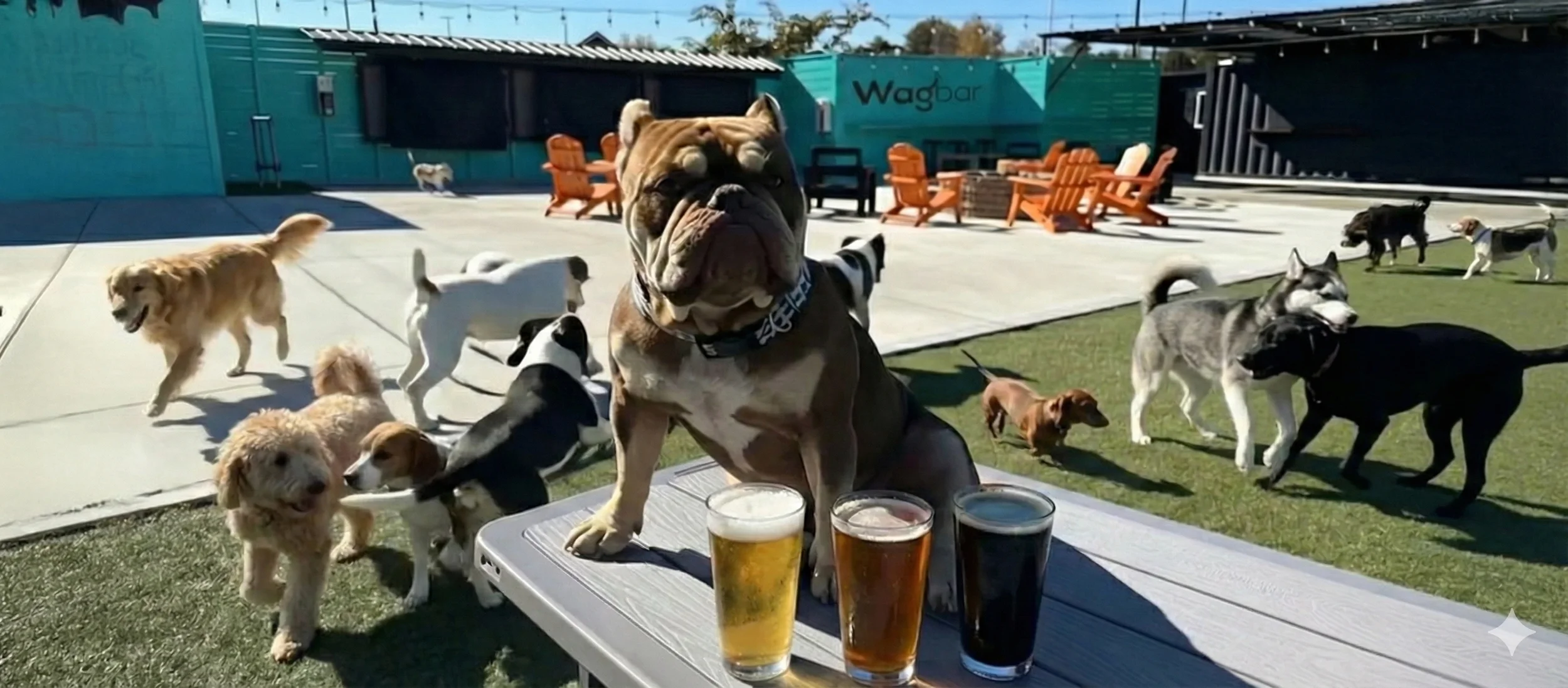
A dog bar is a dedicated venue that combines a licensed bar operation with a supervised off-leash dog park. Both elements are intentional and central to the concept — not an afterthought on either side.
At Wagbar, the model works like this: dogs play freely in a secured off-leash area while their owners watch from nearby seating and order from a full bar menu including craft beer, wine, seltzers, and non-alcoholic options. Staff trained in dog behavior monitor the park at all times. Entry for humans is free. Dogs pay a day pass fee or can be covered by a membership. Everyone has to be 18 or older, and all dogs must show current vaccination records.

That combination of features — supervised play, bar service, vaccination screening, professional staff, and structured membership options — is what separates a true dog bar from looser alternatives.
How It Compares to a Public Dog Park
Public dog parks are free, open to anyone, and typically unmonitored. That's their appeal and their limitation.
When you visit a public dog park, nobody checks whether your dog is vaccinated. Nobody intervenes when play escalates into something more tense. There's no staff, no trained eyes watching the group, and no accountability structure for the humans in the space. If something goes wrong, you're on your own to manage it.
A dog bar operates differently by design. At Wagbar, trained staff are present and watching the play area at all times. Dogs must be up to date on rabies, Bordetella, and distemper vaccines before they can enter. Dogs need to be at least six months old and spayed or neutered. There's a code of conduct, and staff will ask a dog or owner to leave if the situation requires it.
That structure creates a meaningfully different experience. The dog park safety guide goes deeper on what separates a well-run off-leash environment from an unmanaged one, but the short version is: supervised play with screened dogs produces more consistent, positive outcomes than open-access parks.
The other obvious difference is that a public dog park doesn't serve drinks. There's nowhere comfortable to sit while your dog runs, no bar to order from, no food trucks pulling up on weekends. The social experience for the human side is minimal.
How It Compares to a Dog-Friendly Brewery
A dog-friendly brewery allows leashed dogs in the taproom or on the patio. That's a meaningful amenity, and a lot of people love it. But it's not the same thing as a dog bar.
The key difference is the leash. At a dog-friendly brewery, your dog sits at your feet or stays near your table. They're not running. They're not playing with other dogs. They're present, but they're not having an independent experience of their own.
That changes the dynamic considerably. A brewery patio with leashed dogs is a bar where dogs are tolerated. A dog bar is a venue built around what dogs actually want to do — run, wrestle, chase, sniff, and socialize with other dogs at full speed.
It also changes the staffing and operational model. A brewery with a dog-friendly patio doesn't need anyone monitoring canine behavior. A dog bar does, and that professional oversight is part of what makes the experience worth the entry fee.
Brewery-with-dogs visits also tend to be shorter, and the focus stays on the taproom experience. At a dog bar, dwell time is naturally longer because your dog is actively engaged. According to Wagbar's customer reviews, people regularly describe staying for hours without realizing it — because the dog is having too much fun to leave.
How It Compares to a Pet Cafe
Pet cafes, popular in Asian markets and spreading in the U.S., are spaces where customers pay to spend time with animals — often cats, but sometimes dogs, rabbits, or other species — in a cafe setting. The animals typically belong to the venue.
That's a fundamentally different business model. At a dog bar, you bring your own dog. The point is the relationship between you and your animal, plus the social connection with other dog owners. You're not renting time with someone else's dog — you're sharing a space where your dog can be themselves.
Pet cafes also tend to be calm, controlled environments. The animals are selected for temperament, interactions are managed, and the atmosphere skews quiet. A dog bar has a completely different energy — active play, noise, movement, and the kind of chaotic joy that happens when a dozen dogs decide to race across an open field at the same time.
The food and beverage component also differs. Pet cafes typically operate around coffee and light snacks. A dog bar runs a proper bar program with draft beer, craft cocktails, wine, cider, and non-alcoholic options that can carry an evening.
What Makes the Dog Bar Concept Distinct
Pulling the comparisons together, a few things define what a dog bar actually is:
Supervised off-leash play. This is the core. Dogs run free, and trained staff actively watch the space. That's different from a leashed patio at a brewery and different from the unmonitored environment of a public park.
Vaccination and screening requirements. Every dog that enters a Wagbar location has been vetted for basic health and behavioral history. That level of screening doesn't exist at public dog parks and isn't required at dog-friendly bars or cafes.
A real bar program. Not just a cooler with canned beer — a full beverage menu with rotating taps, wine, seltzers, and non-alcoholic options. The bar is designed to give owners a genuine reason to stay and enjoy themselves while their dogs play.
Membership infrastructure. Day passes, monthly memberships, annual memberships, and punch cards create a recurring relationship with customers that a public park or casual brewery visit can't replicate. Frequent visitors become members. Members become regulars. Regulars become community.
Events built around both dogs and people. Breed meetups, trivia nights, food truck rotations, live music, holiday events — the programming is designed to give people reasons to show up beyond just the baseline experience. You can learn more about what to expect at a Wagbar visit.
Why the Hybrid Model Exists
The dog bar concept didn't emerge from a product brainstorm. Wagbar founder Kendal Kulp had a bad experience at a traditional dog park in 2015 and started thinking about what a better version would look like. The bar component wasn't just about selling drinks — it was about giving owners a reason to stay longer and creating the kind of relaxed social atmosphere where a dog park becomes a community gathering place rather than a quick errand.
That origin matters because it explains why the concept works the way it does. The bar and the dog park aren't two separate businesses sharing a parking lot. They're designed to reinforce each other. Dogs play longer when their owners are comfortable. Owners stay longer when their dogs are having a good time. The combination creates a venue with natural dwell time that neither concept could achieve on its own.
For a deeper look at how the model works as a business, the dog bar franchise business model guide covers the revenue structure and operational dynamics in detail.
Who the Dog Bar Is For
The obvious answer is dog owners. But Wagbar locations don't require you to bring a dog. Humans 18 and older are welcome to visit, order from the bar, watch the dogs play, and enjoy the atmosphere without a four-legged companion in tow. It's a genuinely enjoyable place to spend an afternoon even if you don't own a dog.
The dog-owning customer, though, is the core audience. Specifically, the dog bar tends to resonate with owners who feel limited by their current options. Public dog parks can be stressful or unpredictable. Dog-friendly breweries are fun but passive. Doggy daycare exists for weekday logistics, not weekend fun. The dog bar fills a gap in the market for dog owners who want a real social experience for themselves and a genuinely active one for their dogs.
The urban dog ownership guide covers why this matters particularly for city dwellers, who often have smaller living spaces and fewer outdoor options for their dogs.
What to Expect on Your First Visit
If you're considering visiting Wagbar for the first time, here's what the process looks like.
You'll need to show proof of your dog's current vaccinations — rabies, Bordetella, and distemper — on your first visit. After that, members don't need to show records each time. You'll pay a day pass fee for your dog; human entry is free.
Once inside, the dog heads into the off-leash play area. You find a spot at the bar or on the covered patio seating, order a drink, and watch. Staff are visible and active in the park, not standing against the wall. Food trucks typically rotate through on a schedule posted to each location's social media pages.
The experience tends to feel more casual and community-driven than people expect on the first visit. Regular members know each other. Dogs have friendships. The atmosphere is genuinely social in a way that's hard to replicate at a brewery patio or a public park.
Frequently Asked Questions
Is a dog bar the same as a dog-friendly bar?
No. A dog-friendly bar allows leashed dogs on a patio or in certain areas. A dog bar is a venue purpose-built around off-leash dog play combined with bar service, professional supervision, vaccination requirements, and membership programs. They're meaningfully different experiences.
Do I have to bring a dog to visit a dog bar?
Not at Wagbar. Human guests 18 and older are welcome whether or not they bring a dog. The bar, seating, and event programming are available to everyone.
What vaccinations does my dog need?
At Wagbar, dogs must be current on rabies, Bordetella, and distemper vaccinations. Dogs must also be at least six months old and spayed or neutered. Day pass visitors show proof on each visit; members verify once and skip that step on future visits.
How is the staff trained?
Wagbar staff are trained in dog behavior to recognize signs of escalating tension in the play area and intervene before situations become problems. This is different from typical hospitality staff and is one of the core operational differences between a dog bar and a dog-friendly venue.
Is a dog bar the same as a dog park with a beer garden?
Conceptually similar, but in practice a true dog bar is more intentional on both sides. The bar is a real beverage program, not a cooler. The supervision is professional, not informal. The membership model creates an ongoing relationship with customers rather than transactional one-off visits. Events and programming add layers of community that a basic beer garden setup doesn't have.
The dog bar concept is simple to understand once you see it in action, but it's genuinely distinct from the alternatives that might seem similar on the surface. Supervised play, vaccination screening, a real bar program, and community-building infrastructure make it something those other formats don't offer.
If you want to see what it looks like in practice, find your closest Wagbar location and come by with your dog — or without one.
Bottom TLDR: A dog bar combines a supervised, vaccinated off-leash play area with a full bar operation, making it fundamentally different from a public dog park (no supervision or screening), a dog-friendly brewery (leashed dogs only, no play), or a pet cafe (venue-owned animals, no off-leash component). At Wagbar, trained staff monitor the play area, membership options replace repeated vaccine checks, and the bar program gives owners a real reason to stay. Visit Wagbar's locations page to find the nearest dog bar.