
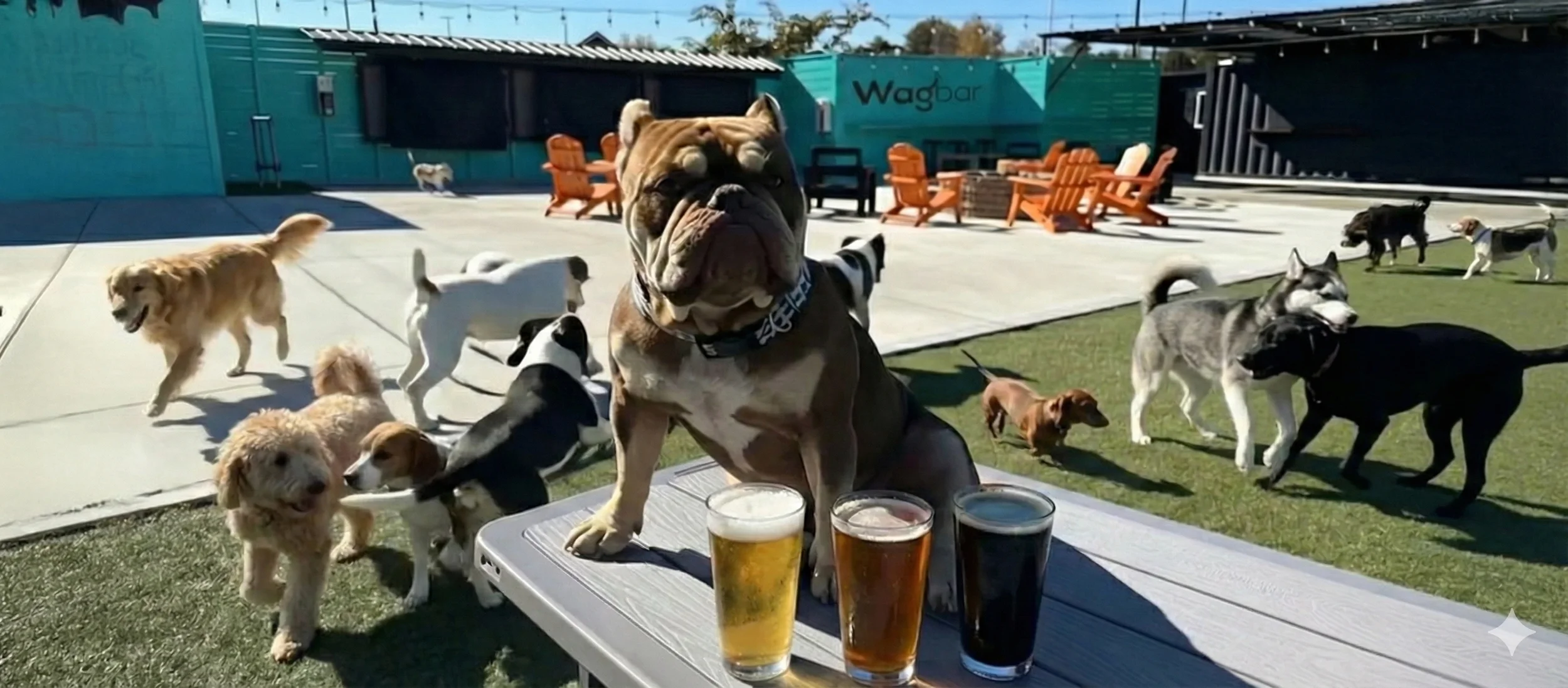
Leaving the Corporate World for a Dog Franchise: What Wagbar Franchisees Actually Did
Top TLDR: Leaving the corporate world for a dog franchise is a decision made by people from finance, sales, tech, and hospitality — not because they had pet industry experience, but because their corporate skills transferred directly to running a real business. Wagbar's training system covers what they didn't know. If you're evaluating whether your background qualifies, start at the Wagbar franchising page.
At some point in almost every corporate career, a version of the same thought surfaces: I want to build something I actually care about.
Not another quarterly review. Not another performance cycle. Something with a tangible outcome at the end of a week — happy customers, a place people want to be, a community that didn't exist before you built it.
For a growing number of people, that thought leads somewhere unexpected: a dog franchise.
Not because they worked in the pet industry. Not because they knew anything about running a bar or managing an off-leash play space. But because when they started looking seriously at what franchise ownership actually required — the skill set, the investment structure, the day-to-day work — their corporate background turned out to be exactly the right preparation.
This isn't a motivational article about following your passion. It's a practical account of what backgrounds actually lead people to Wagbar, what skills from corporate careers transfer directly to running a dog franchise, what the decision-making process looks like when someone in the middle of a successful career is seriously evaluating this kind of move, and what the first year of operating a Wagbar location actually looks like.
Who Actually Makes This Move: The Real Backgrounds
The Wagbar franchisee network doesn't fit a single profile. What it does have is a set of recurring patterns across the backgrounds of people who've made the transition.
Financial services professionals show up more than almost any other group. AJ Sanborn spent 20 years in financial services before he started looking for his next chapter. He considered opening a traditional bar — and then found Wagbar, where the combination of a supervised dog park and a real beverage program felt like the right fit for both his skills and his values. He's bringing that franchise to the Richmond, Virginia area.
The financial services path to franchise ownership makes a certain kind of sense. Two decades of analyzing risk, managing client relationships, and thinking about long-term financial structures produces exactly the kind of person who knows how to evaluate a franchise investment seriously. They read the disclosure documents carefully. They model out the scenarios. They ask the hard questions. And when they decide to move forward, they do it with conviction based on actual analysis.
Sales and tech professionals form another consistent group. Dianna in Phoenix came out of a career in IT sales with a background in the restaurant industry. That combination — customer relationship management on the sales side, operational exposure on the restaurant side — built a profile that covered both the membership-building work and the hospitality execution that a dog bar requires.
Sales backgrounds translate surprisingly well to franchise ownership in a specific way: the skills that make someone effective in sales are almost identical to the skills that build a membership base. Identifying who your ideal customer is, articulating why your offering solves their problem, following up on leads, and converting hesitant prospects — that's sales, and it's also what you do for the first six months of building a Wagbar membership community.
Hospitality veterans making a lateral move into a different kind of venue represent another recognizable path. A bar manager or restaurant general manager who wants to own their own operation rather than build someone else's carries skills that apply directly to the beverage side of a dog bar. Inventory management, vendor relationships, staffing and scheduling, responsible service standards — none of it requires translation. The new layer is the park side, which Wagbar's training system addresses directly.
Corporate generalists — people who spent careers in management consulting, healthcare administration, operations management, or similar fields — bring what might be the most universally applicable background: the ability to learn a new domain quickly, manage across multiple functions, and build systems that work without them having to touch everything. That meta-skill is exactly what running a dual-discipline operation like a dog bar franchise requires.
What all of these backgrounds share is less about specific industry knowledge and more about a set of capabilities: managing people, analyzing financial performance, building customer relationships, and making decisions under conditions of uncertainty. Those are corporate skills. They transfer.
Why Corporate Skills Apply More Directly Than You'd Expect
Most people evaluating a career change into franchise ownership underestimate how much of what they already know applies. The mental model they're operating from — "I've never run a dog park, so I'd be starting from zero" — isn't accurate.
Financial literacy is the most direct transfer
A corporate professional who has managed budgets, analyzed business cases, or read financial statements doesn't need to learn how to think about business finances. They already know how. What they're adding is the specific context of a dog bar P&L — labor as a percentage of revenue, beverage cost margins, how membership revenue hits the books differently from transactional sales.
That context gets covered in training. The underlying financial literacy has to already be there, and corporate careers build it reliably.
The dog park bar revenue structure — memberships plus bar sales — is actually easier to model than most business P&Ls corporate professionals have worked with. There are two main revenue streams, both of which are conceptually straightforward, and one of them (membership fees) is recurring and predictable in a way that most consumer business revenue isn't.
People management is identical in kind, different in scale
Managing a shift at a dog bar involves fewer people than most corporate team structures. But the fundamental challenge is the same: getting people with different roles and different skill sets to work toward a common goal, handle pressure without falling apart, and treat customers well on a busy Saturday afternoon.
Corporate professionals who have managed teams — even indirect teams, even project teams, even cross-functional groups with no direct reporting lines — have been developing the interpersonal and situational judgment that shift management requires. The scale is different. The skills are the same.
Relationship-building is the engine of membership retention
Memberships are the financial foundation of a Wagbar location. Members pay recurring fees, visit more frequently than day pass customers, and become the social core of the venue's community. Building and retaining that membership base requires exactly what corporate relationship-building develops: genuine engagement with customers as individuals, follow-through on commitments, and the kind of consistent presence that earns trust over time.
Account management professionals, client-facing consultants, customer success managers — these roles build relationship skills that transfer directly into membership cultivation and community-building at a dog bar. The community building approach that makes dog bars financially durable is a relationship business at its core.
Operational thinking scales down well
People who've worked in operations — managing workflows, identifying bottlenecks, building systems for repeatable processes — find that running a dog bar is operationally simpler than most of what they've managed. The venue has two main components: the park and the bar. The daily operational tasks are finite and learnable. The challenge is execution under the real-world pressure of a busy environment, not conceptual complexity.
Corporate operators who've managed more complex workflows frequently report that the operational side of franchise ownership is less overwhelming than they expected — not because it's easy, but because their experience with more complex environments gave them a baseline that made the learning curve manageable.
The Decision-Making Process: What It Actually Looks Like
Making a career change from a corporate position to franchise ownership doesn't usually happen quickly. The people who do it well take their time, and the process they go through tends to follow a recognizable pattern.
The question that starts everything
Most people who end up at Wagbar didn't start by searching for dog bar franchises. They started with a broader question: What would it look like to own my own business? That question led them into a general exploration of franchise opportunities, which eventually led to the category of pet-related franchises, which led to the dog bar concept.
The search for a franchise that combines genuine passion with real business fundamentals is why the dog bar category attracts corporate professionals disproportionately. It's not a simple service franchise. It's a dual-discipline operation that requires serious operational attention and produces a community around it. That complexity is a feature, not a bug, for people coming out of substantive corporate careers.
Evaluating the investment seriously
Corporate-background franchise buyers tend to spend more time in due diligence than the average prospect. They model the investment, study the franchise disclosure document carefully, research the market in their target city, and think rigorously about their own financial position and risk tolerance.

Wagbar's investment range — a $50,000 franchise fee with total estimated initial investment between $470,300 and $1,145,900 — represents meaningful capital. Evaluating whether that investment makes sense requires exactly the financial analysis skills that corporate careers develop. People who've done business case analysis professionally tend to be better equipped to assess this than people without that background.
The analysis they're doing isn't just about the numbers in isolation. It's about comparing the risk profile of franchise ownership against the opportunity cost of staying in their current path, the personal value of ownership versus employment, and the specific market dynamics of the city they're considering. That's a complex multi-variable decision — one corporate professionals are trained to make.
What they're actually giving up vs. what they're getting
The honest accounting of a corporate-to-franchise transition involves both sides of the ledger.
On the giving-up side: salary predictability, benefits structure, vacation policies, career advancement within an organization, the political safety of having a boss whose decisions you can blame when things go wrong. These are real things, and people who minimize them without thinking them through tend to struggle with the psychological adjustment.
On the getting side: direct ownership of the outcome, the ability to build something that reflects their values, a customer relationship that is immediate and tangible rather than mediated through layers of organizational structure, and the financial upside that comes from a business that performs well under their management rather than capping out at a salary band.
The people who make this transition successfully have typically done the honest accounting, decided the getting side wins, and made peace with what they're giving up before they sign anything.
Timing: when mid-career buyers move
The mid-career sweet spot for this decision tends to fall between 35 and 55. Earlier than that, the capital requirements are harder to meet and the risk tolerance needs to cover a longer time horizon. Later than that, the physical demands of running a busy venue start to weigh more heavily in the calculation.
People in their 40s and early 50s with 15-25 years of corporate experience tend to hit the convergence point where they have the capital to invest, the management experience to run the operation, and the time horizon to build something with real staying power. That demographic is well-represented in Wagbar's franchisee network.
What the Training System Is Actually Designed For
Wagbar's training is built with one assumption about the person coming through it: they are likely competent at the business side of the operation and probably not experienced with either supervising off-leash dog play or running a beverage program. The training is structured to fill both gaps.
The Opener App: Front-Loading the Hard Work
Before a franchisee ever arrives in Asheville, they work through the Opener app — a guided digital system that walks through the entire pre-opening process. Site selection criteria, build-out planning, permit and licensing timelines, staff hiring frameworks, equipment procurement — all of it has structured guidance built in.
For corporate-background franchisees, the Opener app functions as the kind of project management framework they're already comfortable using. It converts an open-ended "figure out how to open a dog bar" problem into a structured checklist of specific decisions and actions. That structure is familiar territory.
What it prevents is the most common early mistake: attempting to solve all the problems at once. The app creates a sequenced path from signed agreement to opening day, which reduces decision fatigue and keeps the pre-opening period on track.
The Training Week: Learning What You Can't Read About
One week, in person, at a functioning Wagbar location in Asheville, North Carolina. This is the part of the training that no amount of prior corporate experience substitutes for.
The training week covers dog behavior management — how to read a group of dogs in active play, what early tension signals look like, how and when to intervene, what the code of conduct enforcement process is. It covers bar operations — setup, service standards, inventory management, responsible alcohol service, POS system use. It covers staff training protocols — how to onboard and develop park monitors and bar staff in a location that didn't exist a month ago.
Most importantly, it covers the experience of running both sides simultaneously under real-world conditions. The intellectual understanding that a dog bar is a dual-discipline operation is different from the felt experience of managing the gate, monitoring the park, handling bar service, and responding to customer questions all at the same time. The training week provides that felt experience before the franchisee's own location opens.
Corporate-background franchisees consistently report that the training week's most valuable function isn't teaching them specific procedures — it's calibrating their expectations about what busy actually looks like. People who've worked in corporate environments often haven't worked with their hands in a physical customer-facing operation recently. The training week closes that gap.
The bar operations guide for dog bar franchisees goes deeper on the dual-discipline management challenge if you want to understand the operational structure before your training week.
Grand Opening Support and the First Quarter
A Wagbar team member is present at the grand opening of every new franchise location. This isn't incidental — it's a structural acknowledgment that the most complex operational moment for any new location is the first time it runs at full capacity with customers who have expectations, a staff team that hasn't drilled their workflows under real pressure, and an owner who is managing everything simultaneously for the first time.
The grand opening support means the franchisee isn't navigating that moment alone. When something unexpected happens — and something always does on opening day — there's an experienced person there who has seen it before.
Beyond the opening, ongoing support includes access to Wagbar's operational resources, marketing infrastructure, the broader franchisee network, and quarterly business reviews. For corporate professionals accustomed to operating within an organizational structure that provides ongoing feedback and course correction, the quarterly reviews fill a function they value: a structured mechanism for catching problems before they become embedded and identifying opportunities they might not see from inside the day-to-day.
What the First Year Actually Looks Like
The mental model most people bring into franchise ownership — that the first year will be a period of getting settled, building toward some future steady state — tends to get revised quickly. The first year is a full-intensity period that requires everything the training covered and then some.
Months 1-3: Building the Membership Foundation
The first three months are primarily about membership development. Day pass traffic will come from organic discovery — people who walk by, see what the venue is, and want to try it. Members require active cultivation.
This means being present and engaged with every early visitor, not just managing operations from a distance. It means following up with day pass customers who seemed engaged. It means hosting events that give dog owners in the community a reason to show up and meet other dog owners. It means building the social fabric that makes membership feel like belonging to something, not just paying for access.
Corporate-background franchisees who understand customer relationship management at a conceptual level sometimes underestimate how personal and hands-on this work needs to be in the first months. The membership base is built by the owner's presence and engagement, not by a marketing system running in the background.
Months 3-6: Staffing Stabilizes
The early staffing period is typically the most operationally challenging. New employees are learning their roles, workflows are getting refined through actual use, and the owner is discovering which staff members are going to be reliable over time and which aren't.
Corporate professionals often have experience managing through ambiguity and building team culture in new groups — which helps. What's different from corporate hiring is that turnover rates in hourly hospitality positions are structurally higher than in professional roles. Building a reliable core staff requires a different approach than building a stable professional team, and franchisees who adjust their expectations and hiring practices early tend to find steadier footing faster.
The staffing and operations framework covers the specifics of building and managing a dog bar staff team, including the park monitor hiring profile that's different from any standard hospitality role.
Months 6-12: Operations Normalize, Focus Shifts to Growth
By the six-month mark, franchisees who've executed well have a stable membership base, a functional staff team, and an operational rhythm that doesn't require constant intervention. The focus shifts from building to growing — identifying underperforming periods, developing programming that drives traffic on slower days, exploring whether the location is ready for expanded hours or additional event formats.
This is the point at which the financial analysis skills corporate professionals bring become most directly valuable again. Reading the P&L clearly, identifying where margins are thin, making investment decisions about events or staffing based on actual performance data — these are familiar activities. The context is different. The thinking is the same.
What Nobody Tells You Before You Make This Move
A few things consistently surprise corporate-background franchisees in ways that are worth surfacing directly.
The pace is different. Corporate careers, even demanding ones, have a rhythm of meetings, planning cycles, and deliberate decision windows. Running a customer-facing business is more immediate. Problems don't wait for the next planning meeting. Decisions happen in real time. People from corporate environments who are used to having space for considered responses sometimes find the immediacy jarring at first.
The visibility is different. In a corporate role, your work affects outcomes through layers of organizational process. As a franchise owner, you walk into your business and immediately see whether things are going well or poorly. The direct feedback loop is energizing for most people who make this transition — but it's different from what corporate careers trained them to expect.
The community is real. This sounds obvious, but it surprises people. Corporate networking has a transactional quality that's hard to avoid. The community that forms around a well-run dog bar isn't transactional. Regular members know each other. Their dogs are friends. They celebrate each other's milestones and show up when someone needs support. For people who spent careers in environments where relationships were instrumentalized, this is genuinely different — and for most Wagbar franchisees, it's the part they value most.
The dogs are the best part. This also sounds obvious, but the emotional reality of spending your workdays around happy dogs in a space you built is different from knowing it abstractly. People who leave corporate careers carrying the weight of years of work that felt disconnected from anything they actually cared about often report that this particular surprise is the most significant one.
Is a Dog Franchise the Right Move for Your Background?
The honest answer is: it depends on whether your specific background built the right foundations and whether your honest self-assessment matches the reality of what running one of these locations requires.
The skills that transfer: financial literacy, people management, customer relationship building, operational thinking, and the capacity to learn new domains quickly. If your corporate career built those capabilities, the transition is more viable than it might seem from the outside.
What doesn't transfer and has to be developed: comfort with physical customer-facing operations, knowledge of dog behavior at the level needed to supervise a park staff, and the psychological adjustment from employee to owner. None of these are insurmountable gaps — but they need to be acknowledged, not glossed over.
The off-leash dog bar investment guide is a useful first-filter checklist for evaluating whether a specific franchise system matches what you'd need. And the pet franchise opportunity overview gives broader context on what investing in this category of business actually involves.
For people who've done the self-assessment and believe their background is the right fit, the next step is a direct conversation with Wagbar's franchise team. Every market is different, the investment requirements vary with site and build-out specifics, and the realistic timeline from interest to opening depends on factors that require a specific conversation to understand.
Frequently Asked Questions

Do I need pet industry experience to open a Wagbar?
No. Wagbar's training system covers both the park operations and the beverage program from the ground up. Prior experience with dogs as an owner is helpful for calibrating the emotional side of the role, but professional pet industry credentials aren't required. What's required is management experience, financial literacy, and a genuine affinity for dogs and community.
How long does the career transition process typically take?
From first serious inquiry to opening day, the timeline runs roughly 12-18 months in most markets, with significant variation based on site selection availability, permitting timelines, and build-out complexity. The pre-opening work through the Opener app is designed to compress this timeline versus what an independent operator would face building the same concept from scratch.
Can I keep my corporate job while getting started?
The pre-opening phase — site selection, permitting, build-out — can be managed alongside a corporate job with careful time management. The training week requires a full week away. The opening period and first few months require a significant time commitment that most people can't sustain alongside full-time employment. Most franchisees plan their transition so they're exiting corporate employment around or shortly before the opening.
What does the financial commitment look like for someone transitioning from a salaried position?
The initial investment range of $470,300 to $1,145,900 is the capital requirement. Ongoing royalties are 6% of adjusted gross sales plus 1% to the Wagbar marketing fund. Most franchisees also account for personal living expenses during the startup period before the business generates consistent income. Wagbar provides full financial details to qualified prospective franchisees — the franchising page is the starting point for that conversation.
Is this a passive investment or does it require owner involvement?
This is an owner-operator model, not a passive investment. The most successful locations are run by owners who are present, engaged with their community, and actively involved in the culture and operations of the venue. People who want a business that runs without them are looking at the wrong concept.
What if I want to open multiple locations?
Wagbar offers a 50% multi-unit discount on the franchise fee for franchisees committing to three or more locations. Some franchisees with strong operational backgrounds plan for multi-unit development from the start, often opening the first location, stabilizing it operationally, and then evaluating additional markets from a position of firsthand experience.
Leaving the corporate world for a dog franchise isn't a decision that happens because someone got tired and wanted an escape. The franchisees who build lasting Wagbar locations made this move because their corporate background gave them exactly what a dual-discipline business requires — and because the combination of a real operational challenge with a community built around dogs turned out to be the specific kind of work they wanted to spend the next chapter building.
If that description resonates, the Wagbar franchising page is where that conversation starts.
Bottom TLDR: Leaving the corporate world for a dog franchise works when the person's background built financial literacy, people management skills, and relationship-building capacity — all of which transfer directly to running a Wagbar location. The training system covers dog behavior management and bar operations, bridging the gap between corporate credentials and a functioning dog franchise. Start evaluating your fit at the Wagbar franchising page.