

A Day in the Life of a Dog Bar Owner: What Running an Off-Leash Dog Park Bar Actually Looks Like
Top TLDR: A day in the life of a dog bar owner blends hospitality management, community building, staff leadership, and canine safety into a single shift — sometimes before 8 a.m. Running an off-leash dog park bar is not passive ownership; it's an active, people-forward operation. Your most important takeaway: success in this business belongs to operators who show up, build relationships with members, and treat the floor like a living product they're always improving.
Nobody romanticizes a spreadsheet. But a room full of dogs running loose while their owners crack open a cold one and actually talk to each other? That gets people thinking.
If you've been considering a Wagbar franchise — or if you're just genuinely curious what the job looks like — you've probably wondered what a real day in the life of a dog bar owner looks like. Not the highlight reel. The actual day.
Here it is.
Before the Doors Open: The Morning Setup Ritual
Most Wagbar owners are on-site well before the first member walks in. That usually means arriving between 7:30 and 8:30 a.m., depending on the location's opening hours.
The morning isn't glamorous. You're walking the play yard and inspecting the perimeter — checking fencing integrity, clearing anything that shouldn't be on the ground, assessing turf or surface condition from whatever happened the day before. You're checking water stations, making sure the bar area is stocked and clean, and running through the opening checklist with your opening shift staff.

If you've got a general manager handling most of this, your morning looks more like reviewing the previous day's numbers, checking membership sales and day-pass volume, and reading through any incident notes from the prior shift. But especially in the early months after opening, most owners are on the floor, learning the rhythms of their specific location before they build the team and systems that let the business run more independently.
How many hours a week a dog franchise owner actually works varies significantly by stage — early-stage owners are more hands-on; established owners with strong management teams have more flexibility. But the morning setup phase is almost universally owner-attended in the first year.
The First Rush: Weekday Mornings Bring the Regulars
By mid-morning, the first wave of members starts arriving. These are your regulars — the folks who've built Wagbar into their daily routine the way other people build in a gym session or a coffee shop stop.
You'll know most of them by name within a few weeks of opening. More importantly, you'll know their dogs. You'll know which dogs need extra monitoring when they get overstimulated, which pairings tend to escalate, and which new arrivals to watch on their first visit. This isn't passive knowledge — it's core to safe off-leash dog bar operations and it's something great operators develop fast.
Your staff is doing a lot of the active floor monitoring, but as an owner, you're reading the room. You're spotting when something's off before it becomes a problem. And you're greeting members — not because someone told you to, but because this is a community business and community businesses live or die on whether people feel known.
Mid-Morning: The Operator Hat Goes On
Once the floor is running smoothly, a good chunk of a dog bar owner's day shifts to the business side. This is when owners typically tackle the work that doesn't happen in front of customers: reviewing membership metrics, following up on leads from the inquiry form, processing any membership upgrades or cancellations, checking in with staff on scheduling, and handling vendor communications.
The membership model is central to Wagbar's revenue structure. Recurring memberships create predictable revenue — but only if you're actively managing retention, converting day-pass visitors into members, and keeping your renewal rate healthy. Good owners are watching these numbers closely. They know what their average member tenure is. They notice when it starts to slip before it becomes a financial problem.
This is also when you're dealing with the unglamorous operational realities that nobody mentions in the brochure: a staff member calls out sick, a piece of equipment needs a service call, a vendor is late on a delivery, or a permit renewal is due. Running an off-leash dog park bar means managing a hybrid business — part pet facility, part licensed bar, part community venue — and each of those components has its own operational demands running simultaneously.
The Lunch Window: Slower Floor, More Member Conversations
Midday at Wagbar tends to be quieter than the morning and evening rushes. It's a natural window for owners to spend more time on the floor — not managing, just being present.
This is where a lot of the community-building actually happens. A regular comes in with a question about their dog's behavior. A member mentions they'd love to see a trivia night added to the events calendar. Someone asks if you'd be open to partnering with a local rescue for a fundraiser day.
These conversations are the texture of the business. They're also where good operators pick up the insights that drive smart operational decisions. The best Wagbar franchise owners consistently say that time on the floor — not time behind a desk — is where they learned the most about what their specific community needed.
If your location has a bar component running during lunch service, this is also when your bar staff is handling a smaller but consistent flow of food and drink orders. Managing quality and service during a slow period is actually harder than managing a rush — it's easy to get complacent, and good owners don't let that happen.
Afternoon: Staff Development and Operational Planning
Mid-afternoon is often when owners shift into a more internal-facing role. This might mean a brief team check-in with your floor staff, reviewing any behavioral incidents logged from the morning session, or walking through a new hire's onboarding materials.
Staff training at a dog park franchise is ongoing — not a one-time event. Dogs are unpredictable. New staff members need repeated reps reading canine body language, de-escalating tension between dogs, and communicating clearly with members when a situation requires intervention. Owners who treat training as a living process have safer floors and lower staff turnover.

This is also when some owners handle marketing tasks: approving social media content, reviewing an email going out to the membership list, or prepping for an upcoming event. Wagbar provides marketing frameworks and brand standards, but local execution is the owner's responsibility. A well-run Wagbar location feels like a genuine community hub — and that doesn't happen on autopilot.
For owners thinking about the path from corporate life to pet franchise ownership, the afternoon work is often where the skills transfer most directly. Project management, team leadership, P&L awareness, process building — all of it applies here.
The Evening Rush: The Busiest Part of the Day
Late afternoon into early evening is peak Wagbar. Members arrive after work. Dogs that have been home alone all day are wound up. The bar is doing its best volume. The floor is full.
This is the most demanding part of any dog bar owner's day — and honestly, for most owners, it's the most fun. The energy is high. Regulars are introducing their dogs to new members' dogs. Someone at the bar is on their second drink and deep in a conversation about nothing important and everything real. The floor staff is coordinating in real time.
If you're not the type of person who finds this kind of organized chaos energizing, the evening rush is important data about whether this business is right for you. If you are — if you look at that room and feel something light up — that's also important data.
What running a Wagbar actually looks like day-to-day requires people who genuinely want to be in the room with their community, not just manage it from the back office. The evening rush is where that shows up most clearly.
Closing Time: End-of-Day Wrap
By close, the floor clears, the bar runs final service, and the closing checklist begins. Surface cleaning, equipment checks, cash reconciliation, waste disposal, incident log review. Your closing manager handles most of this, but owners — especially newer ones — are often on-site for at least part of the close to stay close to the operational details.
Before leaving, most owners take fifteen minutes to review the day: how many members came through, how bar revenue tracked, whether any recurring issues are showing a pattern, and what needs to be addressed tomorrow. It's a small habit with outsized value. Owners who track their numbers daily almost always catch problems earlier than those who only look at weekly or monthly reports.
What Nobody Tells You: The Parts That Surprise New Owners

The thing that surprises most new Wagbar owners isn't the difficulty — it's the nature of the difficulty. Most people expect the hard parts to be the dog-related stuff. The unexpected hard parts are almost always the people-related stuff: managing staff, setting expectations with members who push boundaries, and learning how to hold your own operational standards without apologizing for them.
The rewarding surprises tend to be bigger than expected too. Owners routinely talk about how quickly they feel embedded in their community — how the business becomes a place where real relationships form, where members show up for each other outside of Wagbar, where the dogs become part of the neighborhood's shared story. That's not something you can manufacture. It's what happens when you build an off-leash dog park bar that actually functions as a third place for its community.
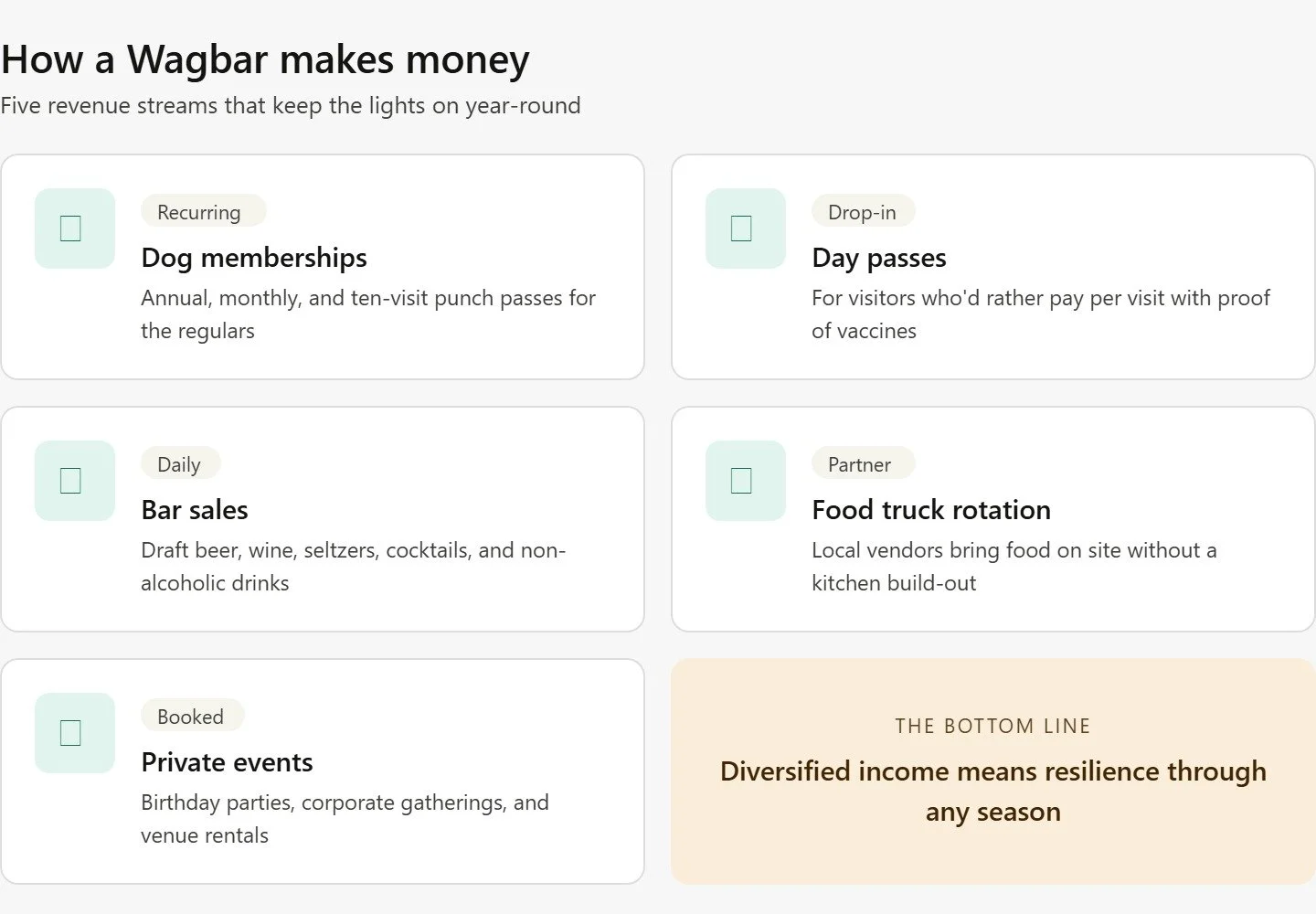
The revenue streams available in this model — memberships, day passes, bar sales, events — give owners multiple levers. But the culture is the product. The owners who understand that early are the ones who build the most loyal, sustainable locations.
Is This the Business for You?
A day in the life of a dog bar owner is full, varied, and genuinely different from most business models. It's not passive. It's not a typical food and beverage operation. And it's absolutely not a business you can run successfully from a distance without caring deeply about the experience on the floor.
If that sounds like the kind of work you want to do — if the idea of building something your community relies on gets you out of bed faster than a corporate calendar ever did — the Wagbar franchising page is the right next step. The dog park franchise training and support program is built to get owners operational with confidence, and the franchise investment guide gives you the real numbers before you commit to anything.
The dogs are already out there. They just need the right owner to open the gate.
Bottom TLDR
A day in the life of a dog bar owner runs from pre-open floor checks and staff coordination through peak evening service at an off-leash dog park bar — with marketing, membership management, and community-building woven throughout. The job blends hospitality operations, canine safety, and culture stewardship in a way that rewards operators who are present and people-first. To know if this business fits your life, start with the Wagbar franchising page and talk to a current owner directly.