

How the Off Leash Dog Bar Became a Third Place for Dog Owners

Key Takeaways
The off leash dog bar fits every criterion Ray Oldenburg defined for a third place: neutral ground, social leveling, easy conversation, and a roster of regulars who build real community over time. Dogs handle the hardest part of the third place problem, dissolving the awkwardness between strangers automatically, so the relationships form faster than in almost any other public setting. Find your nearest Wagbar at wagbar.com/our-locations.
In 1989, urban sociologist Ray Oldenburg published The Great Good Place, a book arguing that healthy communities require three kinds of spaces. The first place is home. The second place is work. The third place is everything else — the informal gathering spot where people go not because they have to but because they want to, the place that gives a neighborhood its social texture and its regulars their sense of belonging.
Oldenburg's list of classic third places included coffee shops, barbershops, pubs, and town squares. What they shared was not a particular format but a set of functional qualities: they were accessible and welcoming, conversation was the main activity, and the people who showed up regularly enough formed a loose community without anyone formally organizing it.
Oldenburg wrote his book before most people had dogs as their primary social companions, before the rise of urban dog ownership transformed how city residents think about their leisure time and their neighborhoods. He could not have anticipated the off leash dog bar. But if you apply his framework to what happens at a Wagbar on a Thursday afternoon, the fit is almost exact.
What Oldenburg Said a Third Place Needs
Oldenburg identified eight characteristics that distinguish true third places from other kinds of public spaces. Not every third place checks every box perfectly, but the core qualities are consistent across the examples that work.
Neutral ground. A third place does not belong to any one person or group. No one is hosting, and no one is a guest. You go because you are welcome, not because you were invited.
A leveling effect. Status markers that matter elsewhere — job title, income, neighborhood — fade in a well-functioning third place. The regulars are there because of who they are in that room, not what they have outside it.

Conversation as the main activity. The primary thing happening is people talking. Food, drink, and other activities are present but secondary.
Accessibility and accommodation. A third place is easy to get to and open at the hours when people actually want to be there. It does not require advance planning or a reason to show up.
A roster of regulars. Occasional visitors are welcome, but a third place is defined by the people who come back consistently. The regulars are what give it character and continuity.
Low profile. Third places are not grand or elaborate. They are comfortable and familiar, the kind of space where you can stay for a while without feeling like you are taking up room.
A playful mood. Oldenburg was specific about this: levity is not incidental to the third place. The capacity for wit, humor, and easy conversation is part of what the space is for.
A home away from home. At its best, a third place makes regulars feel warmly possessed by it. It is a place they belong to, not just a place they visit.
Now think about what an off leash dog bar actually is, and run through that list again.
Why the Off Leash Dog Bar Checks Every Box
Neutral ground. Nobody hosts a dog park visit. You pay your entry fee and walk in. Your dog runs to the nearest group of dogs and the social situation organizes itself. There is no host, no guest list, no reason to feel like an outsider beyond the first five minutes of the first visit.
The leveling effect. One of the most frequently noted qualities of regular dog park users is how little the social hierarchies of the outside world apply inside the fence. The investment banker and the teacher know each other by their dogs' names before they know anything else. The dog handles the introduction and sets a tone of warmth and humor that flattens social distance.
Conversation as the main activity. At an off leash dog bar, both dogs and people are socializing simultaneously. The dogs give the people something to watch, comment on, and laugh about together. The conversation is continuous, easy, and often surprisingly personal, because a shared love of dogs turns out to be a reliable entry point to talking about nearly everything else.
Accessibility and accommodation. Wagbar is open seven days a week, year-round. You do not need a reservation. You do not need to plan. You show up when you feel like it, and your place in the social fabric of the space is waiting for you.
A roster of regulars. Anyone who has attended a Wagbar location more than a few times can tell you about the dogs they recognize and the owners they have talked to across multiple visits. The same people show up on the same evenings. A community forms around that predictability without anyone deciding it would.
Low profile. The physical setup at Wagbar is intentionally comfortable rather than impressive. Covered seating, a bar built from a converted container, outdoor space, food trucks. It is not trying to be a destination restaurant or a special occasion venue. It is a place you can go without making it a thing.
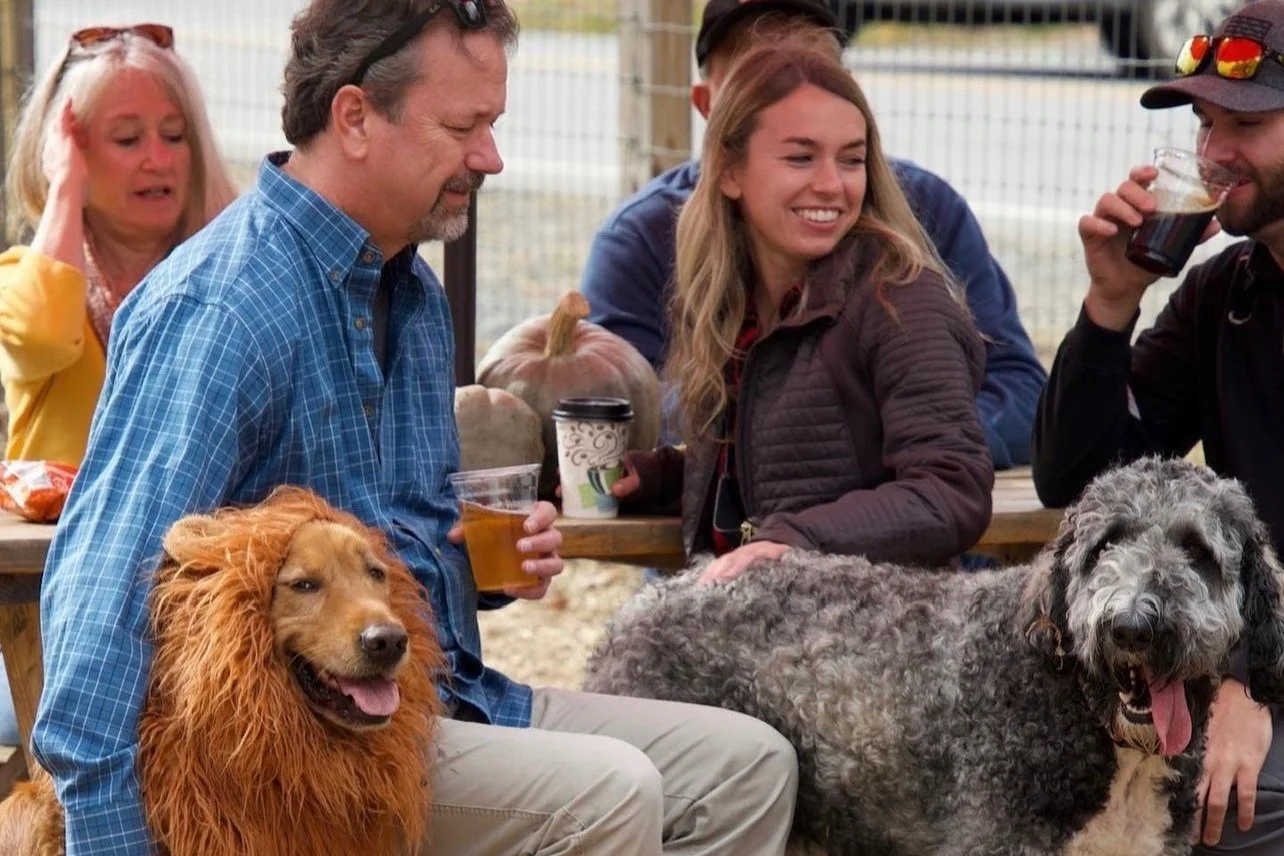
A playful mood. Dogs are, structurally, generators of humor and warmth. A dog park where dogs are off leash and fully themselves is one of the more reliably funny environments available to ordinary people in a city. The mood at an off leash dog bar tends to be lighter than almost anywhere else you could spend a Wednesday evening.
A home away from home. This is where long-time Wagbar members will recognize something true: the place starts to feel like yours. You know who will be there. The staff knows your dog's name. You have a usual spot. The experience of belonging to a place, which Oldenburg identified as the deepest function of the third place, is something Wagbar regulars describe without being asked to.
What the Third Place Fills That Home and Work Cannot
Oldenburg was not making an argument about leisure preferences. He was making a structural argument about what communities need to function.
Home is necessary but private. Work is where most people spend their energy, but it carries obligation and hierarchy. The third place is where the self that belongs to neither home nor work gets to exist. It is where people build the lateral relationships — with neighbors, with near-strangers who became regulars — that hold a community together informally and durably.
When third places disappear, communities fragment. Oldenburg was writing partly as a critique of American suburban development, which had systematically eliminated the informal public gathering spots that denser older neighborhoods contained as a matter of course. Chain retail, drive-through culture, and privatized leisure had eaten into the supply of places where ordinary people encountered each other without a formal reason to be together.
The problem has not improved since 1989. Urbanization has brought density without necessarily producing connection. Working from home has removed the incidental encounters of office culture. Social media has substituted for some functions of the third place while failing entirely at others — you cannot pet someone's dog through a screen, and you cannot have the kind of conversation that changes your mood in a comment thread.
The demand for genuine third places, for spaces that deliver the experience of being socially present with real people in a real room, has been rising against a declining supply. This is part of the same current that explains the growth of the off leash dog bar as a category. People are not showing up at Wagbar primarily because they need somewhere to take their dog. They are showing up because they need somewhere to be.
The Dog as Social Infrastructure
What makes the off leash dog bar specifically well suited to third place functions — rather than just any comfortable bar or coffee shop — is the dog.
The dog solves the hardest problem of the third place, which is the cold start problem: how does a stranger walk into a room of strangers and become part of what is happening there? In most social settings, this requires either prior relationship or a formal introduction. Neither is reliably available. Most people solve the problem by not walking into the room in the first place.
The dog removes that friction entirely. You walk into Wagbar. Your dog immediately runs toward other dogs. The owners of those dogs immediately have something to say to you, because your dog is now running next to their dog. Within the first two minutes of the first visit, you are in a conversation you did not have to initiate.
Over time, the dogs create continuity. You remember the beagle. You ask about him next time. The owner of the beagle remembers your dog. A relationship that did not exist is now two visits old, and will be three visits old next week. This is exactly the structure of the third place: the same people, in the same place, over time, without any formal commitment required.
The dog socialization and behavior hub covers why off leash social play matters for dogs specifically. The human social dynamic is the parallel track running alongside it: what is good for the dog's socialization is also, reliably, good for the owner's.
Events Are the Third Place's Programming Layer
Oldenburg described the best third places as having a natural, unforced character. The community forms without anyone deciding it should. But he also observed that the spaces that worked best tended to have rhythm and ritual — the same crowd on the same nights, recurring events that gave regulars a reason to show up on a schedule.
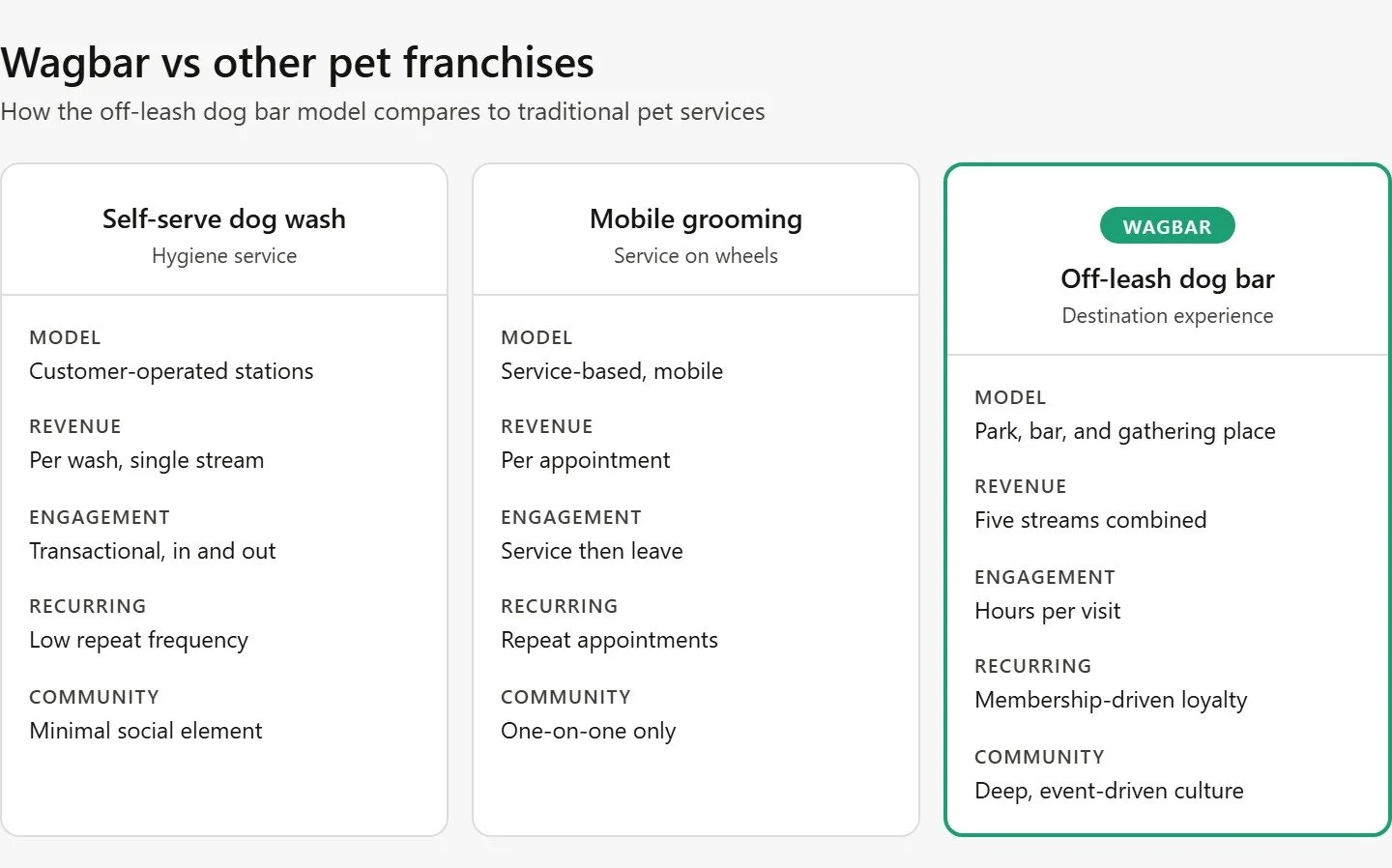
Wagbar's events calendar serves exactly this function. Trivia nights, breed-specific meetups, live music sessions, food truck rotations, and seasonal gatherings are not marketing tactics. They are the programming that turns an off leash dog park with a bar into a space with a calendar of shared experiences that regulars organize their weeks around.
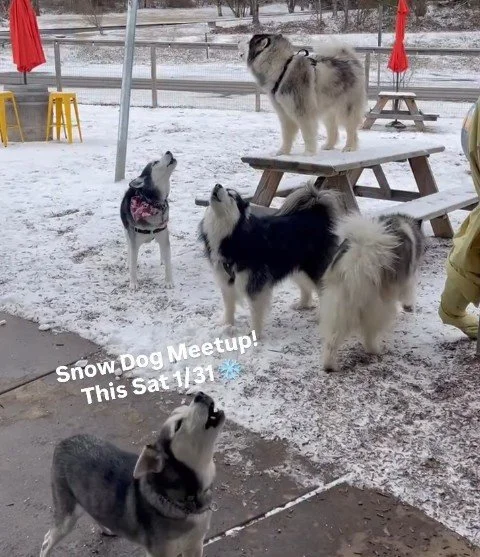
Breed meetups in particular mirror something Oldenburg observed about the best third places: they often have internal sub-communities that form around shared interests within the broader regular crowd. The smush-face breed meetup, the poodles-and-doodles gathering, the husky group — these create dense nodes of familiarity within the larger social space of the park. Owners who might not have talked to each other across a general visit become regulars to the same sub-event.
The community building guide for dog-focused businesses explores how this kind of layered social programming builds lasting customer relationships. The mechanism is the same one Oldenburg described: repeated positive exposure to the same people, around shared experiences, in a comfortable place, over time.
The Third Place Case for Dog Owners Specifically
Dog owners have a version of the third place problem that non-dog-owners do not. A dog is a social commitment that shapes your schedule, your geography, and your daily habits. You are outside twice a day, in the same places, at the same times, often with the same people. The dog park is the most natural third place candidate in that structure.
But most public dog parks fail at third place functions for practical reasons. They are inconsistently populated. Safety varies too much for people to relax fully. There is nowhere to sit comfortably. Nothing keeps people there longer than the dog needs for exercise, so conversations stay short.
An off leash dog bar solves each of those problems. The vaccination requirement and trained staff create a consistent level of safety that allows people to actually relax rather than stay alert. The covered seating, bar, and food trucks give people a reason to stay longer than the dog strictly requires. The membership model creates predictable recurring attendance from a stable group of regulars.
The result is a dog park that functions as Oldenburg intended the third place to function: a place with depth, continuity, and the warm familiarity that comes from spending real time with people in a space that has come to feel like yours.
For more on what the day-to-day experience at an off leash dog bar looks like in practice, including how visits work and what to expect as a first-timer, the full overview covers the basics. If you want to see what the membership community looks like at a specific location, the Wagbar locations page has details for every venue.
Frequently Asked Questions
What is a third place, and why does the term apply to dog bars?
Sociologist Ray Oldenburg coined the term in The Great Good Place (1989) to describe informal gathering spaces that function separately from home and work. Third places are characterized by neutral ground, social leveling, easy conversation, and a roster of regulars who form a loose community over time. Off leash dog bars match this definition closely: they are accessible without advance planning, dogs dissolve social barriers between strangers, and the same people return on a consistent schedule.
Does the off leash component specifically matter for building community?
Yes, for reasons that go beyond dog exercise. In an off leash environment, owners are freed from the divided attention of managing a leash, which allows them to stay in conversation longer and more naturally. Off leash dogs interact in ways that draw their owners together physically and conversationally. The complete dog park guide covers the safety infrastructure that makes this possible in a managed setting.
What makes Wagbar different from a regular bar as a third place?
A standard bar can function as a third place if regulars form around it, but it lacks the structural social catalyst that dogs provide. At Wagbar, the dogs handle the introduction problem — they connect strangers automatically — which removes the highest-friction moment of building a new social connection. The membership model also creates a predictable regular crowd in a way that a transactional bar visit does not.
Is this relevant to people who do not already have a community in their city?
Particularly so. People who have recently moved, who work remotely and lack office relationships, or who have found it difficult to build social connection in a new place often describe off leash dog bars as one of the more effective environments they have encountered. The dog park structure provides ready-made conversation openers and a reason to return to the same place on a consistent schedule — both of which are the conditions social research consistently identifies as necessary for building new relationships. The social benefits of off leash dog parks covers this in detail.
Can you visit Wagbar without a dog?
Yes. All guests 18 and older are welcome at any Wagbar location regardless of whether they bring a dog. Some of the most consistent regulars at Wagbar locations do not own dogs. The social environment works for anyone drawn to it.
Where to Find Your Third Place
Wagbar locations are open across the country. The original is in Weaverville, North Carolina, near Asheville, where the concept was built from the ground up in 2019 by Kendal and Kajur Kulp. Additional locations include Knoxville, Tennessee; Dallas, Texas; Los Angeles and Long Beach, California; Richmond, Virginia; Charlotte and Cary, North Carolina; Greenville, South Carolina; Myrtle Beach, South Carolina; Savannah, Georgia; Cincinnati, Ohio; Frederick, Maryland; Orlando, Florida; and Phoenix, Arizona.
If your city does not have a Wagbar yet and you want to change that, the franchising page has information on how the model works and how to get in touch.
Oldenburg argued that the health of a community is visible in its third places. Find yours at wagbar.com/our-locations.
Summary
The off leash dog bar became a third place for dog owners because it solves the cold start problem of community building: dogs introduce people to each other before either owner has to say a word. Wagbar's membership model, consistent regular crowd, and events programming create the repeated positive exposure that turns strangers into familiar faces and familiar faces into community. Find your third place at wagbar.com/our-locations.
