

From Corporate to Pet Franchise Owner: What the Career Change Really Takes
Top TLDR More professionals are leaving corporate careers to open pet franchises, drawn by the $147 billion pet industry's consistent growth and a business model built around genuine passion. A career change to pet franchise owner typically takes 9 to 18 months from first inquiry to opening day. Transferable skills from finance, tech, and sales translate directly into franchise success. Start by reviewing the Wagbar FDD and requesting a discovery call to understand investment requirements and territory availability.
Key Takeaways
The U.S. pet industry exceeded $147 billion in spending in 2023 and has grown every year for the past three decades, according to the American Pet Products Association (APPA).
Wagbar's total investment range is $470,300 to $1,145,900, with a $50,000 franchise fee and a 6% royalty on adjusted gross sales.
The timeline from initial inquiry to grand opening typically runs 9 to 18 months, depending on site selection, permitting, and buildout.
Franchisees with backgrounds in finance, technology, and sales consistently report that their corporate skills transfer directly into franchise operations.
Multi-unit franchise agreements include a 50% discount on the franchise fee when committing to three or more locations.
Wagbar operates a day-use-only model with four membership tiers, giving franchisees multiple revenue channels from day one.
People leave corporate jobs for a lot of reasons. Burnout, restructuring, a nagging sense that they're spending their best years building someone else's vision. But the ones who end up opening pet franchises tend to have one thing in common: they got tired of working in industries that felt arbitrary, and they wanted to build something they actually cared about.
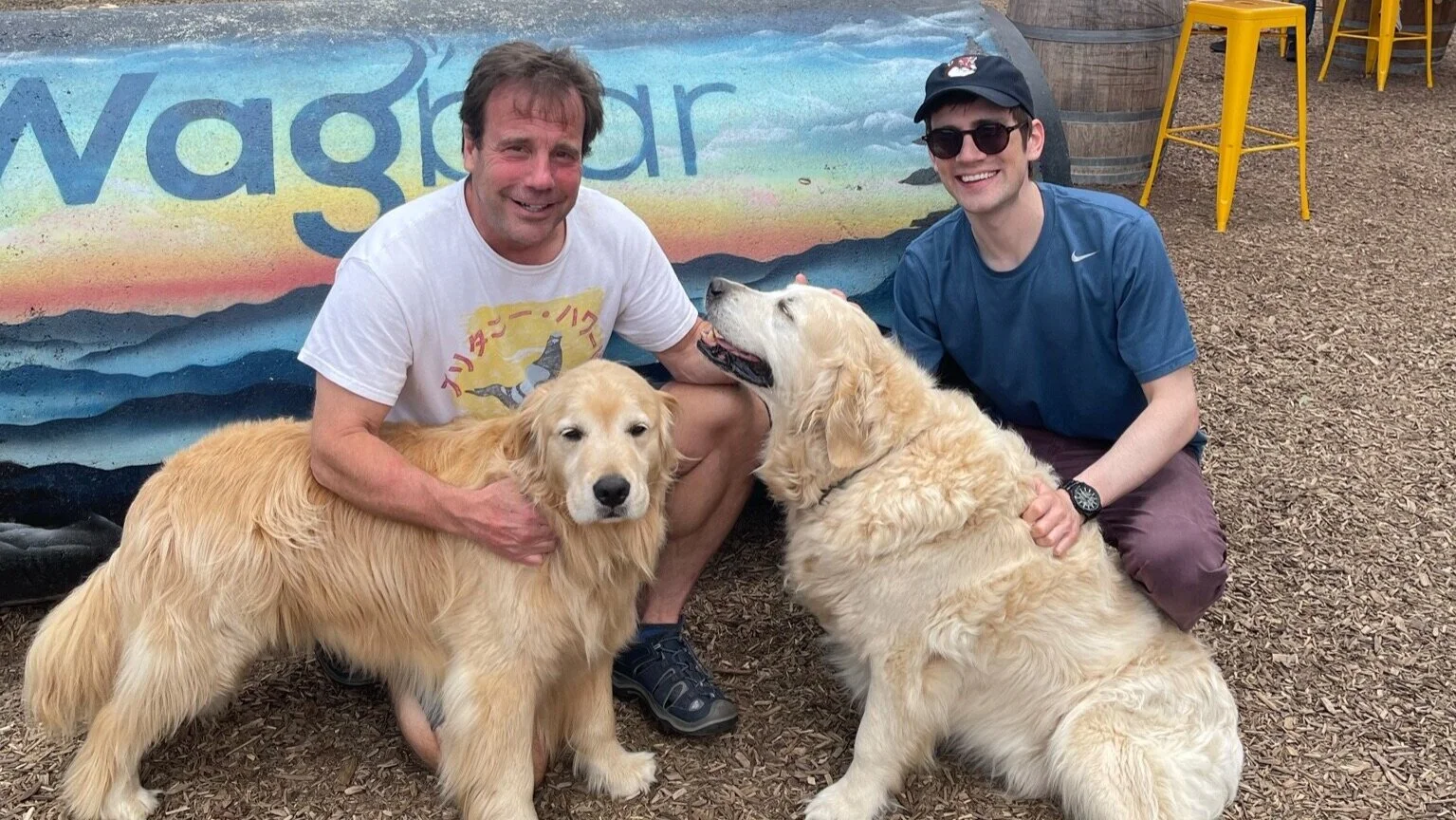
AJ Sanborn spent 20 years in financial services before he started looking for what came next. He considered opening a traditional bar but kept circling back to his love for animals. That led him to Wagbar, where the combination of an off-leash dog park and a bar atmosphere made sense in a way that other concepts didn't. He signed on as Wagbar's Richmond, Virginia franchisee in early 2025.
His story isn't unusual. Across the Wagbar franchise network, you'll find former IT professionals, restaurant industry veterans, and longtime corporate employees who made the same pivot. The pet industry gave them a reason to go to work that went beyond quarterly numbers.
This page breaks down who is making that transition, what skills actually carry over, what the path from inquiry to opening looks like, and how to think about the financial and personal preparation involved.
Who Is Leaving Corporate to Open Pet Franchises
The profile of a career-changer entering pet franchising has shifted meaningfully over the past decade. This isn't a move driven by people looking for an easy lifestyle business. It's a decision being made by experienced professionals who have done the analysis and concluded that the pet industry offers something their current careers don't.
The Finance and Banking Crowd
Financial services professionals make up a disproportionate share of new franchise owners across most franchise systems, and the pet industry is no exception. Twenty years of risk analysis, client management, and P&L responsibility gives someone a real foundation for running a franchise location.
AJ Sanborn is a clear example. His two decades in financial services meant he already understood cash flow modeling, how to read a contract, and how to manage relationships with vendors and customers under pressure. What the industry couldn't give him was a product he felt genuinely connected to.
The transition into pet franchising lets finance professionals apply their analytical strengths to a business built around something they care about. Dog ownership rates in the U.S. now sit at roughly 45% of households, according to the APPA, which means they're also, in most cases, serving a community they're already part of.
The Tech Sector Departure
Tech workers bring a different but equally transferable skill set. Comfort with data, systems thinking, and process optimization translates well into franchise operations. Managing staff through a structured training system, tracking membership metrics, monitoring daily operational flows — these tasks feel natural to people who have spent careers building and running complex systems.
The emotional shift is often bigger for tech professionals than the operational one. Moving from a world where value is measured in product launches and sprint velocity to one where success shows up in a dog's excitement to arrive at the door every morning takes some adjustment. Most franchisees who come from tech backgrounds describe that adjustment as a feature, not a bug.
Sales and Business Development Veterans
Sales professionals often find that franchising fits their temperament well. They're comfortable with variable outcomes, skilled at building relationships, and accustomed to working without a fixed ceiling on what they can produce.
The membership-based revenue model at Wagbar suits sales-oriented owners particularly well. Building a recurring membership base requires the same outreach and relationship maintenance skills that made them effective in B2B or consumer sales. The difference is that the product sells itself to the right audience — dog owners who want a safe, social space to bring their dogs on a regular basis.
Transferable Skills That Actually Matter
A common misconception about franchise ownership is that you need direct industry experience. You don't. What you need are the foundational operating skills that apply across business types, and the self-awareness to know what you're learning from scratch.
Financial Literacy and Cash Flow Management
Understanding how money moves through a business is one of the most critical skills a franchise owner can have. This includes knowing the difference between revenue and profit, how to read a monthly P&L, when to make capital investments, and how to project cash needs during slower periods.
Anyone with a finance background brings this natively. But it's worth noting that solid financial management skills don't require a Wall Street background. Business development professionals, operations managers, and even experienced project managers often have enough working knowledge of financial planning to manage a franchise location effectively.
Wagbar's FDD provides detailed information on investment costs, ongoing fees, and financial structure. Reviewing it carefully before signing anything is standard practice, and the numbers are straightforward for anyone with financial literacy.
Operations and Process Management
Running an off-leash dog bar involves daily operational complexity: staffing, inventory, dog health protocols, facility maintenance, membership administration, event coordination. People who have managed complex processes in corporate environments usually find this complexity manageable because they already have systems for it.
Wagbar's pre-opening training program is designed to close the gap for franchisees who don't come in with hospitality backgrounds. The one-week intensive at Wagbar's Asheville, North Carolina headquarters covers dog behavior management, bar operations, staff training protocols, and marketing. The proprietary "Opener" app provides ongoing digital guidance during the pre-opening phase.
Customer Relationship and Community Building
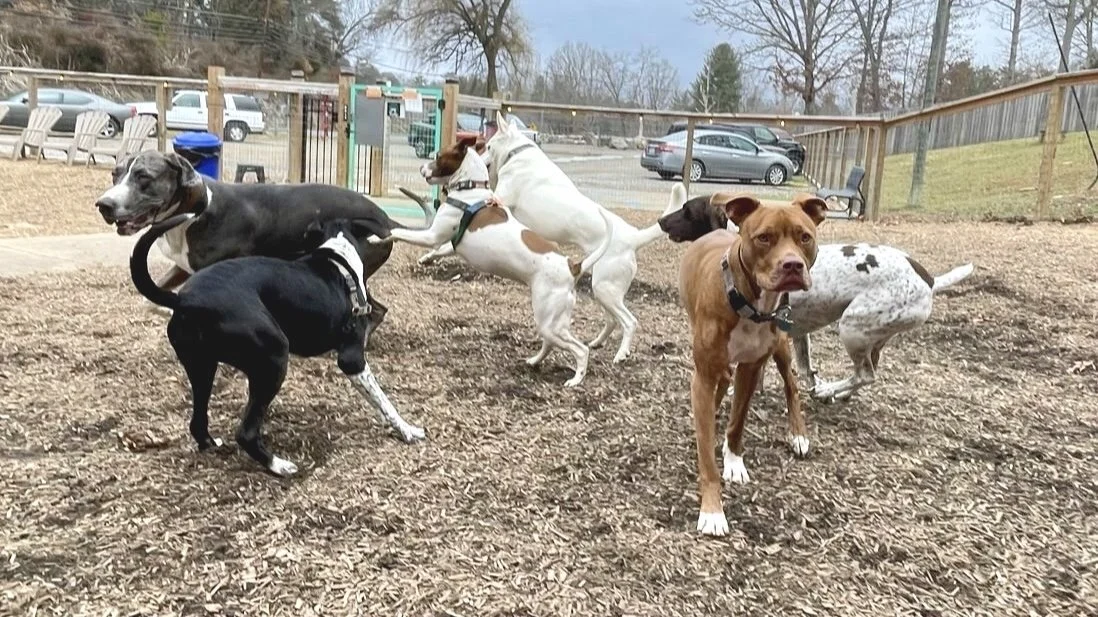
Pet franchise businesses are, fundamentally, community businesses. The members who visit three or four times a week aren't just customers — they're regulars who introduce their dogs to other regulars, refer friends, and generate a word-of-mouth base that no paid ad campaign can fully replicate.
Customer relationship skills from corporate backgrounds transfer directly into this dynamic. Sales professionals know how to make people feel valued and heard. Finance professionals understand how to build trust through consistency and reliability. Tech professionals understand how to use data to identify what customers actually want versus what they say they want.
The community-building component of pet franchise ownership tends to be the most personally rewarding part for career changers. It's also one of the most commercially important.
The Timeline from Inquiry to Opening Day
One of the most common questions from career-changers exploring franchise ownership is how long the process actually takes. The honest answer is 9 to 18 months for most Wagbar franchisees, though the range reflects real variation in site selection timelines, local permitting processes, and buildout complexity.
Here's how the stages typically break down.
Stage 1: Discovery and Due Diligence (1 to 3 Months)
The process starts with submitting an inquiry through the Wagbar franchising page. From there, a Wagbar team member reaches out to discuss the opportunity, answer initial questions, and assess fit. This is a two-way evaluation. Wagbar is selective about who joins the franchise system, and serious candidates are expected to do real due diligence on their end.

That means reading the FDD in full, consulting with a franchise attorney (strongly recommended), talking to existing franchisees, and running your own financial projections. This stage also includes conversations about territory availability. Wagbar operates an expanding network of locations across multiple markets, and territory selection shapes the entire business case.
Stage 2: Approval and Agreement (1 to 2 Months)
Once both parties decide to move forward, the franchise agreement is executed and the $50,000 franchise fee is paid. At this point, the franchisee is formally in the system and begins working with Wagbar's team on site selection.
Site selection is not a trivial step. Wagbar locations require outdoor space suitable for off-leash dog play, proximity to demographic concentrations of dog-owning households with above-average incomes, and a social-scene context that supports a bar operation. Wagbar provides support in evaluating potential sites, but franchisees drive the search.
Stage 3: Site Development and Buildout (4 to 10 Months)
Once a site is secured, the buildout timeline depends heavily on local permitting, construction, and the nature of the space being developed. Wagbar has a distinctive approach to bar infrastructure that involves shipping container bar conversions, which can simplify aspects of the buildout process compared to traditional construction.
During this phase, the franchisee is completing training, hiring staff, and developing local marketing plans. The pre-opening phase is one of the more intensive periods in the process, and franchisees who come in well-organized tend to navigate it more smoothly.
Stage 4: Grand Opening and Early Operations (Ongoing)
Wagbar provides on-site support during the grand opening period. After opening, franchisees receive ongoing operational support including quarterly business reviews, marketing assistance, and access to the franchisee community network.
The early operational period is when the career change becomes most real. You're running the business, managing the team, solving problems in real time, and building the member base that will define your long-term financial performance.
Financial Preparation for Career Changers
The investment range for a Wagbar franchise, $470,300 to $1,145,900, covers a wide span that reflects differences in site costs, buildout complexity, and local market conditions. This is not a low-cost entry franchise. It's a capital-intensive investment in a growing industry with meaningful upside potential for well-operated locations.
Career changers approaching this investment should think about it in several layers.
Liquid Capital and Financing
Most franchise systems, Wagbar included, expect prospective franchisees to demonstrate adequate liquid capital before proceeding. This typically means having enough cash to cover the franchise fee, initial buildout costs, and working capital for the first several months of operation without needing the business to be cash-flow positive immediately.
SBA loans, commercial real estate financing, and HELOC arrangements are among the common financing vehicles used by franchise investors. Individuals with strong credit histories and corporate income histories often find franchise financing more accessible than they initially expect.
Transition Income Planning
One of the more underappreciated aspects of a career change to franchise ownership is the income gap that opens up during the development phase. You're paying franchise fees, funding buildout, and potentially drawing down personal savings during a period when the business isn't generating revenue yet.
Planning for this gap — ideally 12 to 18 months of reduced or no income from the new venture — is essential. Couples and families navigating this transition together need to have honest conversations about financial runway well before signing agreements.
Long-Term Financial Modeling
Understanding how a Wagbar location generates revenue helps prospective franchisees build realistic projections. The four membership tiers (daily, monthly, annual, and 10-visit punch passes) create multiple revenue channels. Bar sales and event hosting add additional income streams. The membership model, in particular, creates a recurring revenue foundation that distinguishes the business from pure-transactional hospitality concepts.
The FDD is the authoritative source for all specific financial disclosures. Any figures presented in planning conversations should be treated as illustrative until reviewed in the context of the full FDD, which Wagbar provides to qualified candidates.
The Emotional Reality of Leaving a Career
The financial preparation gets a lot of attention. The emotional preparation doesn't get nearly enough.
Leaving a career that provided identity, status, and structure is harder than most people expect, even when it's completely the right move. For professionals who have spent 15 or 20 years in corporate environments, the first few months of franchise ownership can feel disorienting. You're no longer the expert in the room. The metrics you're managing have changed completely. The skills that made you successful before need to be supplemented by a new set of operational instincts.
Most Wagbar franchisees describe working through this adjustment in stages. The first stage is the learning curve of the actual business operations — staffing, membership management, daily logistics. The second stage is building the community identity that makes a Wagbar location a real destination. The third stage, which usually takes 12 to 18 months, is when the business starts to feel genuinely yours.
What Franchisee Stories Actually Say
Across Wagbar's network, the franchisees who report the most satisfaction tend to share a few things. They came in with realistic expectations about the learning curve. They had family or personal support systems that held up under the financial and operational stress of the early period. And they were genuinely motivated by the concept, not just the investment thesis.
AJ Sanborn's story illustrates the last point. He didn't back into pet franchising because the numbers looked good. He was looking for something specific: a business he would actually enjoy running. The 20 years in financial services gave him the tools to evaluate the opportunity with clear eyes. The love for animals gave him a reason to act on it.
Dianna, Wagbar's Phoenix franchisee, brought a restaurant industry background and years of IT sales experience to her decision. For her, the franchise represented a convergence of her professional skills and personal passions — a business that felt like community work rather than commercial work.
Jennifer, who opened Wagbar's Los Angeles location, described a similar dynamic. After a long corporate career, she wasn't looking for another job in the traditional sense. She was looking for a way to bring genuine joy into people's lives through something she understood and loved. Dogs and community were her answer.
These stories aren't marketing. They're the actual shape of this particular career change.
How Family Dynamics Factor In
Most people who make significant career transitions don't make them alone. Partners, spouses, and in some cases adult children are part of the decision, and their support or hesitation shapes the outcome at every stage.
The financial conversation is usually the most direct. A partner who understands the investment range, the income gap during development, and the realistic timeline to financial stability is a much stronger support system than one who has been given optimistic projections without the full picture.
But the less obvious dynamics matter too. Franchise ownership changes daily rhythms in ways that a salaried corporate job doesn't. Your schedule is more variable. Problems don't stay at the office. The emotional stakes of the business become part of home life in ways that employment rarely does.
Conversations Worth Having Before You Sign
Before proceeding with any franchise agreement, it's worth having direct conversations with your family about the following:
How long can you operate at reduced income if the ramp-up takes longer than projected? What does the daily operational schedule actually look like, and who covers the business when you're unavailable? What's the plan if the business underperforms for the first year or two? Who in your household understands the FDD numbers?
These aren't pessimistic questions. They're the same questions any experienced financial services professional would ask before committing capital to any investment. The fact that this investment also involves your daily professional identity makes clear-eyed planning more important, not less.
Why Dog-Focused Businesses Keep Growing
Understanding the broader industry context helps put the individual franchise decision in perspective.
The pet industry has grown for more than 30 consecutive years. It grew through the 2008 financial crisis. It accelerated during and after COVID. According to the APPA, total U.S. pet industry spending reached $147 billion in 2023, with pet services (grooming, boarding, training, daycare, and entertainment) representing one of the fastest-growing subcategories.
Dog ownership demographics have also shifted in ways that favor experience-based pet businesses like Wagbar. Millennials and Gen Z dog owners tend to treat their dogs as family members rather than property. They're spending more per dog, seeking higher-quality experiences, and prioritizing social environments where their dogs can interact with other dogs.
This demographic shift is structural, not cyclical. It's reshaping what dog owners expect from pet businesses, and it's creating demand for concepts that didn't exist in meaningful numbers ten years ago. An off-leash dog park combined with a bar atmosphere is exactly the kind of hybrid experience that resonates with this owner profile.
For more on the market forces driving this growth, the pet industry market analysis on Wagbar's site breaks down the demographics and spending patterns in detail.
Frequently Asked Questions
Do I need hospitality industry experience to open a Wagbar franchise?
No. Wagbar's training program is designed to bring franchisees up to speed on bar operations, dog behavior management, and daily facility operations regardless of their professional background. Most current franchisees came from outside the hospitality industry.
What is the minimum liquid capital required to qualify as a franchisee?
Wagbar provides specific financial qualification criteria to candidates during the discovery process. The total investment range of $470,300 to $1,145,900 gives a sense of scale, but liquid capital requirements are detailed in the FDD and discussed directly with qualified candidates.
How long does it realistically take to open a Wagbar after signing the agreement?
The buildout and opening phase typically takes 6 to 12 months after the franchise agreement is signed. Total timeline from initial inquiry to grand opening generally runs 9 to 18 months, with variation based on site selection speed, permitting timelines, and construction complexity.
What ongoing support does Wagbar provide after opening?
Wagbar provides quarterly business reviews, ongoing marketing support, access to the franchisee network, and regular operational updates. The support structure is designed to help franchisees manage the business effectively without requiring prior experience in the pet or hospitality industries.
Is a Wagbar franchise the right fit for someone leaving a high-income corporate career?
It can be, but the financial planning has to be realistic. High-income professionals accustomed to predictable compensation need to plan carefully for the income variability that comes with business ownership, especially during the ramp-up period. The FDD is the starting point for any serious financial analysis.
Can I own multiple Wagbar locations?
Yes. Wagbar offers a multi-unit franchise structure with a 50% discount on the franchise fee for commitments to three or more locations. Multi-unit ownership is common among franchisees with strong operational backgrounds who see the value in scaling a proven model.
What the Next Step Actually Looks Like

If the career change to pet franchise owner is something you're genuinely considering, the practical next step is to request the FDD and schedule a discovery call. That's not a commitment. It's due diligence.
Review the FDD with a franchise attorney. Talk to existing Wagbar franchisees about their experience. Run your own financial projections. Have the direct conversations with your family about timelines and risk tolerance.
If those conversations leave you more confident rather than less, the Wagbar franchising page is where the process formally begins.
The pet industry isn't slowing down. The franchise opportunities in the best markets won't wait indefinitely for the right person to decide. But the right decision is always a well-informed one.
Learn more about what to look for when investing in an off-leash dog bar franchise, explore the benefits of owning a pet franchise, or review Wagbar's active franchise territories to see which markets are currently available.
Bottom TLDR: A career change to pet franchise owner with Wagbar draws on the same financial, operational, and relationship skills that made professionals successful in corporate environments. The total investment ranges from $470,300 to $1,145,900, with a timeline of 9 to 18 months from inquiry to opening day. The franchise fee is $50,000, with 6% royalties on adjusted gross sales. Request the Wagbar FDD and schedule a discovery call to evaluate whether your background and financial position align with available territories.