
Would You Visit a Dog-Friendly Bar? What Actually Happens Inside One
Every time someone asks this question online, the same fears show up. Aggressive dogs with clueless owners. Drunk people ignoring their animals. Your well-behaved dog getting attacked by someone else's untrained pet. A shy dog getting overwhelmed in a chaotic free-for-all.
These concerns are valid. They come from real experiences at unsupervised public dog parks where there are no staff, no screening, no rules, and no consequences. The problem is that people assume a dog bar works the same way. It doesn't.
A professional off-leash dog bar like Wagbar operates more like a private membership club than a public park. Every dog is screened before entry. Trained staff monitor the play areas continuously. Behavior violations get addressed immediately. And the entire environment is designed from the ground up to prevent the exact situations that make public dog parks stressful and sometimes dangerous.
If you have ever said "I would love to take my dog somewhere like that, but..." then this article is for you.
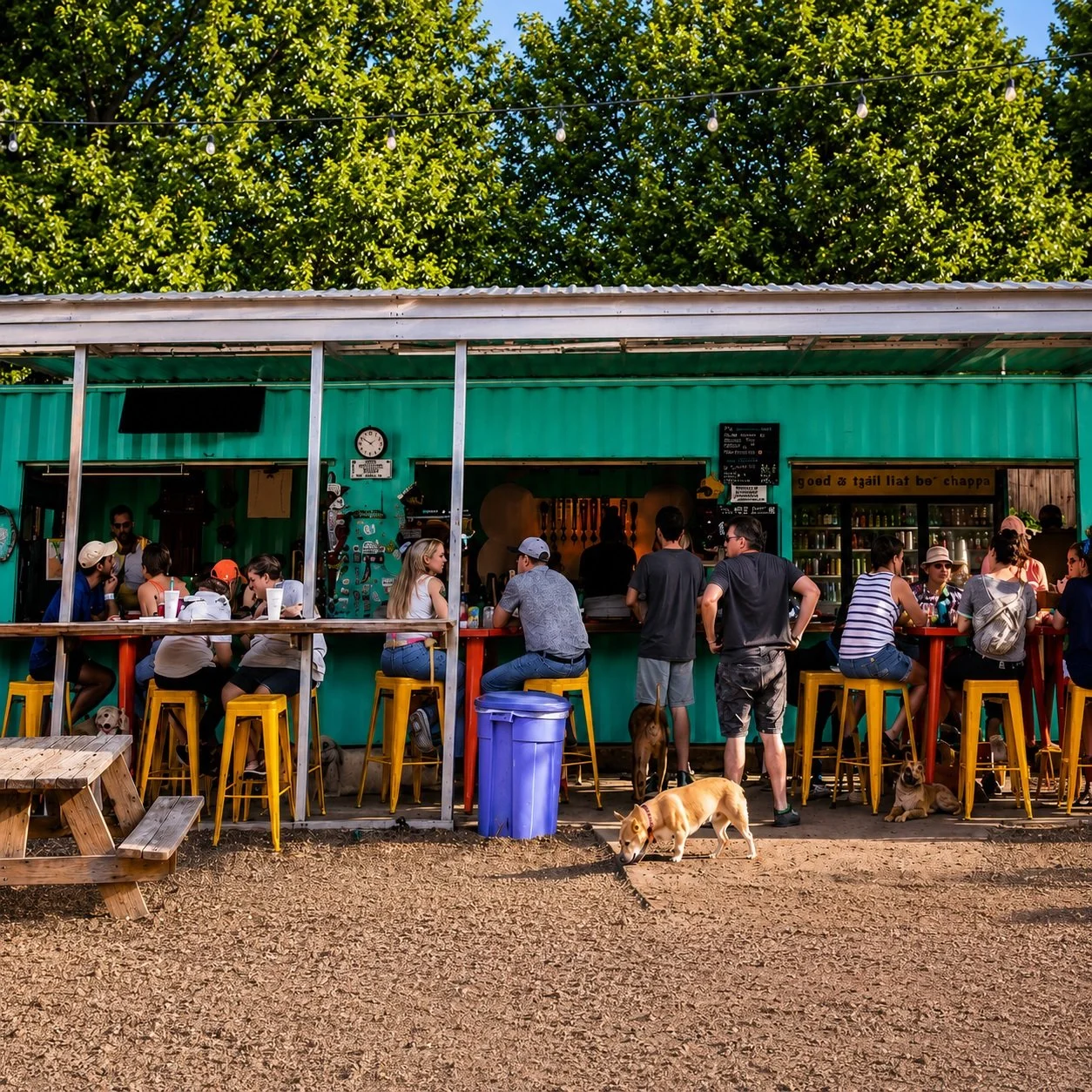
How Dogs Get Screened Before They Walk Through the Door
The single biggest difference between a dog bar and a public dog park is what happens before a dog enters the play space.
At a public park, anyone can walk in with any dog at any time. No questions asked. No vaccination check. No temperament assessment. No staff member observing how the dog reacts to other animals. That open-door policy is exactly why incidents happen. The aggressive dog, the unvaccinated dog, the dog that has never been around other animals. They all walk through the same gate.
At Wagbar, every dog goes through a screening process on its first visit. This starts with vaccination verification. Every dog must have current proof of three vaccinations before entering. Rabies, Bordetella (kennel cough), and Distemper. No exceptions. No "I forgot the paperwork, can we just come in this time?" Staff check these records at the door.
Beyond vaccinations, dogs must be at least six months old and spayed or neutered. The spay/neuter requirement is not arbitrary. It dramatically reduces aggressive behaviors, territorial marking, and the kind of unwanted attention that triggers conflicts between dogs who would otherwise get along fine.
Then comes the behavioral assessment. Staff ask about the dog's history with other animals, any known behavioral issues, recent illnesses, and any special considerations. They observe how the dog enters the space, its initial reactions to other dogs, and its overall energy level and demeanor. This is where most potential problems get caught before they ever reach the play area.
A dog that shows signs of fear aggression, extreme reactivity, or an inability to read other dogs' social cues may be asked to try a quieter time, start with a shorter visit, or in rare cases, may not be suited for the group play environment. That sounds harsh, but it protects every other dog and owner in the space. And it protects that dog from being put in a situation it cannot handle.
What Happens When a Dog Misbehaves
This is the question everyone really wants answered. Because the fear is not just that bad things might happen. The fear is that when they do happen, nobody does anything about it.
At a public park, you are on your own. If another dog attacks yours, your only option is to physically intervene yourself and hope the other owner does the same. There is no authority figure, no staff member, no enforcement mechanism. Just two strangers in a stressful situation trying to separate their animals.
Wagbar operates completely differently. Trained staff members called Bark Rangers are positioned throughout the play areas during all operating hours. Their job is not to stand around and watch. Their job is to actively monitor dog interactions, read body language, and intervene before situations escalate.
Bark Rangers are trained to spot the warning signs that most pet owners miss. The stiff body posture. The hard stare. The subtle resource guarding. The play that is shifting from healthy to overstimulated. They step in early, redirect dogs, separate animals that need a break, and de-escalate situations that an untrained observer would not recognize as problems until they became serious.
When a dog does misbehave, the response is immediate and structured. The first step is separating the dogs involved. Bark Rangers physically redirect or remove the dog from the play area for a cooldown period. If the behavior was a one-time reaction to overstimulation, the dog may return after calming down. If the behavior represents a pattern or poses a safety risk, the owner is asked to leave for the day.
Wagbar maintains a zero-tolerance policy for aggressive behavior from both dogs and humans. Repeated violations result in membership revocation. Owners who refuse to comply with the code of conduct are asked to leave, and that decision is final. The staff has the authority and the training to enforce these boundaries, which is something a public park simply cannot offer.
This enforcement structure is what changes the entire experience. When you know that someone is watching, that rules are real, and that consequences exist, the environment stays safe. It also tends to attract a better crowd. People who are serious about their dogs' behavior self-select into membership environments where standards are maintained.
Can You Bring a Shy or Nervous Dog?
One of the most common concerns from careful dog owners is whether their shy, anxious, or less social dog would be overwhelmed in a dog bar setting. This is actually a sign of a good owner. You are thinking about your dog's experience rather than just your own.
The honest answer is that it depends on the dog, and a well-run dog bar will help you figure that out.
Wagbar's play areas include multiple distinct zones that allow dogs with different play styles and energy levels to self-segregate naturally. Large athletic dogs who want to run and wrestle tend to gravitate toward open spaces. Smaller or calmer dogs often prefer areas with more structure, obstacles, and places to observe from a comfortable distance.
This design means a shy dog does not have to be in the middle of a high-energy wrestling match to enjoy the space. Many nervous dogs find their comfort level by watching from the edges first, gradually approaching other dogs at their own pace, and building confidence through repeated positive experiences.
Staff play a critical role here too. Bark Rangers know the difference between a dog that is stressed and needs to leave and a dog that is cautiously curious and just needs time. They can help guide nervous dogs toward calmer areas, introduce them to mellow play partners, and keep overly enthusiastic dogs from overwhelming a newcomer who is still finding its footing.
Some practical tips if your dog is on the shy side. Visit during off-peak hours when the crowd is smaller and calmer. Weekday mornings typically have the lowest energy levels and the fewest dogs. Start with a short visit of 30 to 45 minutes rather than a full afternoon. Stay close to your dog initially so they have a familiar anchor. And pay attention to their body language. A tucked tail, whale eyes, or attempts to hide behind you are signs they need a break.
Not every dog will love the dog bar experience, and that is perfectly fine. But many dogs that are nervous in the chaos of a public park actually thrive in a supervised environment where the energy is managed and the other dogs have been screened for compatibility.
The Alcohol Question. How Dog Bars Handle Drinks Responsibly
"Drunk people plus dogs equals disaster." This concern comes up in every online discussion about dog bars, and it deserves a direct answer.
Dog bars serve alcohol. That is part of the business model and part of what makes them a social destination for adults. Craft beer, cocktails, wine, and non-alcoholic options are all typically available. The question is not whether alcohol is present but how the environment manages it.
First, the atmosphere at a dog bar is fundamentally different from a nightclub or a sports bar. People are there with their dogs. They are watching their animals play, talking to other dog owners, and generally paying attention to what is happening around them. The vibe is closer to a neighborhood brewery patio than a Saturday night bar scene. Most visitors have one or two drinks over the course of an hour or two while supervising their pets.
Second, responsible service practices apply. Bartenders at dog bars follow the same responsible alcohol service standards as any licensed establishment. Over-service is not tolerated. Staff are trained to recognize signs of intoxication and to cut off service when necessary.
Third, and this is the part most people do not think about, the membership model creates natural accountability. When you are a regular at a dog bar and you know the staff and the other members, you behave differently than you would at an anonymous public venue. Your reputation matters. Your membership matters. Doing something irresponsible means losing access to a place you and your dog enjoy.
The staff also has authority over the play areas regardless of what is happening at the bar. If an owner is not adequately supervising their dog, Bark Rangers will address it whether or not alcohol is involved. The behavioral standards for dogs and owners do not relax based on what beverage someone is holding.
Beverages are permitted in the off-leash areas, but owners are expected to remain responsible for their drink and its safety while dogs are playing. Dogs should never have access to alcoholic beverages. Alcohol is extremely dangerous for dogs and can cause poisoning even in small amounts. Staff are trained to know what substances are toxic to animals and will intervene if they see a risk.
The Real Difference Between a Dog Park and a Dog Bar
The confusion around dog bars exists because people mentally compare them to the wrong thing. They picture the worst public dog park they have ever visited and imagine adding alcohol to that situation. Of course that sounds terrible.
But a professional dog bar is not a public dog park with a liquor license. It is a completely different model built on different principles.
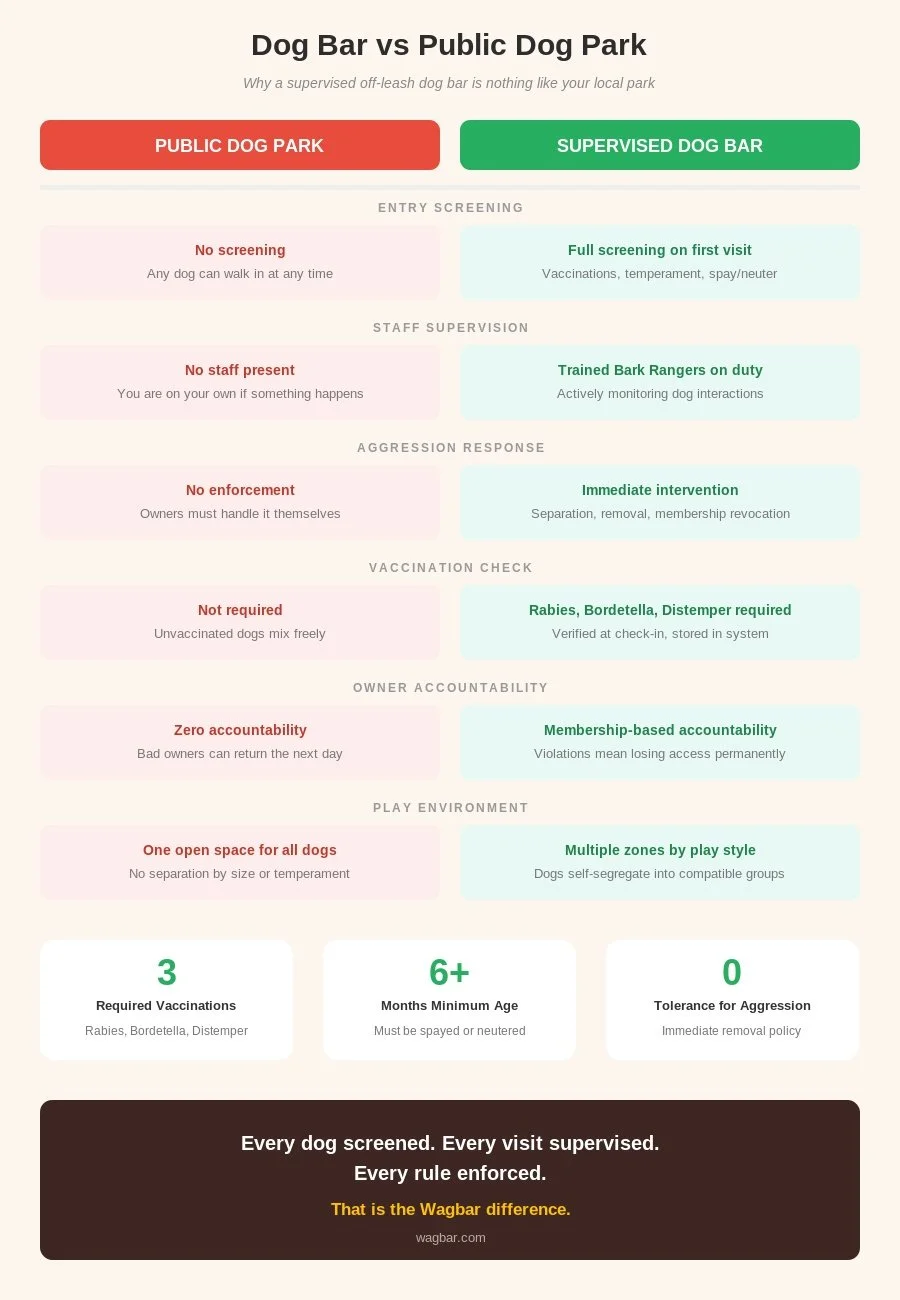
Public dog parks are free, open to anyone, unsupervised, and rely entirely on individual owner responsibility. There is no screening. There is no staff. There is no enforcement. There is no accountability. The gate is open and whatever walks through it is what you get.
Supervised dog bars are membership-based, staffed with trained professionals, require vaccination and temperament screening, enforce behavioral standards, and create accountability through community membership. Every dog in the space has been vetted. Every owner has agreed to a code of conduct. And trained staff are actively managing the environment throughout operating hours.
That difference is not cosmetic. It fundamentally changes what happens inside the space.
At a public park, responsible owners often leave because they cannot control what other dogs do. At a dog bar, irresponsible owners are the ones who get removed. The standards filter in one direction, toward a safer and more enjoyable experience for everyone who follows the rules.
What a Typical Visit Actually Looks Like
For anyone who has never been to a dog bar, here is what you can actually expect.
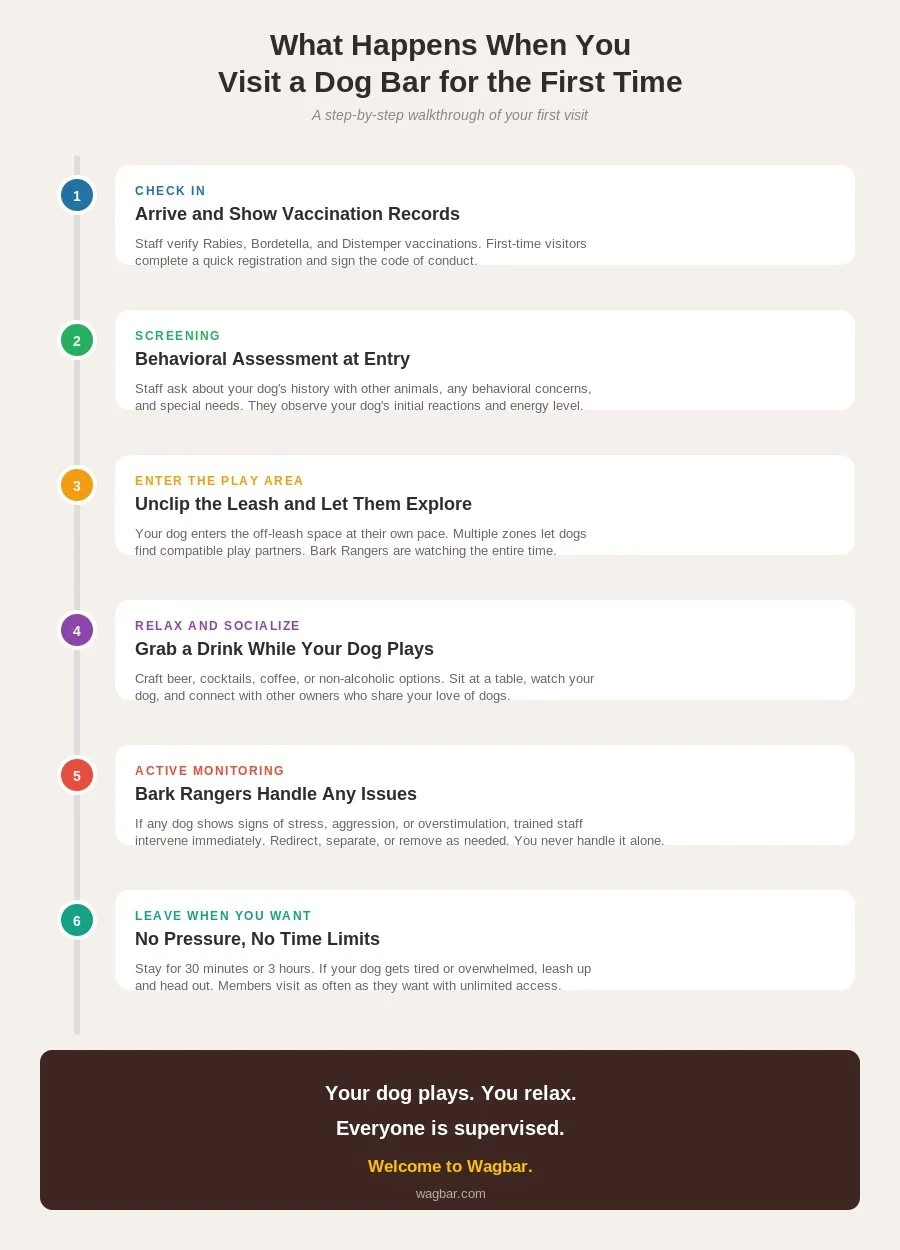
You arrive and check in at the front. If it is your first visit, staff verify your dog's vaccination records, ask about temperament and behavioral history, and walk you through the house rules. Your dog must be on leash until you reach the off-leash play area.
Once inside the play area, you unclip the leash and your dog starts exploring. Bark Rangers are present and watching. Other dogs are playing, some running, some wrestling, some sniffing around the perimeter, some lying in the shade doing absolutely nothing. The energy is social but managed.
You grab a craft beer or a coffee from the bar. You sit at a table or stand near the play area where you can watch your dog. Other owners are doing the same thing. Conversations happen naturally because you already have something in common. Your dog makes a friend. Or your dog ignores everyone and enjoys the space on its own terms. Both are fine.
If something happens, a Bark Ranger handles it. If your dog gets tired or overwhelmed, you leash up and head out whenever you want. There is no pressure to stay for a certain amount of time.
The experience is closer to taking your dog to a friend's really nice backyard than it is to anything you have experienced at a public dog park. Except the backyard has craft beer, other dogs to play with, and professional staff making sure everyone has a good time.
What You Should Look for in Any Dog Bar
Not all dog bars operate at the same standard. If you are evaluating any dog-friendly bar or off-leash social space, here is what separates the good ones from the ones that deserve the criticism.
Vaccination requirements enforced at the door. Not just listed on a website. Actually checked on every first visit and verified in the membership system.
Staff actively present in play areas. Not just bartenders behind the counter. Dedicated team members whose job is monitoring dog interactions and managing the play environment.
Clear behavior policies with real consequences. Written rules, verbal warnings for minor issues, removal for serious violations, and membership revocation for repeated problems.
Spay/neuter requirements. This single policy eliminates a significant percentage of behavioral issues before they start.
Size and temperament separation options. Whether through separate areas, different time slots, or natural zone design, there should be a way for dogs of different sizes and play styles to have appropriate experiences.
Responsible alcohol service. Licensed bartenders, standard responsible service practices, and staff authority to address owner behavior regardless of beverage consumption.
Wagbar checks every one of these boxes. That is by design. The entire dog bar concept was built around solving the exact problems that make people hesitant about dog-friendly social spaces.
The Community Factor Nobody Mentions
There is one benefit of dog bars that rarely comes up in online debates but matters more than almost anything else. Community.
Regular public dog parks have rotating casts of strangers. You never know who will be there or what their dogs are like. There is no relationship, no familiarity, and no shared investment in maintaining the space.
A membership-based dog bar builds something different. You start recognizing the same dogs and owners. Your dog develops friendships. You develop friendships. The staff knows your dog by name and understands its personality and play style. When everyone in the space has a stake in keeping it good, the culture self-reinforces.
This is especially valuable for people who are new to an area, working remotely and looking for social connections, or simply want a regular third place where they and their dog are both welcome. That social development happens for both dogs and owners simultaneously, which is what turns first-time visitors into long-term members.
Frequently Asked Questions
Are dog bars actually safe?
Professional dog bars with vaccination requirements, behavioral screening, trained staff, and membership accountability are significantly safer than unsupervised public dog parks. The screening process filters out dogs that are not suited for group play, and active staff monitoring catches potential issues before they escalate. No environment with animals is 100% risk-free, but supervised dog bars manage risk at a level that public parks simply cannot.
What if my dog gets attacked at a dog bar?
Trained Bark Rangers are positioned throughout the play areas specifically to prevent this. They intervene at the first sign of escalating tension, not after an incident occurs. If something does happen, staff separate the dogs immediately, assess the situation, and the offending dog is removed. Repeated aggression results in permanent membership revocation. This is fundamentally different from a public park where you are on your own.
Can I bring my small dog to a dog bar?
Yes. Well-designed dog bars include areas where smaller or calmer dogs can play comfortably without being overwhelmed by large high-energy dogs. The play space is designed with multiple zones so dogs naturally gravitate toward compatible play partners. Staff also actively manage mismatches and will redirect a large dog that is playing too roughly near smaller animals.
Do I have to drink alcohol at a dog bar?
No. Dog bars serve full beverage menus including coffee, non-alcoholic cocktails, soft drinks, and water. Many visitors come for the dog experience and the social atmosphere, not specifically for alcohol. You can enjoy the space with a coffee or a sparkling water just as easily as with a craft beer.
What vaccinations does my dog need for a dog bar?
Most dog bars require current proof of Rabies, Bordetella (kennel cough), and Distemper vaccinations. These are checked on your first visit and stored in the membership system. Some facilities may require additional vaccinations depending on local requirements. Your dog must also appear healthy and free of contagious symptoms.
Can I bring a puppy to a dog bar?
Most dog bars require dogs to be at least six months old and spayed or neutered. Puppies under six months are still building their immune systems and may not have completed their full vaccination series, making group play environments inappropriate. Once your puppy meets the age, vaccination, and spay/neuter requirements, a dog bar can be an excellent environment for puppy socialization.
What happens if my dog does not enjoy the dog bar?
Nothing bad. Not every dog thrives in group social settings, and that is completely normal. If your dog shows signs of stress, fear, or discomfort, staff will help you recognize those signals and you can leave at any time. Many nervous dogs warm up after a few short visits during off-peak hours. But if the environment is not right for your dog, no one will pressure you to stay or keep coming back.
Stop Wondering and Come See It for Yourself
Reading about a dog bar is one thing. Walking through the gate with your dog and watching them light up in a supervised space built for exactly this is something else entirely. The skeptics almost always become regulars once they experience the real thing. Wagbar has locations across the country and every one of them runs on the same screening, staffing, and safety standards covered in this article. Book your first visit and let your dog decide. If your city does not have one yet and you see the gap in your market, the franchise opportunity is worth a look.