

How to Validate a Dog Franchise Opportunity Before You Buy (USA, 2026 Edition)
Top TLDR: Validating a dog franchise opportunity means independently verifying the business model, financials, and franchisee experience before you sign. In the U.S., that means getting the current Franchise Disclosure Document (FDD) at least 14 days before you sign or pay (FTC Franchise Rule, 16 CFR Part 436), calling existing franchisees from Item 20, asking the right validation questions, reviewing the agreement with a franchise attorney, stress-testing territory and local demand, and visiting operating locations. Wagbar provides full details to qualified candidates who reach out through the franchising page.

Validating a dog franchise opportunity means going beyond the sales pitch to verify the business model, financials, support systems, and existing franchisee experience before you sign anything.
The Franchise Disclosure Document (FDD) is your primary research tool and legally required reading before any franchise purchase in the United States.
Talking directly with current franchisees is the single most reliable way to understand what ownership actually looks like day to day.
The right questions focus on the gap between what the franchisor promised and what ownership actually looks like in practice.
The U.S. pet industry hit $158 billion in 2025 and is projected to reach $165 billion in 2026, with 71 million U.S. households owning dogs — making dog-specific franchise validation about execution, not demand.
Wagbar provides full financial details, access to existing franchisees, and a clear investment structure to qualified candidates who reach out through the franchising page.
Most people who eventually buy a franchise spend months doing research before they ever pick up the phone. That's smart. The research phase, sometimes called the discovery phase, is where you separate franchises worth pursuing from ones that looked good on a landing page and fell apart under scrutiny.
If you're in that phase right now, this walks through what dog franchise validation actually means in the United States, what documents and conversations you need to have, what 2026 industry data tells you about the economics, and what questions to ask before you commit. It applies to any dog franchise you're evaluating.
Validation, at its core, is a process of independent verification — and it's a process that reputable franchise systems actually welcome. Wagbar, the nation's first off-leash dog bar franchise combining supervised off-leash play with a full-service bar, has been operating in this niche since founder Kendal Kulp opened the original location in Weaverville, North Carolina in 2015. With franchise locations now in development across markets including Richmond, South Asheville, Cincinnati, Savannah, Knoxville, Myrtle Beach, Charlotte, Dallas, and Los Angeles, Wagbar is used as a real-world example throughout so you can see exactly how each validation step applies to a live off-leash dog bar franchise opportunity. Their published research paper, The State of the Dog Park Bar Industry in America, also provides useful context for anyone evaluating this specific niche.
When you're evaluating a franchise, the franchisor will tell you all the reasons it's a great investment. That's their job. Your job is to find out whether those claims hold up.
There's no better way to do that than calling people who signed the agreement before you. Current franchisees have gone through the same process you're in. They've opened locations, hired staff, dealt with problems the sales materials didn't mention, and now have real opinions about whether they made the right call. Talking to them isn't just useful. For any serious buyer, it's non-negotiable.

Why the "Dog" Part Matters: U.S. Market Context for 2026
Before you evaluate any specific franchise, you need to understand the market you're entering. The dog-specific segment of the pet industry has its own economics, its own consumer behavior, and its own risk profile that generic franchise validation doesn't fully address.
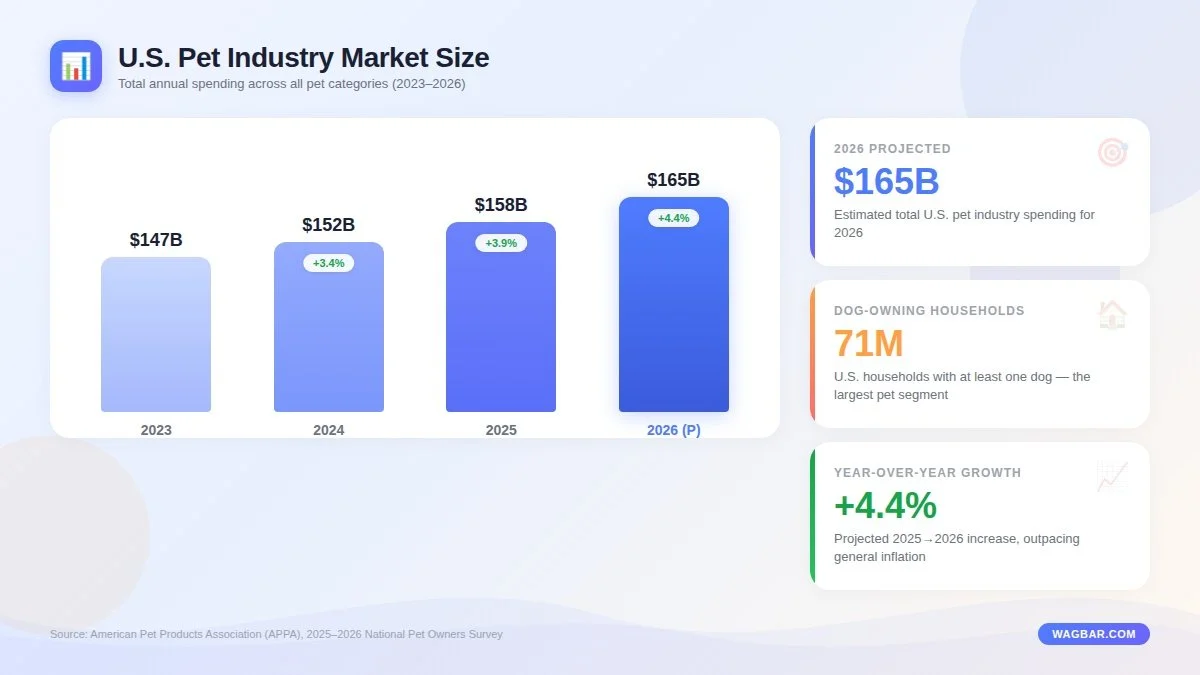
The tailwinds are real. U.S. pet spending hit $158 billion in 2025 (up 3.7% year-over-year), and the American Pet Products Association (APPA) projects $165 billion for 2026, a 4.4% increase with roughly 2% driven by inflation and the rest by genuine demand growth (APPA 2026 State of the Industry Report). Dogs are in roughly 71 million U.S. households — 53% of all households — up from 51% in 2024, representing approximately 4 million additional dog-owning households in a single year (APPA).
The pet services category, which includes boarding, grooming, training, sitting, and walking, reached $14.3 billion in 2025 and is projected at $14.9 billion for 2026. This is the category most directly relevant to dog franchise buyers, and it's been growing faster than pet food or supplies for three consecutive years.
A big market doesn't guarantee your unit succeeds. But it does mean that when you're validating a dog franchise, you're evaluating execution risk, not demand risk. The customers exist. The question is whether a specific franchise model, in a specific territory, with your specific capital structure, can capture enough of them to generate the returns you need.
For deeper context on the specific sub-category of dog park bars, Wagbar's published thesis, The State of the Dog Park Bar Industry in America, covers the emergence, business models, closure patterns, and financial characteristics of the dog park bar sector in detail. It's the only comprehensive research paper on this niche available to franchise buyers.
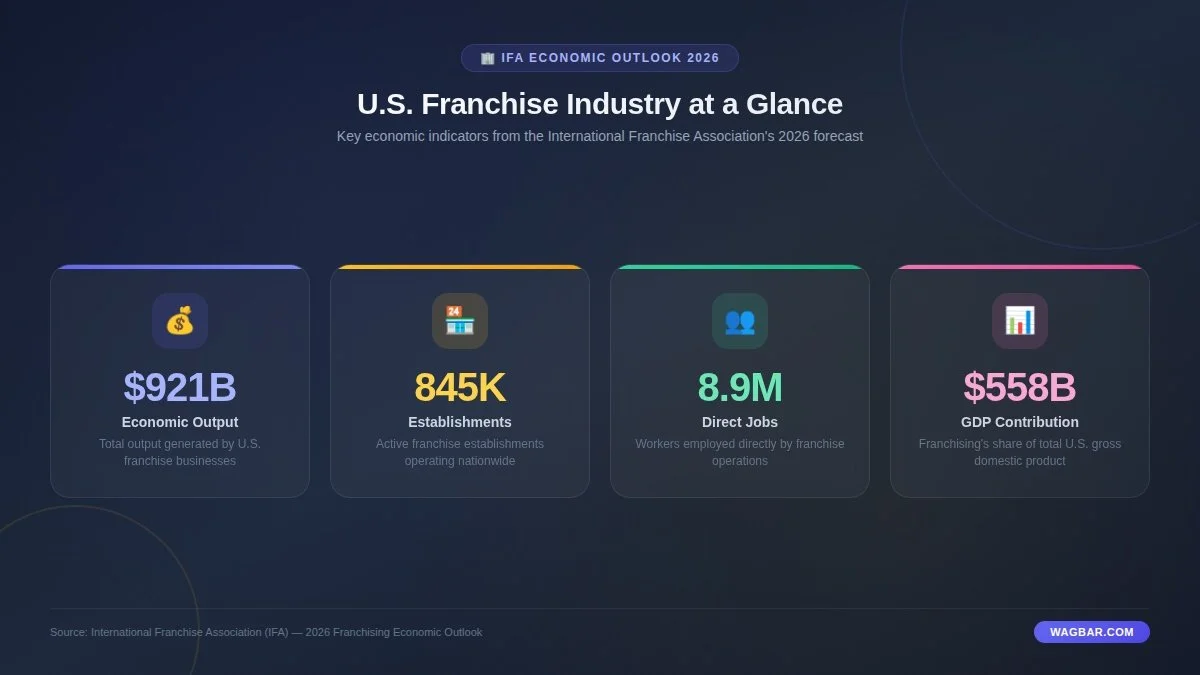
The broader franchise industry reflects similar strength. The International Franchise Association's 2026 Economic Outlook projects U.S. franchise economic output at $921.4 billion across 845,000 establishments employing 8.9 million people, contributing $558.4 billion to GDP — nearly 3% of the total U.S. economy. The franchise model, particularly in pet services, is large, legitimate, and heavily regulated. That regulation, especially around disclosure requirements, is actually one of the protections that makes franchising a more transparent investment than buying an independent business outright.
The pet industry market analysis provides broader context on the market tailwinds supporting the off-leash dog bar concept, including the shift toward experience-based pet spending.
For a foundational understanding of how franchising works before you get into validation specifics, the complete franchise overview on wagbar.com is a useful starting point.
The U.S. Regulatory Framework: What Protects You as a Buyer
Before diving into the step-by-step validation process, you need to understand the legal framework that governs franchise sales in the United States. This framework exists specifically to protect buyers like you, and understanding it gives you both rights and tools that many prospective franchisees don't fully use.
The FTC Franchise Rule (16 CFR Part 436) is the federal law that requires franchisors to provide you with a Franchise Disclosure Document at least 14 calendar days before you sign any agreement or pay any money. This isn't optional for the franchisor and it isn't a courtesy — it's federal law enforced by the Federal Trade Commission. Use that window for genuine due diligence, not just a casual read.
Beyond the FTC rule, 14 states plus Oregon require franchise registration before a franchisor can legally sell in their state: California, Hawaii, Illinois, Indiana, Maryland, Michigan, Minnesota, New York, North Dakota, Oregon, Rhode Island, South Dakota, Virginia, Washington, and Wisconsin (Franchise Registration States). If you live in one of these states or plan to operate a franchise there, the franchisor must have registered their FDD with your state regulator before they can legally offer it to you. State regulators can and do deny registration, which adds an extra layer of scrutiny. Wagbar has a detailed breakdown of state-specific requirements at their state-specific FDD registration resource.
These protections work in your favor, but only if you actually use them. The 14-day window is a minimum, not a target. Serious buyers typically spend several weeks to a few months in the validation process.
Step One: Read the FDD Cover to Cover
The Franchise Disclosure Document is a legally required document that every U.S. franchisor must provide to prospective franchisees at least 14 days before any agreement is signed. It contains 23 items covering everything from the franchisor's background and litigation history to financial performance representations, fees, territorial rights, and training obligations.
Most people don't read it carefully. That's a mistake.
The Items That Matter Most During Initial Validation
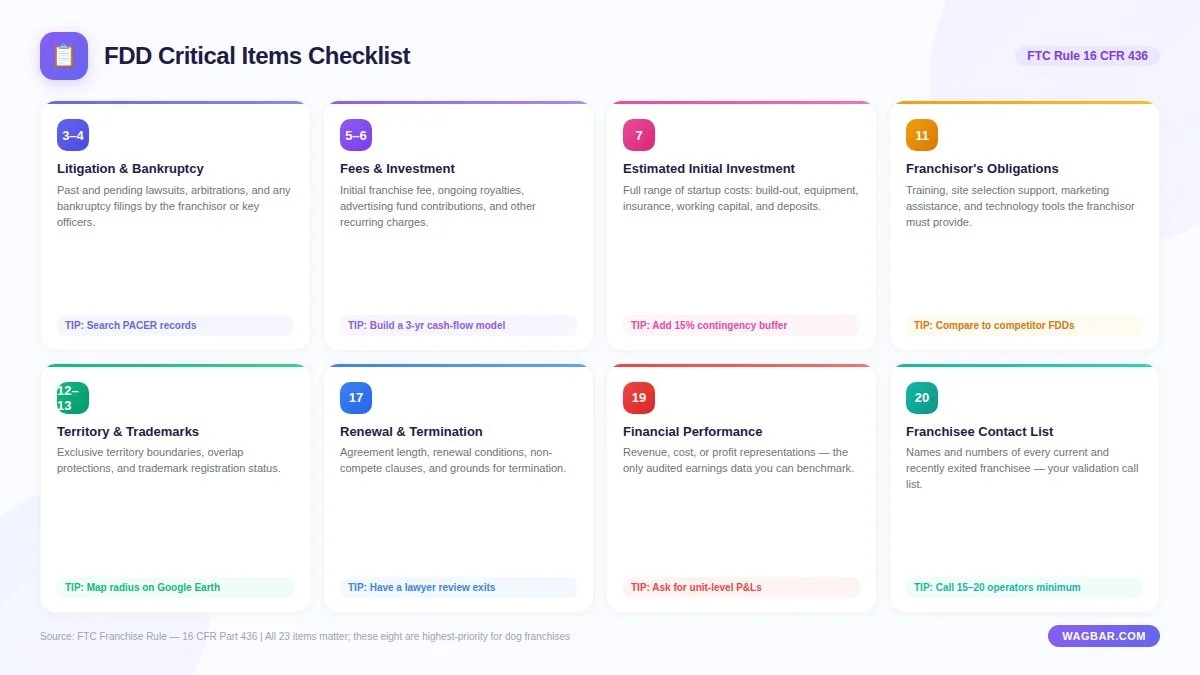
Items 3 and 4 (Litigation and Bankruptcy): Look for patterns of disputes with franchisees or financial distress. A single lawsuit may be routine; a pattern of franchisee litigation is a warning sign. Check whether any current executives have bankruptcy history.
Item 5 and 6 (Fees): These spell out the initial franchise fee, royalties, marketing fund contributions, and any other ongoing fees. Typical pet franchise royalties run 3–7% of gross revenue plus 1–2% for the marketing fund (VettedBiz). For Wagbar, the franchise fee is $50,000. Ongoing royalties are 6% of adjusted gross sales, with an additional 1% contributed to the Wagbar marketing fund. Multi-unit operators who commit to three or more locations receive a 50% discount on the franchise fee for each additional unit.
Pay close attention to the total fee burden. Fees come off gross revenue, not profit. At a 9% combined royalty-plus-marketing rate, every $100,000 in annual sales sends $9,000 to the franchisor before your rent or payroll. Also watch for hidden fees: technology fees (which can run $1,000+ per month at some brands), conference fees, transfer and renewal fees, and required vendor markups that compress your margins further.
Item 7 (Estimated Initial Investment): This is the full cost range to get open, not just the franchise fee. Wagbar's estimated total investment runs between $470,300 and $1,145,900 depending on site, buildout, and local market conditions. That range covers licensing, training, construction, equipment, initial inventory, and working capital.
Compare the franchisor's Item 7 range to real buildout quotes in your specific city. Underestimates here are common across the franchise industry, particularly for construction and permitting timelines (FranchiseStack).
Item 11 (Franchisor's Assistance): Training length, pre-opening support, ongoing field visits, and what's included versus what costs extra. For dog-specific franchises, pay particular attention to animal safety training, incident response protocols, and whether the franchisor provides ongoing operational support or just initial training.
Items 12 and 13 (Territory): How territory is defined, protected, measured, and whether the franchisor retains the right to sell company-owned or other franchise units inside your territory. Some franchisors use non-exclusive territories, which means they can open competing locations near yours. This is a critical area for your franchise attorney to review.
Item 17 (Renewal, Termination, Transfer): Notice periods, penalties, and any personal guarantees. Short termination windows combined with large exit costs are warning signs. Understand what happens to your investment if the relationship doesn't work out.
Item 19 (Financial Performance Representations): Not all franchisors include these, but when they do, they give you actual revenue or earnings data from existing locations. Read the footnotes carefully. Average revenue figures can obscure wide variance between top and bottom performers. No Item 19 at all, or data from fewer than five locations, is a caution flag (VettedBiz). It's also important to note whether the franchisor shows revenue only, or revenue plus expenses plus owner earnings. Revenue without cost data doesn't tell you whether the business is actually profitable.
Item 20 (Outlets and Franchisee Information): This item lists all current and former franchisees with their contact information. It's one of the most valuable items in the document because it tells you who to call. Count closures and transfers over the last three years — high churn is a risk signal.
Item 21 (Financial Statements): These are the franchisor's audited financials. They show you whether the franchisor's own business is financially healthy. A franchisor that's losing money may not have the resources to support you for the duration of your agreement.
Red Flags in the FDD
Frequent litigation with franchisees, high closure or transfer rates, vague or missing Item 19, Item 7 ranges that don't match local contractor quotes, and a franchisor whose primary revenue comes from selling franchises rather than collecting royalties on successful operations (FranchiseStack).
You don't need to be a lawyer to read an FDD, but having a franchise attorney review it before you sign is money well spent. They'll flag unusual clauses, explain what various provisions actually mean in practice, and help you understand what you're agreeing to. A 2026 flat-fee FDD review typically runs $1,500–$3,000, with negotiation and redlining pushing that to $5,000 or more (VetMyFranchise). Hourly rates for franchise attorneys range from $300–$650 depending on market and experience (Lopes Law). That's a modest cost relative to a total investment that can exceed $1 million.
Step Two: Understand the Dog Business Niche You're Evaluating
Dog franchises are not interchangeable. Each model carries different real estate requirements, labor dynamics, insurance needs, regulatory exposure, and capital intensity. Before you go deep into validation with any specific brand, make sure you've understood the structural differences between the main categories.
Dog Daycare and Boarding (brick-and-mortar): Facility builds dominate the cost. Leasehold improvements alone can run $500,000–$850,000 for brands like Dogtopia, and you typically need 4,000+ square feet (Franzy). Call your city or county planning office about zoning, noise ordinances, and kennel permits before signing anything. Total investments in this category commonly range from $600,000 to $1.5 million.
Dog Grooming: Labor is the primary constraint. Qualified groomers are chronically hard to hire and retain across the U.S. Model staffing costs conservatively and pay close attention to what the franchisor's training pipeline looks like for groomers and caregivers.
Mobile Pet Services (grooming, walking, sitting): Lower capital entry ($180,000–$300,000 range), but often personality-dependent and harder to systematize. Test whether the model survives owner absence — if the business collapses without you personally servicing clients, you've bought a job, not a business.
Off-Leash Dog Bars (hybrid hospitality + pet): This is the category Wagbar operates in — combining supervised off-leash play with a full bar and membership model. The investment profile sits between grooming and daycare, and the dual revenue stream (recurring memberships plus bar and event income) creates a different financial profile than single-service models. The buildout dynamics are also different, particularly with Wagbar's partnership with a company that converts shipping containers into fully-equipped bars and bathrooms, which significantly reduces construction uncertainty compared to traditional buildouts.
2026 Investment Benchmarks by Category
Based on current FDD data from publicly available sources:
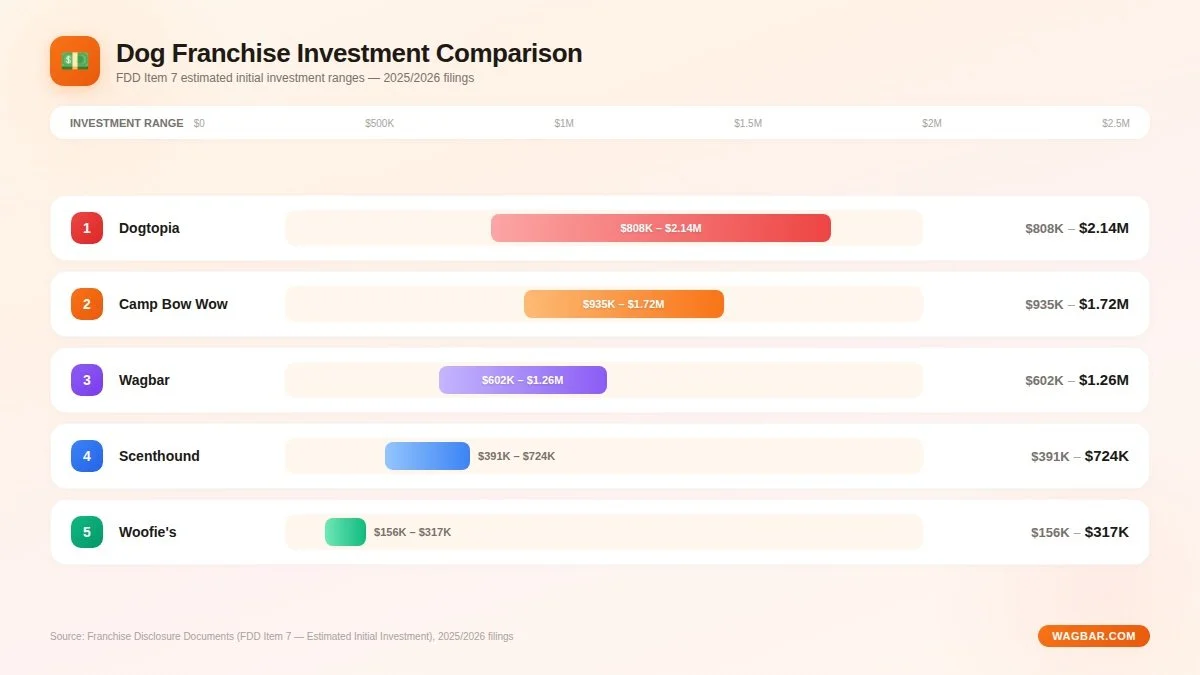
Camp Bow Wow (daycare/boarding): $955,000–$1,200,000 total investment, $50,000 franchise fee, 7% royalty + 1% marketing (FranchiseInvestorData)
Dogtopia (daycare/boarding): $607,765–$1,268,841 total investment, $40,095–$49,500 franchise fee, 7% royalty + 2% brand fund (Franzy)
Wagbar (off-leash dog bar): $470,300–$1,145,900 total investment, $50,000 franchise fee, 6% royalty + 1% marketing fund
Scenthound (grooming): $328,000–$550,000 total investment (FranchiseVS)
Woofie's (mobile pet care): $181,600–$294,900 total investment (FranchiseVS)
These numbers come from FDD Item 7 disclosures via franchise data aggregators. Always confirm against the franchisor's actual current FDD for the exact brand and concept you're evaluating.
Step Three: Talk to Existing Franchisees
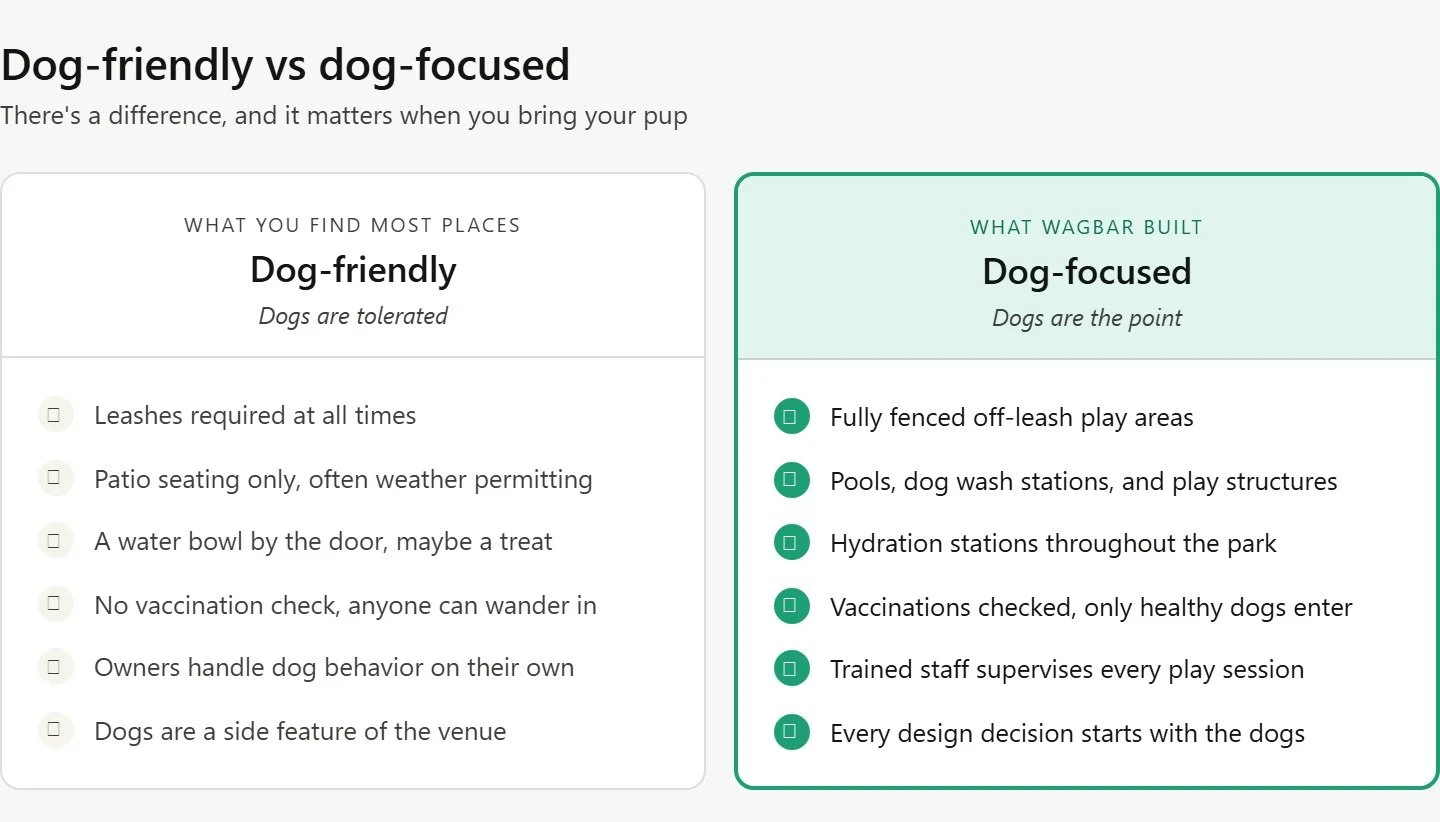
No document tells you more about what franchise ownership actually looks like than the franchisees who are already doing it.
How to Get Franchisee Contact Information
You don't need to ask the franchisor to connect you with franchisees, though they'll often offer to. Item 20 of the Franchise Disclosure Document lists every current and former franchisee by name, location, and contact information. That list is yours to use however you want.
The distinction matters. When a franchisor gives you a list of franchisees to call, they're likely steering you toward their most satisfied owners. Item 20 gives you the full picture, including people who left the system. Former franchisees who chose not to renew or sold their locations can be some of the most informative conversations you have, because they have no ongoing relationship with the franchisor and less reason to soften their answers.
Call as many as you can reasonably reach. Five conversations will teach you more than fifty hours of reading sales materials. Industry best practice suggests calling 8–12 franchisees with a mix of new owners (6–18 months), mature owners (3+ years), top performers, and — critically — former franchisees listed in Item 20 (VettedBiz, FranchiseStack).
With Wagbar, you can also visit the location in Asheville, NC as part of your research. Seeing how an established location runs, watching the membership experience in action, and talking to the staff who work there gives you information no document can fully provide.
As franchisees across multiple markets have come online, including Richmond, South Asheville, Cincinnati, Savannah, and others, Wagbar's Item 20 list continues to grow. That's a meaningful validation signal on its own: each franchise location represents someone who went through this same evaluation process and decided to move forward.
For more foundational context on how franchise agreements and disclosure documents work, the complete franchise overview covers the structure of the relationship between franchisor and franchisee in plain language.
The 10 Questions to Ask Existing Franchisees
In the U.S. franchise world, "validation" means confirming the model works in practice by speaking directly with owners, not just trusting the sales team. These ten questions are specifically tailored to cut through the surface and get to the operational reality of dog franchise ownership.
Question 1: "Knowing what you know now, would you sign again?"
Start here. This is the most direct summary question available, and it cuts through nuance quickly. The answer isn't always a clean yes or no, but how someone responds tells you a lot.
A franchisee who says "yes, without hesitation" is a different data point than one who says "probably, but I'd negotiate a few things differently" or "honestly, I'm not sure." You want to understand the full sentence, not just the word.
Pay attention to tone as much as content. Someone who says yes but spends the next ten minutes listing grievances is giving you useful information. So is someone who says the first year was harder than they expected but now genuinely loves what they built.
Question 2: "Was the total investment estimate accurate?"
Item 7 of the FDD gives a range for total investment. That range exists because real costs vary, but the question is whether franchisees' actual experience fell inside it, at the top of it, or exceeded it.
Construction costs, permitting timelines, working capital requirements in the first six months, unexpected site preparation needs: these are the categories where actual costs most often diverge from estimates. Asking multiple franchisees this question and averaging their answers gives you a more realistic starting budget than the FDD range alone.
For Wagbar, the estimated total investment runs between $470,300 and $1,145,900, which covers licensing, training, buildout, equipment, and working capital. Wagbar's container bar partnership, a system that converts shipping containers into fully-equipped bars and bathrooms, is designed specifically to reduce construction uncertainty. It's worth asking franchisees directly whether they used that solution and how it affected their actual buildout costs.
Question 3: "How long did it take you to break even?"
Ramp-up time is one of the most important financial variables in any franchise, and it's rarely discussed as directly as it should be. You need to know how long it took a location to cover its monthly costs from revenue, and separately, how long the path to recovering the initial investment looked.
A business model with strong recurring revenue, like Wagbar's membership-driven structure, tends to reach operational break-even faster than one dependent entirely on walk-in traffic, because each new member creates predictable monthly income from that point forward. But ramp-up still depends on how fast membership volume builds in a given market.
Asking franchisees in markets of different sizes gives you a range of realistic timelines rather than a single optimistic figure. Many dog daycare and grooming concepts target 24–36 months to break even, but your market may differ significantly based on local labor costs, rent, and competitive density (ClearValueLending). The revenue streams for off-leash dog bars page explains how memberships, day passes, bar sales, and events layer together to build that monthly revenue base.
Question 4: "What did training prepare you for well, and what did it miss?"
Every franchisor describes their training program in positive terms. Franchisees can tell you whether that description matches reality.
Wagbar's training includes the "Opener" app for pre-opening guidance, a one-week hands-on session at the Asheville headquarters covering dog behavior management, bar operations, staff training, and customer experience, and on-site support during grand opening. That's a structured program with clear components. The question is whether franchisees felt genuinely prepared after completing it, or whether they hit situations in the first few months that the training hadn't addressed.
Gaps in training are common and not necessarily a dealbreaker. What matters is whether the franchisor was responsive when those gaps showed up and whether franchisees felt supported in figuring things out.
For dog-specific franchises, pay particular attention to animal safety training. Ask whether the training covered incident response protocols, bite policies, kennel checks, and grooming tool sanitation in sufficient depth. Dog businesses carry unique operational and liability risks, and the franchise's training should specifically reduce those risks, not just cover general business operations.
Question 5: "How responsive is corporate when you have a problem?"
This question gets at the post-signing relationship more directly than anything in the sales materials. Every franchisor promises ongoing support. Franchisees can tell you what it actually looks like.
The specifics to probe: How long does it take to get a response? Do you reach a person or a ticket system? Is the support substantive, or do you end up figuring most things out yourself? Has the level of support changed as the franchise system has grown?
For dog franchises specifically, ask: How responsive is field support when you have an incident — a bite, an injury, a complaint? The speed and quality of incident response tells you more about a franchisor's support infrastructure than any routine business question will.
Wagbar's support structure includes quarterly business reviews, marketing assistance, technology infrastructure, and access to a growing franchisee network. Whether that translates into real responsiveness when an individual owner has a pressing operational question is exactly what the franchisee conversation is designed to verify.
For more on what the ongoing franchisee relationship looks like, the benefits of owning a pet franchise resource covers the support components in more detail.
Question 6: "What's your relationship with other franchisees like?"
Franchise systems where owners communicate and support each other tend to outperform those where franchisees operate in silos. A healthy franchisee network is a form of collective problem-solving that supplements whatever corporate provides.
Ask whether there are informal channels, group chats, annual meetups, or peer-to-peer relationships that have been useful. Ask whether the culture feels collaborative or competitive. And ask whether franchisees in the network are candid with each other, or whether there's a social pressure to project success.
Wagbar's growing network of owners, spanning markets from Myrtle Beach and Richmond to Savannah and Cincinnati, gives newer franchisees access to people who've already worked through opening-year challenges. That knowledge transfer is hard to quantify but genuinely valuable.
Question 7: "Were there any territory or competitive surprises?"
Territorial rights can look protective in the FDD and still create unexpected complications in practice. Ask whether any competing concepts opened nearby after the franchisee signed. Ask whether the franchisor has other brands or formats that could theoretically operate in a franchisee's market. Ask whether the defined territory turned out to be the right size for the target customer base.
For a concept like Wagbar, where membership radius and drive-time are real factors in how big a market a location can serve, this question is worth asking in detail. A territory that looks sufficient on a map can be constrained by traffic patterns, neighborhood character, or competing uses of outdoor space.
Note: some dog franchise brands use non-exclusive territories, meaning the franchisor retains the right to place additional units or company-owned locations inside what you thought was your market. Your franchise attorney should flag this in the FDD review, but it's worth asking franchisees directly whether they've experienced any territorial encroachment.
Question 8: "What's the biggest challenge you didn't see coming?"
This is the most open-ended question on the list, and often the most informative. It invites franchisees to tell you something the franchisor either didn't think to mention or chose not to emphasize.
Answers vary by market, by operator background, and by timing. Common themes across franchise systems include hiring and retaining good staff, managing the gap between the pre-opening timeline and reality, and building early membership volume before word-of-mouth has had time to develop.
For Wagbar specifically, running a location that involves both alcohol service and off-leash dog management has its own operational texture that most franchisees haven't encountered in prior careers. Asking how franchisees got comfortable with that combination is a useful version of this question.
For dog franchises broadly, also ask: What's groomer or caregiver turnover like, and how hard is hiring and training locally? High turnover destroys margins in dog-service businesses, and it's the single most commonly cited operational challenge across the pet franchise industry.
Question 9: "How do your actual sales compare to what you projected going in?"
If Item 19 of the FDD includes financial performance representations, you have some benchmark to work from. If not, franchisee conversations are your primary data source for understanding realistic revenue expectations.
Ask about first-year sales, the trajectory in year two, and whether the location is performing in line with, above, or below the expectations the franchisee set when they signed. Ask what drove any major differences. And ask whether they wish they'd been more or less conservative in their initial projections.
Also ask: Do leads come from the brand, local SEO, or your own advertising? What's your customer acquisition cost? Understanding where customers actually come from tells you how much the brand is really worth versus how much marketing you'll have to do yourself.
The dog business franchise profit margins breakdown provides broader context on how pet-related franchise businesses perform financially, including the factors that separate profitable operations from struggling ones.
Question 10: "What would you do differently if you were starting over?"
This question captures the accumulated wisdom of someone who's already made the mistakes. It's different from "what do you wish you knew," because it asks for specific decisions rather than general knowledge.
Common answers across franchise systems include things like: choosing a different site, hiring a general manager earlier, investing more in local marketing before opening, or negotiating certain lease terms more aggressively. For a concept that relies heavily on community building, you might also hear things about how they'd approach early membership drives or grand opening programming differently.
AJ Sanborn, Wagbar's Richmond franchisee who came from a 20-year career in financial services, represents the kind of operator who brings structured thinking to questions like this. His background, choosing Wagbar over opening a traditional bar because of his passion for animals, reflects the common thread in Wagbar's franchisee base: people who see this as more than a financial transaction. Reading his story on the Richmond franchisee announcement gives useful context on the kind of person who tends to pursue this opportunity.
Red Flags During Franchisee Validation
Inconsistent stories across multiple franchisees, widespread unwillingness to share numbers, high closure or transfer rates that match what you see in Item 20, or multiple owners independently saying they "wish they'd known" about a specific ramp-up or staffing issue that the franchisor doesn't address during the sales process (FranchiseStack).
How to Interpret What You Hear
Getting honest answers requires asking well, but it also requires listening without filtering everything through confirmation bias. If you're already excited about a franchise, you'll unconsciously lean toward the positive signals. Guard against that.
A few practical notes on reading franchisee conversations:
One unhappy franchisee is a data point. Several with the same complaint is a pattern. One person who had a bad experience with corporate support might reflect a personality mismatch. Four people saying the same thing is worth taking seriously.
Watch for what doesn't get said. If you ask about profitability and someone changes the subject to how much they love the community they've built, that's worth noting. Good operators can love their business and still be honest about the financial reality.
Former franchisees are worth the extra effort to reach. They've stepped outside the relationship and often speak more directly. Item 20 includes contact information for owners who left in the past three years.
Franchisees in your target market type are more relevant than others. A location that opened in a dense urban neighborhood and a location in a mid-sized college town may have very different experiences with membership ramp-up and bar revenue. Try to talk to franchisees in markets that resemble yours.
Step Four: Build a Realistic U.S. Financial Model
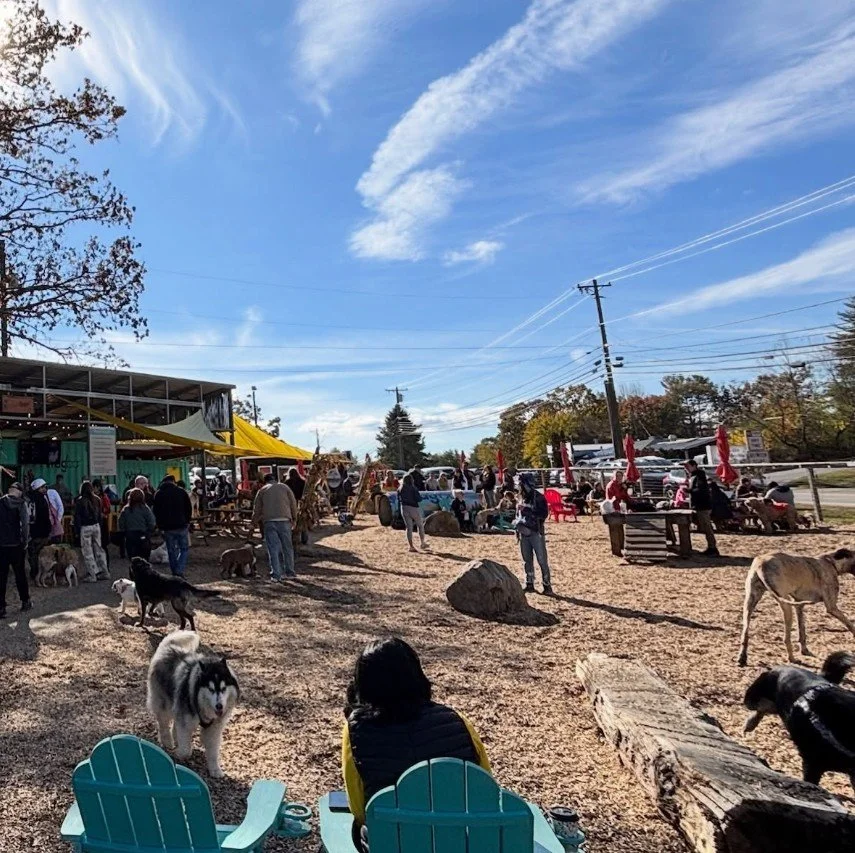
Talking to people and reading documents gets you information. Evaluating the business model requires you to think critically about whether the economics actually work — not on paper, but in your specific market with your specific capital structure.
Create your own 24-month monthly cash-flow model using conservative assumptions and your local cost data, not the franchisor's brochure numbers (VettedBiz, FranchiseStack).
What Your Model Should Include
Revenue drivers: Number of memberships, grooms per day, dogs in daycare, average ticket size, utilization rates, membership versus drop-in mix, and seasonality. For Wagbar, start with what a location needs in terms of membership volume, day pass traffic, and bar revenue to cover its costs and generate a return on investment. The revenue streams for off-leash dog bars page walks through how Wagbar locations generate income across memberships, day passes, bar sales, and private events.
Cost structure: Rent, utilities, insurance (critical for dog businesses — liability coverage for animal-related incidents is not optional), payroll and benefits, groomer or caregiver commissions, supplies, waste disposal, software, and marketing.
Fee load: Royalties (typically 3–7% across dog franchises), marketing fund (1–2%), technology fees, and required vendor markups. Remember: fees come off gross revenue, not profit. The industry-wide median sits at approximately 6% royalty plus 3.5% marketing fund (Frandera). Wagbar's 6% royalty and 1% marketing fund total 7% — competitive within the dog franchise space.
Ramp scenarios: Model slow, medium, and fast ramp. Make sure you can survive the slow case with your reserves. Define your maximum cash commitment, required working capital, and a reserve you will not touch even if ramp-up is slow — often 6–9 months of operating expenses for dog franchises.
Payback period: Calculate time to recover total invested cash under realistic, not optimistic, assumptions. Many dog daycare and grooming concepts target 24–36 months to break even (ClearValueLending), but your market may differ.
If the FDD has Item 19, use it to sanity-check your model, but verify: how many locations contributed data, what time period it covers, and whether the locations are comparable to your planned market — urban versus suburban versus rural makes a significant difference in both revenue potential and cost structure.
One business model question specific to Wagbar: does the membership-driven model match your market? Recurring revenue from members is one of Wagbar's core financial strengths. It creates predictable cash flow that a day-pass-only business can't match. But it requires a local customer base with the density and dog ownership rates to support that membership volume. Evaluating your specific territory against those requirements is part of the work.
SBA Lending Considerations
If you plan to finance your franchise purchase with an SBA loan, verify that your chosen brand is listed on the SBA Franchise Directory. Not all brands are listed, and brands that aren't on the directory can face complications with SBA-backed financing. Wagbar has a detailed resource on SBA loans for pet franchises that covers the application process and requirements specifically for pet franchise buyers.
Step Five: 2026 Revenue and Earnings Benchmarks — What the Data Actually Shows
Before you finalize your financial model, ground it in the actual performance data that's publicly available from dog franchise FDDs. These numbers give you reference points, not predictions. Your location's performance will depend on your market, your execution, and your cost structure.
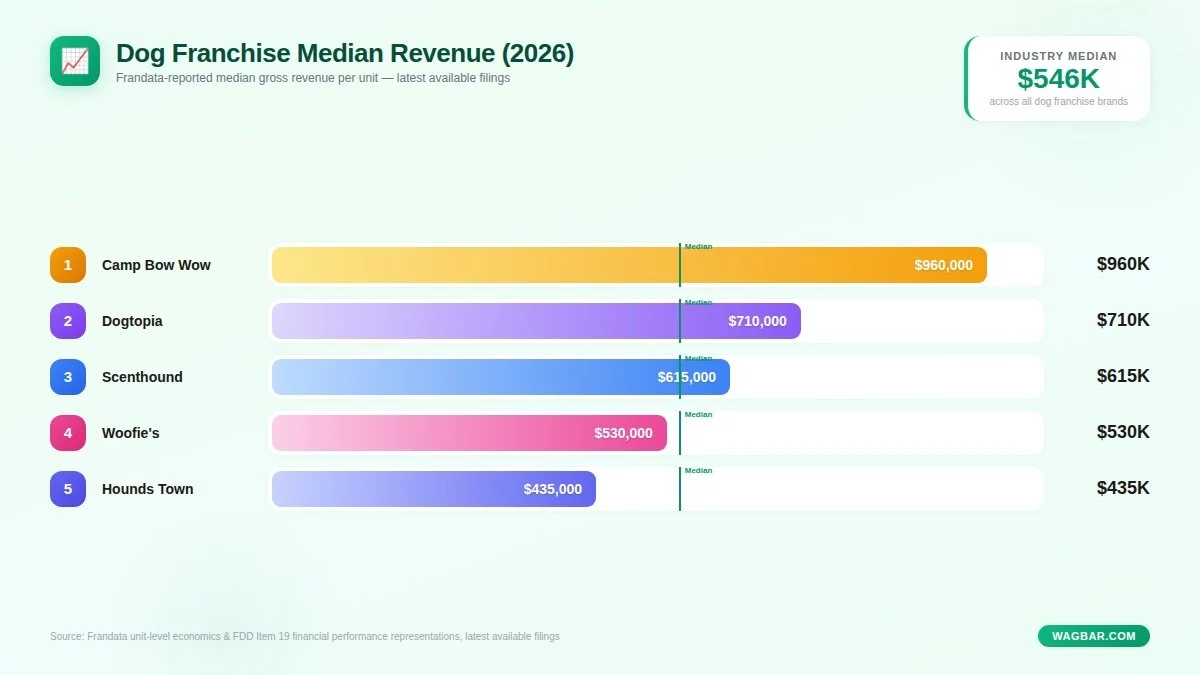
Dog Franchise Median Revenue Rankings (2026 FDD Item 19 Data)
Based on the Frandera pet services ranking, which tracks median revenue from FDD Item 19 disclosures:
Camp Bow Wow (daycare/boarding): $960,150 median annual revenue
The Dog Stop (pet care): $917,252 median annual revenue
Dogtopia (daycare/boarding): $905,798 median annual revenue
Central Bark (daycare): $770,229 median annual revenue
All Dogs Unleashed: $616,895 median annual revenue
Woof Gang Bakery (grooming): $577,837 median annual revenue
Scenthound (grooming): $434,641 median annual revenue
The pet services franchise industry median revenue is $546,335 per year across 2,524 tracked franchise units, with an average investment of $338,711 (Frandera).
Deeper Performance Data Where Available
Camp Bow Wow (from 2026 FDD, FY2025 data, 207 locations open 24+ months):
Average Unit Volume (AUV): $1,089,860
Top Quartile AUV: $1,480,842
Bottom Quartile AUV: $780,768
Net Profit Margin: 14.4% (system mean)
Estimated Owner Earnings: ~$157,000/year
Top Quartile EBITDA: 23.4% — Bottom Quartile EBITDA: Negative 0.6%
Only 45% of locations (93 of 207) exceed the system average
5-Year Survival Rate: 91% (FranchiseInvestorData)
Dogtopia (2024 FDD data):
Average Gross Revenue: $947,972
System Growth: +19% year-over-year footprint expansion
244 total locations (205 franchise, 39 corporate) (Franzy)
Note that revenue figures represent gross revenue before expenses and royalties. A franchise generating $900,000 in annual revenue with a 9% combined fee burden sends $81,000 to the franchisor. After rent, payroll, insurance, and other operating costs, owner earnings are a fraction of the top-line number. The Camp Bow Wow data above illustrates this clearly: the bottom quartile is actually operating at a loss despite being part of one of the highest-revenue dog franchise systems in the country.
The dog business franchise profit margins breakdown provides additional context on how these revenue numbers translate to actual owner economics across the pet franchise landscape.
Step Six: Stress-Test Territory, Local Demand, and Brand Strength
A strong franchise system can fail in a weak territory, and a strong brand nationally doesn't mean local dog owners have ever heard of it.
Territory Analysis
Confirm population density, household dog ownership rates, competitor density (independent groomers, PetSmart, other franchise locations), and any exclusivity gaps in your territory definition. Use the Item 12 territory map as a starting point, but validate it against real-world conditions.
For dog franchises, specific territory considerations include:
Drive-time radius: For membership-based concepts like Wagbar, how far will customers drive regularly? A 15-minute drive-time radius in a suburban market encompasses a very different population than the same radius in a dense urban area.
Zoning and permitting: Call your city or county planning office about zoning restrictions, noise ordinances, and kennel permits before signing anything. Dog daycare and boarding facilities face zoning challenges that other franchise types don't encounter.
Site specifics: Visibility, parking, proximity to complementary traffic (vet clinics, parks, pet retailers), and whether the location supports the customer experience your concept requires.
Local Brand Recognition
Ask normal dog owners in your target area if they recognize the brand. Many pet franchises are better known to franchise buyers than to local pet parents (VettedBiz). Understanding the gap between franchise-industry recognition and consumer awareness in your market tells you how much local marketing you'll need to invest.
Checking Brand Recognition in Practice
As an example, here are the kinds of brand signals you'd evaluate during validation — in this case for Wagbar:
Voted #10 in USA Today's 10Best Dog Bars nationally
Multi-year Best of WNC winner in Asheville
Active growth across multiple Southeast and Mid-Atlantic markets with locations in development in Knoxville, Richmond, South Asheville, Myrtle Beach, Charlotte, Savannah, Dallas, Los Angeles, and Cincinnati
Growing franchisee counts and active media recognition are both positive indicators during the validation phase. So is franchisee diversity: a system where franchisees come from different professional backgrounds suggests the model isn't dependent on niche expertise.
Step Seven: Evaluate Operations, Safety, and Scalability
Dog businesses carry unique operational and liability risks that generic franchise validation checklists don't fully cover. The franchise's systems should reduce those risks, not hide them.
Safety and Compliance
Look for documented protocols for kennel checks, gating and latches, grooming tool sanitation, incident reporting, and bite policies. Ask whether the franchisor provides a safety manual, whether it's updated regularly, and whether there's a clear chain of communication when incidents occur. Insurance requirements for dog businesses are not trivial, and the franchise should have specific guidance on the coverage you need.
Staffing Model
Evaluate the training pipeline for groomers and caregivers, wage structures, retention tactics, and how the brand helps with local hiring. High staff turnover is the single most margin-destructive operational challenge in dog-service franchises. Ask existing franchisees specifically about groomer and caregiver turnover rates and what it costs them to recruit and train replacements.
Technology and Standard Operating Procedures
Scheduling, CRM, customer reminders, photo proof of care, operational checklists, and audit trails all affect both safety and efficiency. Modern dog franchise systems should have technology infrastructure that automates routine tasks and creates accountability trails for animal welfare.
Scalability
Can you add a second location without doubling your personal workload? Does the model produce enough margin to support a general manager, or are you the permanent operator? If growth just increases owner stress without proportionally increasing owner income, the model may work as a single-unit lifestyle business but not as a multi-unit investment.
Step Eight: Attend a Discovery Day
Most franchisors offer a Discovery Day, a formal visit to headquarters where prospective franchisees meet the leadership team, tour operations, and ask questions in person. This isn't just a sales event. It's also your opportunity to evaluate the people behind the franchise system.
Pay attention to how the leadership team handles hard questions. Do they answer directly or deflect? Are they candid about challenges, or only focused on the upside? Do they seem like people you'd want to be in a long-term business relationship with?
Observe how leaders talk about struggling franchisees. Culture often tells you more than the sales deck. A franchisor that's honest about which locations struggle and why is a better partner than one that pretends every location is thriving (FranchiseStack).
Wagbar's founding team includes Kendal Kulp, who started the concept after a genuinely bad experience at a traditional dog park in 2015, and his father Kajur as co-founder. The origin story matters because it reflects the reason the concept exists: not as a calculated market opportunity, but as a response to a real problem that dog owners face. That founding motivation tends to produce better products and more authentic brand culture than concepts built purely from spreadsheet analysis.
For more detail on the Wagbar dog franchise opportunity and the background of the business, the franchising page covers the full picture.
Step Nine: Verify Legally and Financially Before You Sign
If you've passed through steps one through eight and still feel confident about the opportunity, there's a final set of verifications before signing.
Franchise Attorney Review
A 2026 flat-fee FDD and agreement review typically runs $1,500–$3,000 for a focused review including the FDD read, franchise agreement analysis, written risk memo, and debrief call. Add active contract negotiation and the cost climbs to $5,000 or more. Multi-unit or area-development deals can run $5,000–$10,000+ (VetMyFranchise).
A realistic total validation budget in 2026, including attorney fees, travel to visit operating units, and some accounting help, runs approximately $3,000–$5,000 plus 30–60 days of calendar time. Any franchisor rushing you past that process is telling you something important.
State Registration Verification
If you live in or plan to operate in one of the 14 franchise registration states plus Oregon, verify that the franchisor's FDD is currently registered with your state regulator. State regulators can and do deny or revoke registration.
Pre-Signing Checklist
Before signing (FranchiseStack):
Re-confirm territory in writing and any performance clauses that could cause you to lose territorial protection
Ensure your attorney has reviewed and negotiated key terms: territory protection, transfer fees, personal guarantee burn-off, termination conditions
Verify your financing (SBA or conventional) and confirm that your reserves cover at least 6–9 months of operating expenses under a slow-ramp scenario
Run background checks on the franchisor's key executives (Item 2 of the FDD lists them)
Red Flags That Should Stop You
Regardless of how attractive the opportunity looks on the surface, these signals should give any buyer serious pause:
Guaranteed returns or pressure to sign fast. The FTC explicitly warns that rushing buyers past the FDD review period is a bad sign. No legitimate franchise can guarantee profits.
Empty Item 19 combined with franchisees who won't share numbers. If the franchisor won't disclose financial performance and existing owners won't talk about revenue, you're being asked to invest blind.
More closures than openings in Item 20. A franchise system that's shrinking rather than growing is signaling that the model isn't working for existing owners.
Franchisor profits primarily from selling franchises, not royalties. If the franchisor's revenue model depends on selling new units rather than supporting existing ones, their incentives are misaligned with yours.
Non-exclusive "protected" territory. If the franchisor retains the right to place additional units inside your territory, your territory protection is effectively meaningless.
High closure or transfer rates over the last three years. Count them yourself from Item 20. High churn means people are leaving the system, and you need to understand why before you join it.
Putting the Validation Process Together
The steps above apply to any dog franchise you're evaluating. To show how they connect in practice, here's what a thorough validation process looks like when applied to a specific brand — in this case, Wagbar, since the off-leash dog bar model touches every category we've covered:
Request the FDD and read it carefully, particularly Items 3, 4, 5, 6, 7, 11, 12, 13, 17, 19, 20, and 21.
Contact existing Wagbar franchisees from the Item 20 list and ask the validation questions above.
Visit the Weaverville flagship location to see the concept in a real operating environment.
Work with a franchise attorney to review the franchise agreement before signing.
Build your own 24-month cash-flow model using real inputs from franchisee conversations, not just the most optimistic assumptions.
Evaluate your target territory against the market criteria Wagbar looks for: population density, dog ownership rates, outdoor culture, and disposable income.
Ask for Discovery Day access to meet the team in person.
Review the dog park bar industry research to understand the broader competitive landscape of the niche.
Confirm your financing structure, reserves, and personal exposure with your attorney and financial advisor.
This process takes time. It should. The franchisees who tend to succeed with Wagbar are the ones who did their homework, came in with realistic expectations, and built their location on a foundation of genuine enthusiasm for dogs and community rather than a hope that the brand would do the work for them.
If you're running this process on a Wagbar dog franchise opportunity, you'll find a growing pool of franchisees across diverse markets and backgrounds. The Knoxville location, led by a mother-daughter team with roots in animal rescue and finance, brings a different operating perspective than a franchisee coming from corporate sales or hospitality. That variety is actually useful during validation, because it tells you something about whether the model works for different operator profiles.
What you're listening for across all those conversations is consistency. Consistent praise around specific things (training quality, brand recognition, the membership loyalty dynamic) and consistent complaints around others (whatever those might be) will give you the clearest picture of what you're actually getting into.
The what to look for when investing in a dog bar franchise post from Wagbar covers the evaluation criteria from the franchisor's perspective, which is a useful complement to what you hear from franchisees.
Quick U.S. Validation Checklist for a Dog Franchise
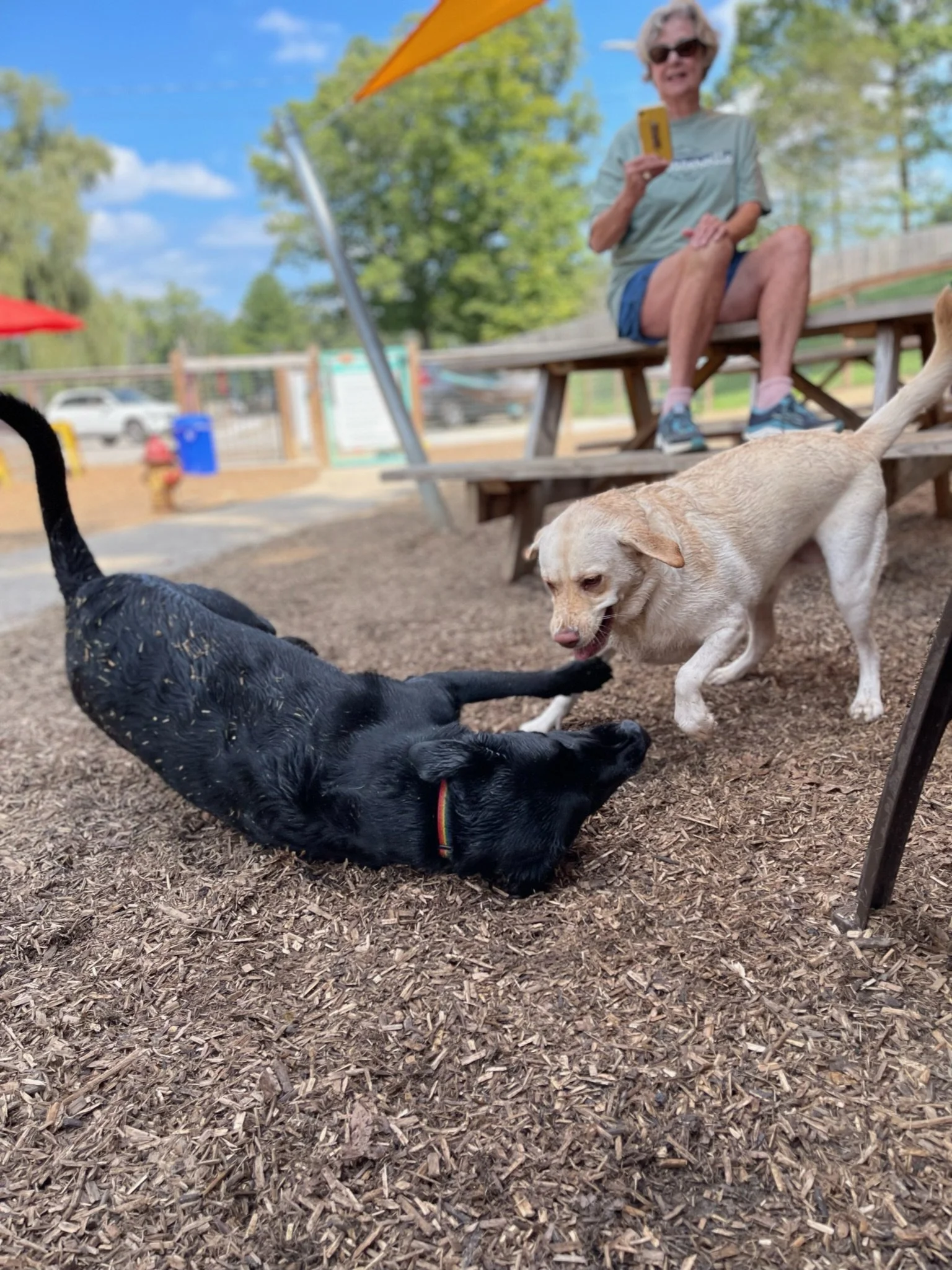
Use this as a compact reference before you buy (VettedBiz, FranchiseStack):
Obtain current FDD at least 14 days before signing; have a U.S. franchise attorney review it
Extract Items 3, 4, 5, 6, 7, 11, 12, 13, 17, 19, 20, and 21 into a single-sheet comparison if evaluating multiple brands
Call 8–12 franchisees (including 2–3 former owners); log themes on ramp, staffing, support, and economics
Build a 24-month cash-flow model with slow, medium, and fast ramp scenarios and confirm payback under conservative assumptions
Validate territory demand and local brand recognition with real dog owners and competitor mapping
Check zoning, noise ordinances, and kennel permits with your city or county planning office
Review safety and compliance SOPs, insurance requirements, and incident handling procedures
Evaluate the staffing model and groomer or caregiver retention pipeline
Confirm financing, reserves, and personal exposure; negotiate key contract terms with counsel
Attend Discovery Day and evaluate leadership culture firsthand
FAQ: Validating a Dog Franchise Opportunity
What is the FDD and why does it matter?
The Franchise Disclosure Document is a legal document franchisors must provide to prospective buyers before any agreement is signed. It contains 23 standardized items covering fees, financials, litigation history, territorial rights, and more. The FTC Franchise Rule (16 CFR Part 436) requires this disclosure at least 14 calendar days before you sign or pay anything. Reviewing it carefully, ideally with a franchise attorney, is the foundation of any proper validation process.
Can I contact any franchisee listed in the FDD, or just the ones the company recommends?
You can contact any franchisee listed in Item 20, including former franchisees. You don't need the franchisor's permission or introduction. Using the full list rather than a company-curated shortlist gives you a more complete picture.
What if a franchisee declines to talk?
Some will. That's their right. Move on to the next name on the list. If a large number of franchisees in a system are unwilling to speak with prospects, that pattern itself is worth paying attention to.
Should I ask the same questions to every franchisee?
Yes, especially the core financial questions. Asking the same questions across multiple franchisees lets you aggregate answers and spot patterns. You can also let conversations go wherever the franchisee takes them, but having a consistent baseline makes comparisons meaningful.
What's the best way to open a franchisee conversation?
Be direct and honest. Explain that you're evaluating the franchise system, that you got their contact information from Item 20 of the FDD, and that you'd appreciate 20-30 minutes of their time. Most franchisees who've been through this process themselves are willing to pay it forward.
What should I look for in Item 19 of the FDD?
Item 19 contains financial performance representations, when franchisors choose to include them. Look for actual revenue data from existing locations, read the footnotes carefully, and ask franchisees whether their own experience matches what the document shows. Pay attention to whether the disclosure shows revenue only or revenue plus expenses.
Do I need a franchise attorney?
For any franchise investment, yes. A franchise attorney has seen hundreds of agreements and knows what normal looks like versus what's unusual or unfavorable. A 2026 flat-fee FDD review typically costs $1,500–$3,000 (VetMyFranchise), which is modest relative to a total investment that can run $500,000 to over $1 million.
Does talking to franchisees replace reading the FDD?
No. The FDD and franchisee conversations cover different things. The FDD gives you legal structure, financial data, and contractual terms. Franchisees give you operational reality and lived experience. Both are necessary for a complete picture.
How long should the validation process take?
There's no fixed timeline, but rushing validation is one of the most common mistakes franchise buyers make. A thorough process typically takes several weeks to a few months and costs approximately $3,000–$5,000 including attorney fees, travel, and professional analysis. If a franchisor is pressuring you to sign quickly, that pressure itself is worth noting.
What are the franchise registration states?
Fourteen states plus Oregon require franchisors to register their FDD before selling: California, Hawaii, Illinois, Indiana, Maryland, Michigan, Minnesota, New York, North Dakota, Oregon, Rhode Island, South Dakota, Virginia, Washington, and Wisconsin (Lopes Law). If you're in one of these states, verify registration with your state regulator.
How do I get Wagbar's FDD and franchise details?
Wagbar provides full details to qualified candidates during the inquiry process. Start by visiting the franchising page and filling out the inquiry form. A member of the team will follow up to discuss next steps.
Where can I learn more about what Wagbar franchisees experience?
The Wagbar FAQ covers common questions about how the system works. For the full picture on owning a pet franchise, the owning a pet franchise resource covers the broader journey from initial consideration through operational success.
Is there any independent research on the dog park bar industry?
Yes. Wagbar has published The State of the Dog Park Bar Industry in America, the most comprehensive research paper on the emerging dog park bar sector. It covers industry emergence, business models, closure patterns, and financial characteristics. The full thesis is available as a downloadable PDF.
Buying a dog franchise is a significant decision. The people who get it right are the ones who treated the validation process seriously, asked the uncomfortable questions, and built their own picture of what ownership would look like rather than relying on someone else's summary. That due diligence serves you well no matter which dog franchise you're evaluating.
Talking to existing franchisees is the part of the validation process that most separates serious buyers from casual ones. It takes time, it requires some directness, and it occasionally produces answers you didn't want to hear. That's exactly why it's worth doing. The information you get from those conversations is something no document, no website, and no sales presentation can fully replicate.
If Wagbar is on your list, reach out through the franchising page to start the conversation.
Bottom TLDR: Thorough dog franchise validation protects you from expensive surprises and builds genuine confidence before you buy. The U.S. pet industry is projected to hit $165 billion in 2026 with 71 million dog-owning households, but market size doesn't guarantee unit-level success. The process means requesting the FDD, speaking with 8–12 existing franchisees using targeted questions, building a conservative 24-month financial model, stress-testing territory and local demand, visiting operating locations, and working with a franchise attorney on the agreement. Budget approximately $3,000–$5,000 and 30–60 days for proper validation. For Wagbar, start the discovery process by visiting wagbar.com/franchising to connect with the team.
Disclaimer
This information is not intended as an offer to sell, or the solicitation of an offer to buy, a franchise. It is for information purposes only. An offer is made only by Franchise Disclosure Document (FDD). Currently, the following states regulate the offer and sale of franchises: California, Hawaii, Illinois, Indiana, Maryland, Michigan, Minnesota, New York, North Dakota, Oregon, Rhode Island, South Dakota, Virginia, Washington, and Wisconsin. If you are a resident of, or wish to acquire a franchise for a Wagbar to be located in one of these states or a country whose laws regulate the offer and sale of franchises, we will not offer you a franchise unless and until we have complied with applicable pre-sale registration and disclosure requirements in your jurisdiction. Wagbar Franchising LLC, (828) 554-1021, 7 Kent Place, Asheville, NC, 28804
THESE FRANCHISES HAVE BEEN REGISTERED UNDER THE FRANCHISE INVESTMENT LAW OF THE STATE OF CALIFORNIA. SUCH REGISTRATION DOES NOT CONSTITUTE APPROVAL, RECOMMENDATION OR ENDORSEMENT BY THE COMMISSIONER OF FINANCIAL PROTECTION AND INNOVATION NOR A FINDING BY THE COMMISSIONER THAT THE INFORMATION PROVIDED HEREIN IS TRUE, COMPLETE AND NOT MISLEADING.