What Actually Happens Inside a Dog When You Switch From Kibble to Fresh Food
When you swap kibble for fresh food, your dog's body responds fast and in ways you can actually see. The gut microbiome shifts, water absorption improves, stool shrinks, coat quality changes, and steady energy replaces the sugar crash cycle within a few weeks. Fresh food carries roughly 70% moisture compared with kibble at around 10%, and that alone changes how the stomach, small intestine, pancreas, and colon process every bite. This piece walks through the biology of that switch, what happens during extrusion cooking versus gentle cooking, how the Maillard reaction creates advanced glycation end products in dry food, and how to run a smooth transition without wrecking your dog's stomach. Wagbar members in Asheville, Knoxville, and beyond already know good nutrition pairs well with real off leash play, and both matter for a dog who feels their best.
Curious how social play supports the same gut and behavior benefits fresh food starts? Stop by Wagbar Asheville or sign up for a Wagbar membership so your pup can run, socialize, and shake off that new steady energy in a fenced safe park while you sit down with a cold drink and other dog people.
The First 72 Hours After the Switch
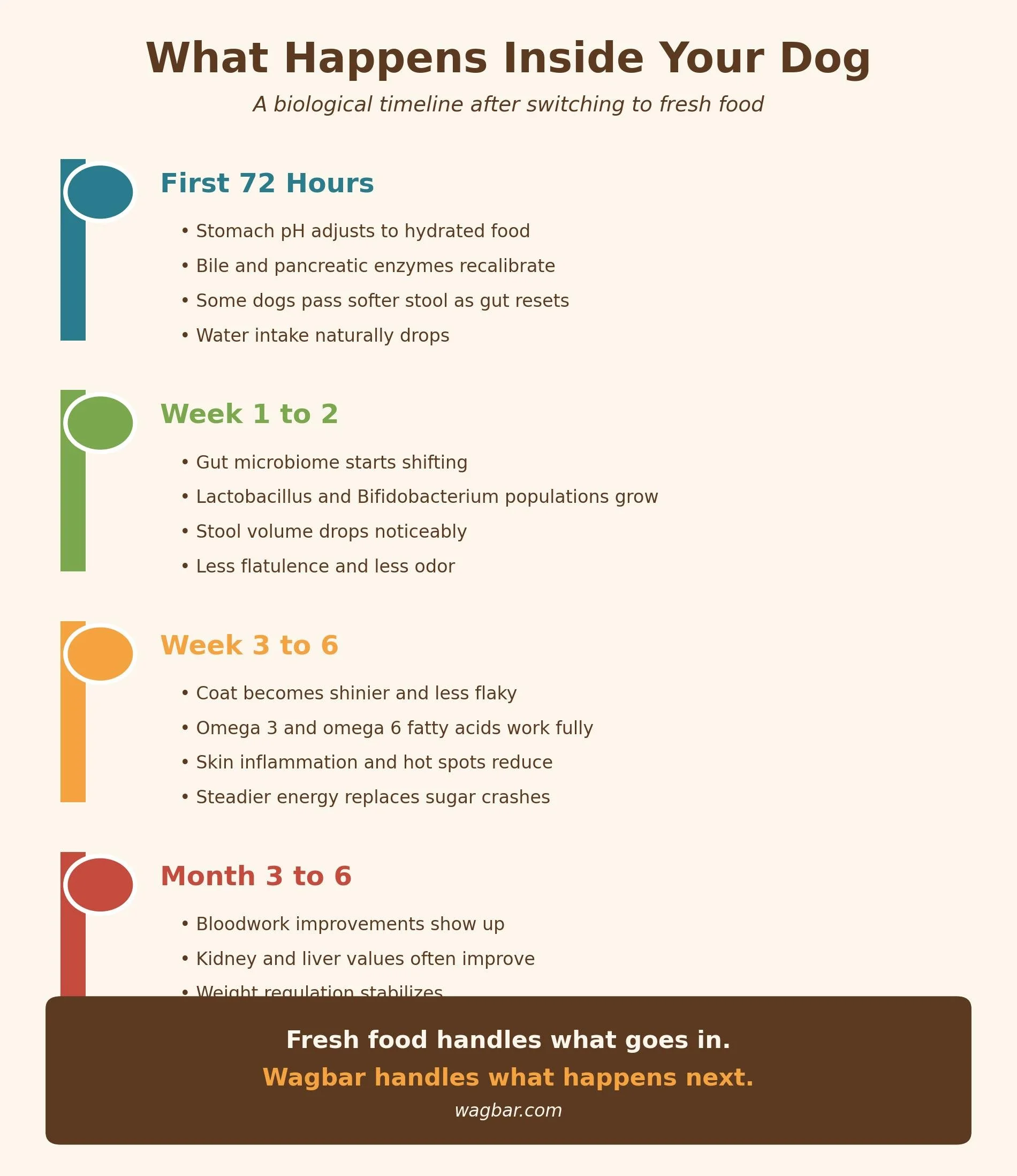
Dogs have a highly acidic stomach with a resting pH near 1 to 2, which is built for breaking down raw and cooked animal proteins. Kibble, cooked twice under high heat and pressure through extruder barrels, arrives already denatured and dry. Fresh food arrives hydrated and closer to its native protein structure, which means the stomach spends less energy pulling water from other tissues to start digestion. Your dog may drink noticeably less water in week one because the moisture is already inside the meal, and that's a normal shift, not dehydration.
Bile release from the gallbladder and pancreatic lipase, amylase, and protease output adjust to the new nutrient profile. Some dogs pass softer stool during days one through three as the small intestine and jejunum recalibrate. This settles once the enteric nervous system, sometimes called the dog's second brain because it holds over 100 million neurons, gets a read on what it's working with. For a wider look at wellness during any diet change, our dog health and wellness page covers what to watch and when to call your vet.
Gut Microbiome Shifts You Can Actually See
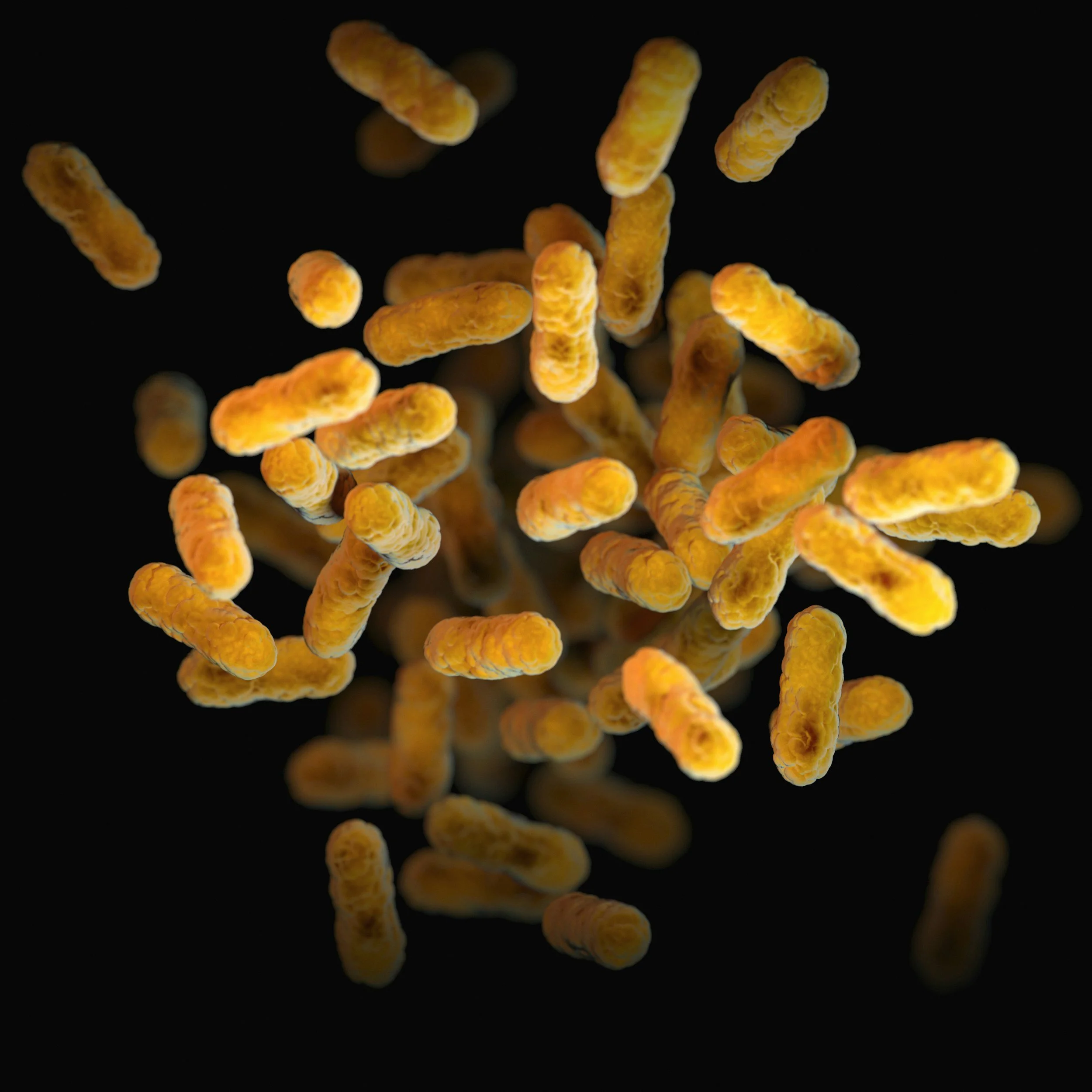
The canine gut microbiome, populated by bacteria like Lactobacillus acidophilus, Bifidobacterium animalis, Bacteroides fragilis, Fusobacterium, and Faecalibacterium prausnitzii, responds to substrate changes within days. Kibble is high in cooked starches from rice, corn, or potato, which tend to grow Firmicutes populations that ferment carbs into short chain fatty acids like acetate and butyrate. Fresh food shifts feeding pressure toward protein and fat fermenters, and populations rebalance over roughly two to four weeks. Prebiotic fibers like inulin, chicory root, and psyllium husk found in many fresh recipes also feed those beneficial strains.
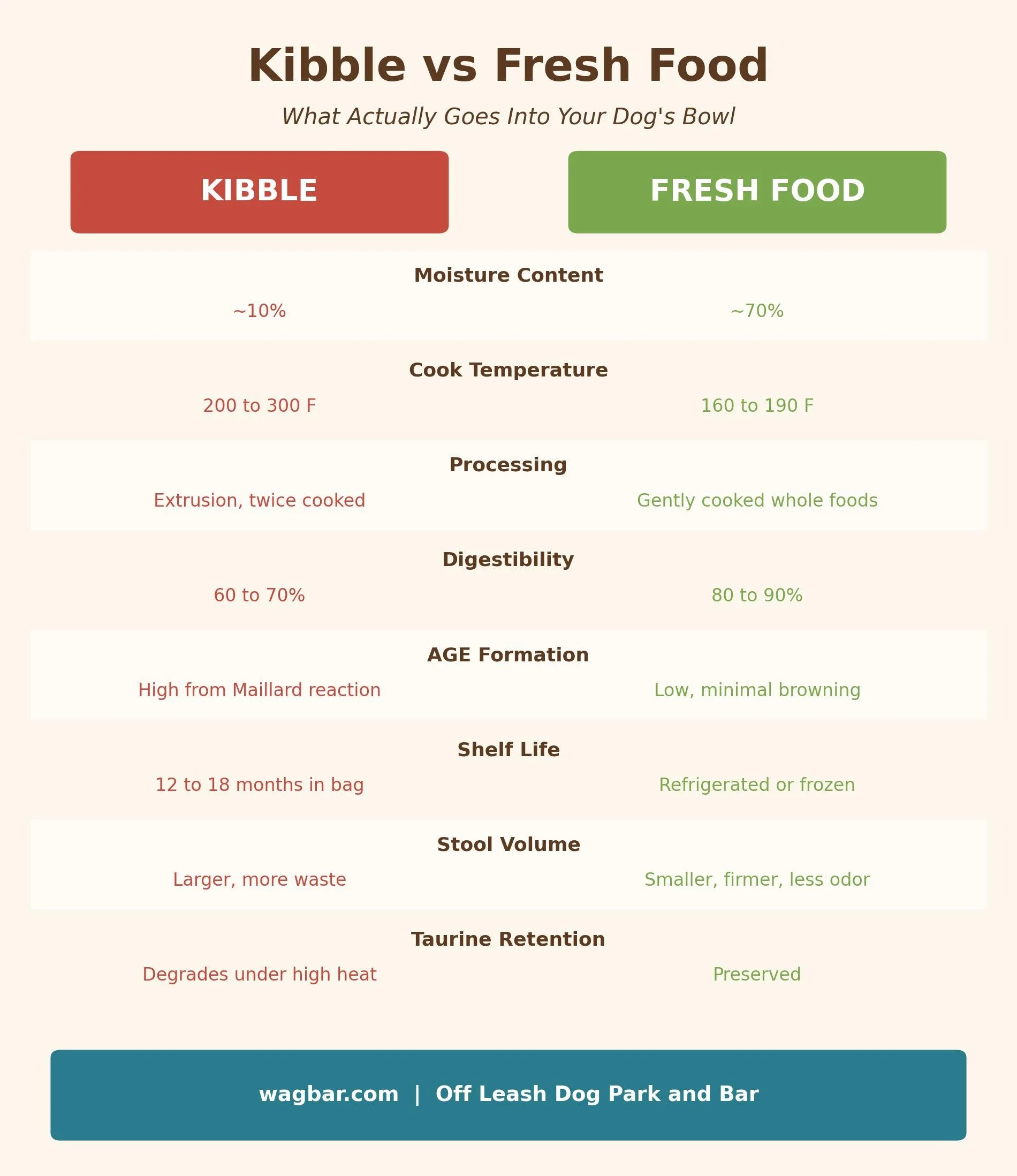
The visible sign for most owners is stool volume. Fresh food is more digestible per gram, so more of it gets absorbed and less exits the other end. Stool shrinks, firms up, and smells way less rank. This isn't magic. It's just what happens when your dog absorbs 80 to 90% of what they eat instead of 60 to 70%. For folks in apartments, condos, or brownstones dealing with small yards and public sidewalks, this makes a real quality of life difference. Our page on urban dog living covers other wins for city dwellers who need every bit of help.
Why Processing Matters More Than Marketing
Kibble is made through extrusion, where dough moves through a heated barrel at 200°F to 300°F under high pressure and gets forced through a die that shapes the pieces. The Maillard reaction, the same browning process that gives seared steak its flavor, produces advanced glycation end products, or AGEs. Chronic high AGE intake is associated with oxidative stress and low grade inflammation in mammals, which is one reason fresh feeding advocates point at processing method as more meaningful than the grain free versus grain inclusive debate that dominated pet food headlines from 2018 to 2022.
Fresh food producers like The Farmer's Dog, Ollie, Freshpet, Nom Nom, JustFoodForDogs, and Portland Pet Food Company cook meals at lower temperatures, generally around 160°F to 190°F, which reduces AGE formation and preserves more amino acid integrity. Taurine, an amino acid tied to cardiac muscle function, degrades under prolonged high heat, and the FDA's 2018 investigation into diet associated dilated cardiomyopathy (DCM) in breeds like Golden Retrievers, Doberman Pinschers, and Great Danes put processing and formulation under a brighter spotlight. Fresh feeding doesn't fix everything, but it changes the input math for what your dog's body has to work with.
The Coat, the Skin, and the Zoomies
Within three to six weeks, most owners notice a shinier coat, less flaky skin, and fewer hot spots. That's linoleic acid, alpha linolenic acid, EPA, and DHA doing their work without being oxidized during long shelf storage. Kibble goes rancid slowly once opened as fats interact with oxygen, and rancid fats trigger low grade inflammation over months of feeding. Fresh food stays refrigerated or frozen, so the fatty acid chains stay intact and the omega 3 to omega 6 ratio stays where it's supposed to be.
Energy also levels out. Blood glucose spikes from starch heavy kibble get replaced by steadier fuel from protein and fat oxidation. Dogs stop crashing between meals. If your Australian Shepherd, Border Collie, or Labrador Retriever suddenly has main character energy at the park, this is why. That extra spark means they need real outlets, which is where the off leash training checklist and social play come in. A high energy dog with no place to run is a couch destroyer waiting to happen.
The Vibe Check Section
Okay let's be real for a second. If you've been feeding kibble your whole dog's life and thinking "she's fine, she likes it," that's fair. Dogs are also fine with mediocre coffee. Doesn't mean they wouldn't love the good stuff. The switch to fresh isn't about hating on kibble or being that dog parent who won't shut up about it at the park. It's about noticing your dog kind of glows up over a month or two and you're like, oh, that's what she's actually supposed to look like. Her fur is doing that shampoo commercial thing. Her ears are cleaner. She's not chewing her paws at 2am anymore. It's giving healthy dog behavior, no cap.
The other thing nobody talks about is how much less gross your house gets. Smaller stool means fewer bags on walks. Less shedding means your black jeans stop being 60% dog. Cleaner ears mean no more that weird corn chip foot smell people pretend isn't there. Your friends will comment. Your couch will thank you. Your vacuum might actually survive another year. Not to be dramatic but the girlies are eating and it shows. Small wins that stack up into a house that doesn't smell like a kennel.
And honestly, if your dog's gut is happier, their behavior often follows. A bloated, gassy, uncomfortable dog isn't going to be the social butterfly at the dog park etiquette scene. They're going to be the one hiding under the picnic table or snapping at other dogs who get too close. Fresh food isn't therapy and it's not going to fix a dog who was never socialized as a puppy. But it takes one variable off the table when you're trying to figure out why your pup is grumpy or hyper or weirdly picky. Rule out the physical stuff first. Then you can actually see what's going on with behavior.
How to Transition Without Wrecking Their Stomach
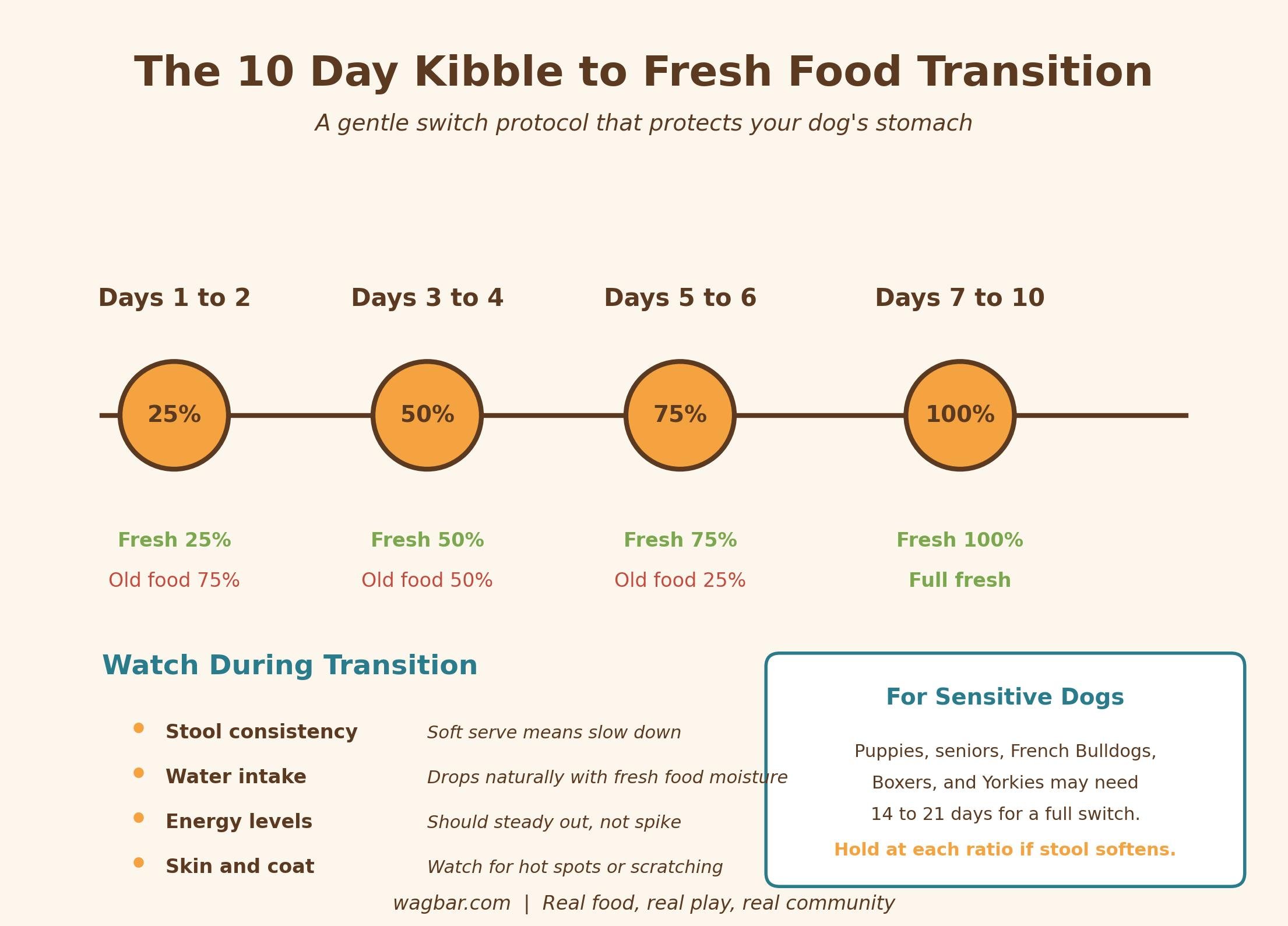
Move over seven to ten days. Start with 25% fresh and 75% old food for two days. Move to 50/50 for two days. Then 75/25. Then full fresh. Watch stool consistency using the Purina Fecal Scoring Chart or just eyeballing whether it's a solid log versus soft serve. If things get loose, hold at the current ratio for an extra day or two before advancing. Puppies, seniors, and dogs with sensitive stomachs (looking at you, French Bulldogs, Boxers, and Yorkies) may need a full two weeks or even three to fully settle.
Hydration usually drops because fresh food carries so much water built in. That's normal. Keep the bowl full anyway, especially if your dog is on a diuretic or has a history of urinary crystals. Skip treats made with the same protein source you just introduced for the first week so you can spot any real sensitivities like chicken or beef intolerance. If you have a household with more than one dog and different feeding needs, our multi dog household breed compatibility page has tips on managing feeding stations so nobody steals from anybody else's bowl.
What Fresh Food Won't Fix
Fresh food will not fix a dog who lacks socialization, exercise, or mental stimulation. A well fed dog with no friends and no room to run is still a stressed dog. Nutrition is one leg of the stool. Movement, community, and behavior work are the other three. That's why Wagbar exists. Off leash time, other dogs, real human interaction, and a fenced safe space matter as much as what's in the bowl. Puppies especially need this in the critical window between 3 and 16 weeks. Our puppy socialization timeline breaks down what happens during those weeks.
Fresh food also won't rescue a poorly formulated homemade diet. Home cooked meals without a veterinary nutritionist's input often miss calcium, zinc, iodine, vitamin E, choline, and specific amino acids like methionine and taurine. Commercial fresh brands that meet AAFCO nutrient profiles handle this math for you. If you're going the DIY route, work with a board certified veterinary nutritionist through the American College of Veterinary Nutrition (ACVN) directory or use a service like BalanceIT.com so you're not guessing on micronutrients your dog actually needs.
Where Wagbar Fits Into the Nutrition Picture
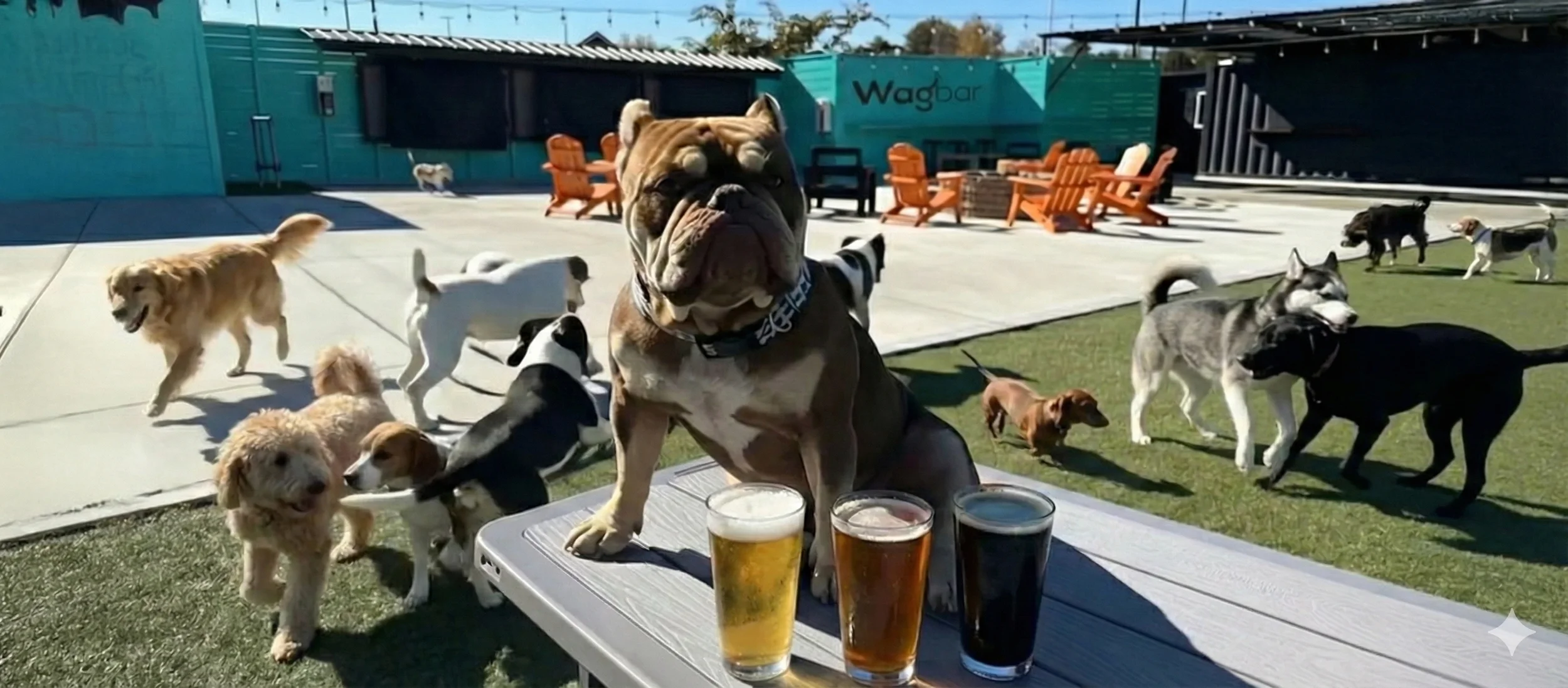
Wagbar started in Asheville, North Carolina as an off leash dog park paired with a real bar, and it has grown into a national brand with locations open or in development across Knoxville, Richmond, Charlotte, South Asheville, Dallas, Los Angeles, Long Beach, Savannah, Myrtle Beach, Cincinnati, Frederick, Phoenix, Orlando, and Cary. The original Asheville location earned a spot on USA Today's 10Best list of dog bars in 2024 and was voted Best Pet Friendly Bar in Western North Carolina multiple years running by Mountain Xpress readers. What makes the model work for dogs is the pairing of nutrition, social play, and real community. When members bring their fresh food fed pups to a Wagbar location, those dogs arrive with steady energy and better gut health, which shows up in more balanced play, less reactivity, and stronger bonds with the regulars in the pack. That's why the brand talks about food as much as it talks about play, and why membership includes access to a fenced safe park where nutrition and behavior meet on the grass.

Cost, Storage, and the Freezer Question
Fresh food runs higher per day than mid tier kibble, and cost varies by brand, dog size, and calorie needs. Storage requires freezer or refrigerator space. Some brands ship pre portioned pouches, others come in larger bricks you scoop from. Plan for a chest freezer if you have a large breed like a German Shepherd, Bernese Mountain Dog, or Great Dane, since a two week supply for a 70 pound dog takes real space. Rotational feeding across proteins (turkey, beef, pork, fish) also helps rotate through the freezer stock.
If a full fresh diet stretches the budget, a partial swap of 25 to 50% fresh with the rest kibble still captures meaningful benefits. Insurance can offset some vet costs that come up during any dietary change, and our page on pet insurance monthly premium breaks down whether the math works for your household. Some owners also feed fresh only for training sessions and use kibble as the base, which builds motivation without a full commitment.
Real Talk From the Park
Look, if you've read this far, you probably already know your dog deserves better than a $22 bag of pellets that's been sitting in a warehouse since March. That doesn't mean you're a bad dog parent for feeding kibble. Life is expensive. Fresh food is a privilege, not a personality. But if you have the room in the budget or you can do partial fresh, the payoff hits pretty fast and the vet visits often get shorter and cheaper down the line. Your dog can't tell you they feel better, but you'll see it in how they move, how they sleep, and how they act around other dogs.

The best part is watching your dog show up different at the park. A dog on fresh food with steady energy tends to play more balanced. They initiate play politely. They read other dogs better. They don't do the manic zoomie meltdown that ends in a scuffle. If you have a dog who has been struggling socially, and you've done the training work, sometimes the last piece is the food. It sounds too simple to be real, but pet parents at Wagbar Asheville say it all the time. Their dog just started acting like themselves again.
Frequently Asked Questions
How long does it take to see results after switching to fresh food?
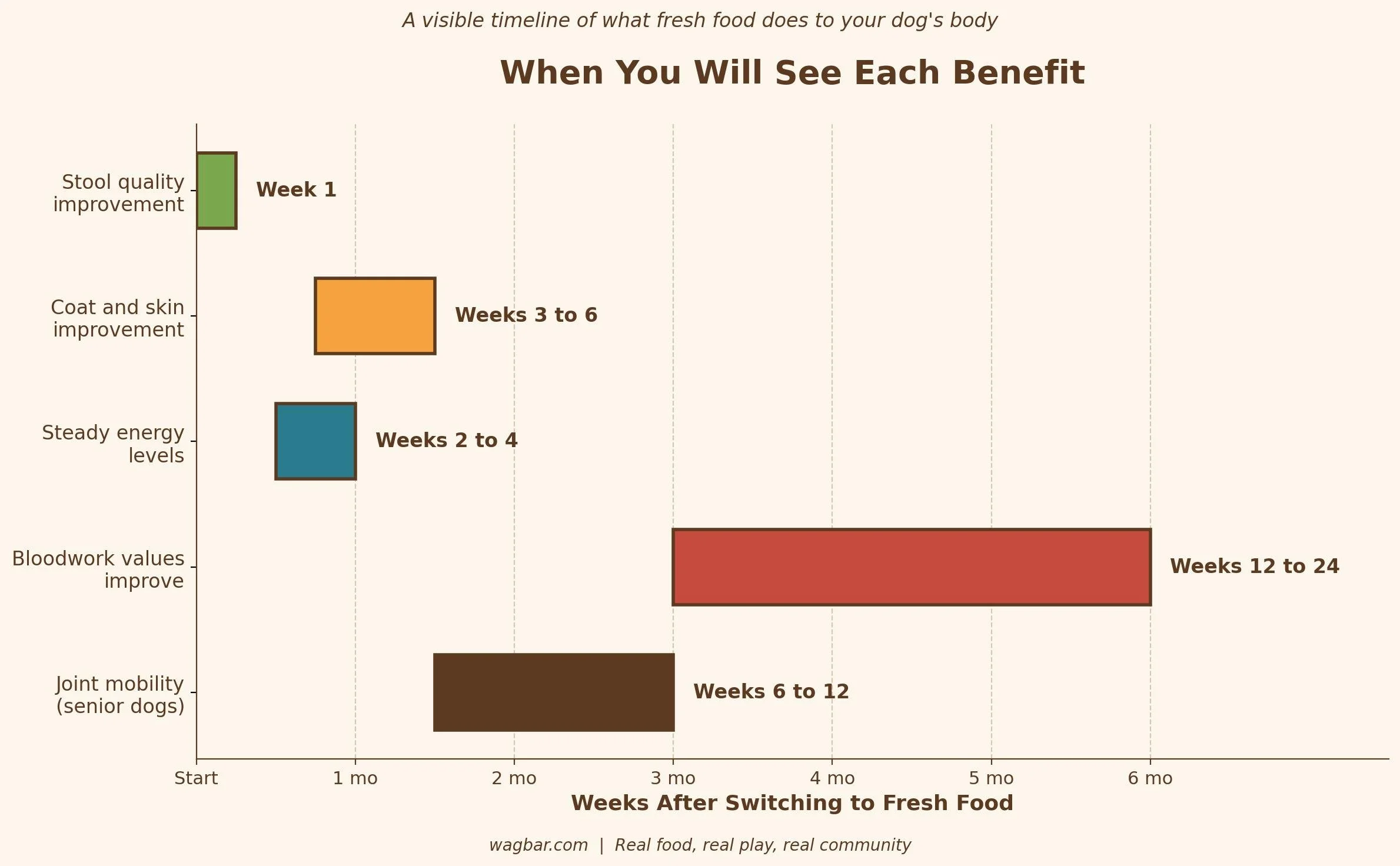
Most owners report visible changes in stool quality within one week, coat improvements between three and six weeks, and steadier energy levels within the first month. Bloodwork changes like improved kidney values and liver enzymes, when measured, tend to show up between three and six months. Some senior dogs show mobility improvements even sooner if joint inflammation was part of the picture.
Is fresh food safe for puppies?
Yes, as long as the fresh food is formulated for growth and meets AAFCO nutrient profiles for puppies or all life stages. Puppies need more calcium, phosphorus, DHA, and calories per pound than adults. Check the label for the growth or all life stages statement. Large breed puppies (over 70 pounds projected adult weight) need controlled calcium levels to avoid orthopedic issues like hip dysplasia and osteochondrosis.
Can I mix fresh food with kibble long term?
Yes. Many households do partial fresh feeding because of cost. Feed kibble in the morning and fresh at night, or split each meal. Just count both toward daily calories so your dog doesn't gain weight, which is a common trap during any food switch.
Does fresh food help with allergies?
Fresh food can help with food sensitivities because ingredient lists are shorter and less processed. True IgE mediated allergies still require elimination diets and a vet's input. Environmental allergies from pollen, dust mites, or grass proteins won't change based on diet, but a healthier gut microbiome may reduce overall inflammatory load.
Is raw feeding the same as fresh feeding?
No. Raw feeding uses uncooked meat, bones, and organs (often called BARF, Biologically Appropriate Raw Food, or PMR, Prey Model Raw). Fresh feeding usually means gently cooked whole ingredients. Both are less processed than kibble, but raw carries higher Salmonella and E. coli risk and requires stricter handling for both the dog and the humans in the kitchen.
What about dilated cardiomyopathy and grain free diets?
The FDA's ongoing investigation flagged certain grain free formulations high in peas, lentils, chickpeas, and potatoes as potentially linked to DCM in some breeds like Golden Retrievers and Doberman Pinschers. Fresh food brands vary in their formulations. Choose one that publishes taurine content and uses named animal proteins as the top ingredients rather than legume heavy fillers.
Do dogs who eat fresh food behave better at the park?
Nutrition affects mood and energy regulation, so yes indirectly. A comfortable dog with steady blood sugar is often more social and less reactive. Behavior work still matters, and our reactive dog training resource covers the full picture for dogs who struggle in busy spaces like dog bars or urban parks.
Should senior dogs switch to fresh food?
Older dogs often benefit the most because they have reduced digestive efficiency, lower thirst drive, and thinner gastric mucosa. The moisture and higher digestibility of fresh food supports kidney function, joint health, and cognitive function, especially when the formulation includes omega 3s, glucosamine, chondroitin, and antioxidants like vitamin C and E.
What breeds benefit most from fresh food?
Every breed benefits, but certain ones show dramatic changes. English Bulldogs, French Bulldogs, and Boston Terriers with sensitive stomachs often stop the chronic gassiness. Doberman Pinschers, Boxers, and Great Danes benefit from the taurine and cardiac support. Working breeds like Belgian Malinois and German Shepherds thrive on the sustained energy. Small breeds like Yorkies and Chihuahuas with dental issues do better with softer food that supports better oral health.
Ready for the Full Picture
Fresh food handles what goes in your dog. Wagbar handles what happens after they eat. Bring your well fed pup to one of our Wagbar locations across North Carolina, Tennessee, Virginia, Arizona, and beyond, and let them run off that new steady energy on real grass with other dogs while you grab a drink and meet neighbors who care about their dogs as much as you do. Ask about our franchising if you want to bring the same off leash park and bar experience to your own city.