

Why Independent Dog Bars Like Yard Bar and Skiptown Prove the Pet Bar Market
Top TLDR: Yard Bar in Austin has operated since 2015, Skiptown has grown into a multi-location brand since 2020, and Fetch Park has expanded to several Atlanta sites. These independents validate the pet bar market as repeatable, not a novelty. The action step: use their city data to screen your target metro before committing to a franchise or independent build.
Every prospective pet bar owner runs into the same skeptical question from a friend or family member. "But does this really work as a business?" It's a fair question. A bar where dogs run free off-leash sounds like either a great idea or a liability nightmare, depending on who's listening. The good news is the question has already been answered, publicly, by real operators in real cities with real P&L performance. Yard Bar in Austin, Skiptown in Charlotte, and Fetch Park in Atlanta have spent anywhere from five to more than ten years proving the pet bar model works. Their growth is the clearest market validation the category has.
Here's what their stories actually tell us, and what that means if you're looking at a pet franchise opportunity in your own city.
Yard Bar: Austin's Decade-Long Proof of Concept
Yard Bar opened in the Allandale neighborhood of Austin in 2015, on the site of a former Putt-Putt Golf and Games. Founder Kristen Heaney, a former architect, built it to be Austin's first restaurant, bar, and off-leash dog park under one property with 20,000 square feet of park space and a membership-based model (CultureMap Austin, 2015).
A decade later, Yard Bar is still operating seven days a week with strong patronage, 439 Yelp reviews, and a dedicated staff of "Bark Rangers" supervising the park (Yelp, 2025). The membership pricing model, day passes, and 21+ park policy all held up across a full decade of business cycles that included a pandemic.

What Yard Bar Proves
Three things worth sitting with:
Longevity. A pet bar can operate profitably for 10+ years in the same location. This isn't a three-year novelty.
Memberships work. Low-friction annual and monthly memberships support repeat visit frequency.
Trained staff matter. The "Bark Ranger" concept (supervisors who know the dogs by name and intervene before problems escalate) became standard practice in the category because Yard Bar showed it worked.
If you've read the ultimate guide to starting an off-leash dog bar business, a lot of the baseline operating principles map directly to what Yard Bar has been doing for years.
Skiptown: A Tech-Forward Pet Bar Scaling Beyond Charlotte
If Yard Bar established the model, Skiptown showed it could scale. The first Skiptown opened in Charlotte's South End in August 2020, right in the middle of the pandemic, and immediately drew hundreds of socially distanced dog lovers to early events (Charlotte Magazine, 2020).
Founders Meggie and Sebastian Williams built Skiptown on top of an existing dog-walking business called Skipper, which gave them a built-in member base and a smartphone app already tested on thousands of Charlotte dog owners. The Rampart Street flagship spans roughly 24,000 square feet indoor and 15,000 square feet outdoor, with a 25-tap bar, a bone broth "beer" made for dogs, and kennel-free boarding and grooming services attached to the bar experience.
By 2024, Skiptown announced a second Charlotte location in the NoDa area, planned at nearly 50,000 square feet (double the size of the South End original), plus new locations in Denver and Atlanta (Axios Charlotte, 2024).
Why Skiptown's Story Matters for the Category
A few standout points:
Apartment-dwelling demographics drive the model. Skiptown was deliberately sited where about 5,000 apartments and roughly 2,500 dogs live within a 15-minute walk. That demographic overlay is now a standard pet bar site-selection criterion.
Multi-location growth is possible. Skiptown went from one location to announcing four within its first four years.
Technology is a real moat. The Skiptown app handles vaccination records, check-ins, bookings, and communication, which lowers operating friction and increases member loyalty.
The tech and membership-retention lessons from Skiptown's trajectory are why serious pet bar operators now treat apps and member data as core infrastructure, not optional add-ons. The revenue streams for off-leash dog bars guide walks through how memberships, day passes, events, and ancillary pet care services stack into a durable model.
Fetch Park: The Atlanta Brand That Keeps Growing
Fetch Park opened in Atlanta's Old Fourth Ward as Georgia's first full-service dog park bar, founded by Stephen Ochs with former Atlanta Falcons player Garrett Reynolds and a boxer named Oakley (Atlanta Pet Life). The original concept used a converted 1976 Airstream as the bar, along with "Bark Rangers" on duty, a splash pad, and a Jumbotron.
Fetch Park now operates multiple Atlanta locations including the original Old Fourth Ward site, a Buckhead Village location, and an upcoming site at The Works development (The Works Atlanta). Current pricing runs $15 per day, $35 per month, and $275 annually.
The brand has earned national media coverage from the Travel Channel and CNN, which is useful for one specific reason: it signals that the pet bar concept has moved from local curiosity to recognized category.
What Fetch Park Adds to the Evidence Pile
Multiple sites in the same metro can work. One pet bar per city isn't the ceiling if the metro is large enough.
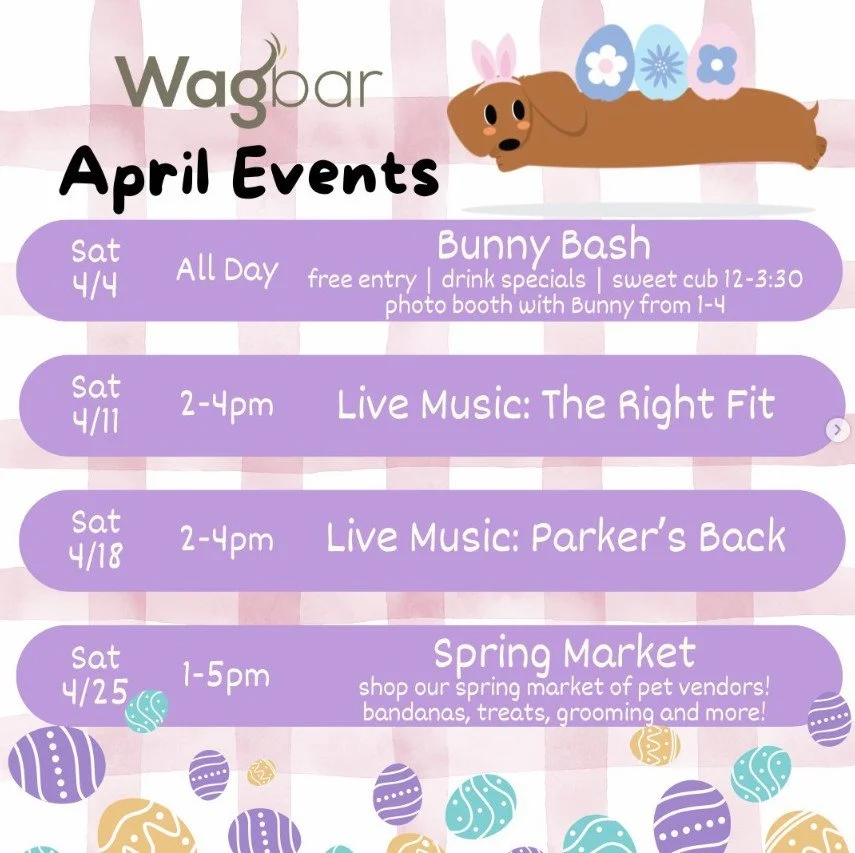
Programming builds retention. Weekly trivia, live music, and recurring events convert visitors into regulars.
The "no dog required" model expands the audience. Fetch, Yard Bar, and Skiptown all allow dog-free humans on-site, which meaningfully widens the addressable customer base.
You can see the same retention patterns operating at Wagbar's flagship location, which is why the rise of dog bars as a community hangout trend post is worth reading alongside these independent case studies.
The Common Pattern Across All Three
Read these three businesses side by side and a pattern shows up that's impossible to see from any single example. The pet bar concept isn't a quirky local experiment. It's a repeatable format with shared DNA across every successful operator.
Operator Launch Year Home Market Growth Status Core Model Traits Yard Bar 2015 Austin, TX Stable, single-location Memberships, Bark Rangers, 21+ park, food and bar Skiptown 2020 Charlotte, NC Multi-city expansion (Denver, Atlanta, DC) Tech-enabled app, full pet care stack, memberships Fetch Park 2015-2016 Atlanta, GA Multi-location (Atlanta metro) Events programming, multi-site, no-dog-required access
Every one of these operators runs a membership-led revenue model. Every one employs dedicated on-park staff to supervise dog behavior. Every one requires proof of vaccinations and spay/neuter status before entry. Every one has found the demographic sweet spot where apartment-dense neighborhoods overlap with strong dog ownership and an active bar-going population.
That's not three businesses doing their own thing. That's three businesses arriving independently at the same operating playbook. That convergence is the clearest possible signal that the pet bar category has real structure, not just good luck.
What the Independents Tell Us About the Broader Market
Market analysts will tell you that pet services is the fastest-growing slice of a roughly $147 billion U.S. pet economy (American Pet Products Association, 2024). Millennials are the largest generation of pet owners, and they spend on experiences more than previous generations did.
Yard Bar, Skiptown, and Fetch Park give that macro data a face. Each of these operators proved, in its own city, that the overlap between "dog owner," "apartment resident," and "regular bar customer" is big enough to support a dedicated pet bar. The pet spending demographics and consumer behavior breakdown backs that overlap with hard numbers.
A few takeaways from this market validation worth writing down:
Pet bars work in very different cities. Austin, Charlotte, and Atlanta have different climates, demographics, and regulatory environments. The model worked in all three.
Demographics beat vibes. The best-performing sites chose apartment-dense, high-renter neighborhoods with strong dog ownership rates, not just "cool" areas.
Revenue mixes are consistent. Memberships plus day passes plus bar sales plus events plus pet services creates a multi-stream income model that's more resilient than a single-channel business.
If you're checking cities against these criteria, the best cities for dog franchise success demographics resource covers the exact screening process.
Where Independents Hit Walls That Franchises Don't
Here's the uncomfortable second half of the story. For every independent operator who made it, there are quiet closures that didn't. Running a pet bar is five businesses stacked on top of each other: a licensed bar, an outdoor recreation facility, a membership business, an events venue, and a dog safety operation. The independents that succeeded did so partly because their founders brought unusual skill sets (architecture, tech strategy, restaurant ops) to the problem.
Most first-time owners don't have that stack of prior experience. That's where a franchise system compresses the learning curve.
What a Franchise System Adds on Top of Independent-Proven Demand
Site selection based on multiple-location data rather than one founder's instinct.
Liquor licensing playbooks mapped to dozens of municipalities.
Insurance relationships with carriers that already write dog-bite and alcohol-service coverage together.
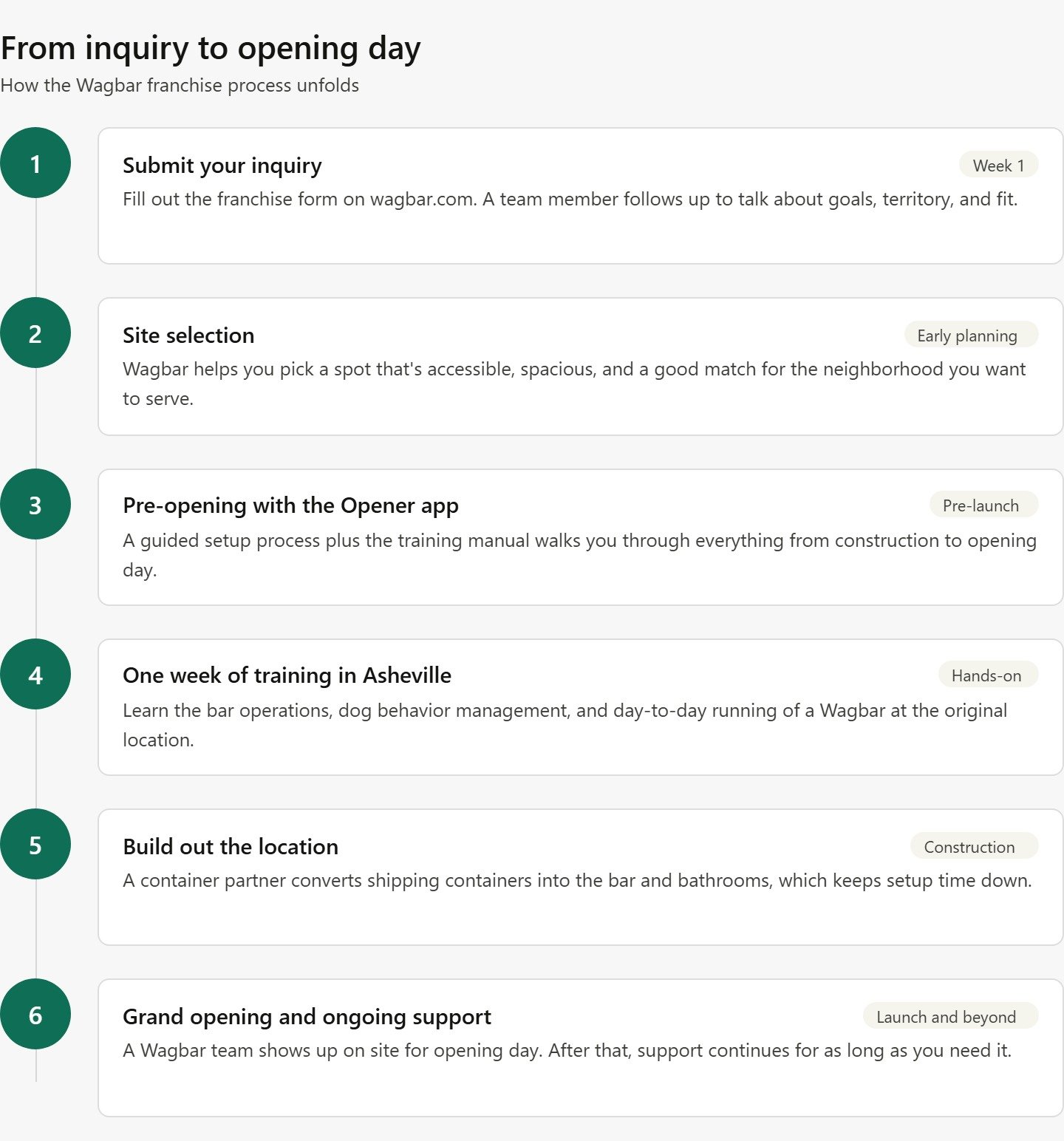
A tested build-out plan including container bar systems, drainage, turf, and double-gated entries.
Staff training that blends bar operations with dog behavior reading.
Marketing and membership systems that aren't built from zero on opening day.
The benefits of owning a pet franchise resource breaks down these points in more detail, and the dog business franchise profit margins discussion shows what the real unit economics look like once the playbook is in place.
Frequently Asked Questions
Does the pet bar category have enough long-term demand to support franchising?
Yes. Yard Bar has operated for a decade, Fetch Park has scaled to multiple Atlanta sites, and Skiptown is expanding across multiple states. Three independent operators growing in three different metros is a stronger demand signal than any single projection.
Aren't the independents already too entrenched for a new entrant?
Only in their specific home metros. Most U.S. top-50 metros still have zero dedicated pet bar, which leaves substantial white space. Franchise territory pages for Denver, Atlanta, Jacksonville, and Charleston reflect the markets where first-mover position is still available.
What's the biggest operational risk the independents have shown?
Dog behavior management. Every successful operator runs a trained on-park staff model (Yard Bar's Bark Rangers, Skiptown's Skippers, Fetch's Bark Rangers) because relying on owners alone doesn't work at scale. That's one of the main reasons a trained, franchise-backed staffing system matters.
How do the independents price memberships?
Pricing varies by market but typically falls in a recognizable range: day passes around $5 to $15, monthly memberships roughly $35 to $45, and annual memberships roughly $275 to $350, based on publicly posted rates at Skiptown, Fetch Park, and Yard Bar. Specific pricing for any franchise system is set market by market.
Can a pet bar work in a smaller city, not just big metros?
Yes. Yard Bar operates in Austin, but Wagbar's flagship in Weaverville, NC (population roughly 4,500) earned a USA Today 10Best top-10 ranking nationally, which shows the model translates to smaller markets with the right demographic overlay. Details on this are available on the about page.
How should I use this market validation as a prospective franchisee?
Use it three ways: confirm the concept is real, screen your home market for similar demographics, and then compare franchise systems against the work an independent build would require. Starting with the franchising page or the FAQ is a reasonable next step.
Bottom TLDR
Why Independent Dog Bars Like Yard Bar and Skiptown Prove the Pet Bar Market: Yard Bar has operated in Austin since 2015, Skiptown has scaled from Charlotte to multiple cities since 2020, and Fetch Park has grown across Atlanta. These independents prove the pet bar market has durable demand and a repeatable operating playbook. The action step: use their demographic and pricing data as your baseline when evaluating a pet bar franchise for your own metro.