

Spouse and Family Buy-In: How to Have the Franchise Conversation at Home

Top TLDR Getting spouse and family buy-in on a franchise decision requires more than enthusiasm — it requires presenting the full financial picture, a realistic income gap plan, and honest answers to the questions a supportive partner will reasonably ask. The franchise conversation at home goes better when it's treated as a shared decision from the start, not a persuasion exercise. Before that conversation, review the Wagbar FDD so you can answer specific financial questions with accurate numbers.
Key Takeaways
Spouse and family buy-in is one of the most consistent factors separating successful franchise owners from those who struggle through the ramp-up period.
The three questions a partner will ask most directly: How much does this cost, what happens to our income during buildout, and what does your daily schedule look like?
Wagbar's total investment range is $470,300 to $1,145,900, with a $50,000 franchise fee. Planning for 12 to 18 months of income variability during buildout is realistic.
Franchisee couples and co-owners appear throughout the Wagbar network — the model supports partnership structures.
Framing the conversation around the FDD rather than excitement alone signals that you've done the analytical work, which builds credibility with skeptical partners.
The 6% royalty on adjusted gross sales and 1% marketing fund contribution are ongoing obligations that affect household income projections and should be discussed explicitly.
Most people who research pet franchise ownership do it alone for a while before they bring it home. They've read the industry data, run some rough numbers in their heads, talked to a few people online, and gotten genuinely excited about the possibility. By the time they raise it with their partner, they've already crossed a psychological threshold their spouse hasn't.

That gap is where a lot of franchise conversations go sideways. Not because the spouse is wrong to have concerns, but because the person bringing the idea home isn't prepared for the questions a reasonable partner will ask.
This page is a practical guide to closing that gap — what to prepare before the conversation, what questions to expect, what honest answers look like, and how to turn a kitchen table discussion into a shared decision rather than a negotiation.
Why Family Buy-In Is a Business Variable, Not Just a Personal One
This isn't a soft topic. Franchise systems, attorneys who specialize in franchise law, and experienced multi-unit operators all identify family alignment as one of the top predictors of franchisee success. The reasons are straightforward.
The ramp-up period of a new franchise — typically 12 to 18 months from signed agreement to financial stability — is stressful under the best conditions. Income is variable or absent during buildout. The franchisee's time and mental bandwidth are consumed by operational challenges. Problems come home whether you want them to or not. A household that entered the process in genuine alignment handles this period differently than one where one partner was talked into it.
Pet franchise ownership specifically involves a daily operational commitment that shapes household rhythms more directly than most corporate jobs do. You're not leaving for an office and returning at a predictable time. You're managing a business that operates on weekends and holidays and depends on you being present and responsive when things don't go as planned.
None of that is a reason not to do it. It is a reason to walk into the conversation at home with a complete picture.
What to Prepare Before You Bring It Up
The most common mistake people make in the franchise conversation at home is leading with vision and enthusiasm before they can answer the practical questions. Enthusiasm is not a financial plan.
Before the conversation, get specific answers to these questions:
What is the total investment range? For a Wagbar franchise, that range is $470,300 to $1,145,900. That's the number your partner needs to see, not a vague reference to "a few hundred thousand dollars." The $50,000 franchise fee is the first specific commitment. The range beyond that reflects site costs, buildout, equipment, and working capital.
How are you financing it? Whether that's savings, an SBA loan, a HELOC, investor partners, or some combination, your partner needs to know what's at risk and what you're drawing on. Vague answers here erode trust.
What happens to household income during buildout? The most anxiety-producing aspect of franchise ownership for most families is the period between signing the agreement and generating stable revenue. That period can run 12 to 18 months. Map it out: What income comes in from existing sources? What reserves do you have? At what point do you need the business to be generating revenue to maintain the household's financial commitments?
What does the ongoing fee structure look like? Wagbar's royalty is 6% of adjusted gross sales, plus 1% to the marketing fund. These are ongoing obligations that affect profitability projections. Your partner should understand that these exist and what they mean in practice before agreeing to move forward.
The FDD is the document that makes all of these questions answerable with real numbers. If you haven't reviewed it yet, that's the first step. You can't have a complete conversation about a franchise investment without the FDD's financial disclosures in front of you.
The Questions Your Partner Will Ask
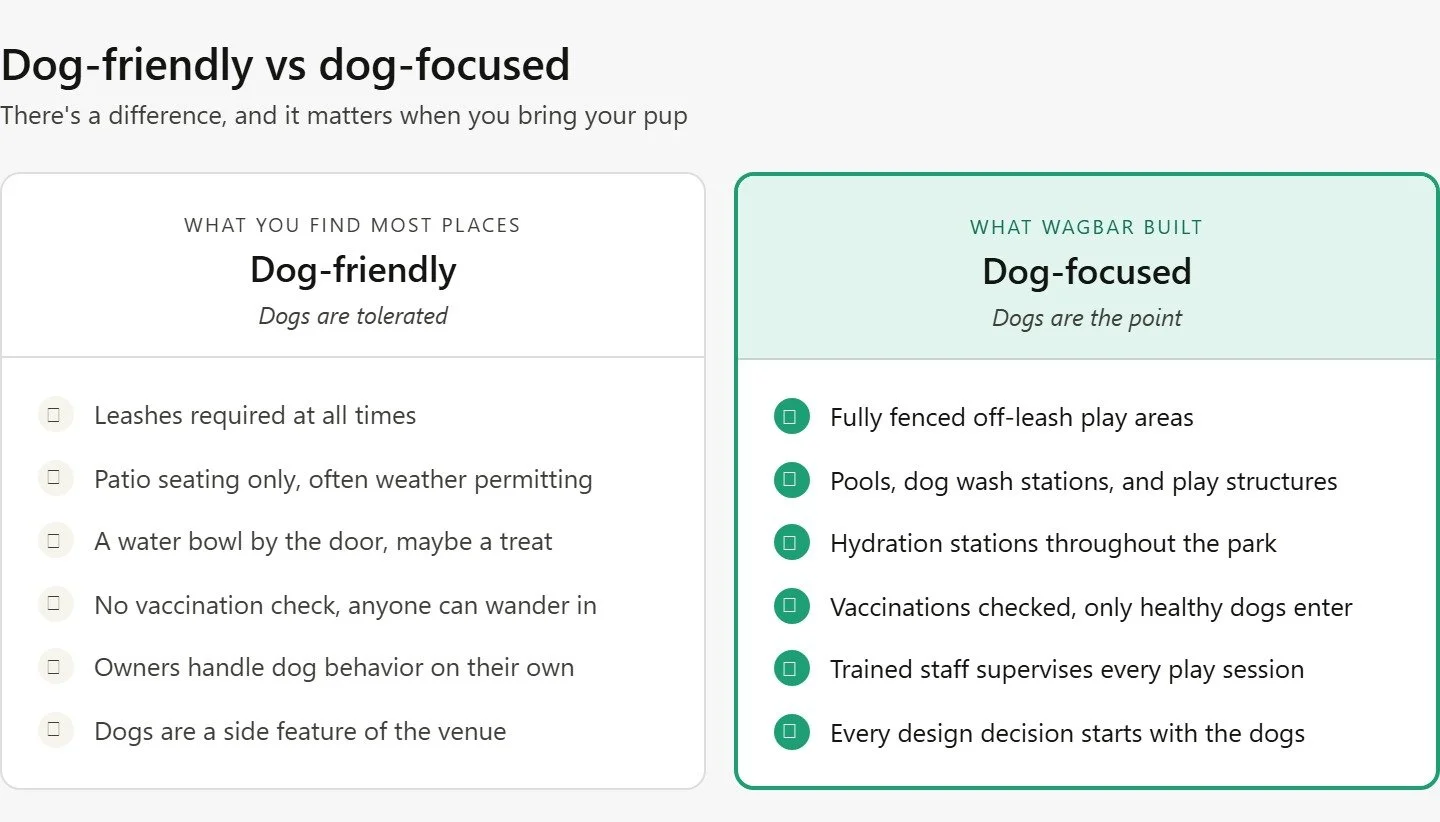
Some version of these questions comes up in almost every franchise conversation. Having honest, prepared answers is more persuasive than enthusiasm.
"What happens if it doesn't work?" This is the most important question on the list, and the most often deflected. Your partner deserves a specific answer: What are the exit provisions in the franchise agreement? What assets are at risk? What's the realistic downside scenario? Glossing over this one damages the conversation more than an honest answer would.
"Will you have enough time for our family?" Franchise ownership changes daily schedules in ways that employment doesn't. An off-leash dog park and bar operates on weekends, evenings, and holidays. The early months require the owner's active presence more than later stages do. Be honest about what that looks like, and discuss how family responsibilities will be managed during the ramp-up period.
"Why this, and why now?" Your partner deserves to understand the actual motivation — not just the investment thesis. If you're leaving a corporate career because you've genuinely reached a personal inflection point, say that. If the timing is driven by a specific financial window or market opportunity, explain it. The personal dimension of this decision is as relevant as the financial one.
"What does Wagbar actually do?" Some partners are genuinely unfamiliar with the concept. Describing an off-leash dog park bar as a place where dogs run free while their owners relax with a drink — and where the whole thing operates as a membership-based community business — often lands better in person than in the abstract. If possible, visit a live Wagbar location together. Weaverville, North Carolina is Wagbar's flagship, and seeing the concept in operation answers questions that no amount of description resolves.
How to Involve a Skeptical Partner in the Process
The most effective approach with a partner who has real concerns is to make them part of the evaluation, not the audience for it.
That means sharing the FDD together and reviewing it with a franchise attorney as a household activity, not a solo exercise. It means attending discovery calls with Wagbar's franchise team together if they're willing. It means talking to existing Wagbar franchisees together rather than reporting back about those conversations secondhand.
When a partner participates in the due diligence rather than being briefed on its conclusions, their concerns get addressed directly by the people and information best positioned to address them. That's a different dynamic than asking them to trust your interpretation of the FDD or your summary of a franchisee conversation.
It also shifts the psychological frame. A spouse who has met the Wagbar team, reviewed the investment structure with their own attorney, and spoken with a franchisee who made the same career move is not being asked to trust your judgment. They've formed their own judgment. That's a much stronger foundation for moving forward together.
When One Partner Is More Excited Than the Other
The situation most franchise candidates are actually navigating is an asymmetry: one person genuinely wants to do this, the other is cautious or skeptical but not opposed. That's a workable dynamic. It's also the one most likely to go wrong if the enthusiastic partner treats the skeptic's concerns as obstacles rather than inputs.
Skeptical partners often ask better questions than enthusiastic ones. Their concerns about the income gap, the downside scenario, and the daily time commitment are exactly the questions that need real answers before any agreement is signed. A partner who is pushing back on weak parts of the plan is doing you a favor.
The goal isn't to get your partner to share your level of excitement. It's to get to a place where both of you have enough information to make a genuine decision together. That might mean slowing down the evaluation timeline to let the cautious partner catch up. It might mean scheduling a visit to a Wagbar location before any further steps. It might mean agreeing on specific conditions that need to be met — a financing structure, a minimum cash reserve, a specific territory — before proceeding.
What it doesn't mean is signing a franchise agreement with a partner who has fundamental unresolved concerns. That dynamic does not resolve itself after closing. It compounds.
Co-Ownership as a Structural Solution
Some households navigate the franchise conversation by turning it into a formal partnership. Wagbar's franchise model accommodates co-ownership, and several locations in the network are operated by couples or family pairs who bring complementary skills to the operation.
The Knoxville, Tennessee location is led by a mother-daughter team who share the finance and operations side with the animal behavior side of the business. That structure lets two people each contribute what they do well while distributing the workload of the early period across two invested owners rather than one.
For couples considering a similar approach, it's worth thinking through the structure before the conversation rather than treating it as an afterthought. Which person manages daily operations? Who handles finances? What's the decision-making process when you disagree? These aren't questions to leave undefined in a business that you'll be managing together around the kitchen table.
Frequently Asked Questions
Does my spouse need to be formally involved in the franchise agreement?
Not necessarily, but if household assets are used to fund the investment or secure financing, your spouse may be required to sign certain documents. Your franchise attorney will advise based on your specific financial and legal situation.
What if my partner wants to be involved in operating the business?
That's common and fully workable within Wagbar's franchise model. Many locations are co-owned and co-operated. It's worth thinking through roles and responsibilities explicitly before opening rather than defaulting to informal arrangements.
How do most franchisees handle the income gap conversation with their families?
The most productive approach is to build a financial model that shows month-by-month household cash flow during the buildout and ramp-up period, grounded in the investment figures in the FDD. That replaces anxiety with a concrete plan that the whole household can evaluate together.
Is it common for a spouse to be skeptical and for the franchise to still go well?
Yes. A skeptical but engaged partner who participates in due diligence and asks hard questions often results in a better-prepared franchisee. What matters is that concerns are addressed directly before signing, not dismissed or deferred.
Where can I learn more about the financial commitment involved?
The Wagbar FDD is the authoritative source. You can request it by starting the inquiry process on the Wagbar franchising page. You can also review what to look for when investing in an off-leash dog bar franchise as a starting orientation before the FDD review.
Making It a Shared Decision
The franchise conversation at home goes better when it starts with honesty rather than salesmanship. Your partner isn't a prospect. They're a co-decision-maker whose assessment of the risk and opportunity is as valid as yours.
Bring the numbers. Share the FDD. Invite them into the process. And give the skeptical questions the same serious treatment you'd give any other due diligence task.
If the franchise makes sense under that kind of scrutiny, it'll hold up. And if your partner shares that conclusion after going through it themselves, you'll enter the venture with the household alignment that makes the difference when things get hard.
Explore the benefits of owning a pet franchise, review how the Wagbar membership model generates recurring revenue, and check available Wagbar territories to ground the household conversation in current market reality.
Bottom TLDR Getting spouse and family buy-in on a franchise starts with presenting accurate numbers, not enthusiasm — including Wagbar's $470,300 to $1,145,900 investment range, the 12-to-18-month income variability during ramp-up, and the ongoing 6% royalty structure. The franchise conversation at home goes best when a skeptical partner is brought into the due diligence process directly, not briefed on its conclusions. Request the Wagbar FDD together and review it with a franchise attorney before making any decisions.