

Pet Bar Franchise vs. Dog Cafe Franchise: Revenue Model Comparison

Top TLDR: Pet Bar Franchise vs. Dog Cafe Franchise comparisons come down to the revenue model. Dog cafes earn on coffee and light food, transactional revenue, and 30 to 60 minute visits. Wagbar's pet bar franchise, based in Weaverville, North Carolina, earns on bar sales, recurring memberships, day passes, events, and food truck share across longer visits. Submit a Wagbar inquiry to receive the full FDD.
What Is a Dog Cafe Franchise?
A dog cafe franchise is a coffee-shop-style business that welcomes dogs inside the dining area. Customers bring their leashed dog along, order coffee or light food, and sit at tables where the dog stays at their side. The business sits squarely inside the coffee shop category, with a dog-friendly twist that drives a modest premium on ticket size and attracts a distinct customer profile.
Concepts like Boxer Barn, The Dog Cafe in Los Angeles, and a scattering of independent operators across the country share a common playbook. Dogs stay leashed at their owner's table. Food is coffee, pastries, breakfast, and light lunch. Revenue comes from standard coffee-shop margins on espresso drinks, baked goods, and sandwiches. Some operators add a rescue or adoption angle, which builds community goodwill and press but does not by itself change the cafe revenue structure.

The defining feature of a dog cafe: the dog is a guest at the table, not a participant in a separate activity. The owner visits for coffee. The dog comes along. The visit usually lasts 30 to 60 minutes. A closer look at the broader category sits on the page covering types of animal franchise opportunities.
What Is a Pet Bar Franchise?
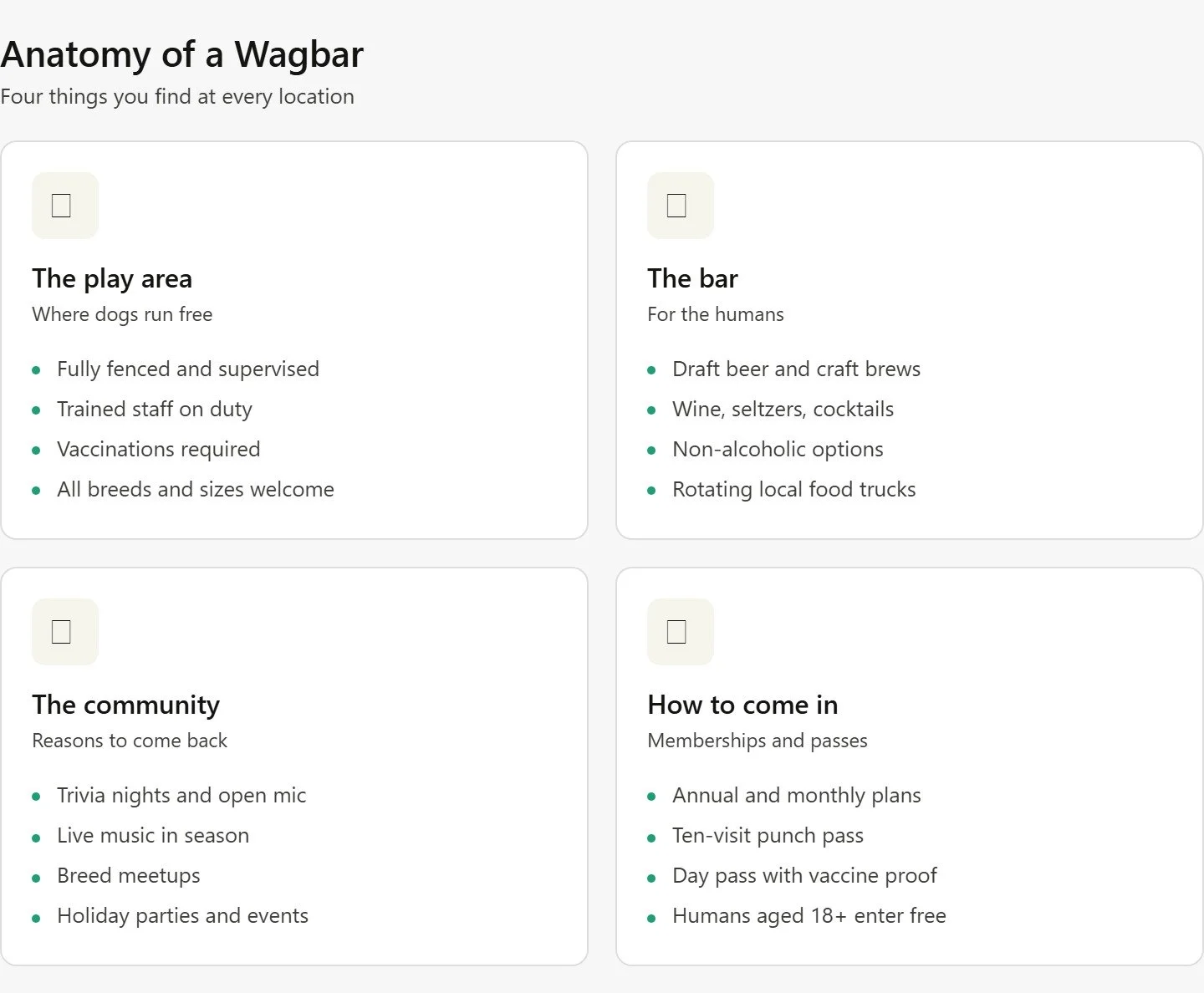
A pet bar franchise is a fundamentally different business. It pairs an off-leash dog park with a bar serving beer, wine, cider, seltzer, and non-alcoholic options. Dogs come off the leash and into a secure, staff-monitored play area. Owners head to the bar, grab a drink, and enjoy the social scene. The full concept is covered on the off-leash dog bar page.
Wagbar is the original pet bar franchise, founded in Weaverville, North Carolina in 2019. The model generates revenue from five streams: dog memberships, day passes, bar sales, events, and food truck revenue share. Visits run longer than at a dog cafe. The play-and-socialize loop keeps dogs and humans on-site for 90 minutes or more on a typical day, and several hours during weekend events.
The defining feature of a pet bar: the dog is the reason for the visit, not a plus-one. The owner visits so the dog can get real exercise and social time. The drink and the bar scene come with it.
The Revenue Model Split: Bar Sales vs. Coffee Sales
This is where the two models separate most clearly.
Revenue characteristic Dog cafe franchise Pet bar franchise Primary revenue source Coffee and light food Beer, wine, and non-alcoholic beverages Secondary revenue Merchandise, tips Memberships, day passes, events, food truck share Average ticket per visit Coffee-shop range Bar-range plus entry fee Customer visit length 30 to 60 minutes 90 minutes or more Peak hours Morning and early afternoon Afternoon, evening, weekend Weekend vs. weekday mix Similar across the week Weekend-heavy Membership revenue Rarely applicable Core revenue stream
Coffee shops run on high-turn, low-average-ticket math. A dog cafe franchise inherits that math. A pet bar runs on bar math plus membership math, where recurring dog memberships smooth revenue across seasons. The deeper version sits in the breakdown of revenue streams for off-leash dog bars.
Customer Visit Patterns
Dog cafe visits skew short. Owners stop in for coffee, sit with the dog for half an hour, and head out. This cycle is productive for the business during a morning rush, but it caps what a single customer contributes per visit. A second coffee, a pastry, and the check lands in a narrow range.
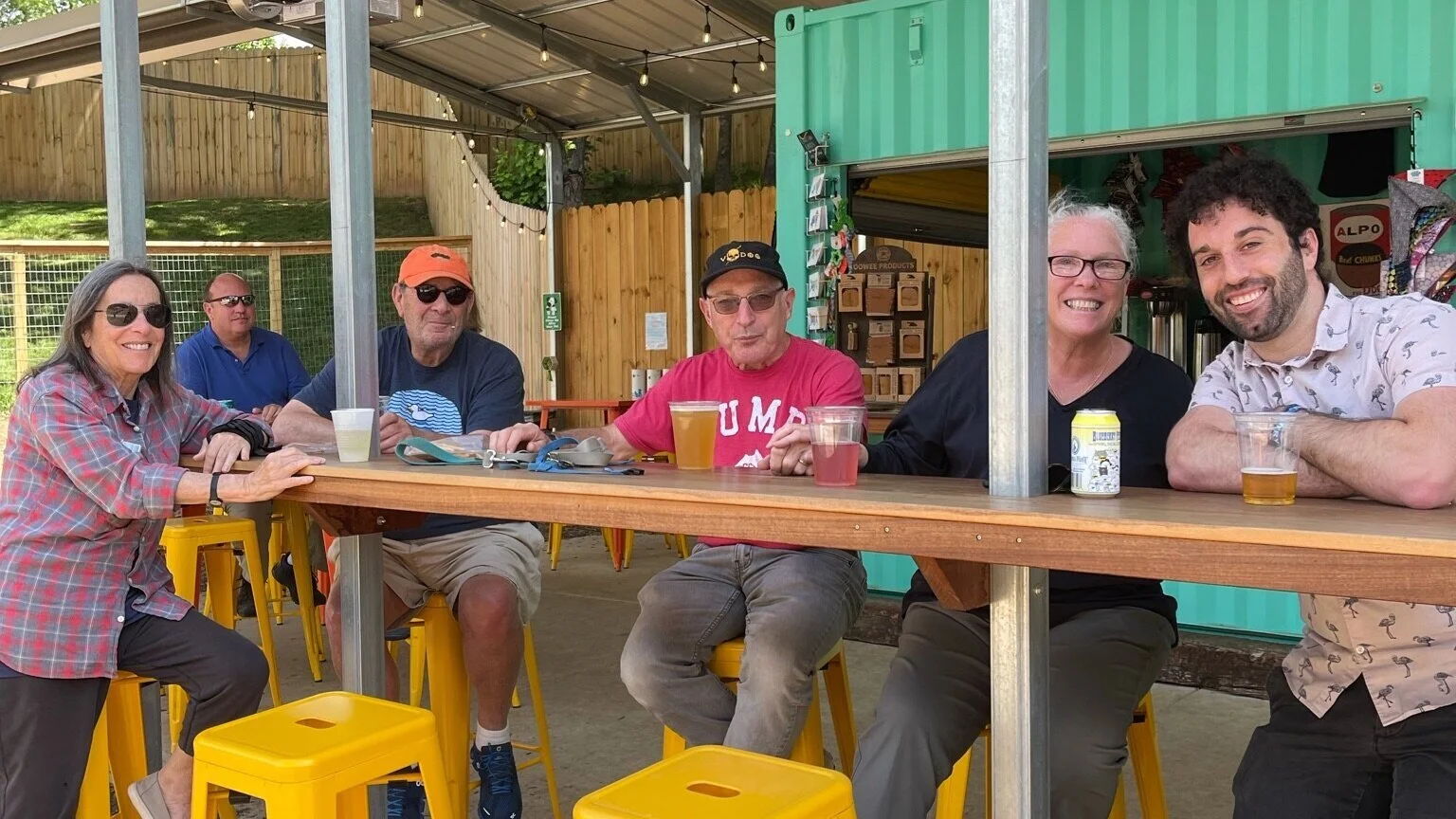
Pet bar visits skew long and social. A Saturday afternoon at Wagbar can stretch two hours or more. The dog plays in the off-leash area, the owner has two drinks and a bite from the food truck, friends join, and the visit turns into a small social event. That longer dwell time means higher revenue per customer per visit.
Visit frequency also differs. A pet bar member with a monthly dog pass typically visits 4 to 8 times a month. A dog cafe regular might stop in weekly for coffee. The pet bar model turns visits into habitual routine because the dog needs exercise the dog cafe does not provide. For the wider category context, see the overview of dog business models for pet industry entrepreneurs.
Day-Part Revenue Comparison
Dog cafes earn most of their revenue in the morning and early afternoon. The business lives on breakfast coffee and lunch. Evenings are slow. Weekends help slightly, but the core revenue is built on the coffee daypart.
Pet bars earn most of their revenue in the afternoon, evening, and on weekends. Wagbar's flagship sees peak traffic Friday afternoon through Sunday afternoon, with supporting weekday revenue from trivia night, open mic, music bingo, and regulars who come in after work. That day-part profile matches a craft beverage business more than a coffee shop. More on how franchisees plan against that rhythm sits on the benefits of pet franchise ownership page.
For an investor comparing the two models, the day-part split matters for staffing, lease selection, and neighborhood fit. A pet bar thrives next to residential areas and walkable neighborhoods where people want to stay out in the evening. A dog cafe thrives near office districts, universities, and morning foot traffic.
Recurring vs. Transactional Revenue
The dog cafe franchise model is almost entirely transactional. Revenue comes from single visits. Each transaction is independent of the one before it. A cafe's best tool for recurring revenue is a loyalty app or a subscription coffee program, neither of which is core to the category.
The pet bar franchise model has recurring revenue baked in. Monthly and annual dog memberships create predictable income the franchisee can forecast. At Wagbar, memberships are the most margin-friendly revenue line and the one that drives customer loyalty. Members come more often, spend more per visit at the bar, and bring friends. That creates a revenue base that is harder to knock off balance during a slow week. The math on how recurring membership revenue compounds sits in the analysis of dog business franchise profit margins.
The effect: a pet bar franchisee knows roughly what the month will gross before it starts. A dog cafe franchisee knows only what the first cup of coffee of the day will cost.
Build-Out and Footprint Differences
Dog cafes fit in small retail footprints. A typical dog cafe operates in 1,000 to 2,500 square feet of indoor space, similar to a standard coffee shop. The build-out is straightforward: coffee bar, seating, restrooms, maybe a small outdoor patio. No specialized infrastructure is required beyond a dog-friendly flooring choice and a small water station.
Pet bars need real outdoor space. Wagbar locations need between 0.5 and 1 acre for the off-leash play area, the bar structure, restrooms, and parking. The build-out is more involved: secure fencing, drainage, turf or sand, water stations, sheltered seating for humans, and a bar that meets local alcohol licensing codes. A full walkthrough of site requirements sits on the page about starting an off-leash dog bar business.
Wagbar also offers a container bar build-out option. Shipping containers converted into fully-equipped bars and bathrooms arrive on-site ready to be placed, plumbed, and powered. This cuts months off the standard bar build-out timeline and compresses capital in a way dog cafes cannot match.
The investment reflects the difference. Dog cafe startup costs typically sit under $500,000 in most markets. Wagbar's total initial investment runs $470,300 to $1,145,900, with the spread driven by real estate and build-out choice.
Licensing and Operational Complexity
Dog cafe licensing is simpler. A standard food service permit plus a health-department inspection covers most of it. Some jurisdictions require a specific "dog-friendly dining" addendum, but that is usually a one-page filing. Alcohol is not part of the business, so liquor licensing sits outside the equation.
Pet bar licensing is more involved. A beer-and-wine or full liquor license is required. Liquor liability insurance is part of the picture. Dog entry verification (Rabies, Bordetella, Distemper, age, spay or neuter) becomes a daily operational task, and staff training on dog behavior is not optional. Zoning for outdoor commercial recreation plus bar service is the piece that takes the longest in many markets.
Wagbar's franchise system handles most of the heavy lifting. The Opener pre-opening app walks a franchisee through permits, licensing, and build-out. The one-week training in Asheville covers the operational layer: vaccination verification, staff training, conflict management, and bar operations. For the evaluation checklist a prospective buyer should run before signing, see what to look for when investing in an off-leash dog bar franchise.
The takeaway: a dog cafe franchise is less complex to open. A pet bar franchise has higher operational requirements and delivers meaningfully higher revenue per square foot in exchange.
Which Model Fits Which Market
Neither model is universally better. The right answer depends on the market you are serving.
A dog cafe franchise fits best in: dense urban markets with high foot traffic, university towns, office districts, neighborhoods with a strong morning-coffee culture, and areas with high renter populations who want social outlets for their dogs without committing to a large play area. The cafe works when the customer is already out getting coffee and wants to bring the dog along.
A pet bar franchise fits best in: suburban and secondary markets with strong outdoor culture, cities with high dog ownership rates and permissive alcohol licensing, areas with rapid residential growth, and markets where weekend leisure is a real social ritual. The pet bar works when the customer plans the visit around the dog's exercise and social needs, and the drink and atmosphere are the reward. More on market selection criteria sits on best cities for dog franchise success.
Some markets support both. Denver, Austin, Portland, and Raleigh have enough density and dog-owner concentration to host dog cafes and pet bars within the same neighborhood without meaningful overlap. The two concepts target different moments in a dog owner's week.
Pet Bar Franchise vs. Dog Cafe Franchise FAQ
Which franchise model is more profitable?
Direct profit comparisons require the specific Franchise Disclosure Documents for each brand. In general, pet bar franchises generate higher revenue per customer per visit and have recurring membership revenue that dog cafe franchises lack. Dog cafe franchises operate on lower total investment and lower operational complexity. For Wagbar's specifics, Item 19 of the FDD covers financial performance disclosures.
Which franchise is easier to open?
A dog cafe franchise is generally easier to open. Smaller footprint, simpler licensing, and no liquor license requirement mean faster time to revenue. Wagbar's pet bar franchise model carries higher build-out requirements but ships with a pre-opening app, one-week training in Asheville, and on-site grand opening support to offset the complexity.
Can I run a dog cafe and a pet bar franchise in the same market?
Yes, and some multi-concept owners have done exactly that. The two concepts target different dayparts and different customer moments. A dog cafe captures morning coffee revenue. A pet bar captures afternoon, evening, and weekend social revenue. They can coexist profitably in the same neighborhood.
Do dog cafe franchises work in cold-weather markets?
Dog cafes work well in cold-weather markets because the business is indoor-focused. Pet bars work in cold-weather markets when the site includes covered, heated seating and partial enclosures. Wagbar's Weaverville flagship runs year-round in the North Carolina mountains, and independent operators like Two Shepherds Taproom in Minneapolis have proven the cold-climate version for years.
What does a Wagbar pet bar franchise cost versus a dog cafe franchise?

Wagbar's franchise fee is $50,000 and total initial investment runs $470,300 to $1,145,900, depending on real estate and build-out path. Dog cafe franchises typically run at a lower initial investment, often under $500,000, but produce lower revenue per customer and depend more heavily on daily transaction volume. The higher investment for a pet bar buys more revenue diversity and a recurring membership base. Full application details sit on the main Wagbar franchise application page.
Bottom TLDR
Pet Bar Franchise vs. Dog Cafe Franchise comes down to market fit. Dog cafes fit dense urban markets with morning coffee foot traffic and lower startup cost. Wagbar's pet bar franchise fits suburban and secondary markets with outdoor culture, with total investment $470,300 to $1,145,900 and recurring dog membership revenue. Request the Wagbar FDD to compare specific disclosures for each model.
Important Franchise Disclosure
This information is not an offer to sell, or the solicitation of an offer to buy, a franchise. It is for information purposes only. An offer is made only by Franchise Disclosure Document (FDD). Currently, the following states regulate the offer and sale of franchises: California, Hawaii, Illinois, Indiana, Maryland, Michigan, Minnesota, New York, North Dakota, Oregon, Rhode Island, South Dakota, Virginia, Washington, and Wisconsin. If you are a resident of, or wish to acquire a franchise for a Wagbar to be located in one of these states or a country whose laws regulate the offer and sale of franchises, we will not offer you a franchise unless and until we have complied with applicable pre-sale registration and disclosure requirements in your jurisdiction. Wagbar Franchising LLC, (828) 554-1021, 7 Kent Place, Asheville, NC, 28804.