

Off-Leash Dog Bar in Austin: The Texas Dog Bar Scene Explained

Top TLDR: An off-leash dog bar in Austin fits a market that already proved the category works through Yard Bar's decade-long run on Burnet Road. Austin's high-income, dog-loving population, outdoor patio culture, and live music identity all support a Wagbar location. Texas prospects should request the FDD through Wagbar's franchising team and begin evaluating East Austin, Mueller, or Domain-area sites.
Austin Already Has a Working Dog Bar Scene
Austin is one of the few American cities where the off-leash dog bar category isn't a question mark for locals. It's a category that's been operating for years. Yard Bar opened in 2015 on Burnet Road and proved that an off-leash play yard paired with a real bar can run as a year-round business in the Texas climate. That early proof point matters because it removes the biggest unknown most cities face: whether dog owners and the general bar-going public will actually show up to the same venue. In Austin, they already do.
For a Wagbar prospect evaluating the Austin market, that history is a green light, not a red one. Yard Bar's success demonstrates the demand. Wagbar's franchise system supplies the operating playbook, training, and brand structure that an independent operator has to build from scratch. The opening for an off-leash dog bar concept in Austin isn't whether the model works. It's about adding capacity and reaching the neighborhoods Yard Bar's single location can't serve.
Why Austin's Demographics Suit the Off-Leash Dog Bar Model
Austin's metro population sits above 2.4 million people, and it has been one of the fastest-growing large metros in the country for more than a decade. The growth has brought in a young, well-educated, and well-paid population. Median household income across the metro tracks above the national average, and the share of residents with a bachelor's degree is high enough to drive premium pet spending behavior. That combination is exactly what makes a pet franchise opportunity work: people with disposable income, dogs they treat as family, and a cultural preference for going out rather than staying in.

Dog ownership rates in Travis and Williamson counties also run above national norms. Walk through any of Austin's parks on a weekend and you'll see leashed dogs everywhere, often in pairs. The city's dog parks (Auditorium Shores, Red Bud Isle, Norwood Estate) are popular but limited. They give dogs off-leash time, but they don't give owners anywhere to sit down with friends afterward. That's the gap a dog bar fills.
A Live Music Town That Was Built for Outdoor Bars
The Austin social scene runs on outdoor patios, food trucks, and live music. The city's identity is wrapped up in places like Rainey Street, South Congress, and East 6th, where the default Saturday afternoon involves a beer outside, a band setting up, and a casual crowd. That backdrop is unusually well-suited to the dog bar format. The drinks, the seating arrangement, and the walk-up energy of an outdoor bar are all things Austin already understands.
Wagbar's drink menu fits naturally into that scene: draft and canned beer, wine, cider, hard seltzer, cocktails without hard liquor, and non-alcoholic options. Food trucks rotate through the locations. Outside food is allowed. That format reads as completely normal in Austin, which is part of why a dog franchise with a bar component fits the city better than most other large U.S. metros.
The live music angle is its own draw. The original Wagbar in Asheville hosts open mic nights, scheduled live bands, and themed events through the year. Replicating that calendar in Austin would slot into one of the most active live music scenes in the country, and the supply of local songwriters and small acts looking for outdoor stage time is effectively unlimited.
Austin Neighborhoods Worth Evaluating
Site selection in Austin comes down to balancing three things: enough land for a real fenced yard, parking that works for membership traffic, and proximity to the dog-owning households most likely to convert into regular customers. Areas that consistently fit that profile include:
East Austin and Mueller: dense, walkable, and home to a young professional and creative population that already drives the neighborhood bar scene. Mueller especially has high household incomes, lots of new construction, and a strong young-family demographic.
North Loop and Crestview: in-town locations with a bohemian streak, growing density, and a built-in customer base for craft beer and small-batch food.
South Lamar and South Congress: established walkable retail corridors with high foot traffic and visible dog culture.
Cedar Park, Leander, and Round Rock: northern suburbs where land is more affordable, parking is easier, and dog ownership rates are very high. These areas often produce better build-out economics for a yard-driven concept.
The Domain area: a dense mixed-use district with extensive shopping, dining, and apartment density. A dog bar here would benefit from concentrated walk-up traffic.
The Wagbar build-out includes a turnkey shipping container conversion option for the bar and bathrooms, which speeds up timelines and helps in Austin neighborhoods where traditional commercial construction permitting can stretch on for months. More on what site selection looks like inside the system is laid out in the guide to starting an off-leash dog bar business.
Texas Heat: How Year-Round Operations Actually Work
The honest question every Austin prospect asks first is about the summer heat. Triple-digit temperatures from June through September are real, and they affect how an outdoor dog yard operates. The model still works, but it requires intentional design. Year-round dog bars in hot climates rely on shade structures, misters, multiple water stations, hard-surface and grass mix for paw safety, and adjusted hours that lean into mornings, evenings, and night operations during peak summer.

Wagbar locations in warmer climates use this exact pattern, and the system's training and build-out support cover it. Spring, fall, and winter in Austin are some of the best outdoor weather in the country, which means the venue gets eight strong months of full daytime operations and roughly four months of shifted, cooler-hours operations. Total annual revenue in hot-climate Wagbar markets does not appear to suffer materially compared to milder climate locations because the spring and fall make up for the modified summer schedule. A look at revenue stream design for off-leash dog bars makes that point in more detail.
Investment Range and What's Included
The initial franchise fee for a Wagbar location is $50,000, with total estimated initial investment between $470,300 and $1,145,900 depending on real estate, build-out scope, and local construction costs. The royalty fee runs at 6% of adjusted gross sales, with another 1% of adjusted gross sales contributed to the brand marketing fund. Wagbar offers a 50% multi-unit discount on the franchise fee for franchisees who commit to opening three or more units, which is worth weighing for a candidate looking at Austin plus a second Texas market.
The investment includes licensing, the proprietary Opener pre-opening app, one full week of in-person training in Asheville, on-site grand opening support, quarterly business reviews, and ongoing operational guidance. A more detailed look at the benefits of owning a pet franchise walks through what each of those support layers covers.
Texas Doesn't Require Franchise Pre-Sale Registration
Texas is not on the franchise registration state list above, which means an Austin candidate generally has a more direct path through the Wagbar FDD process compared to states like California or Virginia. The FDD itself still requires careful review and is the official document for the offer. Local permitting, zoning verification for an outdoor commercial use with on-premise alcohol service, and TABC beverage licensing are still part of the opening sequence. Wagbar's operations team has worked through similar approvals in other states, and the pet business legal compliance guide covers the broader categories of licensing and insurance that apply across most jurisdictions.
Liquid capital and a clear funding plan also matter. Most Wagbar candidates use a combination of personal capital, SBA-backed financing, and in some cases ROBS structures to fund the initial investment. The system is designed to work for first-time franchisees with hospitality or pet industry experience, but business background helps and is reviewed during the qualification process.
How Wagbar Compares to Existing Austin Dog Bars
Austin's existing dog bar scene proves the demand. What it doesn't do is saturate the market. A single venue, even a well-run one, cannot serve a metro of 2.4 million people across dozens of distinct neighborhoods. The off-leash dog bar category in Austin still has space for additional operators, and the concept benefits from category growth rather than fighting over a shrinking pie.
Wagbar's positioning compared to a single-location independent operator is the operating system: a defined intake process, vaccination check standards, trained staff supervising the play yard, a structured membership program, the proprietary Opener app for pre-opening guidance, and a brand identity that travels across markets. Independent operators have to invent each of those pieces themselves. A Wagbar franchisee gets them on day one. The full picture of what's covered is on the franchising overview page.
The Austin market also supports differentiation by neighborhood. Yard Bar's Burnet Road location serves north central Austin. A Wagbar in East Austin, the Domain, or one of the suburban growth nodes wouldn't be competing for the same Saturday afternoon dog. It would be serving a different one.
The Texas Connection: Dallas Sets the Stage
Wagbar Dallas, TX is already a franchise location in development, which puts a peer market in Texas that an Austin prospect can study directly. The Asheville flagship anchors the brand, our second franchisee in Dallas, TX demonstrates Texas commitment, and an Austin location would round out a natural triangle with Houston and San Antonio as logical follow-on markets. That clustering matters operationally. It shortens travel for grand opening support, allows for coordinated marketing across the I-35 corridor, and helps build regional brand recognition faster than scattered single-state launches.
For a multi-unit candidate, pairing Austin with a second Texas market (San Antonio, Houston, or Fort Worth) is a credible path. The 50% multi-unit discount on the franchise fee makes that math work.
What Membership Demand Looks Like in Austin
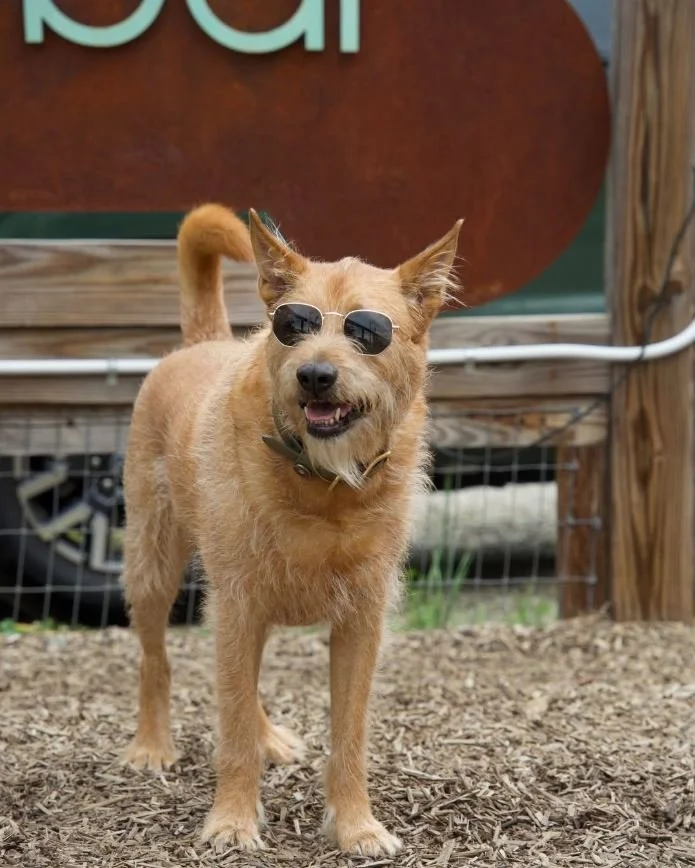
Membership is the recurring-revenue backbone of any Wagbar location, and Austin's profile supports it. The metro has high household incomes, a high concentration of dogs per capita, and a strong cultural willingness to spend on experience-based pet services. Local breed clubs, rescue networks, and dog-walking groups are active across town. Day-pass traffic from tourism, conferences, and the city's major event calendar (SXSW, ACL, F1, the rodeo) layers on top of the resident membership base. That mix of member revenue plus visitor traffic is unusual in pet businesses and is part of why Austin tracks well against pet industry market trends for premium experience-based concepts.
Frequently Asked Questions
Is there already an off-leash dog bar in Austin?
Yes. Austin has had operating off-leash dog bars for nearly a decade, with Yard Bar on Burnet Road being the most established example. The category is real and proven in the local market. What it doesn't have is multiple branded locations across the metro, which is part of the opportunity for a Wagbar franchisee.
Does Texas require franchise pre-sale registration for Wagbar?
Texas is not on Wagbar's franchise registration state list, which means an Austin prospect generally has a more direct path through the FDD process compared to states that require pre-sale registration. The FDD remains the official offer document, and the Wagbar franchising team walks each prospect through it.
Can a Wagbar location operate year-round in Austin's heat?
Yes, with intentional design. Hot-climate Wagbar locations rely on shade structures, misters, multiple water stations, paw-safe surfaces, and adjusted hours during peak summer that lean into mornings and evenings. The eight months of strong outdoor weather in Austin (October through May) more than offset the modified summer schedule.
What kind of property works for an off-leash dog bar in Austin?
The ideal site has a fenced outdoor footprint large enough for safe off-leash play, parking that supports membership traffic, and zoning that permits an outdoor commercial use with on-premise alcohol service. Suburban or fringe-urban sites with bigger lots often work better than dense commercial corridors. The Wagbar system includes a container-based bar build option that fits a range of property types.
How does Wagbar's training program prepare an Austin franchisee?
Training starts with the Opener app for pre-opening guidance, then moves to a full week of hands-on training at the Asheville flagship covering dog behavior management, bar operations, staffing, and marketing. A Wagbar team member is on site for the grand opening, and quarterly business reviews continue once the location is running.
Bottom TLDR
An off-leash dog bar in Austin works because the model is already proven locally and the metro's demographics, outdoor culture, and live music scene match what Wagbar built. Year-round operations require shade and adjusted summer hours, but the eight months of strong outdoor weather more than balance that out. Talk with Wagbar's franchising team about Austin site options.