
Top TLDR: Craft and draft beer at a dog bar isn’t background noise — it’s the anchor of the business model. Rotating taps feature IPAs, lagers, wheat beers, stouts, sours and pale ales from regional breweries, swapped by the season so regulars always find something new. The US craft beer market reached $28 billion in retail dollar sales according to the Brewers Association’s 2026 report, and dog owners over-index as craft drinkers. That demographic overlap is exactly why the tap wall exists: it keeps visits long, per-visit revenue solid and the community vibe alive.
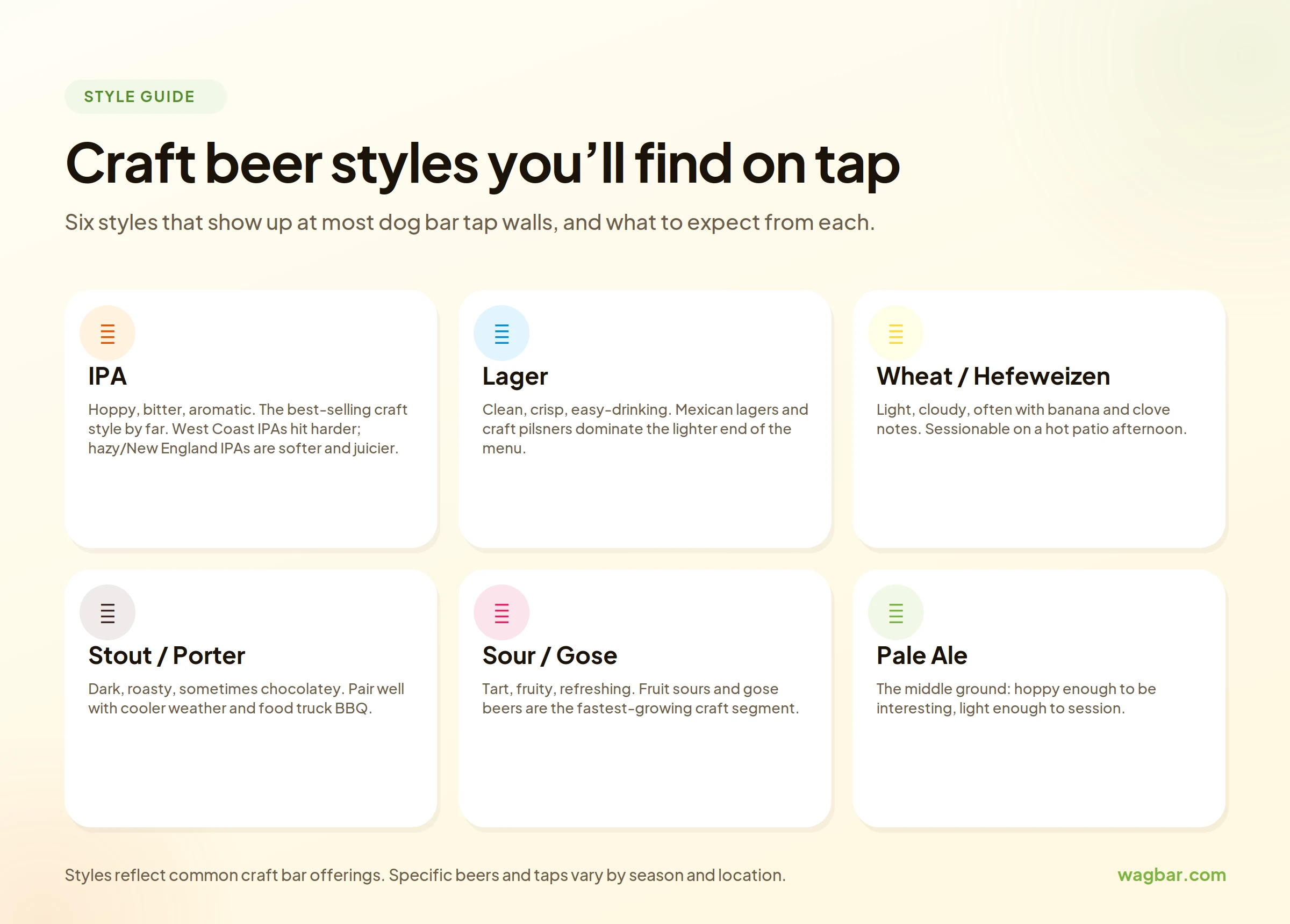
- Six styles dominate tap walls: IPA, lager, wheat, stout, sour and pale ale.
- Taps rotate seasonally. New beers every few weeks give regulars a reason to return.
- The demographic overlap is the business. Craft drinkers and dog owners are the same audience.
- A pint extends a visit. Two drinks turn a 30-minute park stop into a 90-minute outing.
The tap wall at a dog bar isn’t decoration. It’s where the business model lives. Every handle on the wall represents a partnership with a regional brewer, a reason for a regular to come back this week instead of next month, and another 30 to 45 minutes a customer spends on site watching their dog play. Here’s how craft and draft beer at a dog bar works, what you’ll find on tap, and why the pairing makes so much sense.
What’s on Tap: The Six Styles
IPA
India Pale Ales are the best-selling craft beer style in the country and the backbone of most dog bar tap lists. West Coast IPAs hit with sharp bitterness and pine-resin hops. Hazy (New England) IPAs are softer, juicier and more approachable for people who think they don’t like IPAs. Wagbar typically carries both ends of that spectrum, plus a session IPA under 5% ABV for visitors who want the flavor without the weight.
Lager and Pilsner
Not every visit calls for a bold IPA. Craft lagers, Mexican-style lagers and Czech pilsners fill the “I just want something clean and cold” slot on the menu. They’re the best beers to sip at the dog park on a hot day — light, crushable and designed for outdoor drinking in the sun.
Wheat Beer and Hefeweizen
Cloudy, light-bodied and often carrying banana and clove notes from the yeast. American wheat beers are milder; German hefeweizens are more expressive. Either way, they’re sessionable afternoon patio beers that pair well with food truck tacos and a warm breeze.
Stout and Porter
The dark side of the menu. Stouts and porters bring roasted malt, chocolate, coffee and sometimes vanilla. They’re heavier, better suited to cooler weather and an excellent match for barbecue and smoked food from the truck. Wagbar rotates darker beers in during fall and winter when the patio heaters come out.
Sour and Gose
The fastest-growing corner of the craft market. Fruit sours, kettle sours and gose beers (brewed with salt and coriander) are tart, fruity and incredibly refreshing. They attract drinkers who wouldn’t touch a traditional beer and open the tap list to a wider audience.
Pale Ale
The original craft gateway. Pale ales sit between a lager and an IPA — hoppy enough to be interesting, light enough to drink two without regretting it. They’re the safest recommendation for someone who says “I don’t know what I want.”
The Numbers Behind the Taps
Craft and draft beer at a dog bar is backed by a massive and still-growing market.
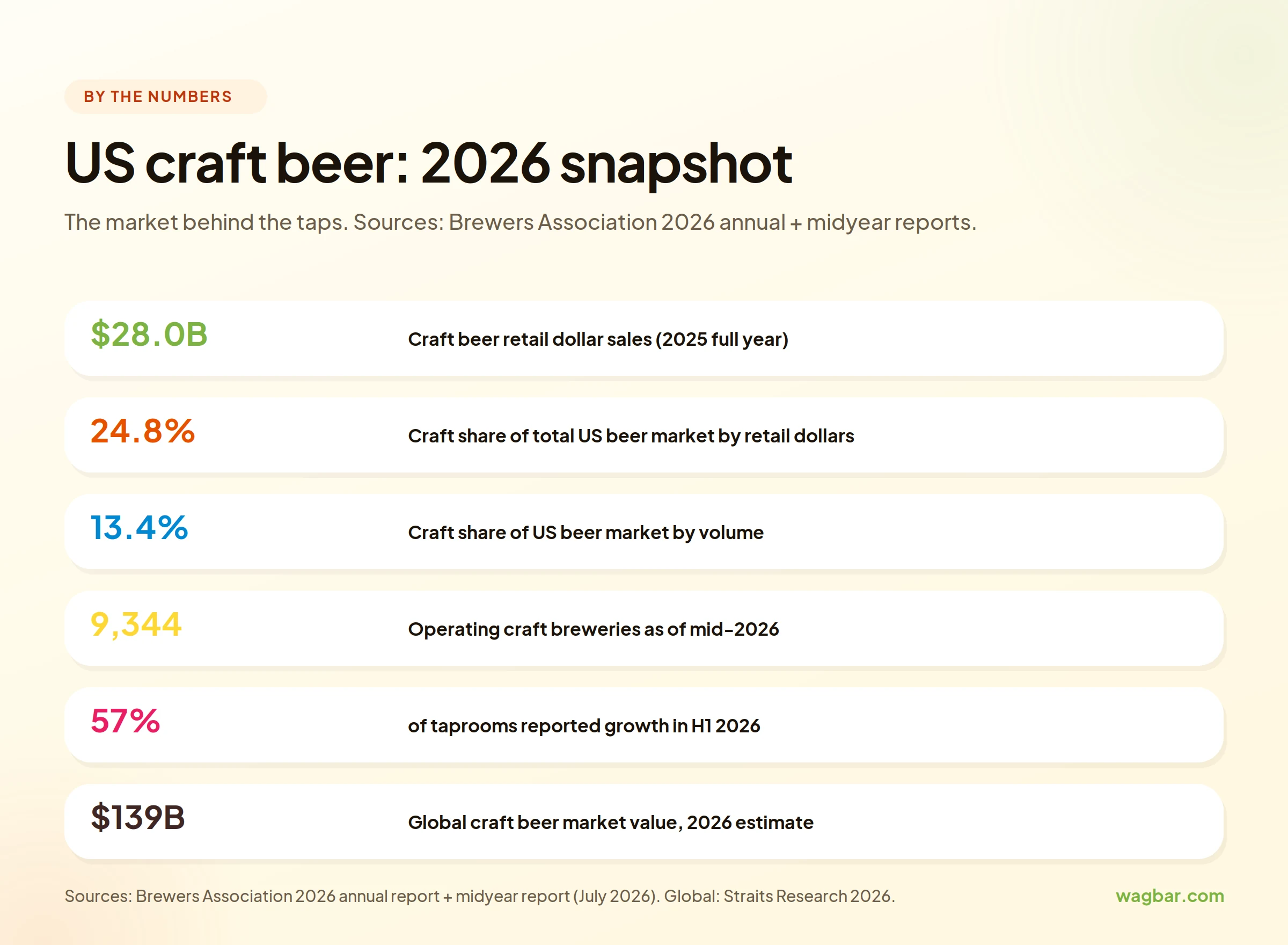
The Brewers Association’s 2026 data (covering the 2025 full year, released and revised through mid-2026) puts US craft beer retail dollar sales at $28.0 billion. Craft holds a 24.8% share of the $113 billion US beer market by retail dollars and a 13.4% share by volume. About 9,344 craft breweries were operating as of mid-2026, and the BA’s July 2026 midyear report showed 57% of taprooms reporting growth in the first half of the year. Globally, the craft beer market is valued at roughly $139 billion in 2026 and growing at a projected CAGR above 10%.
Why Craft Beer and Dog Bars Work Together
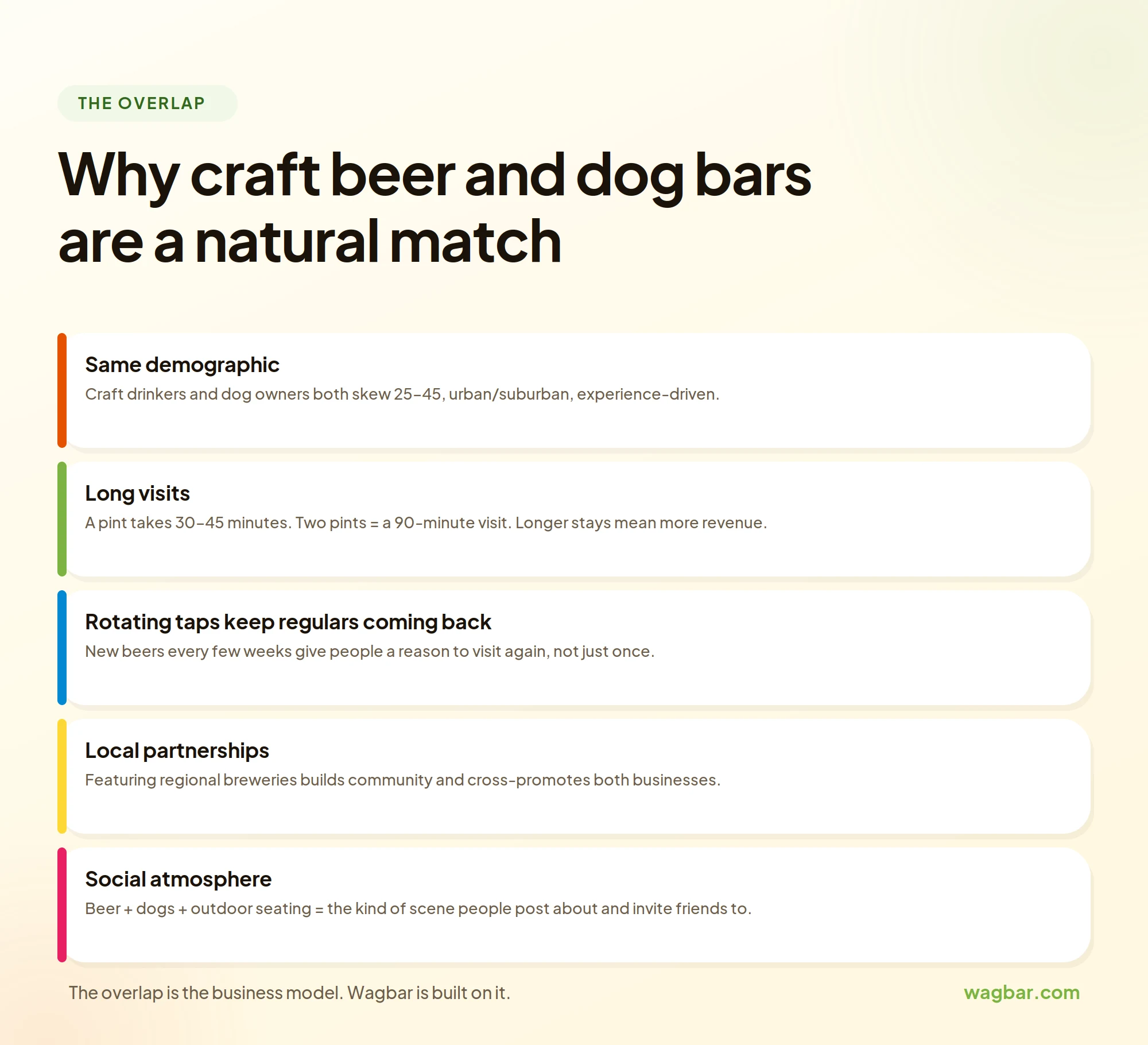
The overlap between craft beer drinkers and dog owners isn’t coincidence — it’s demographic gravity. Both groups skew 25 to 45, live in urban or suburban areas, prioritize independent businesses and seek out experiential outings. A Morgan Stanley survey found that 48% of millennials report that owning a pet shapes which bars and restaurants they visit. A dog bar menu built around craft beer meets that audience exactly where they already are.
The practical benefits stack up too. A pint takes 30 to 45 minutes to drink. Two pints and a food truck order turn a quick park stop into a 90-minute outing with real per-visit revenue. Rotating taps bring regulars back every week to try what’s new. And featuring regional breweries creates a partnership pipeline that cross-promotes both businesses — the brewery gets exposure to a captive, beer-buying audience, and the dog bar gets a tap list with local credibility.
How Wagbar Runs Its Tap Program
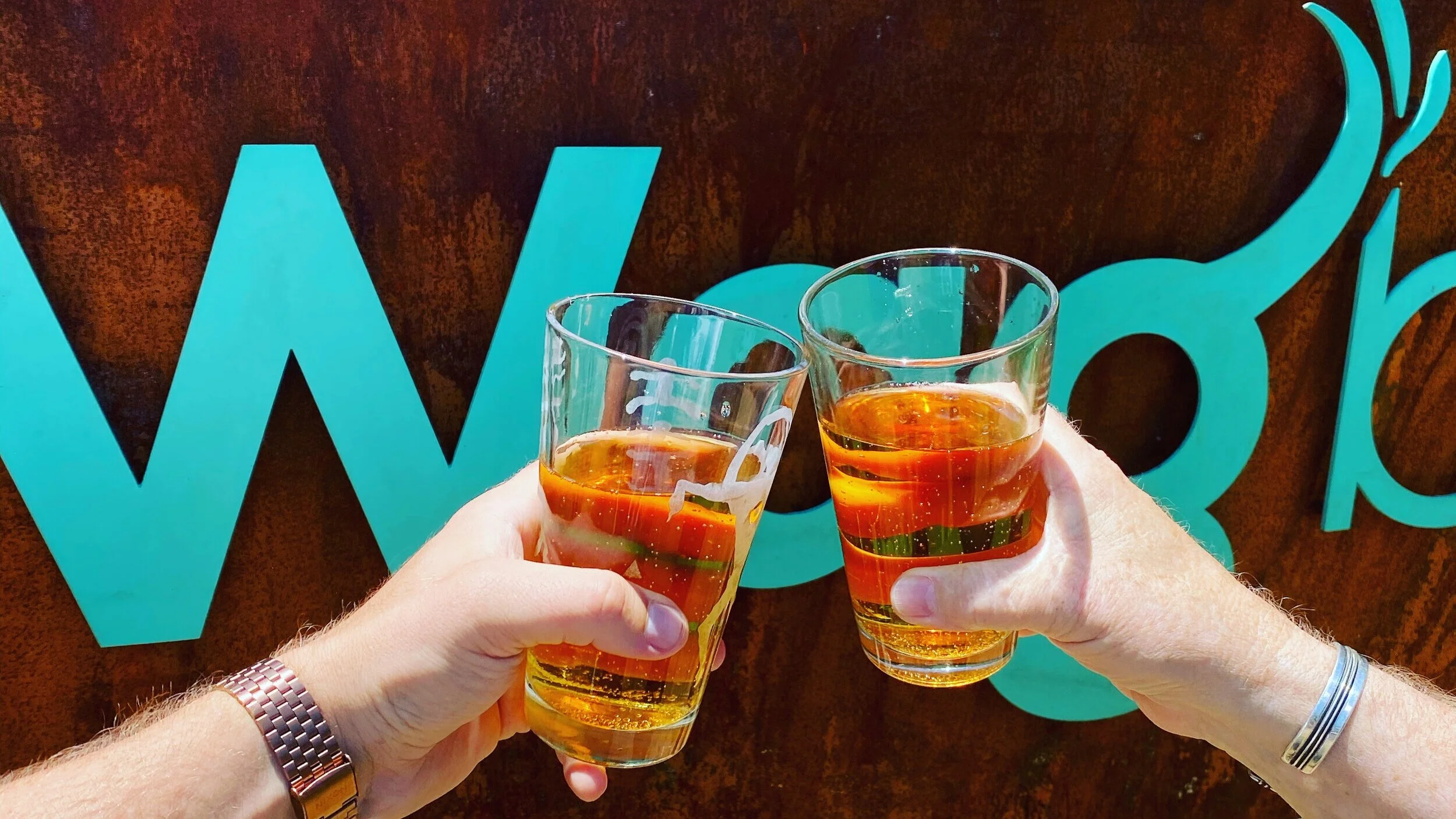
Wagbar’s beer program is built around three principles:
- Regional first. The majority of taps feature breweries within driving distance of the location. In Asheville, that means a rotating cast from one of the densest craft brewery scenes in the country.
- Seasonal rotation. Lighter beers (lagers, wheat, sours) in spring and summer. Darker beers (stouts, porters, amber ales) in fall and winter. IPAs year-round because they always sell.
- Something for everyone. The tap list always includes at least one low-ABV session beer, one non-IPA, and — increasingly — a craft non-alcoholic option for the sober-curious crowd.
The goal is a tap wall where any visitor can find something they want in under 30 seconds. Nobody should have to study the menu or feel overwhelmed. Six to twelve taps, well curated, beat forty taps with no direction every time.
Beer Safety Around Dogs
Beer is for humans. Dogs should never drink alcohol — even a small amount of beer can cause vomiting, disorientation, breathing problems and, in serious cases, coma. A responsible dog bar keeps drinks at table height (not on the ground), cleans spills quickly and offers fresh water stations throughout the yard so dogs always have something safe to drink.
Wagbar’s staff are trained to watch for unattended drinks at dog level and to redirect curious noses away from pint glasses. It’s a small operational detail that matters more than it sounds.
What to Order If You’re New
- Hot day, outdoor patio: a craft lager, Mexican lager or fruit sour. Light, cold, crushable.
- First visit, not sure what you like: a pale ale. It’s the universal middle ground.
- IPA lover: ask the bartender which IPA is newest on the wall. The rotating tap is usually the most interesting pour.
- Not a beer drinker: no problem. Wine, cocktails, seltzers, coffee and a full non-alcoholic lineup are all part of the menu.
- Designated driver: craft NA beers from producers like Athletic Brewing taste closer to the real thing than anything available five years ago.
Craft Beer at a Dog Bar FAQs
How many beers does a dog bar typically have on tap?
Most dog bars carry 6 to 16 taps. Wagbar runs a curated list that rotates by season and brewery availability, usually in the 8 to 12 range.
Do dog bars only serve craft beer?
Craft dominates the tap wall, but most dog bars also stock canned domestic beer, wine, seltzers, cocktails and non-alcoholic options. The bar is designed to serve every preference.
Can my dog drink beer?
No. Alcohol is harmful to dogs at any dose. Even a few laps of beer can trigger vomiting, disorientation and breathing difficulty. Dog bars provide fresh water for dogs and keep alcoholic drinks at table height.
Why do dog bars partner with local breweries?
Local taps build community credibility, reduce shipping costs, and create a partnership where the brewery gets exposure and the bar gets a better, fresher product. Customers notice and appreciate regional selections.
Are the beers expensive?
Dog bar beer prices are typically in line with local craft bar pricing — roughly $6 to $9 per pint depending on the style and market. Happy hour and daily specials bring the per-pint cost down further.
Pour One for the Entrepreneurs
Craft beer is the revenue engine, the community builder and the reason people stay for two hours instead of twenty minutes. Wagbar has refined the tap program over years of operation, and we partner with franchise operators who want to build the same thing in their own market. Find out how a Wagbar franchise runs.

Wagbar does not represent what a franchise owner will earn. Verified performance data is available only in Item 19 of the FDD, provided to qualified candidates during formal disclosure. Published cost figures are FTC-required regulatory estimates and are not profitability guarantees.
Your Dog Plays. You Drink Something Great.
A tired dog, a cold pint and a shaded patio seat. That’s the afternoon a dog bar is designed to deliver. Bring your pup’s records and see what’s pouring at the closest Wagbar.
Bottom TLDR: Craft and draft beer at a dog bar runs on rotating regional taps, seasonal variety and a curated list that covers IPAs, lagers, wheat beers, stouts, sours and pale ales. The $28 billion US craft market and the demographic overlap between craft drinkers and dog owners make the pairing a natural business fit. Rotating taps keep regulars coming back, long visits drive per-customer revenue, and local brewery partnerships build community on both sides. Beer is for the humans. Fresh water is for the dogs.