

Multi-Unit Pet Franchise Investment: When Buying Two or Three Locations Makes Financial Sense
Top TLDR: Multi-unit pet franchise investment makes financial sense when a system's fee discount, shared operational costs, and marketing efficiency offset the higher capital requirements and management complexity of running multiple locations. Wagbar offers a 50% franchise fee discount on additional units for franchisees committing to three or more locations, reducing per-unit upfront costs meaningfully. Review Wagbar's FDD for full investment details and development schedule requirements before committing.
Key Takeaways
Multi-unit pet franchise investment reduces per-location franchise fee costs significantly when a system offers volume discounts.
Wagbar offers a 50% franchise fee discount on additional units for franchisees committing to three or more locations.
Shared operational infrastructure across multiple locations can reduce per-unit staffing, marketing, and management costs.
Multi-unit development requires more capital, stronger management depth, and a clear phased opening timeline before making financial sense.
All financial scenarios in this article are illustrative examples. Review Wagbar's FDD for verified investment and performance data.
Single-unit franchise ownership is the most common entry point, and for good reason. You're learning a new business model, building a team, and establishing yourself in a new market. Going deep on one location before expanding is a sound approach for most first-time franchise owners.
But for investors who have the capital, operational experience, and long-term perspective to think beyond a single unit, multi-unit pet franchise investment deserves a serious look. The math changes when you're buying two or three locations simultaneously, and not always in the direction you might expect. Sometimes it gets better. Sometimes it reveals risks that wouldn't show up in a single-unit model. Understanding which situation you're in before you commit is the whole point.
This page covers the financial logic behind multi-unit development, what Wagbar's specific discount structure means in practice, and the operational conditions that need to be in place before adding a second or third location makes sense.

The Basic Math: What Multi-Unit Discounts Actually Save
Franchise fees are a one-time cost, paid upfront per location. For most franchise systems, that fee is fixed regardless of how many units you open. Some systems, including Wagbar, offer discounts on the franchise fee for franchisees who commit to developing multiple locations from the start.
Wagbar's franchise fee is $50,000 per unit. For franchisees who commit to opening three or more locations, Wagbar offers a 50% discount on the franchise fee for the additional units beyond the first. In concrete terms: a three-unit commitment means paying $50,000 for the first location and $25,000 each for the second and third. That's a total franchise fee outlay of $100,000 instead of $150,000, saving $50,000 in upfront fees compared to opening the same three locations as separate single-unit agreements.
For investors evaluating a multi-unit pet franchise investment, that $50,000 saving on fees is real capital that can go toward working capital reserves, build-out costs at the second or third location, or debt service reduction. It's not a trivial amount.
The illustrative total investment range for a three-unit Wagbar development, based on the disclosed range of $470,300 to $1,145,900 per location, would be approximately $1.4 million to $3.4 million across all three units, net of the fee discount. The wide range reflects real estate variation and market-specific buildout costs. This is a hypothetical illustrative range for planning purposes; actual investment totals depend on specific site costs and local market conditions and are disclosed in the FDD.
How Shared Infrastructure Reduces Per-Unit Operating Costs
The fee discount is the most visible financial advantage of multi-unit development, but shared infrastructure across locations often produces more lasting cost savings over time.
Management and Administrative Costs
A single-unit franchisee typically handles all day-to-day management responsibilities themselves or hires a manager for the one location. A three-unit franchisee can hire a general manager who oversees operations across all locations under one employment arrangement, spreading that management cost across multiple revenue streams rather than charging the full cost to one.
The same logic applies to bookkeeping, scheduling, payroll processing, and administrative functions. These aren't costs that triple as you add locations. They grow, but not proportionally. A two-unit operator paying $2,500 per month for a part-time bookkeeper isn't paying $5,000 when they add a second location; they may pay $3,200.
Marketing Efficiency
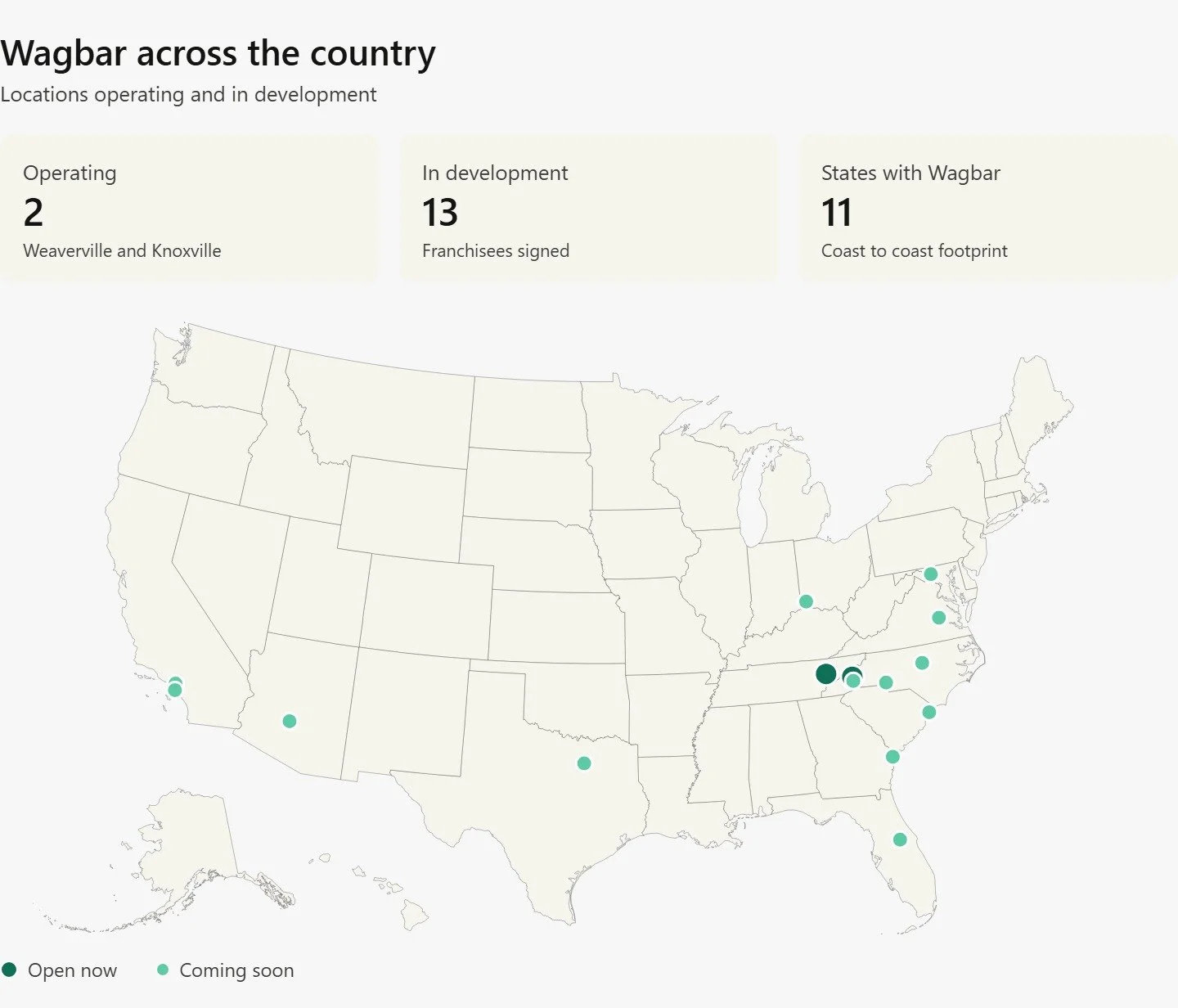
Local marketing for a dog park bar concept builds community recognition and drives membership growth. When you operate multiple locations in a regional market, your marketing investment works harder. A social media campaign, a local radio spot, or a community event promotion reaches potential customers for all your locations simultaneously rather than for one. Brand recognition compounds across your territory, and the cost per acquired customer tends to decline as you add locations in the same region.
This is a structural advantage that single-unit operators in the same system don't benefit from. The community building for dog-focused businesses resource covers how community-driven marketing compounds over time, which directly supports the multi-unit marketing efficiency point.
Staffing Flexibility
A multi-unit operator can cross-train employees to work at different locations, which provides scheduling flexibility and reduces the operational disruption of turnover at any one site. An experienced employee at Location A who's looking for more hours can pick up shifts at Location B without requiring a separate hire. This is a staffing advantage that doesn't exist in a single-unit operation.
The Capital Requirements: What Multi-Unit Development Actually Demands
Multi-unit pet franchise investment sounds attractive until you work through what it demands on the capital side. The advantages above are real. So are these requirements.
Front-Loaded Capital Commitment
When you commit to a multi-unit development agreement, you're committing to open all contracted locations within a specified development schedule, not just one. This means your capital planning needs to account for multiple location build-outs, potentially overlapping in their pre-opening periods, not just the first one.
A franchisee who opens Location 1, reaches profitability, reinvests that profit into Location 2, and later funds Location 3 from operations is on a very different financial timeline than one who commits to all three upfront and needs to fund them through a combination of equity and debt. Both approaches can work. They require very different capital structures and very different risk tolerance.
Debt Service Across Multiple Locations
If you're financing a significant portion of a multi-unit development through SBA or conventional lending, your monthly debt service multiplies with each location. Three locations financed at 65% each means three loan payments, and those payments exist regardless of whether each location has reached break-even. A single underperforming location in a three-unit portfolio creates a deficit that the other two must absorb or that you must fund from outside the business.
This is the most significant risk factor in multi-unit development, and it's the one most often underestimated during the evaluation phase. The pet franchise break-even analysis resource covers how debt service affects the path to profitability at the individual location level, which is the right foundation before modeling a multi-unit scenario.
Working Capital Must Cover Multiple Ramp-Up Periods
Each new location goes through a ramp-up period where revenue is building toward break-even. The working capital reserves that fund that gap for one location must be multiplied when two or three locations are ramping up in close proximity. Underfunding working capital at a single location is a common mistake. Underfunding it across a multi-unit development can be genuinely damaging.
Most franchise financial advisors recommend a minimum of six months of operating expenses in working capital per location, in addition to buildout and pre-opening costs. For a three-unit multi-unit pet franchise investment, that's three times the reserve required for one location.
When Multi-Unit Development Actually Makes Sense
Given the capital demands above, the financial advantages of multi-unit development make the most sense when specific conditions are in place.
You Have Existing Operational Experience
The best multi-unit candidates in the franchise world are typically operators who already have experience running at least one location in the same system, or executives with demonstrated multi-unit management experience from another franchise or retail context. Operating a dog park bar is a specific skill set. Running three of them simultaneously is a management challenge that compounds quickly without a foundation of operational confidence.
For first-time Wagbar franchisees, opening one location well and building from there is typically the stronger path. For experienced operators with hospitality or retail management backgrounds, or for investors who plan to hire experienced general management from the start, multi-unit development from the beginning is a viable approach.
Your Market Has Room for Multiple Locations
Committing to three locations means identifying three viable sites in markets that can each sustain a Wagbar's membership targets without cannibalizing each other. A region with one strong market and two weaker adjacent markets is a different three-unit investment than three separate strong markets within a reasonable management radius.
Understanding the best cities for dog franchise success and the demographic factors that support successful dog park bar locations helps frame the market analysis question before committing to a multi-unit development area.
Your Financing Structure Can Handle the Load
Access to capital at favorable terms is a precondition for multi-unit development that works financially. SBA 7(a) loans can fund each location individually, but each loan is underwritten based on the business's ability to service the debt from that location's projected revenue. Lenders will assess your combined debt load across all committed locations and will want to see that your combined projected cash flows can service the total obligation.

Working with a lender experienced in franchise financing, before you commit to a multi-unit agreement, is essential. The pet franchise investment guide covers SBA financing structures in detail.
Sequenced vs. Simultaneous Multi-Unit Development
Not all multi-unit development happens at the same time. There are two primary approaches, and the financial logic is different for each.
Simultaneous Development
Opening all committed locations within a compressed timeline, typically 12 to 24 months across all units, maximizes the brand-building and marketing efficiency benefits but requires the largest upfront capital commitment. It's appropriate for well-capitalized investors with strong management infrastructure who are entering a market and want to establish territory quickly before competitors can enter the space.
Phased Development
Opening the first location, reaching operational stability, and then using that location's cash flow alongside additional capital to fund subsequent openings is the more conservative approach. It reduces simultaneous financial exposure and lets you apply real operational learnings from Location 1 to the buildout and opening of Location 2. The trade-off is a slower timeline to full territory coverage and potentially less favorable terms if the system changes its discount structure between your first and subsequent openings.
Wagbar's multi-unit discount applies to franchisees who commit to three or more units upfront, which creates a natural incentive toward simultaneous or rapid phased development rather than single-unit sequential expansion. Understanding exactly how the development schedule is defined in your franchise agreement, and what happens if timelines slip, is a question for your franchise attorney before signing.
The Exit Value Consideration
Multi-unit franchisees generally command a premium over single-unit operators in franchise resale markets. A portfolio of three operating Wagbar locations with established membership bases, documented cash flows, and a track record of operational performance is a meaningfully different asset than a single location. Buyers acquiring a multi-unit portfolio are purchasing economies of scale and management infrastructure that would take years to build independently.
This consideration matters most for investors who are building with a defined exit horizon, whether that's a sale to another operator, a private equity buyer, or a family transfer. The franchise resale market for established multi-unit concepts in growing categories like off-leash dog park bars tends to produce higher EBITDA multiples than standalone single-unit sales, all else being equal.
Frequently Asked Questions
What does Wagbar's multi-unit discount actually cover?
Wagbar offers a 50% reduction on the franchise fee for each additional unit beyond the first, for franchisees committing to three or more locations. The discount applies to the $50,000 franchise fee on additional units, reducing it to $25,000 per location for the second and third (and any further) units in the commitment.
Is there a required timeline for opening multiple units?
Multi-unit development agreements include a development schedule specifying when each location must open. The specific timeline is disclosed in the franchise agreement, which is an exhibit to the FDD. Your franchise attorney should review these timelines carefully, as failure to meet development schedule milestones can have consequences under the agreement.
Can I finance a multi-unit development through a single SBA loan?
SBA financing for multi-unit franchise development can be structured as individual loans per location or, in some cases, as a portfolio loan. The approach depends on the lender, your total investment amount, and how your development schedule is structured. Working with a lender who specializes in franchise financing and understands multi-unit development is important for getting this right.
What management structure does a three-unit Wagbar operation need?
A three-location portfolio typically requires at least one experienced general manager or area manager overseeing all locations, with location-level managers at each site. The staffing model depends on your operating hours, market size, and how geographically concentrated your locations are. Wagbar's training program addresses operations management as part of franchisee preparation.
Does a multi-unit commitment change the royalty structure?
Royalty rates are typically per-location and are not discounted for multi-unit operators. At Wagbar, each location pays 6% of adjusted gross sales in royalties and 1% to the marketing fund. The multi-unit advantage is on the front-end franchise fee, not the ongoing royalty structure.
Where can I start the multi-unit development conversation with Wagbar?
Connect with Wagbar's franchise development team through the franchising page to discuss multi-unit territory availability, development timeline requirements, and the full investment disclosure in the FDD.
Building a Multi-Unit Strategy That Holds Up
Multi-unit pet franchise investment makes financial sense when the fee savings are real, the management infrastructure is in place before the second location opens, the market can support multiple locations without internal competition, and the capital structure is strong enough to carry multiple ramp-up periods simultaneously.
For investors evaluating a Wagbar multi-unit development, the 50% franchise fee discount for three or more units is a concrete financial advantage that changes the total investment math meaningfully. Whether the rest of the conditions are in place is a question that requires honest self-assessment alongside market analysis and a thorough FDD review.
The dog business models complete guide and the benefits of owning a pet franchise provide additional context on what the Wagbar system offers operators at any unit count.
Bottom TLDR: The financial case for multi-unit pet franchise investment rests on three pillars: front-end fee savings, lower per-unit operating costs through shared infrastructure, and compounding brand value at resale. Wagbar's 50% franchise fee discount for three or more units is a concrete starting advantage, but the model only holds up with adequate capital reserves and management depth in place before the second location opens. Connect with the Wagbar franchising team to discuss multi-unit territory options.