

How Dog Lovers Are Turning Their Passion Into a Pet Business Franchise
Top TLDR: Dog lovers are building careers around their passion through pet business franchises like Wagbar, a proven off-leash dog park and bar concept with locations across the U.S. The franchise for pet lovers offers a structured path from professional career to dog-focused business ownership, with training, an established build-out system, and ongoing support. If you're serious about this move, visit wagbar.com/franchising to start the inquiry process.
Dog people think about their dogs a lot. Not just at home, not just on walks — at work, in meetings, during commutes, during lunch. If you've ever caught yourself calculating how many hours are left before you get home to your dog, you already know the feeling this page is about.
What's changed in the last several years is what's possible with that feeling. The pet industry has grown into a $147 billion market in the United States, and the businesses doing well inside it aren't just the ones selling dog food or running grooming services. The ones growing fastest are the ones built around community — places where dog owners can show up regularly, let their dogs off the leash, and actually enjoy being there. The franchise for pet lovers that makes the most sense today looks nothing like a traditional pet service business.
This page is for people who love dogs and are seriously considering what it would mean to build a business around that love. It covers the emotional and practical decision framework for career-changing into pet franchise ownership — what's driving people to do it, how they evaluate whether they're ready, what the business model actually involves, and what it looks like on the other side.
Why Dog Lovers Make This Move
The word "passion" gets used a lot in franchise marketing, and it usually means very little. But in this context, it's worth taking seriously — because the people who open dog-focused businesses typically aren't doing it because they ran a financial model and it looked attractive. They're doing it because something about their current work no longer feels worth the time they're trading for it.
AJ Sanborn spent 20 years in financial services before he started looking for what came next. He thought about opening a traditional bar. He kept coming back to dogs. When he found Wagbar, a combination off-leash dog park and bar founded in Asheville, North Carolina, the appeal was immediate — not because it was a safe bet, but because it made sense as a life. He's now the Richmond, Virginia area franchisee.
Dianna came from IT sales and brought years of restaurant industry experience with her. She wasn't looking for any pet franchise — she was looking for a business that combined her background in operations and hospitality with something she actually cared about. Dogs. People. Community spaces. Wagbar lined all of that up.
Jennifer spent years in a corporate career before deciding to open a Wagbar in the Los Angeles area. She'd wanted to work with animals since childhood. For her, this wasn't a career pivot so much as a return to something she'd always cared about.
These aren't unusual stories among Wagbar's franchise owners. The pattern that shows up consistently is: professional background, meaningful career, then a point where the work stops feeling like enough — and dogs become the way forward.

That shift isn't irrational. According to the American Pet Products Association, approximately 66% of U.S. households own a pet. Pet ownership has risen steadily for decades and showed particular acceleration in the years following the pandemic. Dog owners aren't a niche demographic. They're a majority, and they're spending more per pet than any previous generation.
The franchise for pet lovers opportunity exists because that market is real and large and underserved by the kind of businesses that actually feel good to walk into every day.
The Business Model Behind the Off-Leash Dog Bar
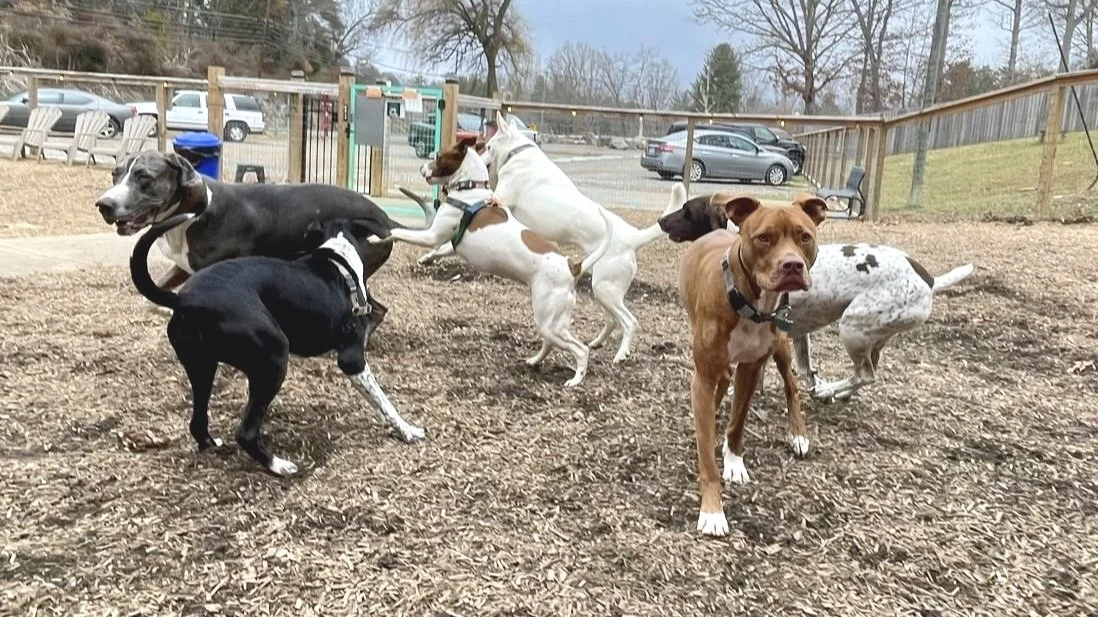
Before you can evaluate whether this is right for you, you need to understand what kind of business this actually is. Wagbar isn't a boarding facility. It's not a grooming studio or a training center. It's a day-use off-leash dog park combined with a licensed bar — a place where dogs run free in a supervised, fenced environment while their owners drink, eat, and spend time with other dog people.
That distinction matters for a few reasons.
The customer comes back voluntarily, repeatedly. A grooming customer shows up every six to eight weeks because they need to. A Wagbar member shows up because they want to, often multiple times a week. That recurring behavior is the foundation of the membership model that drives the business.
Revenue comes from multiple directions. Dog entry fees, memberships (daily, monthly, annual, 10-visit punch passes), bar sales, private events, food trucks — these aren't separate businesses, they're all part of the same visit. A customer paying for their dog's entry is also buying drinks. That layering is what makes the unit economics different from a single-service pet business.
The bar component creates a social anchor. People don't just come to watch their dogs play. They come because the space gives them something to do while the dogs play. That's a meaningful design element — it extends visit duration and creates the kind of regulars culture that makes a local business genuinely hard to replace.
The pet industry market analysis shows the broader tailwinds behind this model. Spending on pet services — not food, not medicine, but experiences and services — has grown faster than almost any other consumer category. Dog owners are demonstrating, at scale, that they'll pay for quality and they'll pay for social experiences.
Understanding those dynamics is what separates someone who wants to open a dog bar from someone who's genuinely ready to.
What Skills Transfer From Your Current Career
One of the most common questions prospective franchisees ask is some version of: "I don't have a background in pets or hospitality. Does that matter?"
The short answer is that Wagbar is designed to train you on the operational specifics — dog behavior management, bar operations, staff training, safety protocols. The week-long intensive training at Wagbar's Asheville headquarters exists specifically because the company's bet is on your transferable skills, not on domain expertise you haven't built yet.
What transfers well from most professional backgrounds:
Financial services and accounting backgrounds bring the exact analytical skills you need to read cash flow, manage payroll, and evaluate membership pricing. AJ Sanborn's financial services experience didn't disappear when he left that career — it became directly useful in a different context.
Sales and account management backgrounds translate cleanly into community building. The instinct to understand what customers want, to build relationships over time, and to follow up consistently is the same skill set that turns a new member into a three-year regular.
Operations and project management backgrounds are genuinely valuable at every stage — from managing the build-out process to scheduling staff to handling the logistics of events programming.
HR and people management backgrounds show up clearly in how you hire, train, and retain your staff. A Wagbar location that runs well is largely a function of the quality of the people working it.
Marketing and communications backgrounds feed directly into local community building, social media, and events — the channels that drive new memberships and repeat visits.
There are skills that don't transfer and need to be built: understanding dog behavior and how to read it, managing situations where dogs don't get along, knowing when and how to intervene, handling the bar operations and licensing requirements for your specific market. The franchise training system is built around these gaps.
It's also worth noting what the daily operational reality is not. You are not a dog trainer. You are not a veterinarian or a veterinary technician. You are not expected to resolve serious medical situations or handle aggressive dogs with specialized behavioral techniques. Your trained staff handles day-to-day park monitoring. Your role is creating the environment, maintaining the standards, and managing the business — not becoming a dog behavior expert before you open.
The combination of transferable professional skills and the training Wagbar provides is specifically designed to make the transition workable for people who love dogs and have meaningful career experience, even if that experience has nothing to do with the pet industry. For more context on what it actually means to run this type of business, see the benefits of owning a pet franchise overview.
The Practical Evaluation: Are You Actually Ready?
Passion for dogs is the starting point, not the finish line. Deciding whether to move forward on a pet franchise opportunity means asking yourself a harder set of questions.
Financial readiness. Wagbar's total estimated initial investment ranges from $470,300 to $1,145,900. That range reflects real variables — land, construction costs, local permitting, size of the location. The initial franchise fee is $50,000. Ongoing costs include a 6% royalty on adjusted gross sales and a 1% contribution to the Wagbar marketing fund. Understanding what you have in liquid capital, what financing options are available to you, and what your income looks like during the ramp-up period before membership revenue stabilizes — those are the financial questions that need honest answers before anything else.
Operational appetite. Running a dog park bar means early mornings before open, physical days on your feet, staff management, event coordination, and being the person who handles problems when they come up. If you're expecting a hands-off ownership model, this isn't it — especially in the early years. The owners who do well tend to be genuinely present and genuinely engaged.
Tolerance for ambiguity. Even with a proven franchise system, there's real uncertainty in a new location. You're building a member base from zero. You're establishing yourself in a local market. You're figuring out what events work and what your particular community responds to. That process takes time and involves a lot of iteration.
Long-term orientation. The membership model rewards patience. Recurring revenue builds gradually. An owner who needs strong results in the first six months is going to have a harder time than one who's committed to a three-to-five year horizon.
Lifestyle fit. The hours of an off-leash dog bar are concentrated in afternoons, evenings, and weekends — which is when dog owners have time. If that schedule works for your life and family situation, that's a meaningful fit consideration. If it creates serious conflicts, that's worth thinking through before you're committed.
Market selection. The right location matters enormously. Wagbar performs well in communities with high dog ownership rates, strong disposable incomes, a culture that values outdoor and social activities, and not too many competing off-leash spaces. College towns, tech corridors, and city neighborhoods undergoing growth tend to show the right combination of demographics. The best cities for dog franchise success resource goes into detail on what market characteristics Wagbar looks for when evaluating territories.
These questions aren't meant to discourage. They're meant to help you arrive at a genuine answer. The people who thrive with this model are the ones who went in clear-eyed.
Building From Scratch vs. Buying Into a Franchise
A common point of comparison for anyone seriously considering this is: why not just open an independent dog bar? You'd avoid the franchise fee, set your own royalty rate (which would be zero), and control every decision.
The honest case for the franchise path comes down to a few things.
The build-out solution. Wagbar has a partnership with a company that converts shipping containers into fully-equipped bars and bathrooms. That's not a minor convenience — it eliminates one of the most complex, expensive, and time-consuming parts of opening a licensed bar from scratch. The container bar system compresses the timeline and reduces the number of variables you're managing during construction.
The operational playbook. You're not guessing at vaccination protocols, park layout, staff training, dog behavior management, membership pricing, or alcohol licensing requirements. The system exists because Wagbar's founders spent years figuring those things out. Buying the franchise means buying the benefit of that experience.
The training program. Before you open, you go through an intensive week of hands-on training at Asheville headquarters covering dog behavior management, bar operations, staff training, and marketing. A team member is present for your grand opening. Ongoing support continues beyond that through quarterly business reviews and operational guidance.
The brand. Wagbar was named one of USA Today's top 10 best dog bars in the country. That recognition doesn't transfer automatically to a new location, but the brand association — particularly for people who've heard of Wagbar, visited one, or seen it in national press — lowers the activation barrier when you're trying to get your first 200 members.
The multi-unit economics. If you're thinking bigger than one location, Wagbar offers a 50% discount on the franchise fee for owners who commit to three or more units. That's a structurally different financial conversation than trying to scale an independent concept.
None of this means independent ownership doesn't work — it means that for a first-time owner with strong professional skills and limited pet or hospitality industry experience, the franchise path removes a significant amount of startup complexity. For a deeper look at what the franchise investment involves, the complete guide to owning a pet franchise walks through the financial and operational considerations.
What Wagbar Owners Actually Do Every Day
This part tends to surprise people who've thought carefully about the financial model but haven't fully visualized the daily reality.
The dogs are the center of the operation, but the job of the owner is to create and maintain the environment that makes the dogs safe and the humans happy. That involves more people management than you might expect.
Your staff is your front line. They're checking vaccination records, monitoring the park, managing situations when dogs get tense, running the bar, helping with events, and representing the brand with every interaction. Hiring well, training consistently, and retaining good people is one of the most important things you do.
Your members are the community you're building. The best Wagbar locations have regulars who know each other, who show up for breed meetups and trivia nights and potlucks, who bring new people in because they're genuinely enthusiastic about the place. That community doesn't happen by accident — it's built through events programming, through staff who know members by name, and through an owner who's present enough to set the tone.
Your bar is a real business unit. Alcohol licensing, inventory management, responsible service training for your staff, compliance with your local regulations — this is a meaningful operational responsibility and one that Wagbar's training covers directly.
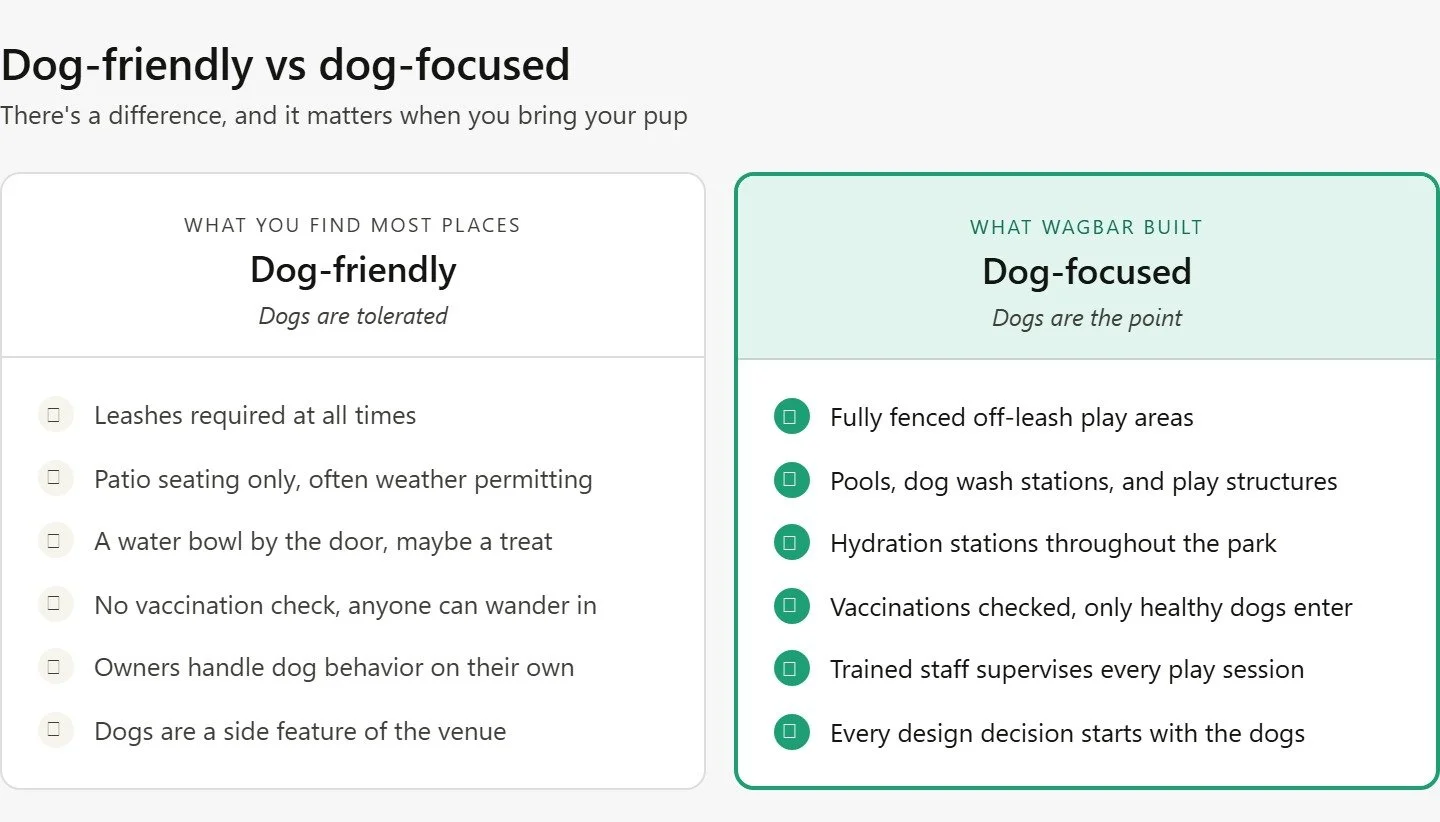
Your park is a safety environment. The off-leash area is fenced, supervised, and governed by a code of conduct that your staff enforces. Dogs must be vaccinated, at least six months old, and spayed or neutered. Aggressive behavior results in removal. Those standards exist because safety is the foundation the whole experience is built on.
For the mother-daughter team opening Wagbar Knoxville — Liz, with her background in finance, community leadership, and animal rescue, and Shelby, who grew up volunteering in shelters and is now pursuing her Animal Behavior certification — the daily reality of the job maps almost perfectly onto skills they already had and things they already cared about. That alignment is what makes the work sustainable.
The Emotional Reality: What Changes When It's Your Business
People who've made this transition tend to describe it with some consistency. The work is harder than a corporate job in some ways — the hours are less predictable, the problems are more immediate and more physical, and the financial stakes are personal in a way that a salary never is.
What's different is the relationship between effort and meaning.
When AJ Sanborn was evaluating his next move, he wasn't just looking for a business that would be profitable. He was looking for something that would feel worth doing. That's a real consideration, and it's not a naive one. The people who sustain difficult work over time tend to be the ones who can connect what they're doing to something they actually value.
A Wagbar on a busy Saturday afternoon — dogs running, people laughing, regulars catching up, someone's dog meeting their new best friend — is a specific kind of payoff that doesn't show up on a financial model. Owners talk about it consistently.
That's not a guarantee of success, and it doesn't replace financial planning, operational discipline, or good judgment. But it matters as a sustained motivator in a way that pure financial incentive often doesn't.
If you're reading this because you've been wondering whether there's a way to build a business around something you genuinely care about — and you care about dogs — this is worth looking at seriously. The pet franchise opportunities page is the right starting place for understanding what's available and where. For those ready to take the next step, visit wagbar.com/franchising to begin the inquiry process.
Frequently Asked Questions
Do I need experience in the pet industry to open a Wagbar franchise?
No prior pet industry experience is required. Wagbar's training program is designed to take franchisees with strong professional backgrounds in other fields — finance, sales, operations, HR, hospitality — and equip them with the specific skills needed to run an off-leash dog park and bar. The intensive week-long training at Asheville headquarters covers dog behavior management, bar operations, staff training, safety protocols, and marketing fundamentals.
What does a Wagbar franchise cost?
The total estimated initial investment ranges from $470,300 to $1,145,900. The initial franchise fee is $50,000. Ongoing fees include a 6% royalty on adjusted gross sales and a 1% contribution to the Wagbar marketing fund. These are informational figures — prospective franchisees receive full details through the Franchise Disclosure Document. A 50% multi-unit discount on the franchise fee applies when committing to three or more locations.
How long does it take to open after signing a franchise agreement?
Timelines vary depending on site selection, local permitting, and construction. Wagbar's build-out solution — using converted shipping containers for the bar and bathroom infrastructure — significantly reduces construction complexity and timeline compared to building those components from scratch. A Wagbar team member is present for grand opening support once your location is ready to launch.
Is a Wagbar franchise a good fit if I want to be hands-on?
Yes. The model works best when the owner is genuinely present, particularly in the early years. This is a community business, and the owner's presence matters — in hiring and training staff, in building relationships with members, in setting the tone for the space. Owners who show up and engage consistently tend to build stronger member retention and more stable businesses.
Can I bring my own dog to work?
This depends on your specific location and how you structure your operations, but many Wagbar owners and their dogs are a visible part of their location's culture. The dog-friendly workplace element is part of the appeal of this model for many owners. It's a practical question worth discussing during the inquiry and discovery process.
What ongoing support does Wagbar provide after opening?
Wagbar provides ongoing support through quarterly business reviews, continued marketing assistance, technology infrastructure, and access to the franchisee community network. Franchisees are not on their own after grand opening day — the support relationship continues throughout the life of the franchise agreement.
What to Do Next
If this page has described something you've been thinking about, the practical next step is straightforward: visit wagbar.com/franchising and fill out the inquiry form. The process starts with a conversation — not a commitment — and the team can walk you through available territories, the discovery process, and what the path from inquiry to opening actually looks like.
The dog franchise opportunity page has additional context on what makes the off-leash dog bar model specifically different from other pet franchise categories. And if you want to understand how the pet industry growth trends support this kind of investment, the pet industry growth trends and projections resource covers the broader market context in detail.
This is a real business that requires real preparation. It's also a business that dog people tend to find genuinely rewarding — not just financially, but in the daily texture of what the work actually is. That combination is harder to find than it sounds.
Bottom TLDR: The franchise for pet lovers opportunity through Wagbar combines a recurring-revenue membership model with multiple income streams — dog entries, bar sales, memberships, and events — in a format that rewards owners who bring strong professional skills and a genuine love of dogs. Real Wagbar owners came from financial services, IT sales, and corporate careers before making this transition. The practical next step is reviewing available territories and investment details at wagbar.com/franchising.