
Craft Beer Bar Franchise vs. Dog Bar Franchise: Which One Fits Your Market?
Top TLDR: A craft beer bar franchise vs. dog bar franchise comparison reveals major differences in food requirements, lease size, staffing, and customer retention despite surface-level similarities. Craft beer franchises like The Brass Tap ($793K to $1.28M) and BrewDog ($1.35M to $5.73M) require full kitchens and 15 to 25+ employees, while Wagbar's dog bar franchise ($470,300 to $1,145,900) operates without a kitchen, runs with 6 to 12 people, and generates recurring membership revenue no craft beer bar can match. Compare both models against your local market's dog ownership rates and craft beer saturation before deciding.
Craft beer bar franchises and dog bar franchises overlap in ways that make them easy to confuse from the outside. Both serve craft drinks. Both host trivia nights and live music. Both build loyal, community-driven customer bases. And both attract entrepreneurs who want a bar concept that feels more personal than a chain restaurant.
But once you look past the surface, these two franchise categories operate on different financial logic. The investment, the lease, the staffing, the food requirements, and the way customers find and return to each business tell completely different stories.
This comparison breaks down the real differences between craft beer bar franchises (primarily The Brass Tap and BrewDog, the two biggest names in this space) and dog bar franchises (led by Wagbar, the original off-leash dog park and bar franchise). If you're trying to decide between them, or just making sure you understand your options, this is the honest side-by-side.
The Tap Count Question and What It Actually Means
Craft beer bars live and die by their tap count. The Brass Tap runs 60 taps per location, rotating selections based on local preferences. BrewDog brews much of its own product on-site and supplements with guest taps. For both concepts, the breadth and freshness of the beer menu is the primary value proposition.
That tap count comes with infrastructure costs. Each tap requires draft lines, CO2 systems, glycol cooling, cleaning equipment, and regular maintenance. A 60-tap system is a significant capital item, and keeping 60 different beers fresh and rotated requires dedicated inventory management, supplier relationships, and staff trained to discuss dozens of products knowledgeably.

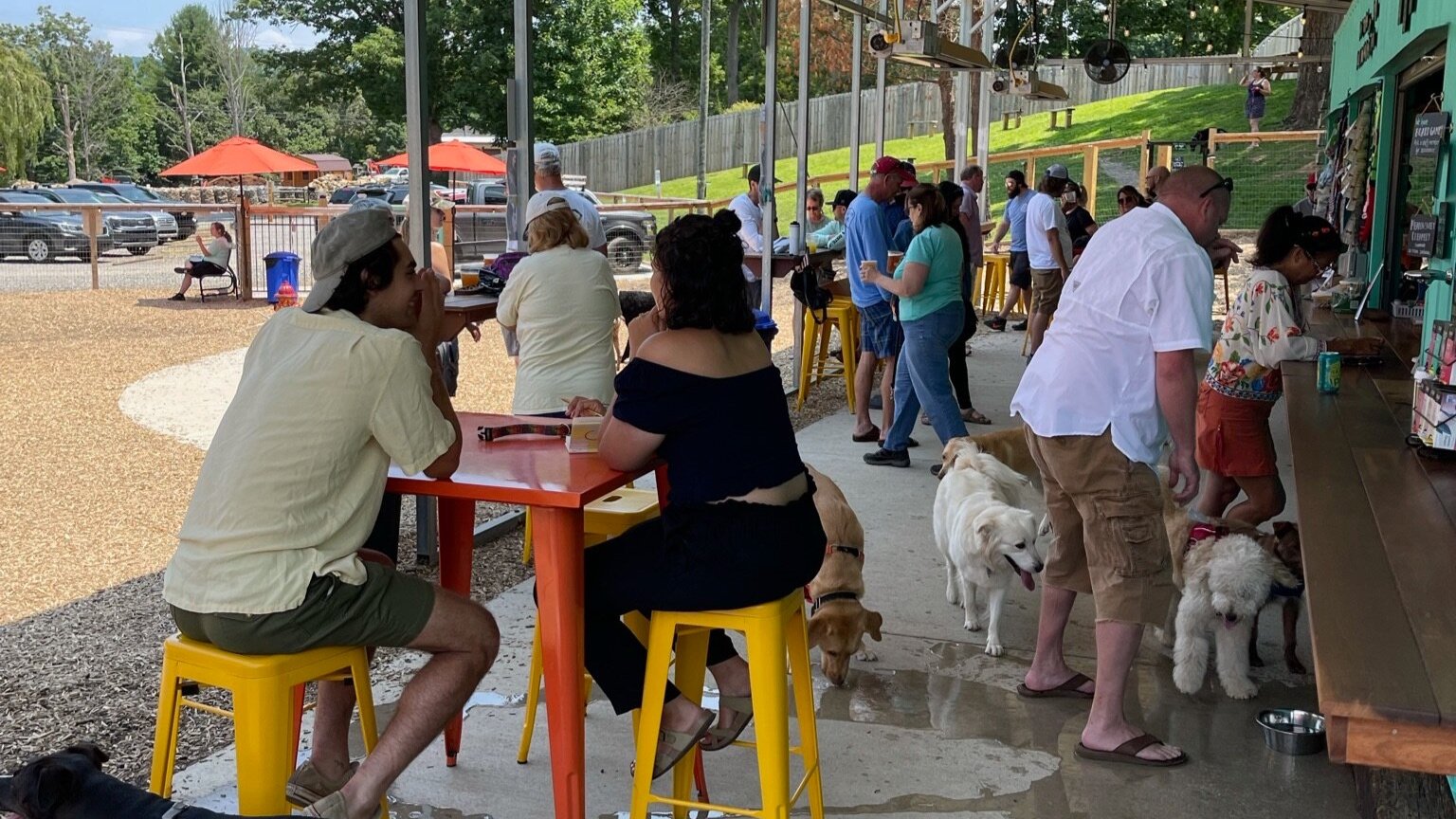
Wagbar's beverage program operates differently. The focus is craft beer, cocktails, wine, seltzers, and non-alcoholic options with a manageable tap count that doesn't require the infrastructure investment of a 60-tap system. The bar serves great drinks, but the drinks aren't the primary reason people come. The dogs are.
That's the key distinction. At a craft beer bar, the product (the beer) is the main draw. At a dog bar, the experience (your dog playing off-leash while you relax with a drink) is the main draw. The beverage program supports the experience rather than being the experience itself.
Food Menu Requirements: The Cost Most People Underestimate
This is where the financial profiles of these two franchise types diverge sharply.
The Brass Tap operates a full food menu with "upscale twists on classic favorites." That means a commercial kitchen with hood systems, cooking equipment, prep stations, refrigeration for food storage, and the staffing to run it: line cooks, prep cooks, dishwashers. BrewDog serves pizzas, burgers, and a broader menu, requiring similar kitchen infrastructure plus the added complexity of coordinating food service with an on-site brewing operation.
A commercial kitchen adds $150,000 to $300,000+ to your build-out costs, depending on the scope. Then there's the ongoing financial impact. Food cost of goods sold (COGS) runs 28% to 35% of food revenue. Kitchen labor adds 10% to 15% on top of bar labor costs. Food waste, health inspections, supplier logistics, equipment maintenance, grease trap cleaning: these are permanent operational costs that never go away.
Wagbar operates without a commercial kitchen. No hood systems. No cooking equipment. No food COGS. No kitchen staff. Some locations partner with food trucks for on-site food options, which gives customers variety without adding permanent kitchen infrastructure to the franchise owner's cost structure.
The math is straightforward. Every dollar you don't spend building and operating a kitchen flows to your bottom line. On a $1 million revenue base, eliminating food operations can save $280,000 to $350,000 annually in food COGS and kitchen labor alone.
Lease Size and Build-Out: Square Footage Costs Money
The Brass Tap targets 3,200 to 3,600 square feet as its sweet spot, including an outdoor patio. That's a full interior restaurant and bar footprint that requires significant leasehold improvements, HVAC, commercial plumbing and electrical, restrooms, kitchen ventilation, and the interior design to create the upscale craft beer atmosphere the brand is built on.
BrewDog locations are larger, often 4,000 to 6,000+ square feet, because they need space for on-site brewing equipment (kettles, fermenters, cold storage) in addition to the bar and dining areas.
Wagbar's container bar construction system takes a fundamentally different approach. Instead of fitting out a large indoor commercial space, Wagbar uses a proprietary container bar that serves as the beverage hub, surrounded by an outdoor off-leash park area. The build-out is simpler because you're not constructing a full restaurant interior. No commercial kitchen infrastructure, no complex dining room layout, no elaborate AV systems.
This shows up directly in the investment numbers:
The Brass Tap: $793,000 to $1,280,000 total investment
BrewDog: $1,347,000 to $5,731,000 total investment
Wagbar: $470,300 to $1,145,900 total investment
The Wagbar franchise fee is $50,000, comparable to BrewDog's $50,000 and higher than The Brass Tap's $25,000. But the total investment, the number that actually matters, lands well below both craft beer competitors in most scenarios. A multi-unit discount of 50% off the franchise fee kicks in when you commit to three or more Wagbar locations.
Staffing and Labor: Where Simpler Pays Off
The Brass Tap positions itself as having "smaller, more manageable-sized staffing requirements" compared to full-service sports bars and restaurants. That's true. But "smaller than a sports bar" still means a full front-of-house service team (servers, bartenders, hosts) plus kitchen staff (cooks, prep, dishwashers), typically 15 to 25+ employees per location.
BrewDog adds brewing staff on top of standard restaurant and bar employees. A head brewer runs $50,000 to $75,000+ annually before benefits, and you'll need cellar operators and brewing assistants depending on production volume.
A Wagbar franchise operates with 6 to 12 employees: bartenders, park attendants who monitor dog behavior and safety, and a manager. That's the entire team.
The labor cost impact is significant. Craft beer bar franchises typically run labor at 25% to 33% of revenue. Wagbar runs at 15% to 22%. When the industry average for restaurants sits at 25% to 35% of revenue (Toast, 2025), that gap represents real money flowing to the owner instead of to a larger payroll.
Fewer employees also means less management overhead. Scheduling 8 people is a different task than scheduling 20+. Training is faster. Turnover hurts less. The HR headaches that come with managing a large team, from call-outs to interpersonal conflicts to tip disputes, shrink proportionally with the size of the team.
Community Building: Same Goal, Different Paths
Here's where craft beer bars and dog bars genuinely overlap. Both concepts are built on the idea that a bar should be more than a place to buy drinks. It should be a gathering place where people feel like they belong.
The Brass Tap builds community through its Brew Crew loyalty program, beer tastings, tap takeovers, trivia nights, and live entertainment. BrewDog builds around its "Equity For Punk" community and a brand identity rooted in craft beer culture. Both models create real community, and that community drives repeat business.
Wagbar builds community through a shared experience that's harder to find anywhere else: watching your dog play with other dogs while you share a drink with their owners. The off-leash dog park creates a social environment where conversations start naturally because everyone has something in common. Breed meetups, live music events, holiday celebrations, and community programming like what runs at the Weaverville flagship location create touchpoints that keep the community engaged.
But there's a structural difference in how each model sustains that community over time.
Craft beer bars retain customers through product novelty and atmosphere. New tap rotations, seasonal releases, and events give people reasons to come back. But those reasons require constant creative effort from the team, and customers can easily find similar craft beer experiences elsewhere.
Wagbar retains customers through behavioral necessity. Dogs need exercise and socialization. That need doesn't take a break. A dog owner with a Wagbar membership returns regularly because their dog needs it, not because there's a new IPA on tap. The bar experience makes the visit enjoyable for the human, but the dog's needs are what drive the frequency. That's a retention mechanism no craft beer bar can replicate, and it's why recurring membership revenue changes the financial equation so significantly.
Revenue Model: One-Time Visits vs. Recurring Membership
Craft beer bars make money the traditional way. Customers walk in, order food and drinks, pay their tab, and leave. The Brass Tap's Brew Crew loyalty program encourages repeat visits, but every dollar of revenue still requires getting someone to choose your bar over the many other options in their market, every single time.
The Brass Tap reports average yearly gross sales of approximately $1.32 million, with estimated owner earnings of $92,000 to $132,000 and a franchise payback period of 9.7 to 11.7 years (VettedBiz, 2025). BrewDog reports average unit volumes around $2.75 million on a much higher investment base.
Wagbar's model adds a revenue layer that craft beer bars simply don't have: recurring subscriptions. Dog owners pay monthly or annual memberships for park access, plus day passes for casual visitors. That membership revenue builds over time, creates a predictable financial floor under the business, and compounds as the community grows.
Beverage sales, events, and private bookings layer on top of the membership base. Wagbar's royalty fee is 6% of adjusted gross sales with a 1% marketing fund contribution.
For detailed financial performance data, prospective franchisees can request Wagbar's Franchise Disclosure Document.
Market Fit: How to Know Which Concept Belongs in Your Area
Not every market supports both concepts equally, and understanding your local market is more important than picking the "better" franchise in the abstract.
A craft beer bar franchise fits markets with strong craft beer culture, high foot traffic in dining and entertainment districts, and a customer base that actively seeks out new beer experiences. Urban neighborhoods with dense nightlife and young professional demographics tend to perform well. The challenge is competition: your craft beer bar will compete against other craft bars, brewpubs, taprooms, and the improving quality of widely distributed craft brands available at grocery stores.
A dog bar franchise fits markets with high dog ownership rates, demand for off-leash spaces, and a community that values experiences over pure nightlife. The American Pet Products Association reports that 67% of U.S. households own a pet. Urban areas where dog owners struggle to find quality off-leash options represent particularly strong markets because Wagbar solves a real problem those dog owners face daily.
Wagbar is expanding across multiple states including North Carolina, Tennessee, South Carolina, Georgia, Texas, California, Virginia, Ohio, Maryland, Florida, and Arizona. Territory availability depends on existing franchise commitments, so checking early matters if you have a specific market in mind.
The key market question is this: in your area, are there more people looking for a new place to drink craft beer, or more dog owners looking for a safe off-leash park where they can also enjoy a drink? The answer tells you which franchise fits.
What Your Life Looks Like as an Owner
Craft beer bar ownership follows the traditional bar and restaurant pattern. Your peak hours are evenings and weekends. You'll spend time managing kitchen operations (at The Brass Tap) or brewery operations (at BrewDog) on top of bar service. Most owners work 50 to 60 hours per week in the first few years. Late nights and weekend commitments come with the territory.
The Brass Tap does offer absentee ownership as an option, which is notable. But the operational complexity of running a kitchen-equipped, multi-tap craft bar with 15 to 25+ employees still requires strong day-to-day management whether or not the owner is the one providing it.
Dog bar ownership follows a different rhythm. Wagbar sees traffic throughout the day, from morning visits through evening happy hours, rather than concentrating on late-night crowds. No kitchen operations means no kitchen emergencies. The smaller team (6 to 12 employees) means less scheduling, less HR management, and less time spent putting out staffing fires.
Wagbar franchisees typically work 40 to 50 hours per week after the initial ramp-up. Franchisees come from diverse backgrounds including financial services, IT sales, and corporate management, and Wagbar's training program covers everything from bar operations to dog behavior management for owners who don't come from hospitality.
Growth Trajectory: Where Each Category Is Headed
The craft beer industry is mature. After explosive growth from 2010 to 2020, new brewery openings have plateaued. Competition is fierce. The Brass Tap operates 53 locations in the U.S. BrewDog has 8 U.S. locations (all corporate-owned as of the latest FDD) and is pivoting toward franchise expansion while managing margin recovery. Both brands compete in a market where consumers have more craft beer options than ever, both at bars and at home.
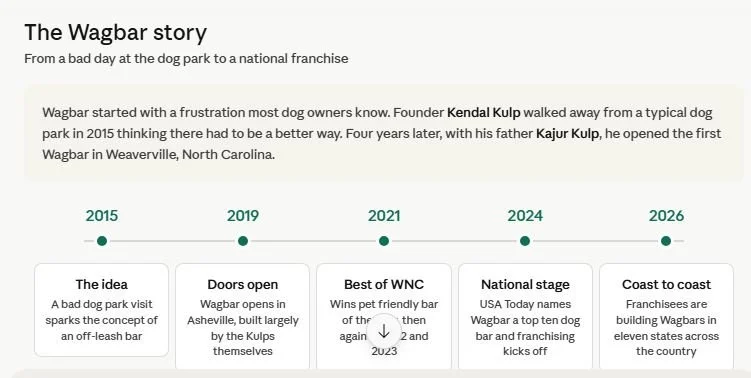
Dog bars are in the earliest phase of category growth. The concept barely existed before Wagbar opened in 2019. The pet industry generated over $147 billion in U.S. spending in 2023, and pet services spending continues to grow at rates that outpace traditional hospitality. The combination of increasing pet spending, growing urbanization, and demand for experience-based social venues creates a growth runway that the craft beer category has already traveled.
Wagbar earned recognition as one of USA Today's top 10 dog bars in the country and has won multiple Best of WNC awards. That kind of recognition builds the brand equity that makes early franchise territories more valuable over time.
Frequently Asked Questions
Is a craft beer bar franchise or dog bar franchise cheaper to open?
Dog bar franchises are less expensive in most scenarios. Wagbar's total investment runs $470,300 to $1,145,900. The Brass Tap runs $793,000 to $1,280,000. BrewDog runs $1,347,000 to $5,731,000. Wagbar's lower costs come from skipping the commercial kitchen, using container bar construction, and requiring simpler infrastructure.
Do craft beer bar franchises require a full kitchen?
Yes. The Brass Tap runs a full food menu with upscale pub fare, requiring commercial kitchen equipment, cooking staff, and food inventory. BrewDog also requires a food menu alongside brewing operations. Wagbar operates without a commercial kitchen, eliminating food COGS, kitchen staffing, and the associated build-out costs entirely.
Which franchise has better customer retention?
Dog bar franchises have a structural retention advantage. Wagbar members return regularly because their dogs need exercise and socialization, a daily behavioral need with no off-season. Craft beer bar customers return based on preference for the atmosphere and product, which is real but more vulnerable to competition and changing tastes.
How many employees does each franchise need?
The Brass Tap typically needs 15 to 25+ employees including kitchen and bar staff. BrewDog needs similar numbers plus brewing personnel. Wagbar runs with 6 to 12 employees: bartenders, park attendants, and a manager. The staffing difference drives Wagbar's labor costs down to 15% to 22% of revenue versus 25% to 33% for craft beer bars.
Can I own either franchise without bar experience?
The Brass Tap and BrewDog both recommend hospitality experience due to kitchen and brewing complexity. Wagbar's training program is designed for franchisees without hospitality backgrounds, covering bar operations and dog behavior management. Current Wagbar franchisees include people from financial services, IT, and corporate management backgrounds.
Where can I open a Wagbar franchise?
Wagbar has franchise locations in development across multiple states including North Carolina, Tennessee, South Carolina, Georgia, Texas, California, Virginia, Ohio, Maryland, Florida, and Arizona. The Knoxville, TN location is open and serving the community. Territory availability changes as franchisees sign, so start the conversation early if you have a target market.
Bottom TLDR: When comparing a craft beer bar franchise vs. dog bar franchise, the choice comes down to whether your market has more demand for another craft beer experience or for a safe off-leash dog park with a bar attached. Wagbar's model costs less to build, runs leaner on staffing and food expenses, and retains customers through a daily behavioral need rather than product novelty. Request Wagbar's Franchise Disclosure Document to see the specific financial performance data and check territory availability in your target market.