

Bar Franchise Comparison: Sports Bars vs. Brewpubs vs. Dog Bars vs. Pubs

Top TLDR: A bar franchise comparison across sports bars, brewpubs, dog bars, and pubs shows that Wagbar's off-leash dog bar model stands apart with a $470,300 to $1,145,900 investment, no commercial kitchen, teams of 6 to 12 people, and recurring membership revenue that no traditional bar franchise offers. If you're evaluating bar franchise categories, start by comparing the cost structure, staffing burden, and owner lifestyle of each type against what you actually want your daily life to look like.
If you're researching bar franchises, you've probably noticed that "bar" covers a lot of ground. A sports bar with 50 TVs and a full kitchen has almost nothing in common with a dog bar where people sip craft drinks while their dogs run off-leash. The investment, the staffing, the hours, the revenue model, the lifestyle you sign up for as an owner: it all changes based on the type of bar you choose.
This guide compares the four main bar franchise categories: sports bars, brewpubs, traditional pubs, and dog bars. Each section covers what the investment actually looks like, what your ongoing costs will be, how the revenue model works, and what your life looks like day-to-day as an owner. The goal isn't to tell you which one is "best." It's to give you enough honest information to figure out which one fits your situation.
How the Bar Franchise World Breaks Down
Every bar franchise follows the same basic structure. You pay a franchise fee, build out a location, operate according to the franchisor's system, and pay ongoing royalties on gross sales. But the similarities stop there.
According to IBISWorld, the U.S. bars and nightclubs industry reached an estimated $38 billion in 2025. That money flows through very different business models with very different cost structures. The type of bar you open determines your build-out costs, how many people you need to hire, when your busiest hours are, how you acquire and retain customers, and how many weekends you spend at the venue instead of at home.
The four categories break down like this: sports bars are the highest-investment, highest-complexity option built around televised events and full kitchens. Brewpubs add on-site brewing to the mix, creating a manufacturing-plus-hospitality hybrid. Traditional pubs offer the simplest operations at the lowest cost, but with a lower revenue ceiling. And dog bars combine off-leash dog parks with craft beverages, running on a membership model that none of the other categories can replicate.
Sports Bar Franchises at a Glance
Sports bars are the most established bar franchise category and the most expensive to open. Brands like Twin Peaks, Walk-On's Sports Bistreaux, Hotshots Sports Bar & Grill, and Beef 'O' Brady's all fall in this space.
The numbers paint a clear picture. Total initial investment runs from $800,000 to over $7 million, with most mid-range builds landing between $1.5 million and $2.5 million. Hotshots estimates $969,000 to $2,156,000 with an average near $1.56 million. Twin Peaks goes as high as $7 million. Franchise fees range from $25,000 to $60,000, and royalties typically run 4% to 5% of gross sales.

The cost drivers are significant: full commercial kitchen equipment (hood systems, walk-in coolers, cooking stations), dozens of large-screen TVs, commercial sound systems, satellite sports packages, and the electrical infrastructure to power all of it. Then there's staffing. Sports bars employ 30 to 60+ people per location, including line cooks, prep cooks, dishwashers, servers, bartenders, hosts, bussers, and multiple managers. Labor costs run 28% to 35% of revenue, and food COGS adds another 28% to 32%.
Average unit volumes for established sports bar franchises range from $1.7 million to $3.5 million annually, but net profit margins for full-service bar-restaurants typically fall between 3% and 9% (Restroworks, 2025). When your labor eats 30%+, food costs eat 30%, royalties and marketing take 6%, and rent runs 8% to 10%, there's not much room for error.
The owner lifestyle reflects the complexity. Most sports bar owners work 50 to 60+ hours per week during the first two to three years. Your busiest times are evenings, weekends, and every major sporting event. Your personal calendar revolves around the game schedule.
Brewpub Franchises at a Glance
Brewpubs add on-site brewing to the bar experience, which sounds exciting and is genuinely complex. Brands in this space include BrewDog, World of Beer, Bohemian Bull, and The Brass Tap.
Total investment runs from $500,000 to $5.15 million. BrewDog ranges from $1.37 million to $5.15 million. World of Beer falls between $1.15 million and $1.9 million. The Brass Tap comes in around $780,000 to $1.3 million. Franchise fees range from $25,000 to $50,000, with royalties at 5% to 6%.
The big variable is whether you're actually brewing on-site. True brewpub models with kettles, fermenters, cooling systems, and canning lines can add $100,000 to $500,000 just in brewing equipment (Wexford Insurance, 2025). You'll also need a head brewer ($50,000 to $75,000+ salary), Federal Brewer's Notice from the TTB, state manufacturing licenses, and ongoing production compliance.
Staffing runs 15 to 40+ employees. Labor costs land between 25% and 33% of revenue. The margin advantage of brewing your own beer is real (gross margins on house-brewed beer can hit 75% to 85% per pour), but the capital and operational costs to get there are substantial.
Owners work 50 to 60+ hours per week initially. The work is different from a sports bar since you're managing a production facility alongside a hospitality venue, but the hours are similar. Weekends and evenings remain your peak periods.
Traditional Pub Franchises at a Glance
Traditional pubs are the simplest and least expensive bar franchise category. Options include Harat's Irish Pub and various regional concepts, though many pubs operate independently rather than as franchises.
Total investment starts as low as $315,000 (Harat's Irish Pub with a $31,500 franchise fee) and runs to about $1.2 million for larger-footprint concepts. The savings come from what you don't need: no commercial kitchen, no brewing equipment, no banks of TVs, no complex AV infrastructure.
Staffing is lean, typically 8 to 15 employees. Labor runs 18% to 25% of revenue. Royalties fall between 4% and 6%. The math gets interesting when you look at margins. Beverage-only operations can achieve net profit margins of 10% to 25% (Restroworks, 2025), because they skip the thin margins and waste associated with food operations. A pub generating $1 million at a 15% net margin produces $150,000 in owner earnings from a lower-stress operation than a sports bar doing $2.5 million at 5% ($125,000).
Owners typically work 40 to 50 hours per week after ramp-up. The trade-off is growth potential. Revenue ceilings are lower, and scaling means opening additional locations rather than growing same-store sales past a certain point.
The Dog Bar Franchise: A Different Model Entirely
Now let's talk about the category that doesn't fit neatly into any traditional bar framework.
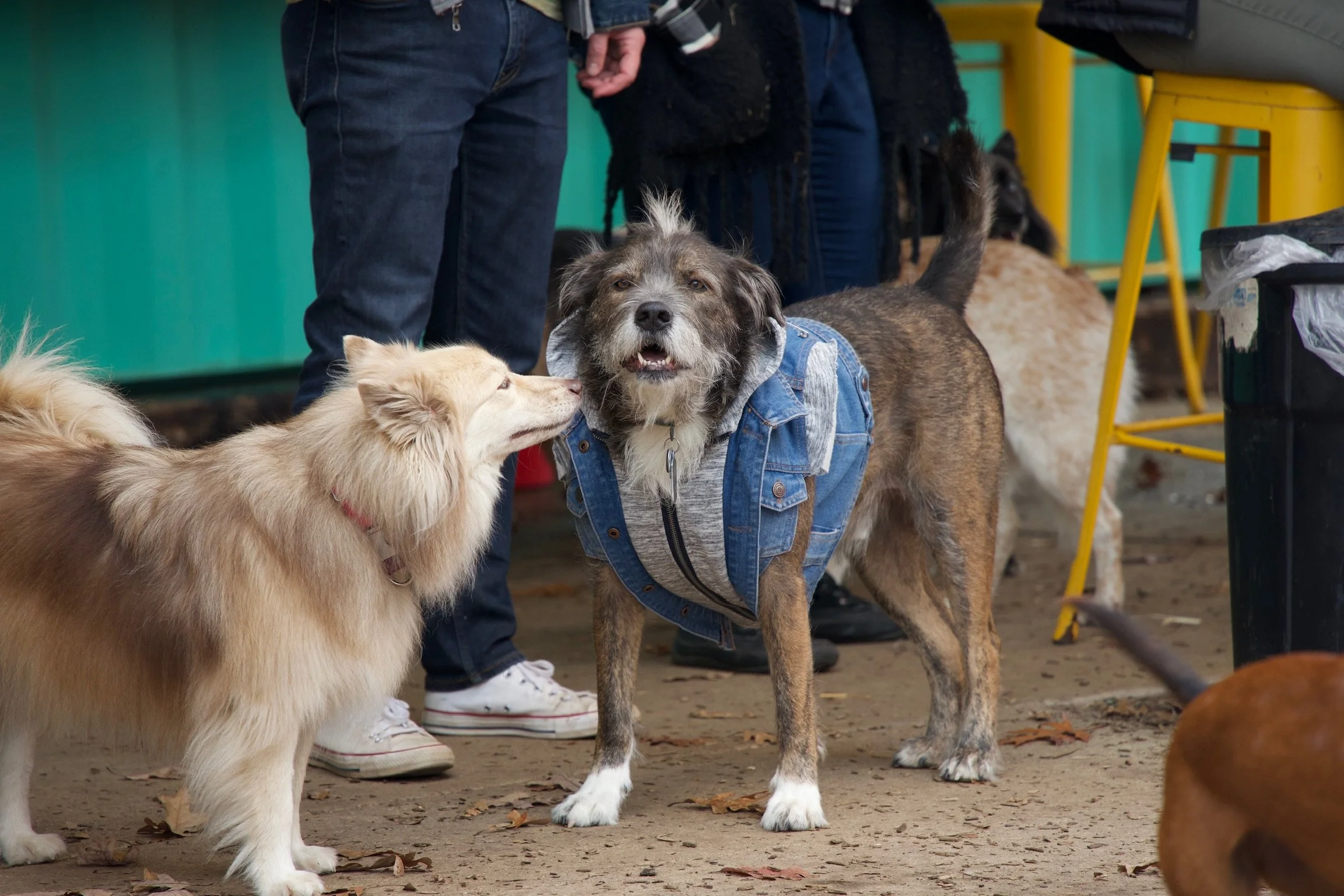
Dog bars combine off-leash dog parks with craft beverage service, creating a venue where dogs play safely in a supervised outdoor space while their owners socialize over drinks. Wagbar, founded in 2019 in Weaverville, North Carolina, pioneered the off-leash dog bar franchise model and has been expanding nationally through franchise development.
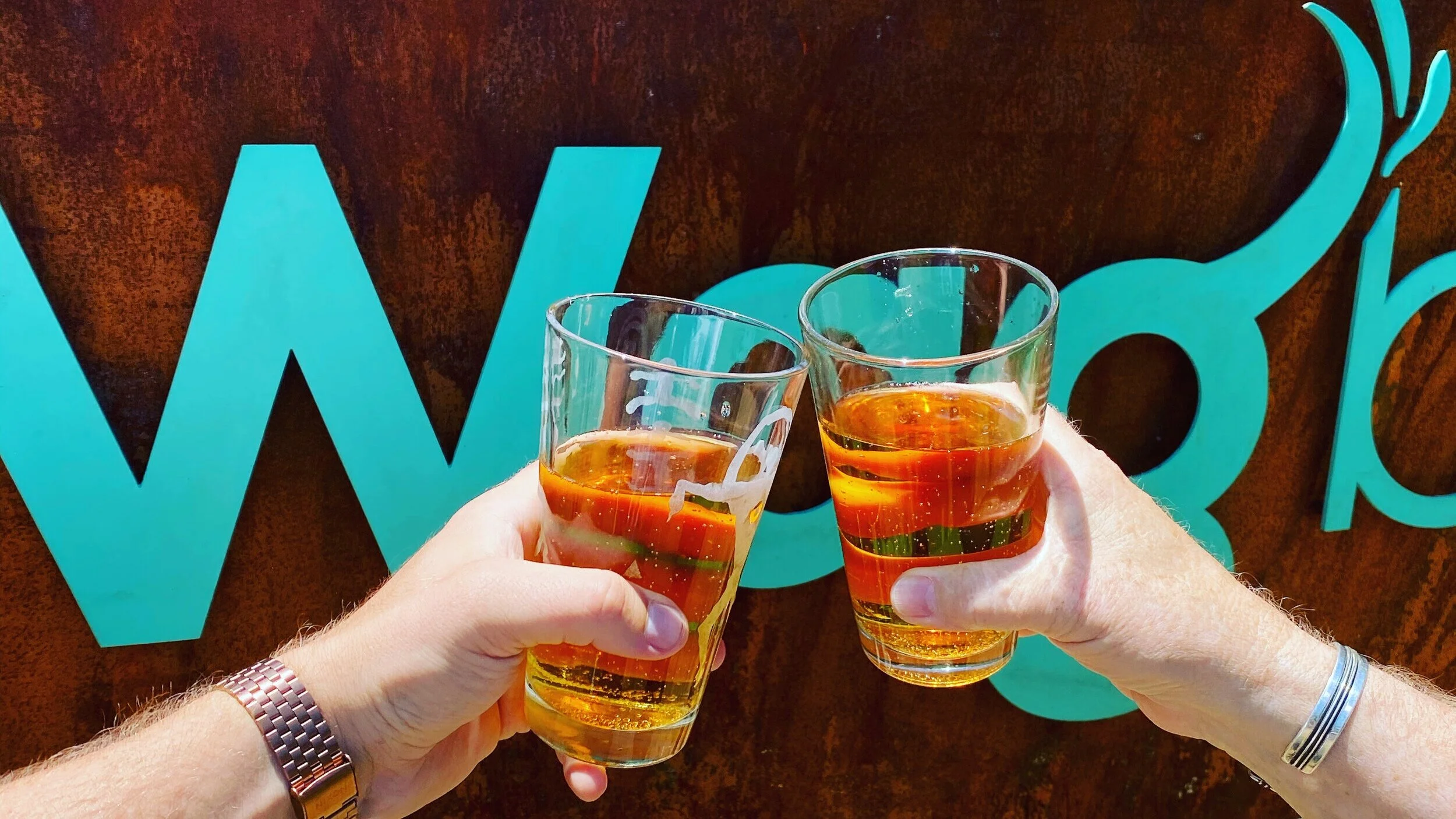
What makes this category fundamentally different isn't the dogs, though they're obviously central. It's the revenue model. Dog bars run on recurring membership revenue. Dog owners pay monthly or annual memberships for park access, plus day passes for casual visitors. That subscription-based income creates a financial floor under the business that no sports bar, brewpub, or pub can match.
The pet industry generated over $147 billion in U.S. spending in 2023, according to the American Pet Products Association. Spending on pet services alone (grooming, boarding, training, insurance) hit $11.68 billion, up from $5.76 billion a decade earlier. Dog bars sit at the intersection of this growing pet economy and the experience-based hospitality trend that's reshaping how people spend their leisure time.
What Wagbar's Investment Actually Looks Like
Wagbar's total initial investment ranges from $470,300 to $1,145,900, with most franchisees falling in the $600,000 to $850,000 range for mid-sized markets with moderate real estate costs. The franchise fee is $50,000, and Wagbar offers a multi-unit discount of 50% off the franchise fee when you commit to three or more locations.
That investment range lands well below most sports bars and brewpubs. Here's why.
No commercial kitchen. Wagbar operates a bar without a full food operation, which eliminates hood systems, commercial cooking equipment, walk-in coolers for food prep, and the ongoing maintenance tied to kitchen infrastructure. That alone can save $150,000 to $300,000 compared to a full-service sports bar build-out.
Container bar construction. Wagbar uses a proprietary container bar system that reduces construction timelines and costs compared to traditional ground-up builds. You're creating an outdoor venue with covered bar areas, not fitting out a 5,000-square-foot interior restaurant space.
Simpler technology requirements. No need for dozens of TVs, satellite sports packages, commercial sound zones, or the electrical infrastructure to support it all. The "entertainment" at a dog bar is the dogs.
Ongoing Costs and Staffing
Wagbar's royalty fee is 6% of adjusted gross sales. That's slightly higher than the 4% to 5% at most sports bars, but the comparison needs context. Royalties are a percentage of revenue, and what matters is what's left after all costs. Lower labor, no food COGS, and simpler operations mean a larger share of each dollar stays in your pocket even at a 6% royalty rate.
Beverage COGS runs 20% to 26%. There's no food cost line because there's no kitchen.
The staffing picture is where the dog bar model really separates. A typical Wagbar location operates with 6 to 12 employees: bartenders, park attendants, and a manager. No line cooks, no prep cooks, no dishwashers, no hosts, no bussers. When the industry average for restaurant labor costs runs 25% to 35% of revenue (Toast, 2025), Wagbar's model operates in the 15% to 22% range. That gap goes straight to your margin.
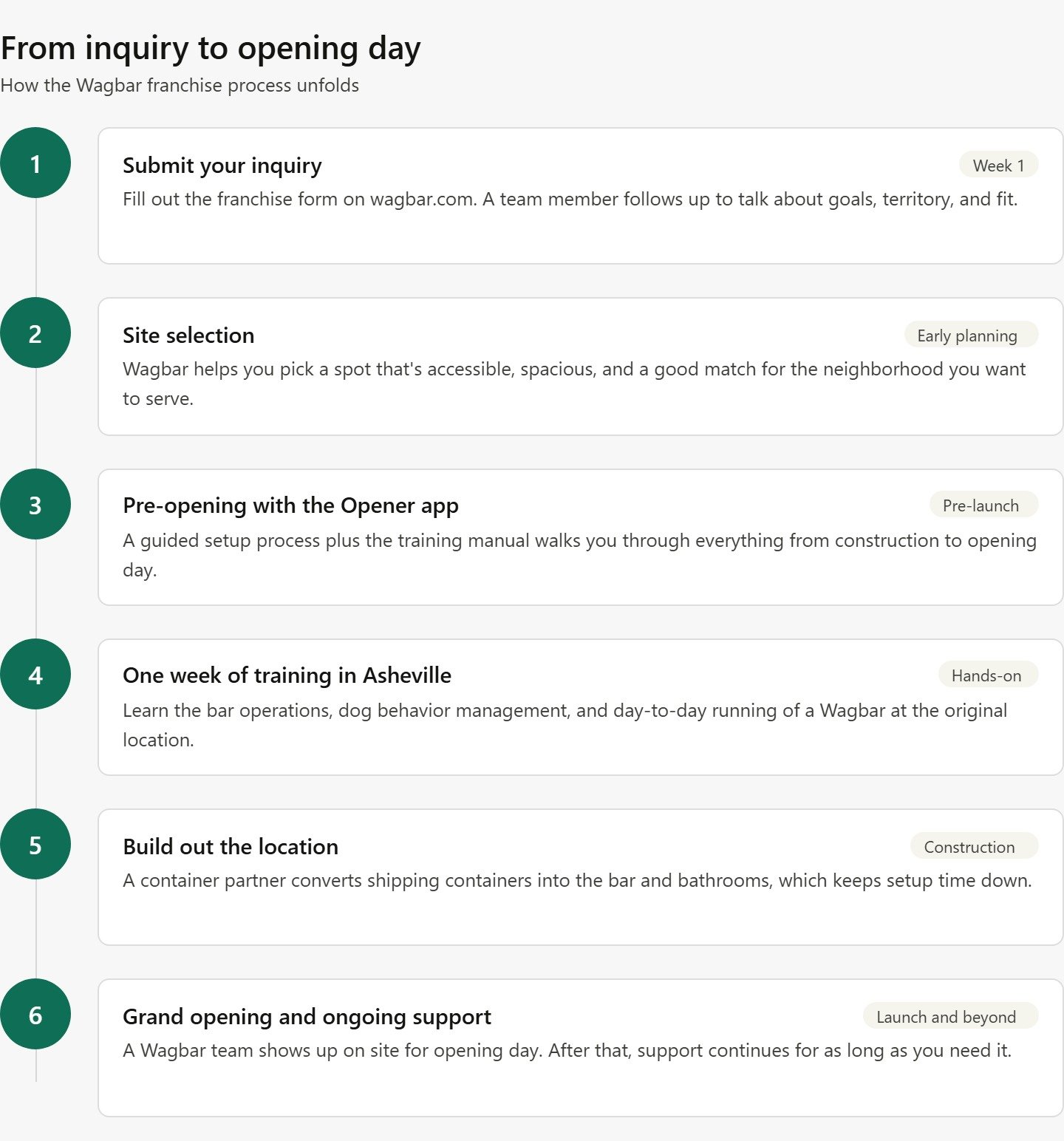
There is a compliance layer unique to this concept. You're managing both alcohol licensing and animal facility requirements, which vary by municipality. Wagbar's training program covers both sides, including dog behavior management, bar operations, and zoning and regulatory guidance. All dogs entering the park need vaccination verification, which creates a safety framework protecting both animals and the business.
Three Revenue Streams, One of Them Recurring
Wagbar's revenue comes from three sources, and the first one is the game-changer.
Memberships and day passes. Dog owners pay recurring monthly or annual memberships for off-leash park access. Casual visitors pay individual day passes. This subscription revenue is predictable, it builds month over month, and it creates a financial base under the business regardless of weather, holidays, or economic swings. No traditional bar franchise has anything like it.
Beverage sales. Craft beer, cocktails, wine, and non-alcoholic options for dog owners while they use the park. Dwell time at a dog bar runs high because people stay while their dogs play. Longer visits mean higher per-visit spending. Someone who stops in for "one drink" while their dog runs around often stays for two or three because their dog isn't ready to leave.
Events and community programming. Breed meetups, trivia nights, live music, holiday celebrations, and private bookings create revenue spikes on top of the membership base. Wagbar's flagship location in Weaverville runs regular community events that drive both attendance and beverage sales, and that programming model transfers to franchise locations.
Wagbar earned recognition as one of USA Today's top 10 dog bars in the country and has won Best of WNC awards multiple times, including first place for Pet Friendly Bar and Brewery three years running. That kind of recognition wasn't built through advertising. It was built through community.
The Retention Advantage No Other Bar Category Has
Here's a question most prospective franchise owners don't spend enough time on: what actually makes customers come back?
Sports bars retain through event-driven loyalty. If your team is playing, you go to your sports bar. But seasons end, teams disappoint, and when the off-season hits, traffic drops. Sports bars spend heavily on promotions and specials to fill those gaps.
Brewpubs retain through product novelty. New releases, seasonal brews, and tap takeovers give beer enthusiasts reasons to return. But craft beer trends shift quickly, and novelty requires constant creative output from your brewing team.
Traditional pubs retain through habit. Regulars come because they've always come. This is powerful but slow to build and vulnerable to a beloved bartender leaving or new competition moving into the neighborhood.
Dog bars retain through behavioral necessity. Dogs need exercise and socialization every single day. That need doesn't have an off-season. It doesn't require a new product launch or a TV schedule. A dog owner with a Wagbar membership uses it because their dog pulls toward the car when they drive by. That's a retention mechanism no amount of happy hour marketing can replicate.
This is why the recurring membership model works at a structural level. Members don't just visit when conditions are perfect. They visit because their dog needs it, and the bar makes it enjoyable for the human half of the equation.
Owner Lifestyle: What Your Days Actually Look Like
Dog bar ownership offers a more balanced lifestyle than any of the traditional bar categories. Here's why that's true and not just marketing language.
Operating hours follow a different pattern. Dog parks see traffic throughout the day, from morning coffee visits through evening happy hours. You're not dependent on a 10 PM to 2 AM rush. Peak windows tend to be late mornings on weekends and after-work hours on weekdays, which means your schedule looks more like a normal business than a nightlife operation.
Lower staffing means fewer management headaches. Running a team of 8 to 12 people is fundamentally different from managing 40+. Less scheduling complexity, fewer interpersonal issues, lower training overhead, and less time spent backfilling positions in an industry with notoriously high turnover.
No kitchen means no kitchen problems. No food safety inspections beyond standard bar requirements. No grease trap maintenance. No line cook calling in sick at 4:30 on a Friday. No food waste management. No supplier negotiations for perishable ingredients. These sound like small things until you've lived them as a restaurant operator.
Wagbar franchisees come from backgrounds including financial services, IT sales, and corporate management. The model doesn't require prior hospitality experience. The franchise training program covers everything from dog behavior to bar operations, and the simpler operating model means a shorter learning curve than any full-service concept.
Most dog bar owners work 40 to 50 hours per week after initial ramp-up, compared to 50 to 60+ for sports bars and brewpubs. Weekends include work, but you're not grinding through midnight closes and Sunday morning opens the way a sports bar owner would.
How Wagbar Stacks Up on the Numbers That Matter
When you pull back and look at the key metrics side by side, a few things jump out.
On investment: Wagbar's $470,300 to $1,145,900 range lands significantly below sports bars ($800K to $7M+) and most brewpubs ($500K to $5.15M). It's higher than the cheapest pub franchises ($315K+), but the revenue model and margin structure are different animals.
On staffing: 6 to 12 employees versus 30 to 60+ for sports bars, 15 to 40+ for brewpubs, and 8 to 15 for pubs. The dog bar staffing model is the leanest in the bar franchise world.
On labor costs: 15% to 22% of revenue, compared to 28% to 35% for sports bars, 25% to 33% for brewpubs, and 18% to 25% for pubs.
On recurring revenue: Wagbar is the only bar franchise category with a membership model generating predictable, subscription-based income. Sports bars, brewpubs, and pubs all depend entirely on walk-in and event-driven traffic.
On margin structure: No food COGS, lower labor percentage, and the membership revenue floor combine to create a margin profile that outperforms most full-service bar concepts on a percentage basis.
On owner hours: 40 to 50 per week (post ramp-up) versus 50 to 60+ for sports bars and brewpubs.
On growth trajectory: The dog bar category is in its earliest expansion phase, with the pet economy projected to keep growing through 2030 and beyond. Sports bars and brewpubs are mature categories with slowing domestic growth. Wagbar is expanding across multiple states with franchise locations in development across North Carolina, Tennessee, South Carolina, Georgia, Texas, California, Virginia, Ohio, Maryland, Florida, and Arizona.
Early movers in emerging franchise categories historically benefit from better territory selection, lower fees before brands increase pricing as they scale, and the first-mover advantage of being "the dog bar" in a market before competitors arrive.
What You Need to Know About Licensing
Every bar franchise requires alcohol licensing, and the complexity varies. Sports bars and pubs need standard on-premises liquor licenses, which range from straightforward to extremely expensive depending on your state. Brewpubs face the most complex landscape: standard bar licenses plus a Federal Brewer's Notice, state manufacturing permits, and separate approvals for on-site consumption versus distribution.
Dog bars need standard bar licenses plus animal-related permits that vary by jurisdiction. Zoning approval for combined animal/hospitality use is the primary additional step. Wagbar's franchise team has navigated this process across multiple states and municipalities, providing zoning and regulatory support that removes much of the guesswork. The animal facility component adds a compliance layer, but it's far simpler than the dual manufacturing/hospitality licensing brewpubs require.
Where the Dog Bar Model Wins and Where It Doesn't
Being honest about trade-offs is what separates a good investment decision from an expensive mistake.
The dog bar model wins when your market has strong dog ownership rates (67% of U.S. households own a pet, according to the American Pet Products Association), when you want recurring membership revenue, when lower build-out costs matter, when you prefer managing a small team, when work-life balance is a real priority, and when you want to tap into the $147 billion pet economy rather than compete in the saturated restaurant market.

The model faces challenges when your target area has low dog ownership or limited outdoor space, when zoning restrictions prevent combined animal/hospitality use, when you want maximum gross revenue regardless of operational complexity, or when extended winter seasons could limit outdoor park use. Every franchise category carries risk. The question is which risks align with your strengths and your market.
How to Think About Your Investment Decision
No comparison article can tell you exactly what you'll earn. That depends on your market, your execution, your location, and factors outside anyone's control. But here's how to think about the decision.
Higher-investment categories like sports bars require more capital upfront and typically take 3 to 7 years to recoup that initial investment. Lower-investment models with efficient cost structures can reach payback faster when revenue scales against a smaller fixed cost base.
During ramp-up, every new bar loses money. Sports bars with $2M+ build-outs need substantial working capital reserves (financial models suggest $818,000+ in minimum cash to cover three months of negative cash flow). Dog bars with lower build-outs and membership revenue that starts building from opening day need less cushion.
Margin expansion over time favors leaner models. A sports bar that grows revenue by 20% needs proportionally more kitchen staff, more food inventory, more servers. A dog bar that grows membership by 20% might need one more bartender on peak shifts.
For Wagbar-specific financial performance data, prospective franchisees should request the Franchise Disclosure Document (FDD), which includes detailed financial representations. You can also visit the dog bar franchise cost breakdown for a more detailed look at where the investment dollars go.
Frequently Asked Questions About Bar Franchise Comparison
What is the cheapest type of bar franchise to open?
Traditional pub franchises offer the lowest starting point, around $315,000 for some concepts. Wagbar starts at $470,300, which is below most sports bar franchises ($800K+) and many brewpub franchises. But "cheapest" and "best value" aren't the same thing. Wagbar's lower build-out costs, membership revenue model, and lean staffing create a margin structure that cheaper-to-open concepts with lower revenue potential can't match.
Which bar franchise has the best profit margins?
Beverage-focused concepts without commercial kitchens tend to produce the highest net margins. Traditional pubs can hit 10% to 25% on beverage-only models. Dog bars like Wagbar operate in that same margin territory while adding the advantage of recurring membership revenue that creates a financial floor traditional pubs don't have. Sports bars and brewpubs, weighed down by food COGS and heavy labor, typically net 3% to 12%.
How many employees does a Wagbar franchise need?
A typical Wagbar location operates with 6 to 12 employees: bartenders, park attendants, and a manager. Compare that to 30 to 60+ for sports bars, 15 to 40+ for brewpubs, and 8 to 15 for traditional pubs. Fewer employees means lower labor costs (15% to 22% of revenue versus 25% to 35% industry average), less scheduling complexity, and a smaller management burden on the owner.
Do I need bar or restaurant experience to open a Wagbar?
No. Wagbar's training program is built for franchisees coming from non-hospitality backgrounds. The program covers bar operations, dog behavior management, staff training, and day-to-day business operations. Current franchisees have come from careers in financial services, IT sales, and corporate management. The simpler operating model (no kitchen, smaller team) has a shorter learning curve than full-service restaurant franchises.
What bar franchise offers the best work-life balance?
Dog bars and traditional pubs offer the most balanced schedules, with owners typically working 40 to 50 hours per week after ramp-up compared to 50 to 60+ for sports bars and brewpubs. Wagbar has an edge even over pubs because peak traffic includes daytime and early evening rather than late nights. No kitchen operations and a smaller staff reduce the daily management load. You're building a business you can run without it running you.
How does Wagbar's membership model change the financial picture?
Recurring membership revenue is something no sports bar, brewpub, or traditional pub offers. Wagbar memberships generate predictable monthly income that builds over time, reduces dependence on walk-in traffic, and creates structurally high customer retention. Dog owners don't need a special event or drink promotion to visit. Their dog needs exercise and socialization, and that behavioral driver brings them back week after week.
What are the main risks of a dog bar franchise?
The primary risks include zoning challenges in municipalities unfamiliar with combined animal/hospitality concepts, climate considerations for outdoor operations in markets with extended cold seasons, and the need to manage both alcohol licensing and animal facility compliance. Wagbar's franchise system addresses each of these through site selection guidance, operational training, and regulatory support. Every bar franchise category has risks; the question is which set of risks you're best positioned to handle.
Can I own a Wagbar franchise while keeping my current job?
Plan for full-time involvement during at least the first 12 to 18 months. After that, the simpler operating model and smaller team make semi-absentee ownership more realistic than it would be with a sports bar or brewpub. A strong manager can handle daily operations once systems are established. But the ramp-up period requires your full attention to build the membership base, train staff, and establish the community presence that drives the business long-term.
Where is Wagbar expanding?
Wagbar has franchise locations in development across multiple states, including North Carolina, Tennessee, South Carolina, Georgia, Texas, California, Virginia, Ohio, Maryland, Florida, and Arizona. The flagship location operates in Weaverville (North Asheville, NC), with the Knoxville, TN location open and serving hundreds of dogs. Territory availability changes as franchisees sign, so checking early matters if you have a specific market in mind.
Summary
The bar franchise market gives you real choices, and those choices carry real trade-offs. Sports bars offer the highest revenue ceiling at the highest cost and complexity. Brewpubs add craft beer creativity with manufacturing headaches attached. Traditional pubs keep things simple but cap your growth. And dog bar franchises like Wagbar sit in a category of their own: lower build-out than sports bars, recurring membership revenue that no other bar model can match, a lean team of 6 to 12 people instead of 30 to 60+, and a growth trajectory tied to the $147 billion pet economy rather than the mature restaurant market. The right choice depends on your capital, your risk tolerance, and the kind of life you want to build around your business. If you want to explore Wagbar's model in detail, the franchise page is where to start the conversation.
Bottom TLDR: This bar franchise comparison shows sports bars require the most capital and hours, brewpubs add manufacturing complexity, and traditional pubs cap your growth, while Wagbar's dog bar franchise combines lower build-out costs, lean staffing (15% to 22% labor versus 28% to 35% industry average), and subscription-based membership revenue tied to the $147 billion pet economy. Match your budget, risk tolerance, and lifestyle goals to the right bar franchise category by requesting Wagbar's Franchise Disclosure Document for specific financial performance data.