

What to Bring on Your First Trip to an Off Leash Dog Bar
Your first visit to an off leash dog bar goes smoothly when you show up prepared with the right items and the right expectations. This page walks you through the vaccination records you'll need at check in, the physical essentials to pack, the items that should stay in the car, how to prep your dog before you walk through the gate, and what actually happens during the first 10 minutes inside. Whether you're bringing a well socialized retriever or a nervous rescue on their first big outing, the checklist below covers the practical side so you can focus on watching your pup actually enjoy themselves.

Not sure which spot is closest to you? Head to our locations page and pick the park nearest home. The FAQ also answers the questions most first timers send in, from age minimums to whether you can bring guests without dogs of their own.
The Vaccination Records Every First Timer Needs
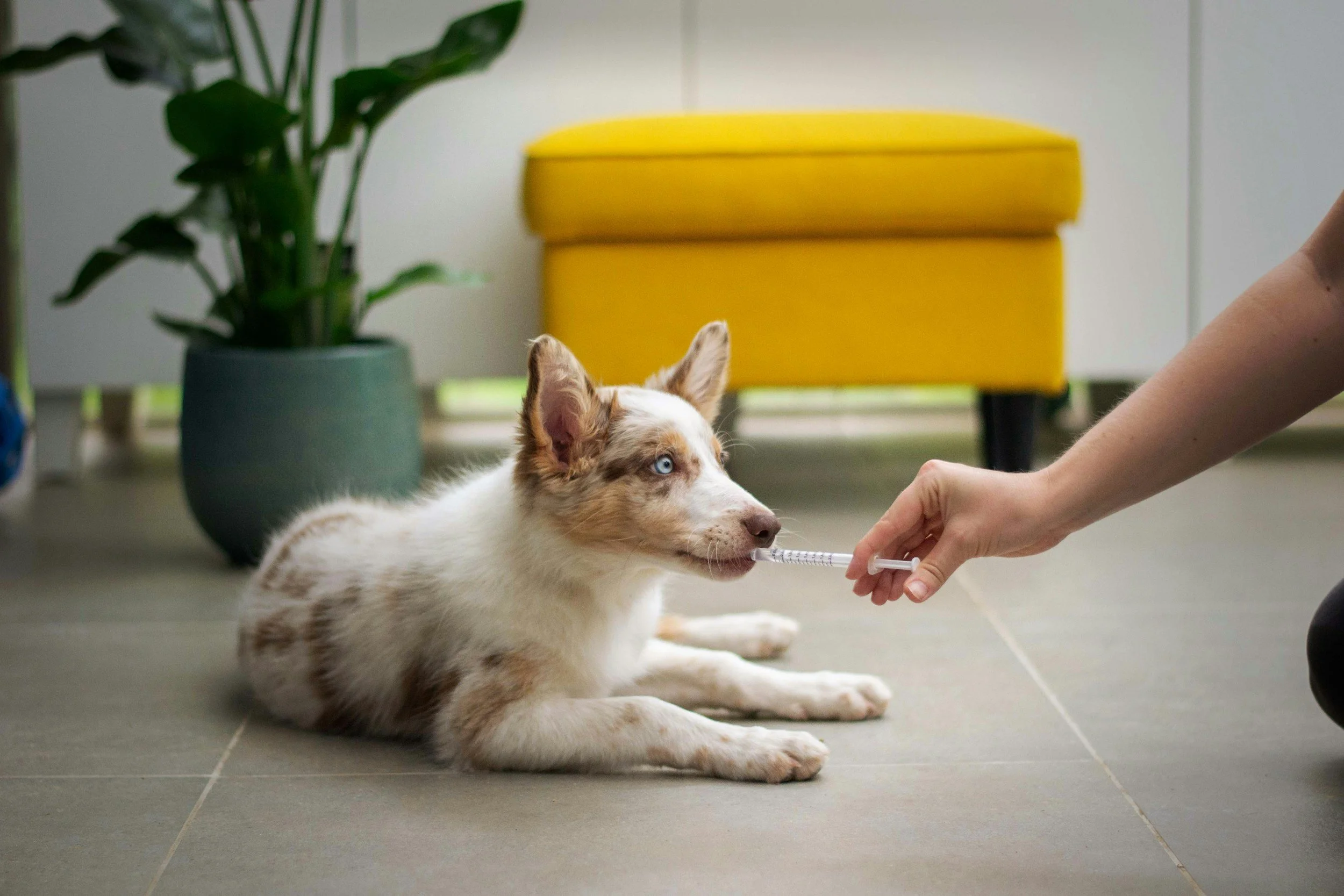
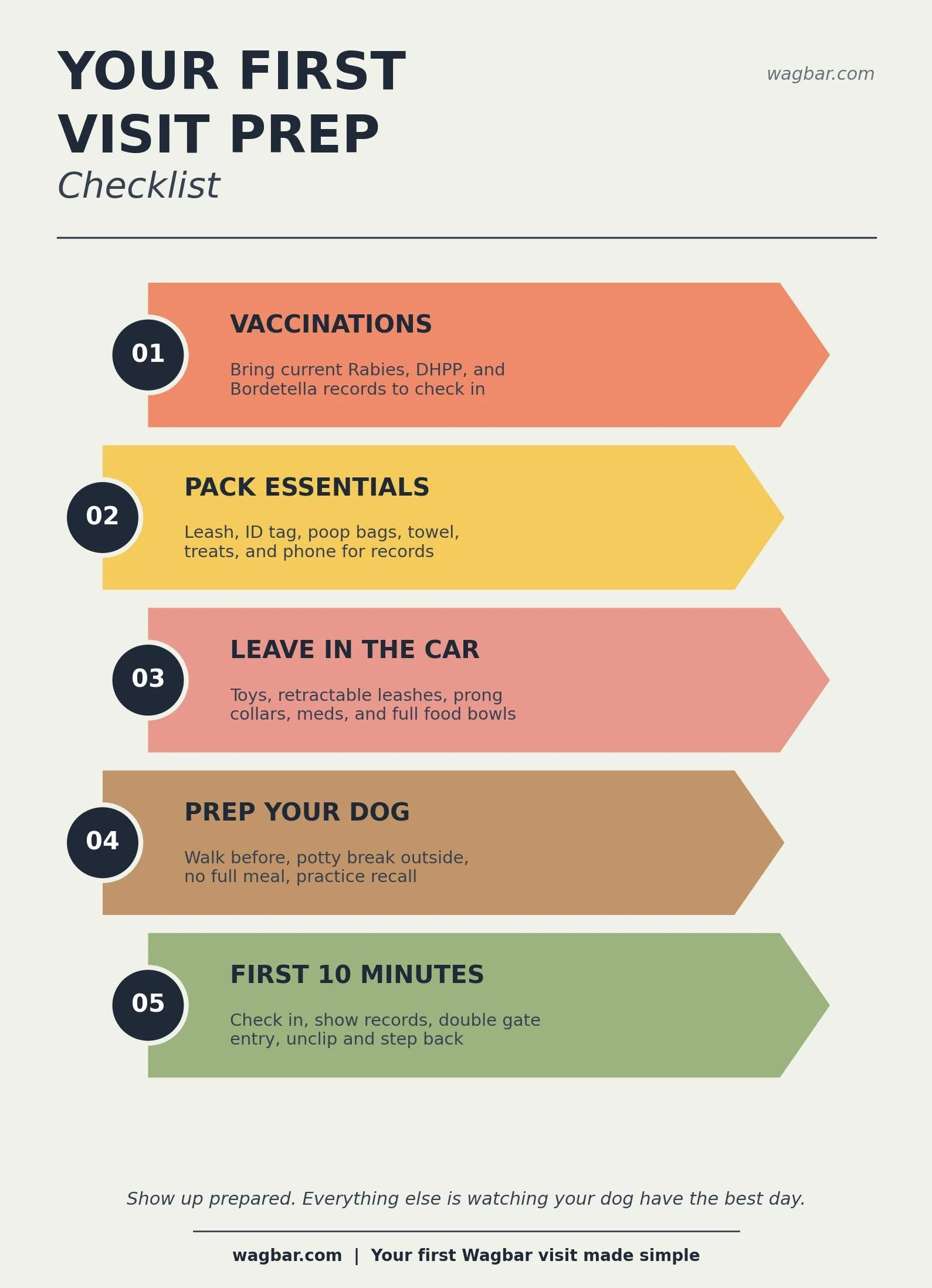
Every off leash dog bar checks vaccination status at entry, and Wagbar is no exception. The three required core vaccines are Rabies, DHPP (which covers Distemper, Hepatitis, Parvovirus, and Parainfluenza), and Bordetella for kennel cough. Vaccines must have been given at least two weeks before your visit so the immune response is fully developed. Bring either a printed copy from your vet, a screenshot from your vet portal, or a photo saved on your phone camera roll.
The American Veterinary Medical Association publishes clear guidance on core vaccine timing for social dogs. If your dog was recently adopted from a shelter, check with your vet on whether their vaccines are complete or still on the puppy series schedule. Wagbar staff will not admit any dog without current records, and that policy protects every other dog inside the park.
The Physical Essentials Checklist
Pack these items in a small bag or leave them in a backpack near the entry.
A standard 4 to 6 foot leash for entry and exit. Retractable leashes are not allowed inside the park.
A well fitted collar or harness with a current ID tag attached.
Poop bags as a backup. Most Wagbar locations provide them, but bringing your own is a good habit.
A small towel or old cloth for wiping muddy paws before you leave.
A few familiar treats in a sealed pouch. Skip anything with strong smell that might trigger other dogs at the counter.
Your phone for check in, digital vaccination records, and any post visit photos.
Water bowls are provided at every location, so you don't need to bring one. Your dog does not need a bed, blanket, or personal bowl since the park is a communal space built around shared resources. Following dog park etiquette helps every dog stay calm around shared water bowls and toys.
What Stays in the Car
Not everything you bring for daily walks belongs inside an off leash dog park. Leave the following items in your car and grab them again when you leave.
Personal toys and chew items. Bringing your dog's favorite ball or squeaky toy into a communal park creates resource guarding risk that dog bartenders will have to address.
Retractable leashes. These tangle other dogs and give you less control at the double gate entry.
Prong collars, choke chains, or electronic training collars. Not permitted inside any Wagbar location for safety reasons.
Any medication, food, or full food bowls that other members might not want their dog getting into.
If your dog has a favorite comfort item, keep it with you but not accessible. Reactive dogs sometimes do better when the visit ends with the familiar toy waiting in the car as a reward for good behavior.
Prepping Your Dog Before You Walk In
The 30 minutes before you enter the park make a huge difference. Take your dog for a solid walk beforehand so they arrive curious but not manic. Let them relieve themselves outside the park, ideally in a grassy area away from the entrance. Don't feed a full meal within two hours of the visit. Full stomachs plus zoomies plus running with other dogs can lead to bloat in deep chested breeds like Great Danes, Boxers, and Weimaraners.
Practice your recall word one last time on the walk in. Your dog should return to you reliably when called, and if they don't, the off leash training checklist covers what to work on before the visit. Young dogs still in their critical socialization window benefit even more from this prep, and the puppy socialization timeline resource covers what to expect between 3 and 16 weeks. The American Kennel Club also publishes handy first outing tips worth skimming before you go.
The Rookie Mistakes You'll Skip
Okay let's be real, the biggest rookie mistake is showing up during peak hours on a Saturday with a dog who has never been off leash around 20 other dogs. That's like taking someone to their first concert and starting with a stadium show. Start with a Tuesday afternoon at 2pm. Get your dog acclimated when the crowd is 6 dogs instead of 26. Nobody talks about this because everyone assumes you already know, but you should not know because nobody told you. Now you know.
The second rookie thing is showing up with a completely full water bottle for your dog because you don't trust the shared bowls. The shared bowls are cleaned regularly and refilled all day. Your dog will drink from them and be totally fine. Don't be that person hovering next to a communal bowl with a separate bottle. It's not necessary and it makes your dog look like the anxious one. If your dog only drinks filtered spring water at home, that's a you problem, not a Wagbar problem.
Third mistake is showing up dressed like you're heading to brunch after. Wear closed toe shoes. Wear clothes that can get muddy. Do not wear white. Wagbar is a dog park with a bar in it, not a bar with a dog corner. Your outfit should reflect the assignment. Sunglasses and a hat if the sun is out. A jacket you don't care about if it's cold. Save the good fits for a place that isn't 40% dog fur by volume.
The First 10 Minutes Explained
When you walk up to a Wagbar location, the dog bartender is already watching. Head to the check in counter first. Show your vaccination records. Sign the standard release if it's your first visit. Get your wristband or day pass. Then step into the double gate entry system. Close the outer gate behind you before opening the inner one. This double gate design keeps dogs from escaping if the outer door opens unexpectedly.
Once inside, unclip your leash and step back a few feet. Let your dog approach other dogs on their own timeline. Don't force introductions, don't hover, and don't apologize for your dog before they've done anything wrong. Most dogs settle within the first 5 minutes once they've done a lap and figured out who's who. Understanding dog park behavior group play dynamics beforehand helps you spot healthy play from stressed interactions. Our dog park fight prevention resource also covers the warning signs to watch for during those first few minutes.
How Wagbar Makes First Visits Easy
Wagbar built the first visit experience around the reality that most dog owners have never actually been to a proper off leash dog bar before. The flagship opened in Asheville, North Carolina and the brand has grown into 15 markets, including Knoxville, Charlotte, Dallas, Los Angeles, Long Beach, and Phoenix. The Asheville location earned a spot on USA Today's 10Best list of dog bars in 2024. Every location runs the same first visit protocol, so what you learn at one park applies at every other one. Dog bartenders greet you at the door, walk you through check in, and keep eyes on your dog while they figure out the pack. A Wagbar membership makes subsequent visits faster because your dog's vaccination records stay on file and you skip the paperwork step entirely.

Ready for the Visit
You've got the checklist, the vaccine records, and the prep routine. The next step is to actually walk through the door. Head to the Play and Unwind side of the community to see what a typical afternoon looks like once you're inside.
Curious about how the whole concept started before you visit? The about page tells the story of two founders in North Carolina who thought dogs and craft beer belonged in the same fenced yard, and how that idea grew into a national brand serving members across 15 cities.