
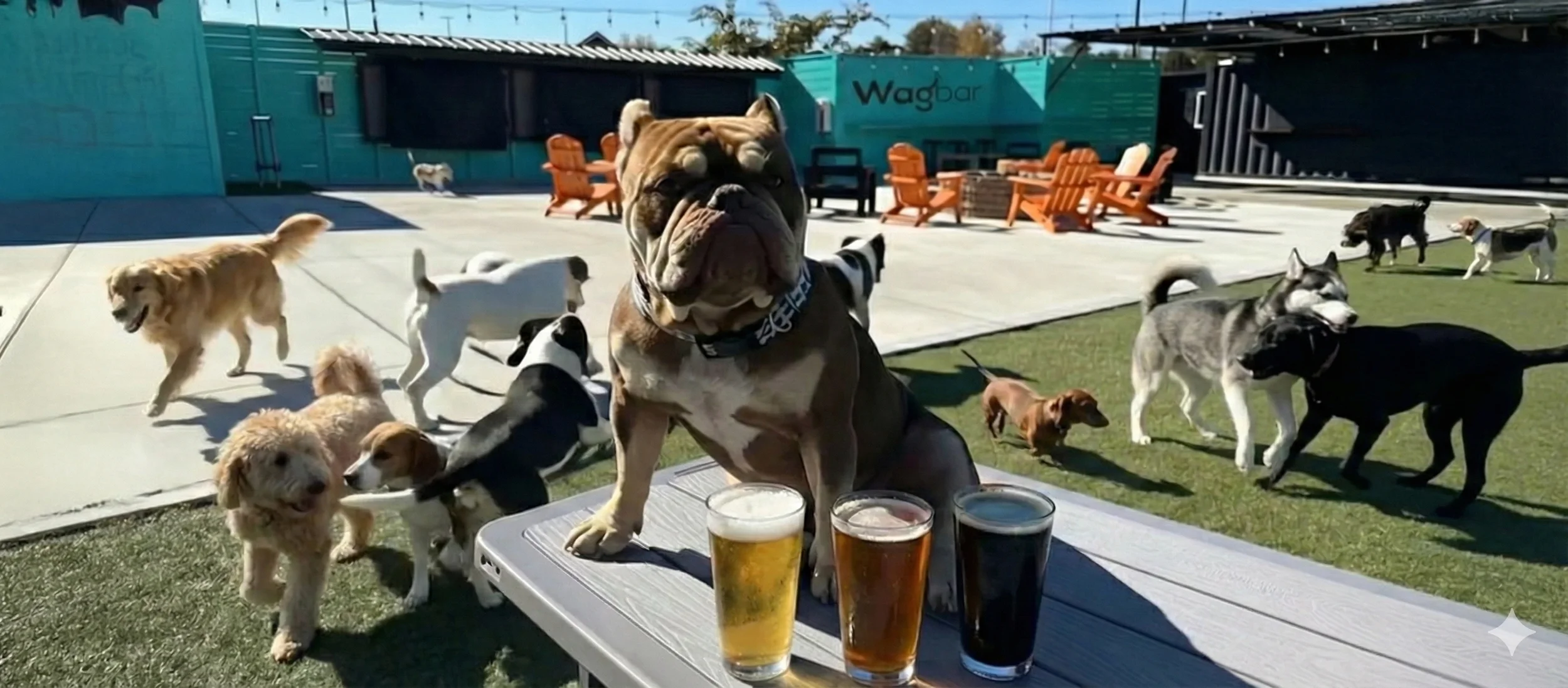
WagBar Knoxville: The Premium Off-Leash Dog Park & Social Experience

When you picture the perfect afternoon with your dog, what comes to mind? Maybe it's watching them sprint across open grass with pure joy, meeting other pups who match their play style, and then settling in with a cold drink while your furry friend catches their breath beside you. That's exactly what WagBar Knoxville delivers—a place where dogs get to be fully, gloriously themselves in a safe off-leash environment, while their humans actually enjoy the experience too.
Opening in October 2025 at the former Creekside Knox location, WagBar Knoxville brings something entirely new to East Tennessee's dog scene. This isn't another fenced-in afterthought at the edge of a public park. It's a thoughtfully designed destination where supervised off-leash play meets genuine social atmosphere, where your dog's safety is monitored by trained staff, and where you can relax with a craft beer instead of hovering nervously by the gate.
What Makes WagBar Knoxville Different from Traditional Dog Parks
Let's be honest about most dog parks: they're better than nothing, but they're rarely great. You show up hoping for the best, scan the other dogs to assess potential trouble, hover near your pup ready to intervene, and leave feeling more stressed than when you arrived. Sound familiar?
WagBar flips that entire experience.
Active Supervision Changes Everything
The biggest difference you'll notice immediately? Trained staff actively monitoring dog interactions throughout your visit. Not someone occasionally glancing up from their phone—actual professionals who understand dog behavior, can read early warning signs, and know how to redirect play before issues escalate.
This isn't micromanagement. Dogs still play naturally and form their own social groups. But there's a safety net that traditional dog parks simply don't provide. When play gets too rough, when one dog needs a break, or when energy levels need redirecting, WagBar's team steps in with the right timing and approach.
Membership Requirements Create Consistency
Unlike public parks where literally anyone can show up, WagBar requires membership or day passes—and with that comes accountability. Every dog's vaccination records are verified. Aggressive behavior history is disclosed during signup. Dogs must be spayed or neutered and at least six months old.
These requirements aren't about being exclusive. They're about creating an environment where you know every dog has met basic safety standards, and every owner has agreed to the same code of conduct. It fundamentally changes the social dynamics when everyone's invested in maintaining a positive space.
The community building approach that drives WagBar's model depends on this shared commitment to safety and respect—for both dogs and humans.
Real Amenities for Humans
Most dog parks offer benches. Maybe picnic tables if you're lucky. WagBar offers an actual bar with craft beers, wine, seltzers, and non-alcoholic options. Covered seating with fans for summer and heaters for cooler months. Rotating food trucks serving real meals, not just vending machine snacks.
This isn't a minor perk—it's a fundamental rethinking of what dog park visits should be. Instead of awkwardly standing around making small talk while secretly watching your dog like a hawk, you can actually relax, enjoy the atmosphere, and have genuine conversations with other dog lovers.
Understanding the Off-Leash Experience at WagBar
If you've never taken your dog to a supervised off-leash environment, you might feel some natural hesitation. That's completely normal. Let's walk through exactly how the experience works and why the off-leash element is so important for dogs.
The Check-In Process
Your first visit starts at the check-in area, not immediately in the play space. This gives nervous dogs time to acclimate and excited dogs time to settle slightly before entering. Staff review your membership or set up your day pass, verify vaccination records (required at every visit unless you have a membership), and ask a few questions about your dog's play style and any concerns.
If you're bringing a dog who's reactive or anxious, mention it. The team can advise on the best timing for entry or whether the current group dynamics might not be ideal. This upfront communication prevents problems rather than reacting to them.
Why Off-Leash Matters for Dogs
The difference between leashed and off-leash play is like the difference between a formal dinner party and a backyard barbecue. Both have their place, but only one lets everyone truly relax and be themselves.
When dogs are off-leash, they can engage in natural play behaviors that leashes prevent: full-speed chasing games, wrestling matches, quick direction changes, and the normal dance of approach and retreat that dogs use to communicate. Leashed dogs can't execute these natural movements, which often leads to frustration, miscommunication, and increased reactivity.
Off-leash play also allows dogs to self-regulate. When they've had enough, they can simply walk away. When they want to join a game, they can approach at their own pace. When they need a break, they can find a quiet corner or return to their owner. This autonomy is mentally enriching in ways that structured, controlled activities just can't match.
For dogs who spend most of their time in houses, apartments, or on leashed walks, off-leash play provides essential physical and mental stimulation. It's not just about burning energy—though that definitely happens. It's about giving dogs the freedom to make choices, practice social skills, and experience the world the way their instincts drive them to.
The dog socialization principles that guide WagBar's approach recognize that dogs develop better social skills through regular, positive off-leash interactions with varied playmates.
Reading Your Dog's Signals
Even in a supervised environment, you should stay aware of your dog's comfort level. WagBar's staff watches for these signals, but you know your dog best.
Signs your dog is having a great time: play bows (front end down, rear up), loose body language, frequent returns to check in with you, voluntary engagement with other dogs, and that unmistakable expression of pure joy.
Signs your dog might need a break: constant panting without engaging in play, hiding behind you or furniture, tail tucked, avoiding other dogs, or repeatedly trying to leave the play area.
One of the beautiful things about the WagBar setup is that taking breaks doesn't mean leaving. Your dog can chill beside you at your table, people-watch from the sidelines, or just observe the action without participating. Some dogs alternate between intense play sessions and longer rest periods. Others prefer to mostly hang back with occasional play ventures. Both approaches are perfectly fine.
Play Style Matching
Not all dogs play the same way, and that's where active supervision really shines. WagBar's trained staff recognize different play styles and can help facilitate compatible matchups while redirecting interactions that aren't working.
Some dogs love high-energy chase games with lots of running and quick direction changes. Others prefer wrestling matches with lots of physical contact. Some are gentle and polite, others play rough but fair, and a few need partners who can match their intensity without escalating to actual conflict.
Good play involves give-and-take, role reversals (the chaser becomes the chased, the wrestler on top ends up on bottom), and natural breaks in the action. When play becomes one-sided, too intense, or when one dog clearly isn't enjoying the interaction, staff intervene to redirect the energy or separate the dogs briefly.
This active management means your dog is more likely to find compatible playmates and less likely to develop negative associations with the dog park environment. For dogs who've had bad experiences at unsupervised parks, this can be transformative.

Safety Protocols That Make WagBar Different
Safety isn't an accident—it's a system. WagBar's approach to creating a secure off-leash environment goes far beyond putting up a fence and hoping for the best. Let's break down the multiple layers of safety that make WagBar Knoxville fundamentally different from traditional dog parks.
Entry Requirements and Verification
Before any dog sets paw in the play area, several checkpoints ensure basic safety standards are met:
Every dog must show current vaccination records for rabies, bordetella (kennel cough), and distemper. These aren't suggestions—they're non-negotiable requirements verified at every visit unless you have an active membership. This dramatically reduces disease transmission risk compared to public parks where vaccination status is unknown.
Dogs must be at least six months old. This protects puppies during their critical socialization window while ensuring they've completed basic vaccination series. Younger puppies belong in controlled puppy classes, not free-for-all play environments where they could be overwhelmed or injured.
All dogs must be spayed or neutered. Intact dogs display different behaviors and hormone levels that can trigger conflict, especially in close quarters with multiple dogs. This requirement creates more predictable social dynamics and reduces aggression risks.
Owners must disclose any history of dog aggression during signup. This doesn't automatically disqualify a dog, but it allows staff to make informed decisions about entry timing, group composition, and monitoring focus.
Trained Staff Monitoring
This is where WagBar's model diverges most dramatically from traditional dog parks. Multiple trained team members are present during all operating hours, actively watching dog interactions and the overall environment.
What does "actively watching" actually mean? Staff members position themselves strategically around the play area to maintain sight lines on all dogs. They're not chatting among themselves or buried in their phones—their job is observation and intervention when needed.
They watch for escalating tension before it becomes conflict. They notice when one dog is getting overwhelmed by attention from others. They redirect play that's becoming too rough or one-sided. They give time-outs to dogs who need to decompress. They help facilitate positive introductions between dogs who seem compatible.
This level of oversight requires training in canine body language, understanding of different breed play styles, experience with de-escalation techniques, and good judgment about when to intervene versus when to let dogs work things out themselves.
The dog behavior expertise that WagBar staff develop through ongoing training means they can often prevent issues before they escalate to the point where owners even notice a problem developing.
Clear Code of Conduct
WagBar's Dog Park Code of Conduct isn't a list of rules designed to suck the fun out of the experience. It's a shared agreement that allows the off-leash environment to work safely for everyone:
Keep a close eye on your dog at all times. Staff monitoring doesn't replace owner responsibility—it supplements it. You should still watch your dog's interactions and body language.
If your dog is not playing nicely, physically intervene. This means stepping in to redirect, separate, or remove your dog from the situation. Don't wait for staff or hope the other dog's owner will handle it.
Maintain control over your dog. This doesn't mean hovering or micromanaging, but it does mean your dog responds to your recall and you can physically retrieve them if needed.
Clean up after your dog immediately. Waste stations are positioned throughout the play area with bags and disposal bins. No exceptions, no excuses.
No toys, treats, or food in the play area. These items trigger resource guarding even in dogs who are otherwise friendly. Personal toys and treats create conflict—leave them in your car or at your table.
Be kind, respectful, and be a good human. This applies to interactions with other owners, staff, and how you handle your dog. We're all here for the same reason—to give our dogs positive experiences.
Failure to follow these guidelines can result in being asked to leave. Repeated violations or serious incidents can result in membership revocation. This might sound harsh, but it's essential for maintaining the safe environment that makes WagBar work.
Physical Safety Features
The facility itself includes safety considerations built into the design:
Secure fencing completely encloses the play area with double-gated entry points. This prevents dogs from bolting out when the gate opens and creates a buffer zone for entries and exits.
Separate play areas for different dog sizes or energy levels when needed. While many dogs play well together regardless of size, having the option to separate groups prevents overwhelming smaller dogs and allows more intense play among matches dogs.
Adequate space for dogs to spread out, choose playmates, and find quiet zones when needed. Overcrowding creates stress and conflict—WagBar manages capacity to prevent this.
Regular maintenance and inspections ensure fencing integrity, eliminate hazards in the play area, and address any facility issues promptly.
Health and Hygiene Standards
Beyond vaccination requirements, WagBar maintains cleanliness standards that reduce disease transmission:
Staff perform regular waste removal throughout operating hours, not just at closing time. This prevents fecal matter from contaminating the play area and spreading parasites or diseases.
The play surface receives regular cleaning and maintenance to prevent the buildup of bacteria, parasites, or other pathogens.
Water stations are cleaned and refreshed regularly to ensure fresh, clean drinking water is always available.
Any dog showing signs of illness is excluded from the play area immediately and owners are notified of the concern.
Incident Response Protocols
Despite all preventive measures, incidents can still occur when dogs play together. WagBar's staff are trained in incident response:
Minor conflicts (brief snarking, corrections between dogs that immediately disengage) are monitored but often allowed to resolve naturally as this is part of normal dog communication.
Escalating situations are interrupted with verbal redirection, physical barriers (staff stepping between dogs), or removal of one or both dogs from the situation.
Actual fights are broken up safely using proper techniques that don't put staff or other dogs at risk. Staff have training in safe fight interruption methods.
All incidents are documented with details about the dogs involved, circumstances, and resolution. This creates accountability and helps identify dogs who may not be appropriate for the off-leash environment.
Owners of dogs involved in incidents are informed of what happened, staff observations about contributing factors, and any concerns about their dog's continued participation.
In serious cases involving injury or repeated aggression, dogs may be excluded from WagBar. This isn't a punishment—it's recognition that not every dog thrives in off-leash multi-dog environments, and that's okay. The safety of all dogs and people has to come first.
The Social Side: Where Dogs and Humans Connect
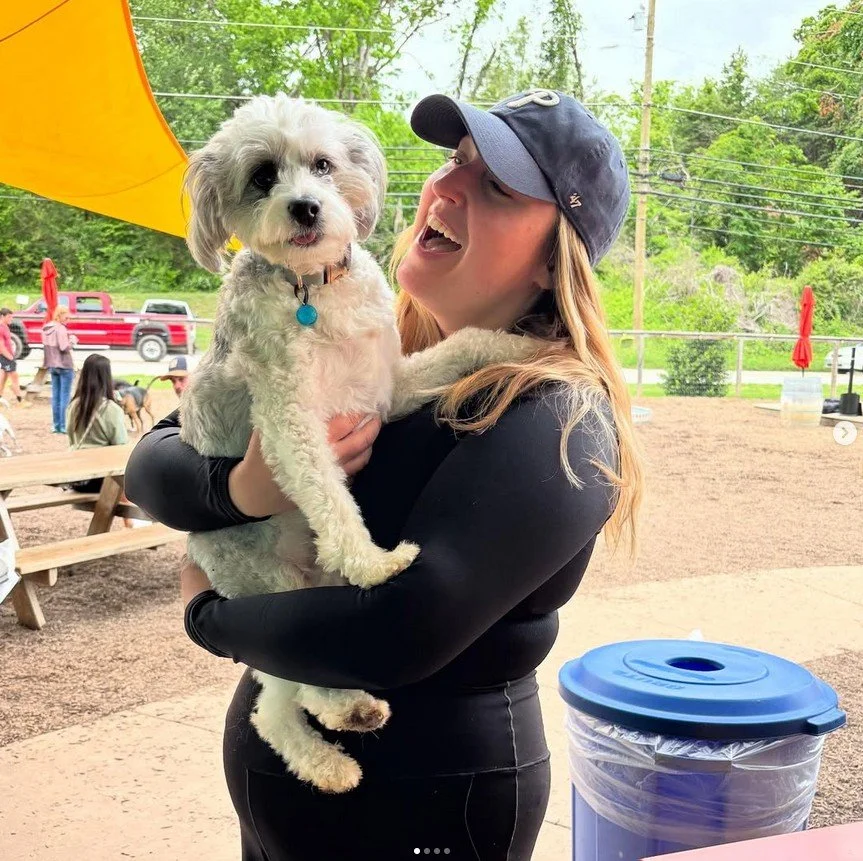
Wagbar guest enjoying quality time with her dog at the outdoor off-leash dog park and bar
Walk into most dog parks and you'll see a familiar scene: clusters of people making awkward small talk while trying to watch their dogs, everyone sort of going through the motions of socializing without really connecting. WagBar replaces that uncomfortable dynamic with something that actually works—a genuine social atmosphere where dog people can relax and connect.
The Bar Experience
Let's talk about the bar, because this is where WagBar's concept really comes together. This isn't a token add-on or afterthought—it's a central feature designed to transform what a dog park visit can be.
The selection focuses on craft beers, local brews when possible, along with wine, hard seltzers, and quality non-alcoholic options. You're not choosing between warm beer from a cooler or warm beer from a different cooler. You're ordering from an actual bar setup serving properly chilled, carefully selected beverages.
The pricing remains reasonable because WagBar recognizes this isn't about maximizing bar revenue—it's about creating an environment where people want to spend time. You're not paying nightclub prices for a casual afternoon drink.
Most importantly, the bar creates a natural gathering point. Instead of standing around the perimeter of the play area with nothing to do but watch dogs and make weather small talk, people settle at tables with drinks, strike up real conversations, and actually enjoy themselves.
This shift from obligation (I have to take my dog to the park) to genuine recreation (I'm looking forward to our afternoon at WagBar) changes everything about the experience. Your dog gets essential exercise and socialization while you get actual downtime—not the stressful vigilance of traditional dog parks.
Food Truck Rotation
WagBar partners with local food trucks on a rotating schedule, offering quality food without the overhead and complications of running a full kitchen. This means real meals, not just packaged snacks from a vending machine.
The rotating schedule keeps things interesting—you might find tacos one week, BBQ the next, and Mediterranean the week after. This variety makes WagBar a legitimate dining destination, not just a place to grab a quick bite while your dog plays.
The food truck model also supports Knoxville's local food scene, creating partnerships with mobile vendors who bring their specialties to WagBar's customer base. It's the kind of community connection that reflects Wagbar's approach to building local relationships rather than operating as an isolated business.
Many members plan their WagBar visits around their favorite food trucks. "Thursday means tacos at WagBar" becomes part of the weekly routine—your dog gets their favorite playmates and you get your favorite meal.
The Social Atmosphere
Something interesting happens when you combine off-leash dog play with a quality bar atmosphere and comfortable seating: people actually talk to each other. Not forced small talk about dog breeds and vet recommendations, but real conversations that happen naturally when you're relaxed and enjoying yourself.
Dog people form a natural community, but traditional dog parks don't really facilitate that connection. Everyone's too tense watching their dogs, too ready to intervene in potential conflicts, too aware they could need to grab their dog and leave at any moment.
WagBar's supervised environment removes that tension. You can watch your dog playing happily from your seat, knowing trained staff are actively monitoring interactions. This mental space—the absence of constant vigilance—allows genuine socializing to happen.
Regular members develop friendships that extend beyond WagBar. They coordinate visit times so their dogs can play together and they can catch up. They meet for coffee or dinner separate from WagBar. They help each other with dog-sitting or provide references for vets and trainers. Real community forms.
For people who've recently moved to Knoxville or are looking to expand their social circle, WagBar offers something valuable: an easy way to meet like-minded people with built-in common ground. You already know everyone there loves dogs and values quality experiences—the rest flows naturally.
Events and Special Programming
Beyond the daily social atmosphere, WagBar hosts regular events that bring the community together around shared interests:
Trivia nights test your general knowledge while your dog socializes—it's like trivia at a brewery, except your dog is with you rather than waiting at home.
Live music events feature local musicians performing while dogs play and people enjoy the atmosphere. These events often draw members who might not visit as regularly, creating opportunities to reconnect with familiar faces.
Themed celebrations for holidays or special occasions—think costume contests around Halloween or photo opportunities with seasonal decorations. These aren't mandatory participation events, just added fun for people who enjoy that kind of thing.
Adoption events partnering with local rescue organizations give homeless dogs exposure to engaged, dog-loving potential adopters in a casual environment. Members get to interact with adoptable dogs, and rescues get access to qualified candidates who clearly prioritize their dogs' wellbeing.
These events don't replace the core off-leash dog park experience—they enhance it by giving people additional reasons to visit and more ways to connect with the community.
Meeting Your Dog's People
One unexpected benefit that members frequently mention: WagBar helps their dogs develop actual friendships. When you visit regularly, your dog encounters the same playmates repeatedly. They recognize each other, develop preferences, and form genuine bonds.
Watch dogs who've become friends reunite after a week apart—the excitement is obvious and heartwarming. These connections enrich your dog's life in ways that random encounters at different parks can't match.
This consistency also benefits you. You get to know the owners of your dog's favorite playmates. You learn which dogs complement your dog's play style and which ones don't mesh well. You can coordinate visits to ensure compatible groups.
For puppies and adolescent dogs going through critical socialization periods, this regular exposure to familiar positive playmates is incredibly valuable. They learn appropriate play, practice communication skills, and develop confidence with consistent, safe interactions.
The developmental windows for dog socialization close relatively early in a dog's life, making consistent positive experiences during these periods especially important for long-term behavioral health.
The Community Vibe That Emerges
There's an interesting phenomenon that happens at WagBar that's hard to describe until you experience it: the place develops its own culture. Regular members know each other. They greet new faces warmly and help them feel welcome. They look out for each other's dogs. They celebrate milestones together—a nervous rescue dog finally playing confidently, a reactive dog managing calm greetings, a senior dog still enthusiastically participating.
This culture doesn't happen automatically—it emerges from WagBar's fundamental design around community rather than just facility access. The membership model, the social amenities, the regular events, and most importantly the shared commitment to creating positive experiences all contribute to building something more than just a business.
You can see this culture in small gestures: someone helping a new member navigate the check-in process, experienced members offering training tips when asked, people holding doors and making space at crowded tables, the genuine happiness when someone introduces their newly adopted dog to the group.
This is what WagBar means by elevating the dog park experience. It's not just about nicer facilities or more amenities—though those matter. It's about creating an environment where both dogs and humans thrive socially, where regular visits become highlights of the week rather than obligations to check off the list.
What to Expect During Your First WagBar Knoxville Visit
Walking into WagBar for the first time can feel a bit intimidating—there's check-in to navigate, vaccination records to present, decisions about membership options, and the big unknown of how your dog will respond to the environment. Let's walk through the entire first-visit experience so you know exactly what to expect.
Before You Arrive
Make sure you have current vaccination records for rabies, bordetella, and distemper. These don't need to be original documents—photos on your phone work perfectly fine as long as they're legible and show current dates. If you're not sure whether your dog's vaccines are current, check with your vet before making the trip.
If your dog has any history of dog aggression, reactivity, or other behavioral concerns, think through how to communicate this during check-in. The staff aren't judging—they're gathering information to help make your visit successful. Being upfront about concerns allows them to offer timing suggestions or management strategies.
Consider visiting during off-peak hours for your first time. Mid-afternoon on weekdays tends to be quieter than weekend mornings or weekday evenings. Fewer dogs means less stimulation, making it easier for your dog to acclimate and for you to get a feel for how the space works.
Your dog should be well-exercised before arrival but not exhausted. A tired dog is calmer during the check-in process, but an exhausted dog won't have the energy to play and explore. A 15-20 minute walk before your visit hits the sweet spot—enough to take the edge off without depleting their batteries.
Check-In Process
When you arrive, head to the check-in area rather than directly to the play space. The staff will greet you, verify that your dog meets the age requirements (6+ months) and is spayed or neutered, and review vaccination records.
They'll ask several questions about your dog: What's their play style—gentle and polite, or more rough-and-tumble? Do they do better with small dogs, large dogs, or mixed groups? Are they comfortable with other dogs, or do they need slow introductions? Have they been to dog parks before? Any known issues with other dogs?
These aren't pass-fail questions. There's no "right" answer that gets your dog admitted while "wrong" answers get rejected. The staff is gathering information to help facilitate a positive experience.
Next comes the membership decision. You can choose a day pass for a one-time visit, or select from membership options if you're planning regular visits. The staff will explain the different tiers and help you pick what makes sense for your situation.
Day passes require showing vaccination records at every visit. Memberships store your records on file so subsequent visits skip that step—a significant convenience factor if you plan to visit frequently.
First Entry to the Play Space
Once check-in is complete, a staff member will accompany you and your dog to the play area. This guided first entry helps your dog transition smoothly and gives the team a chance to observe how your dog initially responds.
Some dogs bolt through the gate immediately, eager to explore and meet everyone. Others hang back near their owner, taking time to observe before venturing out. Both responses are completely normal—let your dog set the pace.
The staff member will watch your dog's initial interactions, offer observations about which dogs might be good playmates based on what they're seeing, and answer any questions you have about how things work.
Don't feel obligated to rush this process. Spend a few minutes walking around the perimeter with your dog if that helps them feel more comfortable. Let them approach other dogs at their own pace. The whole point is positive experiences—there's no timeline or pressure.
Finding Your Rhythm
Once your dog settles in and starts interacting, you can grab a seat at one of the tables and order a drink from the bar. This is where the WagBar experience really clicks—you're still watching your dog and available if needed, but you're also relaxing and enjoying yourself.
Watch your dog's body language to gauge their comfort level. Happy, loose movement with play bows and voluntary engagement with other dogs signals they're having a great time. Tense body language, tucked tail, or repeatedly returning to you suggests they might need a break or could be feeling overwhelmed.
Don't hesitate to call your dog over for breaks, especially during a first visit. Let them rest beside you, drink some water, decompress, and then return to play when ready. This prevents overstimulation and teaches them that you're their safe base in the environment.
If you notice any concerning interactions—play that seems too rough, your dog avoiding certain other dogs, or your dog not engaging at all—ask the staff for their observations. They've been watching and often have helpful insights or suggestions.
Duration of First Visit
Most first-time visitors stay 1-2 hours. This gives your dog enough time to explore, play, and get a feel for the environment without becoming overtired or overstimulated.
Watch for signs your dog is ready to leave: excessive panting without play, repeatedly trying to leave the play area, hiding under tables, or showing stress signals like yawning, lip-licking, or avoiding other dogs.
Ending on a positive note is important, especially for the first visit. If your dog is having a great time but showing signs of tiredness, that's the perfect moment to leave—they'll remember the experience positively and be excited to return.
What If Things Don't Go Well?
Sometimes first visits don't go as hoped. Your dog might be too nervous to play, might react poorly to another dog, or might show that they're not comfortable in the multi-dog off-leash environment. This doesn't mean you've failed or that your dog is "bad"—it simply means this particular setup isn't the right fit.
The WagBar team will work with you if challenges arise. They can suggest different timing when the play space is less crowded, techniques to help nervous dogs acclimate gradually, or recommend professional trainers if behavioral work would help.
For some dogs, off-leash multi-dog play isn't their thing, and that's completely okay. Not every dog needs or wants this type of experience. Better to learn this at WagBar with trained staff present than at an unsupervised public park where things could go much worse.
If things don't work out, WagBar will work with you on refund or credit options. They want positive experiences for everyone—forcing a bad situation helps no one.
Building on a Successful First Visit
If your first visit goes well—which is the case for most dogs—plan your return visits to build consistency. Dogs thrive on routine, and regular visits to WagBar allow your dog to develop familiarity with the environment, the staff, and other regular attendees.
Many members find that a few weekly visits create the sweet spot: frequent enough that their dog maintains comfort and develops friendships, but spaced enough that each visit stays exciting and engaging.
The off-leash training readiness that some dogs need before thriving in dog park environments can actually develop through repeated positive experiences at WagBar rather than requiring extensive preparation beforehand.
Membership Options and Pricing That Work for Your Schedule
WagBar's membership structure recognizes that not everyone visits with the same frequency or needs the same level of flexibility. Whether you're looking for occasional outings or you plan to make WagBar part of your regular routine, there's an option designed around your situation.
Day Pass: Testing the Waters
The day pass works perfectly for first-time visitors, people who are in Knoxville temporarily, or folks whose schedules don't support regular visits. You pay per visit, gaining access for that day without ongoing commitment.
The main limitation? You'll need to present vaccination records at each visit since there's no membership file storing this information. If you visit irregularly—maybe once a month or less—this inconvenience is minimal. If you're visiting weekly or more frequently, the repetitive paperwork gets old quickly.
Day passes also cost more per visit compared to the per-visit cost breakdown of membership options. Two or three visits monthly at day pass rates adds up to more than membership fees, making membership the better financial choice for regular attendees.
Think of day passes as your trial period. Visit once or twice to see if WagBar works for your dog and your lifestyle. If you find yourself planning return visits, membership makes more sense.
Monthly Membership: Flexibility for Regular Visitors
Monthly memberships offer the best balance of commitment and flexibility for most members. You pay monthly, can visit as often as you'd like during that period, and can pause or cancel if your situation changes.
Your dog's vaccination records stay on file, eliminating the need to present them at each visit. Check-in becomes a quick process—verify your active membership and head to the play area. This convenience factor alone is worth the monthly fee if you're visiting weekly or more.
The monthly structure also removes the mental math of "Is this visit worth it?" that sometimes happens with per-visit pricing. Once you've paid your monthly fee, additional visits cost nothing extra. This often leads to more frequent visits, which benefits your dog through increased socialization and exercise opportunities.
Monthly memberships also include priority access to special events, advance notice about changes or new features, and occasional member appreciation perks. These extras aren't game-changers, but they're nice touches that recognize your ongoing commitment.
Annual Membership: Best Value for Committed Members
Annual memberships offer the best per-visit value for people who know they'll use WagBar regularly throughout the year. You pay upfront for a year of access, receiving a significant discount compared to monthly payments over the same period.
The math works strongly in favor of annual memberships for committed users. If you're visiting twice weekly, the savings versus monthly membership fees add up to several hundred dollars over the year.
Beyond financial benefits, annual membership provides stability. You don't think about renewal or whether to continue—you know you have access for the full year. This psychological benefit shouldn't be underestimated. Remove decision fatigue and just show up when it works for your schedule.
Annual members also receive the highest priority for events, special recognition in the WagBar community, and first notice about new features or changes.
The downside? You're committing upfront to a full year. If your situation changes—you move, your dog develops health issues, or your schedule shifts dramatically—you're still locked in. WagBar offers some flexibility for unusual circumstances, but annual membership is definitely a commitment.
Multi-Dog Pricing
Many WagBar members have multiple dogs, and the pricing structure reflects this reality with multi-dog discounts. The exact discount structure will be detailed during your first visit, but the general principle is straightforward: each additional dog costs less than your first dog's membership.
This makes sense from both business and practical perspectives. You're still just one person, occupying one space at the bar, requiring one set of membership administration. The marginal cost of each additional dog is lower, and pricing reflects this.
Multi-dog households often find that WagBar's model works especially well for their situation. Traditional dog parks are free for all your dogs, but they lack the supervision and amenities WagBar provides. Professional doggy daycare charges per dog at much higher daily rates. WagBar hits a sweet spot of affordability and quality for multi-dog families.
Cost Comparison: WagBar vs. Alternative Options
To understand WagBar's value proposition, it helps to compare against other ways to provide your dog with exercise and socialization:
Traditional municipal dog parks are free but offer no supervision, no amenities for humans, and unpredictable experiences. They're better than nothing, but they're not remotely comparable to the WagBar experience.
Professional doggy daycare typically costs $25-45 per day in Knoxville. If you use daycare twice weekly, you're spending $200-360 monthly per dog. WagBar membership runs significantly less while providing similar socialization benefits—and you get to stay with your dog rather than dropping them off.
Private dog parks or play groups (where they exist) charge premium prices for supervised play, often $30-50 per session. WagBar's monthly membership works out to a fraction of this per-visit cost.
Training classes provide structured socialization but are limited in duration (typically 6-8 weeks) and frequency (usually one hour weekly). They're valuable for learning specific skills but don't replace regular free play and socialization.
Hiring dog walkers or pet sitters for exercise needs costs $20-30 per walk in most markets. This provides exercise but not the social interaction and off-leash play that dogs need for complete wellbeing.
When you factor in the beverage service, food truck options, and social atmosphere for humans, WagBar's cost-benefit calculation becomes even more favorable. You're not just paying for your dog's exercise and socialization—you're also getting a legitimate recreational outlet for yourself.
Making the Membership Decision
How often would you realistically visit? Be honest with yourself. If you're thinking "I'd go every day!"—that's enthusiasm talking, not realistic planning. Most committed members visit 2-4 times weekly. Occasional visitors might go twice monthly.
Calculate the break-even point. If monthly membership costs $X and day passes cost $Y, how many visits per month make membership worthwhile? Usually, it's 2-3 visits—a pretty low threshold.
Consider your schedule stability. If your work schedule varies dramatically or you travel frequently, monthly membership offers better flexibility than annual commitment.
Think about your dog's needs. Puppies and adolescent dogs benefit enormously from frequent socialization during critical developmental windows. Adult dogs maintaining social skills need regular but less frequent exposure. Senior dogs might enjoy gentler play at off-peak times but less frequently.
Factor in the convenience value. Even if the pure financial math is close, eliminating the need to present vaccination records and gaining priority event access might tip the scales toward membership.
The urban dog exercise needs that drive many Knoxville residents to seek structured play opportunities make WagBar's membership model particularly valuable for city-dwelling dogs with limited independent exercise options.
Common Questions About WagBar Knoxville
Can I bring my puppy?
Puppies must be at least 6 months old to visit WagBar. This age requirement protects puppies during their most vulnerable developmental period, ensures they've completed core vaccination series, and allows them to build basic social skills in more controlled environments before free play.
If your puppy is under 6 months, focus on puppy socialization classes, structured puppy playdates, and controlled introductions to friendly adult dogs. These provide age-appropriate socialization without the risks of unstructured multi-dog play.
Once your puppy turns 6 months, WagBar becomes an excellent continuation of their socialization journey. The supervised environment and trained staff help ensure their continued development stays positive and builds on the foundation you've established during puppyhood.
What if my dog is reactive or has anxiety?
If your dog has reactivity or anxiety issues, mention this during check-in. The team can advise on the best approach—whether that's visiting during quieter times, starting with shorter visits, or potentially working with a trainer before attempting the multi-dog environment.
Some reactive dogs do well at WagBar once they acclimate. The supervision and consistent rule enforcement can actually help reactive dogs learn better social skills. Others find the environment too stimulating regardless of management strategies.
Be honest with yourself about your dog's stress levels. If they're clearly miserable—hiding under tables, constantly trying to leave, showing stress signals throughout the visit—this might not be the right environment. That doesn't mean your dog is bad or broken. It simply means they need a different approach to socialization and exercise.
Working with a qualified trainer who uses positive reinforcement methods can often help reactive or anxious dogs develop the skills needed to enjoy off-leash play. WagBar's staff can recommend local trainers experienced with these issues.
Do you separate dogs by size?
WagBar's play area can be configured to separate dogs by size when needed, but this isn't automatic. Many small dogs play beautifully with large dogs, and many large dogs prefer gentle play regardless of their playmate's size.
Staff assess the current group dynamics and make judgment calls about whether separation makes sense on any given day. If several large, high-energy dogs are playing intensely, they might open a separate area for smaller or gentler dogs. If the mix is working well with good energy matching across sizes, everyone stays together.
Size separation is about play style compatibility more than strict size categories. A gentle 80-pound Golden Retriever might play perfectly with 15-pound dogs, while a intense 25-pound terrier might overwhelm the same small dogs.
If you have concerns about your small dog playing with large dogs or vice versa, mention this to staff. They can advise on current group composition and whether it seems like a good fit.
What about aggressive dogs?
Dogs with known aggression history must be disclosed during signup. Depending on the severity and context of past incidents, the dog may or may not be appropriate for WagBar's environment.
Dog-to-dog aggression in specific contexts (resource guarding around food, reactivity on leash, territorial behavior at home) sometimes doesn't translate to off-leash play in neutral territory. Other times, aggression is pervasive enough that multi-dog environments aren't safe regardless of management.
WagBar's team makes individualized assessments based on the specific history, circumstances, and their observations of the dog's behavior. They err on the side of safety—both for the dog in question and for other dogs in the play area.
If your dog is asked to leave due to aggression concerns, this isn't a moral judgment. Some dogs simply aren't wired for this type of socialization, and recognizing that is actually responsible ownership.
Can I bring toys or treats?
No personal toys or treats are allowed in the play area. This rule prevents resource guarding conflicts even among dogs who don't typically show these behaviors.
When high-value items appear in multi-dog environments, even friendly dogs can become possessive. The situation escalates quickly, potentially leading to fights that wouldn't happen otherwise.
WagBar provides communal toys that all dogs can interact with if they choose. These become part of the environment rather than "belonging" to any specific dog, reducing conflict potential.
You can bring treats and toys for your dog's use outside the play area—at your table or in your car. They're simply not allowed in the off-leash space where resource guarding could occur.
What about intact dogs?
All dogs must be spayed or neutered to visit WagBar. No exceptions. Intact dogs (particularly intact males) display different behaviors and hormone levels that can trigger conflict in multi-dog settings.
If your dog isn't altered yet but you're planning to schedule the surgery, you can visit WagBar afterward once they've healed from the procedure. Your vet will advise on appropriate timing to resume normal activities including dog park play.
How do you handle fights?
Despite all preventive measures, dog conflicts can occasionally occur when multiple dogs play together. WagBar's staff are trained in safe fight interruption techniques that protect both dogs and people.
Most conflicts don't escalate to actual fights. Dogs correct each other with snapping or snarking, then immediately disengage. This is normal dog communication, not aggression requiring intervention.
When fights do occur, staff interrupt them using air horns, physical barriers, or grab-and-separate techniques depending on the situation. The dogs involved are separated, checked for injuries, and owners are informed about what happened.
Both dogs involved in a fight receive time-outs. Staff gather information about what led to the conflict, whether there were warning signs missed, and whether the fight indicates incompatibility issues.
Repeated fighting or severe aggression can result in exclusion from WagBar. This protects other dogs and recognizes that some dogs simply aren't suited to off-leash multi-dog environments.
What's your weather policy?
WagBar's outdoor setup means weather affects the experience. The play area remains open during light rain, though attendance typically drops significantly. Covered seating areas allow humans to stay dry even when dogs choose to play in the rain.
Severe weather, lightning, or extreme temperatures lead to temporary closures for safety. The WagBar team monitors conditions and makes closure decisions to protect both dogs and people.
Summer heat requires special considerations. Dogs should visit during cooler morning or evening hours during hot months. Staff watch for signs of heat stress and may require dogs showing these symptoms to rest in shaded areas or leave if they're struggling.
Winter weather in Knoxville is generally mild enough for year-round operation, though attendance naturally fluctuates seasonally. Some dogs love cooler weather and become more energetic during winter visits.
Are kids allowed?
WagBar is an 18+ environment for everyone except during specifically designated family hours or events. This age restriction creates a more relaxed adult social atmosphere and reduces risk factors associated with mixing young children and unfamiliar dogs.
Family-friendly events are scheduled periodically when children are welcome. These events maintain additional supervision and guidelines to ensure safety for both kids and dogs.
Can I bring outside food and drinks?
Outside food is allowed—you're welcome to bring snacks or meals to enjoy at your table. This flexibility recognizes that not everyone wants to purchase food on every visit, and some people have dietary restrictions that food trucks might not accommodate.
Outside alcohol is not permitted. WagBar serves alcoholic beverages and operates under appropriate licensing. Bringing your own alcohol violates these licenses and isn't allowed under any circumstances.
What if my dog doesn't play with other dogs?
Not all dogs are social butterflies who want to play with every dog they meet, and that's completely fine. Many dogs prefer to hang out near their owners, observing the action without actively participating.
These dogs still benefit from the WagBar environment. They get to be out in a different setting, experience the sights and sounds, practice being calm around other dogs, and enjoy their owners' relaxed company. Some dogs gradually warm up and begin playing after multiple visits. Others remain content observers throughout their WagBar membership.
As long as your dog seems comfortable and relaxed (even if not actively playing), they're getting value from the experience. Dogs who are miserable, constantly stressed, or trying to hide probably aren't enjoying themselves and might be better served by different activities.
How do I know if WagBar is right for my dog?
The only way to know for certain is to try it. Most dogs who've been properly socialized as puppies, have regular positive experiences with other dogs, and enjoy play do well at WagBar.
Dogs who've had limited socialization, negative experiences at dog parks, or who strongly prefer human company to dog company might struggle in the multi-dog environment.
Signs your dog would likely enjoy WagBar: they get excited seeing other dogs on walks, they have dog friends they play with regularly, they show playful body language (play bows, loose movement, approaching other dogs voluntarily), and they've done well at other dog parks or in group play situations.
Signs your dog might not be a good fit: they avoid other dogs on walks, they've had negative experiences at dog parks, they show stress signals around other dogs, they prefer human company and show little interest in dogs, or they have a history of dog-dog aggression.
When in doubt, try a day pass during off-peak hours. This gives your dog exposure to the environment with fewer dogs present, allowing you to assess their comfort level without full-intensity multi-dog chaos.
https://wagbar.franconnect.net/fc/extforms/leadpage.jsp?
How WagBar Fits Into Knoxville's Dog Community
WagBar Knoxville doesn't exist in isolation—it's part of a broader ecosystem of dog-friendly spaces, services, and community that makes Knoxville increasingly attractive for pet owners. Understanding how WagBar complements (rather than competes with) other local resources helps you build the best possible experience for your dog.
Complementing Traditional Dog Parks
Knoxville offers several municipal dog parks scattered throughout the area. These provide valuable free access to off-leash space, and they'll continue serving important roles in the community after WagBar opens.
WagBar isn't trying to replace these parks. It's offering something fundamentally different—supervised play with amenities that municipal parks can't provide due to budget constraints and different operational models.
Many WagBar members use both their membership and free public parks. They might visit WagBar twice weekly for supervised socialization and bar atmosphere, while also hitting nearby dog parks for quick exercise sessions or convenient playtime near their home.
This mixed approach lets dog owners balance budgets, optimize convenience, and provide variety for their dogs. WagBar recognizes this reality and doesn't push an all-or-nothing approach to membership.
Working With Local Trainers
WagBar's staff observe dog behavior and can identify dogs who might benefit from professional training, but they're not trainers themselves. Their role is facility management and basic behavior monitoring, not behavior modification.
When behavioral issues arise that exceed simple management strategies, WagBar staff refer members to qualified local trainers who use positive reinforcement methods. These trainers can address reactivity, fear, over-arousal, recall issues, or other challenges that prevent dogs from successfully navigating the off-leash environment.
Many trainers in Knoxville have developed relationships with WagBar because they share similar philosophies about positive dog experiences and appropriate socialization. This creates a support network where trainers might recommend WagBar as part of socialization plans, while WagBar refers members to trainers when professional help would benefit their dogs.
WagBar may also host training workshops or seminars periodically, bringing professional trainers to the facility for educational sessions on topics relevant to dog owners. These events provide value to members while supporting local training professionals.
Supporting Local Rescue Organizations
The dog rescue community in Knoxville works tirelessly to find homes for homeless dogs, often operating on tight budgets with limited resources. WagBar creates partnership opportunities that benefit rescue organizations, adoptable dogs, and potential adopters.
Adoption events at WagBar give rescue dogs exposure to engaged dog lovers in a relaxed setting. Potential adopters can interact with dogs in a real-world environment, watching how they engage with other dogs and people. This provides much more useful information than brief shelter visits where dogs are often stressed and not showing their true personalities.
These events also raise awareness about specific rescues, their missions, and the dogs they have available. WagBar's member base represents exactly the type of responsible dog owners that rescue organizations love to work with—people who clearly prioritize their dogs' wellbeing and invest in quality experiences.
Some rescues might use WagBar as a socialization resource for dogs in their programs, helping prepare these dogs for adoption by giving them positive experiences in stimulating environments. This support can make previously unadoptable dogs successful adoption candidates.
Connecting With Knoxville's Pet-Friendly Business Scene
Knoxville's dog-friendly business community has grown significantly in recent years. Restaurants with dog-friendly patios, breweries that welcome well-behaved dogs, retail stores that allow pets, and other businesses creating inclusive spaces for dog owners.
WagBar participates in this ecosystem through various partnerships and cross-promotions. The rotating food truck schedule highlights local vendors. Event collaborations bring different parts of Knoxville's dog community together. Referral relationships with groomers, veterinarians, and pet supply stores create networks that serve the broader community.
This interconnected approach benefits everyone. WagBar gains exposure through partner businesses. Partners gain access to WagBar's engaged member base. Dog owners discover new resources and businesses through their WagBar membership. The entire community strengthens as these connections multiply.
Building on Knoxville's Outdoor Recreation Culture
Knoxville's proximity to the Smoky Mountains, numerous parks and greenways, and generally dog-friendly outdoor culture create a population that values active lifestyles with their dogs. WagBar taps into this existing culture while offering something that outdoor recreation can't fully provide—social connection and community.
Many WagBar members are the same people you'll find hiking with their dogs on weekends, exploring greenways, or visiting dog-friendly breweries around town. They're actively engaged in Knoxville's outdoor scene and looking for diverse experiences for their dogs.
WagBar fills a specific niche in this landscape. When it's too hot for hiking, WagBar provides climate-appropriate exercise. When you want socialization that leashed trail walking can't deliver, WagBar offers off-leash play. When you want to combine dog time with social time for yourself, WagBar creates that opportunity.
Understanding this positioning helps clarify WagBar's value. It's not an either-or choice between WagBar and other activities. It's one valuable option in a toolkit of ways to provide your dog with the physical exercise, mental stimulation, and social interaction they need.
The Investment in Your Dog's Quality of Life
Let's talk honestly about money, value, and what you're actually getting when you invest in a WagBar membership. For some people, the cost feels like a luxury. For others, it's an obvious value. Understanding what you're really paying for helps frame the decision appropriately.
What the Money Actually Buys
At the most basic level, your WagBar membership buys access to a secure, supervised off-leash play space. But reducing it to just that misses most of what you're actually getting.
You're paying for trained staff who understand dog behavior, can prevent conflicts before they escalate, and create an environment where your dog can play safely without you maintaining constant vigilance.
You're paying for facilities maintained to higher standards than free public parks—regular cleaning, equipment upkeep, secure fencing, and amenities like water stations and waste management.
You're paying for consistency and predictability. Unlike public parks where you never know what you'll find, WagBar maintains consistent standards for behavior, cleanliness, and atmosphere.
You're paying for community—both the dog friendships your dog develops through regular interactions with the same playmates, and the human friendships you develop with like-minded dog lovers.
You're paying for the bar service, food truck options, comfortable seating, and social atmosphere that transforms "taking the dog to the park" from a chore into genuine recreation you look forward to.
You're paying for peace of mind. Knowing your dog's playmates have met vaccination requirements, behavioral standards, and owner accountability measures reduces the anxiety that often accompanies dog park visits.
Comparing Value Across Your Budget
Everyone budgets differently, and what feels expensive to one person might be negligible to another. The question isn't "Can I technically afford this?" but rather "Is this a worthwhile use of my discretionary spending?"
Consider what else you spend money on for your dog: food, veterinary care, grooming, toys, treats, training classes, the occasional fancy collar or fun bandana. These purchases reflect your values about your dog's wellbeing and your relationship with them.
WagBar fits into the category of enrichment spending—investments in your dog's quality of life beyond basic needs. If you're someone who chooses premium dog food over budget brands, or who pays for regular grooming beyond basic necessity, you're already operating from a framework where quality matters and is worth paying for.
Within that context, WagBar represents excellent value. The per-visit cost (especially with membership) compares favorably to single-use purchases like new toys, one-time activities, or entertainment options that provide less lasting benefit.
The Intangible Benefits
Some of what you're paying for can't be quantified on a spreadsheet but significantly impacts both your life and your dog's:
Your dog gets essential socialization practice that builds confidence, refines communication skills, and satisfies their innate need for canine companionship. These social skills transfer to all areas of their life—they're calmer on leashed walks, less reactive to strange dogs, and generally more behaviorally healthy.
You get guilt-free downtime. Instead of walking your dog while half-focused on work problems or feeling vaguely guilty about scrolling your phone, you can sit at WagBar with a drink while your dog plays, fully present for both experiences.
Your stress levels decrease. Anxious dog park experiences—constantly watching for potential conflicts, ready to intervene, never quite relaxing—take a toll. WagBar's supervised environment reduces this stress significantly.
You build community connections in an era when genuine local community is increasingly rare. These relationships enrich your social life in ways that screens and digital connections can't replicate.
Your dog's behavior often improves as they receive regular physical exercise and mental stimulation. A well-exercised, socially fulfilled dog is a calmer companion at home—fewer behavioral problems, less destructive energy, more contentment.
The Cost of Not Having This Resource
Consider what you'd do without WagBar. How would you provide your dog with adequate exercise and socialization?
Hiring dog walkers costs $20-30 per walk in most markets. Twice weekly adds up to $160-240 monthly—more than WagBar membership while providing less socialization.
Doggy daycare runs $25-45 per day. Twice weekly means $200-360 monthly per dog—substantially more than WagBar while requiring you to drop off and pick up your dog rather than spending time together.
Inconsistent or inadequate socialization can lead to behavioral problems that require training intervention. Reactive dog training programs often cost $500-1500 and take months to show results. Prevention through consistent positive experiences is far cheaper than remediation after problems develop.
The mental and physical health benefits of regular exercise and socialization for your dog can potentially reduce veterinary costs related to behavioral problems, anxiety, or stress-related conditions.
Your own quality of life suffers without good options for exercising and socializing your dog. The guilt of an under-exercised dog, the stress of behavior problems, the isolation of not having dog-loving social connections—these have real costs even if they don't appear on bank statements.
Making the Investment Decision
Ultimately, only you can decide whether WagBar membership fits your budget and priorities. Here's how to think through that decision:
Be honest about what you'll actually use. If you genuinely believe you'll visit 3-4 times weekly, factor that into calculations. If you're being optimistic and might actually visit twice monthly, acknowledge that reality.
Consider your dog's life stage. Puppies and adolescents in critical socialization windows benefit enormously from regular structured play. The investment during these brief developmental periods provides lifelong benefits.
Think about your alternatives. If your current approach to dog exercise and socialization is working great, maybe WagBar doesn't add enough value. If you're struggling to meet your dog's needs, the membership might be the solution you've needed.
Factor in convenience. Even if the pure financial math is close, how much is it worth to have a reliable option on rainy days, when you're tired after work, or when you want to socialize but also spend time with your dog?
Start small if you're unsure. Try a day pass or month-to-month membership. Experience the reality rather than guessing whether it'll work for you. You can always upgrade to annual membership once you're confident in your usage patterns.
The broader trends in pet industry spending show that dog owners increasingly prioritize experiences and quality of life over purely functional spending, reflecting changing attitudes about pets' roles in family life.
What Makes WagBar Knoxville Part of Something Bigger
When WagBar opens in Knoxville in October 2025, it won't be an isolated business experiment. It'll be part of a growing franchise system that's rethinking what dog-friendly spaces can and should be. Understanding this broader context helps explain what you're actually participating in when you become a WagBar member.
The Franchise Expansion Story
WagBar's flagship location in Asheville, North Carolina proved the concept: supervised off-leash dog parks combined with quality bar atmosphere and genuine community building create something dog owners desperately want and will support financially.
The success in Asheville demonstrated market demand beyond that one location. Dog owners across the country face similar challenges—limited safe off-leash options, municipal parks that range from mediocre to terrible, and desire for dog-friendly social experiences that don't feel like obligations.
Franchise expansion allows WagBar to bring this concept to communities that would benefit from it while maintaining quality standards through comprehensive training, operational support, and shared best practices across locations.
Knoxville franchisees Liz and Shelby bring backgrounds in finance, sales, animal rescue, and community leadership that align perfectly with WagBar's model. Their genuine passion for animal welfare and local community connection—not just business profit—reflects the type of franchisees WagBar seeks in every market.
What Franchise Expansion Means for Members
As a member of WagBar Knoxville, you're part of a network that extends beyond your local facility. This creates several advantages:
Operational best practices developed across multiple locations improve your experience. When one location discovers a better approach to check-in, layout design, or event programming, that knowledge spreads to other locations.
Member reciprocity might allow your membership to work at other WagBar locations when you travel. This isn't guaranteed at every location, but it's a goal of the franchise system.
Collective purchasing power for supplies and equipment can improve quality while managing costs. Franchise networks negotiate better deals than individual locations could secure independently.
The brand becomes more recognizable regionally and nationally. As WagBar expands, the concept gains legitimacy and awareness that benefits all locations.
Investment in technology and systems gets spread across multiple locations, allowing for better member management software, online booking systems, and communication tools than a single location could justify developing.
Quality Consistency Across Locations
One challenge in franchise expansion is maintaining quality and culture as different owners operate locations in different markets. WagBar's approach to this deserves attention because it directly affects your experience.
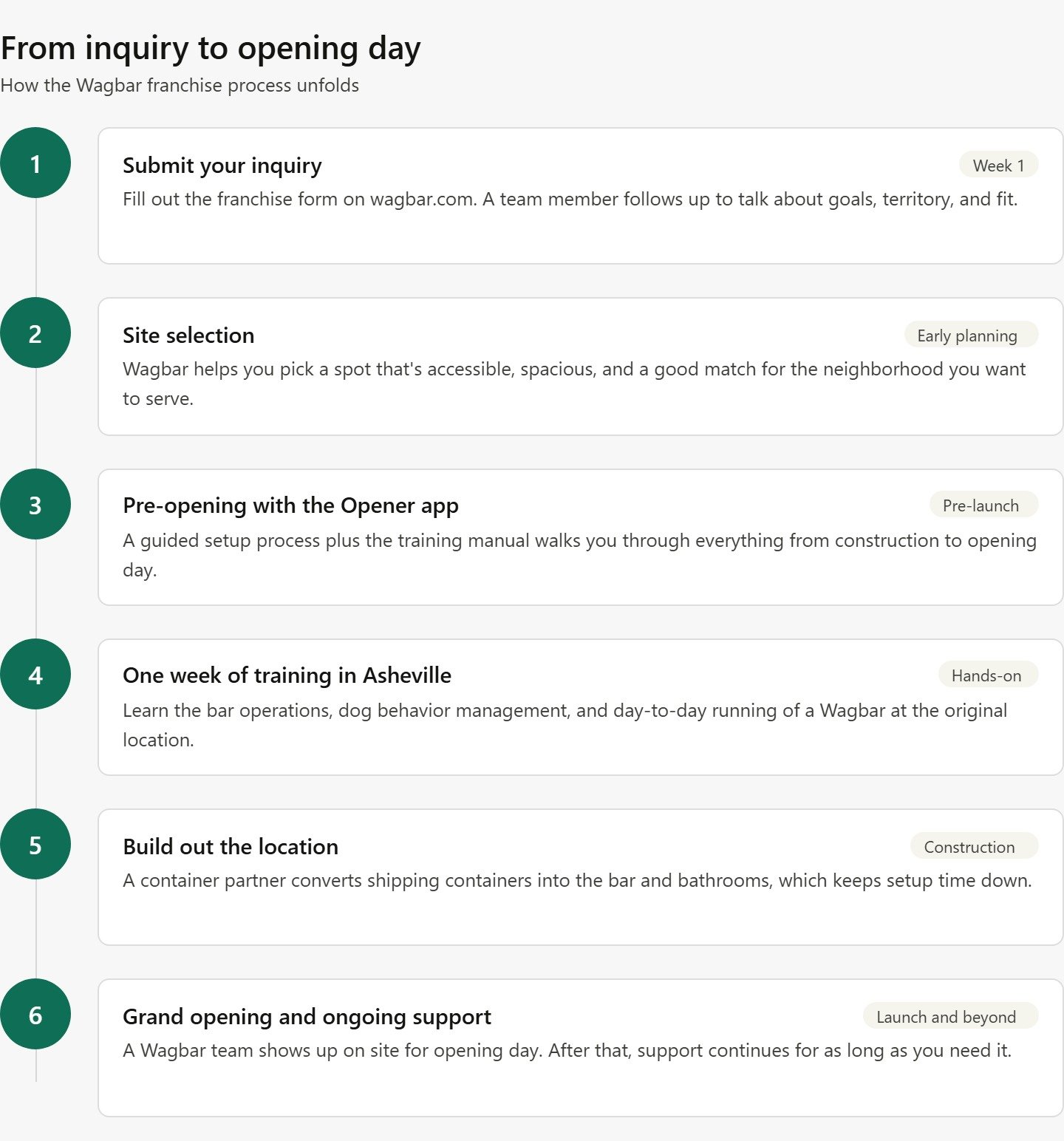
Franchisees undergo intensive training at WagBar's Asheville headquarters. This isn't a brief orientation—it's comprehensive immersion in operational procedures, dog behavior management, community building, and the cultural values that make WagBar work.
Ongoing support includes regular check-ins, operational reviews, and access to WagBar's core team for questions and guidance. Franchisees aren't handed a manual and told "good luck"—they're connected to experienced support throughout their ownership.
Standards for entry requirements, vaccination verification, behavior policies, and facility maintenance remain consistent across all locations. Your experience at WagBar Knoxville should feel fundamentally similar to WagBar Asheville or any future location.
This consistency matters because it means the WagBar brand represents reliable expectations. If you loved WagBar in Knoxville and move to another city with a WagBar location, you'll know what you're getting rather than discovering each location operates completely differently.
Contributing to Industry Evolution
WagBar represents broader trends in how we think about dog care and pet-focused businesses. The model challenges several outdated assumptions:
The assumption that dog parks should be free, minimally maintained public spaces with no services or amenities. WagBar demonstrates that dog owners will pay for quality, supervision, and enhanced experiences.
The assumption that dog care businesses should separate dogs from owners (boarding, daycare) rather than creating experiences they share together. WagBar shows that together-time can be commercially viable and often preferred.
The assumption that dog-focused businesses should be purely transactional (buy food, receive grooming, pay for training) rather than community-oriented destinations people choose to spend time at. WagBar proves the destination model works.
These assumptions shaped the pet industry for decades, and WagBar's success challenges them in ways that could influence how other businesses think about serving dog owners. As the franchise expands and proves sustainability across markets, these lessons will likely spread throughout the industry.
The pet industry's growth patterns and evolving consumer expectations create opportunities for innovative concepts like WagBar to capture market share from traditional models that no longer meet modern pet owners' needs.
Your Role in Proving the Concept
As an early member of WagBar Knoxville, you're helping prove the concept in a new market. Your membership, feedback, and word-of-mouth directly impact the location's success and, by extension, the franchise system's viability.
Knoxville was selected for expansion based on demographic analysis, market research, and community characteristics, but ultimately the concept succeeds or fails based on whether local dog owners embrace it. Early adopters like you determine whether WagBar becomes a Knoxville institution or struggles to find its footing.
Your feedback to management helps refine operations, programming, and policies. Franchisees need honest input about what's working and what isn't, what events draw interest and which fall flat, and how the experience could improve. Members who engage beyond just showing up shape better outcomes for everyone.
Your recommendations to other dog owners expand the membership base and strengthen community. Personal referrals carry more weight than any advertising campaign. When you tell fellow dog owners about your positive WagBar experiences, you're directly building the community that makes the concept work.
Planning Your First WagBar Knoxville Visit
Ready to experience WagBar for yourself? Here's how to set up your first visit for success, from practical logistics to mental preparation for both you and your dog.
Timing Your Visit
WagBar Knoxville opens in October 2025 at the former Creekside Knox location. Check the website or social media for the exact opening date and hours as that date approaches.
For your first visit, consider timing strategically:
Mid-morning on weekdays (10am-1pm) tends to be quieter than peak times. Fewer dogs means less overwhelming stimulation for your dog's first experience.
Weekend mornings (9am-11am) attract regular members whose dogs are often well-socialized and whose owners know the facility culture. Following their lead can ease your entry into the community.
Avoid peak times (weekday evenings after 5pm, weekend afternoons) for your first visit. These periods draw the largest crowds, which can be overwhelming for dogs and humans adjusting to the environment.
Weather matters more than you might think. Pleasant days without extreme heat or cold make everyone's first experience better. Check the forecast and choose comfortable conditions when possible.
What to Bring
Keep your first visit simple. You need:
Current vaccination records (rabies, bordetella, distemper) in a format you can show at check-in—photos on your phone work fine as long as they're legible.
Payment method for your day pass or membership fees. WagBar accepts standard payment options.
Your dog's leash and collar. Even though the play area is off-leash, you need leash for entry/exit and moving through check-in areas.
Water for yourself if you don't plan to purchase beverages immediately. Your dog will have access to water stations in the play area.
Skip bringing toys, treats, or food for your dog. These aren't allowed in the play area and will need to stay in your car anyway.
Preparing Your Dog
The best preparation is a moderate walk before arrival—20-30 minutes of sniffing and movement to take the edge off their energy without exhausting them completely. This helps them stay calmer during check-in and enter the play area in a receptive rather than frantic state.
Don't overthink mental preparation. Your anxiety transfers to your dog, so project calm confidence even if you feel nervous internally. Act like this is a normal, unremarkable outing and your dog will take cues from your energy.
If your dog is particularly anxious or excitable, practice some basic obedience commands during the walk to get them into "listening mode" before arriving. Sit, stay, and heel exercises engage their brain and can help with impulse control.
Setting Realistic Expectations
Your first visit probably won't be perfect—and that's completely fine. You're both learning the environment, meeting new people and dogs, and figuring out how this new experience works.
Your dog might be nervous and need time to warm up. They might be overly excited and need help settling down. They might struggle with recall in this stimulating new environment. They might play beautifully from the start or need several visits before truly engaging.
You might feel awkward or uncertain about the social dynamics. You might not immediately connect with other members. You might struggle with when to intervene versus when to let your dog handle situations independently.
All of this is normal and doesn't mean WagBar isn't right for you. Most members' first visits involve some learning curve. Give yourself and your dog grace to figure things out.
What Success Looks Like
A successful first visit doesn't require your dog playing enthusiastically with every dog they meet or you making three new best friends. Success is much more modest:
Your dog showed interest in exploring the space and other dogs, even if they didn't fully engage in play.
Your dog seemed comfortable enough that they weren't constantly stressed or trying to leave.
You felt confident that the supervision and safety protocols create an acceptable risk level for your dog.
You could imagine returning and potentially finding value in regular visits.
If you hit these modest benchmarks, the first visit succeeded. Everything else—deep friendships, perfect play matches, complete comfort with the environment—develops over time with repeated exposure.
After Your First Visit
Take some time to process the experience. Don't make immediate membership decisions in the parking lot. Go home, think about what you observed, how your dog responded, and whether this aligns with what you're looking for.
If the experience was clearly negative—your dog was miserable, you felt unsafe, the environment didn't match your expectations—that's valuable information. WagBar might not be the right fit, and that's okay.
If the experience was positive or neutral with potential, plan a return visit before committing to membership. First visits involve so much novelty that second visits often look quite different as both you and your dog relax into the environment.
Watch your dog over the following day or two. Are they tired in that satisfied, well-exercised way? Or are they wired and overstimulated? Did the outing seem to energize them or deplete them? These observations help gauge whether the experience actually serves your dog's needs.
The Future of Dog-Friendly Spaces in Knoxville
WagBar Knoxville represents more than just another business opening in town. It signals evolving expectations about what dog-friendly spaces should offer and how we integrate our dogs into community life. Where this leads over the next several years could reshape Knoxville's entire dog culture.
Raising the Bar for Dog-Friendly Standards
When dog owners experience WagBar's level of service, supervision, and amenities, their expectations for other dog-friendly spaces naturally rise. This creates positive pressure on municipal parks, breweries, restaurants, and other businesses to improve their offerings.
Municipal dog parks might not be able to match WagBar's supervised model, but they could improve basic maintenance, upgrade equipment, or enhance safety features. When significant portions of dog owners demonstrate willingness to pay for quality through WagBar memberships, it makes the case for increased public investment in free alternatives.
Restaurants and breweries with dog-friendly patios might enhance those spaces beyond the bare minimum. Better water station setups, dedicated dog areas, or staff training in dog behavior could differentiate businesses competing for dog owners' discretionary spending.
Retail stores might become more thoughtfully dog-friendly—not just allowing dogs but actually designing welcoming experiences for them. The commercial success of dog-focused businesses influences adjacent industries to pay attention to this customer segment.
Building Broader Community Connections
WagBar's community-building model could influence how other Knoxville businesses think about creating loyal customer bases. The membership structure, regular events, and emphasis on relationship building over transactional interactions offer lessons applicable beyond dog parks.
Breweries might develop more robust membership or regulars programs. Community spaces might focus more on consistent community building rather than one-off events. Retail businesses might create reasons for customers to return beyond pure purchasing needs.
The community that forms at WagBar also connects to Knoxville's broader social fabric. Members meet other dog owners who become friends, attend non-WagBar activities together, and generally contribute to Knoxville's social density and connectedness.
In an era when social isolation and loneliness affect increasing numbers of people, businesses that intentionally create community connection points provide value beyond their ostensible service offerings. WagBar demonstrates this model in action.
Inspiring Similar Concepts
As WagBar succeeds, other entrepreneurs might develop complementary or alternative concepts serving Knoxville's dog-owning population. This isn't competition in a zero-sum sense—it's growth of an entire category of dog-focused businesses.
Cat cafes or other pet-focused social spaces might emerge following similar models for different audiences. Adventure companies might offer dog-inclusive outdoor experiences. Training centers might shift toward social learning environments rather than pure instruction.
The broader trend is recognition that pet owners want experiences with their animals, not just services for them. Businesses that create these shared experiences tap into demand that traditional pet services miss.
Influence on Urban Planning
Successful businesses influence policy in ways entrepreneurs rarely anticipate. If WagBar and similar concepts prove strong market demand for quality dog-friendly spaces, urban planners might incorporate more dog-friendly design into new developments and public spaces.
This could mean more dog parks in residential developments, better connectivity of walking trails, stricter standards for existing dog park facilities, or inclusion of dog-friendly amenities in commercial districts.
The economic activity generated by dog-focused businesses—both direct revenue and spending at adjacent businesses by dog owners frequenting the area—demonstrates to planners and policymakers that investing in dog-friendly infrastructure generates returns beyond just quality of life benefits.
Creating Models for Smaller Markets
Knoxville serves as a test case for whether the WagBar model works in mid-sized markets, not just large metropolitan areas. Success here opens possibilities for franchise expansion into similar-sized cities across the Southeast and beyond.
This matters because many medium-sized cities offer few quality dog-friendly options. Traditional dog parks exist, but the supervised premium experience WagBar provides is mostly absent. If the Knoxville franchise thrives, it proves viability in markets previously considered too small for this concept.
The franchise expansion strategy that guides WagBar's growth depends on demonstrating success in varied market conditions, making Knoxville an important proving ground for the entire franchise system.
Why October 2025 Matters for Knoxville Dog Owners
The opening of WagBar Knoxville in October 2025 creates a specific moment when Knoxville's dog community can support something genuinely different from existing options. Understanding why timing matters helps appreciate the opportunity to be part of building something from the ground up.
The Early Adopter Advantage
Being among the first members at a new WagBar location means helping shape the community culture that develops. Early members influence the social dynamics, establish behavioral norms, and create the atmosphere that new members encounter later.
This isn't about formal authority—it's about natural leadership that emerges when you're present from the beginning. Your approach to interacting with other members, how you handle your dog, and what you contribute to community building all ripple outward as the membership base grows.
Early members also develop relationships with ownership and staff that later members don't naturally have the same opportunity to build. This access can influence operational decisions, event planning, and policy refinement in ways that benefit everyone but particularly those providing the feedback.
From a purely practical standpoint, early membership likely includes promotional pricing or incentives that won't be available once the location is established. Franchise openings typically feature deals designed to build initial membership bases quickly.
Timing With October Weather
October in Knoxville offers ideal weather for outdoor activities—warm enough to be comfortable but not the oppressive heat of summer. Opening during this season allows WagBar to showcase the concept under optimal conditions.
Dogs and humans both enjoy being outside in October. The comfortable temperatures mean longer, more pleasant visits that highlight what makes WagBar special. First impressions formed during beautiful October afternoons set expectations that carry through less ideal weather seasons.
The timing also positions WagBar heading into holiday season when people are thinking about memberships as gifts for dog-loving friends and family. Pet industry spending increases around holidays, and opening just before this period captures that economic momentum.
Building Momentum Through Winter
Opening in October gives WagBar several months to establish operations, build membership base, and refine processes before hitting peak spring/summer demand. This operational runway reduces pressure and allows for learning and adjustment before the busiest seasons.
Winter attendance naturally drops at outdoor dog facilities, but WagBar's bar atmosphere and covered seating make visits more appealing than traditional dog parks during cold weather. Members who continue visiting through winter tend to be highly committed and form the community core.
By the time spring 2026 arrives with perfect weather and renewed interest in outdoor activities, WagBar will have eight months of operational experience, an established member base, and refined processes. This positions the location to maximize the spring surge rather than struggling to keep up.
The Former Creekside Knox Location
WagBar's choice of the former Creekside Knox location provides several advantages worth noting. The site has existing infrastructure suited to outdoor social venues, established visibility in the community, and a track record of hosting events and gatherings.
Repurposing this space for WagBar rather than developing a completely new site accelerates the opening timeline and reduces startup costs. These savings can translate to better facilities, more competitive membership pricing, or higher quality amenities.
The location's previous identity as a community gathering spot creates continuity rather than introducing something completely foreign to the neighborhood. People already associate this space with social experiences and outdoor entertainment—WagBar builds on that foundation rather than fighting it.
Your Role in Launch Success
WagBar Knoxville's early success depends largely on those first few hundred members who join during the opening weeks and months. These early adopters determine whether the location reaches sustainable membership levels that support quality operations.
Your membership matters—not just the financial contribution, though that's important, but also your presence, feedback, word-of-mouth recommendations, and engagement with community building efforts.
Every member who tells friends about positive experiences expands awareness organically. Every member who provides constructive feedback helps refine operations. Every member who treats the facility and community respectfully maintains standards that attract similar people.
In very real ways, early members are building the thing they want to exist. WagBar provides the framework, facilities, and operational expertise, but members create the actual community experience through their participation and behavior.
This kind of collaborative community building is increasingly rare—most consumer experiences are completely passive. WagBar offers something different: the chance to actively shape an emerging community around shared values and interests.