
The Social Benefits of Off-Leash Play for Knoxville Dogs
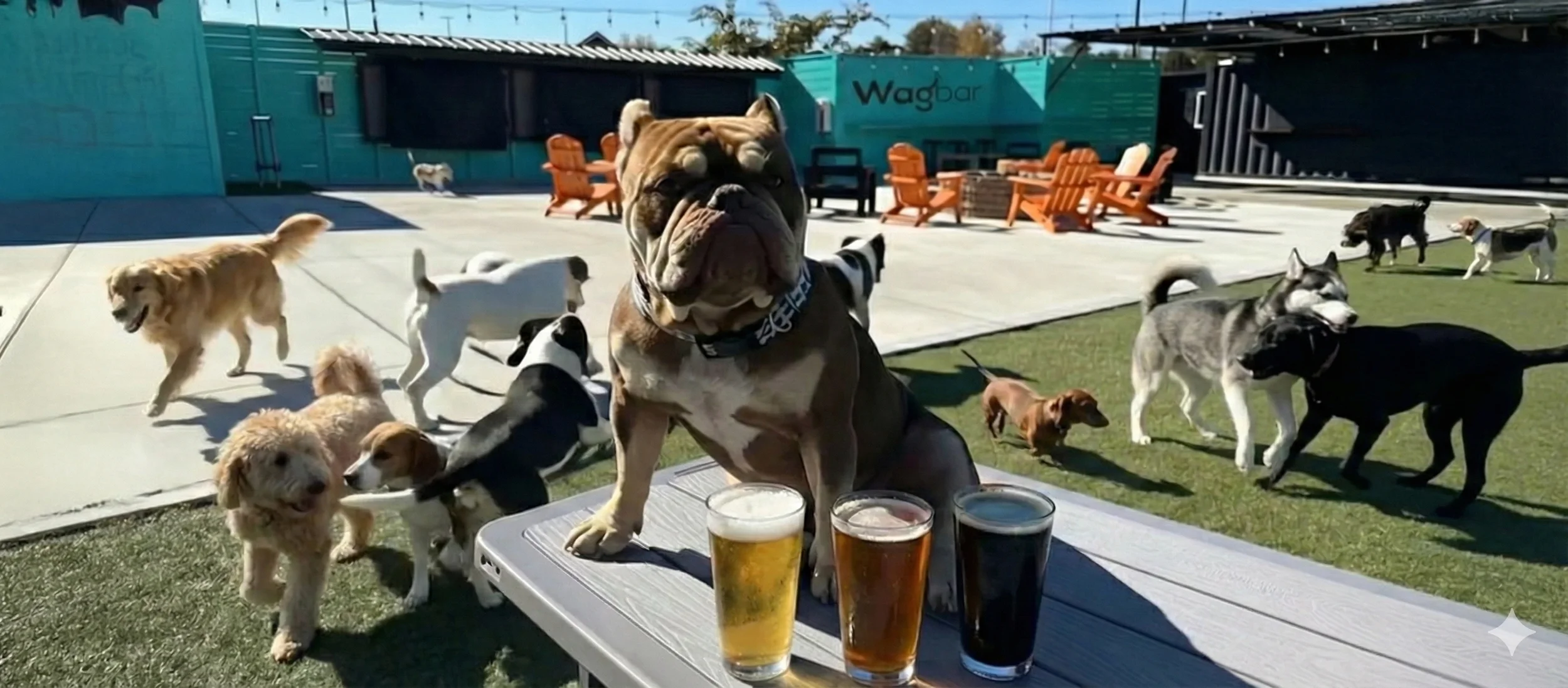
Multiple dogs of different sizes playing safely together under professional supervision at WagBar's off-leash dog park
Top TLDR: Off-leash play provides Knoxville dogs with essential social development opportunities that leashed walks cannot replicate, including natural communication practice, confidence building, and stress reduction through unrestricted movement. Dogs who regularly engage in off-leash socialization develop better behavioral skills, stronger impulse control, and reduced anxiety in various situations. Knoxville dog owners can access these benefits through supervised environments like WagBar's off-leash dog park opening in October 2025.
Your dog pulls toward every other dog you pass on walks. They whine at the window when neighborhood dogs go by. They practically vibrate with excitement at the mere sight of another canine. This isn't just enthusiasm—it's your dog telling you they need something leashed interactions can't provide.
Off-leash play meets social needs that structured, controlled encounters simply don't address. For Knoxville dogs navigating urban and suburban environments where leashed walks dominate daily routines, regular off-leash socialization isn't a luxury—it's essential for behavioral health and emotional wellbeing.
Natural Communication Without Restraint
Leashes fundamentally alter how dogs communicate. When restrained, dogs can't use their full range of body language, approach and retreat at natural speeds, or engage in the circular, back-and-forth movement patterns that characterize healthy canine greetings.
Off-leash environments allow dogs to communicate as evolution designed. They can approach cautiously, reading signals and adjusting their behavior based on responses. They can create distance when uncomfortable rather than being forced into prolonged proximity by leash length. They can use play bows, chase sequences, and wrestling that requires space and freedom.
This natural communication practice develops social skills that leashed encounters cannot teach. Dogs learn to read subtle body language cues, understand the difference between play fighting and real conflict, and practice appropriate responses to various social signals. These skills reduce fear-based reactivity and improve behavior in all dog interactions.
Knoxville's mix of urban density and suburban sprawl means many dogs spend most of their time on six-foot leashes. Without regular off-leash opportunities, they miss critical communication practice that prevents behavioral problems later.
Confidence Building Through Choice
Leashed dogs can't make autonomous decisions about social interactions. Owners control every approach, every greeting, every retreat. This protective management, while sometimes necessary for safety, prevents dogs from building confidence through independent problem-solving.
Off-leash play in supervised settings gives dogs agency. They choose which dogs to approach, when to engage in play, and when to take breaks. They navigate social hierarchies, handle minor conflicts, and learn that they can manage challenging situations without human intervention.
This independence builds genuine confidence distinct from the false bravado of barrier frustration. A dog who's successfully navigated dozens of off-leash interactions knows they can handle themselves. They don't need to react aggressively or fearfully because they trust their own social competence.
For Knoxville dogs who may be generally well-behaved but tense or reactive on leash, off-leash socialization often reveals a completely different personality. The anxiety-driven behaviors disappear when the leash tension and forced proximity are removed.
Physical Exercise That Matches Canine Needs
Dogs didn't evolve to walk at human pace in straight lines. They evolved to run, chase, change directions suddenly, and move in unpredictable bursts that match their prey drive and play instincts.
Off-leash play allows movement patterns that leashed walks cannot accommodate. Dogs sprint at full speed, perform sudden stops and turns, wrestle with shifting body positions, and engage in chase games with frequent role reversals. This varied, intense activity provides physical exercise and mental stimulation simultaneously.
The social component amplifies physical benefits. Dogs push themselves harder during play than they do during solo exercise. A dog who seems tired after a mile-long walk might play vigorously for an hour in an off-leash environment, driven by social engagement and play motivation.
Knoxville's climate offers year-round opportunities for outdoor off-leash play. While summer heat requires timing visits during cooler morning or evening hours, Tennessee's mild winters rarely prevent outdoor activity. This consistency allows dogs to maintain regular exercise routines that support both physical health and behavioral stability.

Stress Reduction and Mental Health Benefits
Leashed walks, particularly in busy urban areas, create constant low-level stress for many dogs. They encounter triggers they can't investigate properly, pass dogs they want to greet but can't approach naturally, and navigate stimuli while physically restrained and unable to employ natural coping behaviors.
Off-leash environments with compatible dogs provide profound stress relief. Dogs engage in behaviors that reduce cortisol levels and promote emotional regulation: running, playing, wrestling, and expressing natural drives in safe contexts.
The mental health benefits extend beyond the immediate play session. Dogs who regularly engage in off-leash socialization typically show reduced anxiety in other contexts, improved sleep quality, and decreased destructive behaviors at home. The outlet for pent-up social and physical energy prevents behavior problems that stem from chronic understimulation.
For Knoxville's urban dogs living in apartments or homes without large yards, regular off-leash play becomes even more critical. These dogs face greater daily restrictions and need dedicated outlets for the energy and social drives that yard access and suburban freedom naturally accommodate.

Learning Appropriate Play Behavior
Many behavior problems labeled as "aggression" actually reflect poor play skills. Dogs who didn't receive adequate socialization during critical developmental periods or who only experience leashed interactions often don't understand normal play etiquette.
Off-leash environments with diverse dog populations teach appropriate play through direct experience. Overly rough players receive immediate feedback from other dogs through corrections, disengagement, or role reversals. Dogs who don't understand "play face" versus genuine threat learn to read these signals through repeated exposure.
Well-managed off-leash settings include dogs with various play styles. High-energy dogs find compatible playmates who enjoy chase games and wrestling. Calmer dogs gravitate toward gentler interactions. Different breeds with distinct communication styles practice adjusting their behavior to be understood across breed communication differences.
This diversity teaches flexibility. A dog who primarily socializes with one or two familiar dogs may struggle when encountering unfamiliar dogs with different communication styles. Regular exposure to varied playmates develops adaptability that prevents reactivity rooted in unfamiliarity.
Preventing Barrier Frustration and Leash Reactivity
Leash reactivity often develops when dogs who want to greet other dogs are repeatedly prevented from doing so by leash restraint. This chronic frustration builds into explosive reactions—lunging, barking, and pulling behaviors that make walks stressful for everyone.
Regular off-leash socialization reduces this frustration by providing appropriate outlets for greeting drives. Dogs who know they'll have opportunities for unrestricted interaction during scheduled off-leash sessions often show improved leash manners because the desperate urgency disappears.
Many reactive dogs behave completely differently off-leash. The barrier frustration that drives their leashed reactivity simply doesn't exist when they can approach and greet naturally. While leash reactivity requires dedicated training, off-leash socialization can be part of comprehensive behavior modification plans.
For Knoxville owners struggling with leash reactive dogs, safe off-leash environments offer hope. Seeing your dog play peacefully with others confirms that the leashed behavior isn't reflecting true aggression but rather frustration with artificial constraints.
Impulse Control and Behavioral Self-Regulation

Off-leash play teaches impulse control through natural consequences. A dog who plays too roughly gets excluded when other dogs walk away. A dog who ignores "leave me alone" signals receives corrections. A dog who doesn't take breaks gets overwhelmed and learns to self-regulate energy levels.
These lessons develop emotional intelligence that structured training alone cannot teach. Dogs learn to read social situations, adjust behavior based on context, and manage their own arousal levels without constant human intervention.
The self-regulation skills transfer to other contexts. Dogs who've learned to manage excitement during off-leash play show better impulse control when greeting people, improved patience during training, and enhanced ability to settle in stimulating environments.
This skill development particularly benefits family dogs living with children. Dogs who can self-regulate during exciting play sessions are better equipped to handle the unpredictable, high-energy environment that kids create.
Building Positive Associations with Other Dogs
Dogs who only encounter other dogs on tense leashed walks often develop negative associations with canine encounters. Every sighting means frustration, restraint, and potential conflict as leashed dogs pass in tight proximity with limited ability to communicate clearly.
Off-leash play builds powerfully positive associations. Other dogs mean fun, play, exercise, and joy. This positive conditioning can actually help modify existing reactivity by creating new emotional responses to dog sightings.
The positive associations extend beyond the immediate playmates. Dogs begin generalizing that unfamiliar dogs represent play opportunities rather than threats. This mental shift reduces fear-based reactivity and increases confidence in various social contexts.
For puppies and young dogs, early positive off-leash experiences during critical socialization windows create lasting behavioral foundations. Puppy socialization that includes supervised off-leash play prevents many common behavior problems before they develop.
Social Enrichment for Cognitive Health
Mental stimulation is as important as physical exercise for canine wellbeing. Off-leash social play provides cognitive enrichment that solo activities cannot match.
Dogs process complex social information during every interaction: reading body language, predicting playmate behavior, adjusting their own actions based on feedback, and navigating multi-dog social dynamics. This mental processing challenges cognitive function and provides enrichment that prevents boredom-related behavior problems.
The social problem-solving required during off-leash play keeps dogs mentally sharp as they age. Senior dogs who maintain social activities often show better cognitive function compared to isolated dogs, similar to how social engagement benefits human cognitive health.
Knoxville's growing dog-friendly community creates increasing opportunities for this social enrichment. Beyond dedicated off-leash facilities, the city offers dog-friendly patios, events, and spaces where social dogs can thrive.
The Community Connection for Dogs and Owners
Off-leash socialization creates community among both dogs and their owners. Regular visitors to off-leash dog parks develop friendships that extend beyond the park. Dogs recognize familiar playmates and owners build relationships with people who share their pet-centered lifestyle.
This community aspect benefits both species. Dogs get consistent social opportunities with known playmates whose behavior and play style they understand. Owners gain support networks, share resources and recommendations, and find friends who welcome dogs as part of social activities.
For people new to Knoxville, dog-focused social venues offer instant community connections. The shared interest in canine wellbeing creates natural conversation starters and relationship foundations.
WagBar's upcoming Knoxville location will combine off-leash dog play with social space for owners, creating an environment where both species' social needs are met simultaneously. Dogs play while owners relax with drinks and conversation—a model that recognizes that pet-friendly spaces should genuinely serve both pets and people.
Choosing Safe Off-Leash Environments in Knoxville
Not all off-leash experiences provide equal benefits. Safety and supervision matter significantly. Unsupervised dog parks carry risks from incompatible dogs, unattentive owners, and lack of behavioral intervention when problems arise.
Supervised off-leash facilities like WagBar provide critical safety layers that maximize benefits while minimizing risks. Professional staff monitor dog behavior and group dynamics, enforce vaccination and behavioral requirements, and intervene appropriately when necessary.
When evaluating off-leash opportunities in Knoxville, consider:
Whether staff actively supervise rather than passively observe
What health and vaccination requirements protect the dog population
How behavioral issues are addressed
Whether the space accommodates different play styles
How crowding is managed during peak times
Quality matters more than quantity. Regular visits to well-managed facilities provide greater benefits than frequent trips to unsupervised parks where safety concerns limit relaxation and genuine play.
Making Off-Leash Play Part of Your Routine
The social benefits of off-leash play compound with consistency. Dogs who visit off-leash environments occasionally may enjoy themselves but won't develop the same deep social skills as dogs with regular access.
Aim for at least 2-3 off-leash sessions weekly for optimal social development and maintenance. This frequency allows dogs to build relationships with regular playmates, maintain physical conditioning, and enjoy consistent outlets for social and physical energy.
Timing matters too. Many dogs show better play behavior during specific times of day when their energy levels align with activity. Experiment with morning, afternoon, and evening visits to find when your dog engages most happily.
WagBar's membership model supports this consistency by removing barriers to regular visits. Rather than making individual decisions about whether to pay for each visit, membership encourages the routine participation that maximizes social benefits.
The Long-Term Behavioral Payoff

Two French bulldogs wearing white dress shirts and ties sitting at a business meeting table
The investment in regular off-leash socialization pays dividends throughout your dog's life. Dogs with strong social skills show better behavior in all contexts—at the veterinarian, during grooming, when encountering unfamiliar dogs, and in stimulating environments.
These well-socialized dogs are more enjoyable companions. They handle change better, recover from stress more quickly, and show resilience when facing novel situations. The confidence and emotional regulation developed through consistent social play become part of their core temperament.
For Knoxville dog owners committed to giving their pets fulfilling lives in urban and suburban settings, prioritizing off-leash social opportunities isn't optional—it's fundamental to raising behaviorally healthy dogs.
Bottom TLDR: The social benefits of off-leash play for Knoxville dogs include improved communication skills, reduced stress, enhanced impulse control, and prevention of leash reactivity through natural interaction opportunities. Regular off-leash socialization in supervised environments teaches behavioral self-regulation and builds confidence that leashed encounters cannot provide. Knoxville dog owners can access these benefits starting October 2025 when WagBar opens, offering professionally supervised off-leash play combined with social space for owners.