

The Business Case for Combining an Off-Leash Dog Park With a Licensed Bar
Top TLDR
The business case for combining an off-leash dog park with a licensed bar rests on two revenue streams off the same foot traffic: membership and access fees from dog owners, and beverage sales from those same owners while their dogs play. Each side makes the other stronger because the combination keeps owners on-site longer and drives membership commitments. Start by understanding how the two revenue streams interact before evaluating this as a franchise opportunity.
Dog parks and bars are both well-understood businesses. The market for off-leash dog spaces is large and growing. The bar and beverage service industry has operated with established economics for decades. On their own, each works. Combined, they produce something neither can achieve independently: a business where the customer has two reasons to be there, stays longer because of it, and comes back on a regular schedule because both needs recur.
That's the business case in its simplest form. This page works through why the combination holds up under closer analysis, what makes it structurally more stable than either concept operating alone, and what a prospective operator needs to understand about the model before treating it as a straightforward hospitality play.
Why the Dog Park Side Needs the Bar
A standalone dog park charges admission and maybe sells memberships. The owner walks in, watches their dog run for 45 minutes, and leaves. There's nothing keeping them there past the point where the dog is tired. Revenue per visit is capped by the admission price, and there's no mechanism to extend the time on premises or add incremental spending.
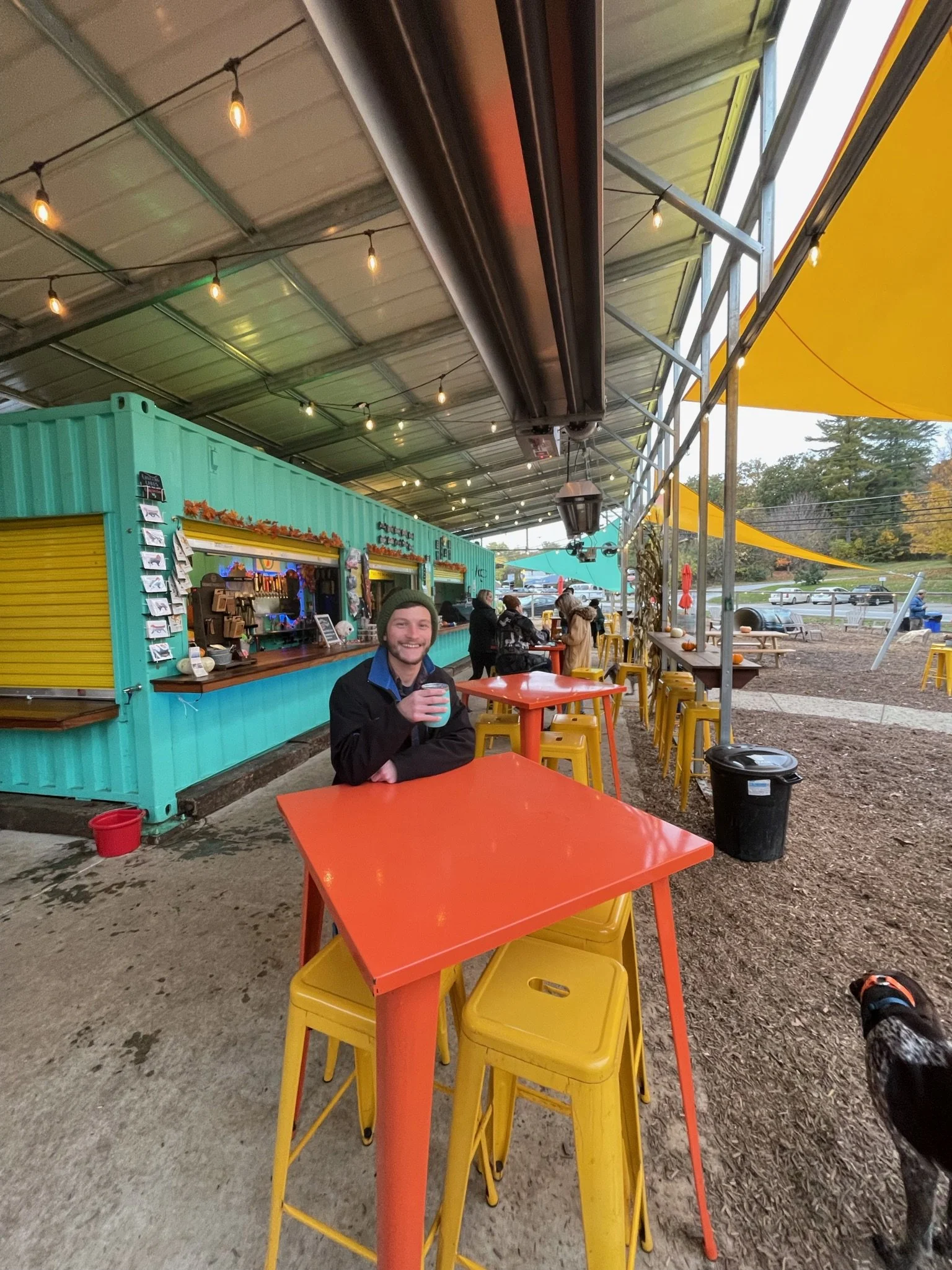
When you add a licensed bar, that ceiling lifts. The owner who arrives with an exhausted dog at 6 PM now has a reason to stay another hour. They order a drink, talk to the person next to them whose labrador won't stop chasing their border collie, and the visit stretches from 45 minutes to two hours. That second hour contains bar revenue the standalone park would never capture.
More importantly, the bar makes the dog park a destination for the owner, not just a utility run for the dog. It converts a chore ("I need to tire out my dog") into a social activity the owner actually looks forward to. That shift from obligation to desire is what drives membership commitment. Owners don't buy annual passes to places they attend grudgingly.
Why the Bar Side Needs the Dog Park
A bar without a differentiator competes on price, location, and ambience against every other bar in the market. In most urban areas, that's a crowded field with limited margin for differentiation.
A bar attached to an off-leash dog park has a self-selecting audience that can't be replicated by adding TVs or changing the music. Every person in that bar is a dog owner who prioritized coming to this specific place because it serves their dog. They're not choosing between your bar and the craft brewery down the street. They're choosing between this and staying home, because this is the only place where they and their dog can both do what they want at the same time.
That captive, motivated audience changes the bar economics. Average ticket size tends to be higher when customers are settled in for a two-hour visit than when they're stopping by for one drink. Groups of dog owners who meet regularly at the same park develop social routines, and those routines generate consistent weekly beverage revenue that random foot traffic doesn't produce.
The off-leash dog bar concept is built on this mutual dependency. Neither side is the lead product. The combination is.

The Membership Layer: Why It Matters Financially
Both a dog park and a bar can operate without memberships. But the combined concept is particularly well-suited to a membership model because the recurring needs on both sides align.
A dog owner with an annual membership has pre-committed to a schedule of visits. They're coming back this week and next week and the week after because the membership creates both financial commitment and social habit. Each of those visits generates bar revenue on top of the sunk membership cost. From a business perspective, the membership secures the access revenue upfront while the bar captures incremental spending on each subsequent visit.
Wagbar's membership structure offers daily passes, 10-visit punch cards, monthly memberships, and annual plans. That tier progression is deliberately designed as a customer development pathway. A visitor who starts with a day pass and has a good experience upgrades to a punch card. Consistent use converts the punch card user to a monthly or annual member. Each step up the tier increases both the commitment and the visit frequency.
Annual members visit more regularly than punch card holders, who visit more regularly than day pass users. More frequent visits mean more bar revenue per customer, compounding the value of a membership conversion. This is why revenue streams for off-leash dog bars look structurally different from a standalone park or a standalone bar: the two primary streams are correlated and self-reinforcing rather than independent.
Licensing: The Barrier That Protects the Margin
Adding a licensed bar to a dog park isn't operationally trivial. Liquor licensing is a regulated process that varies by state and municipality. It requires meeting facility standards, passing inspections, obtaining permits, and in some jurisdictions navigating a limited license inventory or a waiting period.
That complexity is exactly why it protects the margin of the concept. A competitor who wants to open a nearby dog park without a bar can do so relatively quickly. A competitor who wants to replicate the full dog bar model faces the same licensing hurdles, plus the operational complexity of running both a pet service environment and a licensed beverage operation simultaneously.
For an established franchisee, this barrier is an asset. The licensing process is a cost of entry that deters casual competition. And within the Wagbar system, the operational knowledge of running a compliant, licensed bar service in a dog park environment is baked into the training and support structure rather than something each franchisee has to figure out independently.
Understanding the legal and compliance side of operating a pet business is essential before investing in this model. The licensing layer adds complexity, but that complexity is manageable within a franchised system and is precisely what creates the competitive protection.
How the Combined Model Performs Against a Standalone Dog Park
It's worth being direct about what the addition of bar service actually changes in the business model, without overpromising. Wagbar's Franchise Disclosure Document contains specific financial performance data, and any serious evaluation of this opportunity should start there rather than with illustrative comparisons.
That said, the structural mechanics are clear. A standalone dog park generates revenue in one direction: from dog access. A combined dog park and bar generates revenue from two directions, off the same square footage and the same customer visit. Operating costs don't double when you add bar service. The physical space, staff overhead, and facility maintenance are largely shared. The bar adds equipment, inventory, licensing fees, and staff trained in beverage service, but it doesn't require duplicating the core infrastructure of the park.
The economic logic of the combination is that the marginal cost of adding bar service is substantially lower than the marginal revenue it enables, particularly once a location reaches consistent traffic from established members. The dog park fills the space and creates the dwell time. The bar monetizes it.
What the Model Requires Operationally
The business case isn't just a financial one. The combination creates operational requirements that a standalone dog park or bar wouldn't face.
Staff at a dog bar need competency in two areas: dog behavior monitoring and beverage service. Those are genuinely different skills. A person who's excellent at reading dog play dynamics and intervening before a conflict escalates isn't automatically suited for bar service, and vice versa. Training systems need to address both, and Wagbar's week-long on-site training at the Asheville, North Carolina flagship is structured specifically to cover both the dog park management and bar operations sides of the business.
Safety standards also become more complex. Dog health and safety protocols require vaccination verification, behavioral oversight, and clear policies on aggression and removal. Those standards have to coexist with a hospitality environment where the goal is relaxed, social, and enjoyable for the human side. Maintaining both simultaneously is the operational challenge the model presents, and it's the primary reason a franchised system with established protocols performs more consistently than an independent operator figuring it out from scratch.
The Market Context That Makes This Work Now

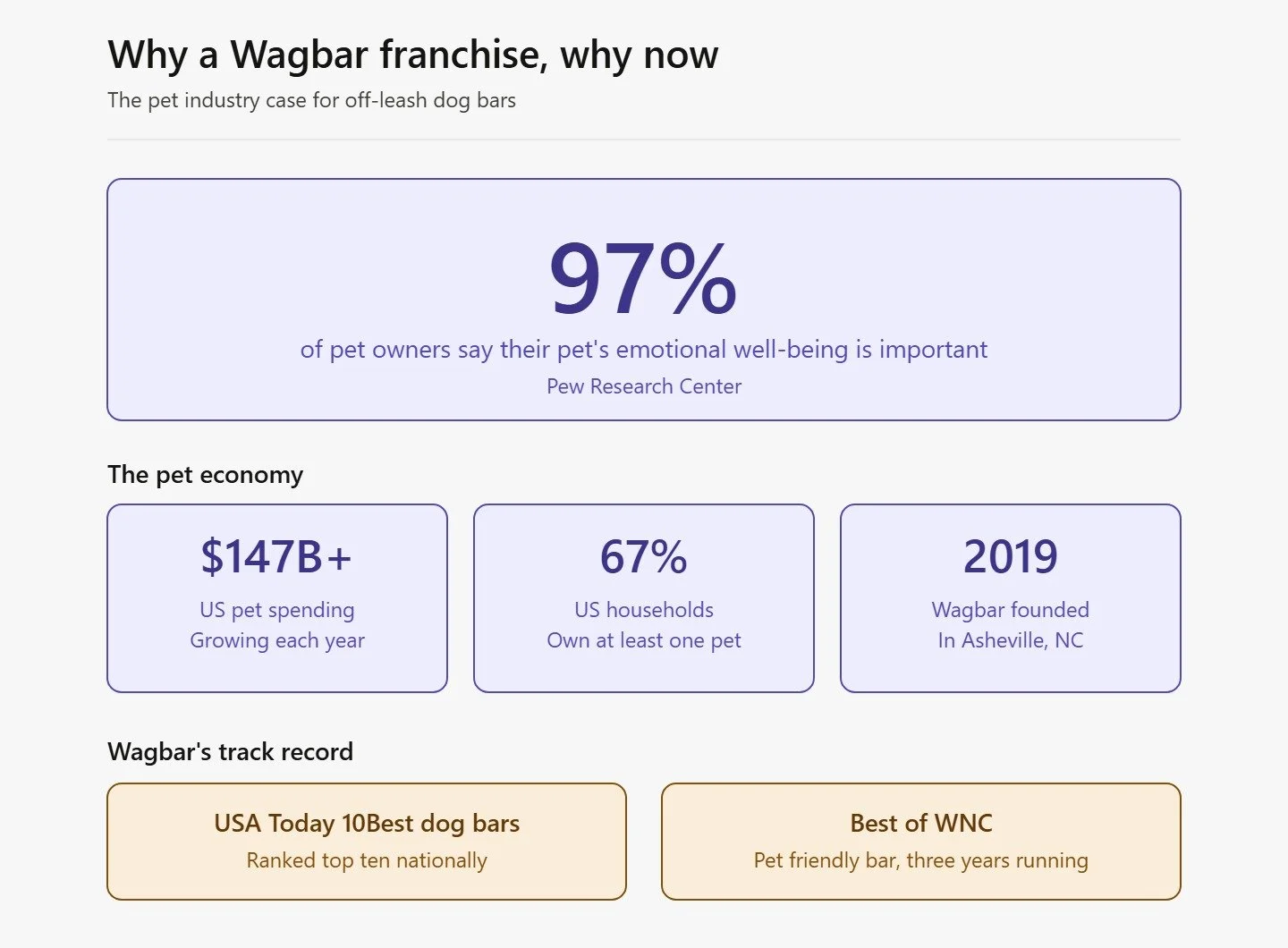
This combination isn't new as a concept, but the market conditions that make it viable at scale are relatively recent. According to the American Pet Products Association, U.S. pet spending reached $147 billion in 2023. The fastest-growing segment of that spending is services, particularly experience-based services aimed at younger dog owners who treat their pets as family members.
That demographic shift in pet spending is the demand foundation the model sits on. Millennial and Gen Z dog owners are the most likely to pay a membership fee for consistent access to a quality off-leash environment. They're also the demographic that has driven the broader trend toward experience spending over product spending. A venue where they can socialize while their dog exercises isn't a niche concept to them. It's a natural extension of how they already think about going out.
The pet industry growth trends through 2030 project this spending to reach $261 billion globally, with services continuing to outgrow products. The business case for combining a dog park with a bar improves as the customer base who values this type of experience continues to grow.
What the Franchise Structure Adds to the Business Case
For an independent operator building this from scratch, the combination of off-leash dog park operations and licensed bar service represents a significant learning curve. The dog park side requires understanding animal behavior, safety protocols, vaccination requirements, and facility design. The bar side requires licensing navigation, inventory management, staff training, and compliance with local beverage regulations. Building operational expertise in both from zero takes time and produces mistakes.
The franchise model accelerates that learning curve. Wagbar's total investment range is $470,300 to $1,145,900, with a $50,000 franchise fee, a 6% royalty on adjusted gross sales, and a 1% contribution to the marketing fund. For three or more units, the franchise fee drops by 50%. These figures reflect the investment in a proven operational system; for actual financial performance data, the Franchise Disclosure Document is the authoritative source.
For prospective franchisees considering the off-leash dog park and bar opportunity, the training and support infrastructure is part of what the franchise fee purchases: a tested system for running both sides of the business, rather than discovering through trial and error what works in a model that has no margin for the learning curve period.
Frequently Asked Questions
Does the bar service actually improve the dog park economics, or is it just an add-on?
It's structurally integral, not an add-on. The bar extends dwell time, adds incremental revenue per visit from existing customers, and shifts the owner experience from obligation to social destination, which directly drives membership conversion. A standalone dog park doesn't have a mechanism to achieve any of those outcomes.
What does a liquor license actually require to operate a dog bar?
Requirements vary by state and municipality but typically include facility inspections, a formal application with background checks, compliance with local zoning for both dog parks and alcohol service, and in some markets a limited license pool that requires purchasing an existing license. The process is manageable but not trivial, which is part of why it creates competitive protection.
How does the membership model interact with bar revenue?
They're complementary. Members visit more frequently than day pass users, and each visit generates bar revenue on top of the already-captured membership fee. Higher membership rates produce more consistent bar revenue, and the social habits formed through regular visits reinforce both.
Is the combined model harder to staff than a standalone dog park or bar?
Yes. Staff need competence in dog behavior monitoring and beverage service. These are different skills that require separate training components. Within the Wagbar franchise system, this is addressed through structured training at the Asheville flagship before a location opens.
What market conditions make the combined model viable?
High dog ownership rates, above-average household incomes, a social culture oriented around local experiences, and a concentration of younger dog owners who treat their pets as family. Markets like Asheville, Knoxville, Richmond, and Dallas have demonstrated these conditions clearly.
Where can I find actual financial performance data for this model?
The Franchise Disclosure Document. Review it carefully, consult a franchise attorney, and talk to existing franchisees. Any projections outside the FDD are illustrative at best and should not be the basis for investment decisions.
The Case Holds Because the Problems Are Real
The business case for combining an off-leash dog park with a licensed bar is durable because it solves real problems for a real and growing customer base. Dog owners in urban areas need consistent off-leash access for their dogs. They also want a social life that doesn't require choosing between their dog and their friends. A venue that handles both needs simultaneously doesn't need to explain its value proposition to the right audience. They already understand it.
The combination creates a business with two revenue streams, a membership model that drives consistent traffic, competitive protection through the complexity of the licensing requirement, and a customer base with genuine loyalty to a venue they genuinely enjoy. That's a more durable position than most single-category pet businesses occupy.
For a closer look at how this model works as a franchise, Wagbar's franchising page is the right starting point. Review the FDD before making any investment decisions.
Bottom TLDR
The business case for combining an off-leash dog park with a licensed bar works because both revenue streams operate off the same customer visit: dog access fees and memberships provide a recurring base, while bar sales capture incremental spending during the same dwell time. Neither side is an add-on; the combination is structurally stronger than either concept alone. Review Wagbar's Franchise Disclosure Document for actual financial performance data before evaluating this as an investment.