
Supervised Off-Leash Play: What Dog Behavior Research Says About How Dogs Actually Socialize
Top TLDR: Supervised off-leash play produces measurably better social outcomes for dogs than on-leash encounters, according to canine behavior research. Studies show that professional oversight, vaccination requirements, and structured group environments reduce aggression incidents and disease transmission at shared dog facilities. If you want your dog to build genuine social skills, a managed off-leash facility is the research-backed choice.
Dog owners have strong instincts about what their dogs need. More exercise. More time with other dogs. More chances to just be a dog. But good intentions and good outcomes aren't always the same thing, and the science of canine socialization makes that clear.
A walk past another dog on a tight leash produces a completely different behavioral experience than two hours of free play in a fenced yard with six other dogs and a trained staff member watching. Understanding why that difference matters, and what the research actually says about how dogs socialize, can change the way you think about where and how your dog spends their time.
What Canine Socialization Actually Means
Socialization is one of the most used, most misunderstood words in dog ownership. People often use it to mean simply "being around other dogs." But behavioral researchers define it more precisely: socialization is the process by which dogs learn to interpret, respond to, and appropriately engage with other social beings, whether dogs, humans, or other animals.
According to the American Veterinary Society of Animal Behavior (AVSAB), the socialization window for puppies closes around 12 to 16 weeks of age, making early positive exposure critical. But socialization doesn't stop at puppyhood. Adult dogs continue developing their social behaviors through repeated, appropriately managed interactions throughout their lives.
What that means practically is that exposure alone isn't enough. A dog that spends time around other dogs but consistently has negative or stressful interactions doesn't become more social. They often become more reactive. Quality of interaction, not just quantity, shapes behavioral outcomes.
This is the foundation for understanding why the environment, the level of supervision, and the other dogs present all matter so much when it comes to group play and social development.
On-Leash vs. Off-Leash: Why the Difference Is Bigger Than It Looks
Most dog owners have seen it. Two dogs approach each other on leash. One or both start pulling, barking, or stiffening. What looks like aggression is often frustration, and the research on leash reactivity explains why.
Dogs communicate through a complex system of body language, movement, and approach patterns. When dogs meet off-leash in a neutral space, they have full control over their approach and retreat. They can curve away, offer calming signals, sniff the ground, or disengage at will. These behaviors are how dogs negotiate social encounters safely.
On a leash, all of that changes. The dog cannot control their approach angle. They're often pulled forward in a direct line toward another dog, which is a pattern that signals threat in canine communication. They can't retreat if they feel uncomfortable. They're tethered to a human who may themselves be tense, which dogs read and respond to through a phenomenon researchers call emotional contagion.
A 2017 study published in the journal Applied Animal Behaviour Science found that leash-restrained dogs show significantly higher rates of stress-related behaviors during greetings than dogs in off-leash settings. The physical constraint of a leash doesn't just limit movement. It limits the dog's ability to communicate and respond appropriately, which can escalate situations that might otherwise resolve naturally.
Off-leash play, by contrast, lets dogs use their full behavioral toolkit. They can self-regulate. They can end interactions they don't enjoy. They can establish relationships at their own pace. This is why off-leash training readiness matters so much before bringing a dog into a shared group setting.
What Research Says About Play Behavior in Group Settings
Not all off-leash play is equal. Research from veterinary behaviorists and ethologists paints a clear picture of what healthy group play looks like and what separates it from problematic interactions.
Healthy canine play involves reciprocity. Dogs take turns chasing and being chased. They alternate between dominant and submissive positions. They use play bows, loose body posture, and brief pauses to reset and confirm the interaction is still mutual. Patricia McConnell, a certified applied animal behaviorist, describes this as "self-handicapping," where more physically capable dogs deliberately hold back to keep play balanced and fair.
Problems arise when play becomes unilateral. One dog repeatedly chasing, pinning, or mounting another dog without breaks, role reversals, or apparent mutual interest crosses from play into something that causes stress. Research by Camille Ward and colleagues at the University of Michigan found that unreciprocated chase and mounting behaviors are among the strongest predictors of agonistic (conflict-based) escalation in group dog play settings.
This is also why the number and mix of dogs in a shared space matters. Small groups with similar play styles tend to produce better outcomes than large groups with mismatched energy levels. Overcrowding increases arousal in the group, which raises the baseline risk of escalation even among otherwise well-socialized dogs.
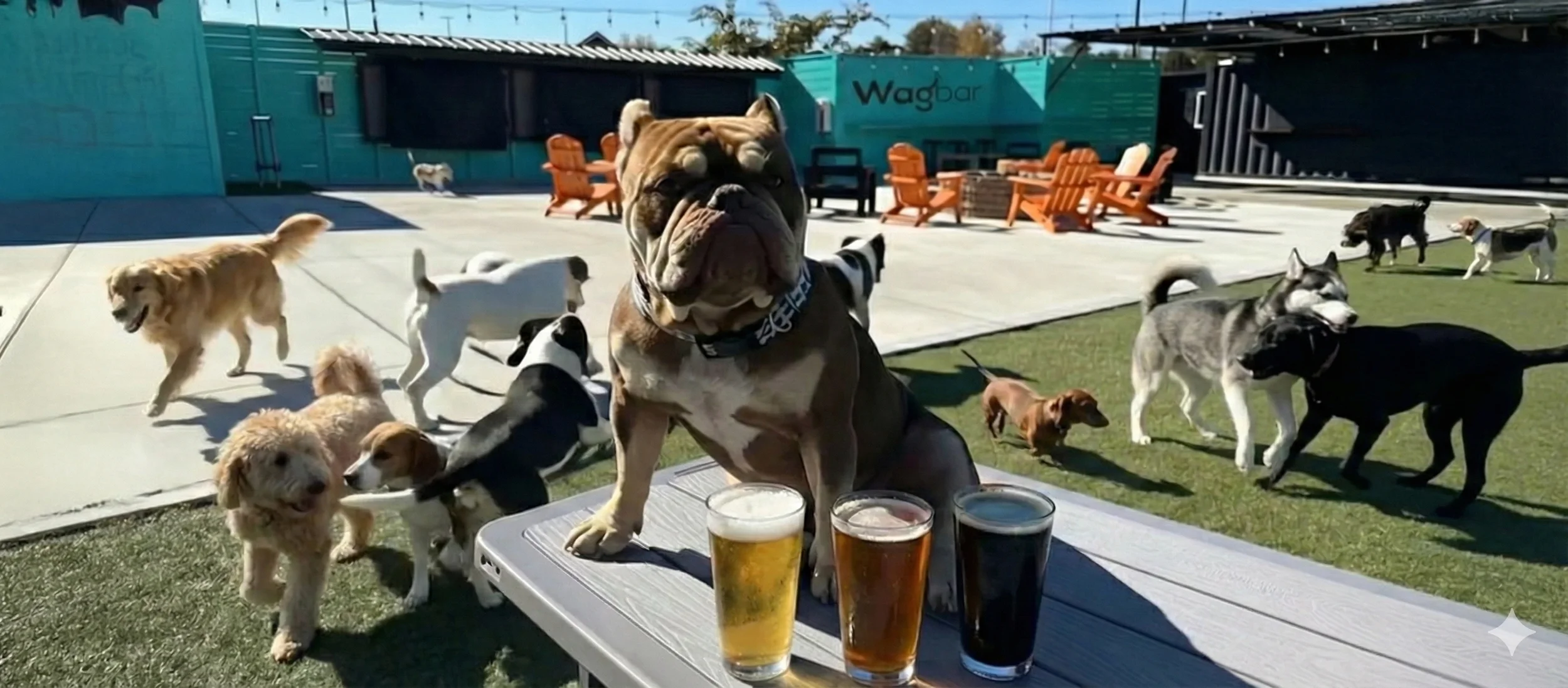
Understanding these dynamics is directly relevant to how managed facilities like Wagbar design their spaces and monitor interactions. It's not just about providing a space for dogs to run. It's about creating conditions that actually support healthy social behavior.
The Role of Human Supervision in Reducing Aggression Incidents
Here's where managed dog parks separate themselves from unmonitored public spaces.
A study published in the Journal of Veterinary Behavior examined incident reports from dog parks across multiple cities and found that facilities with no dedicated staff supervision reported significantly higher rates of dog bite incidents and dog fights compared to facilities with trained staff present. The difference wasn't marginal. Parks with supervision showed roughly 60% fewer serious altercation reports per 1,000 visits.
Why? Because trained humans can read the behavioral warning signs before most dog owners notice them.
The progression from comfortable play to conflict follows a predictable pattern. Dogs show subtle stress signals first: lip licking, yawning out of context, whale eye, a stiff tail held high. Then arousal climbs. Then the interaction tips. A trained eye catches that escalation in the early stages, when redirection is easy. An untrained one often only notices when things have already gone wrong.
Wagbar's approach reflects this directly. Trained staff monitor the dog park at all times, with a zero-tolerance policy for aggressive behavior and clear protocols for intervention. Staff members are trained to understand canine body language and to step in before minor friction becomes a serious incident. That's not just good policy. It's what the research recommends.
The other dimension of supervised play that often gets overlooked is the presence of the owners themselves. At an unmonitored public dog park, owners are often distracted, checking their phones, chatting with other owners, or simply unaware of what their dog is doing at the other end of the park. Research consistently shows that owner attentiveness correlates with fewer incidents. When staff supervision supplements (not replaces) owner attention, outcomes improve significantly.
How Vaccination Requirements Reduce Disease Risk at Group Facilities
Shared dog spaces create shared disease risk. That's not a reason to avoid them, but it is a reason to understand what protections matter and why.
The core diseases targeted by standard vaccination requirements at facilities like Wagbar include rabies, distemper (which covers the DHPP combination vaccine), and Bordetella, commonly called kennel cough. Each of these represents a meaningful risk in group settings.
Bordetella is perhaps the most practically relevant. Transmitted through airborne droplets and direct contact, Bordetella bronchiseptica spreads easily in close-contact environments. The American Kennel Club Canine Health Foundation notes that approximately one in five dogs exposed to the bacteria in group settings will develop kennel cough symptoms without vaccination. The Bordetella vaccine significantly reduces both the likelihood of infection and the severity of symptoms in vaccinated dogs who do get exposed.
Distemper is more serious. A viral disease affecting the respiratory, gastrointestinal, and nervous systems, distemper has a high mortality rate in unvaccinated dogs. Vaccination rates above 80-85% in a shared population create a form of herd protection, reducing transmission risk even for individual dogs with incomplete immunity.
Spay and neuter requirements, another component of Wagbar's entry standards, add a behavioral dimension to the health framework. Intact males are significantly more likely to engage in mounting, resource guarding, and same-sex conflict than neutered dogs. Research from the journal Veterinary Record found that intact male dogs were involved in a disproportionate share of bite incidents in shared dog settings. Requiring spay and neuter before dogs can access shared group spaces reduces that baseline risk.

The minimum age requirement of 6 months serves a similar purpose. Puppies younger than 6 months old are still completing their vaccination series and haven't yet developed the behavioral maturity for sustained group interaction. Their immune systems are more vulnerable and their social reading skills are still developing. Keeping them out of high-density shared spaces until they're ready protects both them and the dogs they'd interact with.
What Distinguishes a Managed Dog Park from an Unmonitored One
The term "dog park" covers an enormous range of environments. A city-maintained fenced field with no staff, no entry requirements, and no rules enforcement is legally a dog park. So is a professionally managed, staffed facility with vaccination checks, trained behavioral monitors, and clear codes of conduct.
The research outcomes associated with these two environments are not comparable.
A 2019 survey published in Preventive Veterinary Medicine analyzed behavioral and health incidents at dog parks across the United States and found that facilities with formal entry requirements (vaccination proof, behavioral screening) had significantly lower rates of both disease transmission events and physical altercations than facilities with open access. The presence of written rules and staff to enforce them made a measurable difference even when controlling for the overall size and busyness of the facility.
Unmonitored parks have several structural problems. There's no consistent baseline for which dogs are admitted. An aggressive dog that was asked to leave one park simply shows up at the next one. There's no mechanism for removing a dog that's causing problems before that dog causes a serious incident. And there's no one watching the space as a whole, reading the collective energy of the group, and intervening when the dynamics start to shift.
Managed facilities solve these problems through policy and staffing. At Wagbar, the combination of vaccination requirements, spay/neuter requirements, behavioral screening through a zero-tolerance aggression policy, and trained staff monitoring means the population of dogs in the park at any given time is meaningfully different from an open-access public park. The dogs are healthier. The baseline behavioral risk is lower. And someone with training is watching.
This is the practical application of what the complete dog park guide describes as responsible group dog management.
The Behavioral Benefits of Regular Socialization for Adult Dogs
A common misconception is that socialization is primarily a puppy concern. Get the critical window right, and the rest takes care of itself. But behavioral research paints a more complex picture.
Adult dogs that have regular positive social experiences with other dogs tend to maintain better behavioral flexibility throughout their lives. A dog that goes months without meaningful social interaction and then suddenly faces a busy, stimulating environment is more likely to show arousal or anxiety responses than a dog for whom group interaction is a regular, familiar experience.
Research published in Applied Animal Behaviour Science found that dogs with more frequent social exposure to other dogs scored significantly lower on owner-reported aggression scales, even when controlling for early socialization history. Regular exposure keeps dogs' social skills sharp.
For city dogs especially, this matters. Most urban dogs lack the organic social opportunities that rural dogs might have through neighborhoods, farms, or open spaces. They live in apartments. They exercise on-leash. Their social world is often limited to brief, constrained on-leash greetings that, as we've covered, aren't particularly beneficial interactions.
A managed off-leash facility gives those dogs what they can't get on a daily walk: genuine social engagement on their own terms, with dogs that have been screened for temperament, in a space where trained humans are managing the overall environment. The urban dog ownership guide covers this gap in detail, but the short version is that city dogs have different needs than dogs with easy access to open space, and managed facilities address those needs more effectively than the alternatives.
Reading the Room: How Good Staff Supervision Actually Works
It's worth spending time on what professional dog park supervision actually looks like in practice, because "trained staff" can mean a lot of different things.
Effective supervision isn't just having someone standing near the park. It involves systematic observation of the group, pattern recognition, and the confidence to intervene before things escalate.
Staff trained in canine behavioral monitoring watch for a specific set of signals. Stiff, upright tail carriage in a dog that was previously relaxed. A dog that keeps returning to another dog that's clearly trying to disengage. A group of dogs that are running together but whose arousal level keeps climbing without natural breaks or play bows. These aren't obvious warning signs to most people. They require training to see and interpret correctly.
When an experienced staff member spots these patterns, they have options. Redirecting a particular dog's attention. Creating brief separation to let arousal levels drop. Asking an owner to leash their dog for a few minutes. Moving a dog to a different area of the park. In most cases, early intervention prevents the incident entirely.
This aligns with what researchers call "proactive management" in group animal settings, intervening before conflict rather than responding after it. Veterinary behaviorist Dr. Karen Overall has written extensively on the importance of proactive management in group dog environments, noting that most serious incidents are preceded by a chain of observable signals that, if recognized early, could have been interrupted.
Wagbar's staff training reflects these principles. Understanding dog park fight prevention is a core competency for anyone managing a shared off-leash environment, and it's why professional supervision changes the safety profile of a facility so significantly.
The Social Component for Dog Owners Isn't Just a Nice Extra
The research on dog socialization almost always focuses on the dogs. But there's a parallel story about what happens to dog owners in well-designed, managed social environments, and it matters more than most people realize.
Dogs are exquisitely attuned to their owners' emotional states. This is not a metaphor or an anthropomorphization. It's documented biology. Research from Stockholm University published in Scientific Reports found that dogs' cortisol (stress hormone) levels mirror their owners' over time, a phenomenon researchers describe as emotional synchronization. A chronically anxious or stressed owner tends to have a more reactive dog. A relaxed owner, in a space they feel comfortable, contributes directly to a calmer dog.
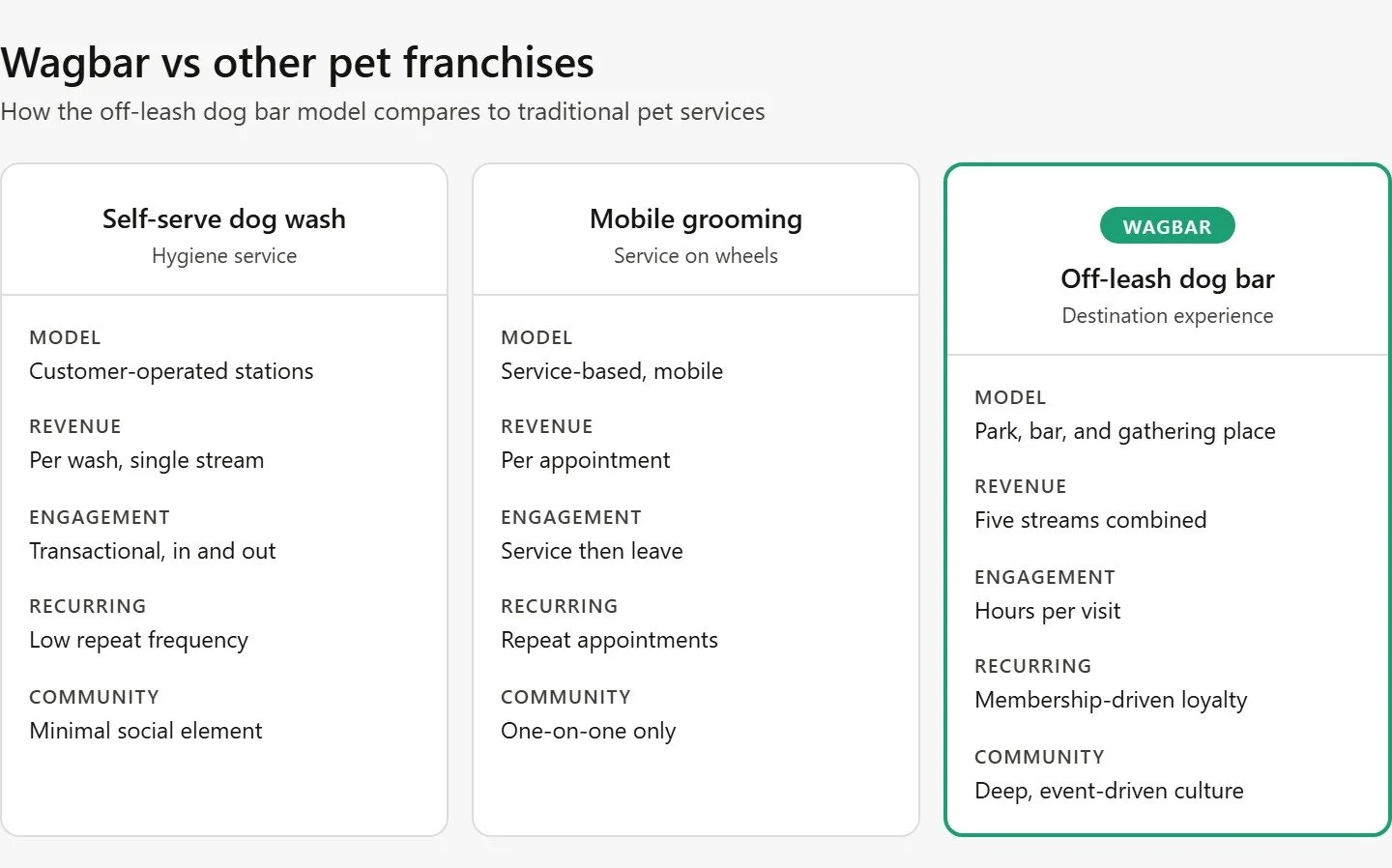
A place where dog owners feel genuinely welcome, where they can relax, connect with other dog people, and simply enjoy watching their dogs play, is doing something real for the dogs too. The Wagbar model, which combines the off-leash dog park with a social bar environment for owners, isn't just a business concept layered on top of a dog park. It's a recognition that the owner's experience shapes the dog's experience.
When owners are distracted by an uncomfortable environment, worried about their dog, or stressed by the social dynamics of the space, those feelings transmit. When they're relaxed, engaged, and comfortable, that transmits too.
What the Science Tells Us About Choosing a Socialization Environment
Pulling the research together, the picture that emerges is fairly clear about what matters when choosing where your dog socializes.
The facility should require and verify vaccinations. This isn't bureaucratic gatekeeping. It's a meaningful epidemiological intervention that reduces disease risk for every dog in the space. The specific vaccines required should at minimum include rabies, distemper combination, and Bordetella for a facility with meaningful dog-to-dog interaction.
Staff should be trained in behavioral observation, not just general customer service. The difference between someone who knows dog body language and someone who doesn't is the difference between proactive incident prevention and reactive incident response.
The physical space should allow for natural movement and choice. Dogs should be able to approach, retreat, engage, and disengage freely. Spaces that are too small for the number of dogs create overcrowding stress that raises baseline arousal and incident risk regardless of the quality of the dogs or the supervision.
Entry requirements should go beyond just vaccinations. Behavioral screening, spay/neuter requirements for adult dogs, and minimum age requirements all contribute to a population of dogs that is fundamentally lower-risk for group interaction.
And the social environment should support attentive, engaged ownership. A space that helps owners relax and enjoy the experience, rather than making them anxious or bored, produces better outcomes for the dogs.
The dog socialization and behavior hub goes deeper on the full picture of canine social development if you want to explore the research further.
Frequently Asked Questions
Why is off-leash play better for socialization than on-leash meetings?
On a leash, dogs can't control their approach angles, can't retreat when uncomfortable, and often read the physical constraint as a threat signal. Research in Applied Animal Behaviour Science shows that leash-restrained dogs display significantly more stress behaviors during greetings than dogs in off-leash settings. Off-leash play lets dogs use their full range of social behaviors, including approach, retreat, and self-regulation, producing more genuine social learning.
What vaccinations are required at Wagbar and why do they matter?
Wagbar requires proof of current rabies, Bordetella, and distemper vaccinations. Bordetella (kennel cough) spreads easily through close contact and airborne exposure in group settings. Distemper is serious and potentially fatal without vaccination. Requiring verified vaccination before entry creates a protected population where herd protection reduces transmission risk for all dogs, not just the ones with perfect immunity histories.
How does trained staff supervision change the safety profile of a dog park?
Research comparing supervised and unsupervised dog parks found facilities with trained staff reported roughly 60% fewer serious altercation incidents per 1,000 visits. Trained observers identify behavioral warning signs like stiff tail carriage, arousal escalation, and unreciprocated interaction patterns before they progress to conflict. Early intervention prevents most incidents that would otherwise occur.
Are spay and neuter requirements really about behavior or just health?

Both. Intact males are documented in veterinary research to be involved in a disproportionate share of bite incidents and same-sex conflicts in group dog settings. Spay and neuter requirements reduce this baseline risk, creating a group of dogs with lower hormonal conflict drive. It's a behavioral screening measure as much as a health one.
At what age should dogs start socializing in group settings?
The AVSAB recommends beginning puppy socialization before the vaccination series is complete, given the importance of the critical window (up to 12-16 weeks), but in controlled, lower-risk environments. For high-density group settings like public dog parks and managed facilities, waiting until dogs are fully vaccinated and at least 6 months old protects both the young dog's developing immune system and the other dogs in the space.
How do owners affect their dogs' experience in a social setting?
Research from Stockholm University documented emotional synchronization between dogs and owners, where dogs' stress hormones mirror their owners' over time. A relaxed, engaged owner in a comfortable social environment contributes directly to a calmer, more positive experience for their dog. This is part of why the social design of a managed facility matters beyond just the dog-specific features.
What should I look for in a managed off-leash dog facility?
Verified vaccination requirements, trained behavioral staff, appropriate space-to-dog ratios, clear conduct policies with actual enforcement, and entry criteria beyond just "up-to-date shots." If a facility has no requirements and no supervision, the research suggests outcomes will reflect that regardless of how well-socialized your individual dog might be.
How Wagbar Applies These Principles
Wagbar's design reflects the research on what makes managed group dog play safe and genuinely beneficial. Every dog entering the park must show current vaccination records for rabies, Bordetella, and distemper. Dogs must be at least 6 months old and spayed or neutered. A zero-tolerance policy for aggression means that dogs and owners who don't meet the behavioral standards can be asked to leave.
Staff are trained in dog behavioral monitoring and actively watch the park during all operating hours. The physical environment is designed to allow natural movement and choice, not just to maximize capacity. And the bar atmosphere for owners isn't incidental to the dog park. It's designed to keep owners present, relaxed, and engaged, which research tells us has a real effect on the dogs themselves.
For dog owners who've wrestled with the alternatives, whether that's crowded public parks with no requirements, expensive daycare settings with limited outdoor time, or constrained on-leash walks that don't actually satisfy a dog's social needs, the Wagbar membership model offers something that stands up to the behavioral science of what good group dog socialization actually requires.
The health and safety standards and the puppy socialization timeline offer more detail on specific aspects of what Wagbar requires and recommends for different dogs and life stages.
Bottom TLDR: Supervised off-leash play produces better social outcomes for dogs than unmonitored parks or on-leash encounters, supported by peer-reviewed research on canine behavior and disease transmission. The key factors are vaccination requirements, trained behavioral staff, and controlled entry criteria. At Wagbar, these principles drive every aspect of how the facility is managed, from vaccination verification to active behavioral monitoring, giving dogs a social environment that's backed by science, not just good intentions.