
State-Specific Regulations for Dog Park Businesses

Top TLDR: State-specific regulations for dog park businesses vary significantly in how they classify animal facilities, issue liquor licenses, and define zoning requirements, meaning a compliance checklist that works in Tennessee won't necessarily transfer to California or Virginia. Before signing a lease or submitting a franchise application, research your target state's animal control laws, health department requirements, and alcohol licensing timelines. Starting the permitting process 6 to 12 months before your planned opening date is a reasonable baseline in most markets.
One of the more common surprises for first-time franchise owners is discovering that "compliant" means something different in every state. Federal regulations set a floor, but states and local governments layer on top with their own requirements for animal facilities, food and beverage service, zoning classifications, and employee protections. A dog park bar concept touches all of these at once, which makes the regulatory picture more layered than a typical retail or restaurant franchise.
This guide covers the major state-specific regulatory categories you'll encounter as a dog park business owner, highlights where variation tends to be most significant, and identifies practical steps for navigating the process in your target market.
Why State Regulations Matter More Than You Might Expect
A dog park bar operates in a category most state regulators weren't originally designing rules for. Animal facility licensing, food and beverage oversight, and liquor licensing typically live in separate agencies that don't coordinate closely. That means you may need approvals from three or four different state or county departments before you can open your doors, and the timeline for each runs independently.

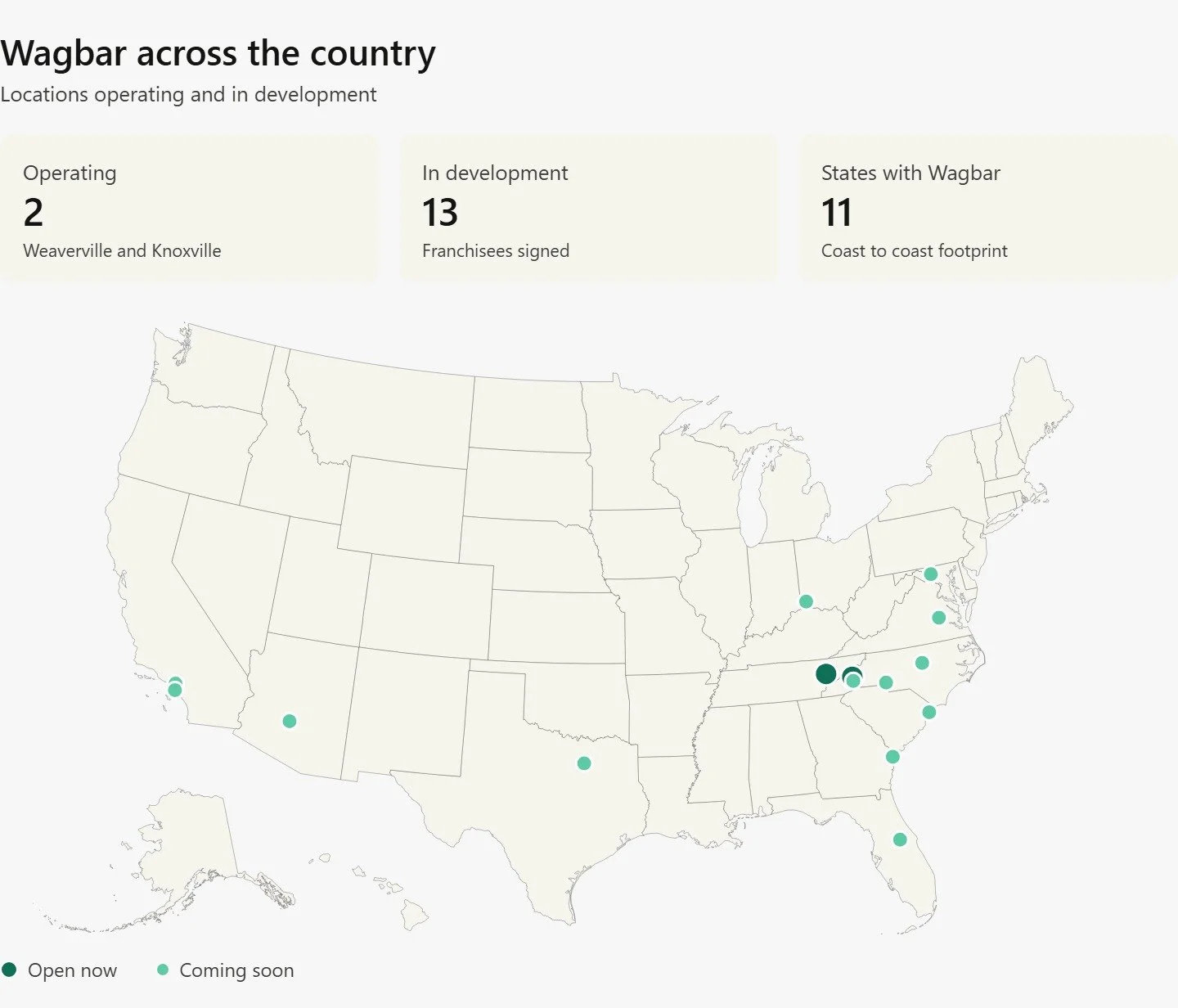
Wagbar locations operate across markets including North Carolina, Tennessee, Virginia, Georgia, South Carolina, Ohio, Maryland, Texas, and California, each with its own regulatory environment. The franchise model provides a proven playbook, but the specific licensing applications, inspection processes, and permit requirements are always determined by the state and local jurisdiction where your location sits.
Starting your compliance research early, ideally while you're still evaluating sites rather than after you've signed a lease, gives you the clearest picture of your actual opening timeline and startup costs.
Animal Facility Licensing: Where the Biggest Variation Lives
This is where state regulations diverge most sharply for dog park businesses. The core question is how your state classifies a supervised off-leash dog park.
Some states regulate any commercial facility that regularly handles dogs under their kennel or animal boarding laws. Others distinguish between facilities that provide custody of animals (kennels, boarding facilities, daycares) and venues where dogs are present under owner supervision. An off-leash dog park where owners are present and responsible for their own animals is a meaningfully different operation than a boarding kennel, but not every state's licensing framework reflects that distinction cleanly.
North Carolina, where Wagbar was founded and currently operates its flagship locations in Weaverville and the greater Asheville area, has a relatively clear framework for animal facilities under the state Department of Agriculture. Supervised play facilities with owner-present dogs are generally treated differently from boarding or daycare operations, but county-level animal control offices often have their own registration requirements that apply regardless of state classification.
Tennessee, where Wagbar's Knoxville location operates, administers animal facility oversight primarily through the state Department of Agriculture's Animal Industries division. Commercial kennels require a state license, but as with North Carolina, the classification of owner-supervised dog parks varies by county. Knoxville's Knox County has its own animal control ordinances that apply to commercial facilities housing or handling animals.
Virginia, where Wagbar's Richmond area franchisee operates, regulates companion animal dealers and facilities under the Virginia Department of Agriculture and Consumer Services. Virginia's regulatory framework tends to be more detailed than some southeastern states, with specific requirements around facility standards, record-keeping, and inspection frequency.
California has among the most comprehensive animal facility regulations in the country. The California Food and Agricultural Code covers kennels, shelters, and pet dealers, and county animal control agencies frequently have additional requirements layered on top. Opening a dog park bar in Los Angeles or the Long Beach area means navigating both state-level oversight and the specific requirements of LA County Animal Care and Control, which maintains its own facility standards.
The practical takeaway: contact your state's Department of Agriculture and your county's animal control office as early in the site selection process as possible. Ask specifically how they classify a supervised off-leash dog park where owners are always present and responsible for their animals. The answer will shape your licensing path and timeline.
Alcohol Licensing: The Longest Lead Time in Your Opening Process
For most dog park bar operators, the liquor license is the most time-sensitive permit in the stack. Alcohol licensing runs through each state's alcohol beverage control (ABC) authority, and the timelines vary from a few weeks to more than six months depending on the state and municipality.
State ABC agencies review applications, conduct background checks on all principals, inspect the premises, and in many states hold a public comment period before issuing a license. In markets where liquor licenses are limited in number (some jurisdictions still use quota systems), the process can take significantly longer or require purchasing a transferable license from an existing holder.
Tennessee operates through the Tennessee Alcoholic Beverage Commission (TABC). Beer permits and wine licenses are handled separately from full liquor licenses, and counties and municipalities have local option authority, meaning some areas allow full liquor sales while others are limited to beer and wine. Knoxville sits in Knox County, which permits full liquor sales with the appropriate state license. TABC processing typically runs 60 to 90 days for straightforward applications.
North Carolina alcohol licensing runs through the NC Alcoholic Beverage Control Commission. North Carolina operates a unique mixed beverage permit system for businesses serving spirits alongside beer and wine. Mixed beverage permits require a separate application, additional fees, and ABC Commission approval. Processing in NC tends to run 90 to 120 days.
Georgia (relevant to the Savannah location) licenses alcohol through the Georgia Department of Revenue's Alcohol and Tobacco Division at the state level, with cities and counties issuing their own local licenses separately. Savannah and Chatham County have their own ordinances governing alcohol establishment requirements, hours, and proximity restrictions.
Virginia administers alcohol licensing through the Virginia Alcoholic Beverage Control Authority. Virginia's licensing process is detailed and typically runs 90 days or more. Virginia also has specific requirements for mixed-use establishments combining food service and alcohol, which applies directly to the dog park bar model.
Texas runs alcohol licensing through the Texas Alcoholic Beverage Commission (TABC). Texas has a complex license classification system with dozens of permit types depending on what you're serving and how your establishment is classified. The process in major markets like Dallas typically runs 60 to 90 days, but can extend in jurisdictions with active local option elections or compliance reviews.
California alcohol licensing through the Department of Alcoholic Beverage Control (ABC) is among the most time-consuming in the country. In major markets like Los Angeles and Long Beach, applications routinely take 120 to 180 days or more. ABC also conducts public notice requirements that allow neighbors to object to a new license, which can extend the timeline further in dense urban neighborhoods.
Start your liquor license application as early as legally permitted, which typically requires a confirmed address and often a signed lease. In most markets, you cannot receive a license for an address you don't control, so this creates a natural sequence issue. Plan for your liquor license timeline to determine your opening date, not the other way around.
Health Department Requirements: Food Service and Animal Proximity
Every state has health department requirements for establishments serving food and beverages. The specific challenge for dog park bars is managing the proximity of animal areas to food service operations, which health departments approach inconsistently across jurisdictions.
Most health inspectors require physical separation between the food preparation and service area and the area where animals are present. Wagbar's container bar model, which uses converted shipping containers as fully enclosed bar and bathroom facilities, creates a practical physical boundary that simplifies this conversation with health inspectors in most markets. The bar is a separate, contained structure rather than an open kitchen adjacent to the dog play area.
Health permit applications for food and beverage service are typically filed with the county or municipal health department rather than at the state level. Requirements cover food handler certifications for all staff handling food or drink, handwashing station placement and accessibility, waste management protocols for both bar waste and animal waste, and pest control documentation.
In states with stricter food service codes, inspectors may require pre-opening inspections of the physical facility before issuing an operating permit. Budget 30 to 60 days for the health permit process in most markets, and schedule your pre-opening inspection with enough lead time that any required adjustments don't delay your opening.
Zoning and Land Use: Where Dog Parks Can Actually Operate
Zoning determines whether a dog park bar can operate on a specific piece of property at all. This is separate from licensing, and a zoning issue that surfaces after you've committed to a location is both expensive and time-consuming to resolve.
Dog park facilities typically require commercial or mixed-use zoning classifications, and the specific use category matters. A "bar" may be classified differently than a "recreation facility" or "animal services facility" in local zoning codes. If your operation combines all three, you may need a use permit or conditional use approval that goes through a planning board review process.
Setback requirements, parking ratios, noise ordinances, and operating hour restrictions can all apply at the local level regardless of what your state license allows. A liquor license from the state ABC doesn't override a local ordinance restricting hours of operation in a specific zone.
The zoning and regulations guide for pet businesses on wagbar.com provides detailed breakdowns of how these requirements vary across different states and markets.
FDD Registration States: A Franchise-Specific Regulatory Layer
For prospective franchisees specifically, there's an additional regulatory layer that applies in 14 states. California, Hawaii, Illinois, Indiana, Maryland, Michigan, Minnesota, New York, North Dakota, Oregon, Rhode Island, South Dakota, Virginia, Washington, and Wisconsin all require franchisors to register their Franchise Disclosure Document with a state agency before offering franchises to residents or for locations in those states.
Wagbar's franchise materials explicitly address this: offers cannot be made in these states until pre-sale registration and disclosure requirements are satisfied. If you're evaluating a Wagbar location in Virginia, Maryland, or California, confirm the franchisor's current registration status in your state before proceeding with your application.
This doesn't mean franchises aren't available in those states. It means the process includes an additional regulatory checkpoint that can affect timing. The Wagbar franchising page is the right starting point for current franchise availability and disclosure details.
Building a State-Specific Compliance Checklist
Given the variation across jurisdictions, a systematic approach to compliance research is more useful than trying to memorize specific requirements by state. Here's the sequence that works in most markets.
Identify the state agencies responsible for animal facility licensing, alcohol licensing, and business entity registration. Contact each one directly and ask how they classify a supervised off-leash dog park where owners are always present. Ask about current processing timelines for your specific license type.
Then work down to the county and municipal level. Contact the county animal control office, the local health department, and the city or county planning and zoning department. Ask each one the same questions about classification, requirements, and timelines.
Compile the results into a timeline that works backward from your target opening date. In most markets, the liquor license and any zoning approvals requiring planning board review will determine your actual opening window. Build in contingency time for requests for additional information, inspection scheduling, and the occasional bureaucratic delay.
For a broader view of how the legal and compliance picture fits together for a dog park franchise investment, the dog park franchise legal guide covers the full compliance stack from FDD requirements through insurance and exit terms.
Frequently Asked Questions
Do all states require a license to operate a dog park?
No universal requirement applies across all states. Some states regulate commercial animal facilities under kennel or animal boarding laws; others have separate classifications for owner-supervised facilities. County-level requirements often apply regardless of state classification. Contact your state's Department of Agriculture and your county animal control office for your specific jurisdiction.
How long does it take to get a liquor license for a dog park bar?
Timelines range from 60 days in some markets to 180 days or more in states like California. Tennessee typically runs 60 to 90 days through TABC. Virginia usually takes 90 or more days. California is frequently 120 to 180 days. Start the application as early as legally possible after securing your location.
What health department permits does a dog park bar need?
Requirements vary by county, but most markets require a food service establishment permit, food handler certifications for staff, and a pre-opening facility inspection. Health departments typically want to see physical separation between food service areas and animal areas.
Can a dog park operate in any commercial zone?
Not necessarily. Zoning classifications for dog parks vary by municipality. Some jurisdictions classify them as recreation facilities, others as animal services, and some require conditional use permits for combined uses. Verify the specific zoning classification and any conditions that apply before committing to a location.
Do franchise registration states affect when I can open a dog park franchise?
They affect when the franchisor can legally offer you a franchise, not necessarily how long it takes to open once you've signed. In the 14 FDD registration states, franchisors must complete state registration before making offers. Confirm your franchisor's registration status in your state before moving forward.
Bottom TLDR: State-specific regulations for dog park businesses require separate research into animal facility licensing, alcohol permits, health department requirements, and zoning classifications, with each category running on its own timeline and through different agencies. Building a state-specific compliance checklist and contacting the relevant agencies before committing to a location gives you the most accurate picture of your real opening timeline. In most markets, the liquor license application should start the day you have a confirmed address.