

South Carolina Dog Franchise Opportunities
Key Takeaways
South Carolina is home to 1.51 million pet dogs, with 45.3% of households owning at least one, above the national average (APPA/Capital One Shopping Research, 2025).
The Myrtle Beach metro is the 3rd fastest-growing in the country (3.8% population growth in 2024), with Spartanburg ranking 10th nationally at 2.7%, both creating surging new customer bases (U.S. Census Bureau, 2025).
Greenville and Charleston have established dog bars that validate the SC market, but Columbia, Spartanburg, Rock Hill, and Hilton Head have zero competition.
Wagbar already secured the Myrtle Beach territory, but the Upstate SC and Midlands markets remain entirely open for dog franchise development.
South Carolina ranks 5th nationally for franchise growth and charges no separate franchise tax, with a 3% flat rate for pass-through entity income (IFA/FRANdata, SCDOR, 2025).
Two off-leash dog bars already operate in South Carolina. One Wagbar franchise is in development. That leaves roughly four million residents and more than a million dogs in markets where the concept has never landed.
That gap is the opportunity. South Carolina's population growth is not a trend story. It's a structural reality driven by relocating families, military personnel, retirees, and young professionals who are arriving with their dogs in tow. The state's Boykin Spaniel has been the official state dog since 1985. Dog ownership here is cultural, not incidental.
This page maps the SC dog franchise market city by city, covering who's already operating, which markets are wide open, and where growth dynamics are creating the strongest near-term case for a new location.
Dogs in South Carolina: Ownership and Spending
The 1.51 million pet dogs living in South Carolina sit inside 45.3% of all households in the state. That's a high-density ownership market, and the spending follows. South Carolina's pet-owning households averaged $1,434 in annual spending in 2024, with total statewide pet expenditures reaching $1.98 billion (Capital One Shopping Research, December 2025).
Dog owners nationally spend over $1,700 per year on their animals, covering food, vet care, grooming, and increasingly, experiences and entertainment (AVMA, 2025). The experience economy has arrived in the pet industry. The fastest-growing segment of pet spending isn't food or insurance. It's services that let owners spend time with their dogs in social settings. The off-leash dog bar concept is at the center of that shift.
Gen Z is accelerating it. That demographic grew its pet-owning household count by 43.5% from 2023 to 2024 alone and spends proportionally more on pet experiences than older generations (APPA, 2025). South Carolina's coastal and urban markets have meaningful Gen Z populations, USC in Columbia, Clemson in the Upstate, the startup scene in Greenville, that feed directly into the dog bar customer base.
For a deeper look at how dog ownership demographics drive location strategy, the pet spending demographics guide covers national patterns that apply directly to SC market selection.
Population Growth Is Creating New Markets in Real Time
South Carolina's growth story is worth understanding in some detail because it directly determines where franchise demand is heading.
In 2024, only Florida, Texas, and Utah grew faster than South Carolina. The state added 91,000 new residents, driven almost entirely by domestic migration, with population concentrated in coastal areas and the Upstate (Post and Courier, February 2025). The four counties that accounted for more than half of all SC population gains since 2020 were Horry (Myrtle Beach), Greenville, Spartanburg, and Berkeley.
The Myrtle Beach metro added residents at the third-fastest rate in the entire country at 3.8% in 2024, while the Spartanburg metro came in tenth nationally at 2.7% (SC Department of Employment and Workforce, 2025). Rock Hill and Fort Mill in York County, the Charlotte suburban spillover zone, have seen Fort Mill grow over 7% annually. These are markets where the customer base is larger today than it was 12 months ago, and that trajectory continues.
People who relocate to South Carolina bring their dogs. Domestic migration tends to skew toward households in the 30-50 age range, the demographic most likely to own a dog and spend on experiential businesses. Each year's new residents are a compounding addition to the addressable market.
Where the Dog Bar Market Stands in South Carolina
Greenville: Proven Demand, Active Competition
The Dapper Dog Bark and Brew operates at 69 Rocky Slope Road in Greenville, offering an off-leash yard, craft beer and wine, a coffee bar, and a regular events calendar including trivia and live music. The concept has been operating for multiple years and has built a loyal membership base. Greenville's outdoor culture, the 22-mile Swamp Rabbit Trail, Falls Park on the Reedy, a thriving West End neighborhood, supports this kind of dog-forward social business.
Greenville is a mature market for the concept. The Unleashed Dog Bar previously operated in the city but appears to have closed. Dapper Dog occupies the primary market position now. A new entrant would need a differentiated location strategy and compelling territory selection within the broader Greenville metro to compete effectively.
Charleston: One Competitor, Metro-Sized Opportunity
Broken Leash opened in North Charleston at 8811 Old University Blvd, combining off-leash play with craft beer and wine in a neighborhood-bar format. The Charleston metro has roughly 800,000 people across the tri-county area. Broken Leash is a real business with a real following, but one location serving a market that large, spread across Charleston, North Charleston, Mount Pleasant, Summerville, and the surrounding suburbs, leaves significant territory unserved.
The off-leash dog bar concept gains traction fastest in markets with a strong craft beer culture and active outdoor communities. Charleston has both. The question for any franchisee considering the Charleston area is territory: which part of the metro doesn't Broken Leash currently serve?

Myrtle Beach: Wagbar's SC Beachhead
Wagbar franchisees Matt and Taylor are bringing the brand to Myrtle Beach, and the market data makes a strong case for why. The Myrtle Beach metro population was roughly 200,000 in 2009. By 2024 it had grown to 413,000, more than doubling in 15 years. The 3.8% annual growth rate in 2024 was the third highest of any metro in the country (U.S. Census Bureau).
As a Wagbar location, Myrtle Beach is not available to new franchisees. But its trajectory validates the brand's SC strategy and demonstrates the kind of market dynamics, rapid population growth, dog ownership above the state average, a tourism-adjacent culture that embraces social experiences, that make SC markets attractive.
Columbia: The Biggest Unserved Market in SC
Columbia is South Carolina's capital city and home to the University of South Carolina's main campus with more than 35,000 students. The Richland County area holds over 411,000 people. Fort Jackson, one of the largest U.S. Army training installations in the country, is located within the Columbia metro.
There is not a single dedicated off-leash dog bar in Columbia. Not one.
The combination of a major state university, a significant military presence, a growing downtown with an expanding food and brewery scene, and a dog-owning population of this size with zero existing competition is a meaningful opportunity. Military families tend toward high dog ownership and a lifestyle that values outdoor social activity. College towns create concentrated demand among a demographic that spends on pet experiences. The dog business franchise profit margins page is worth reading before evaluating Columbia as a target market.
Spartanburg: Fastest-Growing, Completely Open
No off-leash dog bar operates in Spartanburg. That's remarkable given the metro's trajectory. The Spartanburg MSA ranked 10th nationally for population growth in 2024 at 2.7% year-over-year (U.S. Census Bureau). The Greenville-Spartanburg-Anderson combined statistical area has a total population of 1.4 million people.
Spartanburg proper has undergone a significant downtown revival anchored by Morgan Square, a growing food and arts district, and BMW's massive manufacturing presence that has driven professional workforce relocation into the region. The dog franchise training and support that Wagbar provides works especially well in markets like Spartanburg where the operator is establishing the category, not competing against it.
Rock Hill and Fort Mill: Charlotte's Dog-Owning Suburbs
York County sits directly on the South Carolina-North Carolina border, with Fort Mill functioning as the primary destination for people relocating out of Mecklenburg County as Charlotte prices climb. Fort Mill has grown at 7%-plus annually. Rock Hill, with roughly 80,000 residents, is the county's established city center.
The demographic profile is consistent with what Wagbar targets: dual-income households in the 30-45 range, dog owners who commute to Charlotte or work remotely, and a community that has built its identity around suburban quality of life. No dog bar operates anywhere in York County.
Hilton Head and Bluffton: Premium Market, Premium Fit
Hilton Head Island and its mainland neighbor Bluffton occupy a distinct market position in South Carolina. Bluffton grew over 1,400% from 2000 to 2025, from a small coastal village to a suburban city of more than 30,000 permanent residents. The area's permanent population is augmented by seasonal residents and tourists, skewing heavily affluent.
Wagbar's membership model is well-suited to an affluent market with discretionary spending. Dog ownership rates in resort and retirement communities tend to run high. Dogs are a central part of the lifestyle that draws people to places like Hilton Head. No dog bar concept of any kind operates in this market.
Why Wagbar's Model Works for South Carolina
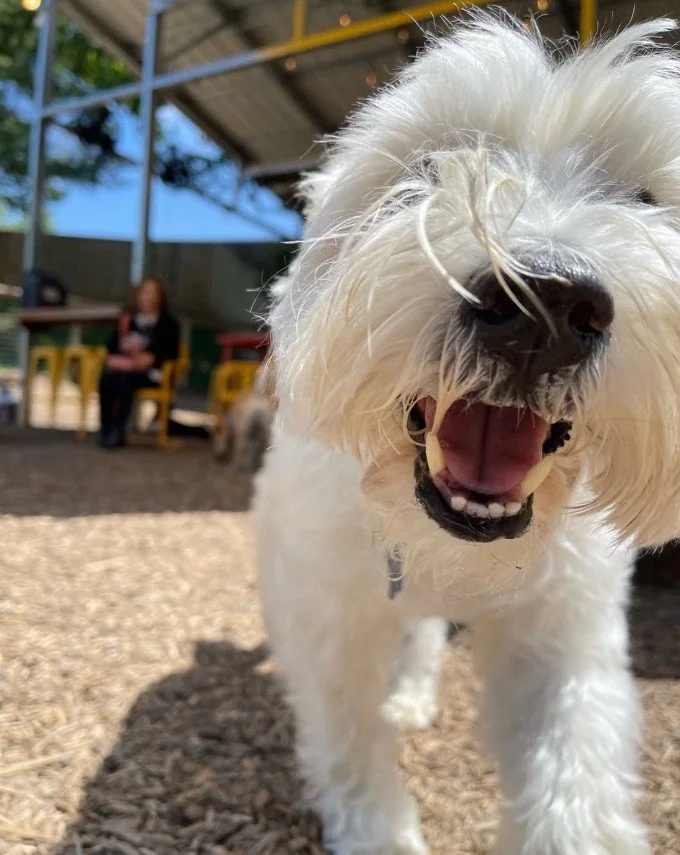
Wagbar's physical format, a shipping container bar structure with flexible site requirements, is built to enter markets efficiently without the cost exposure of full commercial construction. In South Carolina's growth markets, where real estate is competitive and lease rates in popular neighborhoods are climbing, the ability to work with non-traditional spaces is an operational advantage.
The training program launches from Weaverville, just north of Asheville, a two-hour drive from both Greenville and Spartanburg. For an SC franchisee in the Upstate, the training headquarters is genuinely accessible. The one-week intensive in Asheville covers dog behavior management, bar operations, staff training, and marketing before moving to on-site grand opening support at your actual location.
The dog business complete guide maps out how the model compares to other dog business structures. Membership revenue creates recurring income that most pet businesses, grooming, boarding, daycare, don't have. It also builds community in a way that drives retention and word-of-mouth that compounds over time.
The complete guide to starting an off-leash dog bar business is the most detailed public resource on what opening a Wagbar actually involves, from site selection through opening week.
Frequently Asked Questions
Which SC cities have the strongest case for a dog franchise?
Columbia and Spartanburg are the two most compelling pure white-space markets: large populations, zero competition, strong demographic profiles, and active growth trajectories. Rock Hill and Fort Mill have Charlotte-adjacent demographics with no competition. Hilton Head-Bluffton has an affluent consumer base that fits Wagbar's premium positioning. Greenville and Charleston have established players, making location selection within those metros more strategic.
Does Wagbar have existing locations in South Carolina?
Wagbar's Myrtle Beach location has been franchised and is in development with franchisees Matt and Taylor. Myrtle Beach is not available as a new franchise territory. Other SC markets, Columbia, Spartanburg, Rock Hill, Hilton Head, and parts of the Greenville and Charleston metros, remain open. Territory inquiries go through the franchising page.
How does SC's population growth affect dog franchise demand?
Directly. The people relocating to SC, particularly to Myrtle Beach, Spartanburg, Greenville, and the Charlotte suburbs, are disproportionately in the 30-50 age range with dogs. South Carolina added 91,000 new residents in 2024 and that growth is ongoing. Every new household with a dog is a potential member. In markets like Fort Mill and Bluffton, the rate of new dog-owning household formation is faster than in most established markets elsewhere in the country.
What investment is required to open a Wagbar in SC?
The total initial investment ranges from $470,300 to $1,145,900, with a $50,000 franchise fee. Multi-unit developers opening three or more locations receive a 50% franchise fee discount. Royalties are 6% with a 1% marketing fund contribution. The revenue streams guide explains how memberships, day passes, and beverage sales combine to create the business's income structure.
Is SC a franchise registration state?
No. South Carolina does not require franchise registration. Only the federal FDD disclosure requirement applies. Franchisors must provide the Franchise Disclosure Document at least 14 days before signing. This is simpler and faster than registration states and means there's no state-level filing process standing between a signed agreement and your opening timeline.
What's the case for Spartanburg specifically?
Spartanburg is the rare combination: a metro area growing at the 10th-fastest rate in the country, part of a 1.4 million-person tri-county area, with an emerging downtown that's attracting restaurants, breweries, and young professionals, and not a single dog bar. The BMW manufacturing presence brings international and professional workforce households who typically spend well on lifestyle businesses. First-mover position in a market this size, growing this fast, creates durable competitive advantage.
South Carolina's Dog Franchise Opportunity, Summarized
South Carolina's dog franchise map comes down to this: two established markets in Greenville and Charleston, one Wagbar territory already taken in Myrtle Beach, and four major unserved markets, Columbia, Spartanburg, Rock Hill, and Hilton Head, where 1.51 million SC dogs have nowhere purpose-built to run off-leash while their owners grab a beer.
The state's population growth is accelerating demand in real time. Spartanburg and Myrtle Beach are growing faster than nearly any other metros in the country. Columbia has the size and demographic mix of a market that should already have this concept. And Hilton Head has the affluent, dog-obsessed consumer base that makes premium pricing sustainable from day one.
The dog franchise opportunities overview covers the broader picture. When you're ready to talk SC territory, the franchising page is where it starts.
Ready to bring Wagbar to South Carolina? Contact the Wagbar franchising team to check territory availability, receive the FDD, and take the first step in one of the most open dog franchise markets in the Southeast.