

Solo Visits to a Dog Friendly Bar: Why Going Alone (With Your Dog) Is the New Self-Care
Top TLDR: Solo visits to a dog friendly bar are the kind of self-care that actually works. Your dog reframes going to a bar alone from awkward to intentional, and HABRI research shows 87% of pet owners report improved mental health from pet ownership. The setting offers unstructured time with zero social obligation in a space that's genuinely restorative. Grab your dog's leash and make the solo dog bar visit part of your weekly routine.
Why Solo Bar Visits Feel Awkward Without a Dog
There's a stigma around going to a bar by yourself, and it's worth naming before we move past it.
Sitting alone at a regular bar carries a set of assumptions that most people would rather avoid. Other patrons wonder if you're waiting for someone. The bartender checks on you a little too often. You feel the need to look busy, so you stare at your phone. The whole thing has a low-level tension that makes it hard to actually relax.
This isn't imagined. A 2023 study published in the Journal of Consumer Research found that people consistently underestimate how much they'll enjoy solo activities in public, particularly ones traditionally considered social. The researchers called it the "spotlight effect," where people believe others are paying far more attention to them than they actually are.
At a regular bar, that spotlight effect is amplified because there's nothing else to look at. You're a person on a stool. At a dog friendly bar, the spotlight doesn't exist. Nobody is looking at you because everyone is looking at dogs. You're not a person sitting alone. You're a person whose dog is currently trying to befriend a labradoodle. Completely different energy.
The dog gives the solo visit a reason. And having a reason, even a simple one, changes everything about how it feels to be somewhere by yourself.
How a Dog Anchors a Solo Outing
Your dog does something no book, phone, or headphone playlist can do: they give you a role.
When you're at a dog friendly bar like Wagbar with your dog, you're not just occupying space. You're a dog owner keeping an eye on your pet. You have a job. That job happens to involve sitting in a nice spot with a drink while your dog plays off-leash, but it's still a purpose. And purpose eliminates self-consciousness.
Dogs also anchor you to the present moment. You can't scroll through your phone and spiral into work emails when your dog is wrestling with a pit bull mix across the park. You're watching. You're engaged. You're out of your head and into the actual world happening in front of you.

Mars Petcare's research on the human-animal bond found that dog owners who spend active, focused time with their pets report lower levels of loneliness and higher levels of life satisfaction. The key word is "active." Sitting on the couch together counts for something, but getting out of the house, going somewhere together, and sharing an experience hits different.
A solo trip to the dog bar is active time with your dog that also happens to get you into a social environment. Whether you talk to anyone else or not, you've left the house, changed your scenery, and spent quality time with your dog in a space designed for exactly that.
The Best Days and Times to Go Alone
Timing matters for solo visits, and the right window depends on what you're looking for.
Weekday mornings and early afternoons are the quietest. If you want space, a bench to yourself, and a calm park for your dog, this is it. The crowd is sparse. The vibe is mellow. It's ideal for people who want the solo experience without much social interaction at all.
Weekday evenings between 4 and 6 PM bring the after-work crowd. It's busier, but in a comfortable way. The regulars show up. People are winding down from the day. If you're open to casual conversation but don't want to be the center of it, this window is the sweet spot.
Weekend mornings are a different scene. Families, couples, and friend groups are more common on Saturday and Sunday. Solo visitors blend right in, but the energy is higher. If your dog loves a packed park with lots of playmates, weekend mornings are great. If your dog (or you) prefers something calmer, stick to weekdays.
The more you visit, the more you'll learn the rhythm of your local Wagbar location. Regulars know exactly when their favorite bench opens up and when the park is just busy enough to be interesting without being overwhelming.
Bringing a Book, a Laptop, or Just Your Thoughts
One of the underrated perks of a dog friendly bar is that it's a perfectly acceptable place to just... sit.
Bring a book. Bring a journal. Bring a laptop if the location has Wi-Fi and you want to get some work done while your dog burns energy. Or bring nothing at all and just watch the dogs. All of these are normal. Nobody is going to side-eye you for reading a novel at a picnic table while your dog naps at your feet.
This is the kind of space that's hard to find as an adult. Coffee shops work, but they get crowded and there's always an unspoken pressure to keep ordering. Libraries are quiet but not social. Co-working spaces cost money and feel like an office. A dog friendly bar occupies a sweet spot between all of these: it's social enough to feel alive, casual enough to feel comfortable, and open enough that you can stay as long as you want without anyone rushing you.
For remote workers especially, a solo dog bar visit breaks up the isolation of working from home. You're around people. Your dog is getting exercise and socialization. And you're not staring at the same four walls for the eighth consecutive hour.
The Quiet Membership Power Move
Here's a practical tip that solo visitors figure out fast: a membership makes the solo routine frictionless.
When you're a member, showing up is easy. No thinking about whether the day pass is worth it for a short visit. No fumbling with payment at the gate. You just walk in. That matters more than it sounds like it should because any friction between you and a good habit is a reason your brain will use to skip it.
Members also visit more often. And more frequent visits mean your dog knows the space, the staff knows your name, and the regulars start to feel familiar. You're not starting from zero every time. You're returning to a place where you belong.
That sense of belonging is the whole point. Solo self-care isn't just about doing something alone. It's about having a place that feels like yours, where you don't need to explain your presence or justify your time. A membership at a dog friendly bar quietly creates that.

When You Want to Be Social (and When You Don't)
The best thing about a solo visit to a dog friendly bar is that socialization is optional.
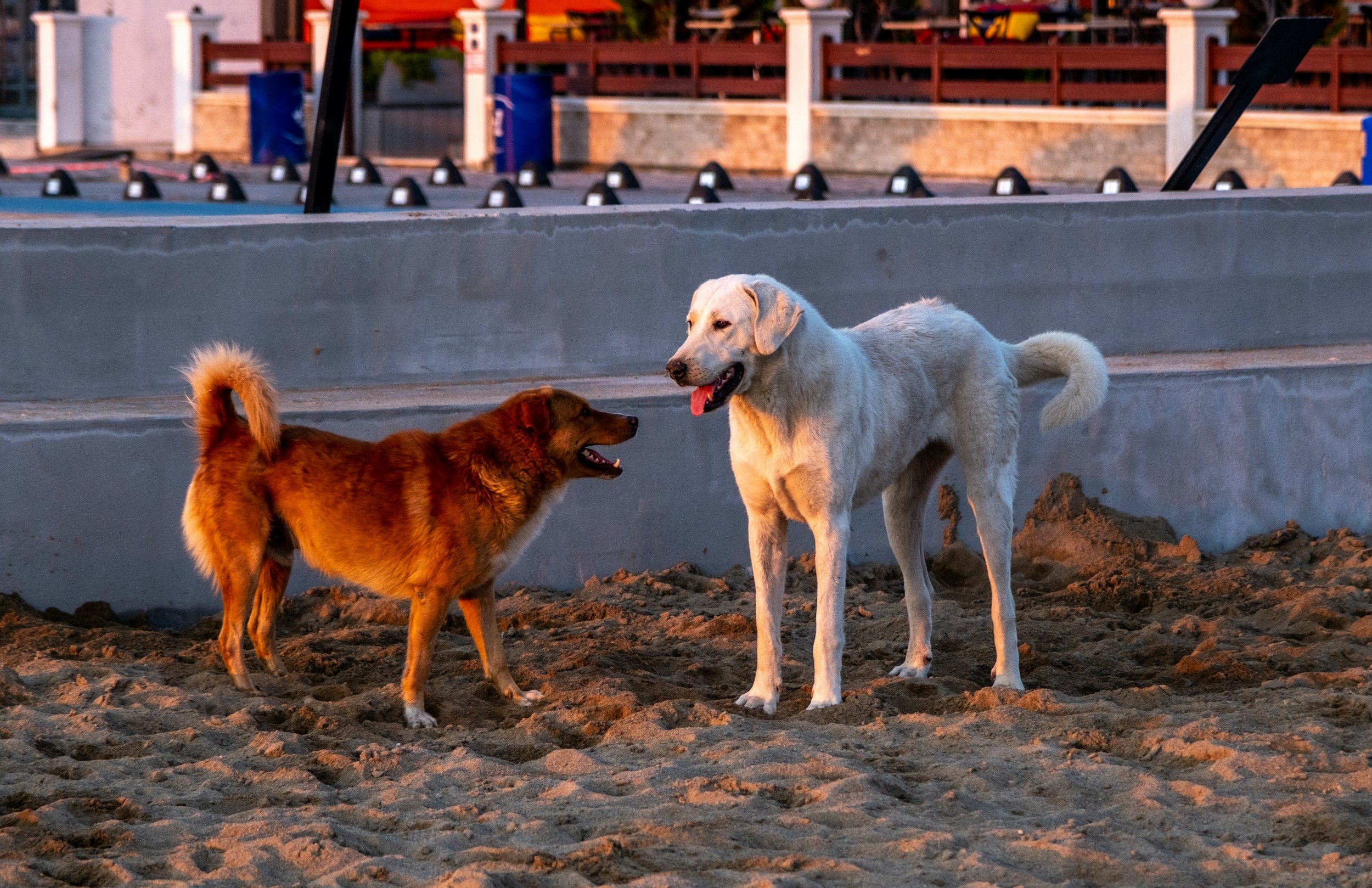
Some days, you want to talk to people. Your dog introduces you to a stranger's dog, and that turns into a 20-minute conversation about rescue organizations and your favorite local hiking spots. You leave feeling connected and lighter. Great.
Other days, you want to sit with your thoughts, drink a coffee, and watch the dogs. Nobody bothers you. Nobody thinks it's strange. The social scene at a dog friendly bar accommodates both modes equally.
This flexibility is something most social venues don't offer. At a party, you're expected to mingle. At a networking event, you're expected to talk. At a bar, sitting silently in the corner can read as unfriendly. At a dog bar, it reads as "watching dogs." The social contract is different, and that difference is what makes solo visits sustainable.
Over time, many solo visitors find that the social part happens naturally. You see the same people. You nod. Then you chat. Then one day you realize you've made friends without ever trying to. That organic progression is worth more than a hundred forced networking interactions.
Mental Health Benefits of the Solo Routine
The mental health case for solo dog bar visits isn't abstract. It's backed by research and reinforced by common sense.
HABRI's 2021 survey found that 87% of pet owners reported that pet ownership improved some aspect of their mental health. Spending focused, intentional time with your pet outside your home amplifies those benefits. You're combining physical activity (even just walking to and from the bar), outdoor time, animal interaction, and a change of scenery. Each of those is independently linked to improved mood and lower anxiety.
There's also the routine component. Having a regular place you go, at regular times, creates structure. For people dealing with depression, anxiety, or the general formlessness of remote work life, structure is a quiet form of therapy. Your dog needs to go out. You go to the bar. It's a small anchor in the week that gives the day shape.
And the cumulative effect of regular solo visits is social capital you didn't have to work for. After a few weeks of showing up, you know people. People know you. You have a place in a community. None of that required a plan or an effort. It happened because you kept showing up with your dog.
Summary
Solo visits to a dog friendly bar are the kind of self-care that actually works: low-effort, genuinely restorative, and available whenever you need it. Your dog gives you a reason to be there, the open-air setting keeps things comfortable, and the social pressure is exactly zero unless you want it to be.
The next time you're sitting at home debating whether to go out or stay in, grab the leash. Your dog already knows the answer.
Frequently Asked Questions
Is it weird to go to a dog bar by yourself?
Not even a little. Solo visitors are a regular part of the crowd at Wagbar. You're there with your dog, which means you're never truly alone. And the atmosphere is relaxed enough that nobody notices or cares whether you came with a group or by yourself.
Do I need a dog to visit alone?
No. Wagbar welcomes anyone 18 and older, with or without a dog. Some solo visitors come just for the atmosphere and the social scene. But having a dog does make the solo experience feel more natural and gives you a built-in activity.
How long do most solo visits last?
Anywhere from 30 minutes to a few hours. There's no minimum or maximum. Some people swing by for a quick drink while their dog runs around. Others settle in with a book for the afternoon. The membership makes short, frequent visits especially easy.
What if I don't want to talk to anyone?
That's completely fine. The beauty of a dog friendly bar is that you can be social or not, and both are normal. Bring headphones, a book, or just your own thoughts. Nobody will push conversation on you.
Can solo visits actually help with anxiety or depression?
Research from HABRI and other organizations supports the idea that structured time with pets in social environments improves mental health outcomes. A solo dog bar visit combines outdoor time, animal interaction, and optional socializing, all of which are independently linked to reduced anxiety and improved mood. It's not a replacement for professional support, but it's a meaningful addition to a self-care routine.
Bottom TLDR: Going to a bar alone feels different at a dog friendly bar because the dog gives you a role, a reason, and a built-in activity. Solo visits combine outdoor time, animal interaction, and optional socializing into a low-effort routine that improves mood and builds community over time. If you want self-care that gets you off the couch and into the world, start with a solo visit to your nearest dog friendly bar.