
Semi-Absentee Dog Franchise Ownership: Can You Keep Your Day Job and Run a Dog Bar?

Top TLDR: Semi-absentee dog franchise ownership is viable if you hire a strong general manager and stay accountable to weekly financials and performance oversight. Wagbar's day-use model, set operating hours, and franchisor training program reduce the complexity of delegating daily operations. The launch phase demands more hands-on involvement; expect to step back gradually once your location stabilizes. Before pursuing this path, honestly assess your ability to hire and manage through others.
Many people researching franchise opportunities have the same question: do I have to quit my job to make this work? Semi-absentee dog franchise ownership is a real model, and for the right candidate, it's genuinely viable. But what it requires in practice depends on the business type, the support system behind it, and how willing you are to hire well and step back. This page breaks down what semi-absentee ownership looks like inside a dog bar franchise, what makes it more or less realistic, and what questions you need honest answers to before you sign anything.
What Semi-Absentee Franchise Ownership Actually Means
Semi-absentee ownership doesn't mean hands-off ownership. It means the owner is not on-site as the day-to-day operator. Instead, a hired general manager handles daily operations while the franchisee handles strategic oversight: finances, hiring key staff, performance review, community relationships, and communication with the franchisor.
In a well-run semi-absentee setup, the owner might spend 10 to 20 hours per week on the business rather than 40 to 60. That could mean reviewing weekly numbers from home, jumping on a call with your GM, or handling a vendor issue remotely. It doesn't mean the business runs itself.

The model works in franchising specifically because the franchisor provides the playbook. Operational systems, training programs, vendor relationships, and brand standards all come pre-built. A franchisee running semi-absentee isn't starting from scratch on any of those. They're plugging a competent team into an established system.
Not every franchise category supports semi-absentee well. Service businesses with unpredictable hours and high customer-contact needs are harder to run from a distance. Experience-based venues with set operating hours and stable staffing patterns are generally better candidates.
How a Dog Bar Runs Day-to-Day
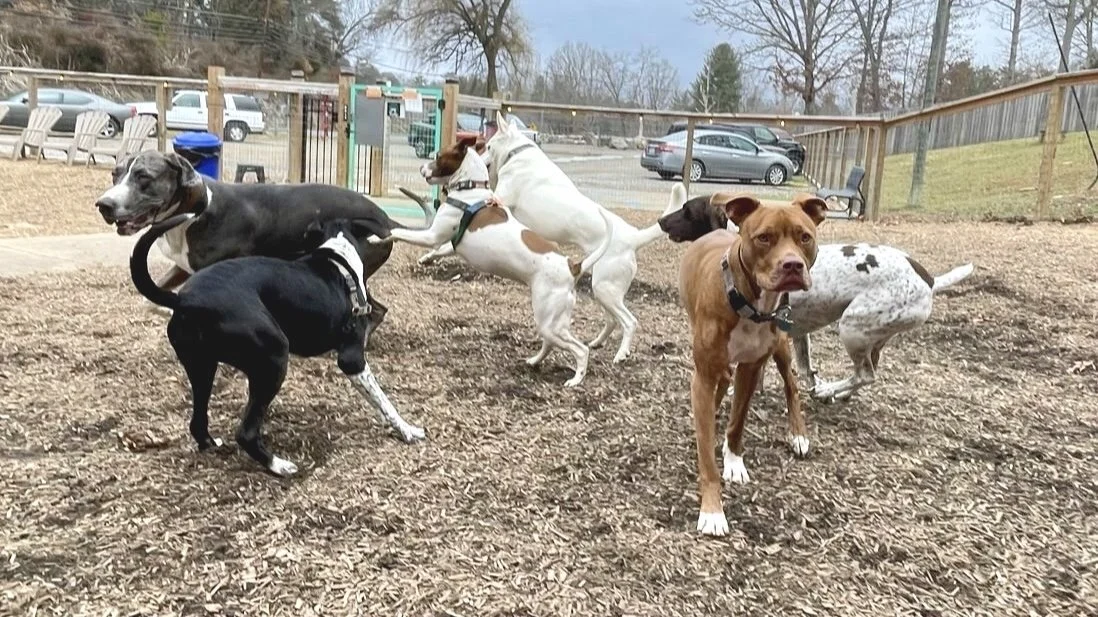
Understanding the operational rhythm of a dog bar franchise helps clarify whether semi-absentee is realistic. Wagbar is a day-use social venue where dogs play off-leash while their owners relax at the bar. It's not a boarding facility. There's no overnight staffing. No middle-of-the-night emergencies when a guest dog gets restless.
A typical operating day involves opening the venue, checking that the off-leash area is clean and secure, running bar service, verifying vaccination records for new members, handling events if there's one scheduled, and closing. The hours are defined. The service model is consistent. Staff roles are specific and trainable.
That predictable structure matters for semi-absentee planning. A business with erratic hours, complex service delivery, or heavy owner involvement in every customer transaction doesn't lend itself to management delegation. A venue with set hours, a defined concept, and repeatable operations does.
Wagbar's pet bar franchise system also includes a near-turnkey build-out option using converted shipping containers as bar and bathroom structures. That simplifies the opening process significantly, which is particularly relevant for owners who aren't on-site every day during the buildout phase.
The Role of a General Manager
The GM is the linchpin of any semi-absentee franchise operation. If you can hire a strong general manager and set them up to succeed, semi-absentee becomes much more realistic. If you can't, or if you try to cut costs by skipping that hire, you'll end up on-site more than you planned.
A general manager at a dog bar handles daily opening and closing procedures, staff scheduling and supervision, customer issues, vendor coordination, event execution, and basic financial tracking. They are the consistent on-site authority.
What a GM typically doesn't handle: major financial decisions, lease negotiations, key hiring decisions at the management level, franchisor communications, and capital expenditures. Those stay with the owner.
The key question when evaluating semi-absentee viability: can the business support a GM's salary and still generate enough margin for the owner? That's a financial modeling question specific to your location, projected revenue, and cost structure. Wagbar's franchising page outlines the investment framework, and those conversations happen in depth during the discovery process.
What Wagbar's Training Program Covers
One of the structural advantages of franchising over independent business ownership is training. Wagbar's program is designed to get franchisees operational, not just conceptually familiar with the model.
The process includes a proprietary pre-opening app called "Opener" that guides franchisees through each step before the doors open. This is followed by a one-week intensive training at the Asheville headquarters covering dog behavior management, bar operations, staff training protocols, and marketing. A Wagbar team is present on-site during the grand opening.
Beyond the launch, ongoing support continues with quarterly business reviews, marketing assistance, and technology infrastructure. Franchisees also have access to a network of other franchisee operators.
This matters for semi-absentee ownership because a trained GM can be plugged directly into these systems. The owner doesn't need to invent operational protocols from scratch and then hand them to a manager. The protocols exist. The owner's job is to hire someone who can execute them and hold that person accountable.
That said, during the launch phase, most franchise systems including Wagbar expect the owner to be significantly more involved. Opening a new business requires decisions that can't be fully delegated. The semi-absentee model becomes more realistic after the location is stabilized, typically several months post-opening.
Real Franchisee Profiles: What People Bring to the Table
Looking at the backgrounds of existing Wagbar franchisees gives some context for who's pursuing this opportunity and what skills they've found valuable.
AJ Sanborn, the Richmond, Virginia franchisee, spent 20 years in financial services before joining the Wagbar network. Financial literacy translates directly into the oversight role an owner plays in a semi-absentee model: reading P&Ls, understanding cash flow timing, evaluating staff productivity against revenue, and having informed conversations with a GM about performance.
Dianna, who brought Wagbar to Phoenix, Arizona, came from IT sales with restaurant industry experience. That background gives her a working understanding of hospitality operations, which shortens the learning curve considerably when evaluating whether a GM is running the floor well.
Jennifer, the Los Angeles franchisee, came out of a long corporate career. Corporate experience often means managing through other people, setting goals, reviewing performance, and communicating priorities without being in the room for every decision. That's exactly the skill set semi-absentee ownership demands.
Liz and Shelby, the Knoxville franchisees, bring finance and sales backgrounds alongside deep roots in animal rescue and community leadership. The community-building side of a dog bar isn't separable from the business side, and owners who understand that build member bases that sustain the venue.
The pattern across these franchisees: professional backgrounds in finance, operations, sales, or management. Those skills don't disappear because someone opens a dog bar. They apply directly to running one well.
Semi-Absentee vs. Owner-Operator: Which Works for a Dog Bar?
Both models can work. The right answer depends on your financial goals, your current job, and your personal interest in being on-site.
An owner-operator is on the floor most days. They know the regulars, they know the dogs, they handle problems in real time, and they build direct relationships with members. Many owners find that genuinely enjoyable when the business they've opened is a dog bar. It's not a call center. It's not a warehouse. It's a space where dogs play and people relax. That's worth showing up for.
A semi-absentee owner runs the business through a team. They're invested in performance and relationships but not present for daily operations. They prioritize hiring, training their GM, and systems accountability. This structure makes sense if you have an existing career generating income you're not ready to leave, if you're building a portfolio of franchise units, or if you genuinely have strong management experience and can hire someone better suited to daily floor operations than you are.
The dog business models guide on Wagbar's site goes deeper on how different ownership structures play out in the pet industry specifically. And if you're weighing the financial side, the profit margins and revenue streams content gives context for what the business generates across different revenue lines.
Multi-unit franchising changes the calculus further. Wagbar offers a 50% discount on the franchise fee when a franchisee commits to three or more units. At that scale, semi-absentee is less a personal preference and more an operational necessity. You can't be in three locations simultaneously.
Frequently Asked Questions
Can I run a Wagbar franchise while keeping my full-time job?
It depends on the phase of the business. During buildout and opening, expect to be significantly more involved than you would be in a mature operation. After launch and stabilization, a competent general manager can handle daily operations while you provide strategic oversight. How much time that oversight actually takes varies by location and team.
What's the minimum investment required to open a Wagbar franchise?
The initial franchise fee is $50,000. Total estimated initial investment ranges from $470,300 to $1,145,900 depending on location, build-out scope, and market conditions. Royalty is 6% of adjusted gross sales. There is also a 1% marketing fund contribution. These figures are for informational purposes only. Complete financial details are available in the Franchise Disclosure Document.
This information is not intended as an offer to sell, or the solicitation of an offer to buy, a franchise. An offer is made only by Franchise Disclosure Document (FDD).
How much does a general manager typically cost?
GM compensation varies significantly by market. Urban markets command higher salaries. This is a real cost to model into your projections, and it's a conversation worth having in depth during Wagbar's discovery process with candidates who are seriously evaluating the opportunity.
Does Wagbar require the franchisee to be on-site every day?
Wagbar's franchise agreement requirements should be reviewed in detail in the FDD. Operationally, the system is designed with training and support structures that allow a GM to run daily operations. What on-site involvement looks like in practice is something to discuss directly with the Wagbar franchising team.
What backgrounds do current Wagbar franchisees come from?
Franchisees include professionals from financial services, IT sales, corporate management, and hospitality backgrounds. Business management experience is consistently useful. Love of dogs is consistent across everyone in the network.
Is a dog bar harder to manage remotely than other franchise types?
The off-leash dog park and bar model has specific considerations: you need staff who are comfortable around dogs, understand basic dog behavior, and can manage the off-leash environment safely. That requires more careful hiring than a purely retail or service concept. It's not harder, but the hiring profile is specific.
What support does Wagbar provide after opening?
Ongoing support includes quarterly business reviews, marketing assistance, technology infrastructure, and access to the broader franchisee network. The franchisor is available for questions and support beyond the initial launch period.
Bottom TLDR: Semi-absentee dog franchise ownership with Wagbar is most realistic after your location stabilizes and a trained GM is in place. The set hours of a day-use venue, combined with Wagbar's operational systems and ongoing franchisor support, create a manageable structure for owners who are not on-site every day. Start your due diligence by requesting the Franchise Disclosure Document and having detailed conversations with current franchisees.