

Puppy's First Off-Leash Dog Bar: When to Start and How to Introduce
Top TLDR: Your puppy's first off-leash dog bar visit happens at six months old or later, with current Rabies, Bordetella, and Distemper vaccinations and the spay or neuter complete. The work that makes that first visit go well happens before six months, during the socialization window from 3 to 16 weeks. Plan a quiet weekday morning, keep the visit short, and let your puppy choose their level of engagement.
Why Wagbar Has a Six-Month Minimum Age
Every Wagbar location has the same rule: dogs must be at least six months old, spayed or neutered, and current on Rabies, Bordetella, and Distemper vaccinations to enter the off-leash area. The age rule isn't arbitrary. Six months gives a puppy's immune system time to develop full vaccine protection, gives their body a chance to handle running play with adult dogs, and gives their brain a chance to mature into the kind of social regulation that group settings require.
The full set of Wagbar entry requirements is non-negotiable, and it's a feature, not a barrier. The minimum keeps the off-leash environment safer for every puppy that does enter.
This page covers two things together. The work to do before six months that makes that first visit successful, and the actual first visit when the day comes.
The Critical Socialization Window: 3 to 16 Weeks
The most important thing for an eventual off-leash dog bar dog happens long before they ever set paw inside one. Between roughly three and sixteen weeks of age, puppies move through the primary socialization window. The experiences they have during this period shape how they read, react to, and handle the world for the rest of their lives.
Puppies who get positive exposures during this window tend to grow into confident, social adult dogs. Puppies who don't often grow into anxious, reactive, or fearful dogs who struggle with new environments. The window closes around sixteen weeks, and you can't get it back later.
What to do during the window: introduce your puppy carefully to varied surfaces, sounds, smells, and people. Hold puppy parties at home with calm adult dogs you trust. Carry your puppy through environments before they're cleared for ground exposure to vaccinated areas. Sign up for a puppy class run by a positive-reinforcement trainer that follows modern protocols.
The full structure of the puppy socialization timeline from 3 to 16 weeks walks through the specific milestones and what to focus on at each stage. Doing this work right is the single biggest predictor of whether your dog will eventually do well at an off-leash dog bar or any group setting.
What to Do Between Four and Six Months
The socialization window closes around sixteen weeks, but the work doesn't stop. Between four and six months, your puppy is consolidating the lessons from earlier and adding new layers. This is when you keep building social exposure and start adding the skills that make off-leash settings work.
Continue careful dog interactions. Once your puppy is fully vaccinated, expand their dog network. Calm adult dogs in friend's yards. Quiet group walks. Off-hours visits to fenced spaces with one or two known dogs. Avoid large unstructured dog parks, which can produce a single bad experience that sets your puppy back.

Build foundation skills. Reliable name recognition. A solid sit and down. The beginnings of recall. Loose-leash walking. None of these need to be perfect at six months, but they should be in progress.
Work on resilience. Expose your puppy to small startles in controlled ways and reward calm recovery. A puppy who learns at five months that surprises pass and life goes on is a puppy who handles a busy off-leash space at six months.
Get the spay or neuter scheduled if you haven't. Wagbar requires this regardless of age. Most vets recommend timing based on breed, size, and your specific dog. Build the schedule so your puppy is recovered well before the planned first visit.
The off-leash readiness training checklist covers the specific drills that turn a four-month-old who's been socialized into a six-month-old who's actually ready for a busy off-leash setting.
Signs Your Puppy Is Ready After Six Months
Hitting six months is the legal minimum for entry, not a guarantee your individual puppy is socially ready. Some six-month-old puppies do beautifully at an off-leash bar. Others need another month or two of prep before the visit goes well.
Signs your six-month-old is ready:
They come when called in low-distraction settings most of the time.
They've had positive interactions with at least three or four dogs outside the household.
They can be near other dogs at moderate distance without overarousal or shutdown.
They recover from small startles within a minute or so.
They show no heavy resource guarding around food, toys, or you.
Their body language reads relaxed in new environments after a brief settling-in period.
Signs they need more time:
Recall doesn't work outside the house.
They've had limited exposure to other dogs.
They lunge, freeze, or hide from unfamiliar dogs.
They escalate quickly and can't come down.
They have any history of resource guarding with growling or snapping.
If your puppy fits the first list, you're ready to plan a visit. If they fit some items in the second list, hold off and put in another few weeks of work. The behavioral readiness self-assessment helps you check honestly.
Pre-Visit Vaccination Requirements for Puppies
The medical baseline for entry is firm. Your puppy needs:
Rabies. Required by law in most states for any dog older than four months. Your vet provides a certificate.
Bordetella. Protects against the bacterial cause of kennel cough. Comes as an injection, nasal spray, or oral dose. Allow about a week after administration for full immunity to develop before any group setting.
Distemper. Part of the standard puppy vaccination series, with the final booster usually completed by 16 weeks of age. Make sure your records show the most recent booster.
Bring vaccination records on the first visit. Either physical printouts or photos on your phone. The Wagbar health and safety standards get checked every time a non-member dog enters. After signing up for a membership, you don't need to show records each visit, just keep them current.
A few medical notes specific to puppies. Puppies who finish their vaccine series late may need a few extra weeks before they're fully protected. If your puppy was just vaccinated within the past week or two, ask your vet whether they're at full immunity yet. The off-leash bar is a shared environment with many dogs, and a puppy without complete protection is at higher risk for kennel cough and other transmissible illnesses.
Picking the Right First-Visit Window
When you first visit matters as much as where. A six-month-old puppy who walks into a packed Saturday afternoon yard with thirty dogs running at full energy can have a fantastic experience, but they can also have an overwhelming one that sets back their confidence.
Aim for a quieter window. Most Wagbar locations are calmest mid-week mornings and early afternoons. Weekends, especially weekend afternoons, are the busiest. Holidays bring extra traffic. If you have a flexible schedule, plan your first visit for a Tuesday or Wednesday around 10 or 11 in the morning.
Call the location ahead of time if you want a sense of typical traffic. Staff usually know the patterns and can tell you when puppies often come in.
Weather matters too. A first visit in extreme heat or cold layers physical stress on top of the social adjustment. Aim for moderate weather if possible. Most Wagbar locations have shaded areas and water stations, but a first-time visitor still benefits from comfortable conditions.
The First Visit: Setup and Approach
The first visit should be designed for success, not for a full dog-bar experience.
Tire your puppy before you go, but not to exhaustion. A long sniffy walk thirty to sixty minutes before the visit takes the edge off without leaving them depleted. A tired puppy regulates better than a bouncy one.
Bring a leash for the entry zone. Wagbar uses a double-gate entry system. You'll be on leash through the first gate, and you can unclip once fully inside the off-leash area.
Walk the perimeter before unclipping. Let your puppy take in the smells, see the dogs already there, and process the environment from a distance.
Pick a quiet corner first. Choose a spot away from any active play group. Sit down. Let your puppy come to you when they want to, or move out from your space when they're curious.
Don't push interaction. A puppy who watches the other dogs from your feet for thirty minutes and never engages has had a successful first visit. Confidence builds in layers, and the first layer is "this place is safe."

Keep the visit short. Twenty to thirty minutes is plenty. If your puppy is settling and curious, you can extend by another ten or fifteen minutes. If they're shutting down or staying overstimulated, leave.
Stay engaged with your puppy. Eyes on them, frequent calm check-ins, no scrolling on your phone. Six-month-old puppies need active supervision in any new environment. The dog body language decoder helps you read what your puppy is telling you in real time.
Common Puppy Behaviors at the First Visit
What you'll likely see in the first ten minutes falls into three patterns.
The shadow. Your puppy sticks to your leg, watches everything, and isn't sure what to do. Common and totally normal. Sit down, let them watch from your space, and don't force engagement. Many shadow puppies start moving around the yard within fifteen to thirty minutes once they've decided the place is safe.
The cautious explorer. Your puppy wanders out a few feet, sniffs the ground, comes back to check in with you, then ventures a little farther. Healthy. They're building a mental map. Let them set the pace.
The bouncer. Your puppy bounds out, runs at the first dog they see, and tries to engage immediately. Less ideal in some ways. Watch carefully. A bounce that the receiving dog welcomes is fine. A bounce that overwhelms a calmer dog needs a redirect from you.
You may also see specific puppy behaviors that aren't problems but look odd to a first-time visitor. Sudden leaps and zoomies. Random rolling. Sniffing one spot for a full minute. Lying down in the middle of the yard. All normal puppy behaviors.
Watch for signs of stress that need a response. Tucked tail, panting that doesn't match the temperature, refusing to engage, hiding behind benches, or trying to hide near the gate. These mean the visit is too much for today. Pack up calmly and head out. The warning signs that precede dog conflicts cover the early-stress markers worth knowing in any group setting.
After the First Visit: What to Watch For
The visit doesn't end at the gate. The first hour and the first day after a first visit shape how your puppy frames the experience in their memory.
Hydrate. Puppies often run themselves into mild dehydration without showing it. Offer water in the car or right when you get home.
Expect a long nap. Mental and physical novelty hit puppies hard. Three to six hours of solid sleep after the first visit is normal and healthy.
Watch for stress signs over 24 to 48 hours. Decreased appetite, restlessness, clinginess, or unusual nighttime waking can all show up after a big new experience. Most resolve within a day or two. Persistent changes are worth a vet check.
Watch for kennel cough symptoms over the next week. Even with Bordetella, no vaccine is fully protective. Dry hacking cough, especially after exercise, is the most common sign. Mention it to your vet if it appears.
Note what worked. Did your puppy do better in the first ten minutes or after they'd settled? Did they prefer watching to engaging? Was the time of day right? These notes shape your second visit. A read through the beginner's primer on dog play at Wagbar gives you reference patterns to compare your puppy's experience against.
Building Up From One Visit to Regular Visits
If the first visit went well, the path to regular visits is gradual.
Visit two should mirror visit one. Same time of day, same length, same general approach. Repetition builds confidence. Don't add intensity yet.
Stretch slowly. Visit three or four can extend to forty-five minutes. Visit five or six can try a slightly busier window. Layer up incrementally.
Let interaction grow on your puppy's terms. A puppy who decides on their own to approach another dog is a different animal from one who's pushed into play. Let them choose.
Track your puppy's progress. Quick note on your phone after each visit covering time, length, your puppy's state on arrival and departure, and any notable moments. Puppy social development is uneven, and tracking helps you see the trend.
By the fifth or sixth visit, most puppies have shifted from "this is new" to "this is mine." They walk in confidently, greet a few familiar dogs, pick play partners, take breaks at your feet, and leave tired and satisfied. That rhythm is what you're building toward.
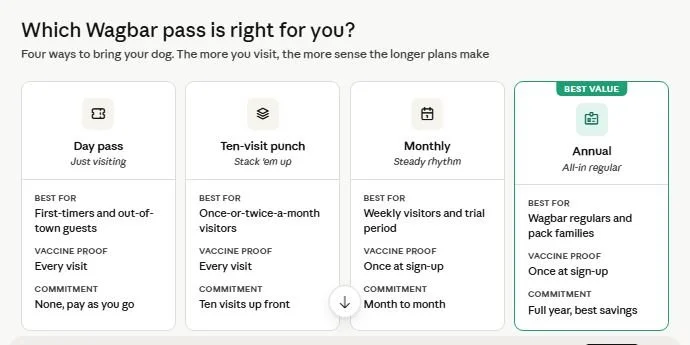
If you're planning to come regularly, signing up for a Wagbar membership skips the vaccination check at every visit and brings the per-visit cost down. The 10-visit punch pass is a popular option for owners testing how often they'll actually come.
Frequently Asked Questions
My puppy is five months old. Can we just bring them anyway?
No. The six-month minimum is firm at every Wagbar location. The age requirement protects your puppy as much as the rest of the dogs. Use the time before six months to keep building socialization with calm individual dogs in controlled settings.
What if my puppy has been to a different dog park already?
That's useful experience, but a busy off-leash bar is usually busier and more variable than most municipal dog parks. Treat the first Wagbar visit as a fresh introduction. Quiet hour, short visit, careful read on your puppy's state.
Does my puppy need to be fully spayed or neutered?
Yes. Wagbar requires the procedure to be complete before entry. Talk to your vet about timing. For some breeds, particularly large-breed puppies, the recommended age is later than six months. If your vet recommends waiting longer, hold off on the visit until you can meet the requirement.
What if my puppy gets nipped by another dog on the first visit?
Most puppy "incidents" at well-supervised off-leash spaces are corrections from older dogs telling a puppy they've crossed a social line. These are normal and often educational. Watch for genuine fear afterward, give your puppy space, and don't push them back into the same interaction. The complete dog park etiquette and safety reference covers how dogs typically self-correct in group settings.
Should I bring treats to use during the first visit?
Use them before you go in, not inside the play area. Wagbar policy bans treats inside the off-leash space because food creates resource-guarding triggers among dogs. Reward calm behavior in the parking lot, then stash the treats in your bag.
How soon can I bring my puppy back for a second visit?
Wait at least a few days. Puppies need time to consolidate new experiences. A second visit two days later is fine if the first went well. Trying to "make up" for a rough first visit by going back the next morning often backfires. Give the experience time to settle.
Can my puppy interact with other puppies at the bar?
Often yes, and puppy-to-puppy play is usually good for social development. Watch the energy match. Two puppies of similar size and energy playing well together is a great visit. A high-arousal puppy bouncing on a quieter puppy who's trying to escape is worth interrupting.
Bottom TLDR
A puppy's first off-leash dog bar visit is a milestone that depends on the work you do beforehand. The age minimum is six months, with full vaccinations and spay or neuter complete. The behavioral readiness comes from steady socialization between three and sixteen weeks and skill-building between four and six months. Pick a quiet weekday morning, keep the first visit short, and let your puppy set the pace.