

Pet Store Franchise vs. Dog Park Bar: A Complete Comparison for 2026 Investors

Top TLDR: Comparing a pet store franchise to a dog park bar like Wagbar reveals different business models, investment profiles, and risk exposures. Pet store franchises carry higher inventory costs and face ongoing pressure from e-commerce, while dog park bars generate recurring membership revenue and thrive on community. Investors evaluating pet franchise options in 2026 should put the experience-based model alongside traditional retail. Start by requesting Wagbar's FDD to compare the financials.
If you've been researching pet franchise opportunities, you've probably run into a familiar pattern. Most of the results point to pet retail stores, grooming studios, or dog training centers. These are established categories with name recognition and decades of operating history. They're also operating in an environment that looks considerably different than it did ten years ago.
The rise of Chewy, Amazon's pet vertical, and direct-to-consumer pet brands has fundamentally changed what brick-and-mortar pet retail needs to do to stay relevant. Meanwhile, a different kind of pet business has been growing, one that doesn't compete with e-commerce at all, because what it sells can't be shipped.
This guide breaks down what separates a pet store franchise from an off-leash dog park bar like Wagbar in the areas that actually matter to investors: initial investment, revenue model, market saturation, day-to-day operations, and long-term growth potential. Both models have genuine merits. The goal here is to give you enough clarity to evaluate them honestly side by side.
What "Pet Store Franchise" Actually Covers
The term "pet store franchise" gets used loosely. In practice, it covers several distinct business types with different investment profiles and operating requirements.
Traditional pet retail stores sell food, supplies, accessories, and sometimes live animals. These are the formats most people picture when they hear "pet store franchise." They carry significant inventory, require dedicated retail space, and operate in direct competition with online retailers on product pricing.

Pet grooming franchises focus on services rather than products. They're generally lower in total investment than full retail and less exposed to e-commerce competition, but they're labor-intensive and highly dependent on booking volume and stylist retention.
Dog training franchises operate on a service model as well, often with in-home or facility-based options. They require certified trainers, ongoing curriculum development, and can be limited in how many clients a single location can serve at one time.
Pet boarding and daycare franchises require significant real estate, staff, and liability infrastructure. They serve a genuine need but face rising competition from apps like Rover and Wag that connect pet owners directly with individual sitters at lower price points.
Off-leash dog park bars are a newer category. The model combines a fenced, supervised off-leash dog park with a bar serving craft beverages to human guests. Revenue comes from memberships, day passes, and food and beverage sales. Wagbar, founded in 2019 in Weaverville, North Carolina by Kendal Kulp, is among the pioneers of this specific format.
Understanding which category you're actually comparing matters before drawing any conclusions. A $75,000 mobile grooming franchise and a $500,000 pet retail franchise are both technically "pet store franchises" in common usage, but they're completely different businesses.
Investment Ranges: What You're Actually Getting Into
Investment comparisons between franchise categories only make sense when you're looking at the full picture: franchise fee, build-out, equipment, working capital, and the total range disclosed in the FDD.
Pet retail franchises like Pet Supplies Plus typically require total investments in the range of $400,000 to over $1 million, depending on location size, lease terms, and market. Inventory investment is ongoing (not just a startup cost), and retail square footage requirements tend to run high. A typical pet retail store needs 5,000 to 12,000 square feet to operate effectively.
Pet grooming franchises such as Wag N' Wash or similar concepts generally fall in the $200,000 to $700,000 range for total investment. These have lower inventory requirements but still need well-located retail space and consistent staffing.
Dog training concepts can range from under $100,000 for mobile or in-home models to several hundred thousand for facility-based programs.
Wagbar's total investment range is $470,300 to $1,145,900, with a $50,000 franchise fee, a 6% royalty on adjusted gross sales, and a 1% marketing fund contribution. Multi-unit operators receive a 50% discount on franchise fees starting at three units. (All figures are illustrative. Prospective franchisees must review the current Franchise Disclosure Document for complete and verified investment information.)
At first glance, those numbers put Wagbar in the same general tier as a mid-to-large pet retail franchise. But the comparison shifts when you look at what the investment is buying in terms of revenue model, margin structure, and competitive environment.
For a deeper look at how to evaluate franchise investment figures, the pet franchise investment guide walks through what to look for in each line item.
Revenue Models: Where the Money Actually Comes From
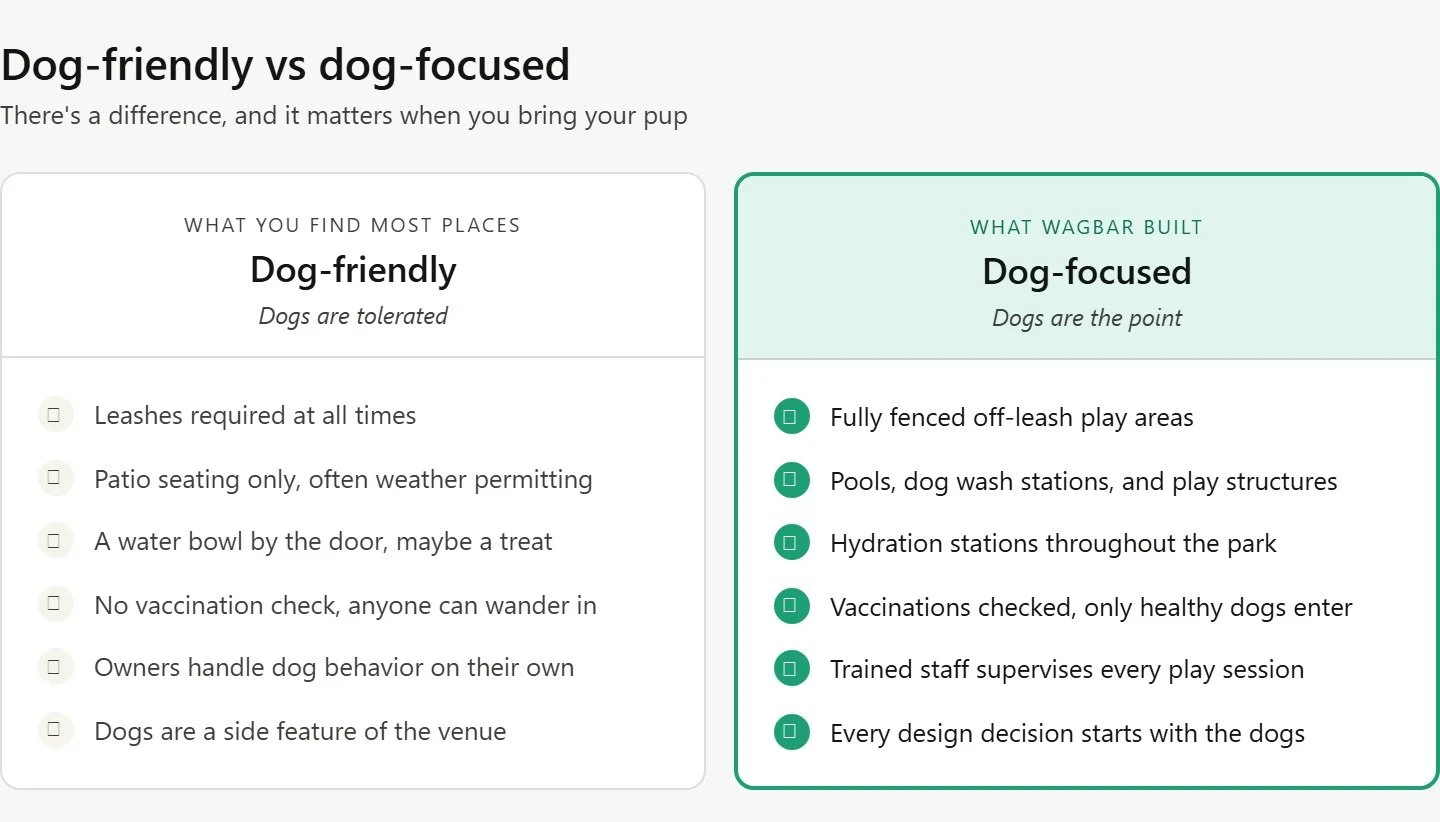
This is where pet store franchises and dog park bars diverge most clearly, and it's the comparison that matters most to anyone building a financial model for their investment.
Pet Retail Revenue
Pet retail franchises depend primarily on product sales. Revenue is largely transactional. A customer comes in, buys food or supplies, and leaves. Margins on pet products are under ongoing pressure for a straightforward reason: if a product can be purchased online at a lower price or with the convenience of home delivery, a segment of customers will do exactly that.
Premium and specialty products create some margin protection. Services like grooming, training, or vet partnerships help as well. But the fundamental challenge of physical retail, competing with platforms that have lower overhead and massive logistics networks, doesn't go away with a franchise agreement.
Seasonality also plays a role. Holiday periods drive spikes in accessory and gift purchases. Other times of year can see softer performance.
Dog Park Bar Revenue
Wagbar's revenue comes from three primary streams: day passes, memberships, and food and beverage sales. Each works differently, and together they create a more layered financial structure than a straight retail model.
Day passes are pay-as-you-go entry for dogs and their owners. Pricing varies by market, and this stream captures first-time visitors and occasional users.
Memberships are the backbone of the recurring revenue model. Members pay a monthly or annual fee for unlimited access. From an operations standpoint, a strong membership base means more predictable revenue that isn't entirely dependent on foot traffic on any given day.
Food and beverage captures the bar side of the concept. Human guests buy craft beers, cocktails, and non-alcoholic options while their dogs play. Unlike product retail, the margin profile on beverage service looks more like hospitality than retail, and the experience is something that cannot be replicated by an app or an online delivery service.
No e-commerce competitor is going to undercut the price of a dog running freely through a fenced yard while its owner has a beer with neighbors. That's the structural advantage the experience economy provides, and it's the reason investors in 2026 are looking at this category more seriously.
You can read more about Wagbar's revenue streams and how the model is structured for profitability.
Market Saturation: Competing Against Yourself and Everyone Else
Any experienced franchise consultant will tell you that market saturation is one of the first things to evaluate before signing a franchise agreement. It matters enormously in pet retail.
The Pet Retail Saturation Problem
The United States has a lot of pet stores. Major chains like PetSmart and Petco have thousands of locations between them. Independent pet stores exist in virtually every market. When you layer in the online retail presence of companies like Chewy, which generated over $11 billion in net sales in fiscal 2024. You're looking at a market where the product side is well-covered.
That doesn't make pet retail franchises automatically unviable. It does mean that a new pet retail franchisee is entering a crowded category and needs a clear strategy for differentiation, whether that's a specialty focus, superior local service, or a destination shopping experience that online channels can't replicate.
Territory protection matters a great deal in this context. Before signing any franchise agreement, investors should verify the size and exclusivity of their protected territory and how the franchisor handles encroachment, both from other franchisees and from company-owned locations.
The Off-Leash Dog Bar Market
The off-leash dog park bar category is newer, and the national footprint is still relatively small. This creates a different set of considerations. Wagbar operates across multiple states with locations in development in markets including Richmond, VA; Phoenix, AZ; Los Angeles, CA; Knoxville, TN; Charlotte, NC; Myrtle Beach, SC; and others. The category itself is growing, but it isn't yet in every market.
For investors evaluating territory, being earlier in a market has real advantages. Brand awareness builds over time, and local relationships with dog owners, neighborhood businesses, and community organizations compound in value as the location matures. The Wagbar locations page shows where the brand currently operates and has development underway.
Existing independent dog parks and off-leash spaces in a market are worth examining as well. The dog park reviews and local market guide provides context on how to evaluate competitive density in your target city.
Operations: What Running Each Business Actually Looks Like
Investment figures and revenue models are one part of the evaluation. The other is the day-to-day reality of operations, because the lifestyle fit matters as much as the financial model for most franchise owners.
Running a Pet Retail Franchise
A pet retail franchise involves managing inventory, managing staff, managing supplier relationships, and managing a retail environment. Hours mirror retail norms, typically seven days a week, including weekends and holidays. Inventory tracking, ordering, and loss prevention are ongoing responsibilities. Staff turnover in retail is historically high, which means recruiting and training is a near-constant task.
Live animal sales, where part of the model, add a layer of regulatory and ethical considerations. Animal welfare standards, state and local licensing, and customer complaints are all part of the picture.
The upside is that the operational playbook for pet retail is mature and well-documented. Franchisors in this category have decades of operational history to draw on, and the systems for running the business are generally well-developed.
Running a Dog Park Bar
Wagbar's model combines elements of hospitality and recreation. On the beverage side, operators need to understand alcohol licensing, responsible service training, and bar-side operations. On the park side, the focus is on dog safety, vaccination requirements enforcement, staff behavior monitoring, and the physical maintenance of the outdoor space.
Wagbar requires that dogs entering the park be current on rabies, Bordetella, and distemper vaccinations, and be at least six months old. Spayed and neutered dogs are part of the safety protocol as well. These standards aren't arbitrary. They're what make the shared space work safely for all dogs and owners.
Human entry is free for guests 18 and older. Revenue is generated by dogs and their owners through day passes and memberships, and by human guests through beverage purchases.
Wagbar does not offer boarding. This is a day-use concept, which simplifies the overnight staffing and liability questions that boarding operations carry.
For investors drawn to a semi-absentee model, the structure of Wagbar's business, with clear operational systems and a manageable daily routine, is worth understanding through conversations with existing franchisees. Profiles of AJ Sanborn in Richmond and other franchise owners give a ground-level view of what ownership actually involves.
The Pet Industry Tailwind Both Models Ride
Both pet store franchises and dog park bars benefit from the same macro trend: Americans spend more on their pets every year, and the rate of spending growth has accelerated meaningfully over the past decade.
The American Pet Products Association reported that US pet industry spending reached $147 billion in 2023, up from $136 billion the year before. Dog ownership in particular remains high, roughly two-thirds of US households own a pet, with dogs holding the top spot. This isn't a niche market. It's one of the most stable consumer spending categories in the country, with demonstrated resilience through economic downturns.
The difference between how these two models capture that spending is the key distinction. Pet retail participates in the product side of that spending: food, supplies, and accessories. Dog park bars participate in the services and experiences side, which has been the faster-growing segment. As pet owners continue to treat their dogs as family members rather than animals, spending on experiences, socialization, and enrichment grows alongside traditional product categories.
The pet industry market analysis covers the full scope of where pet spending is flowing and which categories are growing fastest.
Franchise Support: What the Brand Actually Provides
One of the most important and least-discussed aspects of franchise evaluation is the quality and scope of franchisor support. A franchise fee buys you more than a license to use a name. It should buy you a system, training, and ongoing operational guidance that gives you a real advantage over going independent.
What to Expect from Established Pet Retail Franchisors
Larger, more established pet retail franchises generally have mature training programs, well-developed supply chains, and national marketing support. The infrastructure exists because the brands have been doing this for a long time. The trade-off is that the larger and more established the system, the less flexibility individual franchisees typically have.
Corporate standards for layout, inventory, and pricing are often tight. The brand's direction is the operator's direction. That works well for investors who want clear guidelines and prefer operating within a defined system.
Wagbar's Training and Support Model
Wagbar provides multi-phase training built around the realities of opening and running a dog park bar. The initial phase uses a proprietary digital platform to guide franchisees through the pre-opening process. This is followed by an intensive in-person training week in Asheville, North Carolina, covering dog behavior management, bar operations, staff training protocols, and local marketing.
Grand opening support is included on-site. Ongoing support continues through quarterly business reviews, marketing assistance, and access to the broader Wagbar franchisee network.
For a newer brand, the trade-off is inverse from the established retail giants: there's more flexibility and a closer relationship with the founding team, but the system is still developing as the brand grows. Investors who want to be part of building something, not just replicating an existing template, tend to find that compelling.
The dog park franchise training overview provides a detailed breakdown of what the program covers.
Which Investor Profile Fits Each Model
There's no universally superior franchise choice. The right answer depends on the investor.
Pet store franchise investors typically have retail management or operations backgrounds, are comfortable with inventory and supply chain management, and are looking for a familiar business model with a long track record. They often want well-established systems and are comfortable working within the constraints that come with a large, mature franchisor.
Dog park bar investors tend to have a genuine passion for dogs and community building, often come from hospitality, finance, sales, or corporate management backgrounds, and are motivated as much by the business concept as by the financial returns. Wagbar's confirmed franchisee group reflects exactly this profile.
AJ Sanborn, Wagbar's Richmond, VA franchisee, spent 20 years in financial services before transitioning to franchise ownership. Dianna, the Phoenix franchisee, came from IT sales and restaurant industry experience. Jennifer, the Los Angeles franchisee, left a long corporate career to open a business she genuinely believed in. Liz and Shelby in Knoxville bring finance and sales backgrounds to the partnership.
If you're evaluating whether you're the right fit for this kind of investment, the off-leash dog park and bar concept overview lays out the specifics of what Wagbar is building and what it looks for in franchise partners.
Key Questions to Ask Before Deciding on Either Model
Whether you're seriously considering a pet retail franchise or an off-leash dog bar concept, these are the questions that will cut through the marketing and get to the substance.
What does Item 19 of the FDD show? This is where franchisors voluntarily disclose financial performance information. Not all franchisors include it, and those that do vary considerably in how much detail they provide. Understanding what existing franchisees actually earn, not just what they theoretically could earn, is foundational to any investment decision.
What is the true cost of getting open? The investment range in the FDD is a range, not a guarantee. Ask franchisors and existing franchisees what the actual costs looked like versus the projections. Build-out overruns, extended pre-opening periods, and working capital burn during ramp-up are common surprises that aren't always obvious from the FDD numbers alone.
What do existing franchisees say? The FDD includes a list of current and former franchisees. Call them. This is one of the most valuable steps in franchise due diligence and one of the most commonly skipped.
What happens to your territory if the brand grows? Territory protection clauses vary enormously between franchise systems. Understand exactly what your protected territory covers, how it's defined, and what the franchisor's obligations are if they open a nearby corporate location or a competing format.
How does the brand handle underperforming franchisees? A franchisor's answer to this question tells you a lot about whether they see the relationship as a true partnership or a licensing arrangement.
The franchise due diligence guide covers additional questions specific to evaluating an off-leash dog bar investment.
Frequently Asked Questions
Is a pet store franchise more profitable than a dog park bar?
Profitability depends on your specific market, location, execution, and the financial structure of the specific franchise. Pet store franchises have decades of performance data to reference, while the off-leash dog bar category is newer. What differs structurally is the revenue model: dog park bars generate recurring membership revenue alongside transactional sales, while pet retail depends primarily on repeat product purchases. Investors should review Item 19 of each franchisor's FDD for available performance information before drawing conclusions.
How much does a Wagbar franchise cost?
Wagbar's total investment range is $470,300 to $1,145,900, with a $50,000 franchise fee. Royalties are 6% of adjusted gross sales, with a 1% marketing fund contribution. Operators opening three or more units receive a 50% discount on franchise fees for units three and beyond. All figures are illustrative. Prospective franchisees should review the current Franchise Disclosure Document for verified investment information.
Do pet store franchises compete with Chewy and Amazon?
For products, yes. Online retailers have taken a meaningful share of routine pet supply purchases, including food, which is one of the highest-frequency categories in the pet store. Physical pet retail franchises that thrive tend to differentiate on services, specialty products, local expertise, and the in-store experience. The challenge is real and ongoing. Off-leash dog park bars don't compete with e-commerce at all. What they sell is an in-person experience that can't be delivered.
Can I own a Wagbar on a semi-absentee basis?
The semi-absentee question depends on how you define it and how you set up your management team. Wagbar provides training and operational systems designed to be replicated by a general manager, which gives investors some flexibility in how actively involved they are day-to-day. That said, involved ownership, particularly in the early months, tends to correlate with stronger results in any franchise category. Discuss this directly with Wagbar's franchise team and with existing franchisees for an honest view.
What dog requirements does Wagbar have for entry?
Dogs entering Wagbar must be current on rabies, Bordetella, and distemper vaccinations, and must be at least six months old. Spayed or neutered dogs are required as part of the community safety standards. Entry for human guests is free for those 18 and older. Wagbar is a day-use concept and does not offer boarding.
What types of pet franchises are growing in 2026?
The pet services and experiences segment is outpacing traditional retail. Dog daycare, grooming, training, and social concepts are all showing growth. The experience-based subcategory, which includes dog park bars, benefits from the broader consumer trend toward spending on experiences over products, and from the fact that these services can't be replicated by online competitors. The pet franchise industry overview covers current trends in the category.
Making the Decision

If you've made it this far, you're doing the right kind of research. Franchise investment is a significant financial and personal commitment, and the investors who do best tend to be the ones who ask hard questions before they sign anything.
Pet store franchises offer established models with known track records. In the right market, with the right operator, they work. The challenges they face, particularly on the retail product side, are real, but they're not insurmountable for a well-run, well-located operation.
Dog park bars like Wagbar offer a different kind of opportunity. The category is newer, which means less performance history but also less market saturation and a stronger connection to where consumer spending is trending. The recurring revenue model, the community-building angle, and the structural immunity to e-commerce competition are genuine advantages that show up in how the business performs over time.
Neither is the obvious right answer for every investor. The answer depends on your capital, your background, your market, and what kind of business you actually want to spend your time building.
If you want to explore what Wagbar's franchise opportunity looks like in your market, start at the franchising page or review what current Wagbar owners have said about why they chose this concept over more traditional pet franchise options.
The pet franchise investment overview is also a useful next step for investors who want to understand what ownership in this category actually involves before reaching out.
Bottom TLDR: A pet store franchise and a dog park bar franchise like Wagbar solve different investor problems and operate under fundamentally different business models. Pet store franchises face real pressure from e-commerce on product sales, while Wagbar generates recurring membership revenue from an experience that cannot be replicated online. Investors comparing pet franchise options in 2026 should request each franchisor's FDD, review Item 19 performance data, and speak with existing franchisees before deciding.
FDD Disclaimer: All Wagbar investment figures cited in this page are illustrative estimates only. Prospective franchisees must receive and review the current Franchise Disclosure Document (FDD) before making any investment decisions. Nothing on this page constitutes an offer to sell a franchise.