

Pet Franchise Guides: Essential Resources for Prospective Franchisees

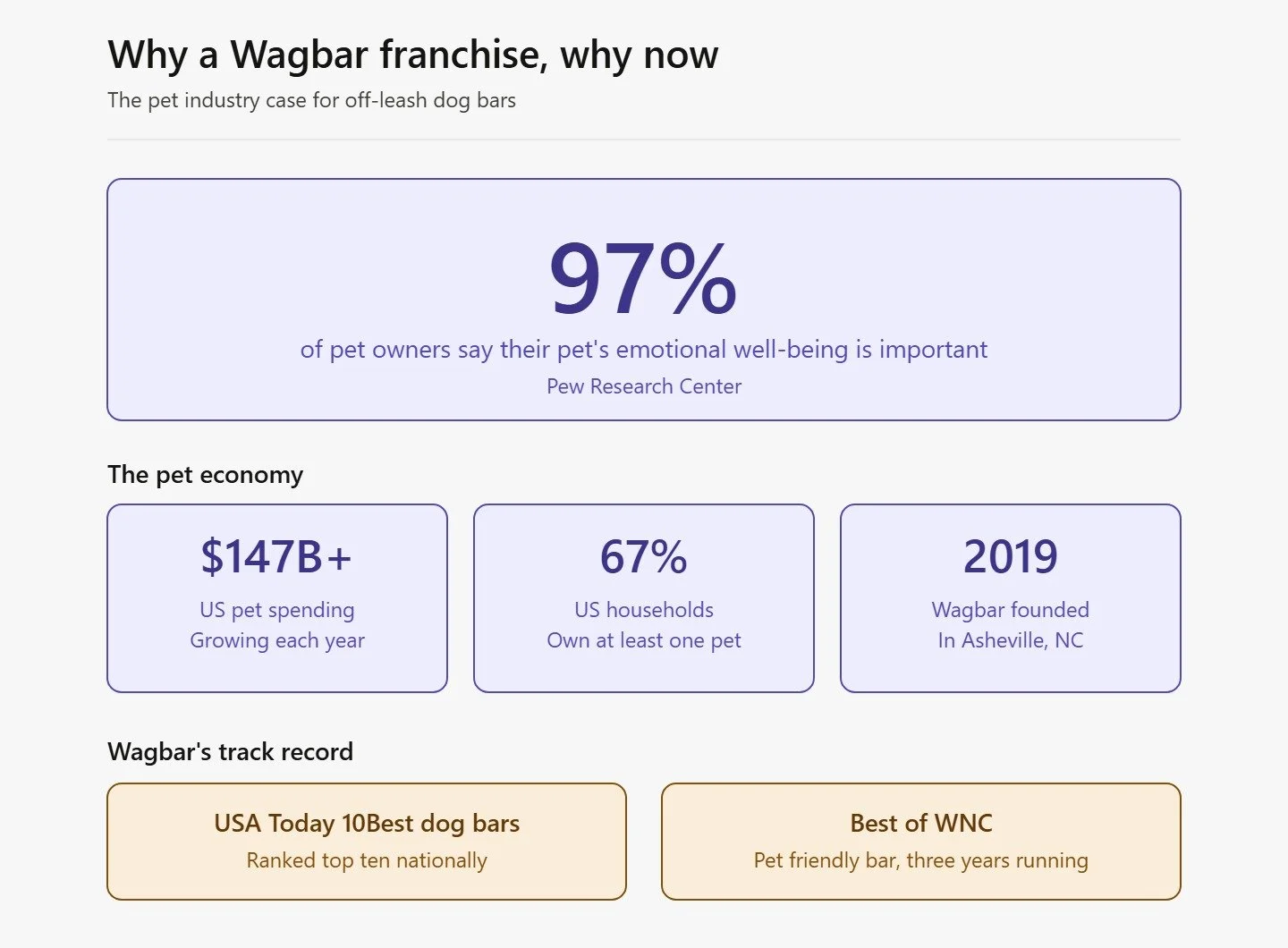
Top LDR: Pet franchise guides help prospective franchisees navigate the $147 billion pet industry by providing research frameworks, financial planning tools, and operational insights for evaluating opportunities from traditional grooming to innovative concepts like off-leash dog park bars. Successful franchise selection requires understanding FDD documents, analyzing local market demographics, interviewing current franchisees, and matching business models to your skills and community needs. Start by assessing your financial capacity, defining your involvement level (owner-operator versus investor), and researching multiple franchise systems before committing to any opportunity. Use these guides to build a structured evaluation process that reduces risk while identifying franchises offering the strongest support systems and profitability potential.
Choosing the right pet franchise represents one of the most important business decisions you'll make. The pet industry's impressive growth creates genuine opportunities, but success demands thorough research, realistic planning, and careful franchise selection. These guides provide frameworks for evaluating pet franchise opportunities, understanding financial requirements, and building businesses that serve both your community and your personal goals.
Understanding the Pet Franchise Landscape
The pet franchise sector encompasses far more diversity than most people realize. Traditional models built around grooming, retail, and basic services continue operating successfully, but newer concepts focusing on experiences and community have created alternatives worth exploring. Understanding this landscape helps you identify which franchise types align with your interests, skills, and local market conditions.
Service-based franchises dominate growth in the pet industry as pet owners prioritize convenience and quality over price. Mobile grooming, daycare facilities, training centers, and pet sitting networks serve practical needs while building recurring revenue through memberships and repeat customers. These models typically require moderate investments ranging from $100,000 to $300,000 depending on scale and location.
Experience-based franchises represent the newest category, transforming pet care from necessity into enjoyable social activity. Off-leash dog park bars like Wagbar combine secure play areas with bar environments where owners socialize while their dogs exercise. This dual-appeal model commands premium pricing while building community that drives membership retention and word-of-mouth growth.
Financial Planning for Franchise Investment
Understanding total investment requirements prevents financial surprises that sink franchises before they open. Franchise fees represent only one component of startup costs—real estate deposits, build-out expenses, equipment, initial inventory, working capital, and professional fees add substantially to initial investment. Pet franchise investments typically range from $75,000 for mobile services to over $1 million for comprehensive facilities.
Working capital requirements often get underestimated by new franchisees. Plan for 6-12 months of operating expenses beyond your opening costs, covering payroll, rent, utilities, marketing, and supplies while building customer base. This runway prevents desperate decision-making during the challenging early months when revenue rarely covers all expenses.
Financing strategies vary based on your financial position and franchise requirements. Conventional bank loans, SBA loans, retirement account rollovers (ROBS), and partnerships each offer advantages and disadvantages. Many franchisors maintain relationships with lenders familiar with their business models, potentially streamlining approval processes and securing better terms than you'd find independently.
Evaluating Franchise Disclosure Documents
The Franchise Disclosure Document (FDD) provides legally required information about franchise opportunities. This comprehensive document covers franchise costs, obligations, restrictions, litigation history, and financial performance. Reading and understanding your FDD before signing anything protects you from unexpected obligations and reveals potential red flags.
Item 19 of the FDD discloses financial performance data when franchisors choose to provide it. Not all franchisors include this information, but when present it offers valuable insights into revenue potential and profitability. Analyze these numbers carefully, noting whether they represent system-wide averages, top performers only, or specific store categories. Ask franchisors to explain their Item 19 data and what factors separate successful locations from struggling ones.
Legal review of FDDs isn't optional. Franchise attorneys understand the implications of various clauses, territorial protections, renewal terms, and exit strategies that non-lawyers might overlook. This investment typically costs $1,500-$3,000 but prevents expensive mistakes from signing agreements you don't fully understand.

Researching Pet Franchise Systems
Thorough research separates smart franchise investments from expensive mistakes. Start by requesting information from multiple franchise systems in categories that interest you. Compare their business models, investment requirements, training programs, support systems, and territorial protections. This comparative analysis reveals industry standards and helps identify franchises offering superior value.
Online research provides baseline information but shouldn't replace direct investigation. Visit franchise websites, read online reviews, search for news articles about the company, and check Better Business Bureau ratings. Look for patterns in feedback—isolated complaints happen to every business, but consistent issues across multiple sources signal problems you'll likely encounter as a franchisee.
Industry conferences and franchise expos let you meet representatives from multiple systems efficiently. These events often feature current franchisees willing to discuss their experiences candidly. Come prepared with specific questions about profitability, challenges, support quality, and whether they'd choose the same franchise again knowing what they know now.
Location Analysis and Market Research
A very happy Wagbar staff with a Wagbar cup
Your franchise's location determines much of its success potential. Even the strongest franchise systems struggle in markets lacking sufficient customer base or facing oversaturation from competitors. Demographic research should examine population density, median household income, age distribution, pet ownership rates, and lifestyle preferences that influence pet spending.
Competition analysis reveals whether your market can support another pet service provider. Visit existing grooming salons, training facilities, daycare centers, and other pet businesses in your target area. Evaluate their service quality, pricing, customer satisfaction, and operational hours. Areas like Atlanta demonstrate ideal conditions with high median incomes, strong pet ownership culture, and demographics supporting premium pet services.
Zoning and regulatory requirements can eliminate otherwise perfect locations. Research local ordinances covering commercial pet facilities, noise restrictions, waste management, parking requirements, and alcohol licensing if applicable. Some municipalities welcome pet businesses while others create regulatory hurdles making operations impractical or impossible.
Interviewing Current Franchisees
Conversations with existing franchisees provide insights that FDDs and marketing materials can't deliver. Franchisors should provide contact information for current franchisees—reluctance to facilitate these conversations raises serious concerns. Prepare thoughtful questions covering training quality, ongoing support, profitability, challenges faced, and overall satisfaction with their franchise decision.
Ask specific questions about financial performance beyond vague inquiries about profitability. Request information about revenue per customer, average transaction values, membership retention rates, and what percentage of franchisees achieve profitability within the first year. Franchisees can't share specifics that violate agreements, but most will indicate whether their experience matches projections they received.
Contact both successful franchisees and those who've struggled or left the system if possible. Success stories reveal best practices and support systems that work, while struggles expose weaknesses in training, support, or business models. This balanced perspective helps you evaluate whether you have resources and capabilities to overcome common challenges.
Understanding Franchise Support Systems
Franchise support quality separates professional operations from those simply selling territories. Comprehensive support begins with thorough training covering operations, customer service, marketing, and business management. Quality training programs include both classroom instruction and hands-on experience at operating locations, preparing you for realistic challenges rather than idealized scenarios.
Ongoing support matters more than initial training for long-term success. Evaluate what assistance franchisors provide after your grand opening—regular business reviews, marketing campaigns, technology updates, operational guidance, and peer networking opportunities. The strongest franchise systems function as partnerships where corporate success depends on franchisee profitability, creating aligned incentives for providing meaningful support.
Technology infrastructure increasingly determines operational efficiency and customer satisfaction. Point-of-sale systems, scheduling software, customer relationship management platforms, and member portals should integrate seamlessly while being user-friendly for staff and customers. Ask how technology updates get deployed and whether franchisees can suggest improvements based on operational experience.
Assessing Your Fit for Franchise Ownership
Honest self-assessment prevents mismatched franchise investments. Consider your preferred involvement level—will you work in the business daily, hire managers to oversee operations, or maintain active oversight while building a team? Different franchises suit different involvement levels, and misalignment between your preferences and franchise requirements creates dissatisfaction regardless of profitability.
Your skills and experience influence which franchises you'll operate successfully. Customer service experience, management capabilities, sales skills, and marketing knowledge all matter in different ways across franchise types. Prior pet industry experience helps but matters less than many assume—strong franchisors train you on pet-specific knowledge while building on your existing business skills.
Lifestyle considerations affect franchise satisfaction as much as financial returns. Some franchises demand weekend and evening work during peak customer hours, while others operate primarily during business hours. Seasonal fluctuations impact income and workload differently across franchise types. Understanding what dog franchise ownership actually involves prevents buyer's remorse from unrealistic expectations.
Comparing Traditional vs. Innovative Franchise Models
Traditional pet franchises built success on product sales and basic services. Pet supply stores, grooming salons, and training facilities serve essential needs with proven business models. These franchises typically face established competition but benefit from customer familiarity with the service category. Success depends on execution quality, convenient locations, and competitive pricing rather than explaining novel concepts.
Innovative franchise models like dog park bars and experience-based concepts require more customer education but operate in less competitive markets. First-mover advantages let you capture market share before competitors enter, but you also bear the risk of proving demand for new concepts. These franchises typically command premium pricing and build stronger customer loyalty when successfully executed.
Traditional dog wash franchises versus innovative alternatives illustrates this distinction clearly. Basic dog wash facilities provide necessary services at competitive prices but struggle differentiating themselves and building recurring revenue. Alternative concepts combining multiple services, social experiences, or premium positioning create more defensible competitive advantages despite higher initial investments.

Understanding Revenue Models and Profitability
Different franchise models generate revenue through distinct mechanisms affecting profitability and scalability. Transaction-based models depend on maximizing customers served per day, making location, pricing, and operational efficiency critical success factors. These models can achieve high revenue but often face margin pressure from competition and rising labor costs.
Membership and subscription models provide more predictable revenue and better customer retention. Monthly or annual memberships create cash flow stability while reducing customer acquisition costs. Recurring revenue from memberships combined with additional revenue streams like day passes and retail sales maximizes financial performance while building sustainable businesses.
Labor costs represent the largest controllable expense in most pet franchises. Grooming, training, and specialized services require skilled staff commanding higher wages and facing recruitment challenges. Evaluate franchises' staffing models and whether their pricing supports adequate compensation to attract and retain quality employees without destroying profitability.
Market Trends Shaping Pet Franchises
The pet industry's premiumization continues as owners demand higher quality products and services. Basic pet care no longer satisfies most owners—they seek organic foods, specialized training, enrichment activities, and social experiences. Franchises positioned to deliver premium offerings with justified pricing benefit from this trend while budget-focused concepts face increasing pressure.
Convenience drives purchasing decisions more than ever before. Mobile services, extended hours, online scheduling, delivery options, and streamlined processes attract time-starved pet owners willing to pay premium prices for convenience. Franchises simplifying pet ownership responsibilities while maintaining high service quality find receptive markets across demographics.
Community building has emerged as a competitive advantage beyond traditional service delivery. Pet owners seek belonging and connection with fellow animal lovers, creating opportunities for franchises facilitating these relationships. Experience-based concepts hosting events, creating social spaces, and building member communities generate loyalty transcending transactional relationships.
Regional Market Considerations

A simple celebration at Wagbar with dog owners
Pet franchise success varies significantly by region based on demographics, climate, cultural attitudes, and regulatory environments. Urban markets support service franchises well but face high real estate costs and zoning restrictions on certain activities. Suburban markets offer more space and lower costs but require different marketing approaches than urban density affords.
Climate affects certain franchise types more than others. Outdoor dog parks and mobile services face seasonal challenges in regions with extreme weather, requiring business models that account for reduced winter revenue. Year-round operational strategies help franchises maintain profitability despite weather-related fluctuations in customer traffic.
Regional pet spending patterns reflect local income levels, cultural priorities, and competitive intensity. Understanding regional spending variations helps you set realistic revenue projections and adapt franchise concepts to local preferences rather than assuming national averages apply uniformly.
Legal and Regulatory Compliance
Pet franchise operations face numerous legal and regulatory requirements beyond general business licensing. Understanding legal requirements for pet businesses prevents operational disruptions and legal liability. Animal welfare laws, health department regulations, zoning ordinances, and insurance requirements vary by jurisdiction and business type.
Liability insurance protects you from claims arising from dog bites, injuries, property damage, or illness. Standard business insurance often excludes or limits animal-related claims, requiring specialized coverage. Discuss insurance requirements with franchisors and independent brokers to ensure adequate protection without overpaying for unnecessary coverage.
Zoning and regulatory compliance requirements can eliminate otherwise perfect locations. Research local ordinances early in site selection rather than discovering deal-breaking restrictions after signing leases. Some municipalities actively recruit pet businesses while others create regulatory obstacles making operations impractical.
Building Your Franchise Evaluation Checklist
Systematic evaluation prevents emotional decision-making and overlooked red flags. Create a standardized checklist covering financial requirements, training programs, support systems, territorial protections, contract terms, and exit strategies. Apply this checklist consistently across all franchises you're considering, documenting responses for comparison.
Weight different factors based on your priorities and circumstances. Training quality might matter most if you lack pet industry experience, while territorial protection could be critical if you're investing in markets with existing competition. Marketing support, technology infrastructure, and franchisee satisfaction all deserve consideration but may carry different importance for your situation.
Involve advisors in your evaluation process. Franchise attorneys, accountants, and business consultants provide objective perspectives that counterbalance the excitement and anxiety inherent in major financial decisions. Their experience with multiple franchises helps you identify industry standards and spot unusual terms requiring explanation or negotiation.
Taking the Next Steps
Begin your franchise journey with thorough self-assessment and market research. Clarify your goals, evaluate your financial capacity, research your target market, and identify franchise categories matching your interests. This preliminary work might take several months but prevents expensive mistakes from premature commitments.
Request information from multiple franchise systems and compare their offerings systematically. Attend discovery days offered by franchisors to experience their culture and meet the team you'll work with. Review FDDs carefully with your attorney, interview current franchisees, and visit operating locations unannounced to observe real customer experiences.
Make your decision based on data and objective evaluation rather than emotional connection to a franchise concept. The strongest franchises might not be the flashiest or most exciting but those offering comprehensive support, proven business models, and franchisee communities succeeding in markets similar to yours. What to look for when investing includes assessing all these factors systematically rather than relying on instinct alone.
FAQ
How long does it take to open a pet franchise? Pet franchise openings typically take 6-18 months from signing agreements to opening day. This timeline includes site selection, lease negotiation, permitting, construction, equipment installation, hiring, training, and pre-opening marketing. Mobile franchises open faster (3-6 months) while comprehensive facilities with extensive build-outs require longer timelines. Work closely with your franchisor to understand critical path items and avoid delays.
Do I need pet industry experience to succeed? Pet industry experience helps but isn't required for most franchises. Strong franchisors provide comprehensive training covering pet behavior, service delivery, and industry best practices. Your business management skills, customer service abilities, and genuine interest in animals matter more than prior pet industry involvement. Many successful franchisees transition from corporate careers, retail management, and other service industries.
What makes a good pet franchise territory? Good pet franchise territories combine sufficient population density, favorable demographics (higher incomes, pet ownership rates), limited direct competition, and appropriate zoning for your franchise type. Urban and affluent suburban areas typically support premium pet services better than rural markets or lower-income communities. Evaluate existing pet service providers to understand competitive intensity before committing to specific territories.
How much can I make owning a pet franchise? Pet franchise income varies dramatically based on franchise type, location, management quality, and local market conditions. Some franchisees achieve six-figure incomes while others struggle reaching profitability. Review Item 19 financial performance data in FDDs when available, interview current franchisees about their experiences, and project conservative revenue scenarios based on your specific market conditions rather than assuming average or top performer results.
What questions should I ask current franchisees? Ask current franchisees about training quality, ongoing support responsiveness, profitability timelines, biggest challenges faced, and whether they'd choose the same franchise again. Request specific information about revenue per customer, retention rates, and what percentage of franchisees achieve profitability within the first year. Contact both successful franchisees and those who've struggled if possible to understand the full range of experiences.
Choosing the right pet franchise requires thorough research, realistic planning, and careful evaluation of both franchise systems and your local market. Use these guides to build a structured decision-making process that reduces risk while identifying opportunities offering genuine support and profitability potential. The pet industry's continued growth creates real opportunities for well-prepared entrepreneurs willing to invest time understanding the landscape before committing significant capital.
Bottom TLDR
Pet franchise guides provide prospective franchisees with evaluation frameworks covering financial planning, FDD analysis, franchisee interviews, and market research necessary for making informed investment decisions in the $147 billion pet industry. Successful franchise selection requires comparing multiple systems systematically, understanding total investment costs including working capital, and matching franchise models to your skills, involvement preferences, and local market demographics. Start by creating a standardized evaluation checklist covering training quality, support systems, territorial protections, and contract terms, then apply it consistently across all franchises you're considering while involving franchise attorneys and accountants in your review process. Take 6-12 months researching thoroughly before committing to franchise agreements, prioritizing franchises with comprehensive support, proven business models, and franchisee communities succeeding in markets similar to yours.