

Outdoor Franchises in Charlotte, NC: Capitalizing on the Queen City's Growth
Top TLDR Charlotte is one of Wagbar's active franchise development markets in North Carolina, backed by a population approaching one million, a median household income of $82,068, a median age of 34.5 years, and a dog-friendly outdoor culture built around the Rail Trail and more than 50 dog-welcoming breweries. If you're evaluating outdoor franchises in Charlotte, the growth trajectory and established dog culture make this one of the most compelling markets in the Southeast.
Charlotte doesn't get the same franchise industry attention as Atlanta or Dallas, but the numbers make a strong argument that it should. The Queen City has added more population faster than almost any major city in the Southeast over the past decade, and the residents driving that growth, younger professionals in finance, technology, and healthcare, are exactly the demographic that turns a dog park and bar concept into a recurring revenue engine.
Wagbar already has Charlotte listed as an active franchise development market. This page explains the market case: why Charlotte's demographics, outdoor culture, and dog ecosystem point to strong performance for an outdoor franchise in the off-leash dog park category.
Charlotte's Growth Is Creating the Right Customer Base
Charlotte's population reached approximately 943,000 in 2024, with projections putting the city near one million residents by 2025. The Charlotte-Concord-Gastonia metro area, which encompasses a broad ring of suburban communities, has a combined statistical area population of over 3.3 million. That metro-level scale creates a large addressable market for a franchise concept that draws customers from a five-to-seven-mile trade area around a given location.
The city's median household income grew to $82,068 in 2024, up from $78,438 the prior year, a 4.6% single-year increase that reflects the income trajectory driven by Charlotte's financial services and technology sectors. Bank of America and Wells Fargo are both headquartered here, and the broader financial industry has built a professional workforce that earns above national norms. Households in the 25-to-44 age bracket report a median income of $84,080, the cohort that over-indexes on dog ownership and premium pet spending.
Charlotte's median age sits at 34.5 years, among the youngest profiles of any major city in the Southeast. Adults between 25 and 44 make up approximately 33% of the population, and the city has drawn consistent inflows of younger professionals from across the country, particularly since the pandemic. Nearly 49% of Charlotte residents hold a bachelor's degree or higher. That educational attainment level is an indicator of professional employment, and it correlates directly with higher pet spending and greater willingness to pay for premium outdoor experiences.

According to the American Pet Products Association, U.S. pet owners spent $147 billion in 2023. In high-income, younger cities like Charlotte, per-household pet spending runs significantly above the national average. For a detailed look at how demographics drive premium pet spending, Wagbar's pet spending demographics analysis covers the patterns in full.
Charlotte Already Has a Dense Dog Culture
Charlotte's dog culture is built into the city's physical infrastructure in ways that tell you a lot about how residents spend their time. The South End Rail Trail, a 3.5-mile linear park that runs through one of Charlotte's most active urban corridors, is consistently filled with residents walking and running with their dogs. The trail passes directly in front of multiple breweries, creating natural foot traffic loops that reinforce the dog-and-social-venue habit.
The city has more than 50 breweries, and almost all of them are dog-friendly. The Olde Mecklenburg Brewery operates an eight-acre biergarten, home to the largest biergarten in the Southeast, where dogs roam the shaded grounds under century-old oak trees. Sycamore Brewing sits directly on the Rail Trail in South End with a spacious outdoor patio. Birdsong Brewing features a large, shaded outdoor area specifically set up to accommodate dogs and their owners comfortably.
Charlotte also has existing off-leash dog park and bar concepts that confirm the market will pay for this experience. Skiptown, located in South End, is a 24,000-square-foot indoor/outdoor dog park with a bar serving 25 taps and a full cocktail menu. Lucky Dog Bark & Brew operates a similar model with separate big-dog and small-dog off-leash areas inside and outside. The Dog Bar in NoDa gives dogs dedicated off-leash indoor and outdoor space including a seasonal bone-shaped splash pool. Brewers at 4001 Yancey in Lower South End operates a fenced dog run alongside its brewery patio.
That concentration of concepts isn't a warning sign for a Wagbar investor. It's market validation. The independent operators in Charlotte have collectively demonstrated that the Queen City's consumers will pay for off-leash dog park and bar experiences, that the behavior is established, and that there's appetite for multiple venues in the same metro. A Wagbar franchise enters with the brand infrastructure, operational systems, training support, and site selection expertise that independent operators don't have access to. Those advantages compound over time.
Charlotte's Outdoor Lifestyle Supports Year-Round Operations
Charlotte averages approximately 212 sunny days per year, with a four-season climate that includes long, comfortable spring and fall windows and mild winters compared to most of the Mid-Atlantic and Northeast. The city sits at around 700 feet elevation, which keeps summer temperatures slightly more moderate than cities further south on the coastal plain. That combination produces an outdoor operating calendar that runs strong from late February through November, with occasional usable days in December and January.
The outdoor recreation culture in Charlotte reinforces this operating advantage. Beyond the Rail Trail and the brewery patios, Charlotte residents use Reedy Creek Nature Preserve, McDowell Nature Preserve, the Catawba River greenway network, and multiple off-leash dog parks across the city's neighborhoods for regular outdoor activity with their dogs. Charlotte is consistently listed among the greener American cities, with 66% of its area occupied by green space as of 2024. Residents who use green space regularly with their dogs are already conditioned to spend time outdoors in the kinds of social, low-key settings that Wagbar creates.
Wagbar's covered container bar structure addresses the weather variability in a four-season market directly. The structure provides shade in summer and shelter during rain, extending the comfortable operating window across the shoulder seasons without fully enclosing the concept. Wagbar has built its model to work across the Southeast's climate range, which includes everything from Asheville's mountain weather to the Tampa Bay heat. Charlotte sits comfortably in the middle of that range.
For more on how Wagbar approaches market selection across different climate profiles, the best cities for outdoor franchise investment covers the full framework.
The Multi-Neighborhood Opportunity in Charlotte
Charlotte's geography is an asset for a multi-unit franchise investor. The city is organized around distinct neighborhood corridors that serve different demographic profiles, each with strong dog ownership and outdoor culture but different household income levels and lifestyle orientations.
South End and the South End corridor serve the young professional population living in the walkable urban core, with high renter density, strong brewery foot traffic along the Rail Trail, and a customer base that's already spending weekends at dog-friendly venues. Ballantyne and SouthPark serve a more established suburban demographic with higher homeownership rates and household incomes that run above the city median. NoDa and Plaza Midwood serve the creative and arts-forward community with a strong independent culture and high dog ownership among younger residents. Concord and Cabarrus County to the north, along with Matthews and Pineville to the south, add suburban rings where family households and lower real estate costs create different but complementary site opportunities.
A franchisee who looks at Charlotte as a multi-location market, rather than a single venue play, can build real geographic coverage across these distinct corridors. Wagbar's 50% franchise fee discount for three-or-more-unit commitments makes that multi-location strategy financially more accessible from the start, and Charlotte's market structure genuinely supports it.
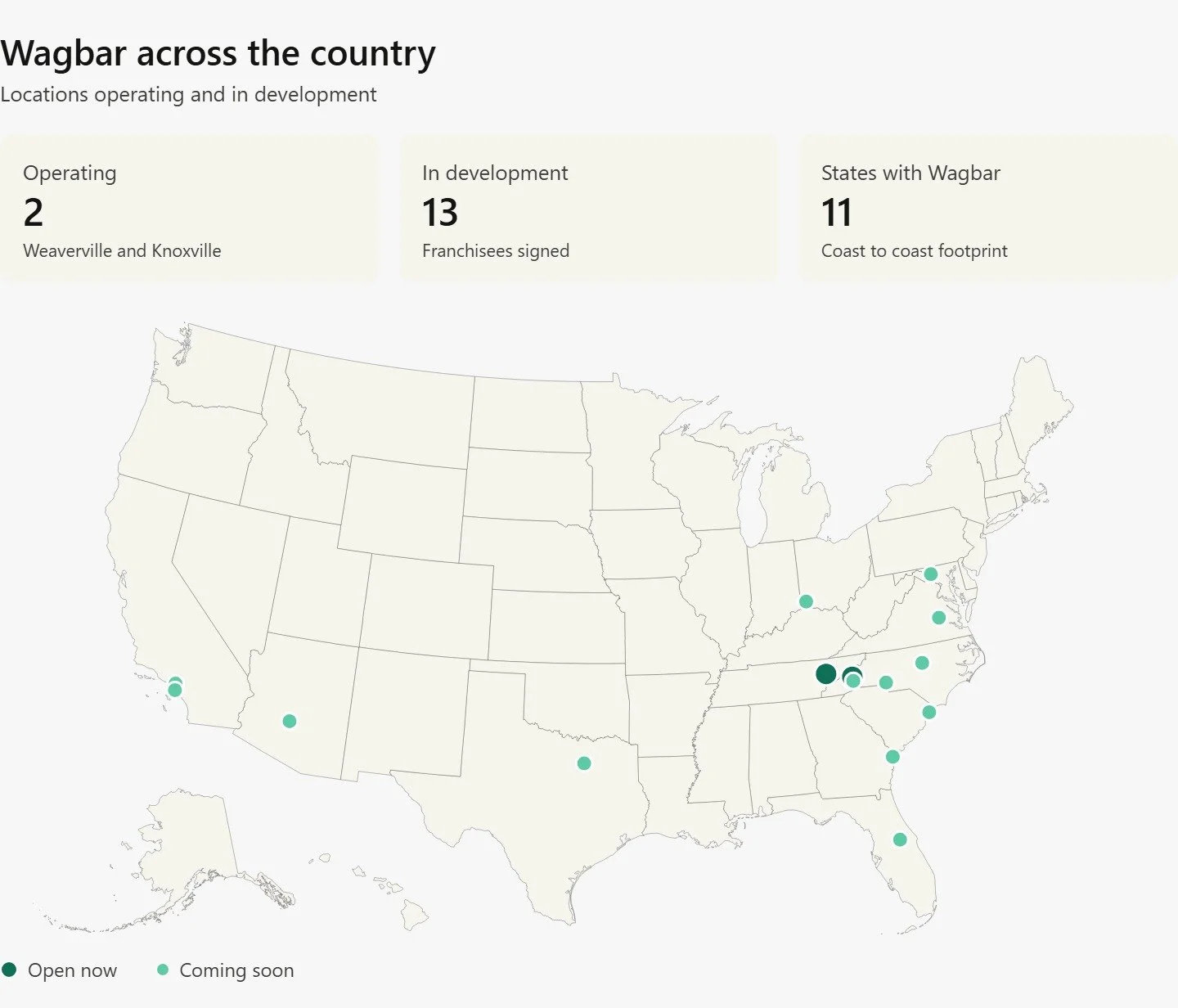
For context on how Wagbar's NC footprint is developing, Wagbar's Cary location represents another active market in the state, and the South Asheville franchise is among the brand's active North Carolina development areas alongside Charlotte. That regional concentration gives a Charlotte franchisee access to an operator network and operating knowledge specific to the North Carolina market.
Investment Overview
Wagbar's initial franchise fee is $50,000, with total investment estimated between $470,300 and $1,145,900 depending on site, build-out scope, and local market factors. The royalty fee is 6% of adjusted gross sales, with a 1% marketing fund contribution. Franchisees committing to three or more units receive a 50% discount on franchise fees for additional locations. All investment figures are informational, and prospective franchisees should review the complete Franchise Disclosure Document before making any investment decision.
To explore Charlotte territory availability and next steps, the Wagbar franchising page is the right starting point. For context on what to look for when evaluating a franchise in this category, this investment evaluation guide covers the key questions.
Frequently Asked Questions
Is Charlotte already a Wagbar franchise market?
Yes. Charlotte is listed among Wagbar's active franchise development markets in North Carolina, alongside Cary and South Asheville. Prospective franchisees interested in the Charlotte market should submit an inquiry through the Wagbar franchising page to discuss territory availability and next steps.
What makes Charlotte's demographics particularly strong for an off-leash dog park franchise?
Charlotte's combination of a young median age (34.5 years), above-average household income ($82,068 median city-wide, $84,080 for the 25-to-44 bracket), and rapidly growing professional population produces the core customer profile for a membership-based outdoor dog concept. Residents in this demographic own dogs at high rates, spend meaningfully on premium pet experiences, and organize their social lives around outdoor venues.
Does Charlotte already have off-leash dog park and bar concepts?
It does, and that's a positive signal for a franchise investor rather than a reason for concern. Skiptown (24,000 square feet, 25-tap bar), Lucky Dog Bark & Brew, and The Dog Bar in NoDa all confirm that Charlotte consumers will pay for this experience. Independent operators proving demand without franchise infrastructure creates the opening for a Wagbar franchisee to enter the market with the operational systems and brand recognition that independent concepts lack.
How does Charlotte's four-season climate affect outdoor franchise operations?
Charlotte averages around 212 sunny days per year with long spring and fall windows ideal for outdoor operations. Winters are mild compared to most of the Northeast and Mid-Atlantic, and the covered container bar structure extends comfortable operations through the shoulder seasons. The climate does not present a significant operating gap for a well-built outdoor concept.
What neighborhoods in Charlotte are strongest for site selection?
South End, NoDa, and the Rail Trail corridor have the highest concentration of young, dog-owning professionals who are already in the habit of spending time at dog-friendly outdoor venues. Ballantyne and SouthPark serve higher-income suburban households with strong homeownership rates that correlate with dog ownership. Each corridor supports a distinct customer profile, which is part of what makes Charlotte a genuine multi-unit opportunity.
How do I start the Charlotte franchise inquiry process with Wagbar?
Submit an inquiry through the Wagbar franchising page. The franchise development team will reach out to discuss specific Charlotte territory availability, review the investment structure, and walk through the evaluation and opening process.
Bottom TLDR Charlotte is an active Wagbar franchise development market in North Carolina, backed by strong fundamentals: a population near one million, median household income of $82,068, a median age of 34.5 years, and an established off-leash dog park and bar scene that confirms consumer demand. Submit an inquiry through the Wagbar franchising page to learn about Charlotte territory availability and what it takes to bring outdoor franchises to the Queen City.