

Outdoor Franchises: Complete Investment Guide for Entrepreneurs (2026)

Key Takeaways
Outdoor franchises span five major categories ranging from home services to pet recreation, with total investment requirements from $50,000 to over $1 million depending on the model. Outdoor pet franchises, particularly off-leash dog park bars, represent one of the fastest-growing segments within the category by combining recurring membership revenue with a bar operation that traditional service franchises can't replicate. If you're weighing outdoor franchise opportunities in 2026, understanding how business model type, climate, and real estate interact will shape both your startup costs and your long-term earnings potential.
The outdoor franchise category is bigger and more varied than most investors realize when they first start researching. Put "landscaping franchise" and "dog park bar franchise" in the same sentence and most people wouldn't group them together, but both are outdoor franchises at their core. They share some key investment considerations: you need outdoor space, your operations are weather-adjacent, and you're building a business that happens largely outside four walls.
What separates the good opportunities from the mediocre ones isn't whether the business is indoors or out. It's the underlying model. Service-based outdoor franchises trade time for money in a fairly direct way. Recreation and experience-based outdoor franchises, including outdoor pet franchises, build recurring revenue, customer loyalty, and community in ways that service businesses rarely achieve.
This guide walks through every major category of outdoor franchise, what drives profitability in each, and why the outdoor pet recreation segment, led by concepts like Wagbar's off-leash dog park bar, has attracted serious franchise investors looking for something more than a service route.
What Makes a Franchise "Outdoor"?
A franchise qualifies as outdoor when its primary operations, revenue generation, or service delivery happen primarily outside an enclosed building. That covers a wide spectrum.
A lawn care franchise is obviously outdoor. So is a dog park. A pressure washing company, an outdoor recreation venue, a pet-focused social bar with an open play yard, all of these are outdoor franchises. What they have in common is that the business depends on accessible outdoor space, and that space becomes a central part of the customer experience or service delivery.
This distinction matters because it affects how you evaluate a franchise opportunity. Outdoor businesses often require larger real estate footprints, face more weather-related variables, and have different staffing dynamics than traditional retail or service businesses housed in commercial spaces. Understanding those dynamics before you sign anything is the first step toward making a sound investment decision.
Outdoor franchises also tend to have stronger community ties than indoor equivalents. When your business is visible, physically present in a neighborhood, and creates a reason for people to gather outside, you build the kind of local recognition that's hard to replicate through marketing alone.
The Five Categories of Outdoor Franchises
Most outdoor franchise opportunities fall into one of five broad categories. Each has different investment requirements, profit structures, and customer dynamics.
Outdoor Home Services
This is the largest and most established category. It includes landscaping, lawn care, pest control, exterior painting, pressure washing, deck and patio building, roofing, and outdoor lighting installation. These businesses typically operate with lower initial investments, are owner-operator friendly, and can scale by adding trucks and crews. Revenue is largely project-based or seasonal contract-based. Representative investment range: $65,000 to $250,000.
Outdoor Recreation and Fitness
This category includes outdoor fitness programs, sports leagues, adventure park operations, youth athletics organizations, and similar businesses that generate revenue through participation. Some are membership-based; others charge per session or event. The customer relationship is ongoing rather than transactional, and community is often central to the value proposition. Representative investment range: $75,000 to $500,000.
Outdoor Food and Beverage
Food trucks, outdoor bar concepts, and food and beverage businesses that operate primarily in outdoor settings. Margins in this category depend heavily on volume and location. Weather is a direct revenue variable, and the most successful operators build their programming around their climate rather than fighting it. Representative investment range: $100,000 to $400,000.
Outdoor Pet Recreation
Off-leash dog parks, dog park bars, and pet-oriented outdoor venues. This is the fastest-growing subcategory, fueled by the expansion of the pet industry and a cultural shift toward experience-based pet ownership. The best outdoor pet franchise models combine multiple revenue streams, including memberships, day passes, and food and beverage sales, creating genuine recurring income. Representative investment range: $470,000 to $1.1 million for a full dog park bar concept.

Outdoor Events and Entertainment
Seasonal event venues, outdoor festival operations, wedding venue franchises, and similar hospitality-oriented outdoor businesses. Revenue is concentrated and often seasonal, with higher volatility than the other categories. Representative investment range: $150,000 to $1 million or more.
For a deeper look at how outdoor and indoor models compare structurally, the outdoor vs. indoor dog business models comparison covers the economic trade-offs in detail.
Outdoor Services vs. Outdoor Recreation: Why the Investment Thesis Differs
Choosing between an outdoor service franchise and an outdoor recreation franchise isn't just a question of personal interest. It's a fundamentally different investment thesis.
Outdoor service franchises generate revenue by completing jobs. You hire and manage crews, schedule routes, and grow revenue by taking on more clients. The model scales with labor, which means your margins are tied to hiring costs, turnover, and your ability to manage multiple teams efficiently. Service businesses are often competitive on price, especially in markets where several similar franchises operate.
The upside is accessibility. Many outdoor service franchises start under $100,000, have short ramp-up periods, and can reach profitability relatively quickly because the demand is established and the model is proven. The ceiling, though, is real: a landscaping franchise in a 50,000-person territory will only generate so much revenue without significant fleet and labor expansion.
Outdoor recreation franchises work differently. Revenue isn't tied to completing jobs, it's tied to membership, attendance, and repeat visits. When a customer joins as a member, they pay monthly. When they come back three times a week with their dog, they become a walking advertisement for the business. Community builds compound loyalty in a way that service customers simply don't.
The trade-off is a higher entry point. Recreation and experience franchises typically require more real estate, more build-out capital, and more time to reach critical mass before the community flywheel starts spinning. You're building something, not just starting a service route.
The pet industry market analysis makes a compelling case for why outdoor recreation in the pet category specifically deserves attention: Americans spent an estimated $136.8 billion on their pets in 2024, and experience-based spending in that category is growing faster than product purchases.
Where Outdoor Pet Franchises Sit in the Market
The outdoor pet franchise category has emerged as one of the clearest growth plays within the broader outdoor franchise space, and the reasons are concrete rather than speculative.
Pet ownership is at record highs. According to the American Pet Products Association, roughly 67% of U.S. households own a pet, and dogs are the most popular choice by a wide margin. Dog owners in higher-income households, the demographic most likely to pay for premium experiences, are spending more on their pets than any previous generation. The pet industry isn't a trend. It's a deeply embedded consumer behavior that has shown consistent growth through every economic cycle since the 1990s.
What's shifted recently is where that spending goes. Dog owners no longer think of their dog as an animal that needs care. They think of their dog as a member of the family who deserves experiences, socialization, and a social life. That mindset shift created the opening for off-leash dog park bars, which are simultaneously dog exercise facilities, social venues for owners, and community hubs.
The outdoor pet franchise model solves a real problem that no other franchise category addresses: where do you take your dog when you want to relax, socialize with other adults, and let your dog run free safely? Not a dog daycare, your dog isn't staying overnight. Not a regular dog park, there's no place to get a drink and sit comfortably with your friends. Not a pet-friendly bar, the dog has to stay on a leash.
The off-leash dog park bar concept, which Wagbar pioneered when it opened in Asheville, North Carolina in 2019, fills that gap in a way that has proven difficult for competitors to replicate. You need outdoor space, a licensed bar, staff trained in both dog behavior and hospitality, a safety infrastructure, and a community programming calendar. That's a real operation with real barriers to entry, and those barriers protect franchisees who get into good markets early.
Key Investment Factors for Outdoor Franchises
Whether you're evaluating a lawn care franchise or an outdoor dog park bar, four investment variables will shape your profitability more than anything else: climate, real estate, seasonality, and staffing.
Climate
For outdoor service franchises, climate mainly affects the calendar. A lawn care franchise in Minneapolis operates eight months a year; one in Phoenix or Charlotte operates twelve. A pest control franchise in Florida has year-round demand.
For outdoor recreation franchises, climate affects the experience itself. An outdoor dog park bar in a city with 300 days of sunshine has a completely different operational profile than one in a city with harsh winters. The most successful outdoor recreation franchise markets tend to be Sunbelt cities, coastal markets, and moderate-climate metros where outdoor living is embedded in the culture. Cities like Denver, Atlanta, Richmond, Charlotte, and Nashville fit this profile consistently. Wagbar's expansion footprint reflects exactly this kind of market logic.
A detailed breakdown of seasonal strategy is available in the guide to climate considerations for year-round pet business operations.
Real Estate
Outdoor franchises need space. Outdoor service franchises need a home base for storage and equipment. Outdoor recreation franchises need dramatically more, typically 15,000 to 30,000 square feet of outdoor space for a full dog park bar operation, plus smaller indoor areas for bar service, restrooms, and staff facilities.
Real estate is often the largest variable in total investment for outdoor recreation concepts. Suburban locations with available land cost significantly less than urban properties, which is why the most accessible outdoor pet franchise markets tend to be suburbs of major metros rather than downtown cores. The off-leash dog bar site selection guide covers this in depth for anyone evaluating a specific location.
Seasonality
Most outdoor businesses have some seasonality. Managing it is a question of planning, programming, and pricing strategy rather than treating it as an unsolvable problem.
Outdoor recreation franchises in four-season markets typically manage shoulder seasons with covered outdoor structures, portable heaters, and programming that brings people out even in cooler weather. Wagbar locations offer weather-protected areas with fans in summer and heaters for cooler months, extending the practical operating season well beyond what a fully exposed outdoor space would allow.
Staffing
Outdoor service franchises are heavily labor-dependent, which means margins are always in tension with payroll. Outdoor recreation franchises require a different kind of staff, people who understand dog behavior, can manage a bar operation, and create a welcoming community atmosphere at the same time. That's a specific profile, which is why the training program a franchisor provides matters enormously.
For a clear picture of what outdoor pet franchise staffing looks like in practice, the staffing and operations guide for off-leash dog bars is worth reading before you get into site selection conversations.
How Wagbar Compares to Traditional Outdoor Franchise Models
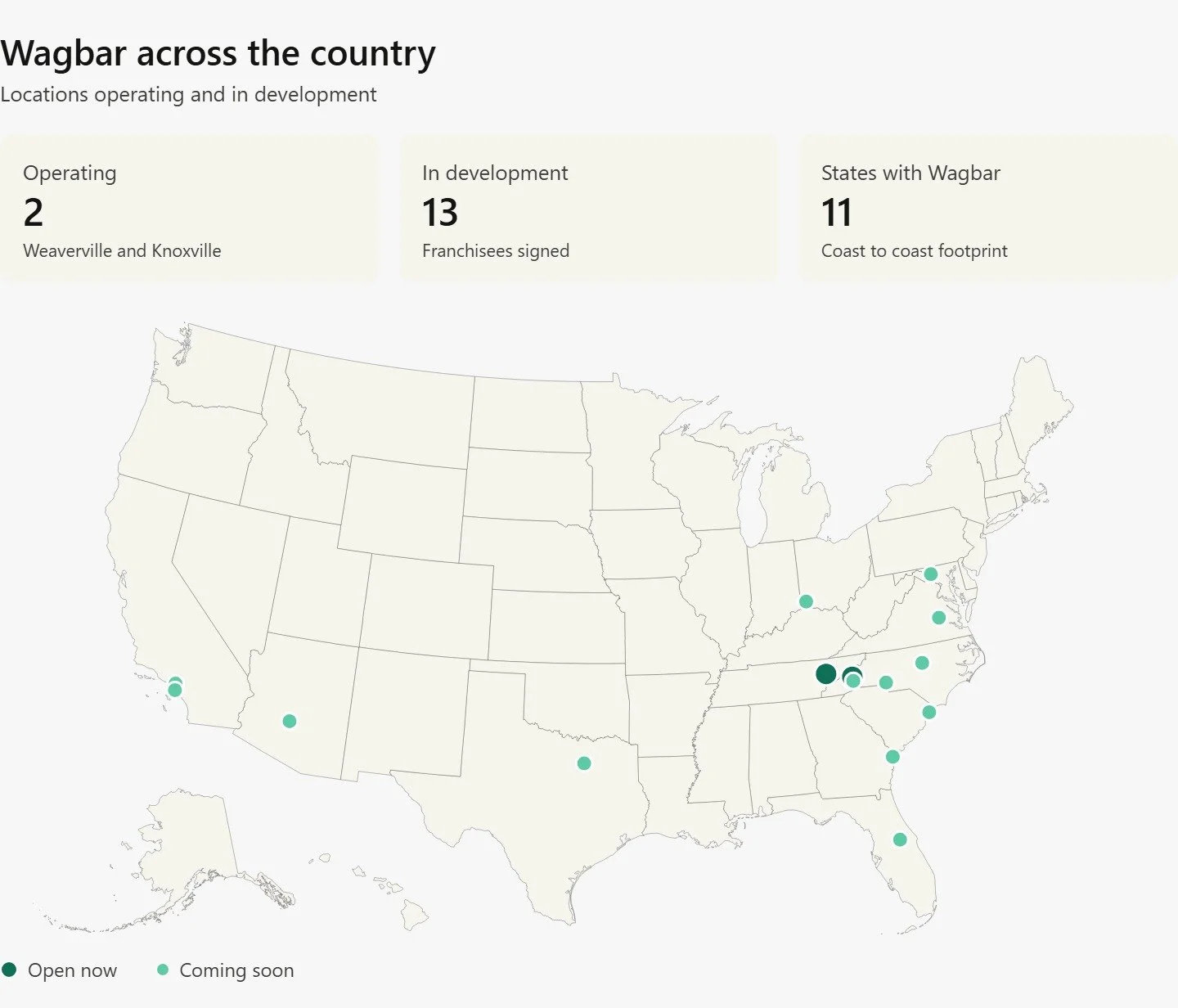
Wagbar isn't competing in the same category as most outdoor franchises. It's not trying to outperform a landscaping company or a pest control route. It operates in outdoor recreation and social experience, with a business model that traditional outdoor service franchises can't match on the dimensions that matter most to long-term investors.
Revenue model. A lawn care franchise generates revenue by completing jobs. Revenue stops when jobs stop. Wagbar generates revenue through memberships, which are recurring monthly income, day passes, and beverage sales. Members keep paying whether or not they visit every week. That recurring revenue base provides stability that service businesses don't have.
Customer loyalty. Service franchise customers typically shop around on price. Wagbar members self-select into a community. When your customers' dogs know each other and your customers have standing Tuesday afternoon plans together, switching costs are high in a way that's hard to quantify on a spreadsheet but very real in the day-to-day operations of a healthy location.
Competitive position. Outdoor home services markets are intensely competitive, with multiple national brands fighting for the same customers in most markets. The outdoor off-leash dog park bar category is still early-stage. Most markets that are good fits for Wagbar don't yet have a direct competitor operating the same concept.
Barriers to entry. Anyone can start a lawn care operation with a truck and a mower. Operating an outdoor dog park bar requires outdoor acreage, liquor licensing, health and safety protocols for animals, staff trained in both canine behavior and hospitality, and a membership management system that actually works. Those requirements filter out casual competitors.
Wagbar's investment structure reflects this positioning. The initial franchise fee is $50,000, with a total estimated investment range of $470,300 to $1,145,900 depending on market, site, and build-out. The royalty is 6% of adjusted gross sales with a 1% marketing fund contribution. For franchisees committing to three or more units, there's a 50% multi-unit discount on the franchise fee. These figures are for informational purposes and should be verified against the current Franchise Disclosure Document.
Wagbar's build-out solution also deserves mention. The company partners with a supplier that converts shipping containers into fully equipped bars and bathrooms, which significantly reduces the complexity and timeline of getting a new location open. That near-turnkey bar approach removes a major variable from the construction process.
For context on how Wagbar stacks up against other dog franchise concepts, see the dog franchise opportunities comparison guide for entrepreneurs.
Market Size: What the Numbers Say
Numbers here are worth understanding clearly.
The U.S. pet industry generated an estimated $136.8 billion in consumer spending in 2024 (American Pet Products Association). The services segment, which includes recreation and experience businesses, is the fastest-growing component of that total.
Dog ownership sits at roughly 65 million households nationally. Among millennial and Gen Z dog owners, who frequent outdoor recreation venues at higher rates than older demographics, spending per pet is higher than any previous generation.
The outdoor recreation industry more broadly was valued at over $400 billion in the U.S. by 2023, with pet-related outdoor spending growing as a share of that total. The convergence of pet ownership and outdoor recreation culture in markets like Denver, Charlotte, Austin, and Knoxville is creating sustained demand for outdoor social venues where dogs and their owners can both have a good time.
Within the pet industry franchise sector, outdoor and experience-based concepts have attracted the most development activity in recent years because they address an experiential spending shift that consumer research has documented consistently across demographics.
None of this makes individual franchise performance guaranteed. What it establishes is that the market conditions underlying outdoor pet recreation franchises are genuinely strong, and the demographic trends driving that market are durable. For the full picture, pet industry growth trends and projections through 2030 covers the data in depth.
Who Is Actually Opening Outdoor Dog Park Bar Franchises?
The franchisees who have opened Wagbar locations don't fit a single mold. They come from finance, technology, sales, and corporate careers. What they share is business experience, a community orientation, and genuine affection for dogs.
AJ Sanborn, Wagbar's Richmond, Virginia franchisee, spent 20 years in financial services before deciding he wanted to build a business with more community impact. He considered traditional bar concepts but chose Wagbar because the combination of off-leash park and bar felt like something that could become a genuine local institution.
Dianna, who brought Wagbar to Phoenix, came from years in IT sales with restaurant and hospitality industry background. She was looking for a business that combined people-facing work with something that felt meaningful rather than transactional.
In Knoxville, a mother-daughter team with backgrounds in finance, sales, and animal behavior is opening a location at a property already familiar to the local community. Their foundation in animal rescue work in East Tennessee gives them a head start on community trust.
The pattern across Wagbar's franchisee base is consistent: people with real business experience who want their work to build something, not just generate a return.
Is an Outdoor Franchise the Right Move?
Outdoor franchises, across all five categories, tend to attract entrepreneurs with a specific set of characteristics. Before evaluating specific concepts, a few honest questions are worth sitting with.
Do you have genuine tolerance for weather variables? Not just intellectually, you need to be comfortable with the reality that a heavy rain weekend will affect revenue, and your job is to build a business that absorbs those fluctuations rather than being destabilized by them.
Do you want to build something visible in your community? Outdoor businesses are public-facing in a way that back-office or service-route businesses aren't. If you want to be a recognizable, active presence in your local area, outdoor franchises tend to be more satisfying than alternatives.
For outdoor recreation specifically, do you genuinely care about the experience your customers are having? A dog park bar isn't a vending machine. It's a place where people come on their days off, for their mental health, for their dogs' socialization, for their friendships. Franchisees who care about that build stronger locations.
If those characteristics describe you, the outdoor franchise category, and particularly the outdoor pet recreation space, is worth serious evaluation. The types of animal franchise opportunities guide is a good place to compare models before narrowing your focus.
Frequently Asked Questions About Outdoor Franchises
What is the average investment for an outdoor franchise?
Investment varies widely by category. Outdoor home service franchises often start between $65,000 and $150,000. Outdoor recreation franchises, including dog park bars, typically require $300,000 to over $1 million due to real estate and build-out requirements. Wagbar's total estimated initial investment ranges from $470,300 to $1,145,900, with a $50,000 franchise fee. All investment figures should be confirmed against the current Franchise Disclosure Document before making any commitment.
How does climate affect outdoor franchise profitability?
For service franchises, climate mainly determines how many months per year you operate at full capacity. For outdoor recreation franchises, climate shapes the entire customer experience and daily operational rhythm. Sunbelt and coastal markets with mild winters tend to generate more consistent year-round revenue. Markets with harsher winters can still work with the right facility design, seasonal programming, and covered shelter infrastructure, but the operational planning is more involved.
What makes outdoor pet franchises different from traditional pet franchises?
Traditional pet franchises like dog daycare and grooming are primarily service-based. Outdoor pet franchises, particularly off-leash dog park bars, combine service with experience and community. The recurring revenue from memberships, combined with beverage sales and day pass income, creates a more diversified model than single-service pet businesses. The community that forms around an outdoor dog park generates word-of-mouth loyalty that marketing budgets can't replicate.
Do I need experience in the pet industry to open a dog park bar franchise?
No. Wagbar's franchisees come from financial services, technology, sales, and corporate backgrounds. What matters is a genuine love for dogs, comfort with customer-facing community building, and the business acumen to manage a venue operation. The franchisor provides comprehensive training covering dog behavior management, bar operations, staffing, and marketing.
What kind of real estate does an outdoor dog park bar require?
Ideal sites typically need 15,000 to 30,000 square feet of outdoor fenced space plus a smaller indoor or covered area for bar service and restrooms. Suburban locations tend to be more cost-effective than urban sites. Wagbar assists franchisees with site selection and provides a turnkey shipping container bar system that significantly simplifies the build-out process.
How does Wagbar's multi-unit discount work?
Franchisees who commit to opening three or more Wagbar locations receive a 50% discount on the franchise fee for those additional units. The standard franchise fee is $50,000 per unit. This structure is designed for franchisees who see strong market potential in their territory and want to scale. Full details are available in the Franchise Disclosure Document.
Learn More About Outdoor Franchise Opportunities With Wagbar
Wagbar is actively seeking franchise partners in markets across the country. If you're evaluating outdoor franchise opportunities and want to understand what the dog park bar model looks like as an investment, the franchising page is the right starting point. You'll find full investment details, an overview of the training and support system, and the ability to reach out directly to the Wagbar team.
The concept is proven. The market conditions are strong. The question is whether the right combination of market, operator, and community exists in your city.
Investment figures cited are for informational purposes only and are not an offer to sell a franchise. Prospective franchisees should consult the current Franchise Disclosure Document for complete investment information and terms.