

Off-Leash vs. On-Leash Pet Friendly Venues: Why It Matters for Your Dog
Top TLDR Off-leash and on-leash pet friendly venues offer your dog very different experiences. On-leash settings limit natural movement and dog-to-dog interaction; off-leash environments like Wagbar let dogs run, play, and socialize the way their biology supports. If your dog needs more than a walk provides, find a supervised off-leash venue near you and check entry requirements before going.
"Pet friendly" is on a lot of signs, but it doesn't mean the same thing twice. A brewery patio that lets you tie your dog to a post, a restaurant with outdoor seating where your dog fits under the table, and a fully fenced off-leash dog park bar are all technically pet friendly. For your dog, they are completely different experiences. The distinction between off-leash and on-leash pet friendly venues matters more than most dog owners realize, and it directly affects how much your dog actually benefits from the outing.
What "Pet Friendly" Actually Covers
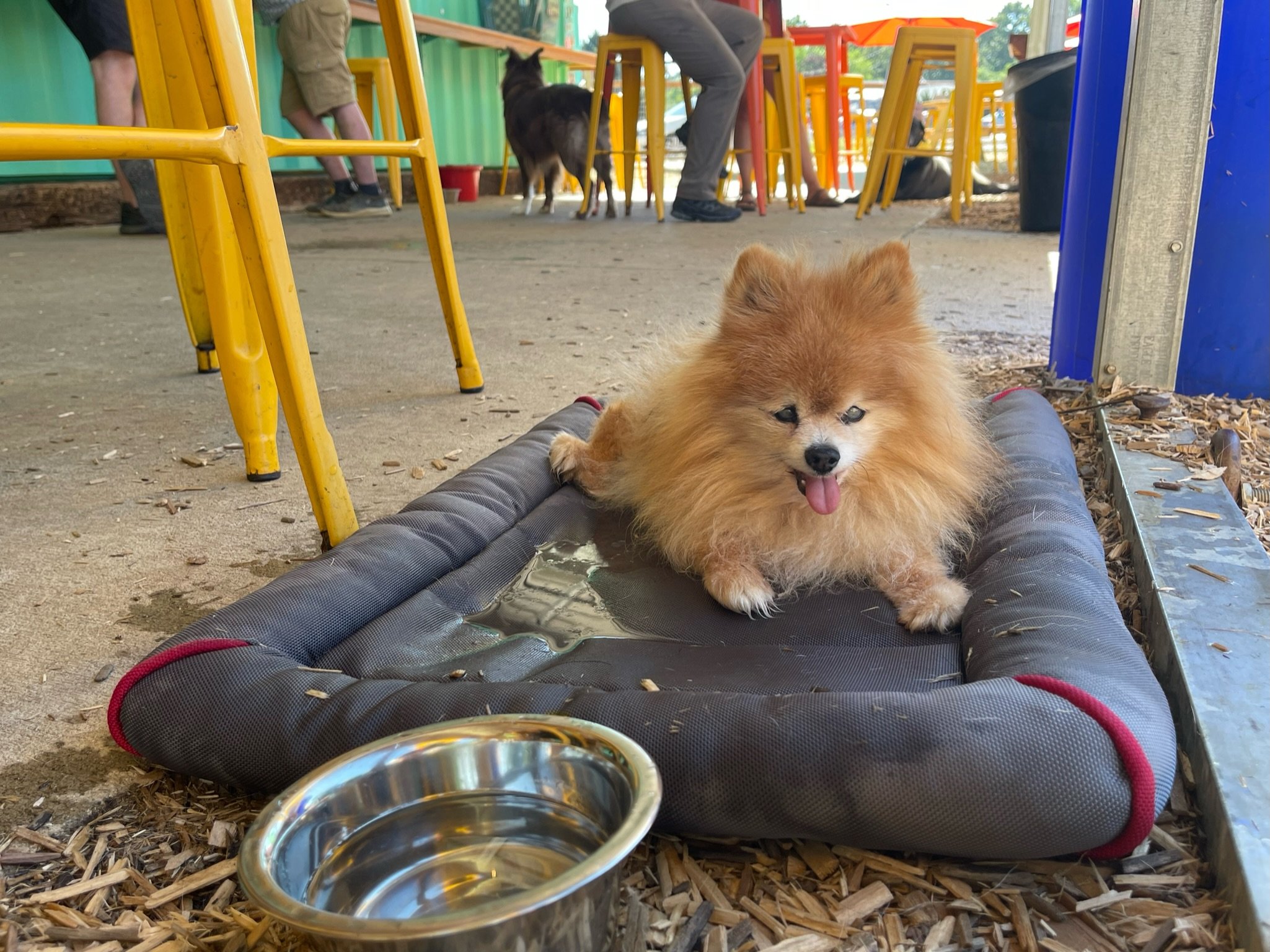
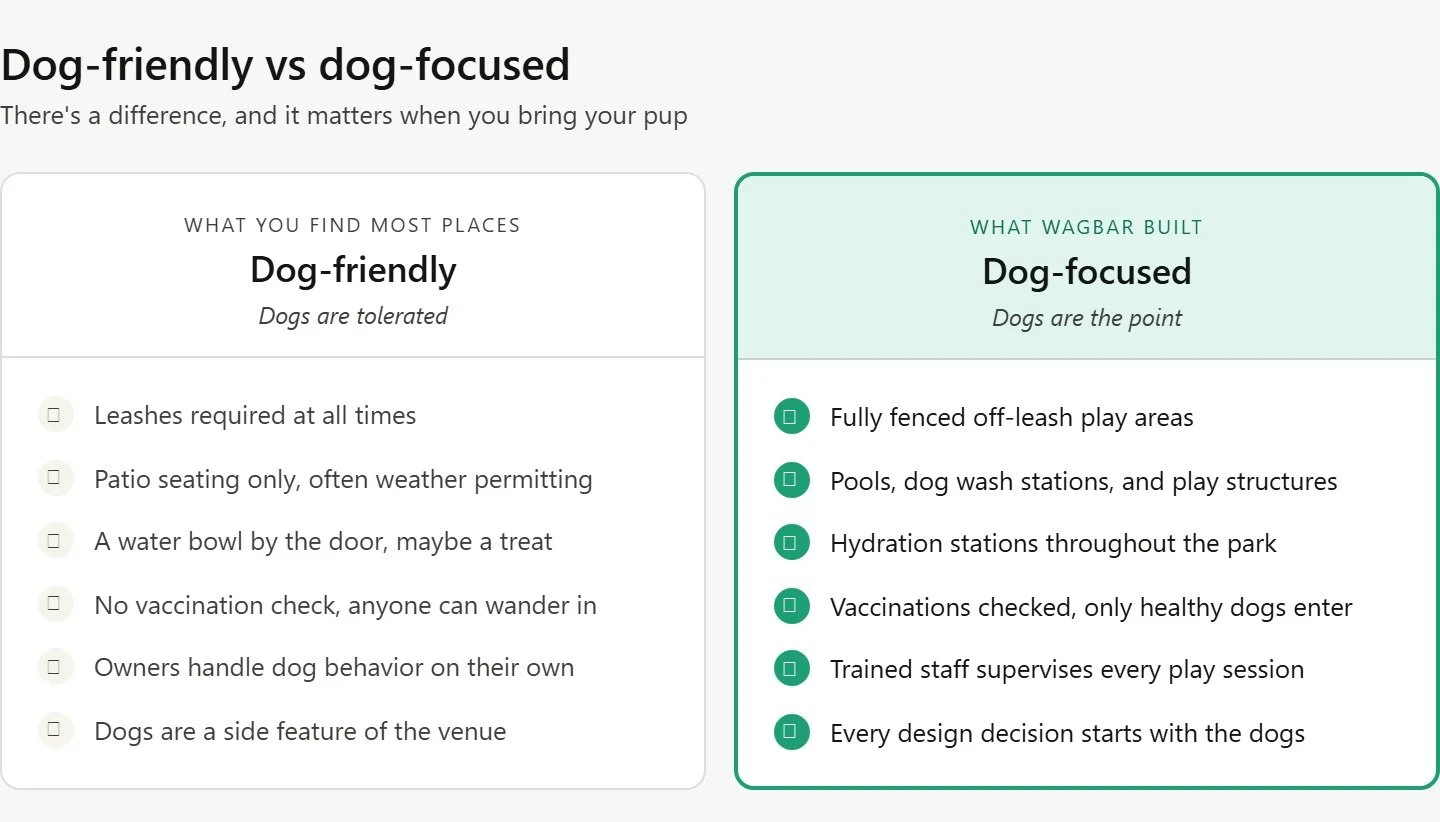
The term spans a wide range. On the lower end, pet friendly means a business tolerates your dog's presence in a limited area, usually outdoors, on leash, close to you, under your full physical control at all times. Your dog is allowed there, but the space wasn't designed with them in mind. The experience for your dog is largely passive: they sit, they wait, they observe, and they stay managed.
On the other end of that range are venues purpose-built around dogs. Fenced play areas with trained staff, vaccination requirements that filter out risk factors, room to run, and other dogs to interact with. The dog isn't a permitted accessory; the dog is why the place exists.
Most dog owners move between both types of venue without thinking much about what they're actually offering their dog in each case. This article breaks that down.
What a Leash Actually Does to a Dog
A leash is a management tool, not a social tool. It keeps a dog physically contained and connected to their owner, which serves a clear purpose in public spaces. But in social contexts, a leash fundamentally changes what a dog can do and how other dogs interact with them.
Dogs greet each other through movement. A natural greeting involves curved approaches, sniffing at the hindquarters, circling, and the ability to move away if either dog becomes uncomfortable. A leashed dog can't do any of that properly. They're constrained to a narrow radius, often unable to circle, frequently pulled back or shortened when another dog approaches, and unable to create distance when they want it.

This forced proximity, without the body language options that normally regulate canine interaction, is a significant source of leash reactivity. Dogs that are perfectly social off-leash sometimes display aggression or excessive pulling on leash specifically because the leash removes their ability to respond naturally. The leash creates tension in situations where the dog would otherwise just sniff and move on.
Understanding this is important context for why the setting matters so much. If your goal is exercise and physical stimulation, an on-leash walk or an on-leash patio visit serves that. If your goal includes genuine social interaction and the kind of play that burns real energy and provides mental engagement, off-leash time in a managed environment does something fundamentally different.
What On-Leash Pet Friendly Venues Look Like in Practice
A dog-friendly patio, a brewpub that allows dogs, a shopping area where pets are permitted: these are on-leash environments. Your dog is present but managed. The experience for them typically includes:
Proximity to you, which many dogs enjoy
Environmental exposure (new smells, sounds, people)
Attention from passersby who ask to pet them
Waiting, often for extended periods, while you do something else
For some dogs, this is genuinely pleasant. Dogs that are social with people, low-energy by temperament, or simply enjoy lying near their owner in a new place can have a good time on a brewery patio. It's a low-stimulation outing that satisfies their need to be with you in a new environment.
For other dogs, particularly high-energy breeds, young dogs, or dogs with a strong need for social interaction with other dogs, an on-leash outing is closer to a tease. They can see and smell other dogs. They can't interact with them normally. They might sit still for a while, but they're not actually getting what they need.
For tips on understanding your specific dog's needs, the urban dog exercise guide covers how to match activity type to dog temperament and energy level.
What Off-Leash Pet Friendly Venues Provide
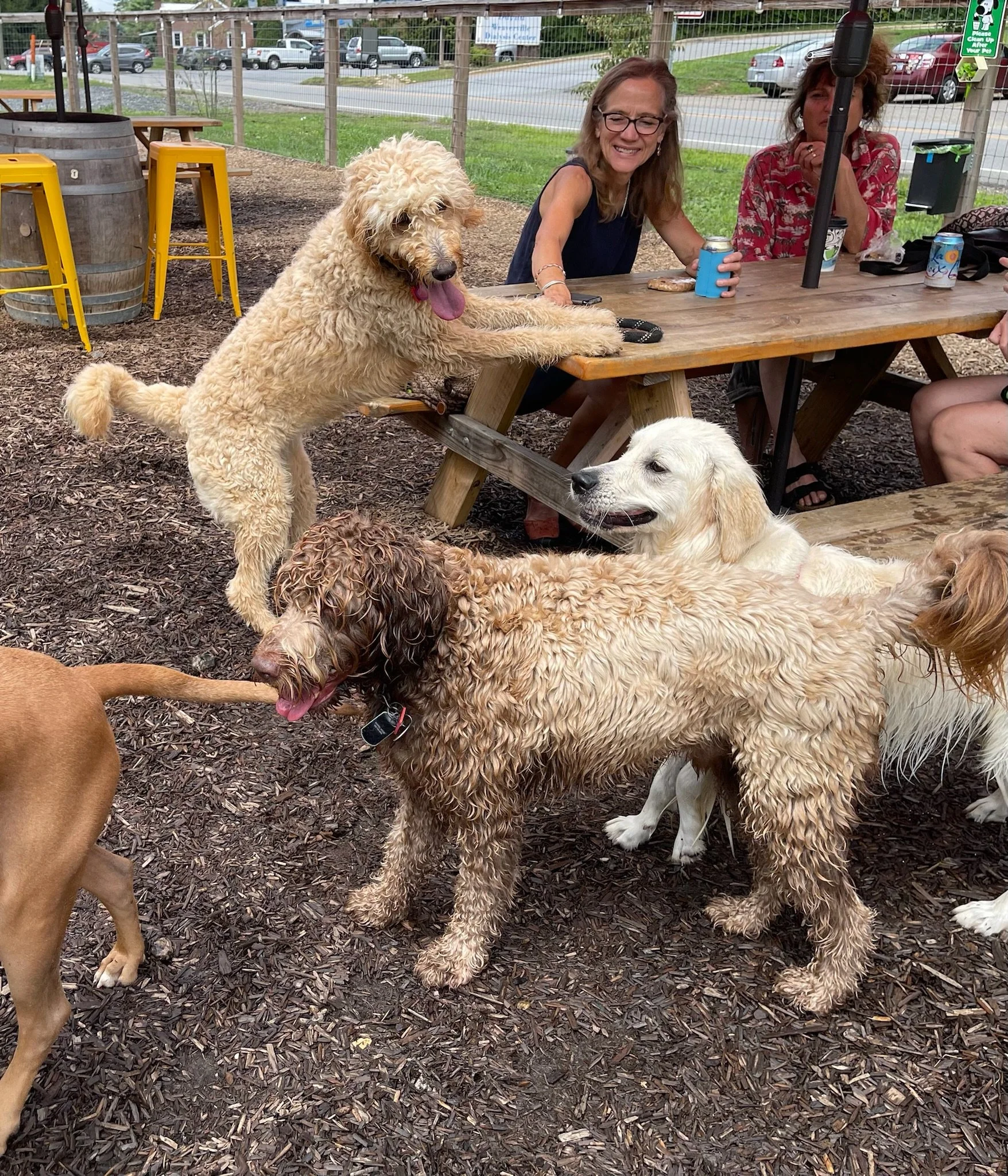
Off-leash environments give dogs access to the kind of movement and interaction that their basic biology is built for. Running at full speed. Choosing their own direction. Approaching and retreating from other dogs based on their own read of each interaction. Burning real energy rather than restrained energy.
At Wagbar, the off-leash dog park and bar operates with a fully fenced perimeter and active staff supervision throughout. All dogs entering must have current Rabies, Bordetella, and Distemper vaccinations, and must be at least 6 months old and spayed or neutered. This isn't bureaucratic friction: it's what makes a shared off-leash environment safe enough to work. The vaccination requirement means the population of dogs in the park at any given time carries substantially lower disease risk than an unsupervised public dog park. The spay/neuter requirement reduces the probability of hormone-driven tension in the group.
The result is a space where dogs can actually do dog things. Play, run, sniff, wrestle, and rest when they're tired, without being physically restricted to a three-foot radius around their owner.
For an owner, it also means something different. At an on-leash venue, you're managing your dog continuously. At an off-leash venue with proper fencing and supervision, you can sit down, order a drink, watch your dog from the bar, and have an actual conversation. The dog gets real exercise. You get real downtime. Both happen at the same time.
Why Vaccination Requirements Change the Equation
One of the underappreciated differences between a supervised off-leash venue like Wagbar and a free public dog park is entry standards.
Public dog parks in most cities have no vaccination requirements. Anyone can bring any dog. The social and safety benefits of off-leash play exist, but so does a higher baseline risk from unvaccinated dogs, dogs with unknown behavior histories, and no staff to intervene when something goes sideways.
Supervised off-leash venues raise that floor considerably. When every dog in the park has current Rabies, Bordetella, and Distemper vaccinations, you're eliminating a significant category of risk. When staff are actively monitoring for behavior issues rather than leaving intervention to owners who may not see the warning signs, you have a safety layer that a public park simply doesn't offer.
This matters especially for owners who've had negative experiences at public dog parks and written off off-leash play as too risky. The variables that make public parks unpredictable -- unknown dogs, no vaccination baseline, no staff, inconsistent owner attentiveness -- are largely controlled in a properly run supervised venue. For more on reading canine communication in group settings, the dog body language decoder is a useful resource for any owner spending time in off-leash environments.
The Socialization Difference
Socialization isn't exposure. A dog tied to a post outside a coffee shop is exposed to the environment. A dog moving freely among other dogs, negotiating play, practicing the body language of approach and retreat, and reading dozens of social signals per minute is socializing.
The distinction matters because socialization builds behavioral flexibility. Dogs that regularly interact with other dogs in off-leash settings tend to develop better communication skills, more accurate reads of social cues, and more resilience when something doesn't go as expected. Dogs that are mostly leashed in public environments and rarely get off-leash dog-to-dog interaction sometimes become oversensitive to encounters -- either overexcited because they rarely get the chance, or increasingly reactive because they've never learned to read and respond to normal canine play.
If your dog currently struggles with leash reactivity or overexcitement around other dogs, the reactive dog training guide covers how to work toward off-leash readiness. Off-leash socialization is often part of the solution, not something to wait on until the problem resolves itself. Similarly, the off-leash training checklist helps you assess whether your dog is ready for a group off-leash environment and what skills to build first.
Matching Venue Type to Your Dog
Not every dog should be in an off-leash park. Not every outing needs to be a full play session. The goal is knowing what your dog actually needs from a given trip out.
Dogs that tend to thrive in off-leash venues:
High-energy breeds that need more than a walk
Socially confident dogs that read other dogs well
Young dogs building their social vocabulary
Dogs that get restless or frustrated on extended on-leash outings
Dogs that may be better suited to on-leash outings, at least initially:
Dogs with a history of reactivity or aggression toward other dogs
Dogs that have had limited socialization and may be overwhelmed by a large group
Puppies under 6 months (the minimum age for Wagbar)
Dogs recovering from injury or illness
The answer for many dogs isn't one or the other permanently. It's a combination, with the venue type matched to what the dog needs that day and what they're currently ready for. The dog park behavior guide covers what healthy off-leash play looks like and what signs suggest a dog isn't ready or is getting overstimulated, which helps owners make better calls in the moment.
What Wagbar Adds to the Off-Leash Picture
Wagbar was built specifically around the idea that an off-leash dog park and a social bar belong together. Dogs get a fully fenced, supervised play environment. Owners get a real bar -- draft and canned beers, wine, cider, hard seltzer, non-alcoholic options -- with covered seating, rotating food trucks, and events built around the community that forms around this kind of space.
The combination changes the calculus for the owner. An off-leash dog park alone often means standing in a field, watching your dog, and then leaving. At Wagbar, you have something to do that's genuinely enjoyable while your dog does what they came to do. The social environment for people is as intentional as the play environment for dogs.
Locations operate year-round, seven days a week, with covered patios and heaters for cooler months. Each location is slightly different in layout and features, but all share the same core structure: secure fencing, supervised play, a full bar, and food service. Find the nearest Wagbar at the locations page, or review entry requirements at the FAQ before your first visit.
Bottom TLDR The difference between off-leash and on-leash pet friendly venues comes down to what your dog can actually do at each one. Supervised off-leash parks with vaccination standards and trained staff provide a level of safety and genuine social engagement that on-leash settings can't replicate. Visit the Wagbar locations page to find a supervised off-leash dog park bar near you.
Frequently Asked Questions
Is a dog-friendly patio the same as an off-leash dog park?
No. A dog-friendly patio allows dogs on leash in a designated area, usually outdoors. An off-leash park provides a fenced space where dogs can move and interact freely without a leash. The experiences for your dog are fundamentally different.
Are off-leash venues safe for all dogs?
Not necessarily. Dogs with a history of aggression toward other dogs may not be appropriate for group off-leash environments. Dogs need to be current on vaccinations and, at Wagbar, must be spayed or neutered and at least 6 months old. If you're unsure whether your dog is ready, the off-leash training checklist is a good starting point.
Why do some dogs seem more stressed on leash than off?
Leashes restrict a dog's ability to move and communicate naturally. Dogs use movement -- curved approaches, circling, moving away -- to regulate social interactions. When that's removed, situations that would normally be simple can become tense. This is one of the reasons leash reactivity is so common.
Does my dog need off-leash time if they get plenty of on-leash walks?
On-leash walks provide physical exercise and environmental exposure. Off-leash time provides different benefits: full-speed movement, dog-to-dog social interaction, and the mental engagement that comes from navigating a dynamic environment. Many dogs benefit from both, not just one.
What makes a supervised off-leash venue different from a public dog park?
Vaccination requirements, staff oversight, and behavior standards. At Wagbar, every dog must have current Rabies, Bordetella, and Distemper vaccinations, and trained staff actively monitor the park. Public parks typically have none of these controls.
Whether you're deciding between a brewery patio trip and a Wagbar visit, or thinking about what your dog actually gets out of the outings you take them on, the on-leash versus off-leash distinction is worth understanding clearly. Both types of pet friendly venues have a place. Knowing which fits your dog on a given day is what makes the difference.