

Off-Leash Dog Bar vs. Dog-Friendly Brewery: Why Leashed Patios Fall Short for Active Dogs
Top TLDR: Off-leash dog bar vs. dog-friendly brewery comes down to one thing: can your dog actually move. Off-leash dog bars give active dogs a fenced, supervised yard to run in while you drink. Dog-friendly breweries only allow leashed dogs to lie at your feet on the patio. For high-energy dogs that haven't been exercised, pick the off-leash format and skip the leash conflict.
An off-leash dog bar lets active dogs run freely in a fenced, supervised yard; a dog-friendly brewery only allows leashed dogs to lie at your feet on the patio.
The two venues look similar on Instagram but solve completely different problems for the dog.
Active and young dogs often get worse, not better, at brewery visits because tethered time amplifies frustration and reactivity.
Pick the off-leash dog bar when your dog needs exercise and social play; pick the brewery when your dog is already worn out and just wants to nap under your chair.
The Brewery and the Dog Bar Look Similar From the Outside
You're driving home from work on a Friday and you want a beer somewhere your dog can come along. Two doors are open. One is the brewery down the road that allows dogs on the patio. The other is an off-leash dog bar that opened last year on the other side of town. Same beer. Same dog-welcoming vibe. Both have outdoor seating.
For a sleepy senior beagle, those two venues are roughly the same. For a 40-pound, two-year-old shepherd mix that's been crated all day, they are not. One option is a beer with your dog tethered next to you, fighting the leash for an hour, getting up every two minutes. The other option is a beer while your dog runs full speed for 45 minutes, then collapses panting in the grass.
Both formats market themselves as dog-friendly. Only one is built around what an active dog actually needs. This piece covers the difference, why it matters more for some dogs than others, and when each option is the right call.
What "Dog-Friendly Brewery" Actually Means
A dog-friendly brewery is a brewery that allows leashed dogs in its outdoor seating area. That's the entire definition. The brewery is built for humans drinking beer. Dogs are tolerated, not designed for.
Walk onto a typical dog-friendly brewery patio and look at what's there for the dog. A water bowl, sometimes. A spot of shade if you're lucky to grab the right table. The hard concrete floor. Foot traffic from servers and other patrons. Other leashed dogs at neighboring tables, six feet away but inaccessible. Maybe a treat from a friendly bartender. That's the full amenity list.
The brewery's job is to pour beer. State and local health codes govern how they do it, and most jurisdictions let dogs on outdoor patios but not inside the brewing area or food service zones. So the patio becomes the default dog-allowed space. The brewery isn't being generous. They're working within the rule that says they can't have dogs inside, so they put up a sign saying dogs are welcome outside.
This format works fine for a specific kind of visit. You ate dinner at home, you walked your dog for a solid hour, your dog is calm and tired, and you want one beer outside on a beautiful evening. Your dog lies down at your feet and falls asleep. Everyone's happy.
The problem is when this is supposed to be the dog's main outing of the day. It usually isn't enough. The brewery format gives the dog almost nothing. No free movement. No social play with other dogs. No room to do anything but sit, lie, or strain at the leash. For an active dog that's been waiting all day for a real outing, this is closer to extended punishment than a treat.
The Leash Problem for Active Dogs
Active dogs are wired to move. A husky wants to run. A border collie wants to herd. A young lab wants to do anything that involves friction and momentum. Tethering one of these dogs to a chair leg for an hour at a brewery doesn't relax them. It builds tension.
You can see it in the body language. The dog stands up, sits down, stands up again. Pulls toward the dog three tables over. Stares at every passing human. Whines when nobody pets her. Eventually the owner gets frustrated and either leaves early or starts using their hand to physically hold the dog down, which doesn't work and looks bad.
The breeds most likely to have this problem are exactly the ones owners proudly bring to breweries. Working breeds. Sporting breeds. Terriers. Huskies, who genuinely need the kind of high-output exercise that an off-leash environment built for huskies actually provides. Border collies, who do better at a proper play space designed for their drive. Young labs, golden retrievers, shepherds, and the entire doodle category.

The same dog that would lay calmly at a patio after 45 minutes of off-leash play will be a wreck at a patio after a normal day in the crate. The order of operations matters more than the brewery is set up to admit.
A dog that pulls toward other dogs on a brewery patio isn't being bad. The dog is doing exactly what makes evolutionary sense: trying to interact with the obvious social opportunity in front of them. The leash blocks them. They get frustrated. They start vocalizing. Other patrons get annoyed. The owner feels embarrassed. The dog isn't allowed to do the thing that would actually relax them. The visit ends badly. Our dog body language decoder shows what mounting frustration looks like before it tips into a problem.
Behavior Problems That Come From Repeated Brewery Visits
This is the part most owners don't see until later. Bringing an under-exercised dog to a leashed brewery setting once is fine. Doing it every weekend for a year teaches the dog things you don't want them to learn.
The first problem is leash reactivity. The dog repeatedly experiences other dogs in close range while being held back by a leash. The frustration of not being able to greet builds an association. Eventually the dog starts barking and lunging at every leashed dog they see, even on regular walks far from any brewery. The behavior wasn't there at six months. By 18 months it's a full-time issue and the trainer is asking what changed.
The second problem is settling refusal. The dog learns that brewery visits are stressful and exciting and exhausting in the bad way. They start pulling toward the door before you even finish your beer. They never relax during the visit, no matter how long you stay. You start wondering why the brewery isn't fun anymore.
The third problem is general arousal. Active dogs that don't get appropriate outlets find their own outlets. Couch shredding. Counter surfing. Barking at every passing car. These behaviors get blamed on boredom, separation anxiety, or "puppy stuff that didn't go away," when the real cause is that the dog has been getting tethered to outings instead of actually exercised. The urban dog exercise resource covers what daily exercise actually needs to look like for these breeds.
None of this means the brewery is the villain. It means the format isn't doing what some owners think it's doing. The brewery is offering you a beer with your dog allowed nearby. It is not offering your dog exercise, social time, or a meaningful outlet.
What an Off-Leash Dog Bar Does Differently
An off-leash dog bar is built around the dog. The brewery layout puts humans first and adds dogs as a permitted accessory. The dog bar layout starts with a fenced play yard for the dogs and adds bar seating for the humans on the same property.
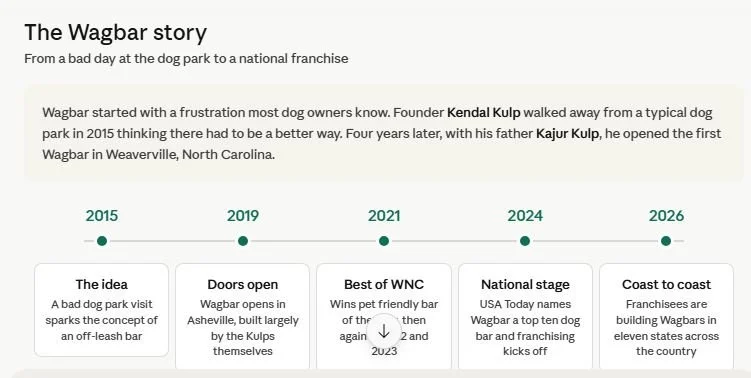
When you walk into a Wagbar location, the first thing you see isn't the bar. It's the play yard. Thousands of square feet of fenced, supervised space where dogs can sprint, wrestle, fetch, swim in summer kiddie pools, and rest in shade structures. The bar is positioned so you can sit at it, order a drink, and watch your dog do all of that. Trained staff are inside the yard the entire time, redirecting rough play and watching for warning signs.
The leash comes off at the gate. Your dog joins the screened pack and runs at their own pace for as long as you stay. After 30 to 45 minutes of real play, most active dogs settle on their own. They flop in the grass. They take water. They come find you for a chest scratch. The visit looks exactly like what brewery visits were supposed to look like, except the dog actually got what they came for.
Wagbar's Weaverville flagship sits in the middle of brewery-rich Asheville, which makes the comparison concrete. Owners who used to bring their high-drive dogs to Asheville's craft beer patios and struggle with frustration behavior often switch over once they realize the math. The dog gets exercised. The owner gets a beer. Both of those happen in the same hour, on the same property, without the leash conflict.
The format also stacks human amenities on top. Indoor seating for cold or rainy days. Real bathrooms. Food trucks several days a week. Trivia nights, breed meetups, live music, and a community of regulars who keep coming back.
The Exercise Math: A Brewery Visit Is Not Exercise
This is the math that gets skipped. Most active dogs need somewhere between 60 and 120 minutes of meaningful exercise per day, depending on breed, age, and individual temperament. That's not "ambient time outside." That's actual movement: running, sniffing, swimming, chasing, wrestling.
A brewery patio visit gives the dog roughly zero of those minutes. The dog walked from the car to the patio (two minutes), and then sat or lay down for 45 to 90 minutes while you drank. The leash walk to and from the car covered maybe 100 yards total. A two-year-old border collie that needs two hours of exercise just got two minutes of it. The other 118 minutes are still owed.
Multiply this across a typical brewery weekend. The owner thinks they spent four hours "with the dog" because the dog was at the brewery and then on the patio for brunch and then at the friend's BBQ. The dog got maybe 20 minutes of actual movement across all those events. The dog comes home as wound up as they were that morning, except now it's 8 PM and time for bed.
An off-leash dog bar visit fixes the math in one stop. 45 minutes of off-leash sprinting equals roughly the daily exercise quota for most active dogs. You also got to sit at a bar with a drink while it happened. The visit replaces the brewery and replaces the missed walk. Two birds with one trip. The urban dog ownership resource covers how to weave this kind of visit into a sustainable weekly schedule.
When a Dog-Friendly Brewery Is Still the Right Call
Not every dog needs the off-leash format every time. Some scenarios where the brewery still works:
Your dog is a senior with low daily exercise needs. You already gave them a real walk earlier. They're tired and they like sleeping at your feet. The brewery is fine. Your dog is a small breed that's already been worn out by 20 minutes of indoor play. Brewery is fine. Your dog has trained settle behavior and the brewery is a normal weekly stop, not the entire outing. Brewery is fine.
The brewery is also the right call when your dog isn't the focus. You're at a friend's birthday party. You're celebrating an anniversary. You're going somewhere specific because the people matter more than the dog's exercise that hour. The brewery accommodates dog presence so you can include the dog without the dog being the point.
Mixing the two formats over a week is normal. A common rotation looks like: weekday off-leash dog bar visits for exercise, weekend brewery patios for chill time after a morning hike. The dog gets the active outlet they need, and the brewery becomes the reward instead of the substitute. The off-leash training checklist helps you tell whether your dog is ready for the off-leash side of that rotation.
When the Off-Leash Dog Bar Is the Right Call
The off-leash dog bar is the right pick whenever the dog actually needs to move. That includes most weekday visits for working-age dogs, almost all visits for puppies and adolescents, every visit for high-drive breeds, and any visit where the dog has been crated for more than four hours that day.
It's also the right pick when you've noticed the brewery isn't fun anymore. The signs are clear: your dog won't settle at brewery visits, has started barking at other patrons or dogs, comes home as wired as they left, or has developed leash reactivity over the past few months. The brewery format is making something worse. The off-leash format usually fixes it within a few visits.
For owners who go more than a couple times a month, a Wagbar membership makes the per-visit cost lower than the cost of brewery beers. Three brewery visits a week at one beer each runs $30 to $50 depending on the city. A monthly membership at most off-leash dog bar locations is comparable, includes unlimited yard access, and your dog gets the actual exercise they need.
Frequently Asked Questions
Is a dog-friendly brewery the same as an off-leash dog bar?
No. A dog-friendly brewery is a brewery that permits leashed dogs on the patio. An off-leash dog bar is a venue purpose-built around a fenced play yard where dogs run free under staff supervision while humans drink at an attached bar. The brewery treats dogs as guests. The off-leash dog bar is built for them.
Can I bring an active dog to a brewery if I exercise them first?
Yes, and that's actually the right way to do it. The brewery patio works well for dogs that have already had a meaningful workout. The problem isn't the brewery itself. It's using the brewery as a substitute for exercise the dog still needs. A long off-leash run beforehand changes the brewery from frustrating to relaxing.
Do off-leash dog bars sell food?
Most do, in some form. Wagbar locations often partner with rotating food trucks several days a week. Some have bar snacks like pretzels, charcuterie, or simple sandwiches. The food selection is usually smaller than a full restaurant but covers a reasonable bar menu. The Wagbar locations page lists what each spot offers.
Will my dog be safe in a yard with strange dogs?
At a reputable off-leash dog bar, yes. Vaccination is verified at the gate. New dogs go through a behavior introduction. Trained staff supervise the play yard the whole time and intervene before rough play tips into a fight. The setup screens out the kinds of dogs that cause problems at unsupervised public dog parks. The dog socialization and behavior hub covers what a healthy social setting looks like.
What if my dog is shy or doesn't want to play?
That's fine. Most off-leash dog bars have separate calm areas or quieter time slots for dogs that don't want full pack interaction. Your dog can be at the venue without being in the middle of the play yard. Owners often start there with a sensitive dog and let the dog choose the pace. Staff can advise on the best time of day to come for a calmer environment.
How long should a typical visit last?

Plan on 45 minutes to two hours. Most dogs do their best play in the first 30 to 45 minutes, settle for a while, and then start signaling they're ready to go home. Owners often stay longer because they're talking to other people at the bar by then. The dog will tell you when they're done. They'll come find you and lean against your leg.
Are off-leash dog bars only for high-energy dogs?
Not at all. Active and high-drive dogs benefit the most because they get the most relative gain from real off-leash time. But common breeds at Wagbar span the full range, including small dogs, senior dogs, and laid-back companion breeds. The format works for any dog whose owner wants supervised social time and a place to relax with a drink.
Final Word
Dog-friendly breweries are great venues for the right kind of visit. They are not exercise. They are not social play for the dog. They are a place where humans can drink and dogs can lie at their feet without anyone making a scene about it.
For active dogs, that's not enough most of the time. Tethering a high-drive dog to a chair leg builds frustration that shows up later as reactivity, restlessness, and refusal to settle. The off-leash dog bar fixes the structural problem by letting the dog actually do what they need to do. You still get the beer. The dog also gets a workout. Both of you go home tired in the right way.
If your dog has more energy than the patio life can absorb, swap the brewery for an off-leash dog bar a few times a month and watch what happens. Most owners notice the difference within two visits.
Bottom TLDR: Off-leash dog bar vs. dog-friendly brewery is really a question about what your dog needs that hour. Breweries work for dogs that are already worn out and just want to nap under the table. Off-leash dog bars work for dogs that still need to run, which is most active dogs most days. Match the format to the dog and rotate through both as the week calls for it.