

Off-Leash Dog Bar vs. Dog Park, Dog Cafe, and Dog-Friendly Patio: Complete Comparison
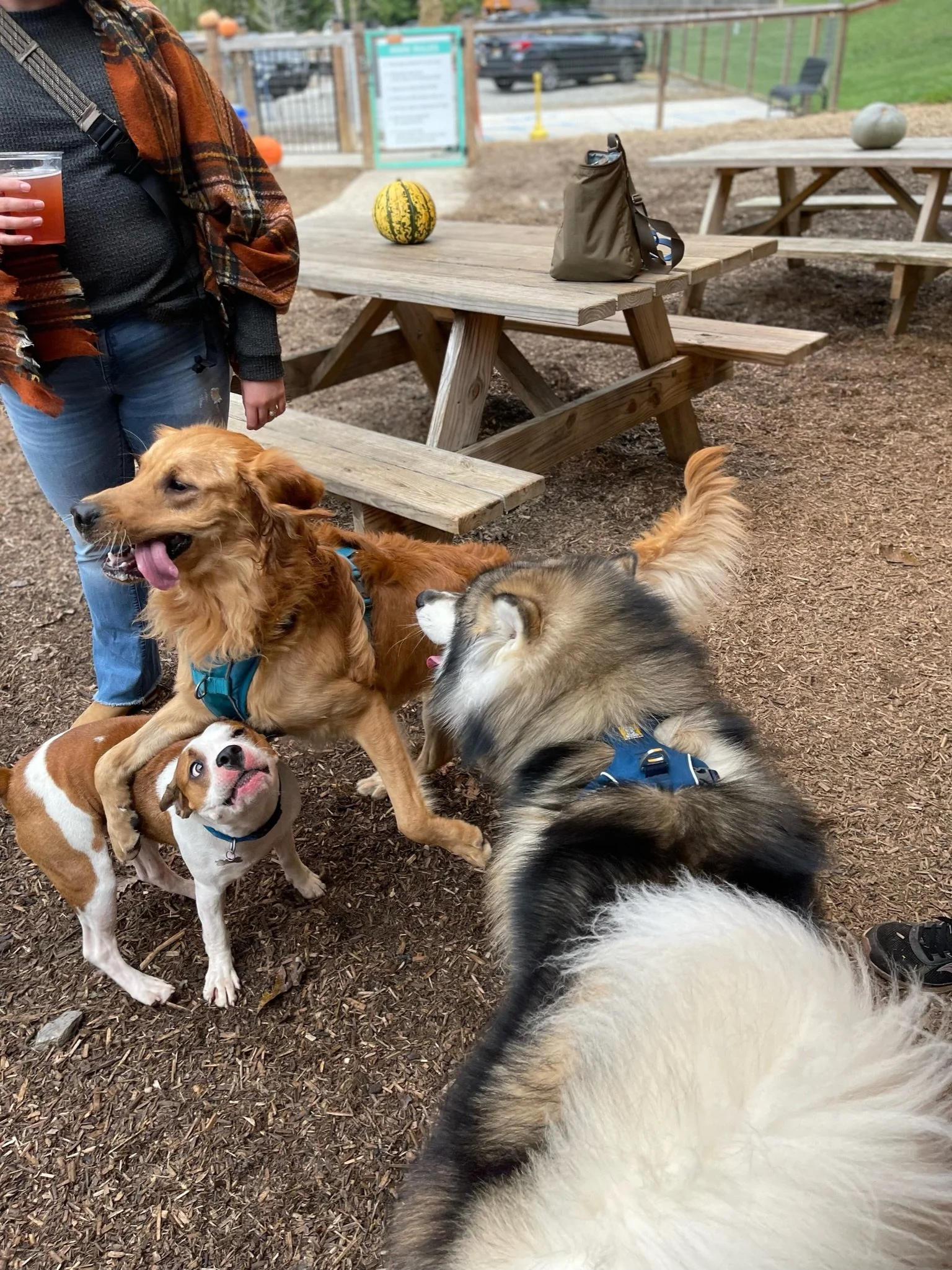
Top TLDR: An off-leash dog bar is a fenced, staff-supervised venue where dogs run loose while humans drink and socialize on the same property. It differs from a public dog park (free but unsupervised), a dog cafe (leashed dogs at indoor tables), and a dog-friendly patio (leashed dogs alongside outdoor dining). Pick the format that matches your dog's energy level and your social plans for the day.
An off-leash dog bar pairs a fenced, staff-supervised dog park with a full bar serving humans on the same lot.
Public dog parks are free but unsupervised, dog cafes restrict dogs to leashed indoor seating, and dog-friendly patios allow leashed dogs alongside human dining.
The four formats sit on a spectrum from "dogs run free with staff watching" to "dogs nap under your table while you eat."
Pick the venue that matches your dog's energy level, your social goals for the day, and how much screening you want at the gate.
Choosing the Right Spot for You and Your Dog
You're standing in your kitchen with your dog at your feet, leash in hand, and a question that should be simple: where do we go? Dog owners across the country face this same fork in the road. Some want their pup to run free for an hour. Others want a beer with friends while their dog naps under the table. A few want both at once.
The answer depends on what each venue actually offers. An off-leash dog bar like Wagbar is not the same as a public dog park. A dog cafe is something else entirely. A dog-friendly patio is its own thing. The differences sound subtle on paper, but they shape your whole visit once you walk through the door.
This piece breaks down all four formats side by side. We'll cover what each one is, how they compare on fencing, supervision, amenities, cost, and what your dog needs to get in. By the end, you'll know which option fits a Tuesday after work, a Saturday afternoon with friends, or a quiet weekday with your senior dog.
What Is an Off-Leash Dog Bar?
An off-leash dog bar is a fenced venue where dogs run loose while humans drink and socialize on the same property. Wagbar pioneered this format in Weaverville, North Carolina, and the model has spread to dozens of cities since.
The setup looks like this. You arrive with your dog and check in at a gated entry. Staff verify your dog's vaccination records and either your membership or day pass. Once inside, your dog joins the rest of the pack in a large fenced area with grass, gravel, water stations, and shade. You head to the bar, order a drink, and grab a seat where you can watch your dog play.

Trained staff stay on site the whole time. They watch the dogs, break up rough play, and step in if a scuffle starts. The bar serves beer, wine, and often hard seltzers or kombucha. Some locations bring in food trucks. Most run weekly events like trivia nights, breed meetups, and live music.
The model fixes the two biggest complaints dog owners have about regular dog parks. First, the supervision problem. Public parks have no staff, which means problem dogs and absent owners can create chaos. Second, the social problem. Dog parks rarely have anywhere comfortable for humans to sit, much less anything to eat or drink. An off-leash dog bar puts the dog park and the bar on the same lot, with adults watching both.
Wagbar's flagship in North Asheville sits on a former farmstead with thousands of square feet of fenced play area. Newer locations in Knoxville, Charlotte, Cary, and Myrtle Beach follow the same template. Members pay a monthly fee for unlimited access. Non-members pay a day rate.
What Is a Public Dog Park?
A public dog park is a free, fenced area maintained by a city or county where dogs can run off-leash without staff supervision. Most U.S. cities have at least one. Some have dozens.
The basic version is a chain-link enclosure with a double-gated entry, a few benches, and a water spigot. Better-funded parks add separate sections for small and large dogs, agility equipment, and shaded pavilions. According to the Trust for Public Land, the number of dog parks in the country's 100 largest cities grew 89% between 2009 and 2020.
The appeal is simple. They're free. They're often close to home. Your dog gets to sprint and roll in the dirt with other dogs.
The downsides are also simple. Nobody is watching. If a dog with no recall comes in and starts trouble, your only option is to grab your dog and leave. Vaccination is on the honor system. There's no bathroom, no food, no drinks, and usually no shade in summer. Maintenance varies wildly by city.
The behavior dynamics get messy too. Without screened entry, any dog can come in. Reactive dogs, intact males, dogs in heat, and dogs who haven't been socialized properly all share the same space. Our complete dog park guide covers etiquette, safety, and what makes a good park visit. The dog park fight prevention page lays out the warning signs every owner should know before walking through that gate.
That said, public dog parks serve a real need. They're the default option for daily exercise, especially for high-energy breeds in city apartments. The trick is picking a well-run park, going at off-peak times, and watching your dog the whole time you're there.
What Is a Dog Cafe?
A dog cafe is a coffee shop or eatery where dogs are welcome inside the indoor seating area, usually under specific rules. The format is more common in cities with high-rise living and dense walkability.
Two versions of the dog cafe exist. The first is a regular cafe that allows dogs in the dining room, often with a dedicated mat or bowl by your table. Your dog stays leashed and stays put. You drink coffee, eat a pastry, and read your book. Some places keep biscuits behind the counter as a treat for visiting pups.
The second version is the cafe with resident dogs you can pet while you eat. This version started in Asia and showed up in the U.S. around 2015. The dogs in these cafes are usually rescues looking for homes, and the cafe doubles as an adoption space. You pay an entry fee on top of your food order.
In both formats, dogs do not run free. There's no off-leash play. The dining area is shared with humans, often kids, and sometimes other allergic patrons. Cafes that allow dogs typically require proof of vaccination, calm behavior, and current flea protection. Cafes that have resident dogs often won't let you bring your own.
The vibe is quiet, slow, and indoor. If your dog is anxious in new places, leash-reactive, or has a hard time settling, this isn't the right format. If your dog is the type that falls asleep on a coffee shop floor and snores through your second espresso, a dog cafe is a great Tuesday morning.
Dog cafes work best for senior dogs, well-mannered small breeds, and city dogs who already do most of their socializing on leash. They don't replace exercise. They replace the part of your day where you'd normally leave your dog at home.
What Is a Dog-Friendly Patio?
A dog-friendly patio is a restaurant or bar that allows leashed dogs in its outdoor seating area only. This is the most common dog-inclusive format in the U.S. because health codes in most states allow dogs outside but not inside food service areas.
The setup is straightforward. You walk up with your leashed dog, the host confirms there's space, and you sit at a patio table. Your dog stays at your feet on the leash for the whole visit. Some restaurants offer water bowls. A few have a "yappy hour" with treats. Many have nothing dog-specific at all but simply don't kick you out.
Dog-friendly patios work great for a meal with friends when your dog has already had exercise. The keyword is "already." A dog who hasn't burned energy will spend the whole meal whining, jumping at servers, or trying to greet every passing dog. A dog who came from a long walk or a dog park session will lay down and let you eat.
The fencing question matters here. Some patios have proper fencing or railings that contain a determined dog. Others are simply tables on a sidewalk with no barriers at all. If your dog has any history of bolting, slipping a collar, or reacting to loud noises, pick a patio with real boundaries.
Vaccination requirements at dog-friendly patios are usually nonexistent. Health departments regulate the food side, not the dog side. The host won't ask for paperwork. You're trusted to have a current and well-behaved dog.
Side-by-Side Comparison Table
The four formats look similar from the outside. The differences show up the moment you compare them on what your dog actually does, what you actually do, and what each place actually requires.
Feature Off-Leash Dog Bar Public Dog Park Dog Cafe Dog-Friendly Patio Dogs off-leash Yes, full off-leash play Yes, inside fenced area No, leashed at table No, leashed at table Fenced perimeter Yes, double-gated entry Yes, varies by location N/A Sometimes Staff supervision Yes, trained staff on site No, owner-supervised only Yes, food service staff Yes, food service staff Vaccination required Yes, proof at entry Honor system only Sometimes, varies No, not enforced Membership or fee Membership or day pass Free Order minimum Order minimum Alcohol on site Yes, full bar No Sometimes Yes Food on site Sometimes, food trucks No Yes Yes Best for high-energy dogs Excellent Good Poor Poor Best for senior dogs Good, separate calm areas Risky Excellent Excellent Best for socialization Excellent, screened pack Variable Limited, leashed only Limited, leashed only Indoor seating in bad weather Yes, most locations No Yes Rarely Cost per visit $5-15 day pass Free Cost of food Cost of food
A few rows in this table do most of the heavy lifting. Staff supervision splits the formats into two camps. Vaccination requirements split them again. The off-leash status of your dog splits them a third time. The other rows refine the picture, but those three columns explain why most dog owners pick between an off-leash dog bar and a public dog park when they want their dog to run, and between a dog cafe and a dog-friendly patio when they want a meal.
Fencing and Supervision: The Safety Layer
Fencing alone doesn't make a venue safe. The Weaverville Wagbar uses six-foot fencing with double-gated entry. Most public dog parks use four-foot fencing with single-gated entry. Both keep dogs in. Only one keeps untrained dogs out.
The screening difference matters more than the height. At an off-leash dog bar, every dog at the gate has a verified vaccine record and a name on the membership list or a day pass on file. Owners have signed a waiver. The staff has a head count and a record of which dogs are inside at any given moment.
At a public dog park, the gate is open to anyone walking by. Some cities require permits for off-leash use. None of them check at the gate. There's no waiver, no headcount, and no real recourse if something goes wrong. The American Veterinary Medical Association recommends choosing parks with separate areas for small and large dogs and avoiding parks where supervision is lax, which describes almost every public park.
Supervision changes how dogs behave too. Dogs read the room. When a calm, observant adult is paying attention, dogs settle into normal play. When everyone is on their phone, the high-energy dogs ramp up and the timid dogs hide. Trained staff at an off-leash dog bar redirect rough play before it tips into a fight. Our dog park behavior breakdown covers what good supervision looks like and the warning signs of brewing trouble.
Dog cafes and dog-friendly patios sit in a different supervision category. Staff watches the room, but they're watching for service issues, not dog body language. If your dog gets stressed, you have to see it yourself. Their fencing question is moot because dogs are leashed the whole time.
Amenities Beyond the Fence
A spot for your dog to play is the start. The amenities decide whether you stay an hour or all afternoon.
Off-leash dog bars stack the most amenities into one footprint. Inside the fence, dogs get water stations, kiddie pools in summer, shaded structures, and play surfaces designed for paws. Outside the play area, humans get bar seating, indoor lounges in some locations, picnic tables, and event programming. Wagbar's flagship runs trivia on Tuesdays, open mic Wednesdays, and themed events like breed meetups and holiday parties most weekends.
Public dog parks offer the basics. Fence, water spigot, a bench or two, and waste bag dispensers if you're lucky. Some city parks add agility equipment. None offer human food or drink. You bring your own water bottle, bug spray, and patience.
Dog cafes offer the full coffee or food menu indoors with dog-tolerant seating. The dog amenities are minimal: a water bowl, maybe a treat, occasionally a small play area in larger venues. The space is built for humans first, with dogs as polite guests.
Dog-friendly patios offer the same restaurant menu you'd get inside, with the patio space as the dog accommodation. Most provide a water bowl on request. A few host dog-themed events on certain nights. The food and drink quality varies wildly because it's whatever the restaurant happens to be.
The amenity mix tells you the format's purpose. Off-leash dog bars are built around dogs and humans together. Dog parks are built around dogs alone. Dog cafes and patios are built around humans, with dogs as a welcome add-on.
Cost Comparison
Money looks different at each format. The sticker price is one thing. The total cost of an actual visit is another.
A public dog park costs nothing to enter. You'll spend money on the gas to get there, on poop bags if you forgot yours, and on the time you spent driving across town because the closest park to your apartment is full of dogs you don't trust. Total visit cost: $0-5.
A dog cafe charges you for whatever you order. A coffee runs $5-7. A pastry adds $4-6. If you want to sit for an hour, plan to order at least once, which puts a typical visit in the $10-15 range. No charge for the dog.
A dog-friendly patio is the cost of your meal. A casual lunch with a beer runs $20-30 per person. A nicer dinner runs $40-60 per person. Again, no charge for the dog.
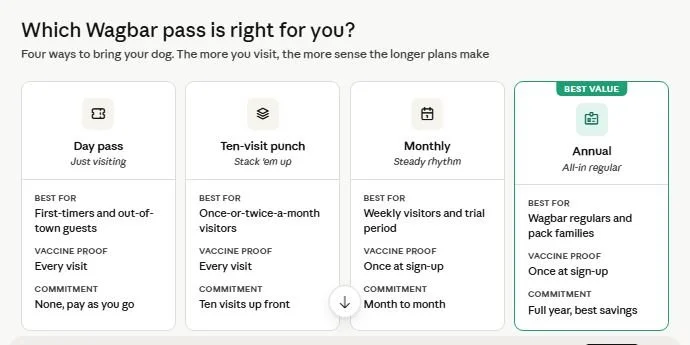
An off-leash dog bar varies by membership status. A day pass runs $5-15 depending on location. A monthly membership at most Wagbar locations puts the per-visit cost down to around $2-3 for someone going twice a week. On top of that, you pay for what you drink and eat from the bar. A typical visit with a beer and a pretzel runs $10-20.
The real comparison is per hour of dog exercise plus human satisfaction. The dog park is cheapest in dollars but often expensive in stress. The off-leash dog bar costs more upfront but gives you a tired dog and an actual adult social outing for the same window of time. Dog cafes and patios don't deliver dog exercise at all, so the cost question is really about whether you wanted that or not.
For owners who go often, a Wagbar membership is usually the best per-visit value. For occasional users, the day pass or a free public park makes more sense.
Dog Entry Requirements

What your dog needs to get in tells you a lot about who else is going to be inside.
Off-leash dog bars ask for the most. At Wagbar, dogs need current rabies, distemper combination (DHPP), and bordetella vaccines. Most locations also require negative fecal tests, current flea and tick prevention, and a behavior evaluation for new members. Spay or neuter is required for dogs over six months old at most locations, though policies vary. Puppies under four months are usually not allowed because they can't be fully vaccinated yet. Our puppy socialization timeline explains why this age cutoff matters.
Public dog parks technically require vaccination per local ordinance, but enforcement is nearly zero. Most parks have a posted sign and nothing more. Some require a permit you buy through the city. Spay/neuter rules vary. Behavior is on the honor system, which means an aggressive dog can show up at any time and there's no formal screening to keep them out. The off-leash training checklist helps owners decide whether their own dog is ready before they go.
Dog cafes vary widely. Some require proof of vaccination at the door. Most just ask that dogs are leashed and well-behaved. The screening is essentially behavioral: if your dog can sit quietly under a table for an hour, you're in. If your dog barks at every passerby, the staff will ask you to leave.
Dog-friendly patios typically require nothing on paper. Health codes regulate the food, not the dogs. A leash and a current rabies tag is usually enough. The trust is implied: you're an adult, you wouldn't bring an unvaccinated dog to a public space.
The pattern is clear. The more dog interaction a venue allows, the more screening it does. Off-leash play with strange dogs requires real verification. Leashed presence at a table requires almost none.
Who Each Format Is Best For
Different dogs and different owners get different results from each venue.
High-Energy Dogs and Active Owners
A border collie, a young lab, or a husky needs more exercise than a leash walk can provide. The common breeds at Wagbar skew toward active sporting and herding breeds for this reason. An off-leash dog bar lets these dogs run for an hour with other dogs, which beats anything you can do solo. Public dog parks work too if you have a good one nearby, but the supervision difference matters more for high-drive dogs that play hard. Dog cafes and patios are non-starters for this group unless the dog has already worked off energy somewhere else.
Senior Dogs and Calm Companions
A 10-year-old golden, a small breed who likes naps, or a recovering rescue does best in low-stimulation venues. Dog cafes are ideal because the room is quiet and your dog can settle on a mat. Dog-friendly patios work in the off-hours. Off-leash dog bars usually have separate calm areas or quieter time slots that work for older dogs, but the busy main yard isn't the place. Public dog parks are risky for senior dogs because younger dogs can play too rough. The dog health and wellness page covers what to watch for as your dog ages.
Apartment Dwellers and City Dogs
If you live in a high-rise without a yard, your dog needs daily off-leash time somewhere. The closest, safest, most consistent option becomes part of your routine. Many city dog owners build their week around two visits to an off-leash dog bar plus one or two patio meals. Dog cafes work as a midweek change of pace. Public dog parks fill in when nothing else is open. Our urban dog ownership resource covers the full weekly rotation.
New Dog Owners and First-Timers
If you've had your dog for less than six months, start with a dog-friendly patio in the off-hours. Practice settling, leash manners, and ignoring distractions. Move to an off-leash dog bar once your dog has solid recall and you've reviewed the dog body language decoder so you can read what's happening on the play yard. Public dog parks are the highest-risk environment for a new owner because there's no staff to ask questions to. Save them for later.
Owners Who Want a Social Life
Off-leash dog bars are the only format built around adult socializing. Dog parks are silent, dog cafes are quiet, dog-friendly patios are conversational but small. If you want to meet other dog owners, watch a band, play trivia, or just have a beer with friends while your dog runs around, the dog bar format is the one that does that. The rise of dog bars as community hangouts traces how this format went from a single Asheville location to a national trend in five years.
When to Pick Each Option
The same dog and the same owner can use all four formats in a given week. The trick is knowing which one fits which day.
Pick an off-leash dog bar when: Your dog has energy to burn and you want a meal or drinks at the same time. You're meeting a friend who doesn't have a dog. You're new to the area and want to meet people. The weather is bad and you need indoor shelter. You're celebrating something. It's a regular Wednesday and you'd be on the couch otherwise.
Pick a public dog park when: You're tight on cash. You have 30 minutes between meetings. The off-leash dog bar is closed or full. Your dog is the only dog there because it's 7 AM. You know the regulars and they're a good crowd.
Pick a dog cafe when: You're working from a third place for the morning. Your dog is calm and likes new environments. You want coffee and a quiet hour. The weather is too cold for a patio. Your dog is past the puppy phase and can settle.
Pick a dog-friendly patio when: You already exercised your dog and now want a meal. You're meeting friends who eat at restaurants you wouldn't normally choose. The weather is perfect. Your dog has good leash manners. You want an actual menu instead of bar food.
The mix shifts as your dog ages. A two-year-old shepherd is at an off-leash dog bar three times a week. A nine-year-old shepherd does one dog park trip plus two patio meals. The format itself isn't the answer. The right format for the right day is.
Decision Framework: How to Choose
When you're deciding what to do today with your dog, run through these four questions in order.
Question 1: Does my dog need to run? If yes, you have two options: off-leash dog bar or public dog park. If no, you have two options: dog cafe or dog-friendly patio. This single question splits your decision in half.
Question 2: Do I want to be around other adults having a good time? If yes, an off-leash dog bar or a dog-friendly patio. If no, a public dog park or a dog cafe. The dog park gets you the silent zen-mode walk-and-watch outing. The dog cafe gets you the quiet coffee and book hour.
Question 3: How much do I trust my dog around strangers? If your dog has solid recall, no resource guarding, and a clean play history, all four are open. If your dog is reactive, anxious, or new to socialization, skip the off-leash formats and stick to leashed venues. A reactive dog at a dog park is a fight waiting to happen. A reactive dog on a quiet patio at lunch is just a learning opportunity.
Question 4: How much am I willing to spend? Free: public dog park. Cheap: dog cafe with a coffee, off-leash dog bar with a day pass. Mid-range: dog-friendly patio for lunch. Higher: dinner patio or membership-based dog bar with multiple drinks. Match the venue to your wallet.
If those four questions still leave you unsure, default to the off-leash dog bar. It covers the widest range of needs in a single venue. Your dog runs, you sit, and the day works.
Frequently Asked Questions
Are dogs really off-leash at off-leash dog bars?
Yes, completely. Once you're inside the gated play area at Wagbar or any reputable off-leash dog bar, your dog stays off-leash for the whole visit. Leashes go on a hook at the gate. Dogs run, play, and rest at their own pace inside the fenced perimeter. The whole point of the format is full off-leash freedom in a screened, supervised environment.
What happens if a fight breaks out at an off-leash dog bar?
Trained staff intervene quickly. They use techniques like the wheelbarrow method or distraction tools to separate dogs without injury. The dogs involved are then assessed, and depending on severity, the instigator may be asked to leave for the day or have their membership reviewed. Compare this to a public dog park, where you're on your own.
Can I bring my dog to any restaurant patio?
No, dog-friendly is a specific designation. Many restaurants don't allow dogs even outside. Always check ahead or look for posted signs. State and local health codes set the rules, and they vary. Most dog-friendly patios are clearly marked and often advertise it. When in doubt, call before you walk over.
Do dog cafes let dogs roam free indoors?
Almost never. Most U.S. dog cafes follow standard health code rules that require leashed dogs at the table. The "dogs roaming free" version exists in adoption-themed cafes where the dogs are residents and you're paying to spend time with them. Bringing your own dog to those is usually not allowed.
Is an off-leash dog bar a good place for my puppy?
Not until your puppy is fully vaccinated, usually around 16 weeks old. Most off-leash dog bars require proof of complete vaccination series before entry. Once your puppy is vaccinated, the supervised social environment is one of the best places for socialization during the critical 16-week to 6-month window. The puppy socialization roadmap breaks down what to do before that.
How do I know if my dog is ready for an off-leash environment?
Your dog should respond to recall in normal situations, not show resource guarding around food or toys, and have basic experience playing with other dogs. If your dog has had bad outings at public dog parks, an off-leash dog bar is often a better fit because of the screening and supervision. If your dog has had bite incidents with other dogs, off-leash group play isn't appropriate, and you should work with a trainer first.
Do off-leash dog bars allow small dogs?
Yes, most do. Wagbar locations have separate small dog areas at most properties, plus the main yard which accepts dogs of all sizes that play well together. Owners of small dogs should ask staff which area is best for their specific dog on a given visit, since the right answer depends on the mix of dogs already inside.
What's the cleanest format from a sanitation standpoint?
Dog cafes typically have the strictest cleanliness standards because they're regulated as food service. Off-leash dog bars are next, with daily sanitation of play surfaces and water stations. Dog-friendly patios sit between cafes and dog bars on cleanliness. Public dog parks are the least controlled, with maintenance varying widely by city and season.
Can I take my dog to a dog bar if I don't drink alcohol?
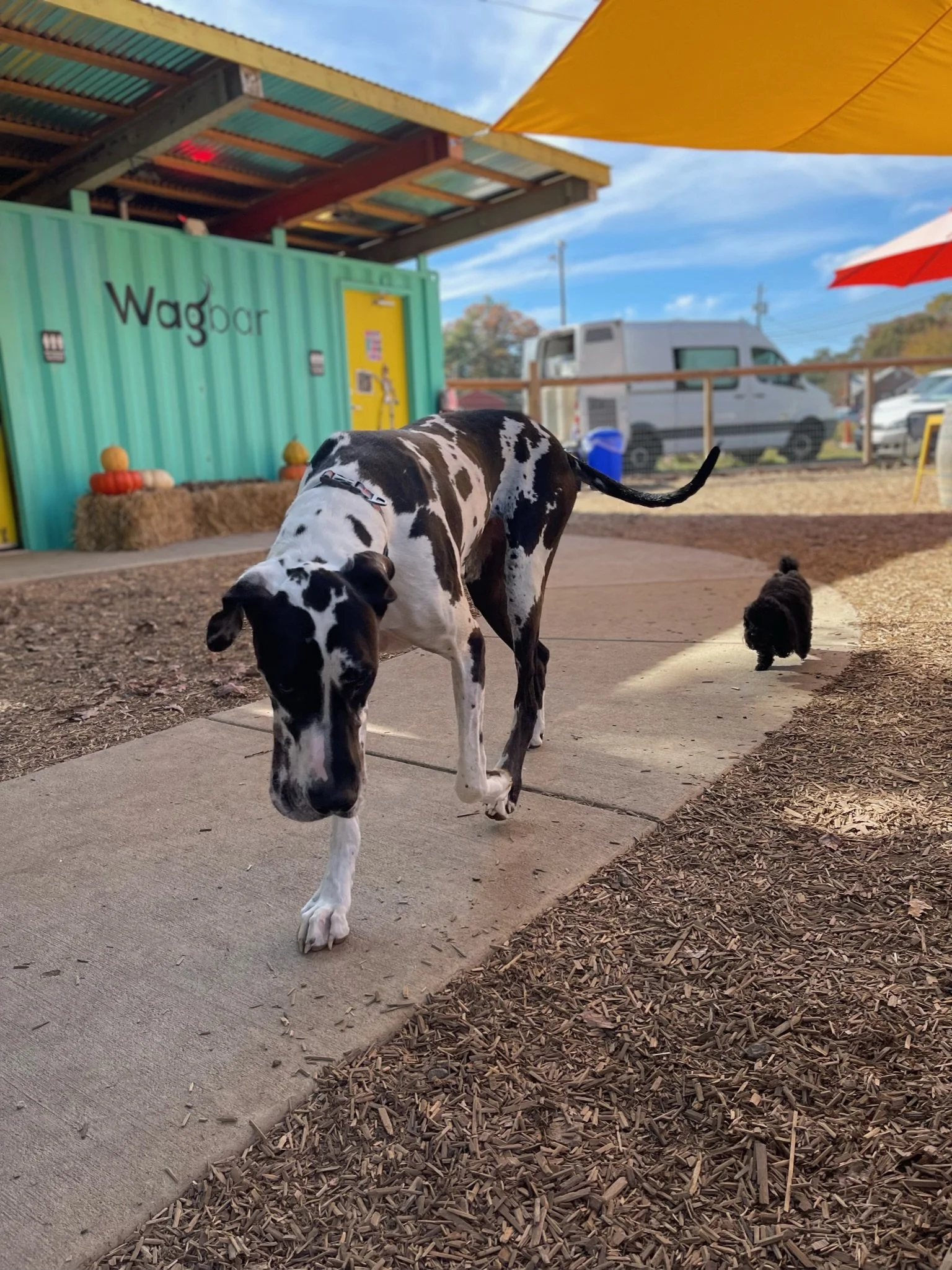
Yes. Most off-leash dog bars sell soft drinks, kombucha, coffee, and non-alcoholic beer. The bar is the central social hub, but you don't need to drink to be there. A lot of regular Wagbar visitors come for the dog play and the community, and order water or a soda. The dog is the reason. The drinks are optional.
Are these formats kid-friendly?
It depends on the venue and the kids. Off-leash dog bars allow children at most locations, though some have age minimums like 12 and up because of liability concerns with kids around dozens of dogs. Dog-friendly patios are usually fine for kids. Public dog parks technically allow kids but most experts recommend against bringing young children because of the bite risk. Dog cafes are usually fine for older kids who can sit quietly.
Key Takeaways
The four formats sit on a clear spectrum. Off-leash dog bars give your dog full off-leash freedom in a supervised, screened environment while you have an actual adult social outing. Public dog parks are free but unsupervised. Dog cafes and dog-friendly patios are for leashed visits where the dog is a guest at your meal. Match the venue to your dog's energy level, your social goals, and your day, then come visit a Wagbar location when off-leash play and a cold drink are both on the list. Want to bring this format to your city? Check out the Wagbar franchising page.