

Off-Leash Dog Bar vs. Dog Cafe: How the Models, Menus, and Dog Policies Differ

Top TLDR: Off-leash dog bar vs. dog cafe is a comparison between two dog-friendly venue formats with different purposes. Dog cafes serve coffee and pastries with leashed dogs at indoor tables during quiet morning hours. Off-leash dog bars serve beer and food truck fare while dogs run free in a fenced yard during evening social hours. Match the format to the time of day and your dog's energy level.
An off-leash dog bar is an evening social venue with a fenced play yard and a beer-and-wine menu; a dog cafe is a daytime coffee shop where leashed dogs sit beside you indoors.
Cafes serve coffee, tea, and pastries. Dog bars serve beer, wine, cocktails, and food truck fare.
Cafe dogs stay leashed at the table. Dog bar dogs run free in a fenced, supervised yard.
Pick the cafe for quiet morning hours with a calm dog. Pick the off-leash dog bar for active social time and real exercise.
Two Dog-Friendly Models, Two Different Days
The category called "dog-friendly venues" sits in a confusing spot in most cities. A search for "dog-friendly spots near me" returns coffee shops, breweries, restaurant patios, dog parks, and a newer entry: the off-leash dog bar. All of them welcome dogs in some form. None of them welcome dogs in the same way.
This piece compares two of those models that get mixed up most often: the dog cafe and the off-leash dog bar. Both involve drinking something while a dog is nearby. That's most of what they have in common. The business model, the menu, the dog policy, the time of day, the atmosphere, and the customer's reason for being there all run on different tracks.
If you've been using one when you actually wanted the other, this should clear up which is which.
What the Cafe Model Looks Like
A dog cafe in most U.S. cities is a coffee shop that permits leashed dogs in the indoor seating area. The business model is the cafe model. They sell coffee, tea, pastries, and light food. The dog allowance is a layer on top, not the core service.
You walk in with your leashed dog, order at the counter, and sit at a table. Your dog stays leashed and lays at your feet. The cafe might have a water bowl by the door. A few have biscuits behind the counter. Some have a designated mat or quiet area for dogs. Most just trust the dog to behave.

The whole format runs on one assumption: the dog can settle. If your dog can lay at your feet for an hour while you work or read, a dog cafe is a great fit. If your dog can't, you're going to have a hard hour. Cafe staff aren't trained to handle dogs that won't settle. Other patrons came for quiet coffee. The format breaks down the moment a dog adds noise.
A second model exists, less common in the U.S. but growing: the resident-dog cafe. Sometimes called a "puppy cafe" or "rescue cafe," these venues have their own dogs that you can interact with while you eat or drink. The dogs are usually rescues looking for homes, and the business doubles as an adoption space. You pay a cover charge on top of the food and drink. You typically don't bring your own dog.
Both models are quiet. Both are indoor. Both treat dogs as leashed companions in a space built for humans first. The cafe model is fundamentally different from a venue built around dogs.
What the Off-Leash Dog Bar Model Looks Like
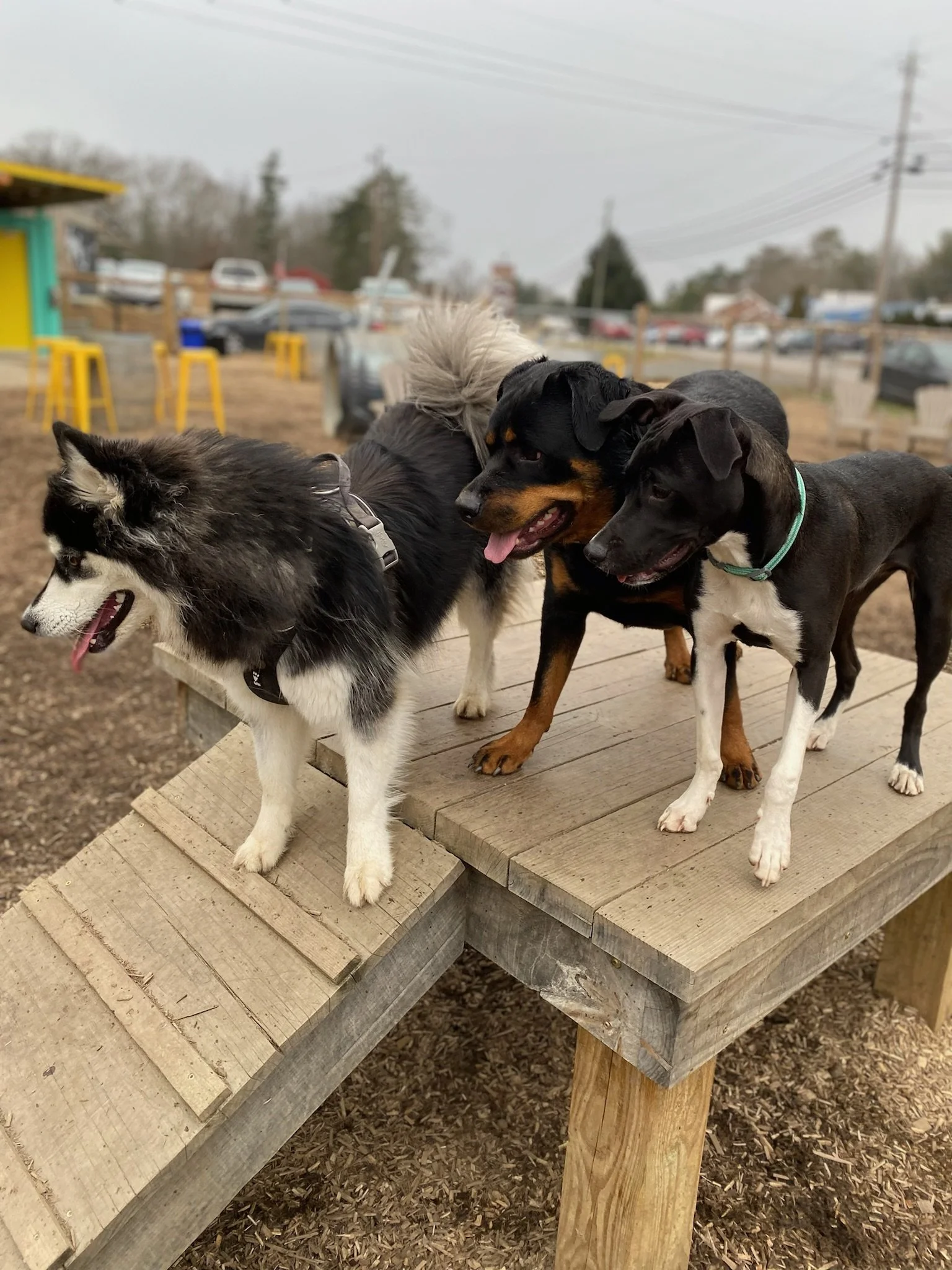
An off-leash dog bar is a bar with a fenced play yard attached. The business model centers on dogs and humans being on the same property at the same time, doing different things in the same space. The yard is for the dogs. The bar is for the humans. Both are core to the model.
When you arrive at a Wagbar location, staff verify your dog's vaccinations and your membership or day pass at the gate. You walk in, the leash comes off, and your dog joins the supervised pack in a large fenced yard. You walk over to the bar, order a beer or a soda, and sit somewhere with a view of the yard. You stay for an hour or two. Your dog runs, plays, drinks water, and rests at their own pace. You watch, drink, and talk to other dog owners.
The model fixes a problem the cafe model can't address. Cafes work for calm dogs. Off-leash dog bars work for active dogs that need to actually move. The yard is the whole point. Without the yard, the bar would just be a bar, and the dog wouldn't have a place to do what they came to do.
The Weaverville flagship shows the format at its busiest. Thousands of square feet of fenced grass, gravel, and shade. A bar that runs trivia on Tuesdays, open mic Wednesdays, and live music on weekends. Owners hanging out for two or three hours while their dogs cycle through play and rest. The vibe is closer to a backyard cookout than a coffee shop.
Menu Comparison: Coffee Shop vs. Bar
The menus tell you what each format is built for.
A dog cafe sells what coffee shops sell. Espresso drinks, drip coffee, tea, hot chocolate. Pastries, muffins, scones, cookies. Sometimes a small lunch menu with sandwiches and salads. The price points run $4 to $8 per drink, $3 to $7 per food item. A typical visit costs $10 to $15 for a drink and a snack.
An off-leash dog bar sells what bars sell. Local craft beer on tap, wine, hard seltzer, kombucha, sometimes cocktails. Soft drinks, bottled water, and non-alcoholic beer for the regulars who don't drink. Many locations partner with rotating food trucks that handle the food side. Wagbar locations typically have food trucks several days a week, plus snacks like pretzels at the bar. Beer prices run $5 to $8, food trucks $10 to $20 per meal.
The menu choice signals the time of day and the social setting. Cafes are designed for the slow morning visit, the work-from-coffee-shop afternoon, the casual catch-up over lattes. Dog bars are designed for the after-work happy hour, the Saturday afternoon hangout, the evening trivia night. Same drinks you'd order at any standard coffee shop or bar. The difference is the dog component.
Some dog cafes have started adding wine or beer in the late afternoon. Some off-leash dog bars serve coffee in the morning. The lines are blurring slightly at the edges, but the core menus stay aligned with the format. Coffee shops are coffee shops. Bars are bars.
Dog Policy Comparison: Leashed Indoors vs. Off-Leash Outdoors
This is the most important difference for the dog. The policies aren't just paperwork. They shape what the dog actually gets to do.
At a dog cafe, the policy is leashed indoors. Your dog must be on a leash at all times. Your dog must stay at your table or directly under it. Your dog cannot greet other dogs, beg from other tables, or wander. Most cafes require proof of current vaccinations, though enforcement varies. Some cafes have a no-puppies-under-six-months policy. Some require dogs to be at least 20 pounds (because tiny dogs in small cafes can be missed and stepped on). All of them require quiet behavior, and any dog that barks repeatedly will be asked to leave.
At an off-leash dog bar, the policy is off-leash inside the fenced yard, leashed in shared transition zones. Wagbar requires verified rabies, distemper combination (DHPP), and bordetella vaccines, with most locations also requiring negative fecal tests and current flea and tick prevention. Spay or neuter is required for adult dogs at most locations. New dogs go through a behavior introduction. Once cleared, dogs run free in the yard, off-leash, for the whole visit. They can play, rest, drink, and choose their own pace.
The policies match the formats. The cafe policy makes the cafe possible. Without leashes and quiet behavior, the cafe model collapses. The dog bar policy makes the dog bar possible. Without the off-leash freedom, you're paying for a regular bar with rules. Our dog body language decoder helps owners understand which environment their specific dog is built for.
The implication: a dog that thrives in one format may not in the other. A border collie that needs 90 minutes of off-leash play will be miserable at a cafe. A 12-year-old senior who likes laying on a cool tile floor won't get much from an off-leash yard. Match the format to the dog.
Atmosphere Comparison: Workspace vs. Social Hangout
The energy of each space is different in ways that aren't obvious until you sit in both.
A dog cafe has the energy of a coffee shop. Quiet talking, soft music, the hiss of an espresso machine, the occasional clatter of a plate. People are working on laptops, reading, having low-volume conversations. Dogs lay on the floor. The atmosphere is calm. If you raise your voice, you get a look. If your dog whines, you get two looks.
An off-leash dog bar has the energy of a busy backyard. Dogs barking, running, splashing in summer. Multiple conversations going on at the bar. Music playing through outdoor speakers. Trivia hosts on certain nights, live music on others. The energy level is higher. People are louder. Dogs are louder. Nobody minds because that's what they came for. The community hangout vibe is a feature, not noise pollution.
This atmospheric difference drives almost every other decision. If you came to focus, the cafe is the answer. If you came to socialize and let your dog run, the off-leash dog bar is the answer. Trying to do focused work at an off-leash dog bar doesn't work. Trying to have an animated group conversation at a dog cafe gets uncomfortable for everyone.
Time of Day: When People Actually Use Each
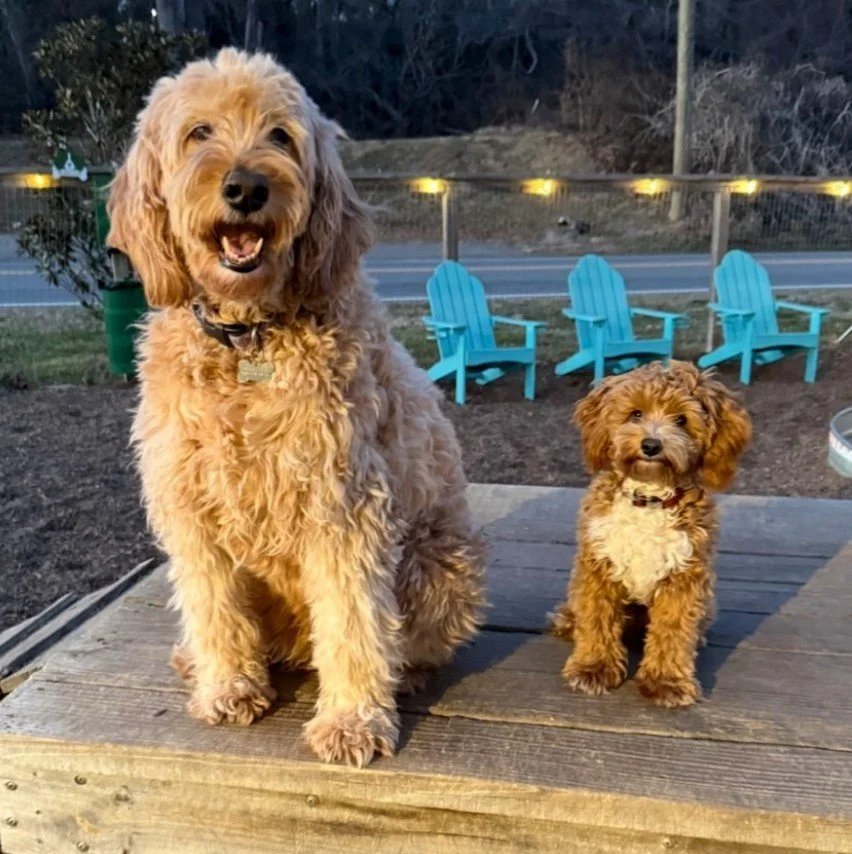
Cafe traffic peaks in the morning and afternoon. Dog cafes follow this curve closely. The 7 AM to 10 AM rush of commuters and remote workers. The 11 AM to 2 PM lunch and meeting crowd. The 2 PM to 5 PM afternoon work session. After 5 PM, dog cafes empty out. Most close by 6 or 7 PM.
Dog bar traffic peaks in the afternoon and evening. Wagbar locations typically open in late morning or early afternoon and run until late evening. The 4 PM to 8 PM happy hour and dinner window is the busiest stretch. Weekend afternoons run busy from noon through evening. Late-night dogs aren't really a thing, but a 9 PM trivia night still sees full tables.
This is why most dog owners use both formats but at different times. The dog cafe handles the work-from-anywhere morning when your dog wants company and you want coffee. The off-leash dog bar handles the post-work or weekend hours when your dog wants to run and you want a beer. The two don't compete because they're not open at the same hours for the same reasons. Our urban dog living resource covers how to weave these into a weekly schedule.
Who Each Format Is Best For
The right format depends on the dog and the day, more than on the owner.
Dog cafes work best for:
Senior dogs and calm temperaments who like sleeping at your feet. Small breeds that travel easily and don't need much space. Dogs that already exercised earlier in the day. First-time dog-out-in-public training, where the controlled environment makes it easier to teach settle behavior. Owners who work remotely and want their dog along for the focus session.
Off-leash dog bars work best for:
Active dogs that need real off-leash exercise. Young adult dogs working on their group socialization skills, especially during the puppy socialization timeline. Apartment-dwelling dogs that don't have yard access. Owners who want to meet other dog people. Owners who want a real social setting, not a focus session. Anyone whose dog has been crated all day and now needs to move.
The breeds at each format diverge predictably. A typical dog cafe sees small dogs, senior dogs, and laid-back companion breeds. The common breeds at off-leash dog bars skew toward sporting breeds, working breeds, and high-energy mixes. Both formats welcome any dog that meets the basic requirements, but the best match depends on what your dog actually needs.
Cost: How the Math Works Out
Per visit, dog cafes are slightly cheaper than off-leash dog bars. A coffee and a pastry at a cafe runs $10 to $15. A beer and a snack at a dog bar runs $10 to $20.
The bigger cost difference shows up at the dog level. Cafes don't charge for the dog. Off-leash dog bars charge a day pass ($5 to $15) or run on memberships. A Wagbar membership runs comparable to a regular gym membership and pays back quickly for owners visiting more than once a week.
The right way to think about the per-visit math: the cafe is a coffee with the dog as a guest. The dog bar is a beer plus a structured exercise outing for your dog, replacing what you'd otherwise have to do separately. The cafe covers one activity. The dog bar covers two.
When to Pick Each
Pick a dog cafe when:
You want quiet coffee with your dog along. You're working remotely and need a couple of hours of focus. The weather is too cold or rainy for a patio. Your dog is calm and likes new indoor environments. It's morning or early afternoon. You have a small or senior dog that doesn't need exercise.
Pick an off-leash dog bar when:
You want a social outing for both you and your dog. Your dog has energy to burn. It's afternoon or evening. You're meeting friends. The weather is good or the venue has indoor seating. Your dog has been crated or alone for hours. You want to meet other dog owners. You want a beer with a real social setting around it.
The rotation that works for most owners: dog cafe in the morning when the schedule allows, off-leash dog bar in the evening when the dog needs to move and you need a beer. The two formats handle different parts of the day without overlap.
Frequently Asked Questions
Are dog cafes the same as cat cafes with dogs?
Not exactly. The original cafe-with-resident-animals format is the cat cafe, which started in Taiwan in the late 1990s and spread globally. Dog cafes followed the same model in some places but mostly diverged in the U.S. into the bring-your-own-dog format. A few resident-dog cafes exist, often partnered with rescues, but most U.S. dog cafes just allow leashed customer dogs.
Can I work from a dog cafe with my laptop?
Yes, in most cases. The atmosphere is built for it. Just make sure your dog can settle for the time you plan to stay. A dog that whines, barks, or pulls toward other patrons makes the format unworkable for everyone. Test shorter visits first if your dog hasn't done a cafe before.
Do off-leash dog bars allow you to work from your laptop?
You can, but it's not the right setting. The atmosphere is closer to a bar than a coffee shop. Music, conversations, dogs barking. Wifi exists at most locations and a few people do bring laptops, but you're swimming against the current. Use a dog cafe for focus work and the off-leash dog bar for social time.
Which format is better for puppies?
Both, at different stages. Once a puppy is fully vaccinated (around 16 weeks), an off-leash dog bar is one of the better socialization venues during the critical window. The screened pack and supervised play yard create safe peer interactions. A dog cafe is a good complement once the puppy can settle, usually closer to six months. Our dog socialization hub covers the developmental stages.
Do dog cafes serve alcohol?
Some do, especially in the late afternoon and evening. The license type varies by state and city. A cafe with a beer and wine license can serve those alongside coffee. Hard liquor is less common at cafe-format venues. The morning hours stay coffee-focused at almost every location.
Can I bring multiple dogs to either format?
Most off-leash dog bars allow multiple dogs per owner, with limits varying by location. Wagbar locations typically allow up to two or three dogs per person, depending on yard occupancy. Dog cafes are stricter. Many limit one dog per person because of space and behavior concerns. Always check the specific venue's policy before showing up with the whole pack.
Where can I locate these venues near me?
Off-leash dog bars are still a relatively new format and not in every city yet. The Wagbar locations page lists current and upcoming spots. Dog cafes are more common but vary widely in quality. Local Reddit threads, dog-owner Facebook groups, and Yelp searches with "dog-friendly cafe" usually turn up the active options in any given city.
Final Word
The dog cafe and the off-leash dog bar are both real answers to the question "where can I take my dog when I want to be somewhere besides home?" They just answer it for different parts of the day, with different menus, different dog policies, and different atmospheres.
A dog cafe is a coffee shop that lets your leashed dog come along for the quiet morning. An off-leash dog bar is a bar with a fenced yard where your dog runs free while you have an evening beer. They aren't competitors. They're complements. The right answer for any given hour depends on what your dog needs and what you came for.
Try both. Most regular dog owners build a pattern over time: cafe on certain days, dog bar on others, and a mental shorthand for which kind of visit each one is. Once the pattern clicks, the question of "where do we go" gets a lot simpler.
Bottom TLDR: The off-leash dog bar vs. dog cafe distinction comes down to model, menu, and dog policy. Cafes are quiet morning coffee shops with leashed dogs at the table; dog bars are evening social venues with off-leash play and beer service. They aren't competitors, they're complements. Use a dog cafe for focused mornings and an off-leash dog bar like Wagbar when your dog needs to actually run.