
Top TLDR: Self-serve dog wash stations are raised tubs with a sprayer, shampoo dispenser and forced-air dryer that let you bathe your dog without destroying your bathroom. You’ll find them at dog bars, pet stores, laundromats and standalone facilities. A typical wash takes 20 to 40 minutes, costs around $10 to $20, and sends you home with a clean dog and zero mess. They’re growing fast, too: the dog wash market hit about $251 million in 2025 and is projected to nearly triple by 2034.
- How it works: lift dog onto raised tub, clip in, rinse, shampoo, rinse again, dry.
- Cost: usually $10 to $20 per session, often with a timer or flat fee.
- Where to find them: dog bars, pet retail chains, dedicated wash houses, some apartment buildings.
- Why they’re catching on: no mess at home, proper equipment, and a fast-growing market.
Your bathroom deserves better than a soaking wet golden retriever shaking all over the tile. Self-serve dog wash stations exist to solve that exact problem: a raised tub with warm water, a sprayer, shampoo and a dryer, all in a space designed to get dirty so your house doesn’t. Whether you’ve seen one at a pet store or you’re wondering what that tub near the exit at Wagbar is for, here’s everything you need to know.
What Is a Self-Serve Dog Wash Station?
A self-serve dog wash station is a purpose-built bathing setup where you wash your own dog using professional-grade equipment. The station typically includes:
- A raised, stainless-steel or fiberglass tub with a ramp or steps so dogs can walk up instead of being lifted.
- A warm-water sprayer with adjustable temperature and pressure.
- A shampoo and conditioner dispenser, usually wall-mounted and included in the price.
- A restraint clip or leash tie that keeps your dog from jumping out mid-scrub.
- A forced-air dryer that blows water off the coat far faster than towels alone.
- A drain system with a hair trap, so you don’t have to clean the pipes.
You bring your dog, do the washing yourself and leave with a clean pup. The station handles the mess, the water and the equipment. Wagbar’s Weaverville location has a wash station near the exit, which makes a lot of sense after two hours in a play yard. Wagbar’s own walkthrough, Need a Groom? Brush Out at the Dog Wash Station, shows exactly what the tub area looks like and how regulars use it.
How to Use a Self-Serve Dog Wash Station
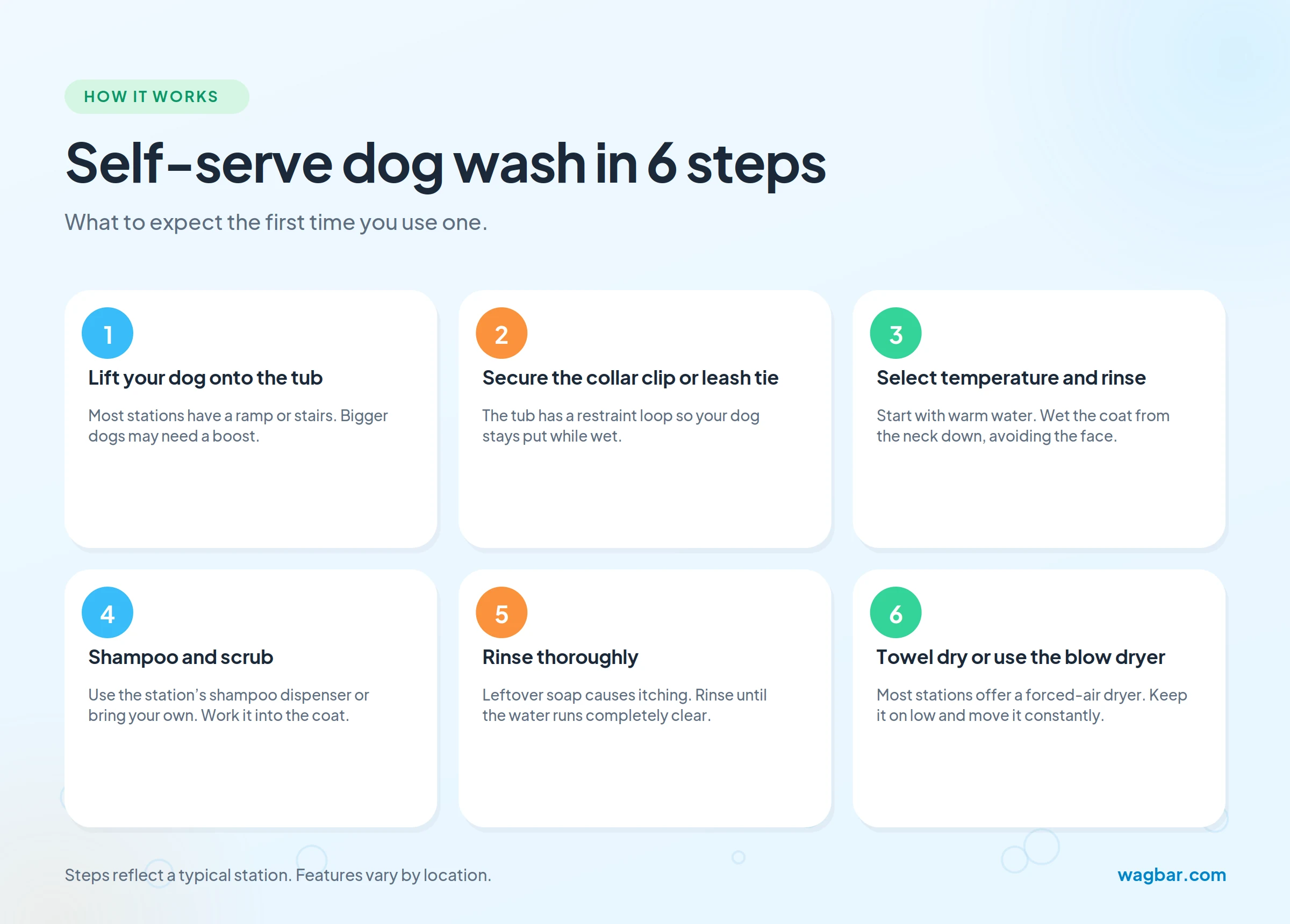
Step 1: Get your dog onto the tub
Most stations have a ramp, steps or a pull-out stair. Small dogs can be lifted. For bigger dogs, lure them up with a calm voice and a treat. The tub is raised to about waist height so you’re not hunching over, which is the single biggest upgrade over washing in a home bathtub.
Step 2: Clip in
Use the tub’s restraint loop to keep your dog in place. A wet, soapy dog on a slippery surface will absolutely try to jump out. The clip prevents that without being uncomfortable.
Step 3: Wet the coat
Set the water to warm, not hot. Start at the back of the neck and work your way down. Keep the sprayer away from the face, ears and eyes. Soak the coat all the way to the skin.
Step 4: Shampoo
Dispense the station’s shampoo or use your own (bring it if your dog has sensitive skin or allergies). Work it into the coat with your hands, paying extra attention to the belly, armpits and behind the ears where dirt collects.
Step 5: Rinse until the water runs clear
This is the step most people rush. Shampoo left in the coat causes itching, flaking and hot spots. Rinse longer than you think you need to.
Step 6: Dry
Towel the excess water first, then use the station’s forced-air dryer. Keep the dryer on a low setting, hold it six to eight inches from the coat and move it constantly. Don’t blast a nervous dog’s face. Some stations have a high-velocity setting that’s great for thick double coats but can scare first-timers.
Where You’ll Find Self-Serve Dog Wash Stations
- Dog bars and off-leash venues. Wagbar has a station at its original location so owners can rinse off after a muddy play session. Other dog bar concepts are following suit.
- Pet retail chains. Petco, PetSmart and independent pet stores increasingly offer self-wash tubs alongside their full-service grooming salons.
- Standalone dog wash businesses. Dedicated self-wash houses operate on a coin-op or flat-fee model, often open late and weekends.
- Apartment buildings and HOA communities. Newer pet-friendly developments are adding wash stations as a resident amenity, sometimes on the ground floor or in the parking garage.
- Laundromats. A growing number of laundromats add a dog wash bay alongside the washers and dryers.
The Dog Wash Market Is Growing Fast
Self-serve dog wash isn’t a niche anymore. According to a 2026 analysis from TrendX Insights, the overall dog wash market reached about $251 million in 2025 and is projected to hit roughly $616 million by 2034, growing at a compound annual rate of 10.5%. Self-service stations make up the largest segment of that market, ahead of full-service and mobile wash.

The broader pet grooming industry is massive: IBISWorld pegs the US pet grooming and boarding market at $15.4 billion in 2026, and Mordor Intelligence projects the US pet grooming services segment alone will climb from $2.19 billion in 2025 to $3.23 billion by 2031. Self-serve is the fastest-growing corner of that market because it hits the sweet spot between “do it in the bathtub” and “pay a groomer $80.”
Self-Serve Station vs. Home Bath vs. Professional Groomer
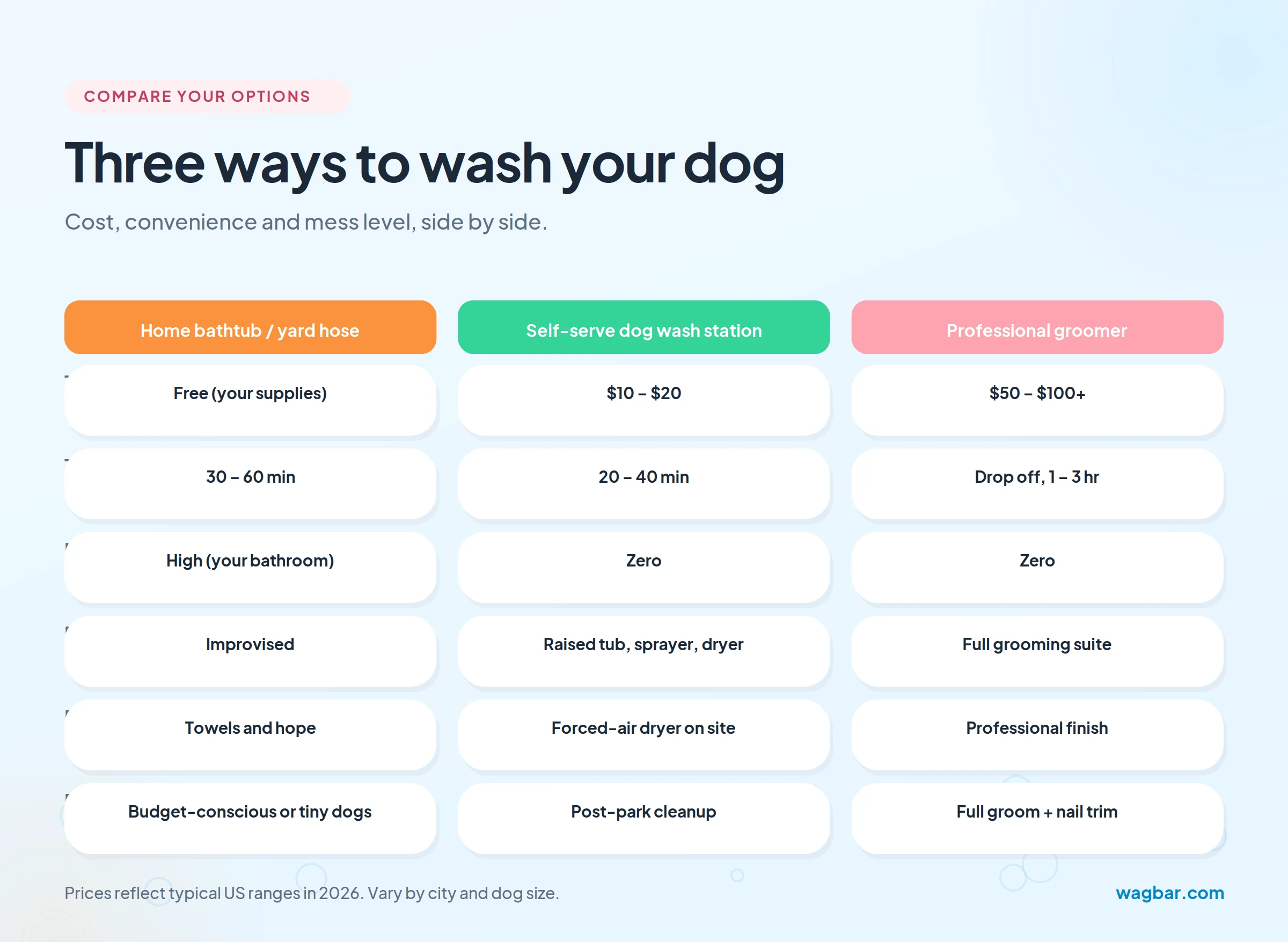
Home bathtub or yard hose
Free, messy, and a guaranteed fight with a wet dog in a slippery tub. Fine for small dogs and brave owners. The cleanup often takes longer than the bath.
Self-serve dog wash station
$10 to $20, 20 to 40 minutes, zero mess at home. You get a proper raised tub, warm water and a dryer without paying for a full groom. Ideal for a quick post-park rinse or a between-grooms refresh.
Professional groomer
$50 to $100+ depending on breed and coat. You drop off, the groomer handles everything: bath, blow-dry, haircut, nails, ears, sometimes teeth. Worth it for breeds that need clipping and shaping. Not worth it when all you need is a rinse.
What to Bring to a Self-Serve Dog Wash
- Your dog’s own shampoo if they have skin sensitivities or allergies. Most stations provide a general-purpose formula.
- A towel or two. Stations have dryers, but a towel speeds things up and keeps the car seat dry.
- Treats. A calm, rewarded dog is an easier dog to wash.
- A clean collar or harness. Swap the wet one for a dry one before heading out.
- Patience. The first wash takes longer. By the third, you’ll have a system.
Tips for a Stress-Free Wash
- Visit the station before you need it so your dog can sniff the space when it’s dry and quiet.
- Skip wash day after a stressful event. A dog who just had a rough vet visit doesn’t need more handling.
- Avoid hot water. Lukewarm is comfortable for most dogs. Test on the inside of your wrist.
- Dry ears carefully. Moisture trapped in ear canals leads to infections. Use a cotton ball or a soft cloth.
- Don’t over-bathe. Once every 4 to 6 weeks is plenty for most dogs. More frequent baths strip natural oils from the coat.
How Self-Serve Stations Fit Into an Off-Leash Park
A wash station near the exit of an off-leash dog park with proper features solves the number one objection to visiting on a wet or muddy day: the car ride home. Instead of spreading mud across your back seat, you walk from the yard to the tub, spend ten minutes rinsing and drying, and load a clean dog into the car.
It also extends the list of things a park can offer. A venue with a fenced yard, a bar, covered seating, water play and a wash station covers the entire outing from arrival to a clean departure. Dogs who splash in a wading pool or sprint through a sprinkler need a rinse before the ride home. Pairing a wash station with proper dog swimming safety protocols keeps ears dry and skin clean.

Self-Serve Dog Wash Station FAQs
How much does a self-serve dog wash cost?
Most stations charge $10 to $20 per session, either on a timer or as a flat fee. Some dog bars and apartment buildings include wash access in a membership or lease.
How long does a self-serve dog wash take?
Plan for 20 to 40 minutes for a full wash and dry. Larger dogs and thicker coats take longer. A quick post-park rinse can be done in 10 minutes.
Do I need to bring my own shampoo?
Most stations provide it. Bring your own if your dog has allergies, sensitive skin or a vet-prescribed formula.
Can I wash a puppy at a self-serve station?
Yes, as long as the puppy is comfortable being handled and the water temperature is lukewarm. Make the first visit short and positive, and bring treats.
Are self-serve stations sanitary?
Well-maintained ones are. The tub should be rinsed and disinfected between users, and the hair trap should be clear. If it looks dirty when you walk up, ask staff to clean it or find a different station.
Open a Venue That Thinks Past the Fence
A wash station turns a good off-leash venue into a complete experience. Wagbar builds that thinking into every location, and we’re partnering with operators who want to do the same. Learn what a Wagbar franchise includes.

Wagbar does not represent what a franchise owner will earn. Verified performance data is available only in Item 19 of the FDD, provided to qualified candidates during formal disclosure. Published cost figures are FTC-required regulatory estimates and are not profitability guarantees.
Skip the Bathtub. Use the Right Tub.
Self-serve dog wash stations take the mess out of keeping your dog clean, and when they’re attached to a great off-leash yard, the whole outing gets better. If your pup’s overdue for a scrub after a big play session, bring a towel and try the station at a Wagbar near you.
Bottom TLDR: Self-serve dog wash stations give you professional equipment (raised tub, sprayer, shampoo, dryer) at a fraction of a groomer’s price and none of the mess of a home bath. The dog wash market is booming, projected to grow from $251 million in 2025 to $616 million by 2034. You’ll find them at dog bars, pet stores, apartments and standalone wash houses. The best spot for one? Right next to the exit of a supervised off-leash yard.