
Note: Wagbar doesn’t offer turf — our Asheville yard is a 25,000 sq ft grassy hillside, and that’s by design. We still wrote this guide so you can see exactly how turf stacks up against grass, mulch, decomposed granite and the other common dog-park surfaces: what each one costs, where it shines, where it falls apart, and how to pick what works for a backyard run, a franchise build or the next park you visit.
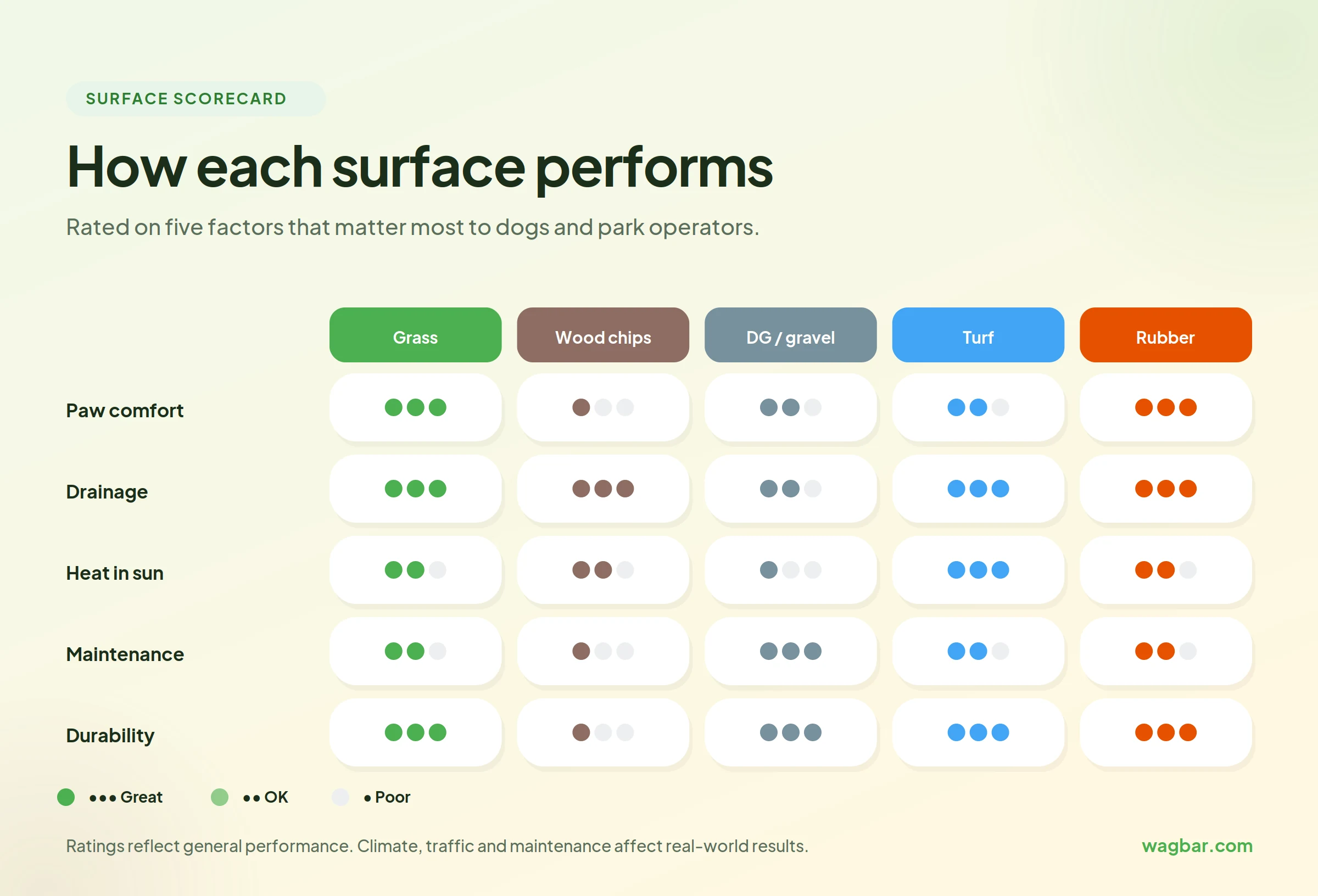
Top TLDR: The ground under your dog’s paws shapes every park visit. Natural grass is soft but wears out fast. Wood chips and mulch for dog runs cushion joints and drain well but need topping off. Decomposed granite and pea gravel are durable and low-maintenance but can heat up and roughen paws. Artificial turf stays green year-round but traps heat and odor. Poured rubber is the cushiest option at the highest price. The best parks mix two or three surfaces, and the best choice depends on climate, traffic, budget and what your dog’s feet can handle.
- Six main surfaces: natural grass, wood chips / mulch, decomposed granite, pea gravel, artificial turf and poured rubber.
- No single winner. Every surface has trade-offs on comfort, drainage, heat, maintenance and durability.
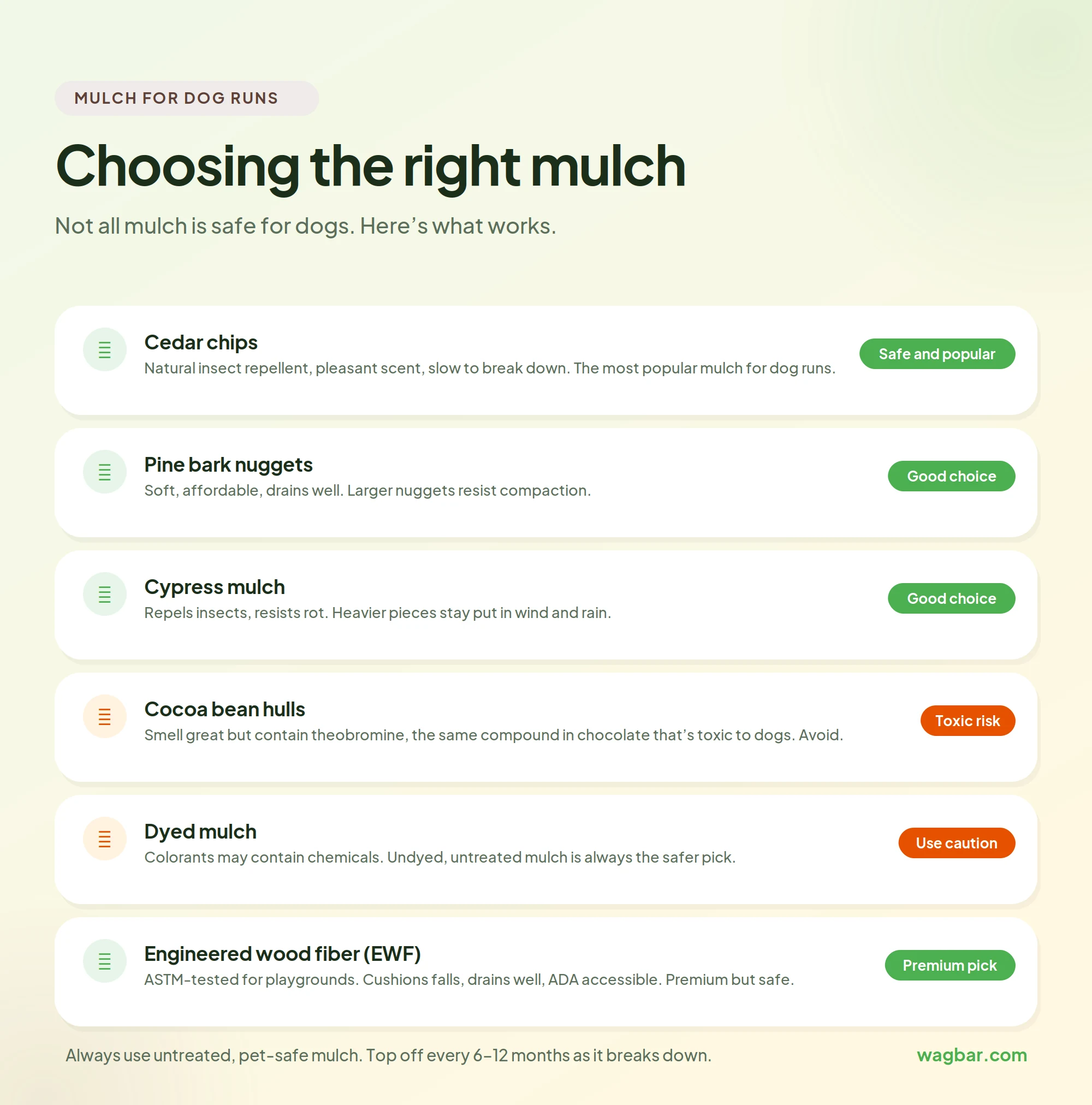
- Mulch matters. Cedar and pine bark are safe. Cocoa bean hulls are toxic to dogs. Always use untreated, pet-safe mulch.
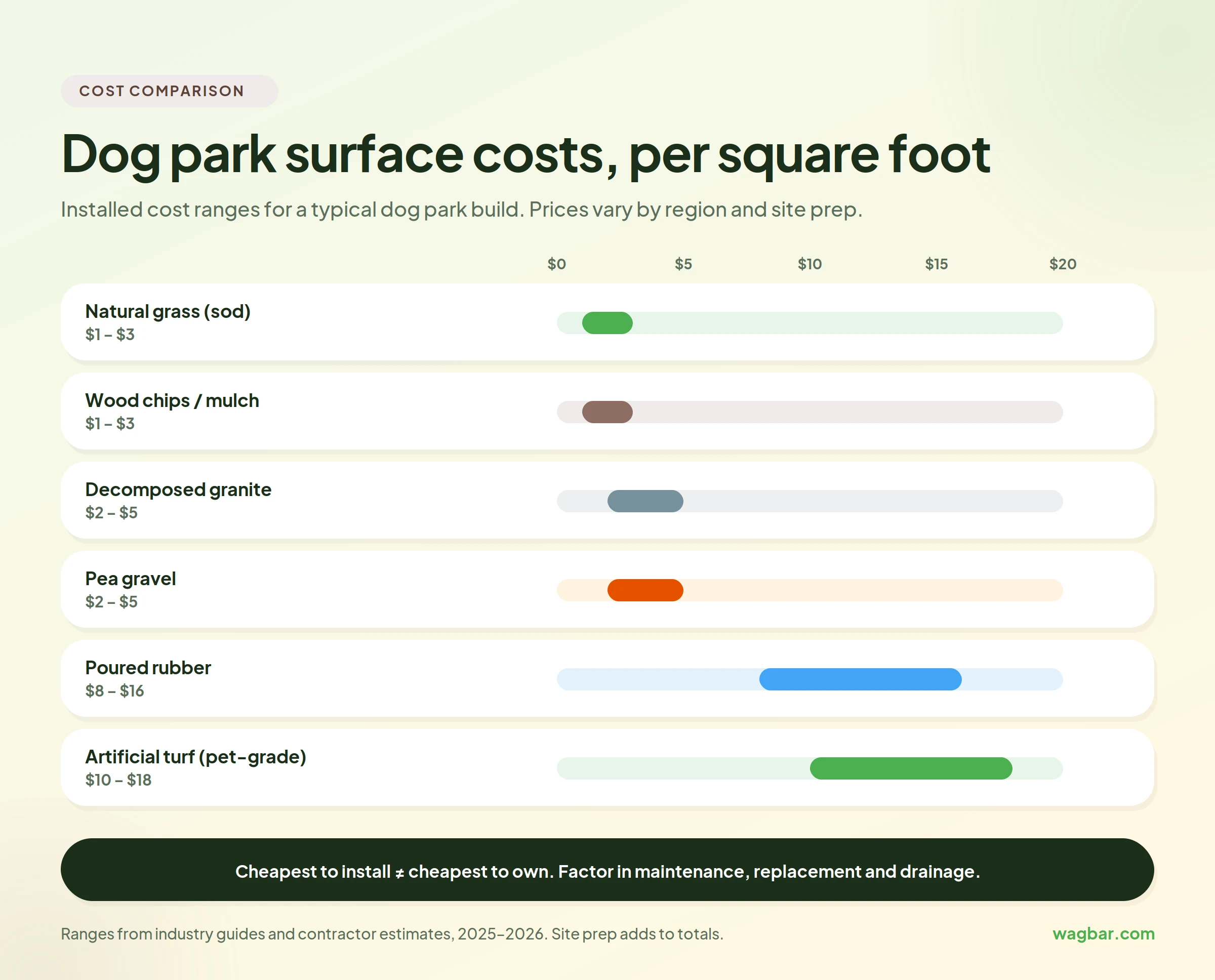
- Cost range is wide: from about $1 per square foot for sod or mulch up to $18 for pet-grade artificial turf installed.
The surface under a dog park decides everything from paw health to how the yard smells in August. Pick the wrong one and you get mud, overheating or a vet bill from torn paw pads. Pick the right one and the park runs cleaner, drains faster and keeps dogs playing longer. Here’s a ground-level look at every dog park surface option, what each one costs, and how to choose the right mulch for a dog run.
Why Surface Choice Matters for Dogs
Dogs don’t wear shoes. Their paw pads absorb every surface they run on, and the wrong ground cover creates real problems:
- Heat burns. Asphalt and dark artificial turf can hit 150°F+ in direct sun. The “seven-second rule” (put the back of your hand on the surface for seven seconds) is a good test before you let your dog on any surface in summer.
- Joint stress. Hard-packed ground, concrete and thin gravel transmit impact straight into hips, knees and elbows, which adds up for older dogs and heavy breeds.
- Cuts and abrasions. Rough gravel, broken shells and degraded surfaces can slice paw pads, especially on dogs who sprint and turn hard.
- Infection risk. Surfaces that don’t drain breed bacteria. Standing water and soggy mulch create conditions for leptospirosis, giardia and hookworm.
The Six Main Dog Park Surfaces
Natural grass
Grass is the surface dogs know best: soft, cool and comfortable underfoot. It’s also the hardest to maintain in a high-traffic park. A few dozen dogs running the same paths every day wear grass to dirt in weeks, and rain turns bare spots into mud pits. Sod installation runs about $1 to $3 per square foot, but reseeding and irrigation costs add up fast. Grass works best in large parks with low daily traffic, good drainage and a warm growing season.
Wood chips and mulch
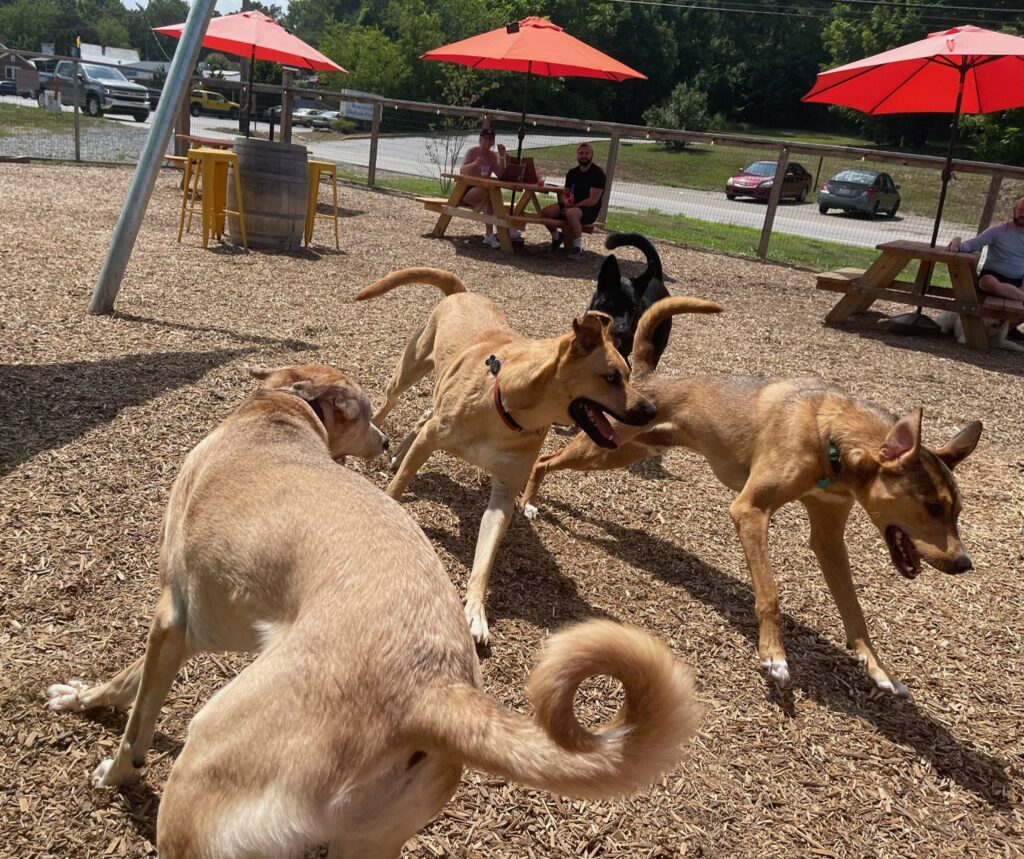
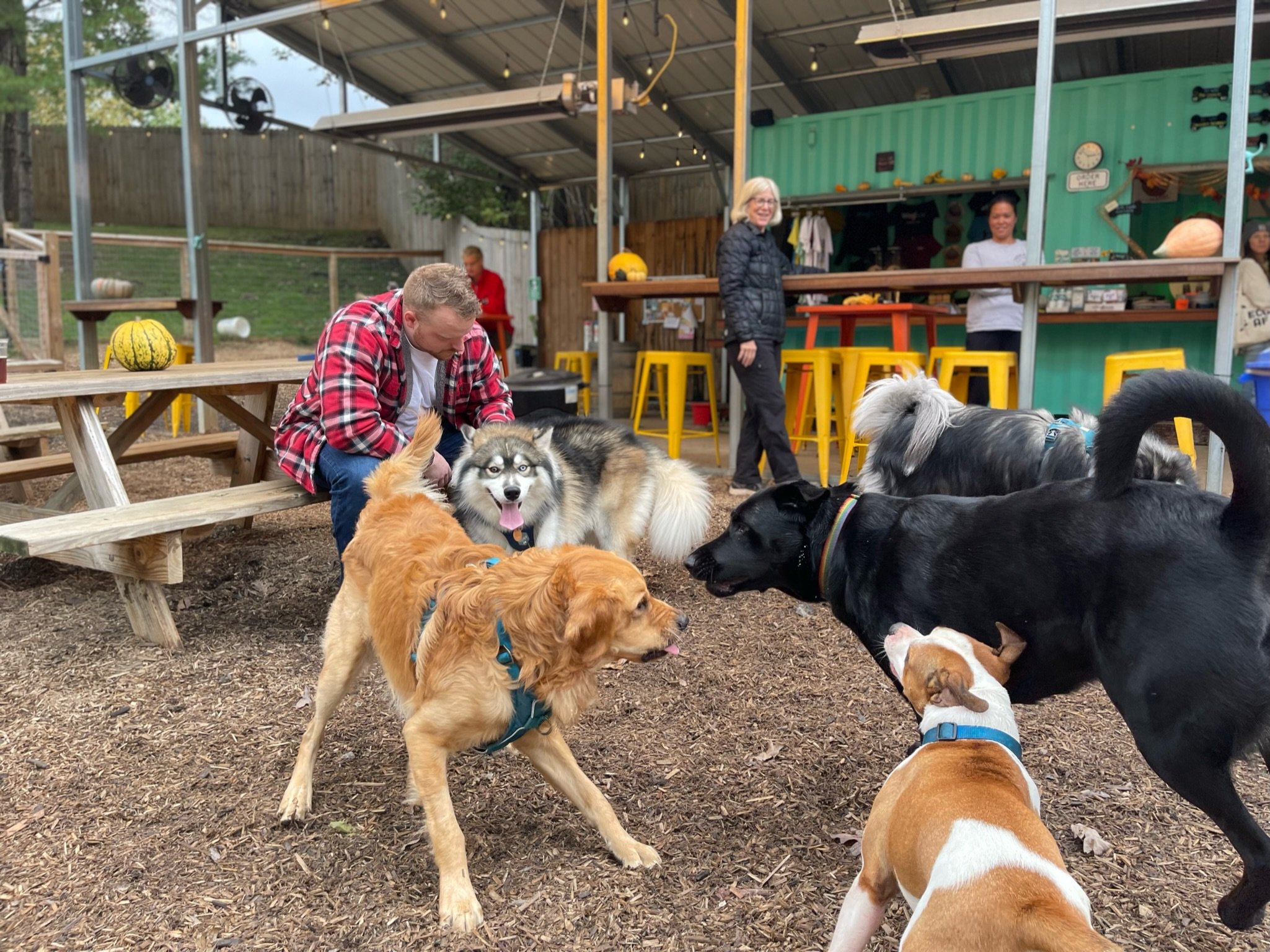
One of the most popular surfaces at dog bar venues and community parks. Wood chips cushion impact, drain quickly and look natural. They break down over time and need topping off every 6 to 12 months. Installed cost runs $1 to $3 per square foot. The main downsides: mulch can harbor mold in persistently wet climates and some dogs eat it, which can cause blockages. (More on safe mulch types below.)
Wagbar’s original Weaverville yard uses wood chips across the main play area. Wagbar rakes, treats and tops off the mulch on a set schedule. Their own breakdown, How We Keep Dog Park Turf Clean (and Why It Doesn’t Smell), walks through exactly what happens daily, weekly and monthly.
Decomposed granite (DG)
Crushed stone that packs into a firm, smooth surface. DG drains well, resists wear and lasts for years with minimal upkeep. It heats up in direct sun and sharp edges on low-quality DG can roughen paw pads. Installed cost is $2 to $5 per square foot. Screened, rounded DG is gentler on paws than angular crushed rock.
Pea gravel
Small, rounded stones about the size of a pea. Popular for drainage zones and transition areas. Pea gravel drains instantly, doesn’t compact and is easy to rake clean. The downsides: it shifts underfoot (making sprints unstable), heats up in summer, and tiny stones get stuck between paw pads. Installed cost is $2 to $5 per square foot.
Artificial turf (pet-grade)
Synthetic grass designed for dogs, with antimicrobial infill and a perforated backing for drainage. It stays green in every season, never needs mowing and cleans up with a hose. The downsides are real: pet-grade turf retains heat in direct sun (surface temperatures can exceed natural grass by 30 to 50°F), traps odor if not treated with enzyme cleaners, and costs $10 to $18 per square foot installed. It’s a high-upfront, low-maintenance option that works best in mild climates or shaded yards.
Poured rubber / rubber surfacing
Liquid rubber poured over a prepared base and cured into a seamless, cushioned surface. It’s ADA-accessible, drains through its pores, cushions landings and lasts a decade or more. At $8 to $16 per square foot, it’s the most expensive non-turf option. Poured rubber shows up mostly in premium parks, playgrounds and high-use commercial dog facilities.
Mulch for Dog Runs: What’s Safe and What’s Not
Not all mulch is pet-safe. If your backyard dog run, apartment dog park or community off-leash area uses wood mulch, the type matters.
Safe options
- Cedar chips: naturally repel insects, resist rot and break down slowly. The most common mulch for dog runs across the country.
- Pine bark nuggets: soft, affordable and easy to find in bulk. Larger nuggets resist compaction better than shredded pine.
- Cypress mulch: heavier pieces stay in place during storms and resist rot in humid climates.
- Engineered wood fiber (EWF): ASTM-tested for playground safety, ADA-accessible, and excellent at cushioning falls. It’s the premium mulch option and the closest thing to a “certified” dog park surface.
Avoid
- Cocoa bean hull mulch: it smells like chocolate because it contains theobromine and caffeine, the same compounds in chocolate that are toxic to dogs. Even small amounts can make a dog sick. Skip it entirely.
- Dyed or chemically treated mulch: the colorants in red, black and brown dyed mulch may contain chemicals that leach into the soil and onto paws. Stick to untreated, natural-color mulch.
Maintenance
All wood mulch breaks down. Budget for topping off every 6 to 12 months, rake out waste stations weekly, and watch for mold in humid weather. A 2- to 4-inch layer is standard. More than 6 inches traps moisture underneath.
How Climate Changes the Best Surface
- Hot, dry climates: avoid dark artificial turf and asphalt. Grass needs too much water. DG and light-colored gravel hold up, and shade sails over play areas help with all surfaces.
- Humid, rainy climates: drainage is everything. Wood chips and pea gravel drain fast. Grass turns to mud. Turf works if the backing drains and the surface gets regular enzyme treatment.
- Cold climates with freeze-thaw: poured rubber handles freeze-thaw cycles well. DG can shift. Turf stays usable but gets stiff when frozen. Mulch compacts but thaws fine.
- Mild, temperate climates: the widest range of options work. Mixing surfaces by zone (mulch in the play area, DG on paths, grass in low-traffic rest zones) is easiest here.
Mixing Surfaces: What the Best Parks Do
The strongest dog parks don’t use one surface everywhere. They zone the yard by activity:
- Main play area: wood chips or turf for cushioning and traction.
- Paths and high-traffic lanes: DG or pea gravel for durability.
- Rest and shade zones: grass or rubber mats for comfort.
- Water and wash areas: poured rubber or concrete with a textured non-slip finish and built-in drains.
This approach costs more to build but lasts longer and works better for every type of dog. Surface is one piece of a bigger puzzle. Fencing, shade, water features and staffing all connect in the off-leash dog park features breakdown, which covers every element from the ground up.
Paw Health: What to Watch For
- Check paw pads after every visit. Look for cuts, raw spots, embedded gravel and excessive wear.
- Wipe paws when you get home. Removes bacteria, allergens and surface chemicals.
- Watch for limping or licking. Persistent paw licking often signals irritation from a surface, not just a habit.
- Use paw balm in winter. Ice-melt chemicals and frozen surfaces crack pads. A balm before and after walks helps.
- If a surface hurts, skip it. Not every dog’s paws tolerate every surface. Gravel runners and turf sprinters are different dogs.

Dog Park Surface FAQs
What is the best surface for a dog park?
There’s no single best answer. Wood chips and mulch offer the best balance of cost, cushioning and drainage for most parks. Artificial turf is lower maintenance but more expensive and hotter in the sun. The best parks combine surfaces by zone.
Is artificial turf safe for dogs?
Pet-grade turf with antimicrobial infill is generally safe. The main risk is heat: turf in direct sun gets much hotter than natural surfaces. Shade, sprinklers and limiting play time on hot days help.
What mulch is toxic to dogs?
Cocoa bean hull mulch is toxic because it contains theobromine. Dyed and chemically treated mulch may also pose risks. Stick to untreated cedar, pine bark, cypress or engineered wood fiber.
How deep should mulch be in a dog run?
Two to four inches is standard. Deeper than six inches traps moisture and can harbor mold. Top off as it breaks down, usually every 6 to 12 months.
Does Wagbar use artificial turf?
The original Weaverville location uses wood chips for the main play area. Surface choices may vary at other locations based on climate and site conditions.
Design a Park That Dogs Actually Want to Use
Surfaces are one piece of a bigger puzzle. Wagbar plans every location around what dogs need, from the ground up, and we team up with people who share that standard. Discover how a Wagbar franchise comes together.

Wagbar does not represent what a franchise owner will earn. Verified performance data is available only in Item 19 of the FDD, provided to qualified candidates during formal disclosure. Published cost figures are FTC-required regulatory estimates and are not profitability guarantees.
Start From the Ground Up
Every good off-leash park begins with what’s under the paws. Now you know what each surface costs, how it performs, and which mulch is safe for your dog. When you’re ready to see a park that got the surface right, bring your pup to the closest Wagbar and let their feet do the testing.
Bottom TLDR: Dog park surfaces range from $1/sq ft mulch to $18/sq ft pet-grade turf, and no single surface is perfect. Wood chips and cedar mulch give the best value for comfort and drainage. Artificial turf looks great but traps heat and odor. The smartest parks mix surfaces by zone. Avoid cocoa bean hull mulch (toxic) and dyed mulch (chemical risk). Match the surface to your climate, your traffic level and your dog’s paws.