
Top TLDR: Flying with your dog means choosing between in-cabin (small dogs under ~20 lb in a carrier under the seat, $75–$200 each way) and cargo hold (larger dogs in an IATA crate, $200–$500+, pressurized but stressful). Airlines cap in-cabin pets at 2–6 per flight — book early by calling the airline directly. A veterinary health certificate is required within 10 days of departure. Practice with the carrier weeks before the flight, skip food 4–6 hours prior, exercise your dog the morning of and arrive 30–45 minutes early for pet check-in. Brachycephalic breeds (bulldogs, pugs, Boston terriers) face cargo restrictions or bans on many airlines due to breathing risks. For most dogs, a road trip is less stressful than flying — but when flying is the only option, preparation makes it manageable.
- Cabin = under ~20 lb. Cargo = any size (with restrictions). No other options.
- Book the pet spot by phone. Airlines cap pets per flight. Online booking often misses it.
- Health certificate within 10 days. No certificate, no boarding.
- Practice in the carrier weeks ahead. The flight is not the time for a first experience.
Flying is the fastest way to travel with your dog and the most stressful for both of you. Every other mode of pet-friendly travel — road trips, trains, even ferries — gives you more control over your dog’s comfort and more flexibility to stop when needed. Flying removes all of that. Your dog is confined in a carrier for hours, surrounded by unfamiliar noise and pressure changes, with no option to step outside. When flying is unavoidable, preparation is everything.
In-Cabin vs. Cargo: The Two Options
In-cabin
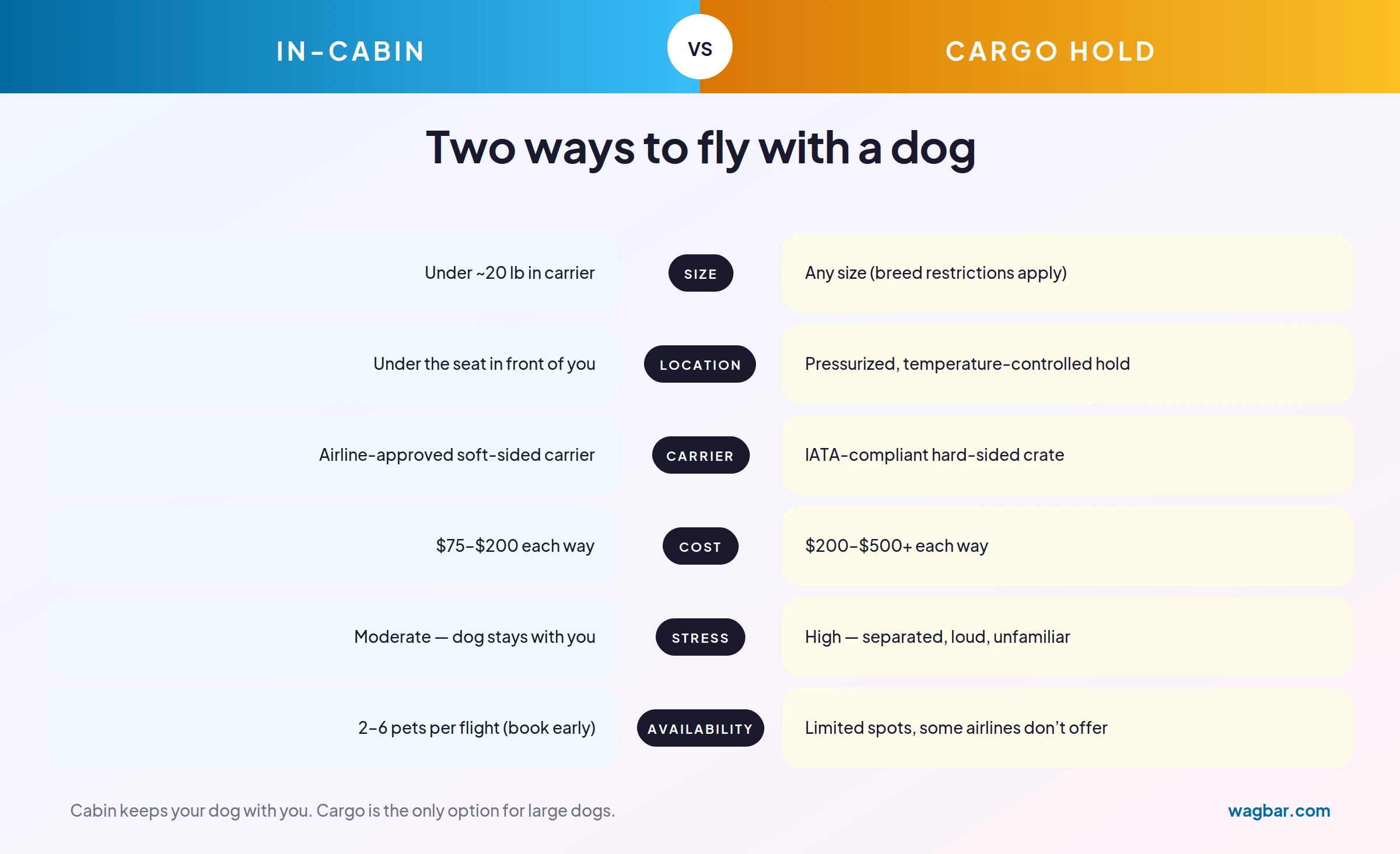
Small dogs — generally under 20 pounds, fitting inside an airline-approved soft-sided carrier that slides under the seat — fly in the cabin with you. The carrier must remain closed and stowed during the entire flight. Your dog cannot sit on your lap, ride in a seat or come out of the carrier at any point between boarding and deplaning. Cabin pet fees range from $75 to $200 each way depending on the airline. The critical constraint: airlines limit in-cabin pets to 2 to 6 per flight. These spots fill fast on popular routes. Book by calling the airline directly — online booking systems frequently don’t show pet availability or don’t offer the pet add-on until after ticketing.
Cargo hold
Dogs too large for a cabin carrier fly in the pressurized, temperature-controlled cargo hold in an IATA-compliant hard-sided crate. The dog is separated from you for the duration of the flight. Cargo fees run $200 to $500 or more each way, and not all airlines offer the service — some have eliminated cargo pet transport entirely. The experience is significantly more stressful for the dog: loud engine noise, pressure changes, unfamiliar handlers, no visual contact with the owner, and a bumpy ride during loading and unloading.
Brachycephalic breed restrictions
Short-nosed breeds — bulldogs, pugs, Boston terriers, Pekingese, shih tzus — face cargo bans or restrictions on most major airlines. These breeds are anatomically prone to breathing difficulties that altitude, temperature changes and stress can compound into a life-threatening emergency. Some airlines ban them from cargo entirely. Others restrict them during summer months. A few allow them in-cabin only if they fit the carrier size. Check your specific breed against your airline’s current policy before booking anything.

The 7-Step Pre-Flight Checklist

1. Book the pet spot early
Call the airline directly. Tell them you’re traveling with a pet and need a cabin spot (or cargo booking). Don’t assume the online booking handled it — many airline websites don’t add the pet reservation automatically. Confirm the spot, the fee and the carrier size requirements in the same call.
2. Get the veterinary health certificate
Required by every US airline for both cabin and cargo travel. Your vet issues it after an exam, certifying your dog is healthy and fit to fly. The certificate must be dated within 10 days of your departure. International flights require an additional USDA endorsement — apply at least 2 weeks before travel.
3. Buy the right carrier
Cabin: a soft-sided carrier that fits under the seat in front of you. Typical maximum dimensions are 17 × 11 × 7.5 inches, but dimensions vary by airline. Cargo: an IATA-compliant hard-sided crate with ventilation on at least three sides, absorbent liner, food and water dishes attached to the door, and “Live Animal” labels. Don’t wait until the week before to buy — your dog needs time to get comfortable in it.
4. Practice in the carrier
Start weeks before the flight. Feed meals inside the carrier. Leave it open in the house with a blanket inside so your dog enters voluntarily. Gradually close the door for longer periods. Build a positive association before the flight forces a negative one. A dog that panics in its carrier at 30,000 feet has no options — and neither do you.
5. Skip food 4–6 hours before departure
An empty stomach reduces nausea and vomiting during the flight. Keep water available until 2 hours before departure. Feed a light meal after landing. If your dog is prone to motion sickness, ask your vet about anti-nausea medication before the trip.
6. Exercise before the airport
A long walk or a play session the morning of the flight burns the energy that would otherwise surface as anxiety in the carrier. A tired dog handles confinement dramatically better than a fresh one. If you’re near a dog bar, an off-leash play session the morning of departure is the ideal pre-flight exercise — Wagbar’s no-feeding policy means your dog burns energy through play without the food that would complicate a flight on a full stomach.
7. Arrive early and stay calm
Add 30 to 45 minutes to your usual airport arrival time for pet check-in procedures. Cargo drop-off requires separate counter visits. Cabin travelers need to present the health certificate and pay the pet fee at the gate or check-in counter. Stay calm through all of it — dogs read your stress and mirror it. A relaxed owner produces a calmer dog in the carrier.
At the Airport
Check your dog in at the airline counter (not the self-service kiosk). Present the health certificate and your booking confirmation showing the pet reservation. For cargo, you’ll drop the crate at a separate cargo facility — some airlines require arrival 2 to 4 hours before departure for cargo pets. For cabin, the carrier goes through the X-ray machine at security while you carry your dog through the metal detector. Yes, your dog comes out of the carrier at security. Have the leash ready.
At the gate, keep the carrier closed and on the floor. Don’t open it “just to check” — airlines can deny boarding if they see the dog outside the carrier in the terminal. Board early when possible (most airlines allow pre-boarding for passengers with pets) so you can stow the carrier and settle before the crowd.
After Landing
Your dog’s first priority after landing is a bathroom break and water. Most airports have pet relief areas inside the terminal (check the airport’s website before departure so you know where to go). For cargo dogs, head to the cargo pickup facility — your dog will be in the crate, likely stressed, possibly disoriented. Open the crate in a secure area, leash your dog, and find a quiet outdoor space for a long walk and decompression before getting in a car or continuing to your destination.

Flying with Your Dog FAQs
How much does it cost to fly with a dog?
In-cabin: $75 to $200 each way depending on the airline. Cargo: $200 to $500+ each way. Fees are per flight segment, not round-trip. Some airlines charge more for international routes.
Can I fly with a large dog?
Large dogs must fly in the cargo hold in an IATA-compliant crate. Not all airlines offer cargo pet transport. Some restrict by breed (brachycephalic breeds often banned from cargo). Check your specific airline’s current cargo pet policy.
Do I need a health certificate to fly with my dog?
Yes. Every US airline requires a veterinary health certificate issued within 10 days of departure. International flights require an additional USDA endorsement. No certificate means no boarding.
Can I sedate my dog for a flight?
Most veterinarians and airlines advise against sedation for flying. Sedated dogs have impaired breathing and temperature regulation, which is dangerous at altitude. Anti-anxiety medication (different from sedation) may be appropriate — consult your vet, not the internet.
What happens if my dog barks on the plane?
In-cabin, a barking dog is your problem to manage. A frozen Kong, a familiar-scented blanket and carrier training before the flight all reduce the likelihood. If the barking is severe and continuous, the airline can ask you to deplane at the next stop. This is extremely rare but possible.
When Flying Isn’t the Answer
For most dogs, a road trip is less stressful, more comfortable and gives both of you more control. Flying makes sense for long distances where driving isn’t practical, but if you have the option, drive. Wagbar locations along major travel routes give your dog the off-leash break it needs between legs of any trip.

Wagbar does not represent what a franchise owner will earn. Verified performance data is available only in Item 19 of the FDD, provided to qualified candidates during formal disclosure. Published cost figures are FTC-required regulatory estimates and are not profitability guarantees.
Prepare the Dog, Not Just the Ticket
Carrier training, health certificate, exercise before departure, calm at the gate. The flight is the easy part — preparation is the work. For off-leash play before or after the flight, bring your pup’s vaccine records to the nearest Wagbar.
Bottom TLDR: Flying with your dog: in-cabin for small dogs under ~20 lb ($75–$200, carrier under seat), cargo for larger dogs ($200–$500+, IATA crate in pressurized hold). Brachycephalic breeds face cargo bans on most airlines. Seven pre-flight steps: book pet spot by phone, get health certificate within 10 days, buy the right carrier, practice in the carrier weeks ahead, skip food 4–6 hours before, exercise morning of, arrive 30–45 min early. At security, dog comes out of carrier through the metal detector. After landing, bathroom break and water first. For most dogs, road trips are less stressful than flying.