
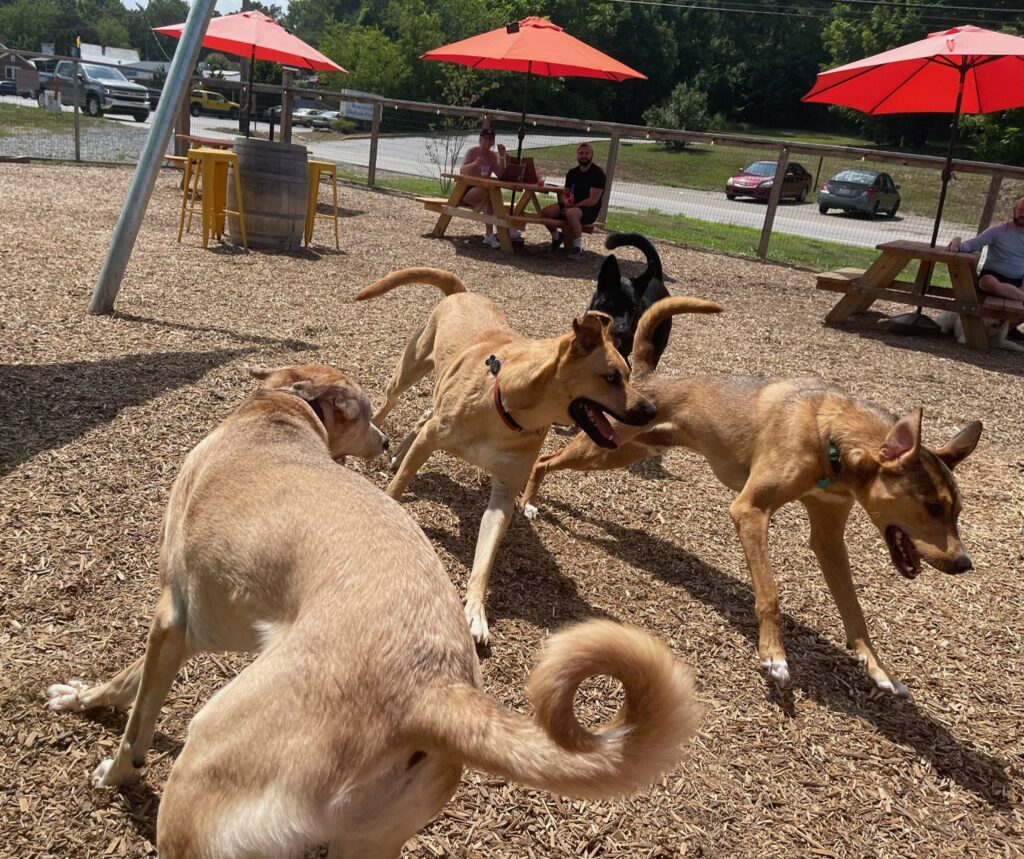
Top TLDR: Dog-friendly breweries typically mean leashed dogs welcome on the outdoor patio. Your dog sits beside your table while you drink. No off-leash play, no staff watching the dogs, no vaccine checks. The experience works well for calm, socialized dogs who can settle on a leash for an hour or two. Before you go: confirm the policy (it changes), check whether indoor access is allowed (usually not), bring water and a short leash, and keep your dog away from production areas — spent hops are toxic to dogs. A brewery is a great social outing for you. For your dog, it’s sitting still. For off-leash play and supervised socialization, a dog bar is the venue designed for that.
- Leashed dogs on the patio is the standard brewery policy. Off-leash is rare.
- Call ahead. Brewery dog policies change with seasons, events and management.
- Hops are toxic to dogs. Keep your dog away from production floors and spent grain.
- A brewery is for you. A dog bar is for your dog. Different venues, different purposes.
The craft beer industry welcomed dogs before most of the hospitality world caught on. Among all the dog-friendly places you can visit, breweries were among the first to put out water bowls, host “yappy hours” and build patios with dogs in mind. But “dog-friendly brewery” covers a wide range of actual experiences, and knowing what to expect before you load your dog into the car saves everyone a frustrating afternoon.
What “Dog-Friendly Brewery” Actually Means
At most breweries, dog-friendly means leashed dogs are welcome on the outdoor patio or in the beer garden. Your dog stays on a short leash beside your table. The brewery provides the patio and maybe a water bowl. Everything else — leash, behavior, waste cleanup, your dog’s comfort — is on you.
A smaller number of breweries allow dogs inside the taproom, usually in states with more permissive health codes or in breweries that don’t serve food from a kitchen (tasting rooms without a food license sometimes have more flexibility). A very few have dedicated off-leash areas, though these are uncommon and usually unfenced sections of a larger outdoor space.
What a dog-friendly brewery is not: supervised. Nobody on the brewery staff is watching your dog’s body language, managing interactions between dogs at neighboring tables, or intervening when one dog fixates on another. The bartender is pouring your beer. Your dog is entirely your responsibility.
Five Things to Check Before You Go

1. Confirm the policy today
Brewery dog policies change more often than you’d expect. A new landlord, a health department visit, a single bad incident with a dog, a seasonal patio closure — any of these can flip a dog-friendly brewery to dogs-not-allowed overnight. Call ahead or check their social media for the current policy before you drive there with your dog.
2. Leash and behavior rules
Most dog-friendly breweries require a short, fixed-length leash (not retractable). Some restrict certain breeds or sizes. A few ask that dogs remain on the ground (no dogs on chairs or benches). Know the specific rules before you arrive so you’re not surprised at the door.
3. Indoor vs outdoor access
Health codes in most states restrict dogs from indoor areas where food is prepared or served. If the brewery has a kitchen, dogs are almost certainly patio-only. Taproom-only breweries without food service sometimes allow dogs inside, but this varies by state and by establishment. Plan for outdoor-only access and be pleasantly surprised if indoor is available.
4. Hops are toxic to dogs
This is the brewery-specific risk that most dog owners don’t know about. Hops — both fresh and spent — are toxic to dogs. Ingestion can cause malignant hyperthermia: a rapid, dangerous spike in body temperature that can be fatal without emergency veterinary treatment. Brewery production floors and areas where spent grain is stored or discarded are the danger zones. Keep your dog on the patio, away from any production areas, and never let your dog eat anything off the brewery floor.
5. Water and shade
A sunny patio without shade or water on a warm day is uncomfortable for you and potentially dangerous for your dog. Bring a portable water bowl. Check whether the patio has shade structures or umbrellas. On hot days, feel the ground surface with your hand — if it’s too hot for your palm, it’s too hot for your dog’s paws.
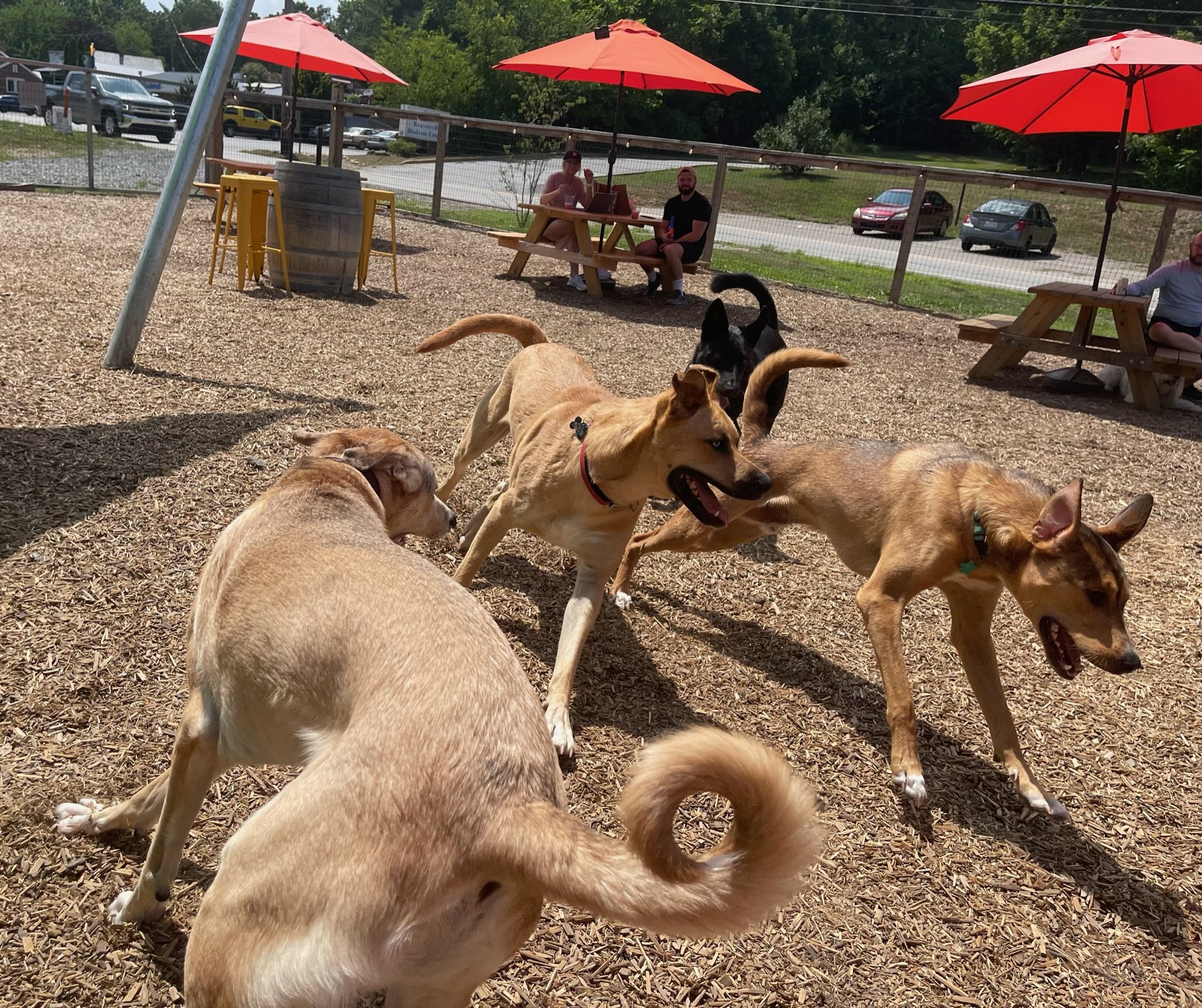
What Your Dog Gets: Brewery vs. Dog Bar
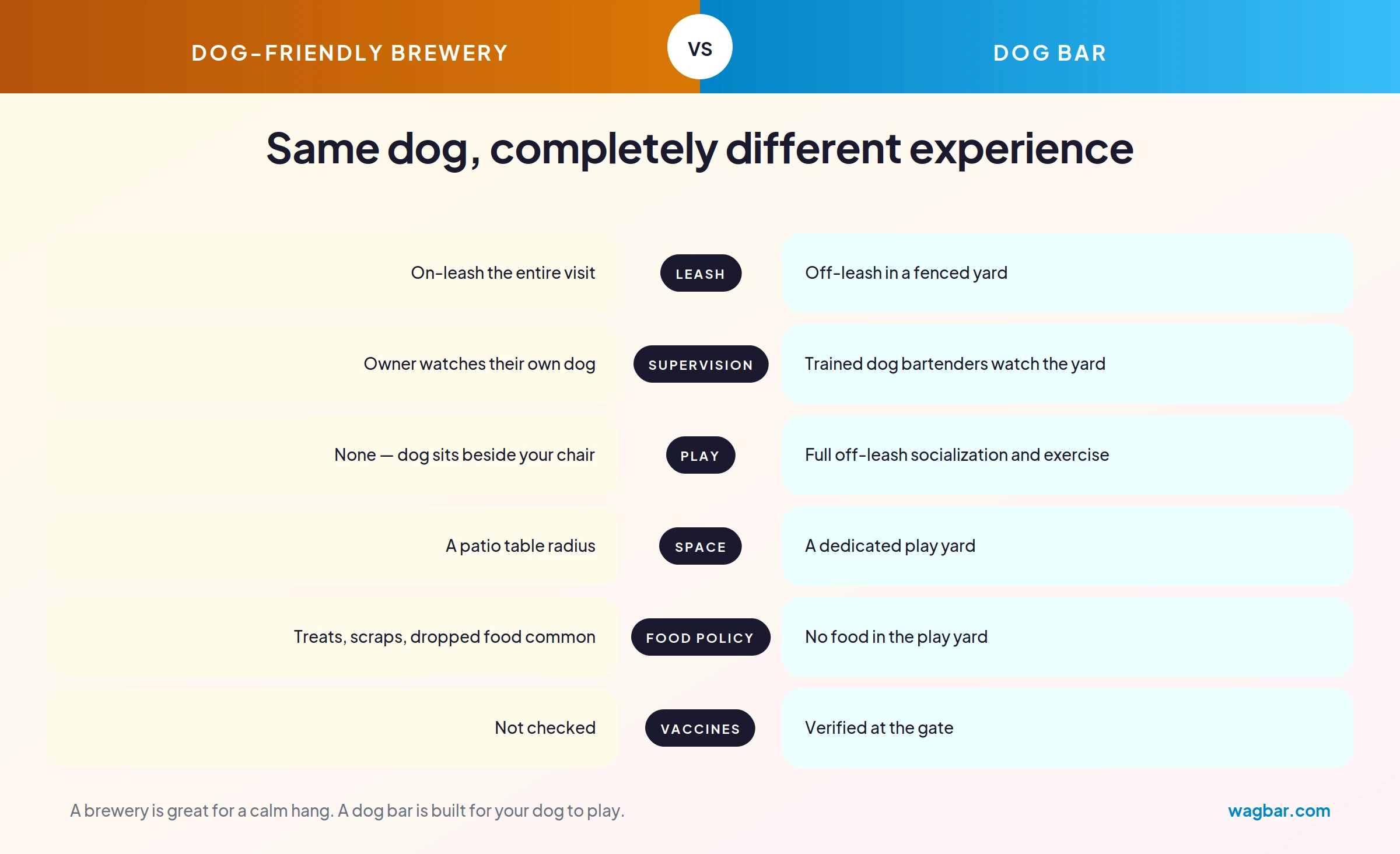
A dog-friendly brewery and a dog bar both serve craft beer and both welcome dogs. The experience your dog gets is fundamentally different. At a brewery, your dog is on a leash beside your table for the duration of your visit. It might see another dog at the next table. It doesn’t play, doesn’t run, doesn’t socialize in any meaningful way. The outing is for you — your dog is along for the ride.
At a dog bar like Wagbar, the dog’s experience is the point. Off-leash play in a fenced yard, dozens of dogs to interact with, trained staff watching every interaction, and a no-feeding policy that keeps food out of the play area entirely. You get your craft beer. Your dog gets exercise, socialization and a supervised environment designed around its needs. Wagbar prohibits food and treats in the play yard because food creates resource guarding — the most common trigger for dog conflicts in shared spaces. That’s a problem breweries can’t solve because their business model puts food, drinks and dogs in the same space.

Dog-Friendly Brewery FAQs
Are all breweries dog-friendly?
No. Policies vary by brewery, by state and by season. Always confirm before visiting. Breweries with food kitchens are more restricted than taproom-only operations.
Can my dog go inside a brewery?
In most states, dogs are restricted to outdoor areas at establishments that serve food. Some taproom-only breweries without food service allow dogs inside. Check your state’s health code and the specific brewery’s policy.
Are hops really dangerous for dogs?
Yes. Both fresh and spent hops can cause malignant hyperthermia in dogs — a rapid, potentially fatal spike in body temperature. Keep your dog on the patio and away from production areas, spent grain bins and anything on the brewery floor.
What should I bring to a dog-friendly brewery?
A short fixed-length leash, waste bags, a portable water bowl and a chew toy to keep your dog settled. Skip the retractable leash and skip the treats — food near other dogs creates tension.
Is a brewery or a dog bar better for my dog?
Depends what you want. A brewery is a relaxed outing where your dog accompanies you. A dog bar is a play session where your dog is the focus. For exercise and socialization, the dog bar wins. For a calm afternoon with a beer and your dog beside you, a brewery works well.
Find the Right Venue for Your Dog
A brewery patio is perfect for a calm, leashed afternoon. For off-leash play with trained staff and a yard built for dogs, Wagbar is a different category. See how Wagbar builds venues designed for dogs from the ground up.

Wagbar does not represent what a franchise owner will earn. Verified performance data is available only in Item 19 of the FDD, provided to qualified candidates during formal disclosure. Published cost figures are FTC-required regulatory estimates and are not profitability guarantees.
Bring Your Dog to the Right Place
A brewery lets your dog sit beside you while you drink. A dog bar lets your dog play while you drink. Both are good — for different reasons. For supervised off-leash play, bring your pup’s vaccine records to the nearest Wagbar.
Bottom TLDR: Dog-friendly breweries mean leashed dogs on the outdoor patio in most cases. Five things to check: confirm the current policy, know the leash and behavior rules, expect outdoor-only access, keep dogs away from hops and production areas (hops are toxic), and bring water and check for shade. A brewery is a relaxed outing for you with your dog along. A dog bar gives your dog supervised off-leash play, vaccine-verified entry and a food-free yard. Wagbar’s no-feeding policy eliminates resource guarding — the risk that breweries can’t control because food and dogs share the same space.