
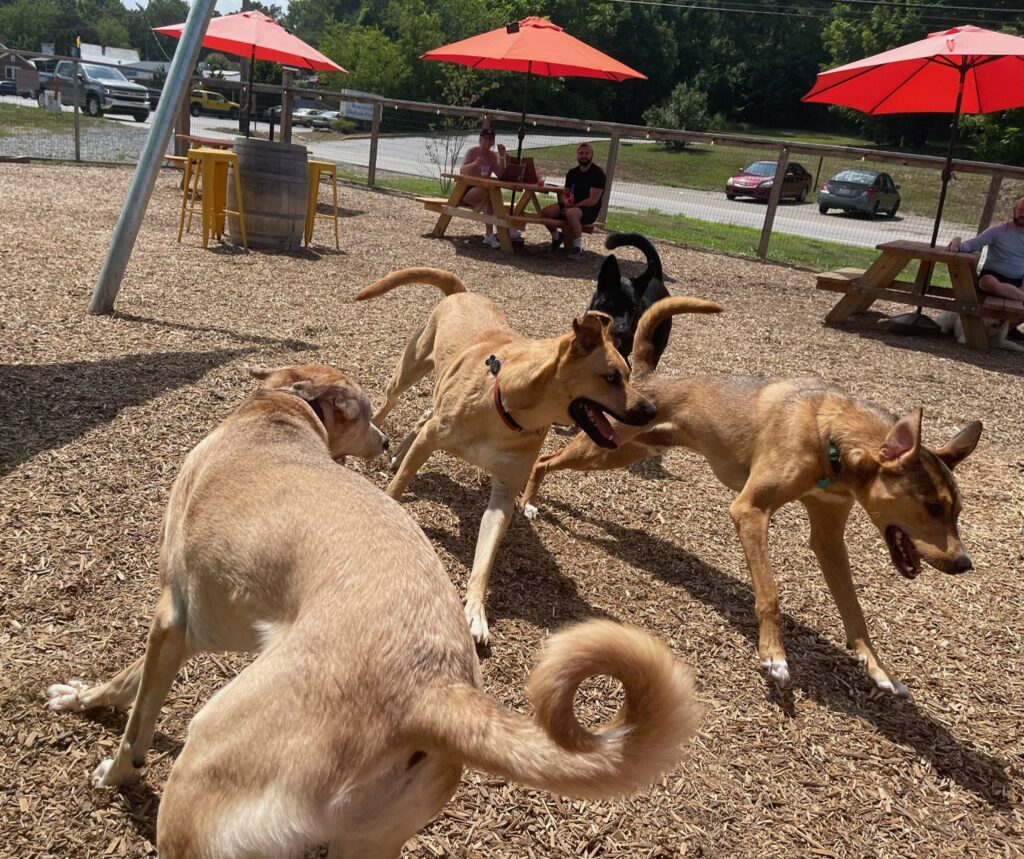
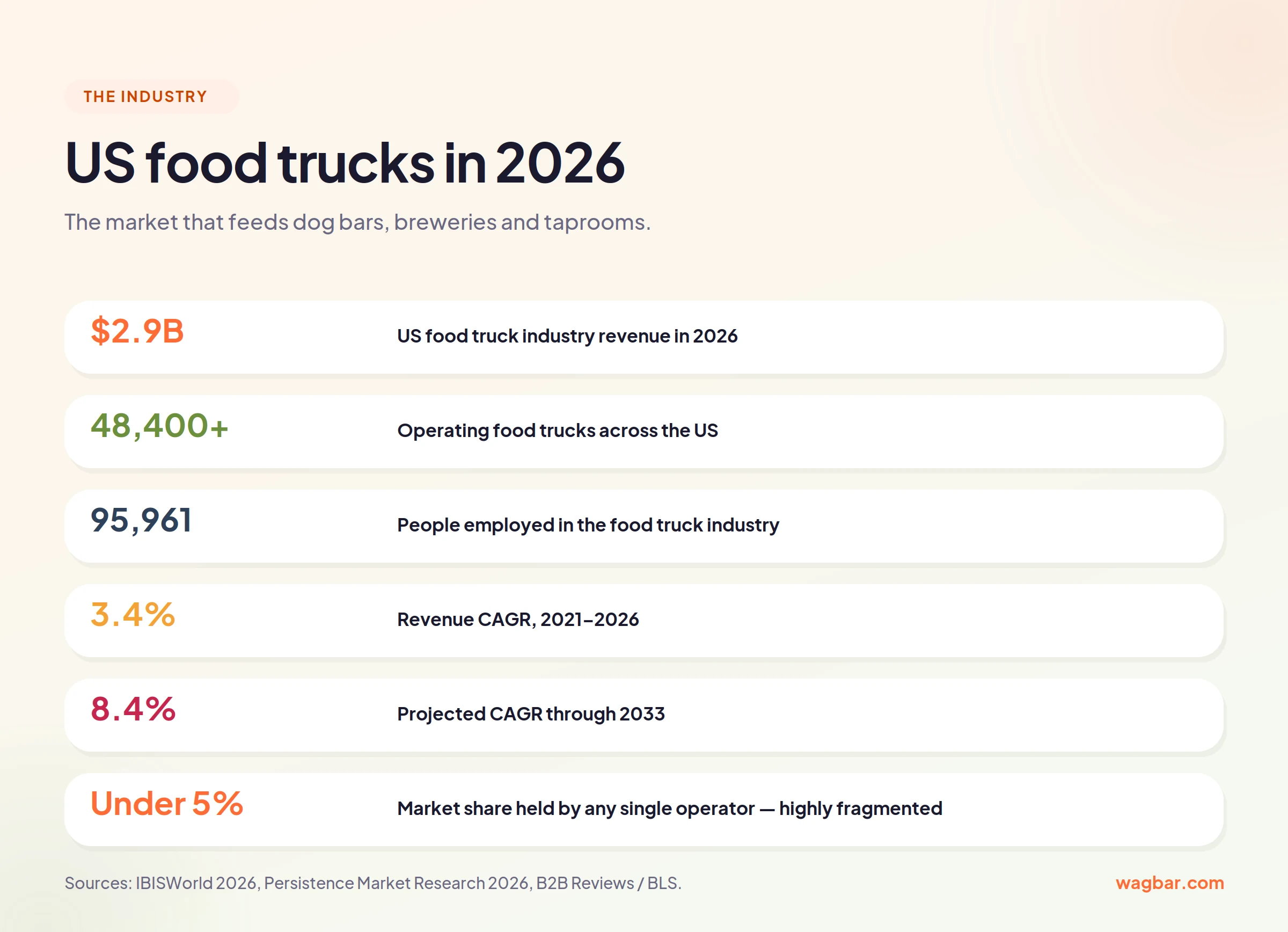
Top TLDR: Dog bars use rotating food trucks instead of building kitchens because the model is cheaper, more flexible and better for the customer. A commercial kitchen costs $80K to $250K+ to build out and requires its own staff, permits and overhead. A food truck parks on site, brings its own crew and license, pays a site fee or revenue share, and leaves. The venue gets a different cuisine every visit with zero kitchen buildout cost. The US food truck industry hit $2.9 billion in 2026, with over 48,000 trucks and nearly 96,000 employees — and dog bars are one of the fastest-growing venue partners in the model.
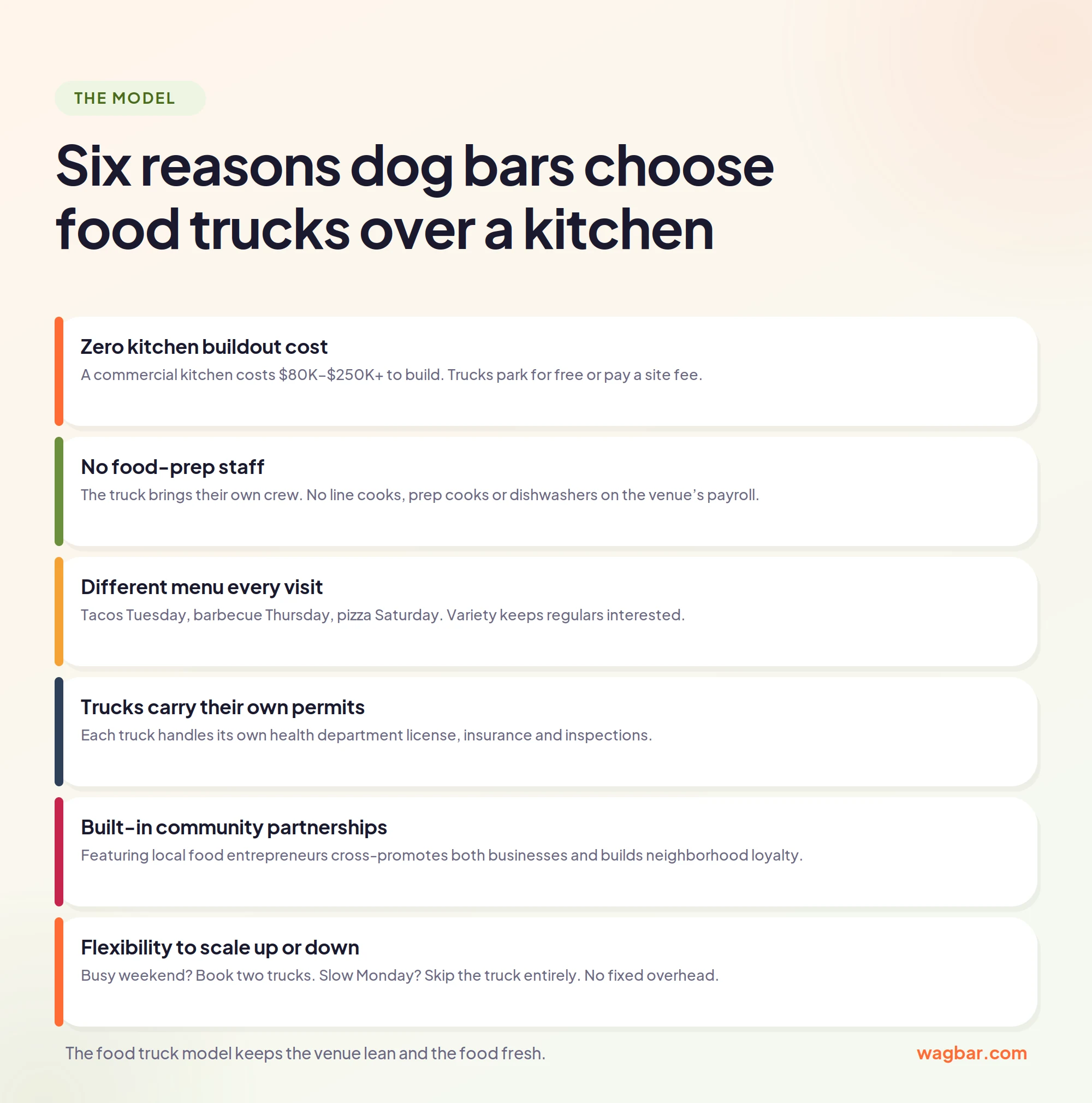
- $0 kitchen cost for the venue. The truck brings everything: kitchen, staff, permits, inventory.
- Different food every visit. Tacos Tuesday, barbecue Thursday, pizza Saturday. Regulars never get bored.
- $2.9B US food truck industry in 2026. Growing at 8.4% CAGR through 2033.
- Both sides win. The truck gets a captive audience. The venue gets food variety without the overhead.
A dog bar that tried to build a kitchen would spend a quarter-million dollars before serving a single plate. A dog bar that parks a food truck on site spends nothing, gets a professional kitchen on wheels with its own licensed crew, and offers customers a different menu every time they visit. That’s why dog bars use rotating food trucks — and why the model has become the industry standard for taprooms, breweries and off-leash venues across the country.
The Economics: Trucks vs. a Fixed Kitchen
Building a commercial kitchen inside a dog bar means $80,000 to $250,000+ in construction, equipment, ventilation, plumbing and fire suppression. After that comes the recurring cost: line cooks, prep cooks, dishwashers, food cost, health department inspections and the licensing overhead of operating a full-service kitchen. Most dog bars and taprooms don’t need that complexity, and they definitely don’t need that payroll.
A food truck eliminates all of it. The truck operator owns the kitchen, staffs it, permits it and insures it. The dog bar provides a parking spot with power and water, promotes the truck on social media, and collects a site fee (typically $100 to $300 per day) or a revenue share (usually 10 to 20%). The venue gets food service without the capital expenditure, and the truck gets guaranteed foot traffic from a venue full of hungry, drinking dog owners.
Why Rotating Trucks Beat a Fixed Menu
A fixed kitchen serves the same menu every visit. A rotating truck schedule serves a different cuisine every day of the week.
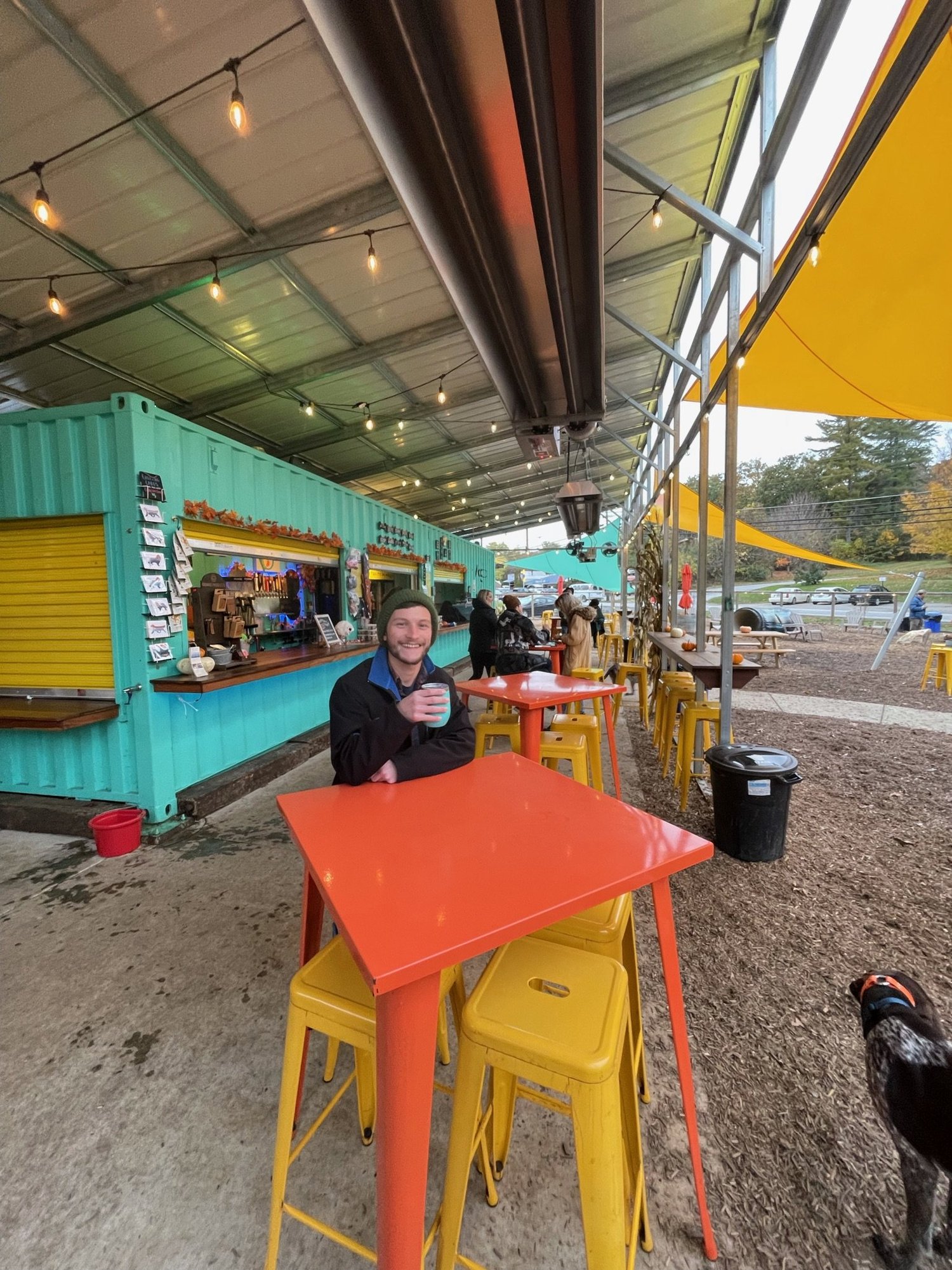
At Wagbar, the truck lineup changes by the day. A customer who comes on Tuesday might get street tacos. The same customer on Thursday gets pulled pork. Saturday might be wood-fired pizza. That variety does two things for the business: it gives regulars a reason to come back multiple times per week (not just once), and it lets the venue test which cuisines perform best without committing to any of them permanently.
Variety also protects against boredom, which is the silent killer of repeat visits. A brewery with the same burger menu for three years loses regulars who’ve eaten every item. A dog bar with rotating trucks never has that problem because the menu resets every 24 hours.
How the Partnership Works
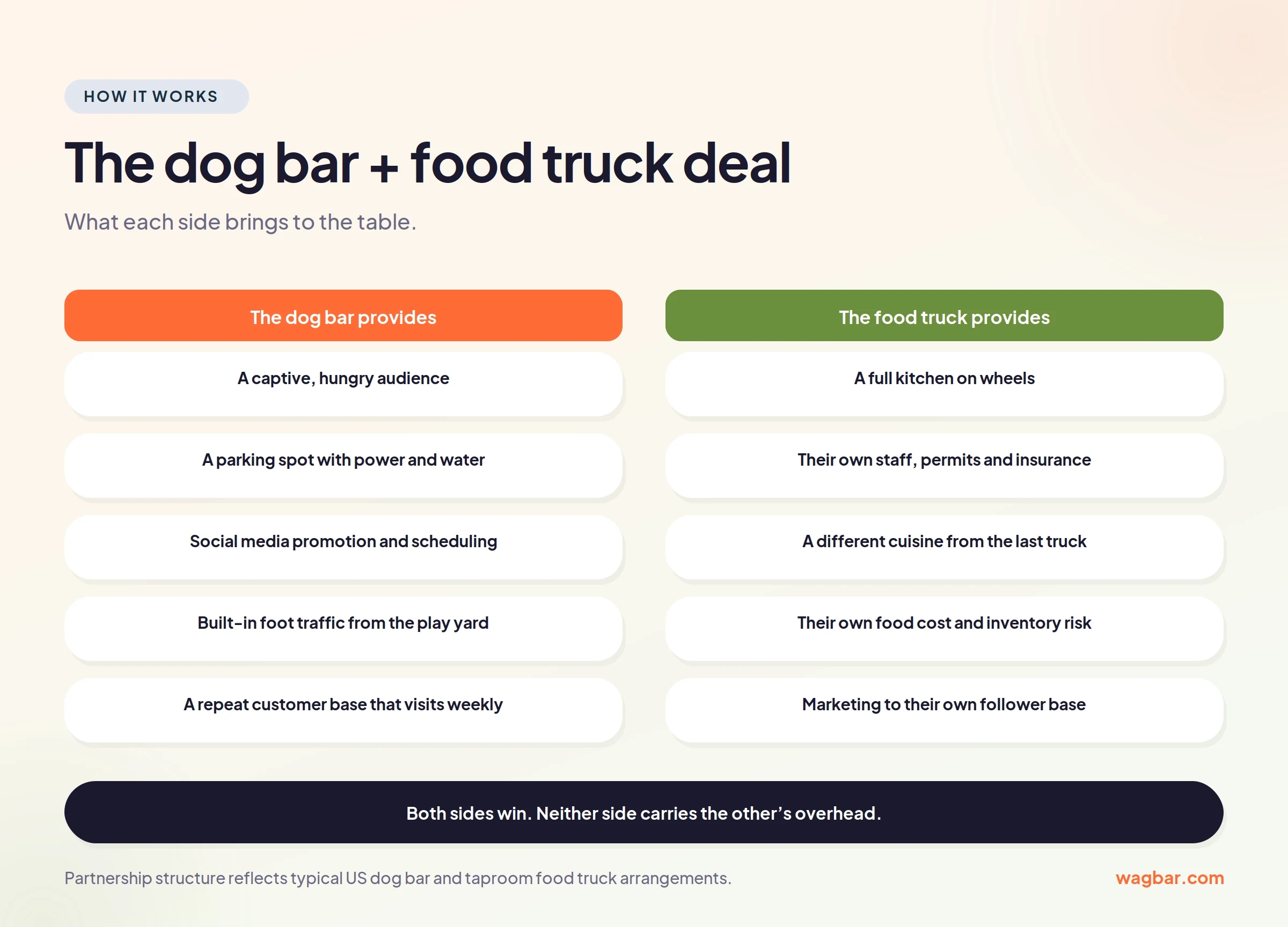
The relationship between a dog bar and a food truck is straightforward: both sides bring what they’re good at, and neither side carries the other’s overhead.
The dog bar provides a captive audience (visitors who are already on site for one to three hours and getting hungry), a parking spot with hookups, social media promotion and a repeat customer base. The food truck provides a full kitchen, a trained crew, their own health permits, their own food cost and inventory risk, and marketing to their own follower base. When the truck posts “We’re at Wagbar tonight,” their followers become the venue’s walk-ins. When the venue posts “Tonight’s truck: [name],” the venue’s audience becomes the truck’s customers.
It’s a two-way marketing engine that neither side could build alone.
The Food Truck Industry in 2026
The numbers behind the model are solid. The US food truck industry reached $2.9 billion in revenue in 2026, according to IBISWorld, with over 48,400 trucks operating nationwide and nearly 96,000 employees. The industry grew at a 3.4% CAGR between 2021 and 2026, and Persistence Market Research projects an 8.4% CAGR through 2033. No single operator holds more than 5% of the market, making it one of the most fragmented segments in the entire restaurant industry — which is exactly what makes it work for venue partnerships. There’s always a truck available, and there’s always a new cuisine to book.
The broader menu at a dog bar — craft beer, cocktails, coffee, slushies — is designed to keep people drinking for hours. Food trucks make sure those people eat, too, without the venue ever touching a fryer.
What Wagbar Looks for in a Truck Partner
- Proper licensing and insurance. Every truck must carry its own health department permits, liability insurance and food handler certifications. No exceptions.
- Quality and consistency. The truck’s food reflects on the venue. Wagbar vets truck partners before booking them.
- Dog-safe operations. Food is served from the truck, not in the play yard. Wagbar’s no-feeding policy means no food enters the off-leash area — no scraps on the ground, no treats handed to dogs, no plates carried into the yard. This prevents resource guarding between dogs, protects animals with allergies, and keeps the play surface clean.
- Social media presence. A truck that promotes the partnership to their own followers doubles the marketing reach of every booking.
Food Trucks at a Dog Bar FAQs
How often do food trucks rotate at a dog bar?
Most dog bars rotate trucks daily or a few times per week. Wagbar books a different truck each day the kitchen-less venue is open, so the food selection changes with every visit.
How much does food cost from a truck at a dog bar?
Food truck prices are comparable to casual restaurant pricing: $8 to $15 per plate is typical. The pricing is set by the truck operator, not the venue.
Can I bring outside food to a dog bar?
Policies vary, but most venues prefer that visitors buy from the on-site truck since food partnerships are part of the business model. Wagbar doesn’t allow outside food in the play yard to maintain its no-feeding policy for dogs.
Do food trucks serve dogs?
No. Food trucks at Wagbar serve humans only. The no-feeding policy keeps all food out of the play yard to prevent behavioral issues like resource guarding, protect dogs with dietary restrictions, and keep the yard clean.
How do food trucks get booked at a dog bar?
Trucks typically reach out to the venue or respond to a booking call. The arrangement is a site fee or revenue share. Many dog bars maintain a roster of vetted trucks and schedule them weeks in advance.
Feed the Humans. Let the Dogs Play.
The food truck model works because it lets a dog bar do what it does best — run an off-leash yard and a great bar — while outsourcing the kitchen to professionals who already own one. Wagbar builds this partnership structure into every franchise location. Learn how a Wagbar franchise operates.

Wagbar does not represent what a franchise owner will earn. Verified performance data is available only in Item 19 of the FDD, provided to qualified candidates during formal disclosure. Published cost figures are FTC-required regulatory estimates and are not profitability guarantees.
Your Dog Runs. You Eat Something Great.
A different truck every visit. Tacos, barbecue, pizza, pho — whatever’s parked outside today. Grab a plate, grab a pint, grab a seat where you can watch the yard. Bring your pup’s records and find out who’s cooking at the nearest Wagbar.
Bottom TLDR: Dog bars use rotating food trucks because the model eliminates $80K to $250K in kitchen buildout cost, skips the staffing and permitting overhead, gives customers a different cuisine every visit, and creates a two-way marketing engine with local food entrepreneurs. The US food truck industry is a $2.9 billion market in 2026 with over 48,000 trucks and 8.4% projected growth through 2033. At Wagbar, food stays on the human side — the no-feeding policy keeps the play yard free of food to prevent resource guarding, allergy incidents and mess.