

Menu Planning for Dog-Friendly Establishments

Top TLDR: Menu planning for dog-friendly establishments means building a beverage and food program that works alongside an off-leash dog park environment, where rotating food trucks, craft beer selections, and non-alcoholic options all serve owners while their dogs play. At Wagbar, this model has proven that the right menu mix keeps guests longer, increases per-visit spending, and builds the kind of community loyalty that drives repeat visits. Start with a strong local draft selection and let food truck partnerships handle the rest.
Dog-friendly establishments face a menu challenge that traditional bars don't: your guests are managing an enthusiastic 60-pound Labrador with one hand while trying to hold a drink with the other. Planning a menu around that reality isn't just smart hospitality, it's the difference between a concept that thrives and one that creates headaches for staff and guests alike.
Whether you're exploring an off-leash dog bar franchise or looking to add dog-friendly amenities to an existing venue, the menu decisions you make early on will shape the entire guest experience.
Why the Menu at a Dog-Friendly Bar Is Different
Traditional bar menus assume stationary guests with both hands free. Dog-friendly venues don't have that luxury. When someone is watching their dog interact with a new pack of regulars, they're not studying a lengthy food menu or managing a complicated cocktail order. They want something easy to grab, hard to spill, and satisfying enough to keep them around for another hour.
That fundamental difference shapes everything from glassware choices to food format. Canned beverages, for instance, outperform traditional glassware in outdoor dog park settings because they're lighter, less likely to shatter if knocked over, and easier to carry while moving around the park. According to the National Restaurant Association, outdoor dining and flexible service formats have seen consistent growth, with guests prioritizing ease and atmosphere over elaborate food presentation.
At Wagbar's off-leash dog bar locations, the beverage program centers on exactly this philosophy: a rotating selection of craft and domestic beers on draft and in cans, wine, cider, hard seltzer, and non-alcoholic options that keep everyone included. Simple. Manageable. Social.
Building the Beverage Program
The beverage menu is the backbone of any dog-friendly establishment. Food can rotate, specials can change, but the core drink selection needs to be consistent, approachable, and locally rooted wherever possible.
Draft and Canned Beer
Local craft beer is the obvious anchor. Guests at dog-friendly venues skew toward the same demographic that supports independent breweries: younger adults, outdoor-activity enthusiasts, and community-minded consumers who care where their money goes. Partnering with local breweries serves double duty, giving you rotating tap handles that keep regulars interested while building relationships with other businesses in your area.
Keep the draft list manageable. Four to eight taps is plenty for most dog park venues. Too many choices slow service at outdoor windows and create decision fatigue when someone's half-watching their terrier start something with a golden retriever across the yard. Round out the draft list with canned options that guests can carry around the park without worrying about a pint glass.
Wine, Cider, and Seltzer
Not everyone drinks beer, and building in solid alternatives is just good business. Canned wine and canned cider work particularly well in outdoor settings for the same reasons canned beer does. Hard seltzer has become a genuine menu staple rather than a trend, and stocking two or three options covers a significant portion of the non-beer-drinking crowd.
Non-Alcoholic Options
This category matters more than most operators initially expect. Dog-friendly venues attract guests who are driving (sometimes with a dog crate in the back), guests who don't drink, and guests who want to pace themselves during a three-hour weekend visit. A solid non-alcoholic menu, including sparkling water, quality coffee, and a few non-alcoholic beverages with some personality, keeps those guests spending money and coming back.
Wagbar's locations include hot drinks alongside the standard beverage options, which makes the off-leash dog park experience genuinely year-round rather than a fair-weather operation.

The Food Truck Partnership Model
Here's where dog-friendly establishment menu planning gets genuinely smart: let someone else handle the kitchen.
The food truck partnership model has emerged as the standard for dog park bars for good reasons. Rotating food truck partnerships eliminate the capital cost and complexity of building and staffing an in-house kitchen, while keeping the food program fresh enough that regulars have a reason to see what's cooking this weekend.
From a guest experience standpoint, food trucks fit the atmosphere. They're casual, they're interesting, and they create a natural gathering point. People who might drift toward the park perimeter find themselves pulled toward the center of the venue by whatever's on the menu that day.
Setting Up the Partnership
Successful food truck programs at dog-friendly venues typically operate on a scheduled rotation, with trucks booking specific days rather than showing up ad hoc. This lets you promote the schedule in advance, build anticipation on social media, and give regulars a reason to plan their visits around a favorite truck.
Keep the rotation diverse. A mix of cuisine types serves the full range of guests better than cycling through similar options. One week's BBQ truck and the next week's taco truck draws different crowds and gives regulars variety. According to the American Mobile Retail Association, food trucks that participate in consistent venue partnerships see 40% higher average sales than those operating independently, so the relationship benefits both parties.
What to Look For in a Food Truck Partner
Not every food truck is a good fit for a dog park environment. Look for operators who understand the casual, outdoor setting: manageable wait times, handheld-friendly menu items, and pricing that matches the demographic. Guests juggling dogs aren't the ideal audience for a multi-course tasting menu with long ticket times.
Wagbar locations feature rotating food trucks prominently in their events, and the Wagbar locations page directs guests to check current food truck schedules, which builds the habit of checking back regularly and keeps engagement high.
Handling the Dog Side of the Menu
One of the more common questions for new dog-friendly establishment operators: should you sell anything for the dogs?
The honest answer is that most successful dog park bars keep this simple. Water stations throughout the park handle hydration, and most operators wisely prohibit treats and outside food in the park itself to prevent resource guarding and the kind of behavior issues that can derail an otherwise smooth session.
For context, Wagbar's FAQ explicitly notes that toys and treats are not permitted in the park, a policy that exists for the safety and enjoyment of all dogs. This is worth understanding before building a menu that includes dog treat upsells, because the policy that keeps the park running safely may conflict with the impulse to sell dog snacks.
If you want to offer something dog-specific, the approach that works best is a takeaway item: a treat bag or a branded item guests can pick up on their way out rather than something consumed in the park.
Seasonal Menu Considerations
A dog-friendly establishment that's only appealing in good weather is leaving significant revenue on the table. Menu planning for year-round operation means thinking about what keeps guests comfortable and coming back when the weather isn't cooperating.
Cold Weather
Hot drinks become genuine menu anchors rather than afterthoughts when temperatures drop. Coffee, hot cider, and other warm options give guests a reason to stay outside longer, and they pair well with the kinds of warm, covered patio areas that good dog park bars invest in. Wagbar locations include covered patios with heaters, and some partially enclose their outdoor spaces in winter, which makes the beverage menu as important as the infrastructure in keeping guests comfortable.
Soups and warm handheld foods from food truck partners also perform well in colder months, and it's worth communicating to your regular truck partners that you'd like winter-appropriate menu options as the season shifts.
Hot Weather
The challenge flips in summer. Ice-cold canned beer and seltzers are at peak appeal, and the menu should lean into that. Frozen or slushy beverage options, if your operation supports them, perform well. Some Wagbar locations have offered wine slushies, which have become a signature item during warm months.
Beyond the beverages, warm-weather menus should think about lighter food options. Heavy food in summer heat isn't what people are reaching for when they've been watching dogs run for an hour.
Pricing and Revenue Strategy
Menu pricing at dog-friendly establishments needs to balance a few competing priorities. The entry fees and memberships that make up a significant portion of the revenue model mean that guests have already spent money to be there. Aggressive pricing on beverages creates friction that undermines the community feel.
That said, this is a business. Beverage margins need to support operations, and the overall revenue picture for a dog park bar blends admission, memberships, beverage sales, and event revenue into a model that works when all the pieces are healthy.
The general approach that successful operators use is competitive local pricing on the beverage side, with the understanding that guests who feel the pricing is fair tend to order more and stay longer. A guest who feels like they're being charged airport prices for a local craft beer leaves after two drinks. A guest who feels like they got fair value for a great afternoon orders a third.
For anyone exploring the franchise investment side of this business model, understanding how menu revenue contributes to overall profitability is an important piece of the due diligence process.
Staff Training for Menu Service in a Dog Environment
Serving drinks in an off-leash dog park environment requires specific training that goes beyond standard bar service. Staff are managing beverage orders while also monitoring dog behavior, responding to interactions that need intervention, and maintaining the kind of calm, helpful presence that keeps the atmosphere positive.
That combination means cross-training matters. At Wagbar, staff are specifically trained in dog behavior and safety protocols, because the person taking your drink order may also be the person who needs to step in when two dogs aren't getting along. That's a genuinely different job than bar service alone.
Menu service in this context should be designed to be as frictionless as possible for staff: streamlined ordering, manageable prep times, and a beverage program that doesn't require elaborate construction while someone's attention is split across the park.
Creating a Menu That Builds Community
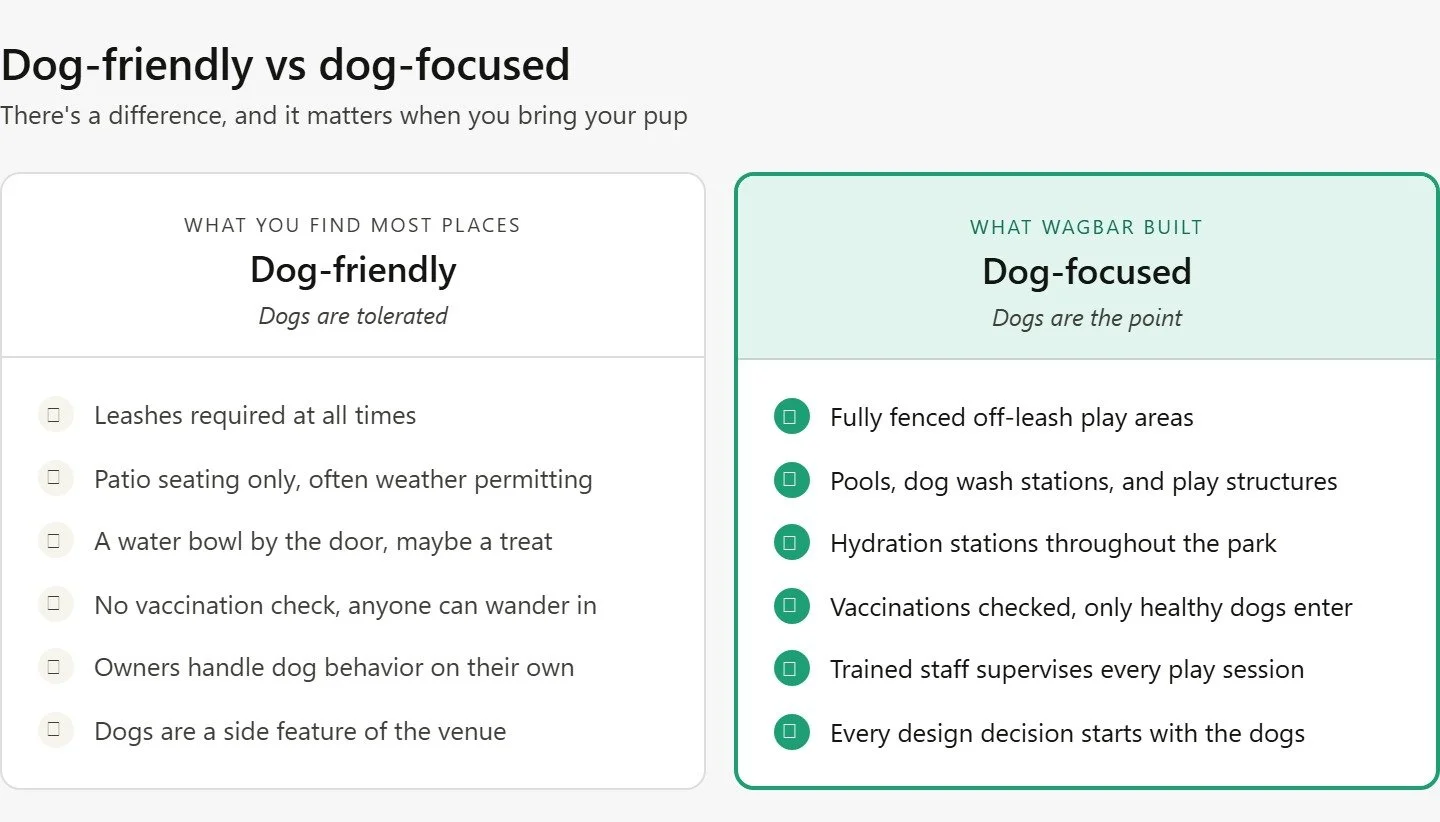
The best menus at dog-friendly establishments aren't just functional, they become part of the venue's identity. A recurring Thursday night food truck that regulars plan their week around. A seasonal beer that signals the arrival of a new season. A non-alcoholic option that becomes someone's Saturday ritual.
These small touchpoints are where community building for dog-focused businesses actually happens. The menu isn't just sustenance, it's part of the reason people choose to spend their afternoon at your establishment rather than somewhere else.
Wagbar's approach to events, from trivia nights to breed-specific meetups to live music, consistently pairs social programming with the beverage offering, which is how a drink menu becomes a reason to show up rather than just something to order once you're already there.
FAQ
What type of beverages work best in a dog-friendly outdoor setting?
Canned beverages are the most practical choice for outdoor dog park venues because they're lighter, portable, and significantly less likely to break if knocked over. A solid selection of local craft beer in cans, alongside canned wine, hard seltzer, and quality non-alcoholic options, covers the full range of guest preferences without creating service complications.
Should dog-friendly establishments sell dog treats as part of their menu?
Most successful off-leash dog park operators do not sell or permit treats inside the off-leash area, because treats can trigger resource guarding and conflict between dogs. If you want to offer something dog-related, a takeaway treat item available for purchase at exit is a cleaner approach that doesn't create behavioral issues in the park.
How do food truck partnerships work at dog park bars?
The most effective model is a scheduled rotation where trucks book specific days in advance, allowing you to promote the schedule and build guest anticipation. Look for trucks with manageable ticket times, handheld-friendly menus, and pricing appropriate for a casual outdoor setting. Communicate your venue's operational style, including wait time expectations and the casual, outdoor nature of the setup, before bringing a new partner on.
How do seasonal changes affect menu planning for dog-friendly venues?
Summer menus should lean heavily into cold beverages, lighter food options, and refreshing non-alcoholic choices. Winter menus benefit from a stronger hot drinks program and warmer food options from food truck partners. Physical infrastructure matters too: covered patios with heaters, and potentially partial enclosure during cold months, make the beverage menu relevant year-round rather than just a summer offering.
What pricing approach works best for dog park bar menus?
Competitive local pricing that reflects fair value tends to encourage longer visits and higher per-guest spending. Guests who feel pricing is reasonable order more and stay longer, while guests who feel they're being overcharged leave early and don't return. The membership and admission revenue structure that most dog park bars use means beverages don't need to carry the full revenue weight, which creates room to price fairly.
Does Wagbar allow outside food?
Yes, Wagbar's policy allows outside food, which is worth knowing as a guest. Outside food is permitted, though treats and toys are not allowed inside the off-leash park area. Check the Wagbar FAQ for full details on current policies at specific locations.
Menu planning for dog-friendly establishments comes down to a clear principle: serve people who have their attention split between a drink and a dog. That means manageable beverages, rotating food that handles itself through truck partnerships, and a beverage program built for a community that keeps coming back. When the menu supports that experience rather than complicating it, the whole operation runs better.
Bottom TLDR: Menu planning for dog-friendly establishments centers on portable beverages, rotating food truck partnerships, and a non-alcoholic program strong enough to serve the full guest range at an off-leash dog park venue. The right menu mix at dog-friendly bars like Wagbar keeps visits longer and increases per-guest spending. Prioritize canned beverages, local craft beer, and scheduled food truck rotations to build both revenue and community loyalty.