

Meet the Dog Bartenders Who Keep Every Wagbar Visit Safe
Behind every successful visit to a Wagbar location is a role most people have never heard of. The dog bartender. These are the trained staff members who watch the play area, read dog body language in real time, pour drinks for humans, and keep the entire park calm, safe, and well behaved from open to close. They are the reason your dog can run off leash in a fenced space with 20 other dogs while you sit down with a beer and actually relax. This page introduces you to who they are, what they do, and why this specific role makes the model work in a way no traditional bar or dog park can copy.
Ready to see it in action? Head to our locations page to find the park nearest you and plan your first visit. The dog bartenders will be watching for you before you even reach the door, which is exactly the point.
What a Dog Bartender Actually Does at Wagbar

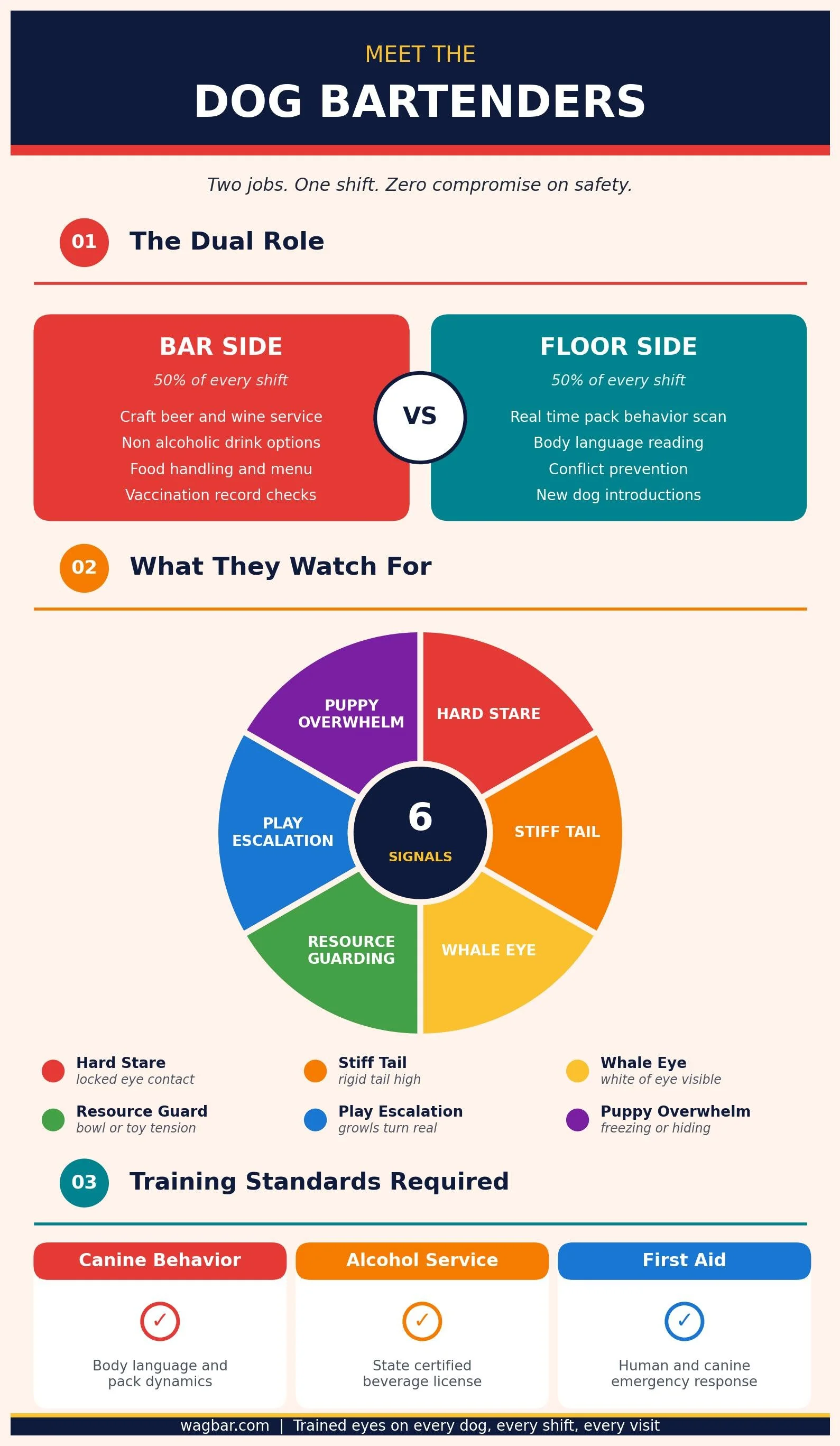
The role blends two jobs into one. Half the time, a dog bartender is behind the counter pouring craft beer, wine, hard seltzers, and non alcoholic options for members and guests. The other half, they're on the floor reading the pack, spotting the dog that just walked in with tense body language, watching for resource guarding at the water bowl, breaking up rough play before it escalates, and welcoming new pups into the group with a gentle introduction. Every dog bartender has to be equally comfortable pulling a pint and interrupting a scuffle.
Most Wagbar locations run with at least two dog bartenders on shift during peak hours. One focused primarily on the bar side and one on floor watch. They rotate roles depending on how busy the park is and how many new dogs walked in that afternoon. When the dog park etiquette scene gets crowded on a Saturday, the ratio flips toward more eyes on the ground and fewer at the counter until things settle.
The Training Behind the Bar
Before a new hire ever pours their first beer at Wagbar, they move through a training program covering canine communication signals, pack dynamics, safe intervention techniques, breed specific behavior tendencies, and emergency protocols. The training references material aligned with the dog body language decoder approach that Wagbar publishes openly for members. Staff learn to spot a hard stare from across the yard, distinguish play growls from real ones, recognize the stiff tail that signals a dog is about to blow up, and read the whale eye of a dog asking for space.
Wagbar also aligns the behavioral portion of training with the standards published by Fear Free Pets, the industry certification body that trains pet professionals in low stress handling and behavior assessment. The bar side of training runs parallel with standard alcohol service certification, food handling, and product knowledge for the local beer selection. Every bartender is expected to hold both credentials at all times.
Reading Dogs While Pouring Drinks
The skill that makes a dog bartender rare in the hospitality world is real time canine assessment while managing human customers. A pour takes 20 seconds. In those 20 seconds, they have already scanned the yard twice. Which dogs are playing well. Which one is over threshold. Whose owner just walked in without checking their dog in properly. Whether the Golden Retriever near the fence has been standing stiffly for too long. Whether the puppy who came in an hour ago is starting to get overwhelmed by the pack size.
Reactive dogs benefit from this constant attention because escalation gets caught early. If your dog struggles in busy spaces, our reactive dog training resource covers the training side. For an authoritative overview of dog body language basics, the American Kennel Club publishes accessible material every dog owner should read once. Owners of anxious dogs often say the dog bartender presence is why they keep coming back to Wagbar week after week. Someone is always watching, and that someone knows what to look for.

Why This Role Exists in the First Place
Traditional dog parks fail in three predictable ways. There is no staff on site to prevent conflicts before they happen. There is no vetting of the dogs who show up. There is no place to sit down and actually be a human while your dog plays. Traditional bars fail the other direction. They don't allow dogs. They don't have space for dogs. The environment isn't built for dogs. The dog bartender role bridges both problems at the same time.
Wagbar's health and safety approach leans on staff observation combined with published veterinary guidance from organizations like the American Veterinary Medical Association. Cameras and door sensors help, but they cannot read intent. A trained human can. The dog bartenders are the reason parents of nervous dogs feel comfortable letting their pup off the leash at all, and they're the reason members trust the park with their dogs while they grab another drink at the counter.
The Vibe Is Actually Real
Okay let's be honest for a second, the "dog friendly bar" thing has become a whole aesthetic on TikTok. Fifty bars in every major city have a water bowl outside and a dog bed by the patio and they call themselves dog friendly. That's not dog friendly. That's dog tolerant. What Wagbar built is different because the dog bartender role means the environment is actively managed for dogs, not just accommodated. Your pup isn't the guest awkwardly hoping the vibe stays chill. They're the reason the space exists in the first place.
If you've been to one of those dog tolerant bars with your dog and left early because it just felt off, you already know the feeling. Dogs pick up on it. Owners pick up on it. Wagbar built the opposite experience with a Wagbar membership that gets you into a space where the staff make eye contact with the dogs first, then the humans. The bar is designed around the pack, not the other way around. Members talk about this constantly, and it's not a marketing line, it's a training model that starts on day one for every hire.
Also worth saying, if you're the type of dog parent who has been screenshot deep in dog behavior research at 1am, the dog bartenders will speak your language. They know what a whale eye is. They know why some greetings need to be paused. They will not judge you for being that owner. They are those owners too, just with training and a job title and a beer in their hand.
What This Means for Your Next Visit
When you walk into any Wagbar location, the dog bartender is watching before you reach the door. They're clocking your dog's body language, your energy, whether you brought vaccination records, and how your dog is reacting to the sound of the pack inside. From that first moment forward, you're part of a managed environment where safety isn't hoped for, it's staffed. That is what makes it possible for members to bring anxious dogs, reactive dogs, senior dogs, and puppies still learning their manners into the same space and have it work out for everyone in the park that day.
Wagbar started in Asheville and now operates in 15 markets across the country. The Play and Unwind side of the community shows what a typical afternoon looks like once you walk in and settle into the rhythm of the park.
Curious about the company itself? The about page covers the story of how this whole idea started with two founders, one location in Weaverville, and a bet that dogs and craft beer belonged in the same fenced yard. If bringing the model to your own city sounds like something you'd want to do, the franchising team can walk you through what that process actually looks like from first call to opening day.