
Knoxville vs Asheville: Complete Guide for Dog Owners Choosing Between Cities
Top TLDR (72 words): Knoxville vs Asheville comparison for dog owners reveals dramatic cost differences: Knoxville saves $750+ monthly ($9,000 annually) on housing and pet services while offering less crowded dog parks and growing infrastructure including Wagbar's supervised facility. Asheville provides more activity variety, slightly cooler temperatures, and established dog culture at premium prices averaging $2,500+ monthly for housing and pet expenses. Choose Knoxville for affordability and space; choose Asheville if budget allows and you prioritize maximum variety.
Knoxville and Asheville sit 110 miles apart in the southern Appalachians, sharing mountain access and outdoor culture while differing dramatically in costs, infrastructure, and lifestyle. For dog owners deciding between these East Tennessee and Western North Carolina cities, the choice affects your daily routine, budget, and your dog's quality of life more than you might expect.
Both cities attract outdoor enthusiasts and dog lovers. Both provide hiking, breweries, and mountain views. The similarities end there. Asheville's explosive popularity drove costs through the roof while creating extensive pet infrastructure. Knoxville maintains affordability while rapidly developing dog-friendly amenities. Understanding what each city actually offers helps you make informed decisions rather than choosing based on reputation alone.
This comparison examines eight factors: cost of living impact on dog ownership, housing availability and restrictions, dog park and off-leash options, veterinary care access, outdoor recreation proximity, business and social scene, climate and seasonal considerations, and overall lifestyle fit for different dog breeds and owner priorities.
Cost of Living: The Foundation of Every Comparison
Every other factor matters less if you can't afford to live in the city. Cost differences between Knoxville and Asheville compound over time, affecting what you can provide for your dog.
Housing Costs Tell the Story
Asheville housing reality: Median home prices hover around $475,000 as of 2026. Rental inventory stays limited with strong competition. Pet-friendly one-bedroom apartments average $1,400-$1,700 monthly. Two-bedroom rentals run $1,800-$2,200. Most properties charge $300-$500 pet deposits plus $35-$75 monthly pet rent per dog.
Knoxville housing advantage: Median home prices around $310,000 provide substantially more value. Pet-friendly rentals average $900-$1,200 for one-bedrooms, $1,200-$1,500 for two-bedrooms. Pet deposits typically $200-$400 with $25-$50 monthly pet rent.
The difference in practice: Asheville housing costs $600-$800 more monthly than comparable Knoxville housing. That's $7,200-$9,600 annually—enough to fund emergency veterinary care, premium food for a year, professional training, regular grooming, and quality daycare with money left over.
Yard size matters: Asheville's land scarcity means small yards or no yards even at premium prices. Knoxville homes commonly include quarter to half-acre lots at middle-tier prices. The space difference affects daily life with dogs needing outdoor access.
Veterinary and Pet Service Costs
Asheville premium pricing: Routine wellness exams run $85-$120. Dental cleanings cost $500-$750. Emergency visit exam fees start at $180-$225. Grooming services average $70-$110 for medium dogs. Dog daycare runs $40-$50 daily.
Knoxville competitive rates: Wellness exams cost $60-$90. Dental cleanings average $400-$600. Emergency exams start at $125-$175. Grooming runs $50-$85 for medium dogs. Daycare averages $28-$38 daily.
Annual savings add up: Asheville's 20-30% higher costs mean paying $400-$800 more yearly for routine care. Emergency situations magnify cost differences dramatically.
Food, Supplies, and Incidentals
Pet supply stores, food costs, and general expenses track closely between both cities. Premium dog food runs similarly priced. The cost advantage for Knoxville comes entirely from housing, veterinary care, and professional services.
Real Monthly Budget Comparison
Asheville typical dog owner monthly costs:
Housing (2BR pet-friendly apartment): $2,000
Pet rent: $50
Utilities: $170
Vet budget (monthly average): $110
Food and supplies: $90
Activities/services: $120
Total: $2,540
Knoxville typical dog owner monthly costs:
Housing (2BR pet-friendly apartment): $1,350
Pet rent: $35
Utilities: $155
Vet budget (monthly average): $85
Food and supplies: $85
Activities/services: $80
Total: $1,790
Monthly difference: $750 in Knoxville's favor. Over a dog's 12-year lifespan, that's $108,000 in savings or resources available for superior care, training, and quality of life improvements.

Housing Reality: Finding Pet-Friendly Places
Both cities claim pet-friendliness. Finding actual housing that accepts your specific dog tells a different story.
Asheville Housing Challenges
Limited inventory creates fierce competition. Pet-friendly properties receive dozens of applications within hours of listing. Landlords screen aggressively: income requirements (3x monthly rent), credit checks (minimum 650-700), rental history verification, and pet interviews.
Breed restrictions hit hard: Most Asheville rentals prohibit "aggressive breeds"—pit bulls, Rottweilers, German Shepherds, Huskies, Akitas, and any mixes thereof. Weight limits (usually 50 pounds) exclude many popular breeds.
Houses not apartments: Asheville's tight rental market means finding houses rather than apartments. Houses typically allow more pet flexibility but cost significantly more and come with lawn maintenance requirements.
Knoxville Housing Advantages
Greater supply means less competition. Properties stay on market longer, giving you time to evaluate options. More landlords accept larger dogs and breeds facing restrictions elsewhere.
Private landlords common: Individual property owners often waive breed restrictions after meeting well-behaved dogs. Corporate-managed Asheville properties rarely budge regardless of your dog's temperament or training certifications.
Negotiation power: Knoxville's balanced market lets you negotiate terms. Lower pet deposits, waived monthly pet rent, or breed exception approvals happen regularly. Asheville landlords have no incentive to negotiate when they receive 30 applications.
Buying vs. Renting in Both Cities
Asheville buyers: The $475,000 median limits what income levels can afford. Young professionals and families often find themselves priced out of homeownership despite good jobs. Staying renter means permanent pet restrictions and ongoing monthly pet rent.
Knoxville buyers: The $310,000 median makes homeownership realistic for more households. Owning eliminates breed restrictions, provides yard space, and removes ongoing pet rent expenses.
Dog Parks and Off-Leash Options
Both cities offer off-leash spaces but approach infrastructure differently.
Asheville's Dog Park Scene
French Broad River Park Dog Park: Asheville's largest facility spans 3+ acres with separate small and large dog areas. Well-maintained with water fountains, waste stations, and ample parking. Gets extremely crowded on weekends—expect 50-100+ dogs during peak times.
Azalea Park Dog Park: Smaller neighborhood facility (approximately 1.5 acres) in North Asheville. Less crowded than French Broad but limited parking. Good for calm dogs uncomfortable with large groups.
Carrier Park: Small fenced area as part of larger park complex. Basic amenities. Convenient for West Asheville residents but nothing special.
Wagbar Weaverville: Located in nearby Weaverville, Wagbar's original location provides supervised off-leash play with professional staff oversight. Membership-based model funds better maintenance and safety standards than municipal parks. Staff trained in dog behavior intervene before problems escalate.
Crowding creates problems: Asheville's popularity means its dog parks see heavy use. High dog density increases fight risks, disease transmission, and stress for sensitive dogs. Quality decreases as quantity increases.
Knoxville's Growing Infrastructure
Victor Ashe Park Dog Park: Knoxville's premier facility covers 2 acres with separate areas by dog size. Well-designed with good drainage, water access, and shade structures. Sees moderate crowds—typically 15-40 dogs at peak times rather than Asheville's 100+.
New Harvest Park Dog Park: East Knoxville facility offering 1.5 acres of space. Less crowded than Victor Ashe. Good for dogs preferring smaller group dynamics.
Tommy Schumpert Park: South Knoxville option with approximately 1 acre. Adequate for local residents but basic amenities.
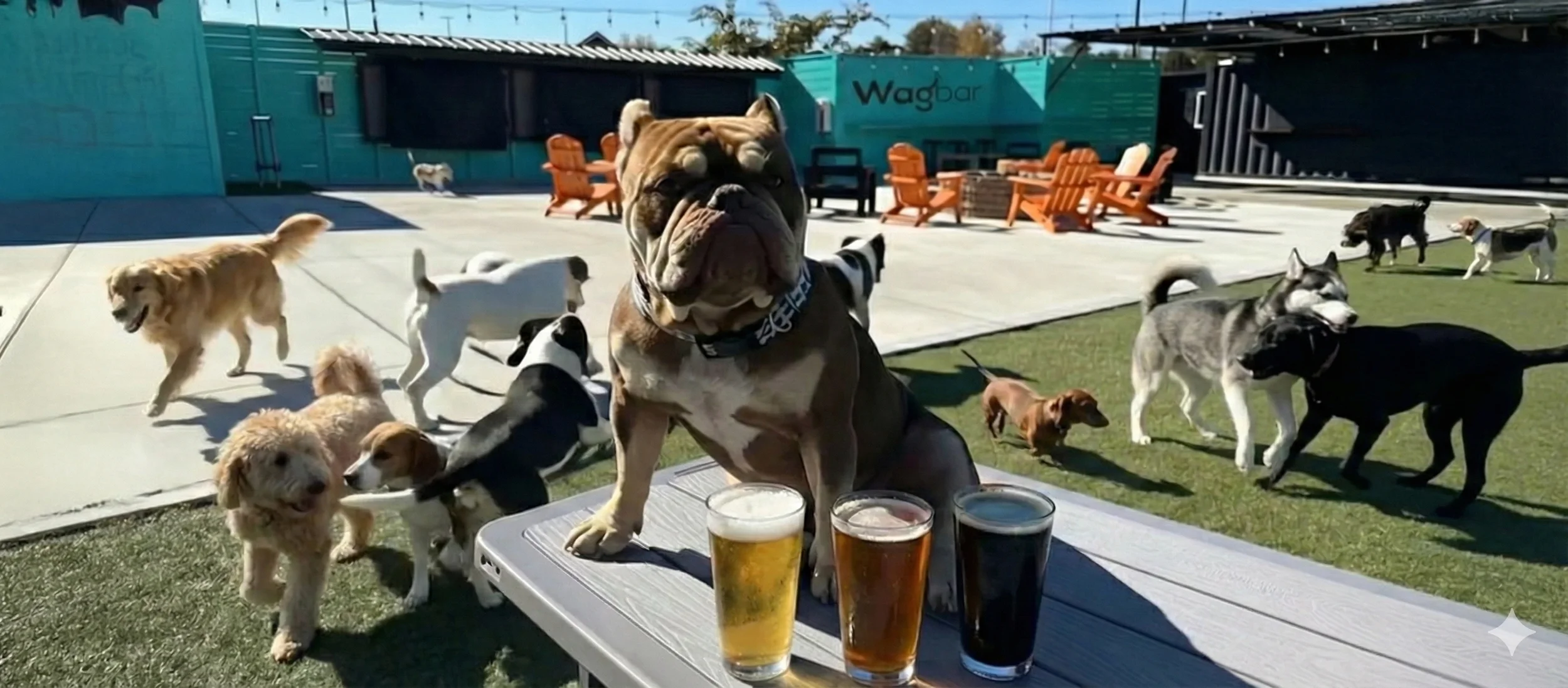
Wagbar Knoxville: Opened late 2025, bringing the professional supervised model to Tennessee. Trained staff monitor interactions, verify vaccinations, and screen for behavioral issues before entry. Provides safer socialization environment than unsupervised municipal parks.
Less crowding benefits everyone: Knoxville's lower population density means better dog park experiences. Your dog actually has room to run. You can watch your specific dog rather than tracking them through crowds. Fewer dogs mean lower disease transmission risk.
The Supervised Advantage
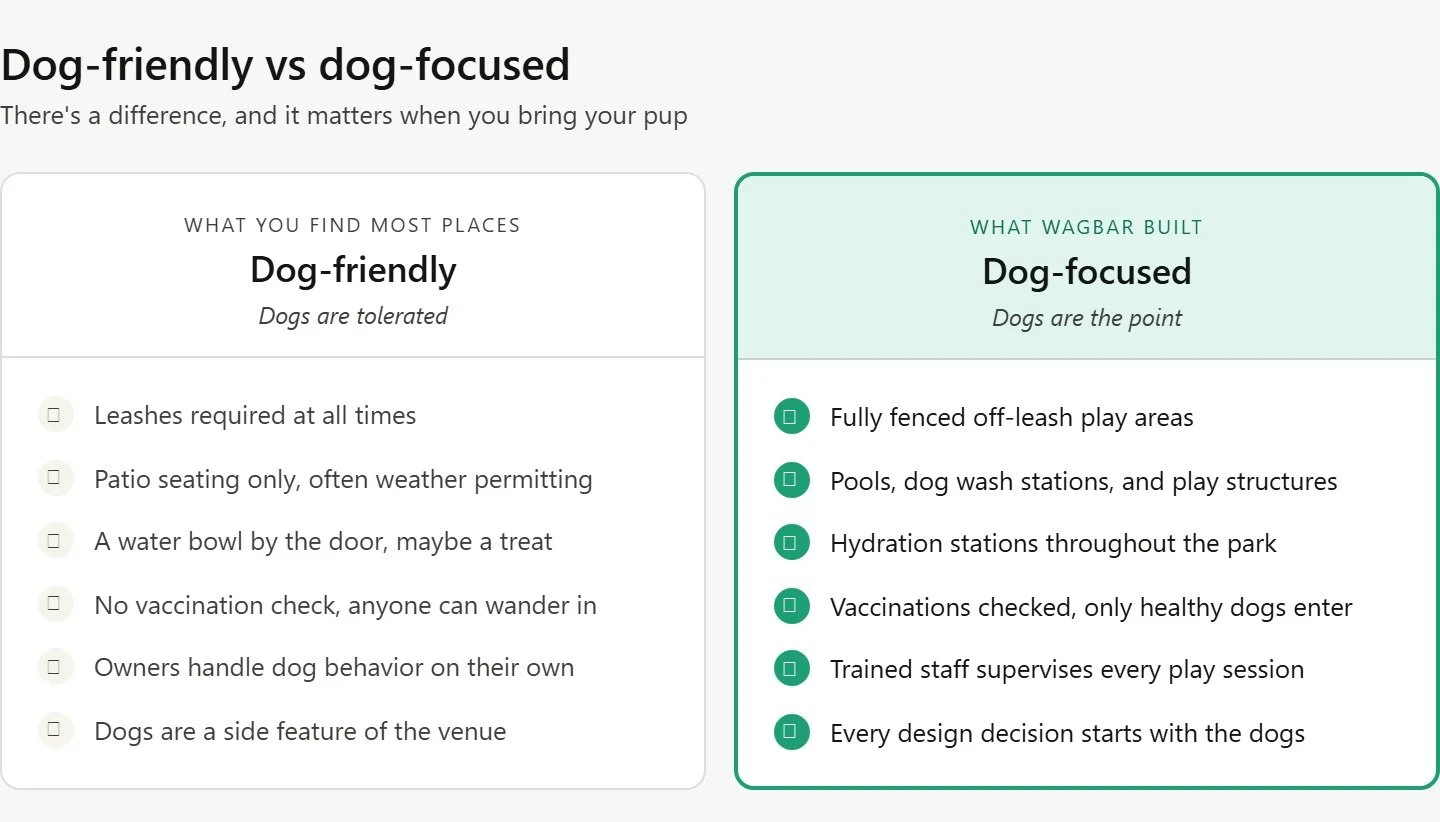
Both cities now offer Wagbar facilities providing supervised off-leash play. This model addresses fundamental municipal park problems:
Professional oversight prevents problems: Trained staff read canine communication signals and intervene before situations escalate. Municipal parks rely entirely on owner intervention after problems develop.
Vaccination verification protects health: Every dog entering Wagbar shows current vaccination records. Municipal parks operate on honor system with no enforcement.
Behavioral screening maintains standards: Aggressive dogs get excluded at assessment, protecting the community. Municipal parks have no screening—you encounter whatever dogs show up.
Owner amenities create longer visits: Comfortable seating, food trucks, and beverage options mean owners stay longer. Longer visits equal better exercise and socialization for dogs. Municipal parks offer benches and minimal shade.
Veterinary Care and Emergency Services
Your dog will need medical attention. Access to quality care matters.
Asheville Veterinary Landscape
Multiple excellent general practices: REACH, Pisgah Pet Hospital, Animal Hospital of North Asheville, and numerous others provide routine care. Competition drives quality up and keeps hours convenient.
Specialty care available: Carolina Veterinary Specialists in nearby Matthews (45 minutes) handles complex cases. Internal medicine, oncology, orthopedics, and cardiology accessible but requiring drives.
Emergency services: Veterinary Emergency and Specialty Center provides 24/7 emergency care. Quality facility but expensive and often crowded. Wait times can extend 2-4+ hours for non-critical cases.
Cost premium: Asheville's popularity and tourism economy mean higher prices across all services. Budget 20-30% more than comparable Tennessee cities.
Knoxville Veterinary Network
Solid general practice options: West Knoxville Animal Hospital, Turkey Creek Animal Hospital, PetVet365, and others provide quality routine care at competitive prices.
University of Tennessee advantage: UT College of Veterinary Medicine offers advanced specialty care, clinical trials access, and teaching hospital services. One of the nation's top vet schools provides Knoxville with medical resources exceeding what Asheville offers.
Emergency coverage: UT Veterinary Medical Center operates 24/7 emergency services. PetVet365 locations provide after-hours urgent care. Better distribution means less driving and shorter wait times than Asheville's single emergency facility.
Cost advantage: Knoxville's lower overall costs extend to veterinary care. Same quality at 15-25% lower prices than Asheville.
Specialized and Alternative Care
Both cities offer basic specialty services. For truly advanced procedures—neurosurgery, advanced oncology protocols, complex orthopedic cases—both require referrals elsewhere. Knoxville's UT connection provides easier access to cutting-edge treatments through university research programs.
Holistic and alternative care (acupuncture, chiropractic, laser therapy) available in both cities through specialty practices.
Outdoor Recreation: Beyond Dog Parks
Mountain access defines both cities. How you actually use that access differs.
Asheville's Recreation Strengths
Pisgah National Forest: Massive wilderness area 20-30 minutes from downtown. Hundreds of miles of trails from easy to extremely difficult. Waterfalls, mountain views, and varied terrain.
Blue Ridge Parkway: Scenic drive providing trail access at numerous points. Popular but beautiful.
Asheville Urban Trails: In-town greenway systems like French Broad River Park and Carrier Park provide walking paths without driving to mountains.
Crowding affects experience: Popular Asheville hiking trails see heavy use, especially weekends. Finding parking at trail heads requires early arrival (before 9 AM) on Saturdays and Sundays. Some trails implement parking reservations and permitting systems.
Urban dog exercise becomes necessary: When getting to actual trails requires fighting traffic and crowds, owners rely more on urban options for daily exercise.
Knoxville's Recreation Access
Great Smoky Mountains National Park: 45 minutes from Knoxville. Most popular national park in America but still less crowded than Asheville's nearby trails. Note: Dogs allowed on only two trails (Gatlinburg Trail and Oconaluftee River Trail). Most Smokies trails prohibit dogs.
Cherokee National Forest: Substantial wilderness area with dog-friendly trails. Less known than Smokies means fewer crowds. Multiple access points within 30-45 minutes.
Ijams Nature Center: In-town urban wilderness with multiple trail options. On-leash required but convenient for quick after-work hikes.
House Mountain State Natural Area: Popular moderate-to-difficult hike with summit views. Gets busy weekends but parking usually available with reasonable arrival times.
Less competition for trail access: Knoxville's location between multiple mountain ranges means more options spreading crowds thinner. Finding parking and trail space easier than Asheville.
Dog-Friendly Trail Limitations
Both cities face the same problem: many premier trails restrict dogs or require leashes. Great Smoky Mountains prohibits dogs on most trails. Blue Ridge Parkway trails allow leashed dogs. Pisgah National Forest generally permits dogs but leash requirements vary.
Finding genuinely dog-friendly trails with off-leash options requires research and willingness to drive farther from both cities.
Business and Social Scene for Dog Owners
Where you spend time with your dog outside of parks and trails matters for quality of life.
Asheville's Dog Business Ecosystem
Extensive dog-friendly dining: River Arts District, downtown, and South Slope brewery districts feature dozens of dog-friendly patios. Most local breweries welcome dogs. Finding places to eat and drink with your dog is easy.
Boutique pet stores and services: Multiple premium pet supply stores, boutique groomers, specialized training facilities, and high-end dog daycares. Competition drives innovation but also prices.
Regular dog-focused events: Yappy Hours, adoption events, dog yoga, breed-specific meetups, and organized social activities happen weekly. Easy to find dog owner community and structured activities.
Commercial feel: Asheville's tourism economy means many "dog-friendly" businesses cater to visitors as much as residents. Authentic local community exists but requires effort to find beyond surface-level tourist interactions.
Knoxville's Developing Scene
Growing dog-friendly options: Market Square, Gay Street, Old City, and neighborhood breweries increasingly welcome dogs to patios. Less extensive than Asheville but rapidly expanding.
Competitive pet services: Multiple grooming salons, daycares, training facilities, and pet stores provide solid options at better prices than Asheville equivalents.
Community-focused events: Knoxville's smaller size means less formal organization but tighter actual community. Dog owner groups form organically through regular park visits and neighborhood connections.
Authentic local culture: Less tourism influence means businesses genuinely cater to residents rather than visitors. Building lasting relationships with other dog owners easier in less transient population.
Wagbar impact: The late 2025 Wagbar opening created instant community hub for Knoxville dog owners, filling infrastructure gap that previously favored Asheville.
Training and Organized Activities
Asheville advantages: More variety in training options—basic obedience, agility, nosework, rally, scent work, and specialized behavior modification programs. Competition among trainers drives quality.
Knoxville solid basics: Good options for fundamental training and common dog sports. Less variety in specialized or advanced training programs. Serious competitors sometimes travel to larger cities for specific training access.
Climate and Seasonal Considerations
Both cities experience four distinct seasons with similar patterns but important differences.
Temperature and Humidity
Asheville cooler: Higher elevation (approximately 2,100 feet) keeps Asheville 3-5 degrees cooler than Knoxville (900 feet elevation) year-round. Summer highs in Asheville peak around 85°F versus Knoxville's 90°F. Winter lows in Asheville drop to 27°F versus Knoxville's 30°F.
Knoxville more humid: Tennessee Valley location traps moisture. Humidity makes summer temperatures feel warmer and winter cold feel more penetrating. Asheville's elevation provides better air circulation.
Practical impact: The temperature difference rarely determines city choice but affects daily comfort. Heavy-coated breeds (Huskies, Golden Retrievers) handle Asheville summers slightly better. Short-coated and senior dogs manage winter comparably in both cities with appropriate gear.
Seasonal Activity Patterns
Spring (March-May): Both cities shine. Moderate temperatures, blooming landscapes, and ideal outdoor conditions. Dog parks and trails see highest use. Plan on crowds in both locations.
Summer (June-August): Asheville's cooler temperatures make midday activities more tolerable. Knoxville requires early morning or evening outdoor time during peak heat. Both cities see reduced trail use during hottest months.
Fall (September-November): Peak season for both cities. Comfortable temperatures, fall color, and excellent conditions for all outdoor activities. Second-busiest season for dog parks and trails after spring.
Winter (December-February): Both cities average 4-8 inches of annual snowfall. Neither city handles snow and ice particularly well. Occasional storms shut down activities for days. Cold-sensitive dogs need gear and shortened outdoor time in both locations.
Breed-Specific Considerations
Different dogs thrive in different environments. Matching breed needs to city characteristics improves outcomes.
High-Energy Working Breeds
Border Collies, Australian Shepherds, Belgian Malinois and similar breeds need serious daily exercise beyond neighborhood walks.
Asheville's advantage: Closer Pisgah trails and slightly cooler temperatures benefit daily exercise routines. More variety in activities and training options.
Knoxville's advantage: Less crowded trails mean safer off-leash work (where permitted). Lower costs allow more budget for quality daycare and exercise programs. Multiple mountain range access spreads traffic.
Verdict: Slight edge to Asheville for variety, but Knoxville works fine if budget matters and you handle drive times to trails.
Social and Family Breeds
Golden Retrievers, Labrador Retrievers, family-friendly breeds thriving on human and canine interaction.
Asheville's advantage: More organized social activities and formal dog events. Greater variety in group training and activities.
Knoxville's advantage: Supervised Wagbar facility and less crowded municipal parks provide safer socialization. Tighter community builds deeper friendships. Lower costs support consistent daycare and social opportunities.
Verdict: Knoxville's supervised options and authentic community outweigh Asheville's greater quantity of activities.
Small and Toy Breeds
Small dog breeds adapt well to apartment living but face unique challenges.
Asheville's advantage: More indoor activities, climate-controlled facilities, and small-breed-specific social groups.
Knoxville's advantage: Less overwhelming dog park experiences. Better small dog area separation at facilities. Lower costs allow higher-quality services.
Verdict: Either city works fine. Asheville if you prioritize indoor activities; Knoxville if budget matters more.
Reactive or Anxious Dogs
Dogs with reactivity issues need quieter environments and controlled exposure.
Asheville's challenges: Higher density and crowded parks overwhelm reactive dogs. Constant stimulation makes training harder.
Knoxville's advantage: Less density and crowding provide quieter neighborhoods and calmer dog parks. Easier to find low-stimulus walking routes. Professional supervision at Wagbar allows controlled socialization.
Verdict: Clear advantage to Knoxville for reactive dog management.
Lifestyle and Culture Differences
Beyond dog-specific factors, general city character affects daily life.
Asheville's Identity
Tourism drives Asheville's economy and culture. Downtown caters heavily to visitors. Restaurants, breweries, and attractions price accordingly. Traffic congestion reflects tourist patterns more than commuter patterns.
Authentic local community exists beneath tourism veneer but requires intentional effort to find. Many residents commute from surrounding cheaper areas (Weaverville, Black Mountain, Fletcher) rather than living in Asheville proper.
Progressive culture attracts people valuing arts, music, and alternative lifestyles. Strong environmental consciousness and outdoor recreation focus.
Transient population: High costs and limited opportunities mean young professionals often move after a few years. Building lasting community requires finding people committed to staying long-term.
Knoxville's Character
University of Tennessee shapes city culture. Game days transform downtown but academic calendar creates consistent patterns. More stable population with lower turnover than Asheville.
Genuinely local feel with less tourism influence. Businesses cater to residents. Prices reflect local market rather than tourist economy.
Southern culture mixed with university influence: Traditional Southern hospitality combines with more progressive academic population. Less homogeneous than Asheville's progressive reputation.
Economic diversity: Strong manufacturing base, healthcare sector, and university create varied opportunities. More economic stability than Asheville's tourism-dependent economy.
Making Your Decision: Knoxville or Asheville?
Neither city is objectively "better." The right choice depends on your specific priorities, budget, and dog's needs.
Choose Asheville If:
Budget isn't a primary concern—you can comfortably afford $2,000-$2,500 monthly housing
You prioritize variety in activities, training options, and dog-related businesses
Slightly cooler summer temperatures matter for your dog's breed and coat
You value proximity to specific Pisgah National Forest trail systems
You prefer Asheville's progressive culture and arts scene
You can handle crowded dog parks and hiking trails
Your dog is small or medium-sized without breed restrictions
Choose Knoxville If:
Budget matters—saving $700-$900 monthly significantly impacts your quality of life
You want more space: larger yards, bigger apartments, and room for your dog
You have a large breed or breed facing common rental restrictions
You prefer less crowded dog parks and trails
You value authentic local community over tourist-oriented culture
Your dog is reactive or uncomfortable in high-density situations
You want easy access to University of Tennessee veterinary specialty care
You prioritize the supervised Wagbar model for safer socialization
You want to own a home rather than rent permanently
The Budget Reality Check
Most people underestimate cost-of-living impact on long-term decisions. The $750-$900 monthly difference between cities compounds dramatically over years.
Five-year comparison:
Asheville total costs: $152,400
Knoxville total costs: $107,400
Difference: $45,000
That $45,000 buys multiple emergency surgeries, premium food for your dog's entire life, extensive professional training, quality daycare five days weekly for three years, or a substantial emergency fund providing peace of mind.
For young professionals and families, that cost difference often determines whether you can afford a dog at all. Choosing the cheaper city allows quality pet ownership. Choosing the expensive city might force compromises on care.
Visiting Before Deciding
Don't choose based on reputation alone. Visit both cities with these specific tasks:
In each city:
Visit dog parks during weekend peak times to assess crowding and atmosphere
Drive to hiking trail heads to understand actual accessibility
Tour pet-friendly housing options to verify availability and costs
Walk neighborhoods you'd potentially live in to gauge safety and walkability
Visit local veterinary practices to assess professionalism and pricing
Eat at dog-friendly restaurants to experience social scene
Talk to local dog owners at parks about their honest experiences
Specific to your dog:
How does your dog handle the crowding level at each city's dog parks?
Can you find housing that actually accepts your specific breed and size?
Are veterinary costs within your realistic budget?
Do you enjoy the culture and people you encounter?
Can you see yourself building community in either city?
Timeline for Transition
Moving between these cities requires planning, especially with a dog.
3 months before moving:
Research and visit both cities if possible
Identify housing options accepting your dog
Find veterinarians and schedule first appointment
Connect with local dog owner groups on social media
Research dog parks, trails, and activities
1 month before moving:
Schedule final vet visit in current location
Request complete medical records
Update ID tags with new contact information
Arrange pet-friendly moving logistics
Plan first week's activities to help dog adjust
First week in new city:
Schedule veterinarian appointment
Visit dog parks during off-peak hours first
Walk neighborhood multiple times daily
Maintain consistent routines despite changes
Be patient with adjustment behaviors
First 3 months:
Join training class or dog activity group
Attend local dog events to meet community
Establish regular routines and favorite spots
Assess whether the city meets expectations
Make adjustments as needed
Final Thoughts: It's About Your Specific Situation
Rankings and comparisons provide frameworks for thinking through decisions. They don't make decisions for you. Knoxville offers better value, less crowding, and growing infrastructure. Asheville provides more variety, slightly cooler climate, and established dog culture.
Your budget, dog's needs, and personal priorities determine which factors outweigh others. An Asheville resident earning six figures experiences the city completely differently than a young professional earning $55,000. A reactive dog needing quiet environments has different needs than a Golden Retriever wanting maximum social interaction.
Both cities support dog ownership well. Neither is wrong. The question is which set of trade-offs aligns with your specific circumstances. Honest assessment of budget, lifestyle preferences, and dog needs guides you toward the right answer for your situation rather than the "best" answer according to someone else's priorities.
Bottom TLDR: Knoxville vs Asheville decision for dog owners depends on budget and priorities rather than objective superiority. Knoxville's $750 monthly savings, less crowded facilities, and breed-friendly housing suit budget-conscious owners and reactive dogs. Asheville's extensive services, cooler climate, and activity variety justify costs for those affording $2,500+ monthly expenses. Visit both cities with your dog before committing, assessing actual park crowding, housing availability, and community culture firsthand to inform your decision.