
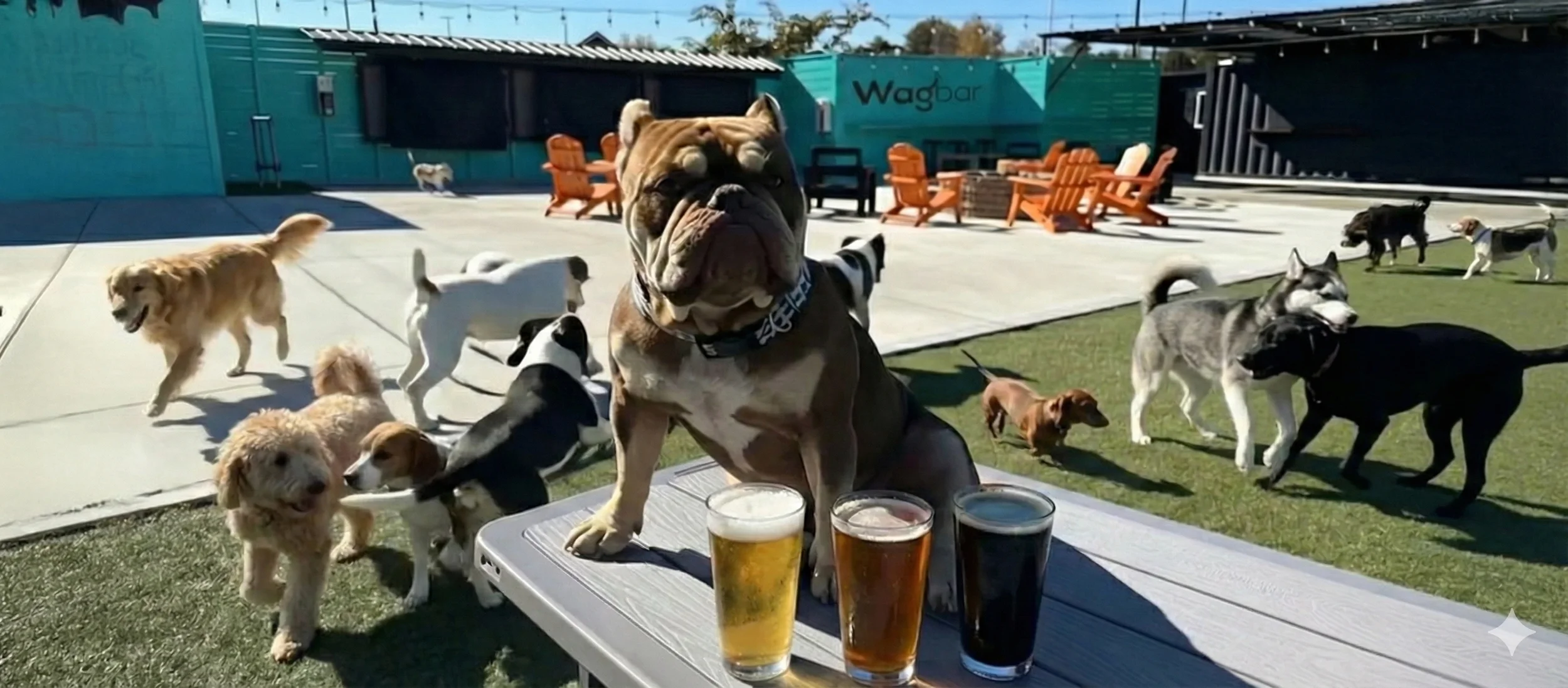
Knoxville Dog Park Safety: How Wagbar's Supervision Prevents Common Dog Park Problems

Top TLDR: Knoxville dog park safety improves dramatically with trained staff supervision compared to unmonitored public parks where aggressive dogs, inattentive owners, and unknown vaccination status create risks. Wagbar Knoxville employs staff trained in canine body language and conflict prevention who screen dogs at entry, monitor play continuously, and intervene before fights occur—addressing the primary safety gaps at Victor Ashe Park, Tommy Schumpert Park, and Carl Cowan Park. Visit during quiet weekday afternoons at any park to assess safety conditions firsthand, or choose Wagbar's supervised environment for consistent professional oversight.
Dog parks provide essential socialization and exercise opportunities, but they also carry inherent risks that make some owners avoid them entirely. Knoxville's public dog parks—Victor Ashe Park, Tommy Schumpert Park, and Carl Cowan Park—operate completely unmonitored, meaning safety depends entirely on the collection of owners present during any given visit. One inattentive owner or one aggressive dog can ruin the experience or cause serious injury.
Wagbar Knoxville introduces a fundamentally different approach: trained staff supervision throughout all operating hours. This professional oversight addresses the most common safety problems that plague unmonitored parks, creating an environment where nervous owners can relax and anxious dogs can build confidence knowing someone is actively managing the space.
The Safety Problem with Unmonitored Dog Parks
Traditional public dog parks like those throughout Knoxville operate on an honor system that frequently breaks down. The model assumes all owners will supervise their dogs attentively, intervene when problems arise, maintain current vaccinations, and honestly assess whether their dogs are appropriate for off-leash group play.
These assumptions fail regularly.
The Phone-Absorbed Owner: Walk into Victor Ashe Park on any weekend morning and count how many owners are staring at phones instead of watching their dogs. These distracted visitors miss the warning signs preceding conflicts, fail to notice when their dogs are bullying others, and respond slowly when their dogs need intervention. One absorbed owner creates vulnerability for every dog present.
The Aggressive Dog: Unmonitored parks lack behavioral screening at entry. Owners of dogs with aggression histories can enter freely, hoping their dogs "do better today" or believing socialization will fix problems that require professional training. By the time aggression manifests, other dogs have already been traumatized or injured.
Unknown Vaccination Status: Public parks don't verify health records. You're trusting every visitor to maintain current vaccinations and recognize signs of contagious illness. This trust gets violated frequently—whether through owners who skip vaccines to save money, those who don't realize vaccines lapsed, or people who bring visibly sick dogs to parks.
No Conflict Resolution Authority: When problems occur at public parks, no authority figure exists to manage the situation. Polite requests that owners control their dogs get ignored. Aggressive confrontations between owners escalate situations further. Problematic dogs remain in the space because no one has power to remove them.
Inconsistent Community Standards: Regular visitors to specific parks often develop shared expectations and informal rules, but newcomers don't know these norms. Tommy Schumpert's regular morning crowd might have strong standards for behavior, while afternoon visitors operate under completely different assumptions. This inconsistency creates unpredictable safety conditions.
These structural problems don't make public parks unusable—many dogs have thousands of positive public park visits—but they create unnecessary risk that supervised environments eliminate.
How Wagbar's Trained Staff Prevent Common Problems
Wagbar Knoxville's supervision model addresses each failure point in the unmonitored park approach through professional staffing, systematic protocols, and consistent enforcement.
Behavioral Screening at Entry: Every dog undergoes assessment before entering play areas. Staff trained in canine body language observe how dogs react to the entry process, other dogs visible through fencing, and handling by strangers. Dogs showing significant fear, aggression, or extreme anxiety get declined entry or directed toward quieter times when staff can provide extra attention during gradual introduction.
This screening catches problems before they enter the space rather than discovering them after incidents occur. The process isn't perfect—some issues only manifest in specific contexts—but it eliminates the most obvious red flags that unmonitored parks allow through unchallenged.
Continuous Active Monitoring: Staff members position themselves throughout the facility with clear sightlines across play areas. Unlike owners who might glance up occasionally while chatting with friends, staff actively scan for warning signs continuously. Their job is watching dogs, not socializing or checking phones, creating reliability that visitor-dependent monitoring can't achieve.
This constant observation allows early intervention. Staff recognize when play is escalating from enthusiastic to aggressive, when one dog is being ganged up on by others, when a timid dog needs extraction from overwhelming situations, or when resource guarding is developing around water stations. They intervene before situations reach the point of injury or trauma.
Authority to Remove Problem Dogs: When dogs display aggression, persistent bullying, or behaviors threatening safety, staff have clear authority to remove them from play areas. This happens politely but firmly—the dog's owner is asked to leash their dog and either take a timeout outside the play area or leave the facility entirely depending on severity.
This authority protects the majority of well-behaved dogs from the minority causing problems. At public parks, aggressive dogs often remain because other owners lack power to enforce removal, allowing one problem dog to terrorize the entire space.
Vaccination Verification: Every dog must prove current Rabies, Bordetella, and Distemper vaccinations at first visit, with records kept on file for members. This verification eliminates the unknown health status that makes public parks risky for immunocompromised dogs or cautious owners.
While vaccinated dogs can still contract some diseases, verified vaccination status dramatically reduces risk compared to environments where owners simply hope everyone else maintains their dogs' health protocols properly.
Consistent Standards Across All Visits: Whether you visit Tuesday afternoon or Saturday morning, Monday evening or Sunday brunch time, the same safety standards apply. Staff training ensures consistent interpretation of rules, behavioral expectations, and intervention thresholds regardless of which team members are working.
This consistency creates predictable safety conditions. You don't arrive wondering whether today's crowd will enforce good behavior or let chaos reign—the professional oversight remains constant.
Real Safety Scenarios: Supervised vs. Unmonitored Response
Understanding how supervision changes outcomes requires examining specific scenarios that occur regularly at dog parks.
Scenario 1: Mounting Behavior
At Unmonitored Parks: A dog repeatedly mounts other dogs despite their obvious discomfort. Other owners exchange uncomfortable glances, hoping the mounting dog's owner will intervene. The owner is absorbed in conversation or checking their phone. Several dogs become stressed trying to escape the mounter. Eventually another dog snaps at the mounter to make it stop, triggering a fight. Owners rush in pulling dogs apart. Everyone leaves upset.
At Wagbar: Staff observe mounting behavior beginning. After the second mount, staff approach the owner: "Your dog is mounting repeatedly which is stressing other dogs. Let's have them take a short break." The dog is temporarily removed from play, given a few minutes to calm down, then reintroduced with staff watching closely. If mounting resumes, the owner is asked to end their visit for the day. No fight occurs. Other dogs remain relaxed.
Scenario 2: Size Mismatch
At Unmonitored Parks: A 90-pound Labrador enthusiastically body-slams a 12-pound Yorkie during play. The Yorkie's owner anxiously watches but doesn't want to seem uptight by intervening. The Lab owner insists their dog is "just playing" and "loves small dogs." The rough play continues until the Yorkie yelps in pain from being stepped on. The Yorkie owner leaves angry. The Lab owner feels attacked and defensive.
At Wagbar: Staff observe the size mismatch creating unsafe dynamics. They approach both owners: "This size difference is creating risk. Let's separate them before someone gets hurt. Big dogs can play together over here, and we have small dogs arriving in a few minutes who'll be better playmates for the Yorkie." Both owners appreciate the professional intervention preventing injury. The dogs are redirected to appropriate playgroups. Everyone continues enjoying their visit safely.

Scenario 3: Resource Guarding
At Unmonitored Parks: A dog positions itself at the water fountain, growling at other dogs who approach. Thirsty dogs are afraid to drink. Some owners don't notice. Others notice but don't know whose dog is guarding or how to address it. The situation persists until the guarding dog's owner happens to walk near the fountain and calls their dog away. Multiple dogs leave the park dehydrated because they couldn't access water safely.
At Wagbar: Staff immediately notice resource guarding at the water station. They approach and redirect the guarding dog to a different area of the park. Additional water stations throughout the facility mean thirsty dogs can drink at alternate locations. The guarding dog's owner receives education about resource guarding and suggestions for addressing the behavior. If guarding persists despite intervention, the dog is removed from group play. All dogs maintain safe access to water throughout their visit.
Scenario 4: Bullying/Ganging Up
At Unmonitored Parks: Three dogs fixate on one dog, following it everywhere, preventing it from playing with others or relaxing. The targeted dog's owner grows increasingly anxious but hesitates to leave since they just arrived. The bullying dogs' owners are scattered around the park, each assuming someone else's dog is the problem. The targeted dog eventually snaps in self-defense. Owners blame the dog who fought back rather than addressing the bullying that caused it.
At Wagbar: Staff recognize bullying dynamics forming. They redirect the three dogs to different areas of the park, breaking up the pack mentality. If the dogs persistently re-form their group targeting the same victim, staff separate them into different play sessions or ask owners of the most persistent bullies to end their visit. The targeted dog is given space to recover confidence. Play resumes in healthy dynamics.
Scenario 5: Unvaccinated/Sick Dog
At Unmonitored Parks: A dog showing kennel cough symptoms—persistent coughing, nasal discharge—plays with dozens of dogs over the course of an hour. Several weeks later, multiple regular visitors experience kennel cough outbreaks among their dogs. No one can identify the source dog. Owners lose trust in the park's safety.
At Wagbar: Staff observe a dog coughing repeatedly during entry screening. They politely inform the owner: "Your dog is showing symptoms consistent with kennel cough. We can't admit them today to protect other dogs' health. Please have your vet examine them, and we'll welcome you back once they're cleared." The sick dog never enters play areas. Other dogs remain healthy. The owner appreciates learning their dog is sick and seeks veterinary care.
These scenarios play out daily at dog parks. The supervised approach doesn't eliminate all risk—dogs are animals and unexpected things happen—but it dramatically reduces frequency and severity of negative incidents.
Shelby's Animal Behavior Training: Expertise Behind the Supervision
Wagbar Knoxville benefits from franchisee Shelby's active pursuit of Animal Behavior certification, bringing professional-grade expertise to the staff training program. Her education provides the scientific foundation for the supervision protocols that make Wagbar safer than unmonitored alternatives.
Understanding Canine Communication: Shelby's training covers the subtle signals dogs use to communicate stress, fear, confidence, and intent. This knowledge gets transmitted to all staff members, teaching them to recognize the difference between healthy rough play and concerning aggression, between a confident dog and an anxious dog masking fear with bravado, between play bows that invite engagement and stiff postures that warn others away.
This expertise matters because untrained observers frequently misread dog behavior. They interpret a wagging tail as happiness when it may indicate arousal or stress. They see mounting as dominance when it often reflects anxiety or overexcitement. They miss the freezing, hard staring, and raised hackles that precede bites because these signals are less obvious than growling or snarling.
Pack Dynamics Knowledge: Groups of dogs establish social hierarchies and relationships that shift constantly. Understanding how packs function helps staff recognize when social structures are stable versus when tension is building toward conflict. They can identify when a particularly confident dog is organizing play productively versus when their leadership is becoming controlling and bullying.
This understanding of dog park behavior and group dynamics allows appropriate intervention timing—not too early that healthy dog-dog negotiation is prevented, but not too late that conflicts escalate beyond verbal warning into physical altercation.
Breed-Specific Play Styles: Different breeds exhibit different play preferences and communication styles. Herding breeds engage in stalking and eye contact that can unnerve dogs unfamiliar with that play style. Bully breeds prefer physical body-slamming play that looks aggressive to observers who don't recognize it as normal for those dogs. Retrievers carry things in their mouths constantly, which can trigger other dogs' chase instincts.
Staff training includes breed-typical behaviors so they can distinguish breed characteristics from actual behavioral problems. This prevents inappropriate interventions that would restrict normal, healthy play while ensuring truly problematic behaviors get addressed regardless of breed.
De-Escalation Techniques: When conflicts begin brewing, staff employ specific techniques for defusing tension before it reaches the point of fighting. These include redirecting dogs' attention to other activities, temporarily separating dogs who are fixating on each other, introducing new elements that break existing dynamics, and strategic positioning that influences how dogs move through space.
These professional techniques prove more effective than untrained owners' typical responses—yelling, physical punishment, or panicked grabbing—which often escalate conflicts rather than resolving them.
Ongoing Education: Animal behavior science continues evolving with new research. Shelby's commitment to continuing education ensures Wagbar's protocols incorporate current best practices rather than outdated dominance-theory approaches that modern behavior science has debunked. This dedication to staying current benefits every dog visiting the facility.
The combination of formal education and daily hands-on experience creates a feedback loop where theoretical knowledge gets tested and refined in real-world conditions, producing supervision that's both scientifically grounded and practically effective.
Safety Benefits for Reactive Dogs
Dogs with reactivity—those who lunge, bark, or show aggression toward other dogs due to fear, frustration, or past trauma—face particular challenges at unmonitored dog parks. These dogs desperately need controlled socialization to build confidence and improve their behavior, but traditional parks often make their issues worse rather than better.
Wagbar's supervised environment creates opportunities for reactive dog rehabilitation that unmonitored parks can't provide safely.
Gradual Exposure with Professional Support: Staff can facilitate careful introductions between reactive dogs and carefully selected calm, confident dogs. This gradual exposure under professional oversight helps reactive dogs learn that other dogs aren't threats, building positive associations that reduce reactivity over time.
At public parks, reactive dogs either get thrown into overwhelming situations with no support, or they never visit at all because owners know the uncontrolled environment will trigger their dog's worst behaviors.
Immediate Intervention During Setbacks: Reactive dogs often experience regression during their improvement journey. A particular trigger—a dog who moves too fast, makes direct eye contact, or vocalizes—can provoke reactive response even in dogs who've been doing well.
Staff supervision means these moments get managed professionally. Staff can quickly separate dogs before the reactive dog practices the unwanted behavior extensively, redirect to calmer interactions, and adjust the environment to reduce triggering situations. This prevents the reinforcement cycles that make reactivity worse at unmanaged parks.
Owner Education in Real-Time: Staff can coach owners of reactive dogs during their visits, providing real-time feedback about their dog's body language, suggesting when to give breaks, and offering behavior management tips. This education accelerates progress compared to owners trying to figure out reactive dog management alone at public parks.
Protected Environment: The behavioral screening at entry means reactive dogs won't encounter the most challenging situations—extremely rude dogs, aggressive dogs, or chaotic high-arousal packs. The controlled environment allows focus on building confidence rather than just surviving overwhelming circumstances.
Success Stories Build Confidence: As reactive dogs experience positive interactions in the supervised setting, their confidence grows and reactivity decreases. These success stories often inspire owners to continue the hard work of rehabilitation knowing professional support is available when needed.
Many reactive dog owners report that Wagbar-style supervision makes the difference between avoiding dog parks entirely and successfully using them as rehabilitation tools.

The Staff Training Process: How Supervision Stays Consistent
Quality supervision requires systematic training that produces consistent responses across all staff members. Wagbar's approach to staff development ensures safety protocols don't vary based on which employees happen to be working.
Initial Training Program: New staff members undergo comprehensive orientation covering canine body language, common dog park problems, intervention techniques, facility-specific protocols, emergency procedures, and customer service standards. This foundation ensures basic competency before staff supervise dogs independently.
Shadowing Experienced Staff: After initial training, new employees shadow experienced staff members, observing how they assess situations, when they intervene, and how they communicate with owners. This mentorship model transfers institutional knowledge and demonstrates how theoretical training applies in real scenarios.
Role-Playing Common Situations: Staff practice responding to typical problems through role-playing exercises. How do you approach an owner whose dog is mounting others? What do you say when declining entry to a dog showing aggression? How do you manage two owners who disagree about whether rough play is acceptable? Practicing these conversations builds confidence and consistency.
Regular Team Meetings: Ongoing staff meetings review challenging situations from recent weeks, discuss how they were handled, and identify opportunities for improvement. This collective learning ensures that discoveries made by one staff member benefit the entire team.
Performance Feedback: Management observes staff regularly, providing feedback on their supervision skills. Are they positioning themselves for optimal visibility? Are they catching warning signs early? Are their interventions effective and politely delivered? Regular feedback maintains high standards.
Updated Training Materials: As new situations arise or behavior science evolves, training materials get updated. Staff receive ongoing education about new techniques, changed policies, or emerging challenges, ensuring their skills remain current.
Cross-Training on Multiple Roles: Staff learn both park supervision and bar service functions, creating flexibility in staffing and deeper understanding of how different facility areas interact. This comprehensive knowledge improves overall operational safety.
The investment in training reflects understanding that supervision quality determines safety outcomes. Poorly trained staff provide minimal advantage over unmonitored parks. Professionally trained staff create genuinely safer environments.
What Supervision Cannot Prevent: Realistic Expectations
While professional supervision dramatically improves safety compared to unmonitored parks, it's important to maintain realistic expectations about what supervision can and cannot prevent.
Not All Incidents Are Preventable: Even with attentive staff watching constantly, some incidents happen too quickly for human intervention. Dogs can go from playing to fighting in seconds. Staff positioned 20 feet away cannot physically prevent every snap, bite, or collision. Supervision reduces incident frequency and severity but doesn't eliminate risk entirely.
Supervision Doesn't Replace Owner Responsibility: Owners remain ultimately responsible for their dogs' behavior and for recognizing when their dogs are stressed, tired, or approaching behavioral thresholds. Staff supervision supplements owner oversight rather than replacing it. Owners who rely entirely on staff while ignoring their own dogs create unnecessary risk.
Some Dogs Simply Aren't Appropriate: Certain dogs—those with significant aggression histories, extreme fear, or serious behavioral issues—need professional training before group play is appropriate regardless of supervision level. Staff can decline entry or ask problem dogs to leave, but they cannot rehabilitate serious behavioral issues during casual park visits.
Environmental Hazards Exist: Even well-maintained facilities contain some hazards—uneven ground that might cause sprains, surfaces that get slippery when wet, potential for collisions during high-speed play. Supervision helps manage these risks but cannot eliminate them entirely.
Disease Transmission Remains Possible: While vaccination verification dramatically reduces disease risk, vaccinated dogs can still contract certain illnesses. Kennel cough in particular spreads despite vaccination. Supervision and health screening lower odds but don't create zero-risk environments.
Owner Conflict Can Still Occur: Staff intervention in disputes between owners usually resolves situations professionally, but occasionally owners respond defensively or aggressively to feedback about their dogs. While staff training includes de-escalation techniques, interpersonal conflict remains possible.
Understanding these limitations prevents unrealistic expectations that would inevitably be disappointed. The goal is significantly safer than unmonitored alternatives, not absolutely risk-free environments that don't exist anywhere.
Cost-Benefit Analysis: Is Safety Worth the Price?
Wagbar Knoxville charges for access while public parks remain free, raising legitimate questions about whether improved safety justifies the cost difference.

Quantifying Safety Value: How much is preventing a dog fight worth? For owners whose dogs have been traumatized by attacks at public parks, the answer might be "any price." For owners whose dogs have thousands of incident-free public park visits, paying for supervision may seem unnecessary. The value calculation depends heavily on individual risk tolerance and past experiences.
Peace of Mind Factor: Some owners find that supervised environments allow them to relax and enjoy visits rather than maintaining hypervigilance. They can socialize with other owners, have a drink, check their phone occasionally, knowing professional eyes remain on their dogs. This stress reduction has value beyond just preventing incidents.
Veterinary Cost Avoidance: Dog fight injuries can generate significant veterinary bills—hundreds or thousands of dollars for wound treatment, antibiotics, pain management, and follow-up care. A single avoided fight might pay for years of membership through medical expense prevention alone.
Behavioral Damage Prevention: The worst outcome from dog park incidents isn't always physical injury but psychological trauma that creates lasting behavioral problems. Dogs who experience severe attacks may develop reactivity, fearfulness, or aggression that requires expensive professional training to address. Prevention costs less than rehabilitation.
Time Value: Driving to public parks during their limited hours, finding them too crowded or chaotic to use safely, and leaving disappointed wastes time. Wagbar's extended hours, consistent conditions, and professional management respect your time investment.
Alternative Comparison: Compare membership cost to other dog expenses—grooming, training classes, doggie daycare, toys, premium food. Many owners spend more on monthly grooming than Wagbar membership while considering grooming non-negotiable. If safety and socialization rank equally important, the cost becomes reasonable in context.
Budget Realities: Despite these arguments, budget constraints remain real. Not everyone can afford paid memberships regardless of safety benefits. The good news is Knoxville offers choices—free public parks for budget-conscious owners willing to accept higher risk, and premium supervised options for those prioritizing safety and convenience.
The decision becomes: Is professional supervision, health screening, and conflict prevention worth [membership cost] to your family? There's no universal right answer. Different families have different priorities, risk tolerances, and financial situations making different choices appropriate.
Public Park Safety Tips for Budget-Conscious Owners
If budget constraints mean public parks remain your only option, specific strategies can maximize safety despite the unmonitored environment.
Visit During Quiet Times: Weekday afternoons typically feature fewer dogs and more attentive owners compared to crowded weekend mornings. Smaller groups create more manageable environments where you can observe all interactions more easily.
Stay Engaged: Put your phone away. Watch your dog constantly. Position yourself where you can see your dog at all times and reach them quickly if needed. Your attentiveness compensates somewhat for the lack of professional supervision.
Know When to Leave: Don't feel obligated to stay if the environment feels unsafe—too crowded, too chaotic, dogs playing too rough, inattentive owners dominating the space. Better to leave after five minutes than stay and experience an incident.
Build a Regular Community: Visit the same park at the same times consistently. You'll encounter the same responsible owners repeatedly, creating informal accountability and shared expectations that function as weak substitutes for professional supervision.
Learn Canine Body Language: Educate yourself about dog body language and communication signals so you can recognize warning signs before conflicts escalate. The more you understand dog behavior, the better you can protect your own dog.
Advocate for Your Dog: Don't hesitate to politely ask other owners to control their dogs if problems arise. Many owners genuinely don't notice their dogs' problematic behaviors and appreciate the feedback. Some won't respond well, but trying diplomatic intervention beats accepting unacceptable situations.
Choose Size-Appropriate Areas: Use Victor Ashe Park's small dog section if you have a small breed. The size separation reduces injury risk from rough play with larger dogs.
Maintain Health Protocols: Keep your own dog's vaccinations current and skip park visits when your dog is sick. You can control your dog's health status even if you can't control other dogs' status.
Build Confidence Gradually: If your dog is nervous or inexperienced, start with very short visits during quiet times. Build positive experiences slowly rather than overwhelming them with crowded conditions they're not ready to handle.
These strategies can't replicate professional supervision's safety benefits, but they improve outcomes compared to completely passive public park use.
The Future of Dog Park Safety in Knoxville
Wagbar Knoxville's introduction of supervised dog parks to East Tennessee may influence how the community thinks about dog park safety more broadly.
Raising Standards Awareness: As Knoxville dog owners experience supervised environments, they may begin demanding higher standards at public facilities. Could Knox County Parks consider adding part-time staff supervision during peak hours at Victor Ashe or Tommy Schumpert? Could volunteer programs train community members in basic dog behavior observation? The conversation about what constitutes acceptable dog park safety standards may shift.
Demonstrating Viable Business Model: If Wagbar succeeds, it proves that Knoxville's market will support paid supervised dog parks. This could encourage additional private facilities, increasing supervised access beyond the single Wagbar location and creating competition that drives quality improvements.
Educational Ripple Effects: Owners who learn about canine body language and conflict prevention at Wagbar carry that knowledge to public parks, potentially raising the overall competence level of the public park community. Better-educated owners make safer public park environments even without professional staff.
Pressure on Problematic Behaviors: As supervised parks establish clear behavioral standards, owners whose dogs can't meet those standards face pressure to address problems through training rather than continuing to impose problematic dogs on public spaces. The existence of higher standards makes the absence of standards at public parks more visible and less acceptable.
Insurance and Liability Discussions: The contrast between supervised and unsupervised models may spark discussions about liability at public facilities. Should governments posting dog parks accept zero responsibility for what happens there? Should private facilities accepting payment have higher liability? These conversations could shape future dog park development.
The introduction of professional supervision creates natural experiment comparing outcomes between monitored and unmonitored environments. The results of that experiment will influence how Knoxville's dog park landscape evolves over coming years.
Bottom TLDR: Knoxville dog park safety improves with Wagbar's trained staff supervision compared to unmonitored public parks at Victor Ashe, Tommy Schumpert, and Carl Cowan where safety depends entirely on which owners happen to be present. Staff trained in canine behavior screen dogs at entry, monitor play continuously, intervene in mounting/bullying/resource guarding, and remove aggressive dogs—preventing the common problems that cause fights and injuries at public facilities. Choose supervised environments for reactive dogs, nervous owners, or maximum safety assurance, or apply safety strategies like visiting public parks during quiet times if budget requires free access.