
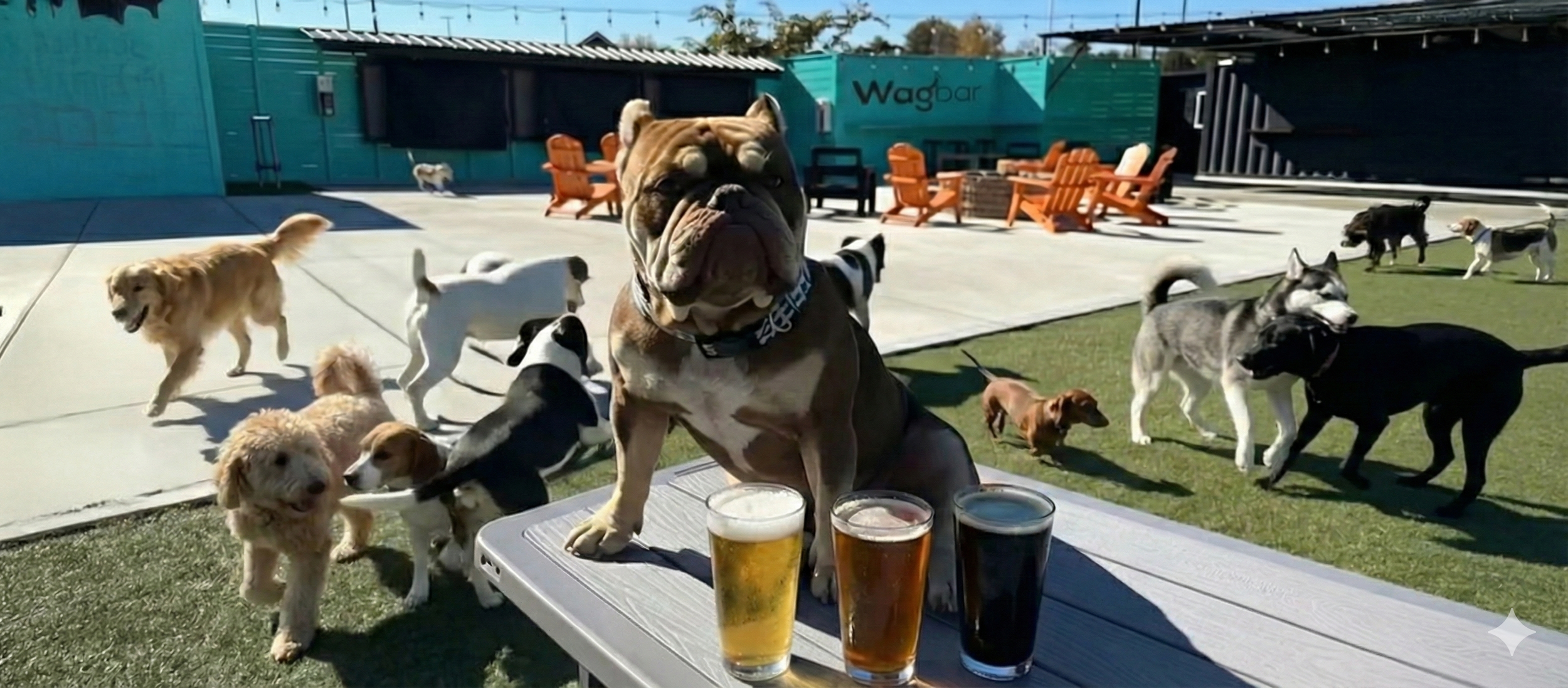
Is Your Dog Ready for the Dog Park? A Comprehensive Readiness Assessment

Top LDR: Determining if your dog is ready for the dog park requires evaluating five critical factors: age and health status, temperament and personality traits, basic obedience skills, socialization history, and ability to read canine communication signals. Dogs under six months, those with health issues, lacking basic recall, or showing fear-based aggression aren't ready for unstructured off-leash environments and need alternative socialization options. Use this comprehensive readiness assessment to make informed decisions that protect your dog's safety and build positive social experiences rather than traumatic ones.
The gate to the dog park swings open. Dogs are running, playing, barking. Your pup pulls on the leash, desperate to join. So you unclip them and hope for the best. Five minutes later, your dog is cowering behind your legs or launching at another dog, and you're wondering what went wrong.
Here's what went wrong: hope isn't a strategy. Dog parks aren't universal solutions for canine exercise and socialization. They're complex social environments that some dogs thrive in and others find terrifying. Taking a dog who isn't ready into an off-leash park doesn't build confidence—it creates trauma that can take months or years to undo.
The question isn't whether dog parks are good or bad. The question is whether your specific dog, at this specific point in their development, is ready for what dog parks demand. This assessment helps you answer that question honestly before you make a decision that could impact your dog's social development permanently.
Understanding What "Dog Park Ready" Actually Means
Before evaluating your dog's readiness, understand what you're evaluating for. Dog park readiness isn't about perfection. It's about having the foundational skills, temperament, and experience to navigate an unpredictable social environment safely.
A dog park ready dog can:
Recall reliably even with significant distractions
Read and respond appropriately to other dogs' body language
Disengage from play when another dog signals discomfort
Recover quickly from startling or overwhelming situations
Play reciprocally rather than relentlessly pursuing unwilling dogs
Tolerate being approached, sniffed, and occasionally bumped
Handle frustration without escalating to aggression
Notice what's not on this list: perfect obedience, advanced training, or being "good with all dogs." Dog park readiness is about social skills and resilience, not formal training achievements.
Also understand that readiness isn't permanent. A dog ready for dog parks at two years old might become reactive at four after a negative experience. A puppy not ready at eight months might be perfectly suited by twelve months. Readiness is a snapshot of current skills and temperament, not a permanent classification.
This is why facilities like Wagbar's supervised off-leash environment exist—they bridge the gap between dogs who need socialization but aren't ready for unmonitored parks and those who thrive in completely unstructured environments.
Age and Health Considerations: Physical Readiness First
Before evaluating behavior or temperament, address the physical prerequisites for dog park play. Some age and health factors make dog parks inappropriate regardless of personality or training.
Puppies Under Six Months
The standard recommendation is no unmonitored dog parks before six months, and for good reason. Young puppies are in their critical socialization window, but that doesn't mean they need exposure to uncontrolled adult dog interactions.
Puppies under six months typically lack:
Complete vaccination series (making them vulnerable to disease)
Physical development to handle rough play safely
Social skills to recognize and respond to adult dog corrections
Cognitive ability to generalize learning from chaotic environments
Resilience to recover from overwhelming or frightening experiences
One traumatic incident during the critical fear period (typically 8-11 weeks) can create lasting behavioral issues. That social dog who growled at your puppy? Your puppy might now fear all dogs of that breed. That rough play that knocked your puppy down? They might develop fear-based reactivity to large dogs.
Structured, controlled socialization through puppy classes, supervised play dates with known dogs, and facilities with age-appropriate areas serve puppies better than unmonitored parks. Wagbar's environment, for instance, requires all dogs to be at least six months old specifically because younger puppies need different socialization approaches.
Senior Dogs and Health Limitations
Age and health issues don't automatically disqualify dogs from park visits, but they require honest assessment. A senior dog with arthritis might not enjoy being body-slammed by exuberant young dogs. A dog recovering from surgery can't risk reinjury from rough play.
Consider your dog's:
Joint health and mobility limitations
Energy levels and stamina
Sensory changes (vision or hearing loss)
Cognitive function and ability to navigate complex social situations
Specific health conditions that might be aggravated by stress or exercise
A senior dog who loves gentle sniffing and slow play might hate a high-energy dog park but thrive in quieter, controlled environments. Don't force park visits because "dogs need socialization." Find socialization that matches their physical capabilities.
Vaccination Status is Non-Negotiable
Every reputable dog park—and certainly supervised facilities like Wagbar—requires current vaccinations for rabies, bordetella, and distemper. This isn't bureaucracy. It's disease prevention.
If your dog can't be fully vaccinated due to health issues, they shouldn't visit dog parks. The risk of disease transmission is too high. Find alternative socialization that doesn't involve shared spaces with unknown dogs.
Similarly, if your dog is on medications that affect behavior (sedatives, pain management, anxiety medications), consult your vet about whether dog park play is appropriate. Some medications reduce inhibitions or alter personality in ways that make social situations riskier.
Temperament Evaluation: Is Your Dog's Personality Suited for Park Play?
Physical readiness is necessary but not sufficient. Temperament determines whether your dog will enjoy and thrive in dog park environments or find them stressful and frightening.
The Confidence Factor
Dog parks reward confidence. Confident dogs navigate social hierarchies, handle rough play, recover from corrections, and advocate for themselves when needed. They don't escalate when bumped, don't panic when surrounded, and don't shut down when overwhelmed.
Assess your dog's general confidence level:
How do they react to new environments?
What happens when they're startled?
Can they recover quickly from scary experiences?
Do they explore independently or cling to you?
How do they handle mild frustration?
A confident dog isn't necessarily extroverted or constantly playing. Confidence means resilience and adaptability. Some of the most confident dogs at parks are calm observers who occasionally engage in play but mostly just enjoy the environment.
Fearful or anxious dogs often struggle in dog parks. The chaos, unpredictability, and constant stimulation can be overwhelming. For these dogs, forcing park visits in hopes they'll "get used to it" often backfires, creating fear-based reactivity that's much harder to address than the original anxiety.
Play Style Compatibility
Not all play styles work in dog park environments. Assess your dog's preferred play style honestly:
Chase-oriented dogs can thrive if they understand consent—they pursue dogs who enjoy being chased and stop when the other dog disengages. Chase-oriented dogs who relentlessly pursue reluctant dogs create problems.
Wrestling dogs need to play reciprocally, taking turns being on top and bottom. Wrestling dogs who always dominate or never back off when the other dog signals submission aren't appropriate for unmonitored play.
Toy-focused dogs often struggle in dog parks because toys trigger resource guarding in many dogs. If your dog's primary interest is fetch or tug rather than social play, parks might not meet their needs anyway.
Herding breed dogs sometimes nip, circle, or try to control other dogs' movement—natural herding behaviors that other dogs find annoying or threatening. These dogs often do better in structured activities than free play.
Understanding dog body language helps you evaluate whether your dog's play style is compatible with park environments. Do they read other dogs' signals? Do they respond when another dog signals discomfort? Can they self-regulate arousal levels?
The Red Flags: Temperaments That Struggle
Certain temperament traits reliably predict dog park struggles:
Fear-based reactivity: Dogs who lunge, bark, or growl at other dogs because they're frightened (not because they're aggressive) often get worse in dog parks, not better. The overwhelming environment confirms their fear rather than building confidence.
Resource guarding: Dogs who guard food, toys, water, or even owners can't safely navigate environments where these resources are present and contested.
Predatory behavior toward small animals: If your dog has strong prey drive toward cats, small dogs, or wildlife, they may not be able to suppress that drive in parks with small dogs running.
Low frustration tolerance: Dogs who escalate quickly when frustrated—whether by another dog not wanting to play or by being unable to reach something they want—create dangerous situations in parks.
Inability to self-regulate: Some dogs, particularly young adolescents, get increasingly wound up in stimulating environments rather than calming themselves. These dogs need training and maturity before handling park energy.
None of these temperament traits make your dog "bad" or mean they can never socialize. They simply mean unstructured, unmonitored dog parks aren't the right socialization environment—at least not yet. Reactive dog training can address many of these issues, but do that training first, then reassess readiness.
Basic Obedience Prerequisites: The Non-Negotiables
Dog park readiness requires certain obedience foundations regardless of temperament. These aren't optional nice-to-haves. They're safety requirements.
Recall: The Life-Saving Command
If your dog doesn't have reliable recall, they're not ready for off-leash dog parks. Period. Recall needs to work:
With significant distractions (other dogs playing)
At distance (across the park)
When they're highly aroused (in the middle of chase)
Consistently (not just when they feel like it)
Test recall honestly. Can you call your dog away from another dog mid-play? Can you interrupt chase? Can you get them to come when they're focused on something compelling across the park?
If not, work on recall training before dog parks. Practice in progressively distracting environments. Use high-value rewards. Build a recall so strong that coming to you is always their best option, regardless of what else is happening.
The off-leash training checklist provides specific benchmarks your dog should meet before off-leash park play. These aren't arbitrary—they're based on situations that actually occur in dog parks and the skills needed to navigate them safely.
Basic Commands in Distracting Environments
Beyond recall, your dog needs to respond to basic commands even with distractions. At minimum:
"Leave it" or "drop it" for when they pick up something they shouldn't (trash, another dog's toy, questionable substances)
"Wait" or "stay" for controlling entry and exit through gates and preventing door-bolting
"Gentle" or "easy" for moderating play intensity when things get too rough
These don't need to work perfectly. But they need to work reliably enough that you can manage situations before they become problems. If your dog completely ignores you the moment other dogs are present, build that foundation before expecting them to handle park environments.
Leash Manners Matter Too
While the park itself is off-leash, you navigate to and from the off-leash area on leash. Dogs who lunge, pull, or create chaos on leash create problems:
They trigger reactivity in other dogs
They make it impossible to enter/exit calmly
They arrive at the park already highly aroused
They're difficult to manage if you need to leash them during the visit
Work on basic leash walking before park visits. Your dog should be able to walk on leash near other dogs without losing their mind. They should be able to wait calmly while gates are opened and closed. These leash skills prevent the visit from starting problematically.

Socialization History: Past Experiences Matter
Your dog's previous social experiences significantly impact their readiness for dog parks. Dogs aren't blank slates—they bring their history into every new situation.
Quality Over Quantity in Socialization
Many owners believe "more socialization is better" and expose puppies to as many dogs as possible as quickly as possible. This quantity-focused approach often backfires. What matters isn't how many dogs your puppy has met, but whether those interactions were positive.
One negative experience during the critical socialization window can outweigh dozens of positive ones. That dog who growled at your puppy when they got too close? Your puppy might now approach all similar dogs with fear. That puppy play session that got too rough and scared them? They might now avoid rowdy play groups.
Assess your dog's socialization history:
Have they had mostly positive interactions with a variety of dogs?
Do they have experience with different play styles?
Have they learned to navigate corrections from adult dogs?
Can they read and respond to subtle social signals?
Have they experienced off-leash play in controlled environments?
Dogs with limited socialization aren't necessarily unsuited for parks, but they need gradual exposure with careful management. Throwing them into intense environments to "catch up" on socialization often creates more problems than it solves.
The Impact of Negative Experiences
If your dog has had negative park experiences—fights, getting bullied, being overwhelmed—honestly assess whether they've recovered. Signs your dog hasn't fully recovered include:
Increased vigilance or hyperawareness at parks
Reluctance to engage in play they previously enjoyed
Changes in body language (more tense, less loose and relaxed)
Increased reactivity to triggers related to the incident
Avoidance behaviors or attempts to leave the park
Dogs who've had traumatic park experiences may need a break from parks while you rebuild confidence through structured socialization in more controlled environments. Facilities like Wagbar, with trained staff monitoring play, can provide the middle ground these dogs need.
Previous Training and Structure
Dogs who've experienced structure and training generally do better in dog parks than those who've had complete freedom without boundaries. This seems counterintuitive—wouldn't dogs who've always been off-leash be better at dog parks?
Actually, no. Dogs who've learned impulse control, learned to check in with owners, learned that rules apply even when excited, bring those skills to dog parks. They have the cognitive tools to manage their arousal and behavior even in stimulating environments.
Dogs who've never experienced boundaries often struggle with the self-regulation dog parks require. They've never learned to moderate their energy, respect other dogs' signals, or respond to owners amidst distractions.
The Dog Park Readiness Self-Assessment
Based on everything covered, assess your dog honestly across these dimensions:
Physical Readiness (Must Meet All)
[ ] At least 6 months old
[ ] Fully vaccinated (rabies, bordetella, distemper)
[ ] Healthy with no conditions affecting mobility or stamina
[ ] Spayed or neutered (required at many parks including Wagbar)
Temperament Readiness (Must Meet Most)
[ ] Generally confident in new environments
[ ] Recovers quickly from startling situations
[ ] Shows interest in other dogs without fear or aggression
[ ] Can tolerate being approached/bumped without escalating
[ ] Demonstrates appropriate play style with other dogs
[ ] Shows no resource guarding tendencies
[ ] Can self-regulate arousal levels
Obedience Readiness (Must Meet All)
[ ] Reliable recall with distractions
[ ] Responds to basic commands even when excited
[ ] Calm leash walking near other dogs
[ ] Can wait calmly at gates and entries
Socialization History (Must Meet Most)
[ ] Positive experiences with variety of dogs
[ ] Experience with different play styles
[ ] Has learned to read dog body language
[ ] No recent traumatic experiences with dogs
[ ] Experience in off-leash environments
If your dog meets ALL physical readiness criteria and MOST criteria in the other categories, they're likely ready for supervised dog park environments like Wagbar. You can start with shorter visits during quieter times and build from there.
If your dog meets physical readiness but struggles in temperament, obedience, or socialization, they need more preparation before dog parks. Focus on the specific gaps identified.
If your dog fails multiple criteria across categories, dog parks aren't appropriate right now. That doesn't mean they'll never be ready—it means they need different socialization approaches first.
Alternative Options When Your Dog Isn't Ready
Not ready for dog parks doesn't mean no socialization. It means finding appropriate alternatives that build skills without overwhelming your dog.
Structured Play Dates
Arrange one-on-one or small group play dates with known dogs whose play style matches your dog's. This controlled environment lets you:
Monitor all interactions closely
Intervene immediately if needed
End sessions before anyone gets overwhelmed
Build positive experiences gradually
Choose playmates carefully. A well-socialized adult dog who gives appropriate corrections can teach your dog more than dozens of rough puppy play sessions. Quality matters far more than quantity.
Supervised Off-Leash Environments
This is where Wagbar's model shines for dogs who need socialization but aren't ready for unmonitored parks. The key advantages:
Trained staff monitor play constantly, intervening before situations escalate rather than after problems occur
Vaccination and health screening ensures all dogs meet safety standards
Community culture maintains behavioral expectations that unmonitored parks lack
Size and energy-appropriate groupings can often be arranged, especially during quieter times
Owner education helps you understand what's normal play versus problematic behavior
These environments bridge the gap between complete control (leashed walks, play dates) and no control (unmonitored dog parks). They let dogs experience off-leash freedom while you build skills and confidence.
Training Classes and Workshops
Reactive dog classes, puppy socialization classes, and advanced obedience all provide controlled exposure to other dogs while building specific skills. These structured environments ensure:
Professional guidance on reading dog behavior
Controlled exposure at appropriate distances and intensities
Development of obedience skills in distracting environments
Gradual building of confidence and capability
Don't view training classes as just obedience work. They're socialization with structure—exactly what many dogs need before handling unstructured environments.
Solo Exercise Alternatives
Remember that dog parks aren't the only exercise option. Many dogs actually prefer:
Long walks or hikes on trails
Swimming or water play
Interactive toys and puzzle feeders
Training sessions and trick work
Fetch or tug in fenced yards
If your dog doesn't enjoy dog parks or isn't ready for them, there's no obligation to force it. Dogs don't need off-leash dog play to be happy, healthy, and well-adjusted. They need appropriate exercise, mental stimulation, and positive social experiences—which can come from many sources.
When Readiness Changes: Reassessing Over Time
Dog park readiness isn't static. Puppies mature. Adult dogs develop reactivity. Senior dogs slow down. Negative experiences change temperament. New training builds skills. Reassess periodically rather than assuming readiness is permanent.
Developmental Stages
Puppies go through multiple developmental periods that affect social behavior:
Juvenile period (3-6 months): Developing social skills but vulnerable to trauma
Adolescence (6-18 months): Often regression in training, increased independence
Young adulthood (1-3 years): Settling into mature temperament and play style
Prime adulthood (3-7 years): Generally most stable period
Senior years (7+ years): May need adjustments as energy and health change
What's appropriate at one stage may not work at another. The adolescent who loved dog parks at 8 months might become reactive at 14 months. The senior who enjoyed gentle play at 6 years might prefer solo walks at 10 years. Stay flexible and responsive to where your dog is developmentally.
After Negative Experiences
If your dog has a fight, gets bullied, or has a traumatic park experience, reassess readiness even if they previously met all criteria. Some dogs bounce back quickly. Others need extended breaks and confidence rebuilding.
Signs your dog needs a break from dog parks:
Increased stress signals before or during visits
Changes in play style (more tense, less engaged)
Increased reactivity to specific triggers
Reluctance to engage with dogs they previously played with
Physical symptoms of stress (excessive panting, drooling, stress diarrhea)
Take breaks without guilt. Focus on rebuilding confidence through controlled, positive experiences. You can always return to dog parks when your dog is ready.
When Training Changes Readiness
The flip side is that training can transform dogs who weren't ready into dogs who thrive at parks. If you've worked on:
Building reliable recall
Managing reactivity through training
Developing impulse control and self-regulation
Creating positive associations with other dogs
Teaching appropriate play skills
Reassess readiness. Your dog at 8 months post-training may be completely different from your dog at 8 months pre-training. Skills and confidence compound, often creating rapid improvement once foundation training takes hold.
Making the Right Choice for Your Individual Dog
Dog parks work wonderfully for some dogs and terribly for others. The goal isn't to force your dog into an environment that doesn't suit them. The goal is to honestly assess what your specific dog needs and provide socialization that helps them thrive.
If your dog meets the readiness criteria, Wagbar's supervised environment provides excellent socialization with safety and structure. If they don't meet criteria yet, focus on building the foundations they need through training, structured play dates, and gradual exposure.
Either way, prioritize your dog's emotional wellbeing over external pressure to "socialize" or let them "be a dog." A confident, well-adjusted dog who never visits dog parks is infinitely better than an anxious, reactive dog created by forced exposure to overwhelming environments.
Use this assessment to make informed choices. Trust what you observe about your dog. Seek professional guidance when uncertain. And remember: dog park readiness isn't a judgment of your dog or your training. It's simply an honest evaluation of current skills and temperament to ensure positive experiences rather than traumatic ones.
Bottom TLDR
Assessing if your dog is ready for the dog park requires evaluating physical health and age, temperament and confidence levels, basic obedience skills including reliable recall, and socialization history to determine if unstructured off-leash environments are appropriate for your individual dog. Dogs failing multiple readiness criteria need alternative socialization through structured play dates, training classes, or supervised facilities like Wagbar rather than unmonitored parks that could create trauma or reactivity. Complete the comprehensive readiness assessment honestly and choose socialization environments that build confidence and skills rather than overwhelm your dog, regardless of external pressure to attend dog parks.