

Is My Dog Ready for an Off-Leash Dog Bar? A Behavioral Readiness Check
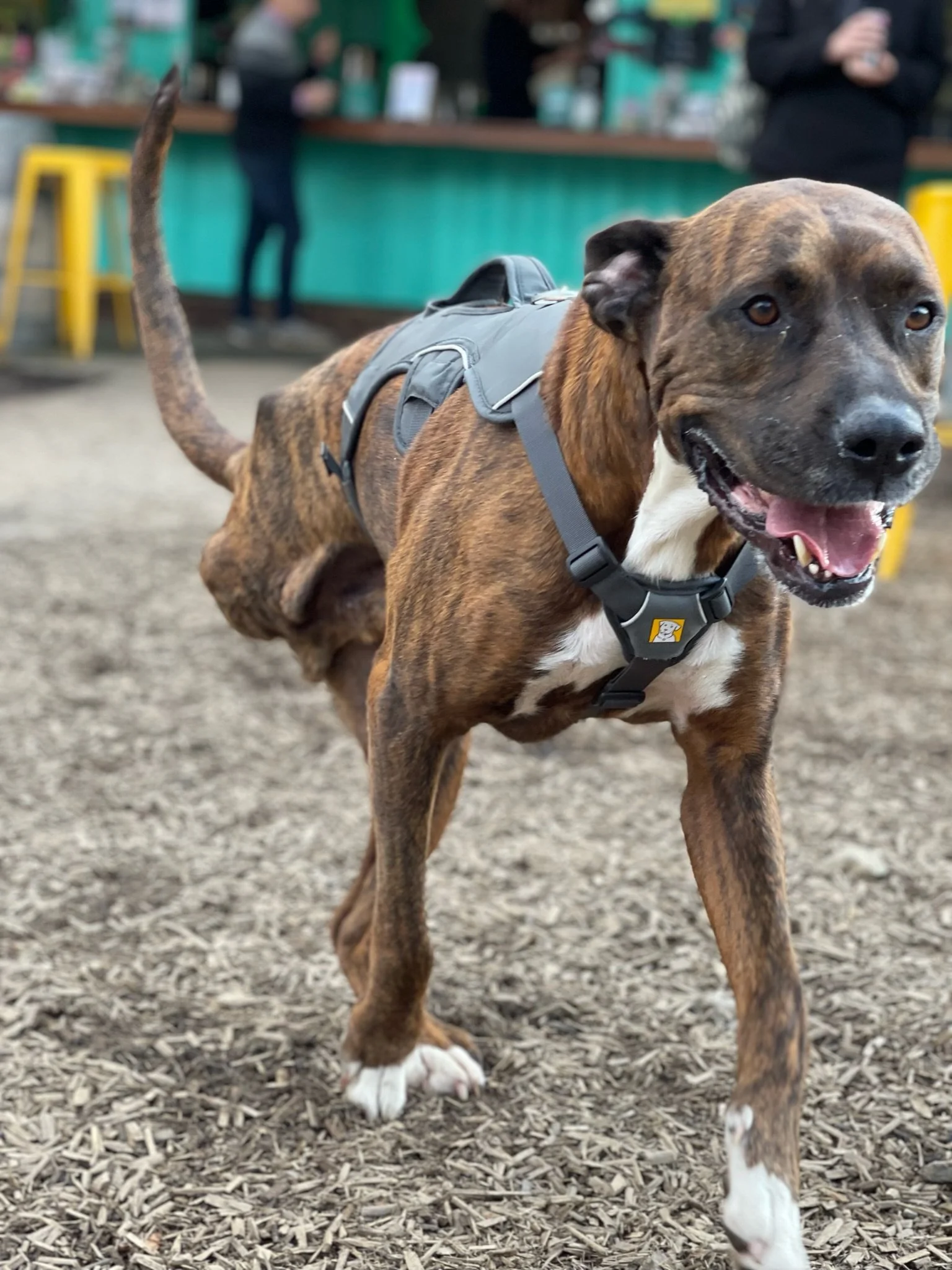
Top TLDR: Your dog is ready for an off-leash dog bar when they have reliable recall, can be near other dogs without lunging or freezing, don't guard food or toys aggressively, and recover from minor surprises within a minute or two. Run through the eight-question self-assessment below before your first visit. If most answers are "yes," you're good to go. If several are "no," put in a few weeks of focused work first.
What "Ready" Actually Means in This Setting
A behavioral readiness check for an off-leash dog bar is different from general obedience. Your dog doesn't need to know fifteen tricks. They don't need to walk perfectly on a heel. What they do need is the social and emotional baseline to handle a high-stimulation environment with twenty other dogs, music from the bar, food smells, and constant new arrivals.
Wagbar requires every dog to be at least six months old, spayed or neutered, and current on Rabies, Bordetella, and Distemper vaccinations. Those are the medical baseline. Beyond that, the off-leash dog bar concept puts your dog in a setting where staff supervise but owners are still the first line of awareness. That setup works when your dog is socially calibrated. It backfires when your dog is sent in before they're ready.
This cluster page covers the behavioral side of that readiness, not the training side. The training side gets covered in a dedicated companion piece on training drills and skill work.
Recall: Can Your Dog Come Back to You?
Recall is the single biggest indicator of readiness. If your dog comes when called in your living room but ignores you in a park, they're not ready for an off-leash bar.
The version of recall that matters here is "comes back when called even when something more interesting is happening." That's a higher bar than most people realize. A dog who comes when there's nothing else going on isn't tested. A dog who comes when another dog is running past them is tested.
Try this. Walk your dog to a quiet park or a friend's yard. Drop the leash. Wait until they're sniffing or watching something. Call them. If they turn and come within a few seconds, you've got real recall. If they glance at you and keep doing what they're doing, you've got partial recall. If they don't even acknowledge you, you've got recall problems that need work before any off-leash environment.

Recall doesn't have to be perfect, but it has to be reliable enough that you can pull your dog out of an interaction if you see something going sideways. At a Wagbar, that might be redirecting your dog away from a play partner who's getting overwhelmed, or calling them off the gate when a new dog is entering. Without recall, you're a passenger. The companion off-leash training checklist walks through the specific drills that build this skill from the ground up.
Reading Your Dog's Reaction to Other Dogs
The next big readiness check is how your dog responds when other dogs are around. Watch them on a normal walk when another dog passes on the other side of the street.
A ready dog notices the other dog, maybe pauses, and continues. They might wag, sniff the air, look interested. Their body stays loose. They keep moving with you when you cue them.
A not-ready dog reacts hard. They lunge, bark, freeze, or pull. They might do this at every dog or only at certain ones. Even if they're "friendly" reactive (excited to meet, not aggressive), the intensity is still a problem in a confined off-leash setting where they don't get to launch at every new arrival.
Reactivity isn't a moral failure. Lots of dogs are reactive at some point in their lives, and many work through it with training. But it's a real signal that the off-leash bar isn't the right environment yet. If your dog struggles with this on regular walks, looking through reactive dog training fundamentals is a better starting point than jumping straight to a busy off-leash setting.
Resource Guarding: The Quiet Deal-Breaker
Resource guarding is the behavior where a dog gets tense, growls, snaps, or fights when they think someone's about to take something they value. It can be food, toys, a favorite person, even a spot on the couch.
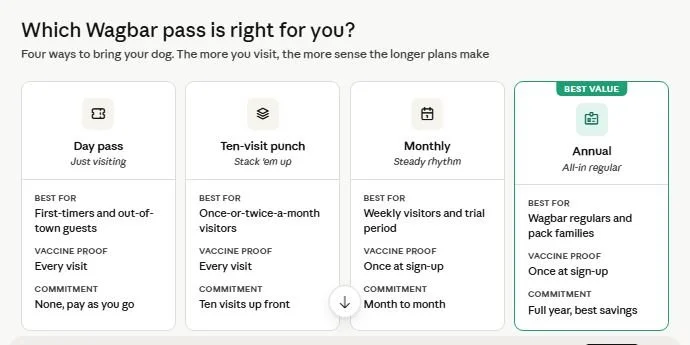
In an off-leash bar, this matters because dogs are around food smells, the occasional dropped french fry, and other dogs who might come too close to whatever your dog has decided is theirs. Even though Wagbar policy bans toys and treats inside the play area, dogs still come across things. A stick. A water bowl. A bench they've claimed.
A dog who resource guards heavily at home is at higher risk in this setting. Watch for early signs: stiffening when another dog approaches their food, lifting their lip when you reach for a chew, low growls when someone walks past their bed. Mild guarding is workable. Strong guarding with snaps or bites is a real signal to address it before any group setting.
If you've seen even small flashes of guarding, reading up on the warning signs that precede dog conflicts gives you a clearer sense of what to watch and when to step in.
Recovery After Surprises: The Bounce-Back Test
This one's subtle but important. When something unexpected happens, like a loud noise, a stranger walking up fast, or another dog charging at them, how long does it take your dog to recover?
A ready dog might startle, look at you, get a little stiff, and then within thirty seconds to a minute, they're back to normal. They settle. Their body relaxes. They go back to sniffing or moving.
A not-yet-ready dog stays activated. The startle becomes a fixation. They stay on alert for ten or fifteen minutes. They might tremble, refuse food, plant their feet, or scan the area constantly.
The off-leash bar setting has small surprises constantly. A new dog enters. A barking starts and stops. A glass breaks. A truck pulls up. A child's voice comes from outside the fence. A dog who can't recover from these will be in a low-grade stress state the whole time, which isn't good for them and isn't fair to ask. The broader socialization and behavior fundamentals explain why bounce-back time matters and what builds it.
Body Language You Should Read Before You Go
You don't need to be an expert behaviorist, but reading basic dog body language is part of being a responsible owner in a group setting. The minimum vocabulary is:
A loose body, soft eyes, relaxed mouth, and play bows mean a dog who's having a good time. A stiff body, hard stare, closed mouth, and high tail mean a dog who's not. Lip licks, yawns out of the blue, turning the head away, and slow movement mean a dog asking for space.
If you don't already read these signals, take a few hours to study them before your first visit. The dog body language decoder breaks down the specifics. Knowing this changes how you watch your dog at the park, and it lets you step in before something escalates.
You also need to be able to read your dog specifically. Every dog has personal tells. Some pant when stressed. Some shake. Some hide behind you. Some get hyper-clingy. Whatever your dog's stress signals are, you should know them well enough to spot them across a busy yard.
The 8-Question Self-Assessment
Run through these honestly. "Mostly" doesn't count. Either yes or no.
Does your dog come when called within five seconds when they're distracted by something interesting?
Can your dog walk past another dog at a normal distance without lunging, barking, or freezing?
Does your dog have at least one positive ongoing experience with a dog outside your household (a friend's dog, a cousin's dog, a regular walking buddy)?
Does your dog recover within a minute or two when something startles them?
Can you take a chew, food bowl, or favorite toy from your dog without growling, snapping, or stiffening?
Is your dog at least six months old, spayed or neutered, and current on Rabies, Bordetella, and Distemper vaccinations?
Does your dog show clear, readable body language that you can interpret in real time?
Has your dog had at least a few exposures to varied environments (different parks, sidewalks, friend's homes) without falling apart?
Six or more "yes" answers usually means your dog is ready. Three to five means there's prep work to do. Two or fewer means the off-leash bar isn't the right next step yet. The Wagbar FAQ page covers many of the entry-related questions that come up alongside this assessment.
Common False Positives
A few patterns make owners think their dog is more ready than they actually are. Watch for these.
"My dog is friendly with my other dog at home." Living with a sibling dog is different from meeting twenty unfamiliar dogs at once. Home siblings have a worked-out relationship over months or years. The bar setting is a flood of new dogs, new smells, and new social negotiations every minute.
"My dog plays great at daycare." Daycare and an off-leash bar overlap but aren't the same. Daycare typically has smaller groups, structured time, and trained handlers running the floor. The bar adds music, alcohol service, food trucks, dropped objects, and a much wider variety of dogs and energy levels.
"My dog has been to dog parks before." Most dog parks are smaller and quieter than an off-leash bar. Some are also poorly supervised, which means your dog may have learned to cope rather than thrive. Coping isn't readiness. The deeper group play dynamics and safety discussion covers what real readiness looks like in a group setting.
"My dog used to be social as a puppy." Puppy social skills don't always carry into adulthood, especially if the dog had a sparse socialization period or a single bad experience between months six and eighteen. Re-evaluate your adult dog as the dog they are now, not the dog they used to be.
"My dog is a friendly breed." Breed tendencies matter, but individuals vary widely. A "friendly" Golden Retriever can still be reactive. A "tough" Pit Bull can still be a social butterfly. Read the dog in front of you.
If the Answer Is "Not Yet," Here's the Path Forward
A "not yet" answer isn't a verdict. It's a starting point. Most dogs who aren't ready can get there with a few weeks to a few months of focused work.
Start with the gaps that showed up in your assessment. If recall was the issue, work on recall in low-distraction settings, then build up to higher-distraction ones. If reactivity was the issue, that's its own training arc. If resource guarding was the issue, talk to a trainer who specializes in it before trying to fix it on your own.
Build social exposure gradually. Calm parallel walks with one other dog. Quiet meetups in a friend's yard. A short visit to a low-traffic dog park during off-hours. Each layer adds confidence.
For young dogs, a puppy socialization timeline lays out the developmental windows that matter most. For adult dogs that missed those windows, the work is slower but absolutely possible.
When you do get to the readiness threshold, start with a short first visit during a quiet hour. Mid-week mornings are usually calmest. Pick a Wagbar location near you, call ahead if you want to know how busy they typically are at a given time, and treat the first visit as a test rather than a commitment to a full afternoon.
Frequently Asked Questions
How old does my dog have to be to come to Wagbar?
Wagbar requires dogs to be at least six months old, spayed or neutered, and up to date on Rabies, Bordetella, and Distemper vaccinations. The age cutoff allows your dog's immune system, body, and behavior to mature before being introduced to a busy group setting.
What if my dog is friendly but very high-energy?
High energy isn't a problem on its own, but it can become one if your dog can't moderate themselves around lower-energy dogs. Watch for signs of overarousal like fixated chasing, mounting, or inability to stop. If your dog can play hard but also pause, drink water, and read other dogs' signals, energy alone won't keep them from being ready.
Can a shy dog handle an off-leash dog bar?
Often yes, with a slow introduction. A shy dog who watches from a distance, stays close to their owner, and gradually engages over multiple visits is doing fine. A shy dog who shuts down completely, refuses to move, or shows persistent stress signals is telling you they need more time and a different environment first. Reviewing a beginner's primer on dog play at Wagbar helps you set realistic expectations for a slow-warmup dog.
My dog had one bad experience years ago. Are they still ready?
Maybe. Bad experiences leave imprints, but they don't always become permanent. Test your dog's current reactions in controlled settings first. If they've moved past it, they may be fine. If you see lingering fear or reactivity tied to the original event, address that with a trainer before adding a high-stimulation environment.
Is the readiness check different for older dogs?
Mostly the same, with a few add-ons. Older dogs benefit from shorter visits, especially if they have arthritis or low stamina. They may also do better at less crowded times. The same recall, reactivity, and recovery checks apply, but consider physical comfort alongside behavior.
Should I bring my dog if they've never been around other dogs?
A first off-leash bar visit isn't the right place for true first-ever dog exposure. Build up with smaller, controlled meetings first. Once your dog can handle one or two unfamiliar dogs without spiraling, the off-leash bar becomes a reasonable next step. Wagbar staff screen vaccinations and supervise the floor, but that screening isn't a substitute for a dog being socially prepared.
Bottom TLDR
A behavioral readiness check for an off-leash dog bar comes down to four things: solid recall under distraction, calm reactions to other dogs, no heavy resource guarding, and quick recovery from surprises. Walk through the eight-question self-assessment and answer honestly. Six or more "yes" answers means you're ready to plan a first visit. Anything less means a few weeks of focused work first.