
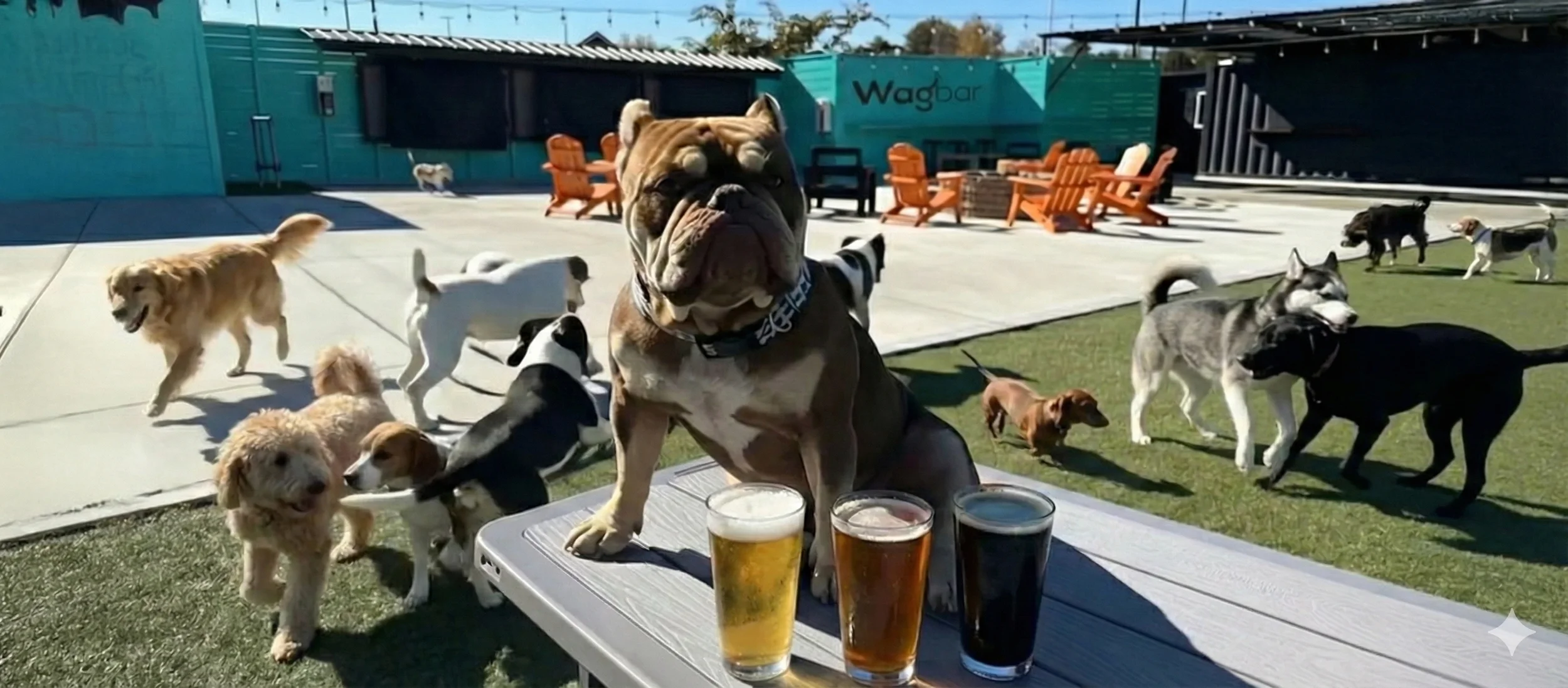
From Bar Manager to Dog Bar Owner: Career Paths That Lead to Wagbar

Top TLDR: Becoming a dog bar owner draws people from hospitality, corporate careers, financial services, and the pet industry — what they share isn't a specific job title but transferable skills in managing people, serving customers, and running an operation. Wagbar's training system is designed to fill the gaps regardless of where you're coming from. If you're ready to evaluate whether your background fits, start at the Wagbar franchising page.
There's no single resume that produces a Wagbar franchisee.
The Richmond, Virginia location is being opened by someone who spent 20 years in financial services before deciding he wanted to build something with his hands and his heart. Myrtle Beach is being built by a couple taking their first steps into business ownership. Los Angeles is in the hands of someone who spent a long corporate career waiting for the right opportunity to align with her lifelong love of animals.
The backgrounds are genuinely different. The common thread isn't industry experience — it's a specific kind of person who wants to do something that matters in their community, who is serious about running a real business, and who can't stop thinking about dogs.
If you're somewhere in the hospitality world — bar manager, restaurant owner, general manager, director of operations — you have a head start on some of the most important skills this business requires. But you're not the only person who gets here successfully.
Why Bar and Hospitality Experience Transfers So Well
A bar manager who decides to become a dog bar owner doesn't have to unlearn anything. The competencies that make someone good at running a bar are directly applicable to running the beverage side of a Wagbar location.
Inventory management, vendor relationships, responsible alcohol service, POS systems, shift scheduling, managing a front-of-house team under pressure — all of it applies. If you've handled a packed Friday night at a busy bar, you have a visceral understanding of what peak service looks like and how to keep things running when demand is high and staff are stretched.

What bar managers typically need to add is the park side. Supervised off-leash dog play is a genuinely different operational discipline from anything in hospitality. It requires staff trained in dog behavior, protocols for managing aggression and de-escalating tension, a vaccination verification process, and a physical environment designed for canine safety. None of that is beyond a capable operator's ability to learn — but it requires intentional study, not just assumption that dog management will come naturally.
Wagbar's training week in Asheville addresses this directly. The full week is spent inside a functioning location learning both the bar operation and the park operation. Bar managers leave with confidence on both sides rather than just the one they arrived knowing. The dog park behavior guide is also a useful starting point for understanding what your park staff will need to know.
Restaurant Owners and Operators
If you've run a restaurant, you've already managed the three things that trip up most new business owners: staff, margins, and customer expectations. You know that a great concept fails with poor execution. You know that labor cost and product cost require constant attention. You know what it feels like to handle a difficult situation with a customer in a way that keeps them coming back.
Restaurant operators who come to Wagbar often find that the business model is actually less complex in certain ways than what they've managed before. There's no kitchen, no food cost risk tied to daily prep, no complicated menu to execute. The food offering at most Wagbar locations comes from rotating food truck partnerships — which simplifies operations significantly while still giving customers a reason to stay longer and spend more.
The challenge for restaurant operators is the same as for bar managers: building genuine fluency with the dog park side. The operational instinct to manage everything is there. The specific knowledge of dog behavior, pack dynamics, and safe off-leash play is something that gets added through training and early hands-on experience running the park.
The Corporate Career Transition
AJ Sanborn spent 20 years in financial services before he started looking for something different. He considered opening a traditional bar — and then found Wagbar and realized the combination of a dog park and a bar was closer to what he actually wanted to build. He's bringing that franchise to the Richmond, Virginia area.
That story repeats across the Wagbar franchisee network. Long careers in corporate settings — financial services, tech, consulting, healthcare administration — leave people with management discipline, analytical capability, and a deep understanding of how organizations run. They're often skilled at reading financial statements, managing vendor contracts, and making decisions with incomplete information.
What they typically need more time with is the customer-facing, physical business side. Running a floor, managing a team of part-time employees, handling the immediate demands of a busy afternoon — these require a different kind of presence than a corporate career develops. The good news is that corporate-background franchisees tend to be excellent learners who take the training process seriously and who invest in hiring strong operational staff for their team.
The passion requirement is important here. A corporate career pivot into dog bar ownership because the financial model looks interesting won't produce the same result as a pivot driven by a genuine connection to dogs and community. The business is real enough that the financial model matters — but the energy and authenticity that attract members and build regulars comes from owners who are actually excited to be there.
Veterinary Technicians, Dog Trainers, and Pet Industry Professionals
People who have spent careers working professionally with dogs often feel an immediate pull toward the Wagbar model. The park side makes complete sense to them — they understand dog behavior, they know how to read a group of animals, and they can train staff in the skills that most hiring pools don't arrive with naturally.

What they're typically less familiar with is the business side: managing a P&L, running a bar program, building a membership marketing strategy, managing seasonal cash flow. The skills are learnable, but they require a different kind of commitment than the animal-side expertise that comes naturally to this group.
Pet industry professionals who move toward franchise ownership often make excellent operators precisely because they're not intimidated by the park side. They can focus their learning energy on the business mechanics rather than having to develop both simultaneously. The Wagbar training system gives them the framework for the business operation — the animal knowledge they show up with fills in the gap the training can't teach from scratch.
For context on what that operational training looks like, the bar operations guide for franchisees covers what the dual-discipline management challenge actually looks like day to day.
The Passion-First Path
Not every Wagbar franchisee comes from a closely related professional background. Some come from fields with no obvious connection to either dogs or hospitality — real estate, education, engineering, healthcare. What they share is a deep connection to dogs, a desire to build something in their community, and the kind of determination that makes up for gaps in directly relevant experience.
Dianna in Phoenix came from a career in IT sales with a background in the restaurant industry. Jennifer in Los Angeles spent years in corporate environments, driven by a childhood dream of working with animals. Matt and Taylor in Myrtle Beach took their first steps into business ownership together, motivated by the chance to build something meaningful for their community.
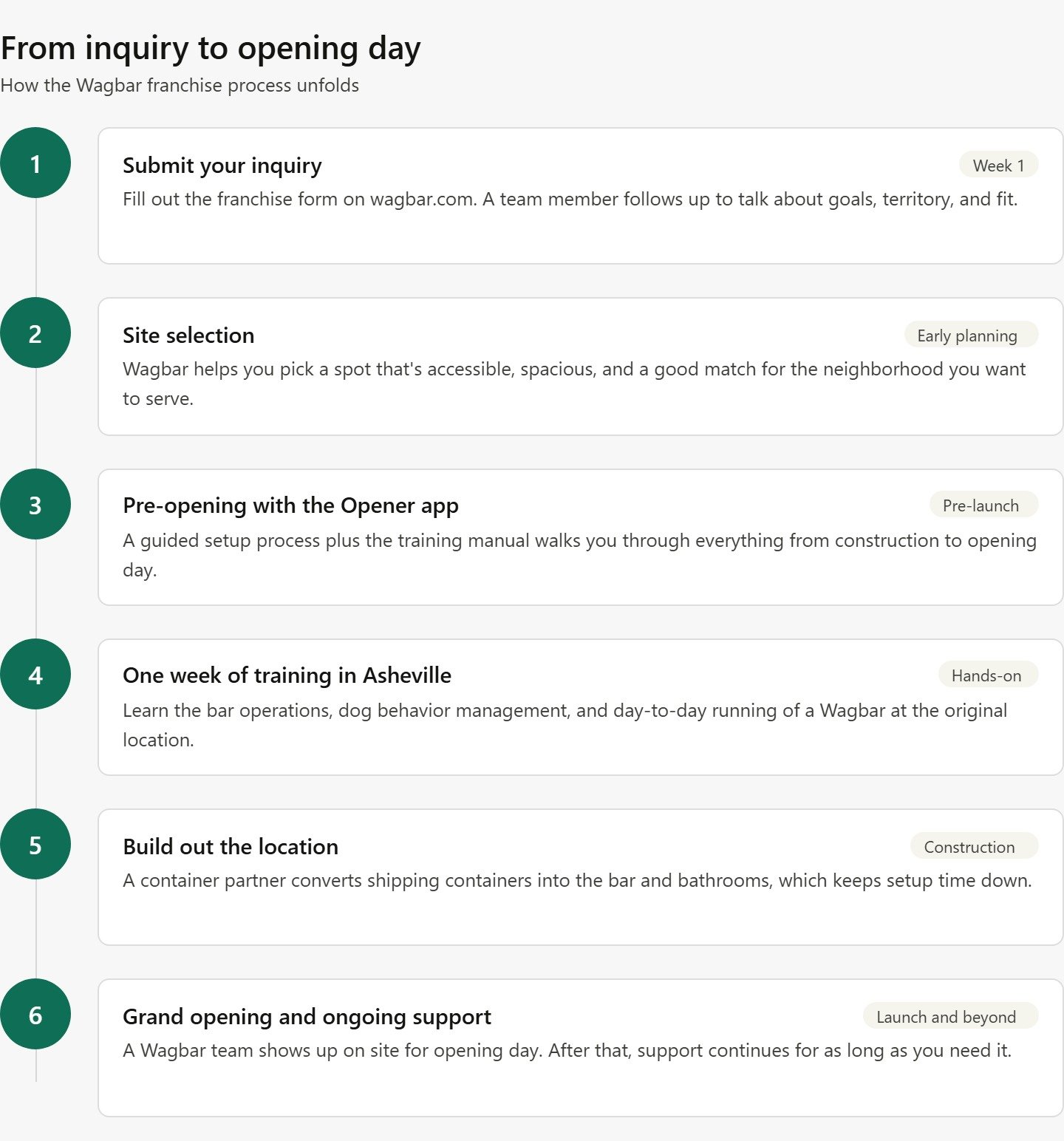
The training system Wagbar provides — the Opener app, the intensive week in Asheville, the grand opening support — is specifically designed to make the dual-discipline operation learnable for people who arrive with passion and management fundamentals but not necessarily deep expertise in both sides of the business.
What the system can't provide is the genuine love for dogs that makes the environment feel authentic to customers. That part has to already be there. Customers can tell within minutes whether an owner cares about their animals or is simply running a service. Memberships, repeat visits, and the community that makes the business durable are all built on the back of that authenticity.
What Skills Matter Most Across All Backgrounds
Regardless of where someone comes from, certain capabilities consistently show up in franchisees who build successful locations.
Managing people across multiple roles. A dog bar requires park monitors, bar staff, and a shift manager holding both sides together. Every background that includes leading a team — whether in a bar, a corporate department, or a dog training facility — builds relevant muscles for this.
Customer relationship thinking. Membership retention is built on relationships. Owners who think in terms of building long-term customer connections, not just processing transactions, tend to develop the recurring membership base that makes the business financially stable. The community building guide explains how that relationship investment translates to revenue.
Financial literacy. Understanding a P&L, knowing what your labor percentage should be, recognizing when bar cost is running high — these aren't optional skills for an owner. Some people arrive with this from financial careers or restaurant ownership. Others develop it through the Wagbar training and ongoing business reviews. Either way, it has to be there.
Comfort with physical, fast-paced operations. This is a business that asks you to be present. Busy weekends require hands-on management, not remote oversight. Owners who thrive tend to genuinely enjoy the environment — the dogs, the people, the energy of a full park on a Saturday afternoon.
What the Path Forward Looks Like
For anyone seriously considering the career transition to dog bar owner, the practical next steps are the same regardless of background.
Start with an honest assessment of which side of the operation you know well and which requires focused learning. Bar and restaurant backgrounds need to invest in dog behavior knowledge. Corporate and pet industry backgrounds need to develop comfort with the hospitality operation. Neither gap is insurmountable, and both close significantly through Wagbar's training system.
The off-leash dog bar investment guide is a useful checklist for evaluating whether a specific franchise system's training and support structure matches what you'd need. What to look for in operational support, site selection help, and ongoing coaching applies regardless of background.
Frequently Asked Questions
Do I need prior hospitality experience to open a Wagbar?
No, though it helps on the bar side. The training system covers both the beverage operation and the park management side, so prior hospitality experience accelerates your learning curve but isn't required. Management experience of any kind is more universally valuable than hospitality specifically.
What if I've never managed animals professionally?
Most Wagbar franchisees haven't. The training week in Asheville covers dog behavior management directly, and Wagbar's resources provide ongoing reference material. Park staff you hire can also bring animal experience to complement your operational strengths.
Is passion for dogs actually required, or is this just a business?
It's genuinely both, but the passion is what shows up in the customer experience. Members can tell whether an owner cares about their animals or is running a transactional service. The community and membership retention that make the business financially durable are built on authentic engagement with dogs and dog owners — not just solid operations.
How long does it typically take to transition from considering Wagbar to opening?
The timeline varies based on site selection, permitting, and build-out, but Wagbar's Opener app guides franchisees through the pre-opening process systematically. The training week happens closer to opening. Contact Wagbar's franchise team for a realistic timeline based on your target market.
What's the investment required?
The initial franchise fee is $50,000, with total estimated initial investment ranging from $470,300 to $1,145,900. A 50% multi-unit discount on the franchise fee applies for franchisees committing to three or more locations. Wagbar provides full financial details to qualified prospective franchisees.
The career path to dog bar ownership doesn't run through one particular industry or job title. It runs through people who are serious about building something, who care genuinely about dogs and community, and who are willing to learn what they don't already know. Whether you're a bar manager, a financial services veteran, a vet tech, or someone making a corporate career pivot — the question is the same: is this the kind of thing you want to spend the next chapter building?
If the answer is yes, the Wagbar franchising page is where that conversation starts.
Bottom TLDR: The path to becoming a dog bar owner runs through bar management, restaurant operations, corporate careers, financial services, and the pet industry — what matters isn't a specific job title but transferable skills in people management, customer relationships, and operational thinking, combined with a genuine passion for dogs. Wagbar's training system bridges the gaps between any background and a functioning location. Start the conversation at the Wagbar franchising page.
Meta Description: Bar managers, restaurant operators, corporate professionals, and pet industry workers all become dog bar owners. Here's what career backgrounds lead to Wagbar franchisees.