Franchise Business for Sale in Austin, TX: Why Austin's Dog Culture Fits the Wagbar Model

Top TLDR: A franchise business for sale in Austin, TX rarely has this clean a match between market and concept. Austin's median household income of $93,658, median age of 34.7, and consistent top ranking for dog-friendly cities combine with one of the country's most developed dog-friendly bar and brewery cultures to create strong demand conditions for a Wagbar off-leash dog park bar. Start exploring the Austin territory at wagbar.com/franchising.
Austin has spent years building a culture that Wagbar was essentially designed for. The city has more than 60 craft breweries. It has 54-plus documented dog-friendly bars and restaurants. It has produced its own version of the dog-park-and-bar concept in Yard Bar, where guests drink on a patio while their dogs run an off-leash park. And it does all of this with a population whose median age is 34.7, whose median household income sits at $93,658, and whose pet ownership rate tops 70% of households according to Wagbar's own Austin market research.
If you're evaluating a franchise business for sale in Austin, TX, the question isn't whether the market can support a Wagbar. It's whether you're the right owner to build it.
What Makes Austin's Demographics Unusually Well-Suited for This Concept
Austin is the fourth most populated city in Texas with approximately 980,000 residents, and its metro area is projected to cross 991,000 by 2026 according to U.S. Census data compiled by Cubit Planning. Employment grew 1.79% between 2023 and 2024, adding jobs primarily in professional and technical services, healthcare, and retail sectors.
Those aggregate numbers matter less than the demographic composition behind them. Austin's median age of 34.7 puts its population squarely in the millennial-heavy cohort that drives pet spending nationwide. Millennials represent 30% of all pet-owning households in the country per APPA data, spend an average of $5,150 annually on their pets, and are the only generation to have increased pet spending every single year since 2016. Austin's median household income of $93,658 sits well above the national average, and households led by 25-to-44-year-olds specifically skew toward the higher end of professional earnings in the tech, healthcare, and creative sectors that define Austin's economy.

For a Wagbar franchisee, this demographic profile translates directly to membership potential. Wagbar locations generate recurring revenue through memberships, day passes, and bar sales. The membership model works best in markets where residents have the income and the motivation to visit multiple times a week. Austin's combination of high earnings, young professional density, and deep dog ownership culture fits that model precisely.
Austin also has a documented history of supporting businesses that feel local, even when they're not. The city's "Keep Austin Weird" orientation is not just a bumper sticker. It reflects a genuine consumer preference for businesses with personality, community roots, and a reason to exist beyond pure transaction. A Wagbar franchise, owner-operated and embedded in a specific neighborhood's social fabric, fits that preference.
Austin's Dog Culture Has No Real Parallel in the South
Austin consistently ranks alongside Denver, Nashville, and Asheville as one of the country's top dog-friendly cities, based on AVMA survey data and APPA research. Those cities share several defining features: outdoor culture, young professional populations, a community-oriented social scene, and a pattern of treating dogs as full participants in daily life rather than pets to be left at home.
Austin's version of this is particularly well-developed. Wagbar's own research on dog ownership rates by city documents how Austin's in-migration of younger professionals from higher-cost metros brought a dog-owning demographic into a market that already had the outdoor infrastructure and social culture to support them. Over 70% of Austin households own pets, with average annual pet spending exceeding $2,000 per household, according to Wagbar's Austin market analysis.
That spending reflects the humanization trend that has reshaped the entire pet industry over the past decade. A 2023 Pew Research survey of more than 5,000 adults found 97% of pet owners consider their pets family members. The Harris Poll's 2024 State of Pets report found 82% of pet owners describe their pet as "like my own child." Austin's millennial-heavy population skews toward the upper end of those numbers. This is a city that builds dog-friendly patios before it finishes a restaurant buildout, that lists pet adoption partners on brewery websites, and that has produced dedicated dog travel guides, dog-friendly dining directories, and neighborhood-specific canine social networks.
The complete dog park guide covers what makes off-leash environments thrive in markets like Austin: high ownership density, a recurring outdoor social culture, and a customer base willing to pay for a safe, well-managed space where their dog can interact freely. All three conditions are present here.
The Austin Bar Scene Has Already Validated the Dog-Bar Concept
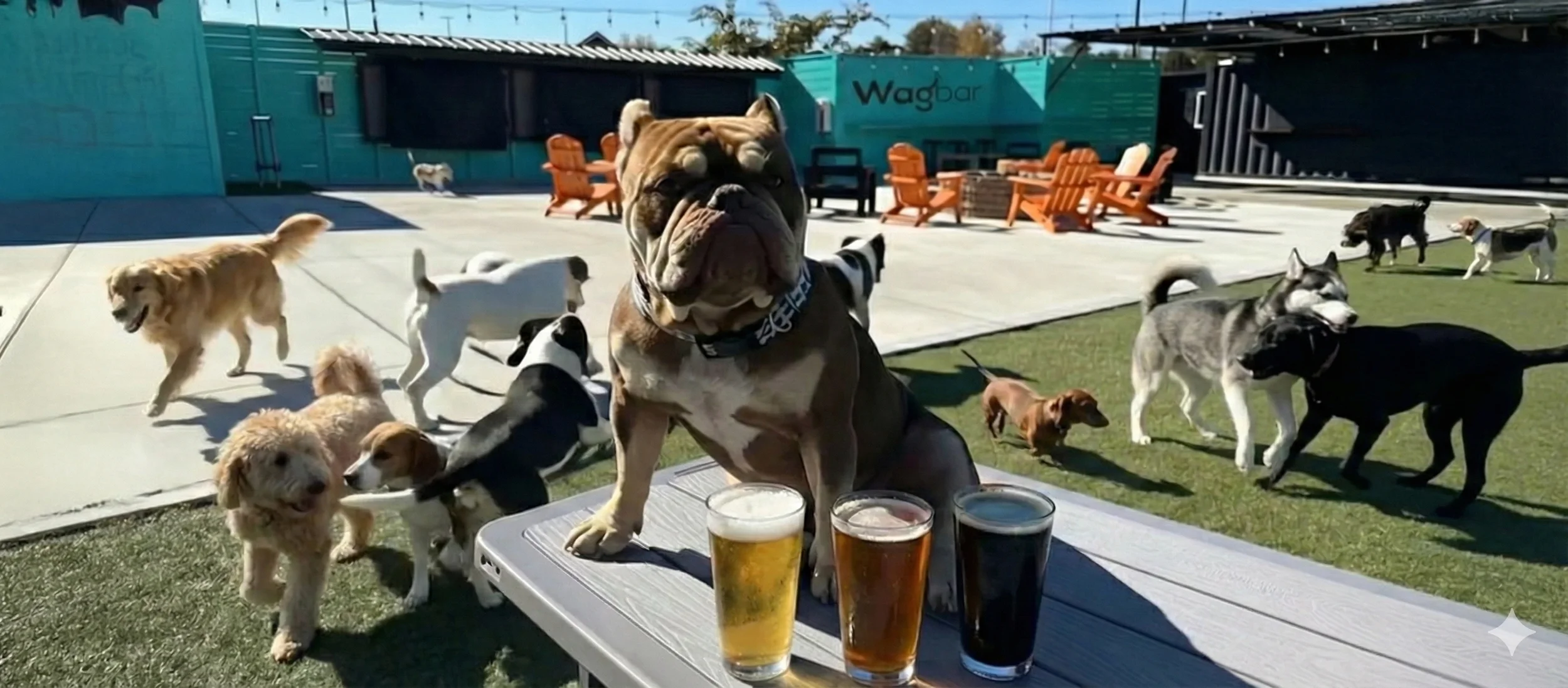
One of the clearest indicators that a Wagbar franchise would land well in Austin is that Austin has already demonstrated demand for the category independently. Yard Bar, located in North Austin, is explicitly described as part dog park and part bar, with off-leash play areas supervised by staff ("Bark Rangers") while guests drink on the patio. Beerburg Brewing maintains a full double-gated dog park within its beer garden, allowing guests to drink while watching their dogs run. St. Elmo Brewing, Austin Beer Garden Brewing, Zilker Brewing, and Celis Brewery are among the dozens of Austin taprooms that have built their identities around dog-friendly outdoor spaces.
Austin has more than 60 operating craft breweries as of official 2024 data, with industry analysts projecting that number could reach 85 by the end of 2026. The city's craft beer culture has matured over the past decade from a niche interest into a core part of neighborhood social life, particularly in East Austin, South Congress, and the North Loop corridor. Dog-friendly brewery visits have become a routine part of Austin's weekend culture, not an occasional novelty.
This existing market behavior matters for a franchise investor because it removes the education burden. Austin residents already understand what it means to drink at a bar with their dog. They already know how to navigate dog-friendly venues, they already have opinions about which spots do it well, and they're already looking for the next option. Wagbar's differentiation in this market isn't the concept. It's the combination of a supervised, fully off-leash environment with a structured bar experience, membership model, and operational system that existing Austin dog bars don't offer at the same level.
The off-leash dog bar concept page walks through the specifics of what separates a true off-leash environment from a dog-tolerant patio. The distinction matters in Austin because the market is sophisticated enough to recognize and reward the difference.
How the Wagbar Model Works in a Market Like Austin
Wagbar is an off-leash dog park and bar franchise founded in Weaverville, North Carolina by Kendal and Kajur Kulp. The concept opened in 2019 and has since expanded across the Southeast, Mid-Atlantic, Texas, and California. The Dallas, TX franchise is already operational, which means Wagbar has direct operational experience in the Texas market, including an understanding of summer heat management, Texas licensing requirements, and the regional dog ownership culture that extends into Austin.
The franchise model provides a structured path to ownership that independent dog bar concepts don't. Wagbar franchisees receive site selection support, a container bar build-out system that simplifies construction significantly, a week-long training program at Wagbar headquarters in Asheville, NC, and ongoing operational support from the brand's systems and team. The training and support program covers dog behavior management, bar operations, staff training, and marketing, so that owners enter opening day prepared for the full operational picture.
Revenue flows from three sources: day passes, memberships, and bar sales. The membership model is particularly valuable in a market like Austin, where a strong core of regular dog owners visits the same social spots week after week. Members build relationships with staff and other dogs, which reinforces the retention dynamic that keeps this kind of venue thriving long past the novelty phase. The revenue model for off-leash dog bars covers this structure in detail.
The financial structure: the initial franchise fee is $50,000. Total estimated investment ranges from $470,300 to $1,145,900 depending on site selection, local build-out costs, and market-specific factors. The royalty fee is 6% of adjusted gross sales, with 1% directed to the Wagbar marketing fund. Franchisees committing to three or more units receive a 50% multi-unit discount on the franchise fee.*
This information is provided for general reference only and does not constitute an offer to sell a franchise. Investment figures are estimates. Full financial details are in the Wagbar Franchise Disclosure Document (FDD). Wagbar Franchising LLC, 7 Kent Place, Asheville, NC 28804.
Austin Neighborhoods Worth Considering for Site Selection
Site selection for a Wagbar depends on outdoor space availability, proximity to residential dog-owner density, and access to the social-dining corridors where Austin's craft beverage culture is most active. Several Austin neighborhoods offer strong conditions for each of these.
East Austin has built the most visible dog-friendly commercial culture in the city. Breweries, patios, and food-forward concepts have clustered in East Austin in ways that attract exactly the customer profile a Wagbar targets: younger professionals, dog owners, and regulars who spend weekends moving between outdoor social venues. The neighborhood's residential density and relatively lower commercial rents (compared to downtown Austin) have historically made it accessible to independent operators, though development has pushed costs higher in recent years.
South Congress and South Lamar draw a mix of residents and visitors who skew toward the outdoor-social profile. The corridor has established dog-friendly venues, and its proximity to Barton Creek and surrounding green space means dog-owning residents are already active in the area throughout the week.
The Domain and North Austin represent the city's suburban professional core. High household incomes, significant tech industry employment, and residential density that includes dog-owning families make this corridor a viable site selection area for a Wagbar that wants to serve a membership-oriented suburban customer base.
Mueller is one of Austin's most deliberately dog-friendly planned communities. The neighborhood is built around parks and walkable streets, with a resident population that includes a high proportion of dog owners by design. Mueller's commercial strip has drawn food and beverage concepts that serve the neighborhood's repeat customers, which is the exact dynamic a Wagbar membership model benefits from.
Wagbar's site selection process works in partnership with the franchisor's support team, drawing on market data, lease analysis, and the franchisee's local knowledge. Final decisions depend on factors that are specific to the market at the time of development.
Frequently Asked Questions
Is Wagbar franchising in Austin, TX?
Austin is an open territory for Wagbar franchise development. Prospective franchisees interested in the Austin market can begin the inquiry process at wagbar.com/franchising. Wagbar's team reviews all inquiries and follows up to discuss qualification, territory availability, and next steps.
What is the investment required to open a Wagbar in Austin?
The initial franchise fee is $50,000. Total estimated investment ranges from $470,300 to $1,145,900. Royalties are 6% of adjusted gross sales plus 1% to the Wagbar marketing fund. A 50% multi-unit discount applies for commitments of three or more locations.* Full financial details are in the FDD.
Not an offer to sell a franchise. Offer made only by FDD.
Does Wagbar already operate in Texas?
Yes. The Wagbar Dallas, TX location is part of the active franchise network, giving Wagbar direct operational experience in the Texas market, including familiarity with state licensing, seasonal considerations, and regional customer behavior.
What entry requirements apply to dogs at Wagbar locations?
All dogs must be current on rabies, Bordetella, and distemper vaccinations, at least six months old, and spayed or neutered. Human guests 18 and older enter free. These requirements apply consistently across all locations. Full details are in the Wagbar FAQ.
Does prior food and beverage experience help in this franchise?
Business and management experience helps, but Wagbar's training program is designed to prepare franchisees regardless of prior bar or restaurant background. The week-long intensive in Asheville covers all operational areas. The more consistent indicator among successful franchisees is a genuine connection to their local dog-owner community, not a specific industry background.
How does Wagbar handle the off-leash environment safely?
Wagbar's safety protocols include vaccination verification at entry, staff trained in dog behavior management, and a monitored play environment. The dog behavior and safety resources cover what well-managed off-leash environments look like in practice, and the operational training program prepares owners and staff to manage group dynamics effectively.
What makes Austin different from other Texas markets?
Austin's combination of high pet ownership rates (70%+ of households), a millennial-dominated professional population with median household income of $93,658, and a deeply established dog-friendly bar and brewery culture puts it in a different category from most Texas markets. Dallas has the scale. Austin has the culture. A Wagbar in Austin targets both.
Bottom TLDR: A franchise business for sale in Austin, TX has measurable market fundamentals working in its favor: 70-plus percent household pet ownership, a median household income of $93,658, a median age of 34.7, and a craft bar culture that has already validated the dog-and-drink concept independently. Wagbar's Dallas location demonstrates the model works in Texas. Explore the Austin opportunity at wagbar.com/franchising.